The Louisiana Purchase
U.S. envoys sent to Paris to conclude a modest deal to solve a pressing problem instead struck a historic agreement that set the United States on the road to becoming a world power.
By experts and staff
- Published
 James M. LindsayCFR ExpertMary and David Boies Distinguished Senior Fellow in U.S. Foreign Policy
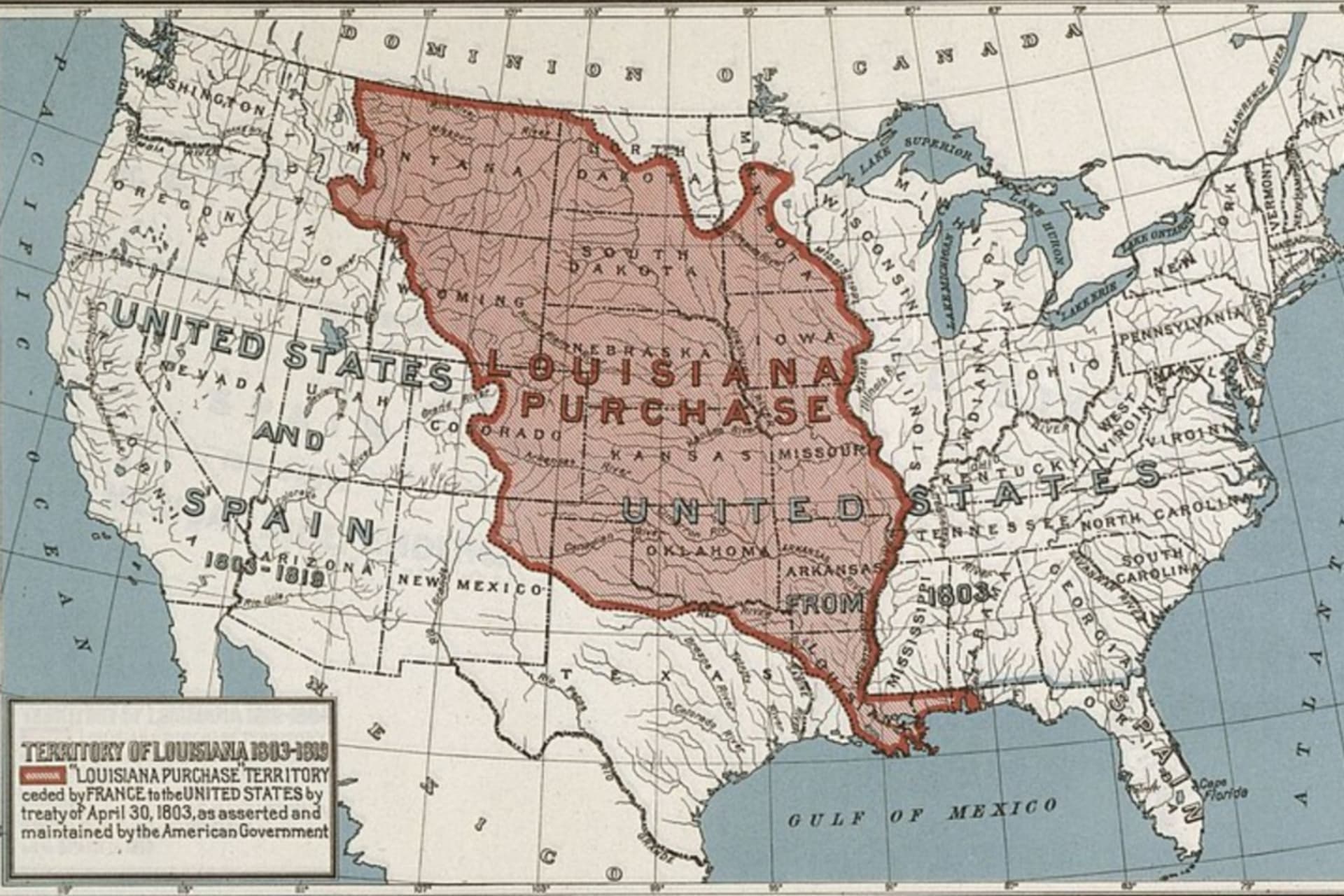
Diplomacy is often long, arduous, and frustrating. But sometimes, historic agreements come quickly. That was certainly the case for U.S. negotiators in Paris more than two hundred years ago. They were seeking to buy New Orleans from France. Their French counterparts made a surprising counteroffer—the entire Louisiana Territory was for sale. Rather than wait for weeks for guidance from Washington on what to do, the Americans jumped on the offer. On April 30, 1803, they struck the deal that history now knows as the Louisiana Purchase.
A recent survey I conducted on behalf of the Council on Foreign Relations with members of the Society for Historians of American Foreign Relations ranked the Louisiana Purchase as the fourth-best foreign policy decision in U.S. history.
[Video: https://www.youtube.com/shorts/q20vdCIs6QQ]
“Embryo of a Tornado”
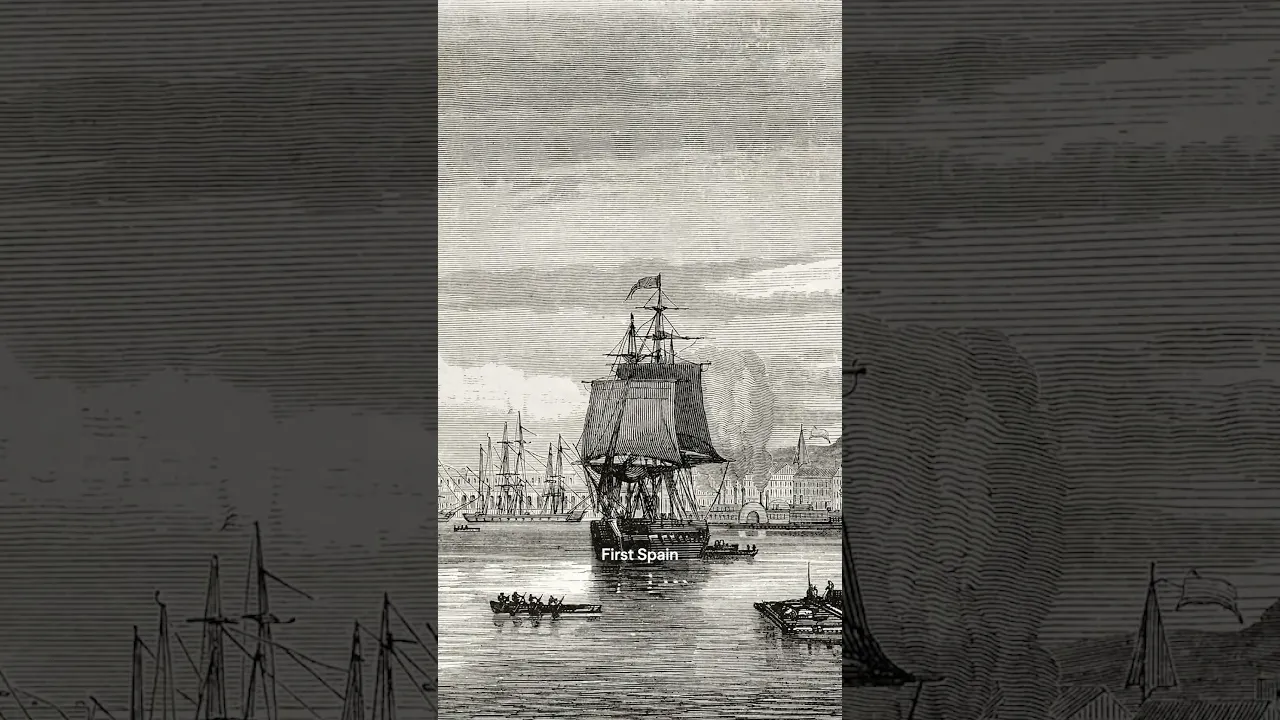
Americans living west of the Appalachians at the start of the nineteenth century depended on the Mississippi River to send their goods to market. In 1795, President George Washington negotiated a treaty with Spain, which then controlled New Orleans, granting Americans the right to send goods through the port. But in 1801, rumors began to reach Washington that Spain planned to transfer its claim to the city and the surrounding territory to France.
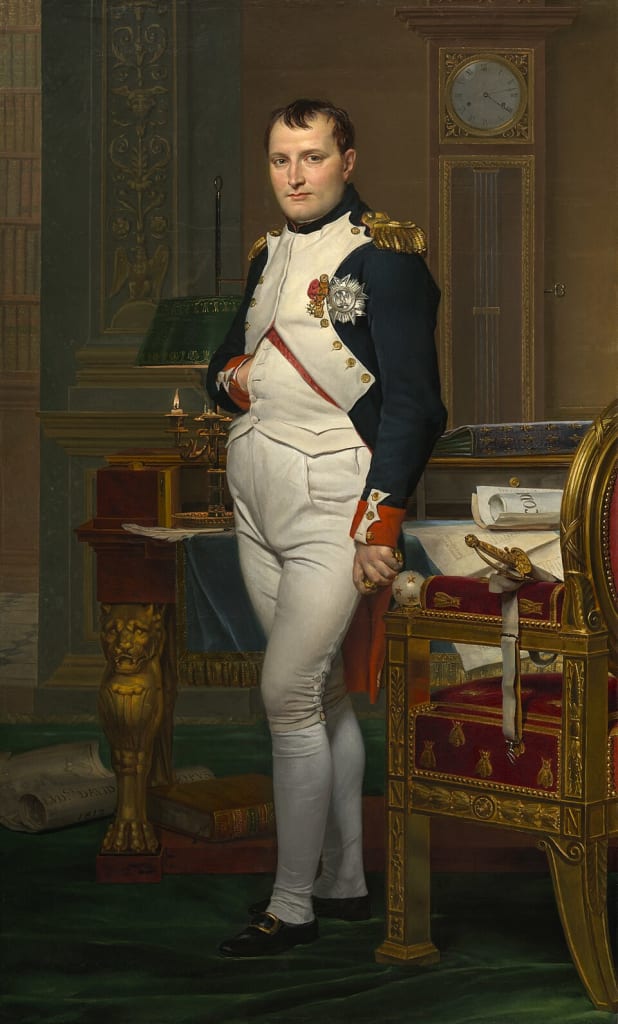
President Thomas Jefferson wrote that France’s acquisition of the Louisiana territory would be “the embryo of a tornado which will burst on the countries on both sides of the Atlantic.” France was far stronger than Spain. Paris could enforce its claims to New Orleans and beyond in a way that Madrid could not. Worse yet, Napoleon Bonaparte, who had seized power in France in late 1799, dreamed of establishing a French empire in the region west of the Mississippi. The United States could suddenly find itself threatened not just by British Canada to the north but by a French presence to the west.
In October 1802, Spain formally handed its claim to Louisiana to France. In a parting act, Spain revoked the right of Americans to use warehouses in New Orleans. The exports from a third of the United States were suddenly at risk. Some Americans, particularly those living west of the Appalachians, urged Jefferson to seize New Orleans. That, however, would mean a war that the United States, then a weak country with a minuscule army and navy, was not ready to fight.
Diplomacy First
As the rumors of France’s acquisition of Louisiana swirled, Jefferson sent notes to the French government warning that the United States would “marry ourselves to the British fleet & nation” to prevent the move. Such a move would undercut one of the strategies that Napoleon was pursuing to contain England: preventing Britain and the United States from joining forces. Indeed, one of his early acts upon coming to power in France was to negotiate the end to so-called Quasi-War between France and the United States that had begun in 1798 and had seen each side attack the other’s maritime trade. As long as Britain and the United States remained at odds, London would have to reserve forces to defend its position in Canada that could be used elsewhere against French interests.
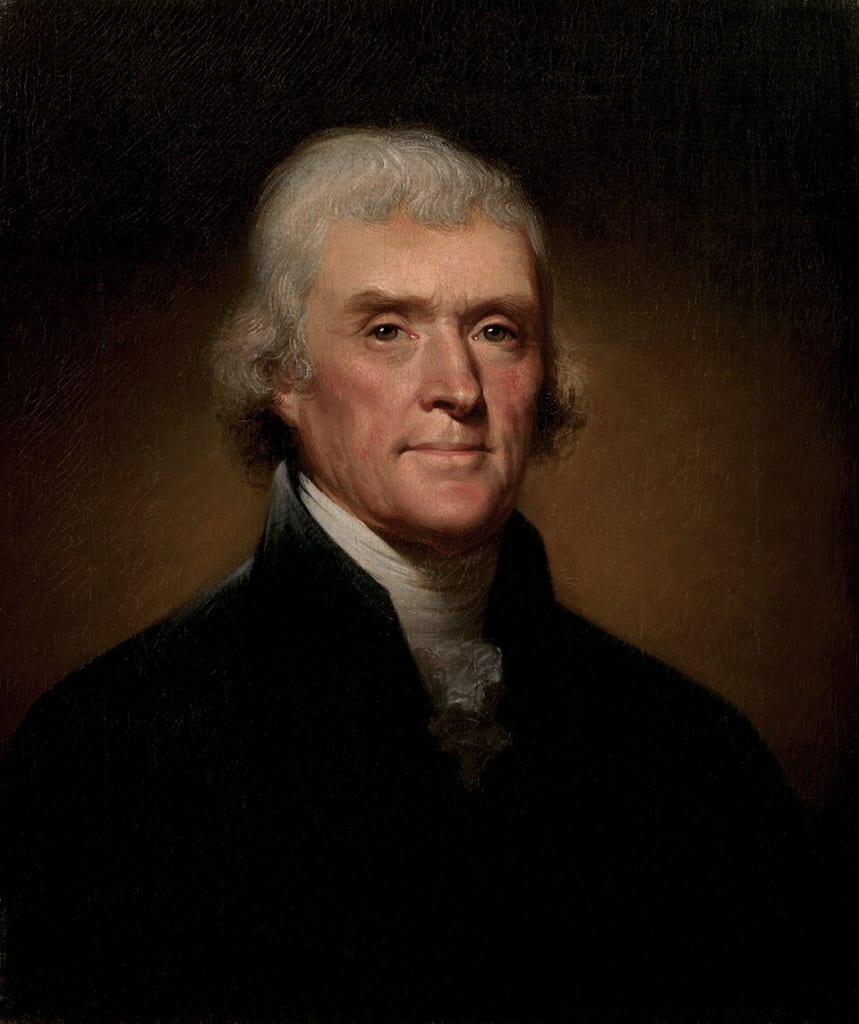
But Jefferson was bluffing. He had no interest in an alliance with London. He had long viewed Britain as the primary threat to the United States. Indeed, it had been what he viewed as Washington’s pro-British sympathies that had led to a rift between the two Virginians and Jefferson’s resignation from his post as secretary of state.
With his hand forced by the closure of New Orleans to U.S. commerce, Jefferson opted to try diplomacy. In January 1803, he dispatched his close friend and political ally James Monroe to Paris. Monroe’s guidance was simple: try to buy New Orleans and as much of the land east of the city—known as the Floridas—as possible. To that end, Jefferson authorized Monroe to spend up to $10 million.
Monroe reached Paris on April 12, 1803. He was greeted by the U.S. minister to France, Robert Livingston. The minister had surprising news: Napoleon wanted to sell not just New Orleans but the entire Louisiana Territory.
Napoleon’s Reversal
While Americans were seething over French designs for New Orleans and the Mississippi, Napoleon was souring on his dreams of establishing a French empire in North America. In 1791, enslaved people in the French colony of Saint Domingue, known today as Haiti, began to rebel. In 1801, after years of fighting, Toussaint Louverture, a former enslaved person, took control of the country.
In December 1801, Napoleon ordered his brother-in-law to lead a military expedition to retake Saint Domingue. The French force eventually captured Louverture, but his chief lieutenants continued a ferocious resistance. Meanwhile, many French soldiers, including Napoleon’s brother-in-law, died of yellow fever. The effort to retake the colony collapsed.
The news of the ill-fated expedition to Saint Domingue came as France faced the prospect of renewed war with Britain. Napoleon’s advisors counseled him that British naval forces would likely seize both Saint Domingue and New Orleans. Rather than defend the indefensible, Napoleon opted to sell the Louisiana Territory to the United States. Livingston learned of the decision the day before Monroe arrived in Paris.
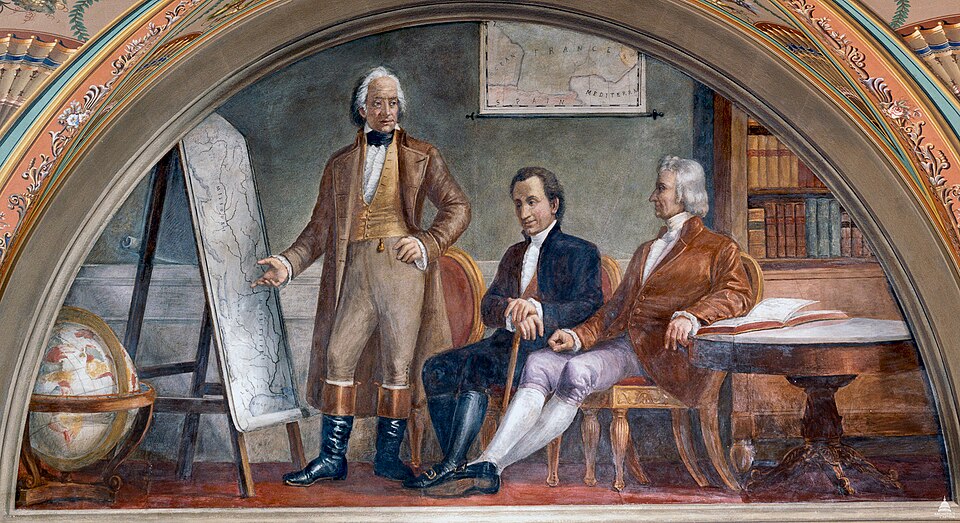
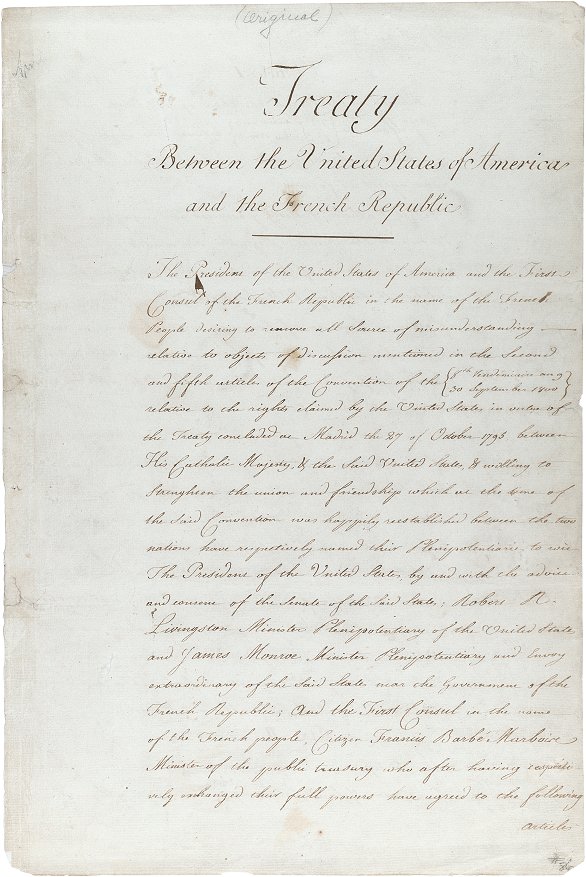
On April 30, 1803, the two sides struck a deal. France would transfer its claim to Louisiana for $15 million. Napoleon understood the opportunity he was handing to the United States, but he took solace in the belief that Britain would be the deal’s biggest loser: “This accession of territory affirms forever the power of the United States, and I have just given to England a maritime rival that sooner or later will lay low her pride.”
Jefferson’s Dilemma
News of the deal that Livingston and Monroe had struck reached Washington in early summer and was announced on July 4, 1803. Most Americans applauded the achievement. The French threat to the United States would be eliminated, and settlers would be free to migrate west.
However, Jefferson doubted that the deal was constitutional. He had long argued that the president, and the federal government more broadly, could only do what the Constitution explicitly authorized. As he wrote in August 1803: “The general government has no powers but such as the constitution has given it; and it has not given it power of holding foreign territory, and still less of incorporating it into the Union. An amendment of the Constitution seems necessary for this.”
But Jefferson wanted Louisiana. He believed that the future of the American Republic and the virtue of its citizens depended on family farming. In his view, agrarian life developed moral character and taught personal responsibility in a way that a commercial or a manufacturing society could not. Doubling the size of the United States would make a nation of family farmers possible.
Jefferson’s cabinet shared his land hunger but not his constitutional qualms. They argued that the deal was too good to pass up and well within the federal government’s power. They noted that the Constitution explicitly authorized the president to negotiate treaties. Acquiring territory was a permissible purpose of a treaty.
The agreement that Monroe and Livingston had struck gave the United States until October 1803 to ratify the treaty. Faced with a deadline to act, Jefferson, not for the first time in his career, put aside his constitutional aside. He accepted his cabinet’s advice that the treaty could authorize the Louisiana Purchase.
The Senate Debates
Jefferson now had to persuade the Senate to consent to the treaty and Congress to appropriate the funds needed to conclude the purchase.
Members of the Federalist Party, Jefferson’s opposition, sought to block Senate consent to the resolution of ratification. They offered an array of objections. The young country could not afford the purchase. The price tag would double once the federal government paid off the loan needed to finance the deal. The United States would become too big and diverse to govern. Disputed boundaries with British and Spanish claims in North America might trigger conflict. Slavery would expand into the new territory. Federalists also bristled at what they saw as Jefferson’s hypocrisy: The strict constitutional constructionist was abandoning his principles now that they conflicted with his interests.
The Federalists’ objections to acquiring the Louisiana Territory reflected their own self-interest as much as principle. The party drew its political strength from the northeast. Westward expansion threatened that region’s well-being. Ports that had long been the United States’ gateway to the world might suffer as commercial opportunities shifted to New Orleans, and businesses might collapse as workers headed west for new opportunities.
Congress Decides
The Federalists were badly outnumbered in the Senate, and their effort to block the treaty came to naught. Jefferson’s fellow Democratic-Republicans rallied behind him. On October 20, 1803, after two days of debate, the Senate voted 24 to 7 to consent to the treaty with France.
With the treaty approved, Jefferson now needed to persuade Congress to appropriate the funds needed to complete the purchase. Although he might have been tempted, he could not argue that the House of Representatives was obligated to appropriate the necessary funds simply because the Senate had approved the treaty to purchase Louisiana. Several years earlier, Jefferson and his fellow Democratic-Republicans had tried to derail implementation of the Senate-approved Jay Treaty, which Washington had negotiated with Britain, by blocking the appropriation of the funds needed to carry it out. They had argued then that the Senate’s decision to approve a treaty could not obligate Congress to spend money. An about-face on the principle that the House could refuse to appropriate funds was a political nonstarter.
Many House members were skeptical about buying Louisiana. Although the United States was acquiring 828,000 square miles of land for less than a nickel per acre, the $15 million price tag was steep for the young country. Completing the purchase would require it to borrow money from European banks, an unpopular proposition in a country proud of its independence. As a result, the bill to fund the purchase passed the House by only two votes, 59 to 57. The Senate was less troubled by the financial commitment and moved quickly to add its approval. The United States had completed the Louisiana Purchase.
A Consequential and Continental Legacy
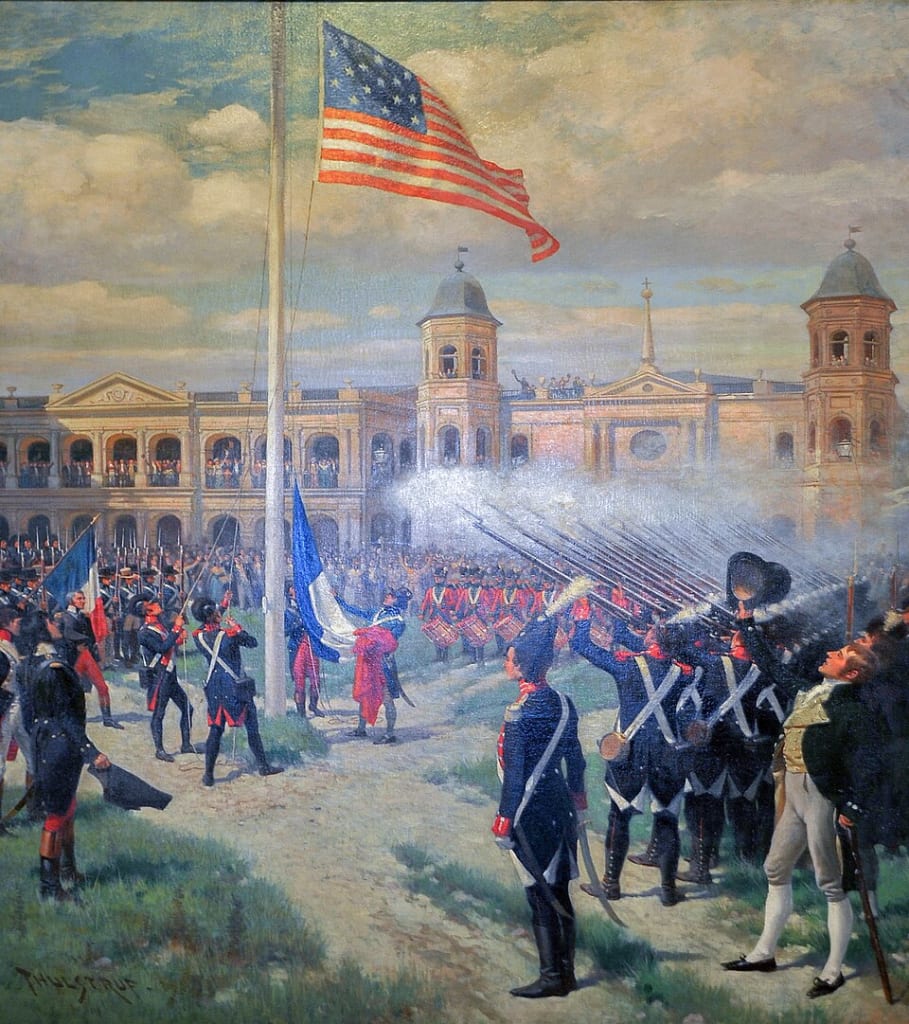
France formally conveyed New Orleans to the United States on December 20, 1803, in what today is Jackson Square. The French tricolor was lowered for the last time, and the U.S. flag was raised for the first. Three months later, France formally ceded its claims to the remainder of the Louisiana Territory.
The consequences of the Louisiana Purchase were sweeping and not without controversy. The acquisition of the Louisiana Territory made possible the expansion of the plantation economy, enabling the growth and brutality of the American slave system. The deal also ignored the fact that Indigenous peoples lived in the territory the United States now claimed. As the nineteenth century progressed, American settlers, aided by an increasingly powerful federal government, would forcibly move tribal nations off their native lands.
The Louisiana Purchase also made the modern United States possible. The sale secured the western frontier from a potential French threat. New possibilities for expansion exploded, laying the groundwork for what would come to be called Manifest Destiny—the belief that the United States was destined to reach from the Atlantic to the Pacific. The road was now open to the possibility of the United States becoming a continental country and ultimately a world power. And all of that owed to U.S. diplomats willing to think big when it mattered most.
Oscar Berry assisted in the preparation of this article.