Peru Is About to Elect Its Ninth President in a Decade. What Happened to the Other Eight?
Peru is South America’s most politically unstable country, having cycled through eight presidents in the last decade. Here’s a rundown of Peru’s recent leaders.
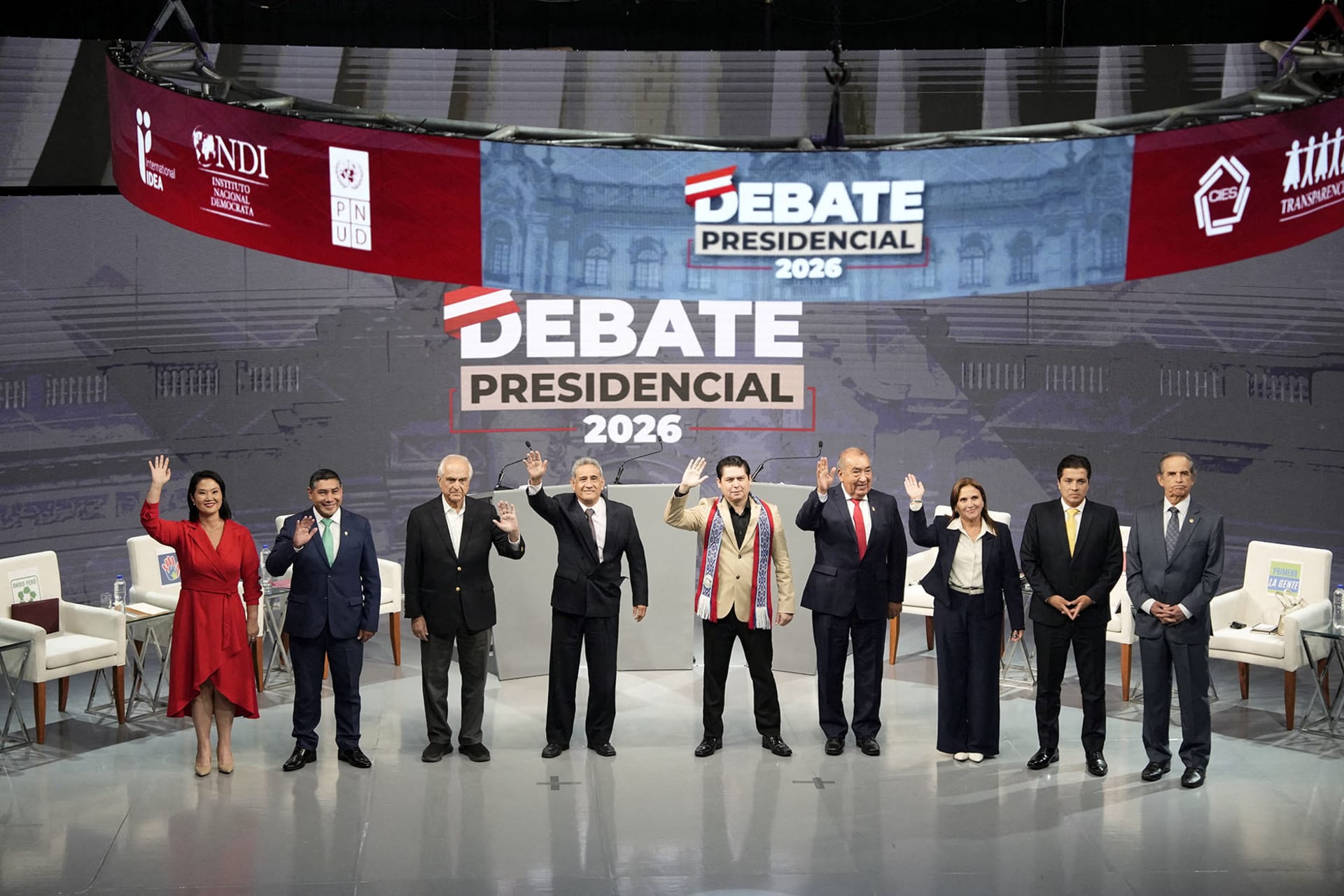
Peru has earned a reputation for its so-called presidential curse, having had eight presidents take office in the past ten years. Many resigned or were impeached, and some are serving time at Barbadillo Prison in the capital, Lima, known as Peru’s “presidential prison.”
José Jerí became the most recent president to be removed from office on February 17—just four months into his term—over corruption allegations. Peru’s rapid leadership turnover has been driven largely by invoking a constitutional clause allowing Congress to impeach and remove leaders with a two-thirds majority for reasons of “permanent moral or physical incapacity.” This, combined with political clashes between the executive and legislative branches, frequent scandals, and a lack of legislative majorities, has fueled chronic political instability. The current cycle of revolving leadership traces back to the presidency of Pedro Pablo Kuczynski, who took office in 2016.
With a presidential runoff scheduled for June 7, Peru will soon inaugurate its ninth leader in roughly as many years. Here’s a look at who has led the South American country over the past decade, and why they left office.
Pedro Pablo Kuczynski
July 2016–March 2018
Kuczynski, widely known as PPK, had previously served as both prime minister and minister of economy and finance under President Alejandro Toledo. Peru’s Congress initiated impeachment proceedings against Kuczynski in late 2017, following allegations that he had lied about receiving payments related to the Odebrecht scandal that ran from 2001 to 2016. As part of this regionwide corruption scheme, Brazilian construction conglomerate Odebrecht paid nearly $800 million in bribes to officials across twelve countries—most of which were in Latin America—to secure major public contracts. Though Kuczynski survived an initial impeachment vote, he resigned in March 2018 in the face of a second impeachment effort.
In April 2019, Kuczynski was arrested for alleged money laundering in the Odebrecht case and placed under house arrest. He was granted conditional release in 2022. As of 2023, prosecutors are seeking a thirty-five-year prison sentence; Kuczynski is still on trial. In June 2025, he was given an eighteen-month travel ban after getting caught attempting to leave the country.
Martín Vizcarra
March 2018–November 2020
Vizcarra faced impeachment proceedings in September 2020 for allegedly misusing public funds, though opposition leaders failed to amass enough support for the effort. The next month, several political factions filed fresh impeachment articles, citing the president’s presumed “permanent moral incapacity.” They alleged Vizcarra had accepted more than $600,000 in bribes during his tenure as governor of the southern Moquegua region from 2011 to 2014. Vizcarra was officially removed from office that November following a 105–19 vote.
In November 2025, Vizcarra was sentenced to fourteen years in prison at Barbadillo after being convicted of corruption. He was also ordered to pay almost seven hundred thousand dollars in compensation—jointly with other defendants—and barred from public office for nine years.
Manuel Merino
November 2020
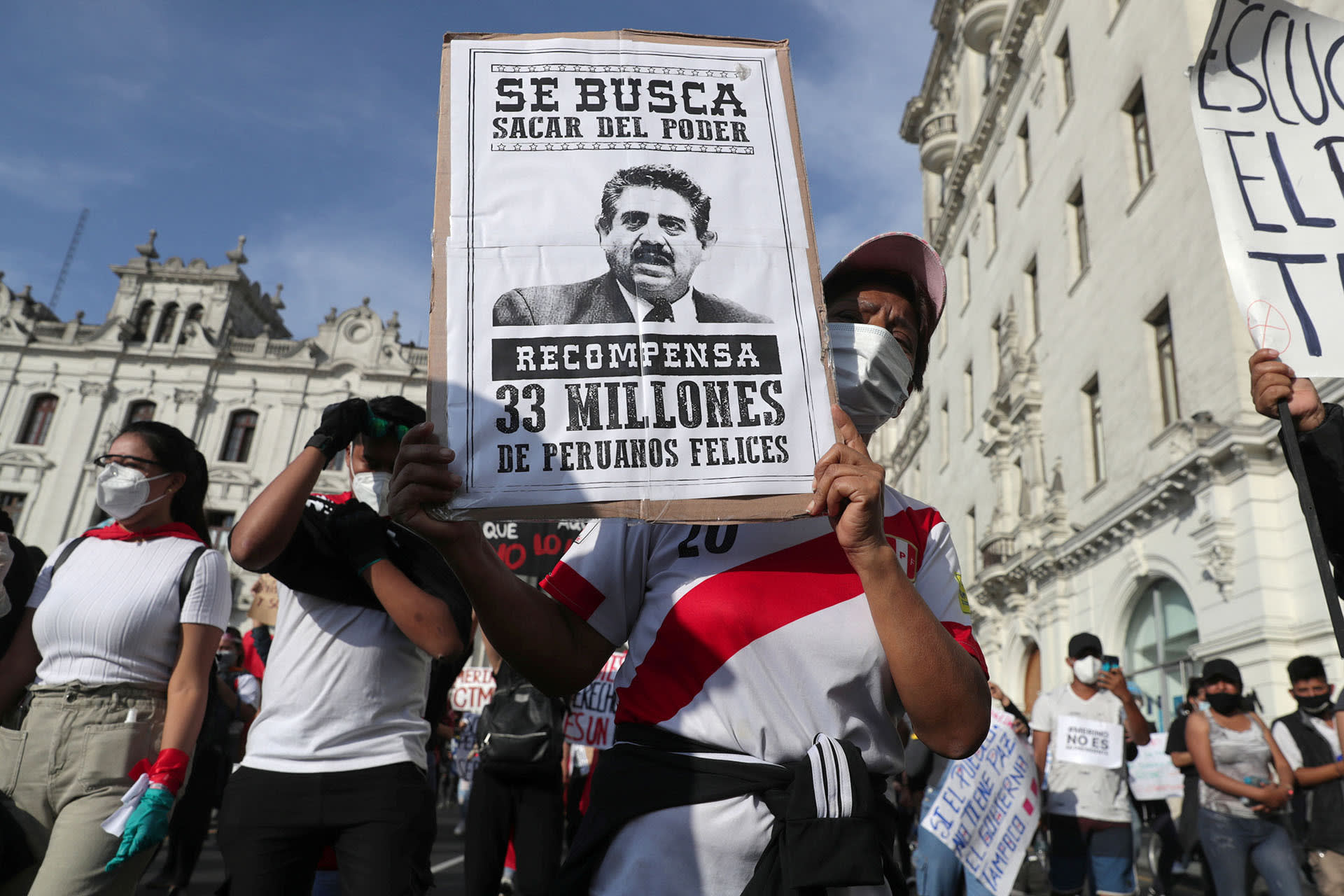
Merino served only for five days before resigning on November 15 amid widespread protests that accused Congress of staging a parliamentary coup after the ouster of the popular Vizcarra. The demonstrations reached a critical point when police killed two protesters, sparking widespread outrage and prompting Merino to step down.
Merino had previously served as president of Congress, presiding over Vizcarra’s impeachment proceedings. Half of his cabinet also resigned. His presidency is the shortest in modern Peruvian history.
Francisco Sagasti
November 2020–July 2021
Sagasti served as interim president for less than a year following Merino’s resignation. A centrist leader in Congress, Sagasti was sworn into office on November 17, 2020, marking Peru’s third president in a single week. He remained in office until the winner of the general election was inaugurated in July 2021.
Sagasti’s Purple Party had been the only one in Congress to vote against Vizcarra’s impeachment in November 2020. Many Peruvians hoped his leadership could calm the country following Merino’s abrupt resignation.
Pedro Castillo
July 2021–December 2022
After taking office, Castillo faced significant congressional opposition over what policymakers considered to be radical proposals, including calls to nationalize major industries, such as mining and gas, and rewrite the constitution. He also faced accusations of corruption, including for his alleged involvement in a “pay-for-promotion” scheme involving police and military officers and for unfairly favoring bids by the Puente Tarata construction consortium when awarding public works contracts. Castillo survived two impeachment attempts between November 2021 and March 2022.
Facing a third impeachment, Castillo launched an autogolpe, or self-coup, in December 2022, announcing his plans to dissolve Congress and install an emergency government to rule by decree. He also called for new legislative elections. Hours after his proclamation, lawmakers convened anyway and overwhelmingly voted to impeach him. Soon after, Castillo was arrested on charges of conspiracy and rebellion after attempting to seek asylum at the Mexican Embassy in Lima. In November 2025, a court sentenced Castillo to 11.5 years in prison.
Dina Boluarte
December 2022–October 2025
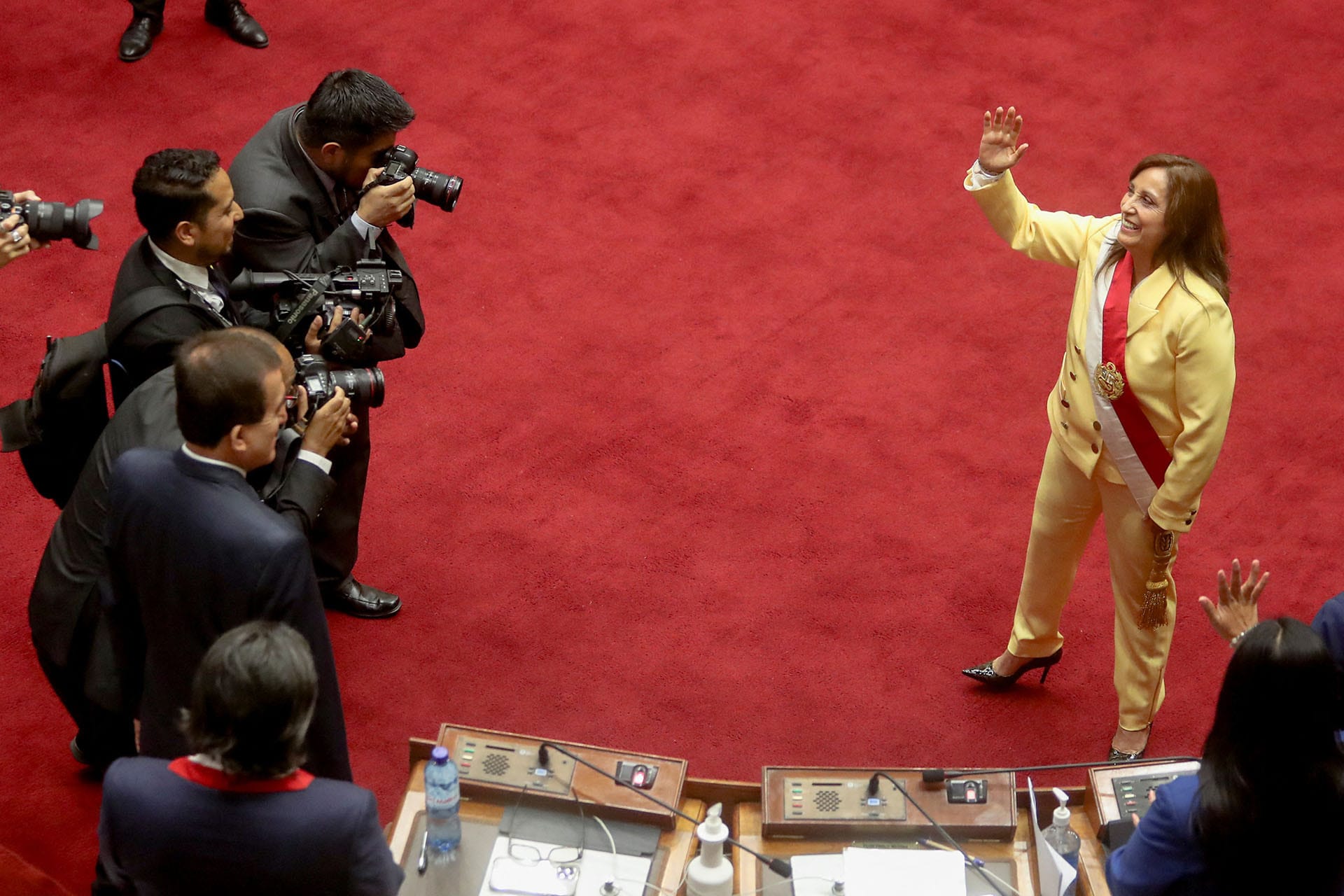
Boluarte, Castillo’s vice president, succeeded Castillo following his impeachment, becoming Peru’s first female president. She was set to serve out the remainder of Castillo’s term until July 2026.
However, her tenure was plagued by low approval ratings, increased crime, and several scandals. The most prominent of these was “Rolexgate,” which involved allegations that Boluarte accepted luxury Rolex watches and other expensive jewelry as bribes. Her administration was also characterized by high levels of public insecurity, with several major anti-government protests resulting in the deaths of dozens of demonstrators. Boluarte survived eight impeachment attempts before Congress ultimately ousted her.
José Jerí
October 2025–February 2026
After Boluarte’s impeachment, president of Congress Jerí ascended to the presidency. He was set to lead Peru until July 2026, when a newly elected president would be inaugurated.
Yet Jerí quickly became embroiled in a scandal stemming from undisclosed, late-night meetings with Chinese businessman Zhihua Yang, who has more than a dozen companies in Peru. Jerí also faced accusations of awarding state contracts to women following after-hours meetings in the presidential palace. Just four months into Jerí’s term, Congress voted 75–24 to remove him, citing “moral incapacity.” He denied any wrongdoing on both counts.
José María Balcázar
February 2026–present
After Jerí was ousted, Congress elected Balcázar, a lawmaker from the left-wing Free Peru Party and a former judge, to serve as interim president until July 28. In his inauguration speech, he warned that democracy in Peru was “not working,” but pledged to ensure a peaceful and transparent electoral process, fight crime, and support the economy.
Balcázar is no stranger to political controversy, either. He was removed from his former position as a provisional member of Peru’s Supreme Court for serious misconduct and expelled from a regional bar association for alleged misappropriation of funds during his tenure as its dean.
Surina Venkat contributed to this article.