Pete Hegseth’s Campaign to Remake the U.S. Military
The secretary of defense’s shake-up of the senior ranks raises hard questions about the future of U.S. military leadership. Carla Anne Robbins turns to the New York Times’ Greg Jaffe to explain who is being pushed out, and why it matters.
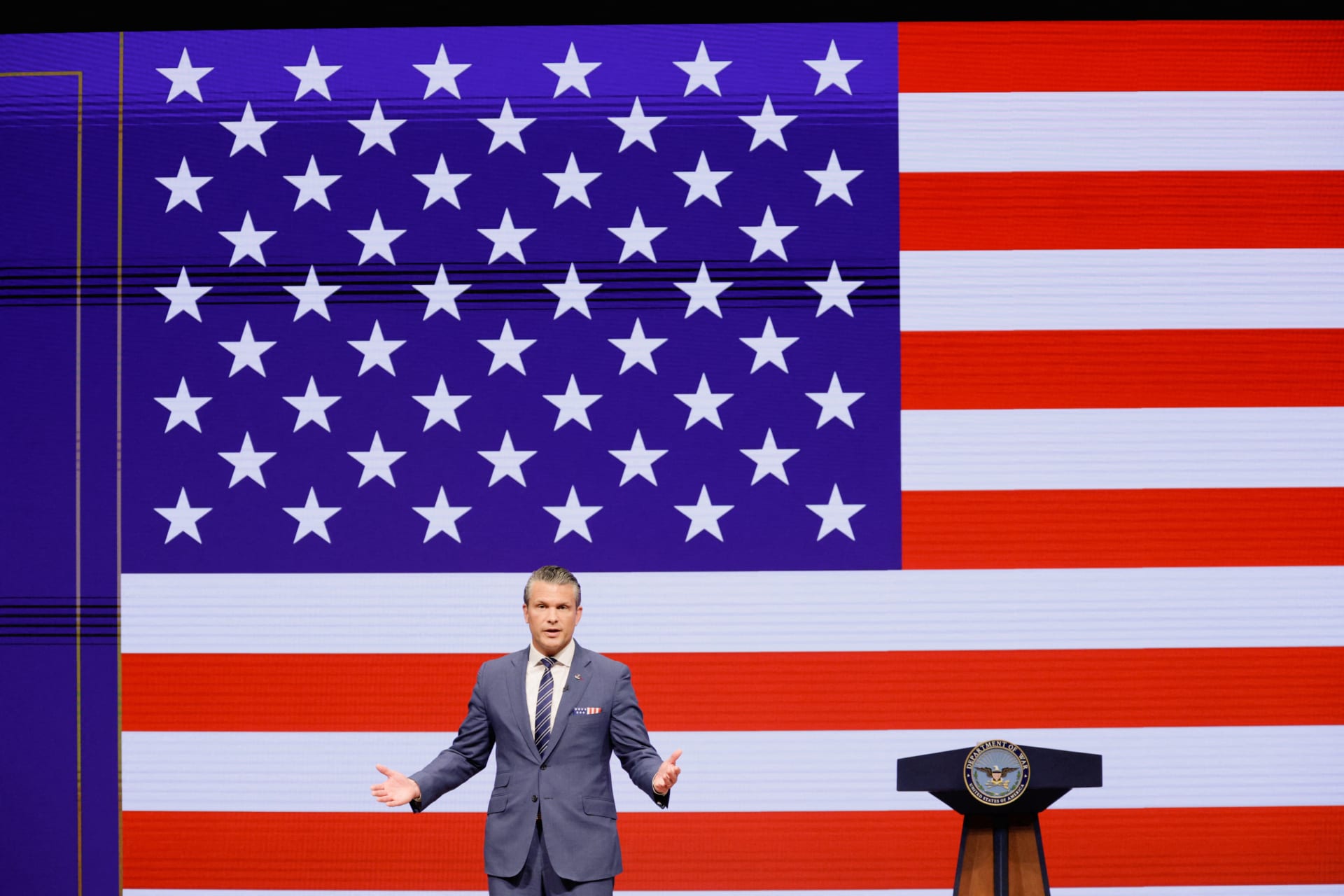
Whether it is doing push-ups on the flight deck of an aircraft carrier or striding across the stage in American flag regalia, Secretary of Defense Pete Hegseth is a showman. His campaign to reshape the U.S. military goes far beyond the performance of a culture war. Since 2025, the secretary, who says that “personnel is policy,” has fired or blocked the promotions of more than eighty generals and admirals, 10 percent of the most senior officers. Almost half were female or minority officers.
In a late September address, Hegseth described his vision to six hundred junior officers and enlisted leaders gathered at the U.S. Marine Corps Base in Quantico, Virginia. “We are no longer the Woke Department or the Weak Department. Simple translation of that: No fatties. No trannies. No beardos. No weirdos. No wimps. No radicals. Just warriors.” The speech was much like the one he gave a year ago to eight hundred top military leaders summoned from all over the globe to Quantico. This one seemed even more out of sync with the United States bogged down in an unpopular war in Iran that has overstretched U.S. military forces and military stocks.
Hegseth appears to have President Donald Trump’s backing, although last week, amid mounting bipartisan criticism, Trump overruled the secretary’s announced decision to livestream the execution of the army officer convicted in the 2009 Fort Hood shooting. On Capitol Hill, Hegseth is having a tougher time, with lawmakers from both parties resisting his budget requests and his nominations for top positions.
Watching this unfold, I wondered about the effect on morale in the ranks and on the quality of U.S. military leadership. Are we losing the best and brightest? If everyone around the planning table looks the same, how can we get the most creative ideas? And will the military leaders who remain provide unvarnished advice?
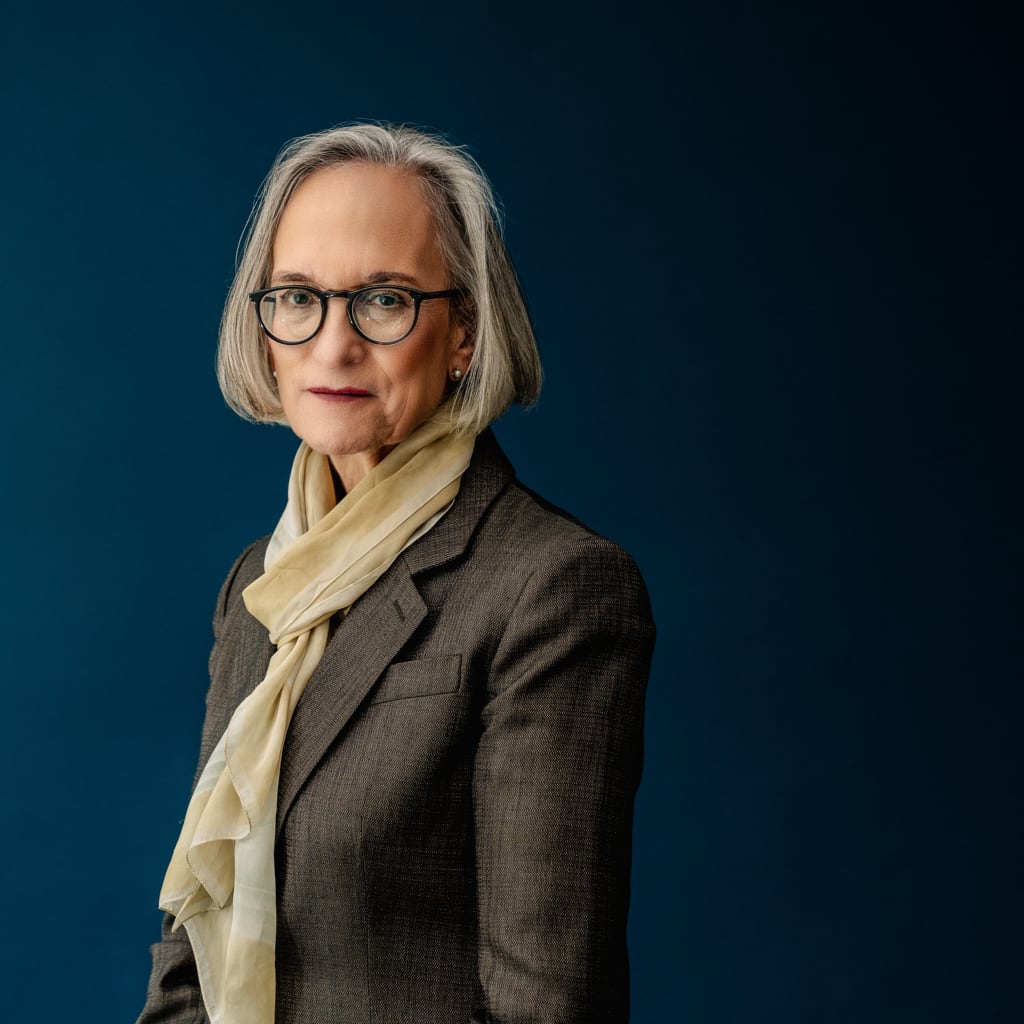
To understand what is happening, I reached out to my longtime colleague and friend Greg Jaffe, who covers the Pentagon for the New York Times and has been at the forefront of reporting on Secretary Hegseth and his impact on the institution. Before joining the Times, Greg spent thirteen years at the Wall Street Journal and fifteen years at the Washington Post, much of that writing about the U.S. military and the wars in Iraq and Afghanistan, frequently embedding with troops. We covered a lot of ground, and I encourage you to listen to our conversation here:
[Audio]
Loading...
0:00 / 0:00
Here are a few takeaways:
- Greg sees several forces behind Hegseth’s drive to remake the U.S. military, starting with his grievances over Iraq and Afghanistan. “Pete Hegseth is what you get when you lose wars,” he says, noting that his complaints about military lawyers tying our hands and not being allowed to be as lethal as we needed to be have echoes of “the military coming out of Vietnam.” He says Hegseth’s embrace of Trump’s politics and his Christian nationalist views are also key. “I think he believes [there’s] a civilizational war that’s happening across the world, in our country, and inside the Pentagon.”
- The most demonstrable impact so far has been felt by the senior ranks, and women have taken a particularly hard hit. In the case of the U.S. Navy, Greg notes, “there will be no women promoted to flag officer rank for the first time in more than a decade.” He describes a vetting process that can trigger scrutiny or disqualify officers for something as routine as giving a Black History Month speech or participating in a panel on women in the military.
- Greg says, “in some ways the military has proven more resilient than I thought.” He points to the fact that prominent leaders who have been ousted, including Gen. CQ Brown, former chairman of the Joint Chiefs of Staff, Gen. Randy George, former army chief of staff, and Adm. Lisa Franchetti, former chief of naval operations, have not spoken out. Greg says he’s “sure they feel betrayed, upset, angry, frustrated.” And he believes that as much as they might “want to defend themselves, they want to defend their institution.”
- He is less optimistic that current leaders are willing to speak truth to power. Greg says that Chairman of the Joint Chiefs Gen. Dan Caine defines his role more narrowly and apparently speaks less bluntly in private than past chairmen, noting “He’ll say it’s not my job to say whether something is a good idea or a bad idea. My job is to tell the civilian leaders whether we can execute.” He contrasts that with the advice President Joe Biden received from top military leaders on the Afghanistan withdrawal. “General Milley, General [Austin S.] Miller, who was the senior commander in Afghanistan at the time, all said that they thought that was a bad idea to go to zero as quickly as we were going to. They were very clear about that internally. And then they executed it, as is their job.” Greg thinks Gen. Caine “has factored in the need to survive into his calculations.”
- Congress may be Hegseth’s biggest obstacle, with lawmakers from both parties resisting his personnel nominations and his budget requests. One of their biggest complaints is that it’s “really hard to get straight answers from Pete Hegseth,” whether it’s about munition stockpiles, damage to U.S. bases from the Iran war, or how the Pentagon plans to spend the money it is asking for. Greg notes, “there’s no army chief of staff because Secretary Hegseth can’t get one confirmed. There’s no army secretary because Hegseth’s choice for the job, Sean Parnell, who’s the current head of public affairs in the Pentagon, is not confirmable. There’s no navy secretary. And I think that’s largely because the acting navy secretary, Hung Cao,” doesn’t have the votes.
We also talked about who’s in charge of vetting the officers getting promoted and fired, their baggage, and how much credit the so-called war on woke should get for the rebound in recruitment numbers. I hope you will listen.
This work represents the views solely of the author(s). The Council on Foreign Relations is an independent, nonpartisan membership organization, think tank, and publisher, and takes no institutional positions on matters of policy.