The 1978 Panama Canal Treaties
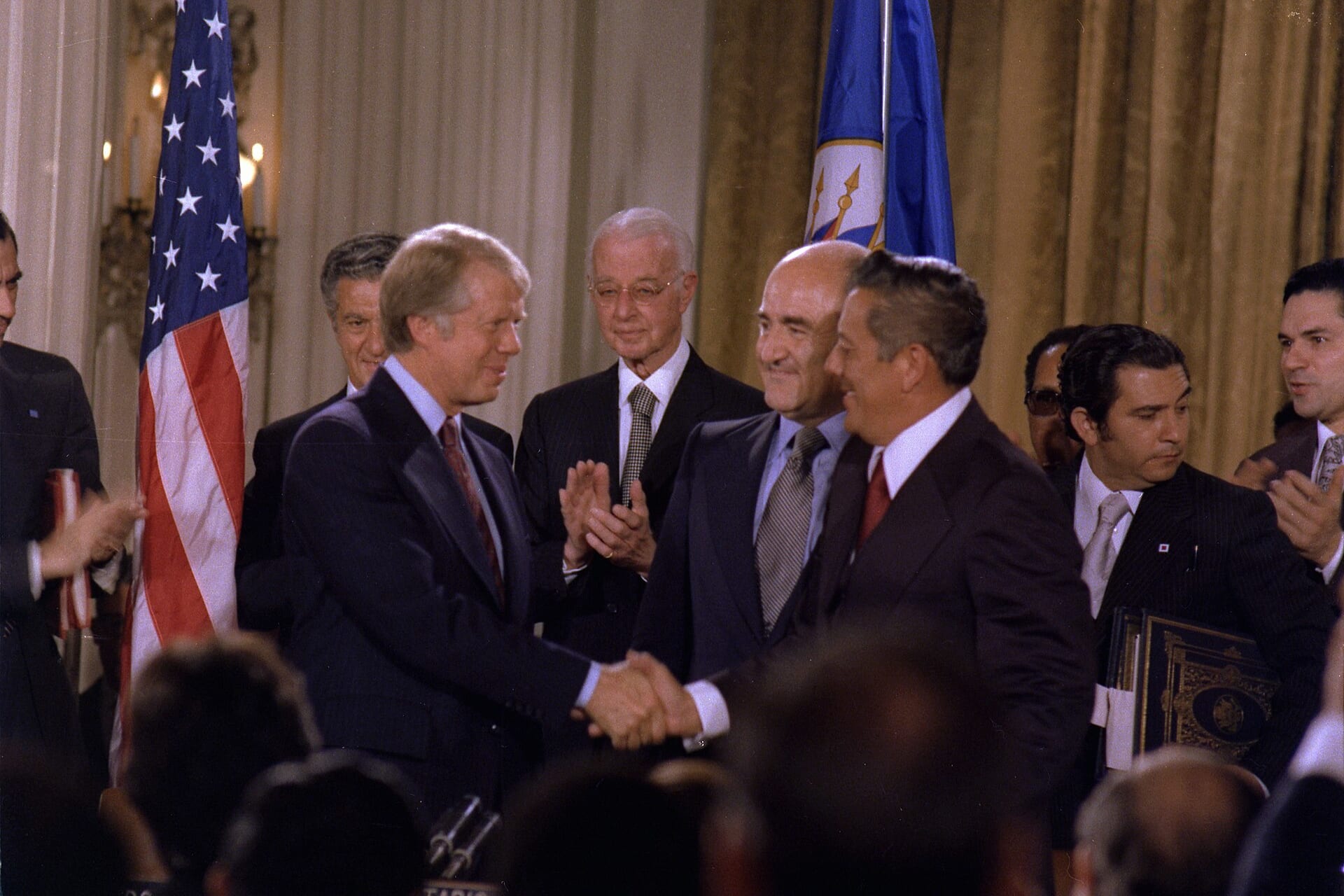
President Jimmy Carter overcame intense domestic opposition to persuade the Senate to approve two treaties ceding control of the Panama Canal, resolving a growing irritant in U.S. relations with Latin America.
By experts and staff
- Published
 James M. LindsayCFR ExpertMary and David Boies Distinguished Senior Fellow in U.S. Foreign Policy
In an address to a joint session of Congress last March, President Donald Trump announced that “my administration will be reclaiming the Panama Canal.” While Trump has done little over the past year to make good on that pledge, his remarks reflect the fact that the United States agreed in two treaties ratified in 1978 to cede control of the canal it built to Panama. On March 16, 1978, the U.S. Senate approved the resolution of ratification for the Treaty Concerning the Permanent Neutrality and Operation of the Panama Canal. A month later, it approved the Panama Canal Treaty. Both votes were unpopular at the time with many Americans, and the treaties passed only after considerable political wrangling. But the decision to hand over control of the canal resolved a long-standing and growing irritant in U.S. relations with Latin America that was only likely to worsen with time. For that reason, a survey CFR conducted of members of the Society for Historians of American Foreign Relations ranked the handover of the Panama Canal as the twenty-ninth best decision in the history of U.S. foreign policy.
A Source of Controversy
The Panama Canal Zone, which cut a ten-mile-wide path across the middle of Panama, was a source of controversy in Latin America from its creation. Theodore Roosevelt had initially negotiated a treaty with Colombia to build a canal across the Panamanian isthmus, which was then part of Colombia. The treaty heavily favored the United States, however, and the Colombian Senate rejected it. Roosevelt decided that there was more than one way to skin a cat. He encouraged Panamanian separatists to revolt. The rebels succeeded, in part because the U.S. Navy prevented Colombian troops from landing in Panama to put down the uprising. Roosevelt then struck a deal with the new government to build a canal.
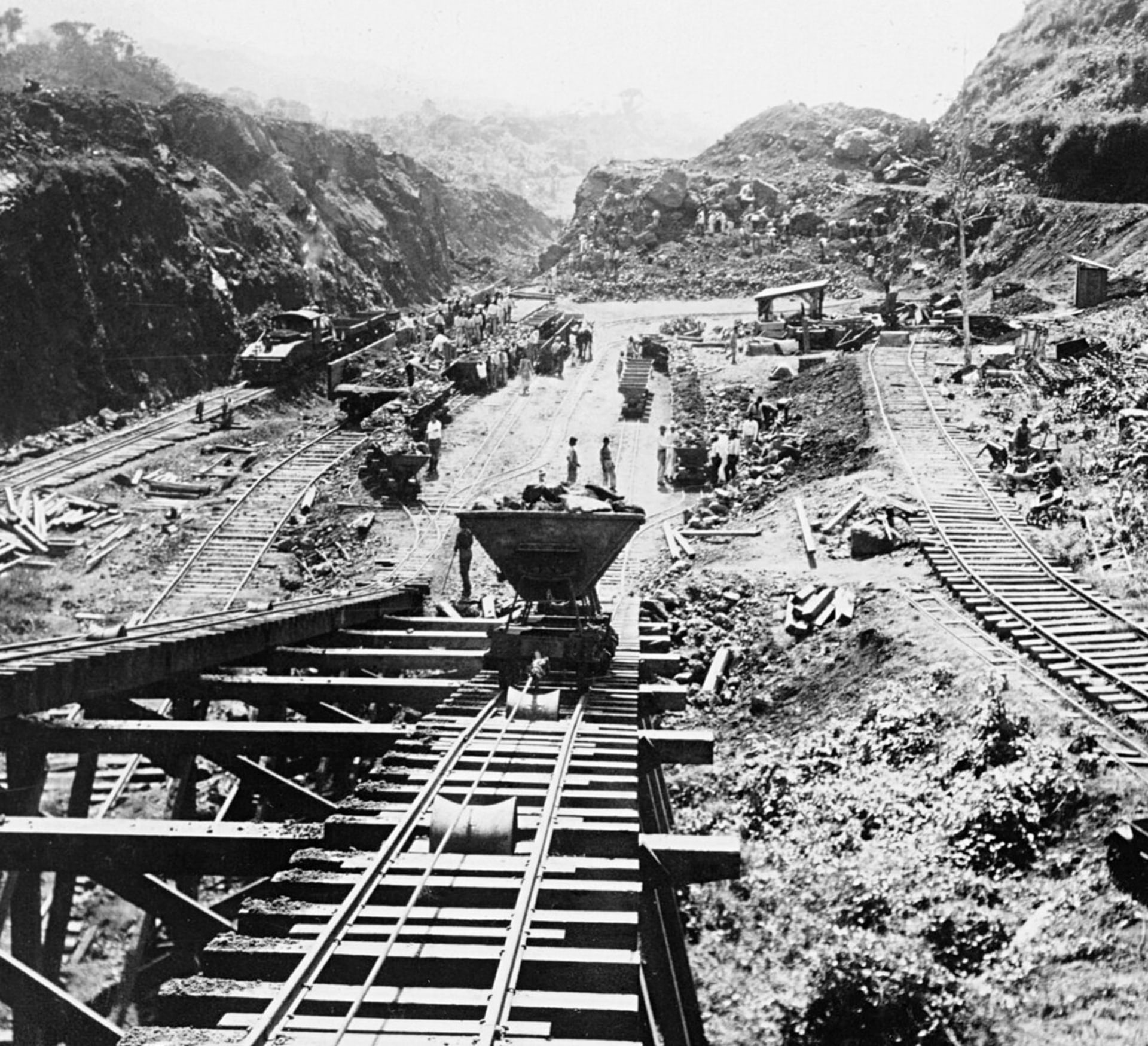
The Panama Canal was a point of great pride for the United States, but trouble was brewing. In 1964, anti-American riots in Panama left three Americans and twenty-three Panamanians dead. The violence was triggered by reports that U.S. high school students in the Canal Zone had desecrated a Panamanian flag. But the deeper issue was that many Panamanians saw U.S. control of the canal as an affront to Panamanian sovereignty—“a foreign flag piercing its own heart,” as a later Panamanian leader, General Omar Torrijos, would put it.
Negotiating a New Deal
The Johnson administration and then the Nixon administration talked with Panama about writing a new treaty. But those negotiations had failed to produce an agreement by the time President Jimmy Carter came to office in 1977. So, it fell to Carter to strike a final deal. Although he had argued earlier in his career against ceding control of the canal to Panama, he had since changed his mind. He no longer saw the canal as vital to U.S. strategic and trade interests. He worried instead that a failure to reach an agreement with Panama would jeopardize U.S. relations across Latin America.
Carter moved quickly. In August 1977, U.S. and Panamanian negotiators announced an agreement. The deal consisted of two treaties. One, the Panama Canal Treaty, terminated the original 1903 treaty and established a process for handing control over the canal to Panama by December 31, 1999. The other treaty, usually referred to as the “Neutrality Treaty,” gave the United States a right in perpetuity to protect the canal’s “neutrality” to ensure that any and all countries could use it.
[Video: https://www.youtube.com/watch?v=0DxpA3qJKPU]

Backlash at Home
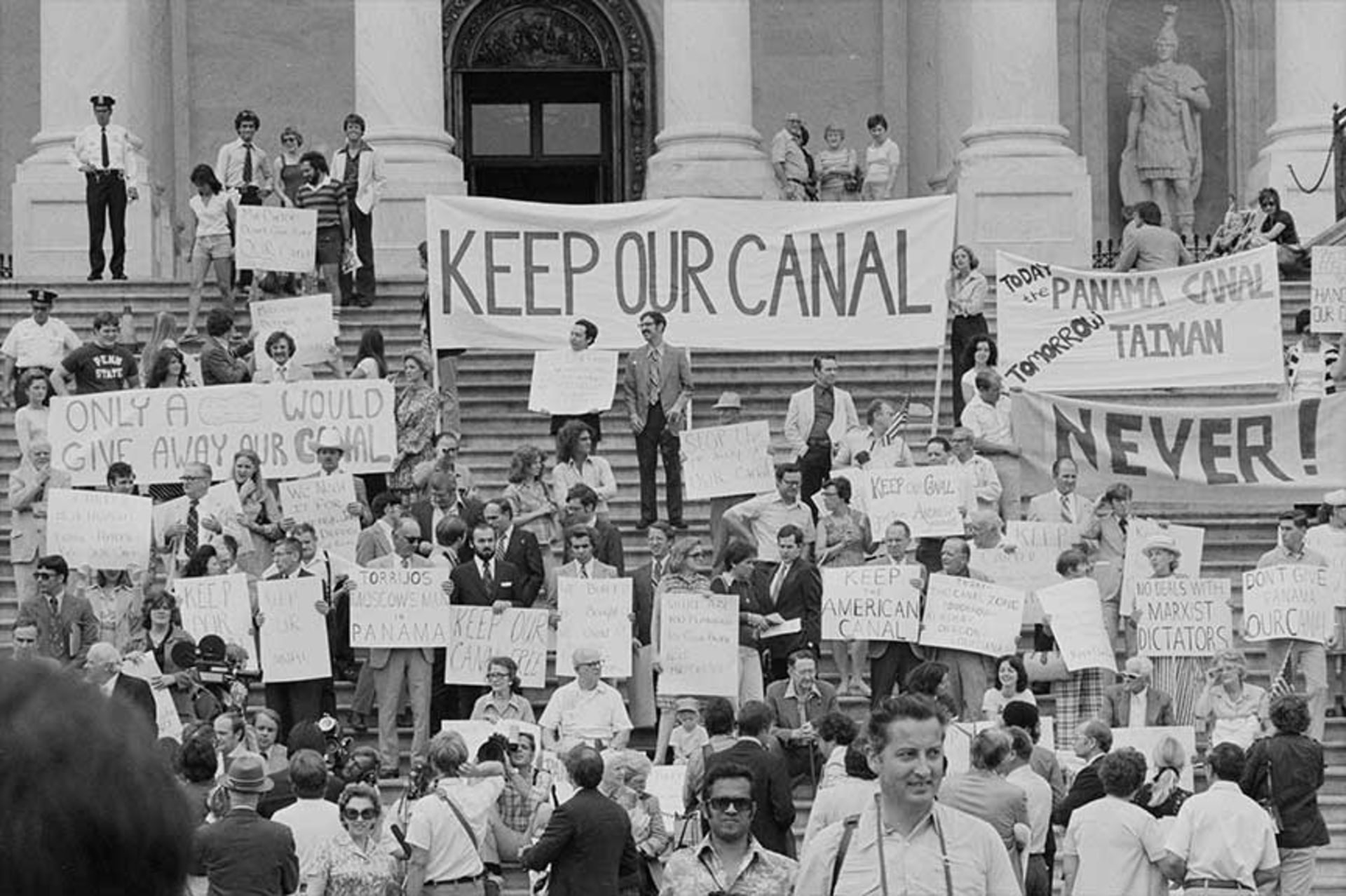
Leaders across Latin America praised the deal for resolving a budding crisis in the region. Unfortunately for Carter, the Senate and not Latin American leaders would decide whether the treaties would be implemented. And senators would face intense pressure from the pro-canal lobby in the United States to kill the treaties. Coming as they did just two years after the ignominious U.S. withdrawal from Vietnam, critics accused Carter of appeasement and leading America’s “retreat” from the world.
A prominent voice for the anti-treaty forces was Republican presidential hopeful Ronald Reagan. For the Gipper, the Canal Zone was “sovereign United States territory just the same as Alaska. . . and the states that were carved out of the Louisiana Purchase.” Or as he liked to say in a line that brought his conservative audiences to their feet: “We bought it, we paid for it, it’s ours, and we’re going to keep it.” Reagan’s fellow California Republican, Sen. S. I. Hayakawa, had a slightly different take—America had a right to the canal because “we stole it fair and square.”
As a matter of law and history, Reagan and Hayakawa had it wrong. The Canal Zone was not sovereign U.S. territory, whether taken fairly or unfairly. As Ellsworth Bunker, the distinguished U.S. diplomat who helped to negotiate the treaty, argued:
We bought Louisiana; we bought Alaska. In Panama, we bought not territory, but rights . . . . It is clear that under law we do not have sovereignty in Panama.
Whatever the facts, most Americans sided with Reagan and Hayakawa. A poll taken in September 1977 found that just 23 percent of Americans supported the treaties, while 50 percent opposed them. The breadth and depth of opposition to the treaties unnerved some senators, perhaps none more so than Edward Zorinsky (D-Neb.) He told Carter that while he was personally inclined to support the treaties, most of his fellow Nebraskans were not. Caught between his own policy preferences and those of his constituents, he announced that he would vote for the treaties if the administration could persuade Nebraskans that it was the right thing to do.
Building Public Support
Worried about where public opinion would lead Senator Zorinksy and others, Carter set out to make a public case for the two treaties. He gave a national address defending them. The Committee of Americans for the Canal Treaties, composed of Cold War luminaries, influential labor leaders, and other opinion shapers, was formed to push for Senate passage. Major corporations that worried about what would happen to their investments in Latin America if the treaties didn’t pass, as well as liberal religious groups seeking to wipe away the stain of “colonialism,” also joined the fray.
Carter also got a surprising boost from an unlikely source in Hollywood, Marion Robert Morrison. Better known to the world as John Wayne—yes, that John Wayne, the star of Stagecoach, The Searchers, The Green Berets, and True Grit, among other classic films—he had become friends with the Panamanian leader, General Torrijos. And Wayne did not take kindly to Reagan criticizing his friend. He publicly challenged the Gipper “point by God damn point in the Treaty where you are misinforming people.”
Carter’s team at times took a page out of the John Wayne macho handbook in defending the treaties. When Carter’s national security adviser Zbigniew Brzezinski was asked how the United States would respond if Panama closed the canal on the pretext of conducting repairs, his response was blunt: “According to the provisions of the Neutrality Treaty, we will move in and close down the Panamanian government for repairs.” (Brzezinski’s swagger was poorly received in Panama City.)
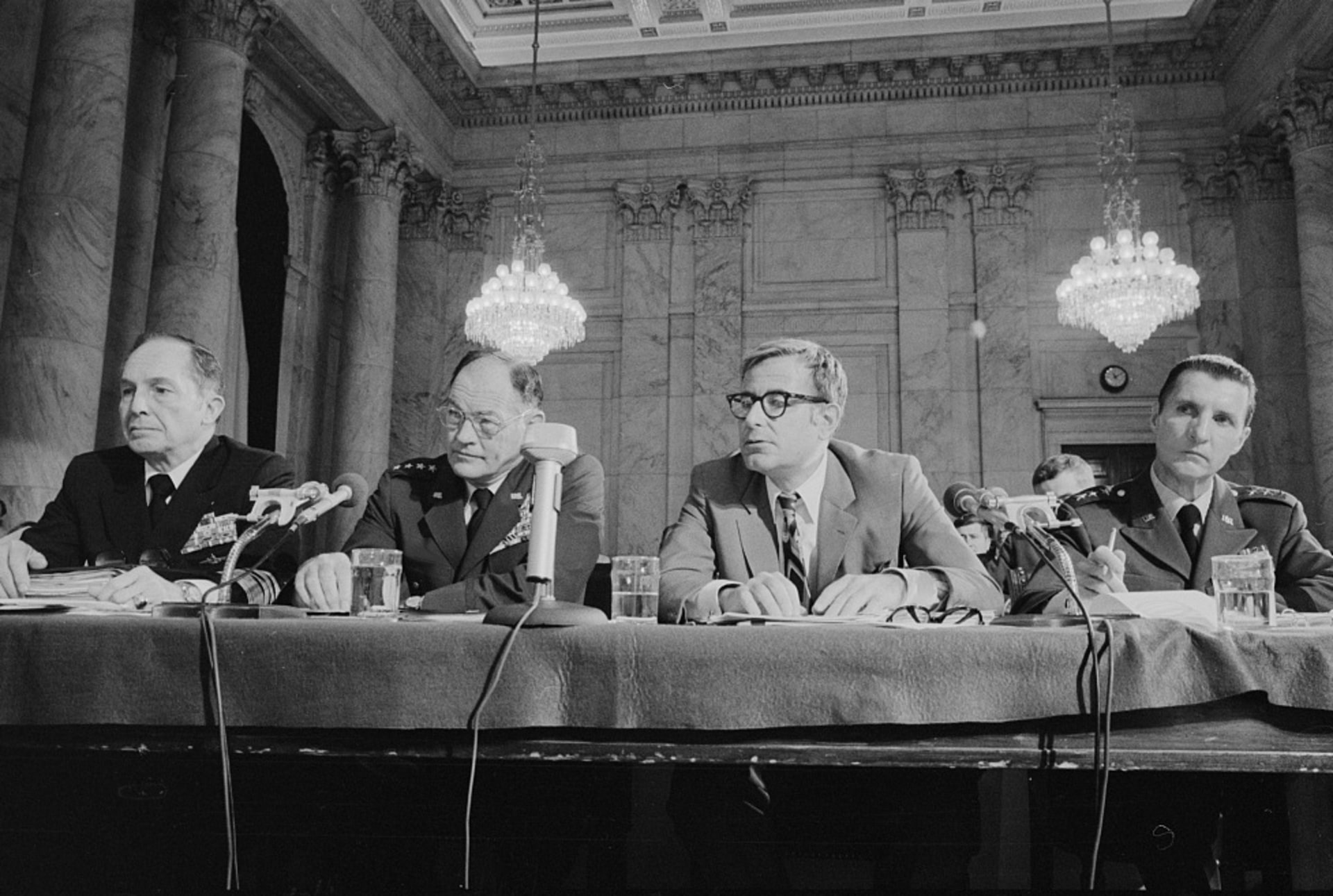
The Senate Debates
The Senate took up the canal treaties in March 1978. Unlike Woodrow Wilson six decades earlier with the Treaty of Versailles, Carter was willing to let senators revise his handiwork—and even conduct their own negotiations with Panama’s leader. As the historian George Herring tells the story:
The key to the administration’s eventual narrow victory was the passage of two amendments [to the Neutrality Treaty] carefully crafted and shepherded through the upper house by Democrat Robert Byrd of West Virginia and Republican Howard Baker of Tennessee. The first gave the United States explicit rights after the year 2000 to intervene militarily to keep the canal open and for U.S. ships to move to the head of the line in times of crisis. Originally a memorandum of understanding, this amendment was formally incorporated into the treaty after quite extraordinary negotiations between Senator Baker and Torrijos.
On March 16, 1978, the Senate voted 68 to 32 to approve the Neutrality Treaty, just one vote more than the two-thirds majority needed. (Polls showed that Nebraskans opposed the treaty. Senator Zorinsky kept his word and voted no.) Along the way, the Senate rejected seventy-seven amendments, most of which were designed to make the treaty unacceptable to Panama. A month later, the Senate passed the Panama Canal Treaty.
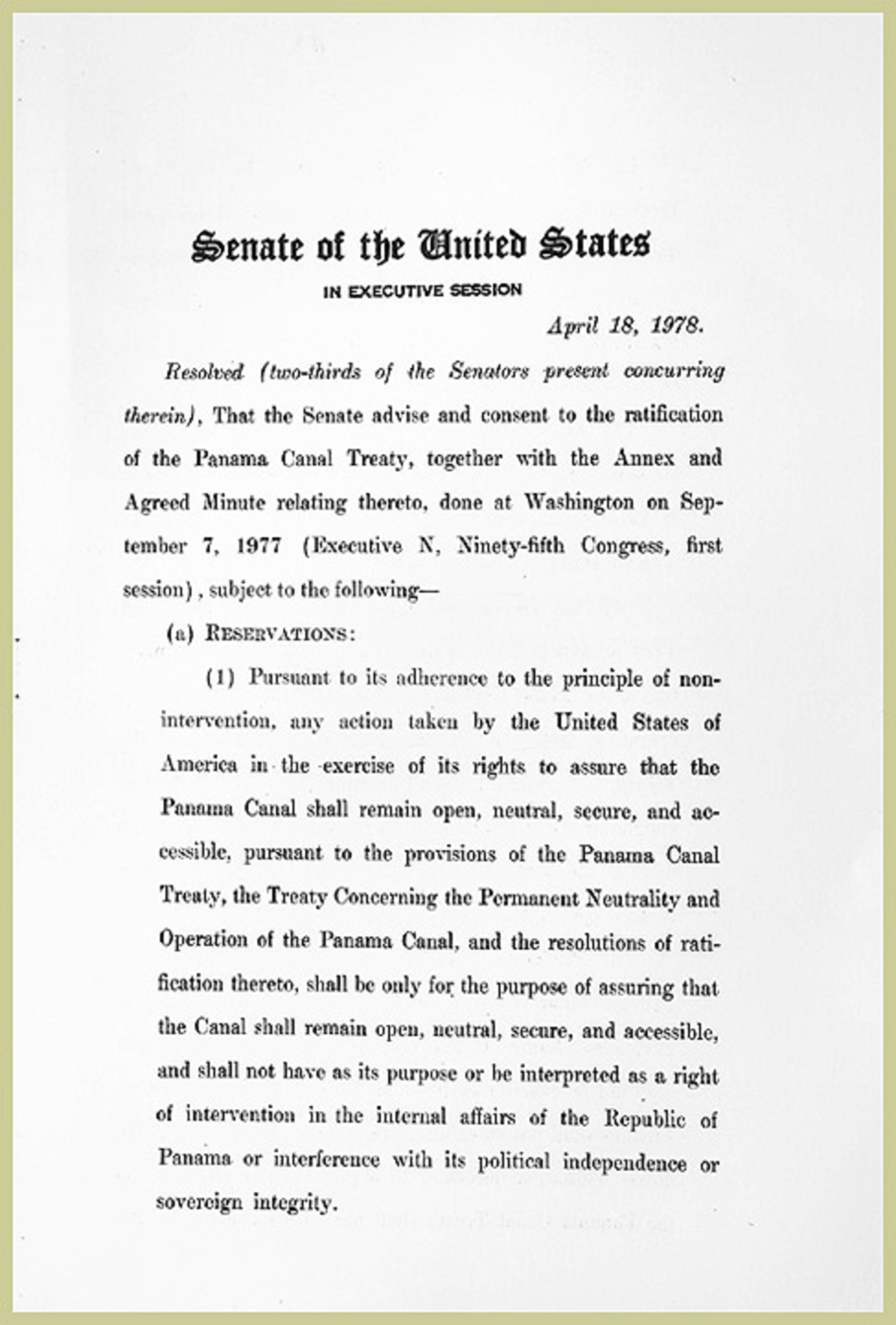
Unfortunately for Carter, his political problems did not end with the Senate’s consent to the two resolutions of ratification. He also had to persuade Congress to appropriate funds to implement the treaties. This gave members of the House of Representatives an opportunity to vent their spleen over the fact that the Constitution excludes them from treaty-making. Rep. John Dingell (D-Mich.) berated the Carter administration officials sent to Capitol Hill to defend the funding request:
We in the House are tired of you people in the State Department going to your tea-sipping friends in the Senate. Now you good folks come up here and say you need legislation [to implement the treaties] after you ignored the House. If you expect me to vote for this travesty, you’re sorely in error.
When the conference committee set up to reconcile differences between the House and Senate versions of the implementing legislation issued its first report on the bill, the House rejected it. The House reversed itself only after Carter launched an intensive lobbying effort that involved former secretary of state Henry Kissinger and other Republican notables.
Lessons Learned
The battle over the Panama Canal treaties illustrates three lessons about the politics of U.S. foreign policy. One is that while presidents are often tempted to cut members of Congress out of foreign policy decision-making, their success often depends on involving them. Carter’s decision to work with senators, and particularly with Senator Baker, was critical to Senate approval of both treaties.
A second lesson is that presidents sometimes win over the Senate even when they fail to win over the American public. Polls conducted in the spring of 1978 showed that Carter’s public relations effort had not moved public opinion. A majority of Americans continued to oppose the treaties.
A third lesson is that prevailing legislatively does not mean that a president necessarily prevails politically. Carter later lamented that “some fine members of Congress had to pay with their political careers for their votes” on the canal treaties. But in many ways, he did as well. He was right to cede control of the Panama Canal. Had the United States insisted on retaining control, the issue would have become a festering sore in U.S. relations with Latin America. Instead, with the ratification of the two treaties, the canal disappeared as an issue in U.S. politics for more than four decades. Nonetheless, Carter reaped few political benefits from his victory. Indeed, it likely hardened the determination of his opponents to make him a one-term president.
The United States celebrates its 250th anniversary in 2026. To mark that milestone, I am resurfacing essays I have written over the years about major events in U.S. foreign policy. A version of this essay was published on March 16, 2011.
Oscar Berry assisted in the preparation of this article.