Russia’s Wary Embrace of Trump’s Transatlantic Disruption
The Kremlin is greeting U.S.-Europe tensions over Greenland as possibly helping to achieve its long-sought goal of weakening NATO, but Donald Trump’s second administration has also frustrated Russian plans on Ukraine and other fronts.
Thomas Graham is a distinguished fellow at the Council on Foreign Relations.
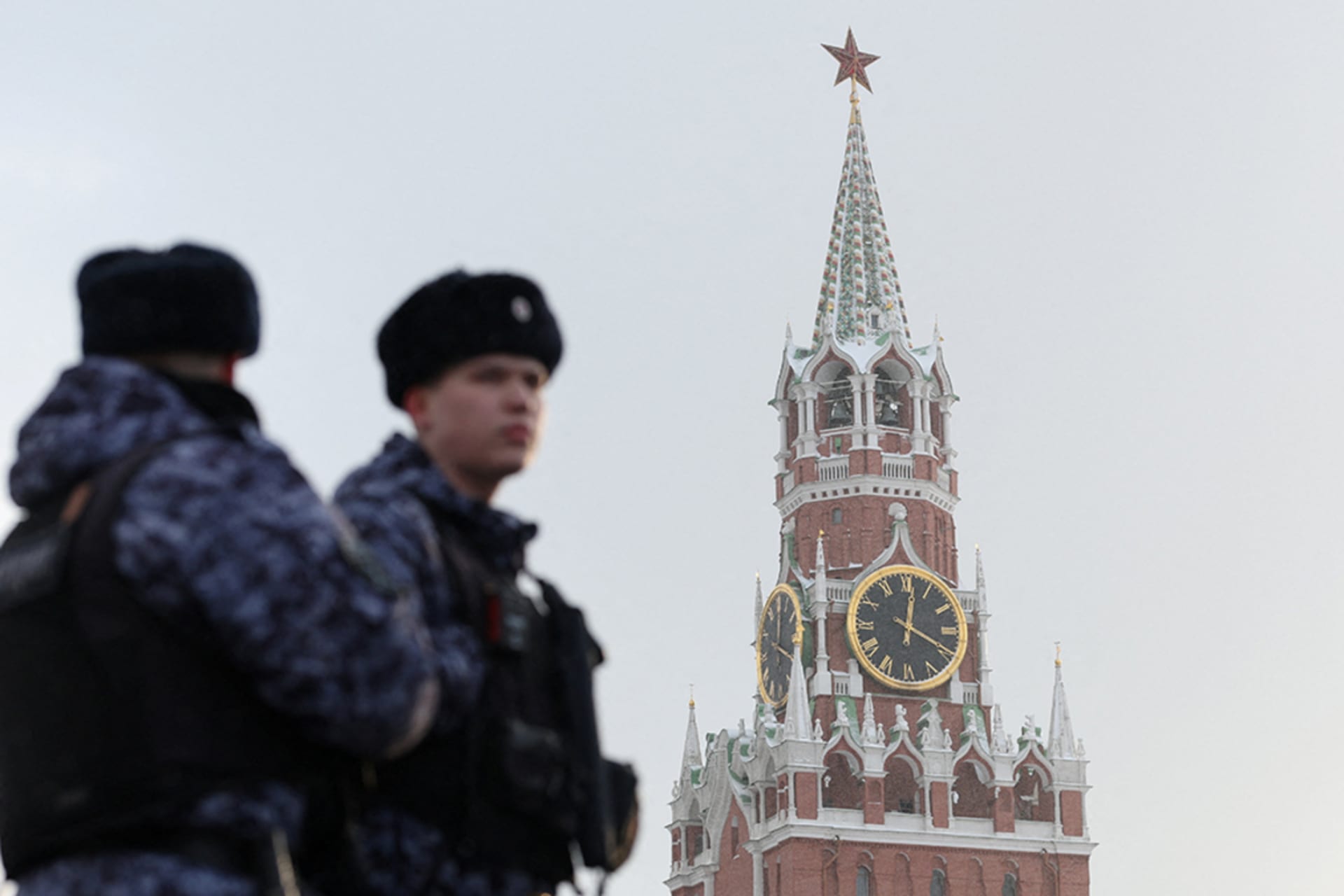
The Kremlin certainly welcomes the unprecedented tensions between the United States and its European allies over Greenland. By demanding that Denmark cede the Arctic island to the United States, U.S. President Donald Trump could produce an outcome that Russia has pursued for eighty years to no avail—a rupture in the Atlantic community and the demise of NATO. Trump’s agreement with NATO Secretary-General Mark Rutte on a framework for resolving the dispute may have defused the crisis for the moment. But European debate over the credibility of the U.S. commitment to the continent’s defense will not abate.
At the same time, Russian President Vladimir Putin’s muted response to the Greenland crisis diplomacy reflects caution over how to deal with Trump’s unpredictable and unexpectedly assertive second-term foreign policy. He has not gained the quick, Russia-favored deal to end the Ukraine war and has seen U.S. actions directly undermine Russian influence, including in the Middle East and Venezuela. Still, the Kremlin likely retains hopes of a U.S.-Russia thaw fostered by Trump that would benefit Russia’s strategic position.
Russia’s Trump Test
Putin faces a challenge familiar to other world leaders: how to manage the mercurial American president. The Kremlin has concluded that Trump is better than any plausible alternative as the U.S. leader, especially on the issue of utmost importance to Putin: Ukraine.
While many Western observers bemoan what they consider to be Trump unseemly catering to Putin, from the Kremlin’s standpoint, he has turned out to be a decidedly mixed bag. They originally thought that Putin and Trump would agree on a resolution of the Russia-Ukraine war, which the U.S. president would then impose on Kyiv. Trump has also allowed the Europeans to insert themselves into the negotiations in ways that have needlessly dragged them out, in the Kremlin’s view. Similarly, the Kremlin anticipated a rapid normalization of relations, which would have brought some sanctions relief, U.S. investment in Russian critical strategic sectors, and validation of Russia as a great power. That has not yet occurred.
Along the way, Trump bombed Russia’s ally Iran and more broadly eroded Russia’s position in the Middle East. He inserted himself into the conflict between Armenia and Azerbaijan, diminishing Moscow’s stature. More recently, he captured Russia’s partner and Venezuelan leader Nicolás Maduro; seized a Russian-flagged tanker in the North Atlantic; and threatened Cuba, a longstanding Russian ally; and is once again exerting pressure on Iran’s hardline leaders. Russia’s foreign ministry has, as expected, criticized Washington’s aggressive actions—but in muted tones. Putin, meanwhile, has for the most part remained silent, preferring in his public comments to stroke Trump’s ego.
The Trump-Putin Relationship
So far, this approach has served the Kremlin well. With rare exception—the decision last fall to levy sanctions on Russia’s two remaining unsanctioned oil majors is one—Trump has been reluctant to pressure Putin to agree to a ceasefire or back off his maximal demands. His periodic expressions of outrage at Russia’s devastating aerial assault on Ukraine’s critical infrastructure and major cities have carried no serious consequences for Putin. Indeed, Trump still appears to believe that Ukrainian President Volodymyr Zelenskyy, not Putin, remains the main obstacle to peace.
As the Greenland crisis mounted between U.S. and NATO allies in recent weeks, many Russian commentators could not resist the temptation to gloat. Russian Foreign Minister Sergey Lavrov noted that Crimea was as strategically important to Russia as Greenland was to the United States. Putin was more reserved. In his first public comments, he dismissed the dispute as something that did not concern Russia. He would, he said, let the United States and Denmark deal with it. He could not, however, resist suggesting a reasonable purchase price for Greenland—$200–250 million—based on what Washington had paid the Russian Empire for Alaska in 1867. But he obeyed one cardinal rule of competition and conflict: Never interfere with the enemy while he is destroying himself.
Even though Trump named the threat from Russia as one reason why the United States needed to control Greenland, the reality—as Putin likely understands—is that Washington is not unduly alarmed by Russia’s growing military presence in the High North. Two concerns are driving the buildup: nuclear deterrence and coastal defense.
Russia, Greenland and Arctic Security
For more than a decade, Russia has been returning to and refurbishing the military sites in the Arctic that it abandoned in the first decade after the end of the Cold War. These measures do not pose a direct threat to the United States despite the burgeoning tension. Quite the contrary, to the extent that this buildup increases Moscow’s confidence that it can monitor U.S. nuclear activities in the High North and detect preparations for a nuclear strike, while enhancing the survivability of its nuclear deterrent, it fortifies strategic stability. That benefits both countries.
Russia has also been building up its security presence to deal with the consequences of global warming. The rapidly melting ice cap has created a situation where, for the first time in history, Russia has to actively defend its northern border, beyond a small segment surrounding the White Sea. It also needs to improve its ability to provide adequate security for the potentially lucrative Northern Sea Route, which reduces the time to ship goods between Europe and East Asia by several days, as compared to the route through the Suez Canal, as well as for companies engaged in exploiting the Arctic’s rich resources. Such measures pose no threat to the United States, while they could prove beneficial if American companies ever return to develop those resources in the years after a settlement of the Russia-Ukraine war.
To be sure, the United States will monitor Russia’s security measures in the Arctic quite closely, as it has for decades, and be prepared to respond vigorously to any steps that suggest aggressive intent. But at least for the time being, little does. Moscow has more than enough resources to develop within its own vast exclusive economic zone. It has no outstanding maritime border disputes in the region, and it is pursuing its unresolved claim to a share of the seabed as an extension of its continental shelf through the appropriate international mechanism established under the UN Convention on the Law of the Seas. Trump’s claims to the contrary notwithstanding, Russia has no designs on Greenland.
Rather, it is Beijing’s operations, including a recent submarine excursions under the polar ice, that alarm Washington—not Moscow. Combined with China’s rapid modernization and expansion of its nuclear arsenal, they raise serious questions about China’s intent, especially since, unlike Russia, China is not an Arctic power.
In these circumstances, Putin will be reluctant to do anything that would suggest Russia challenging the United States in or around Greenland. Instead, he likely hopes this dispute will distract attention from Ukraine and erode the Western unity of purpose on the war, with regard to security guarantees and Ukraine’s post-conflict reconstruction, that has been on display in recent weeks. Putin will hardly object should Trump’s growing anger at the Europeans over Greenland only fuel his desire to draw closer to Russia.
This work represents the views and opinions solely of the author. The Council on Foreign Relations is an independent, nonpartisan membership organization, think tank, and publisher, and takes no institutional positions on matters of policy.