South Africa’s Cabinet Reshuffle Reflects Leadership Crisis
President Jacob Zuma’s cabinet reshuffle has exposed growing fissures within the ruling African National Congress, writes CFR’s John Campbell.
By experts and staff
- Published
- John CampbellRalph Bunche Senior Fellow for Africa Policy Studies
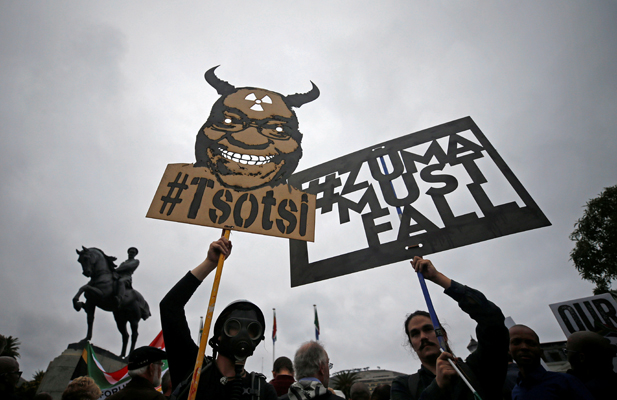
South African President Jacob Zuma has split the governing African National Congress (ANC) and risks a parliamentary no-confidence motion that could bring down his administration. This intraparty division followed his late-night cabinet reshuffle on March 30, in which he removed nine cabinet ministers, including the well-regarded finance minister, Pravin Gordhan. While South African presidents have the authority to remove anyone in the cabinet, by tradition they first consult their party’s leadership. Zuma, however, made these cabinet decisions unilaterally. The reshuffle came as Zuma has grown weaker within the ANC, which has resulted, in part, from recent judicial rulings against his policies and corruption charges that have been leveled against him and his close associates. Zuma presented the reshuffle as a shift toward a “pro-poor” policy, but it appears it was driven by his effort to regain control of the party and ensure he can handpick his successor.
In the aftermath of the cabinet reshuffle, the Democratic Alliance (DA) and the Economic Freedom Fighters (EFF), the two largest opposition parties, called for the vote of no confidence. It would require a simple majority among the four hundred members of the National Assembly, the country’s parliament. Of them, 249 belong to the ANC.