The Strait of Hormuz Already Faces a Tough Recovery. Now Trump’s Iran Deal Is Unraveling.
The U.S.-Iran ceasefire is on the verge of collapse, and with it any prospect of restoring normal traffic through the Strait of Hormuz. Even if the agreement holds, transit fees, sea mines, billions in infrastructure damage, and deep regional mistrust pose significant obstacles to a genuine recovery.
By experts and staff
- Published
 Edward FishmanCFR ExpertSenior Fellow and Director of the Maurice R. Greenberg Center for Geoeconomics
 Clara GillispieCFR ExpertSenior Fellow for Climate and Energy
 Elisa EwersCFR ExpertSenior Fellow for Middle East Studies
 Max BootCFR ExpertJeane J. Kirkpatrick Senior Fellow for National Security Studies
 Sam VigerskyCFR ExpertInternational Affairs Fellow
The fragile U.S.-Iran cease-fire appeared to be in danger on Wednesday as the two sides exchanged fresh strikes and President Donald Trump threatened to end the Memorandum of Understanding (MOU). U.S. forces attacked targets in Iran and the White House reimposed sanctions on Iranian oil sales on Tuesday. Iran’s Islamic Revolutionary Guard Corps responded by firing at U.S. military sites in Bahrain and Kuwait.
“To me, I think it’s over,” Trump said about the agreement during the NATO summit in Ankara on Wednesday. He later claimed that further strikes were imminent. “We hit them [Iran] very hard last night,” he told reporters, “and we’re going to hit them hard again tonight.”
The collapse of the sixty-day MOU—signed just over three weeks ago to reopen the Strait of Hormuz and lay the groundwork for a permanent end to the war—would deal a severe blow to efforts to restore normal shipping through the waterway. But reopening the strait, through which roughly 20 percent of the world’s oil and liquefied natural gas (LNG) transits, is just the first step. Several other formidable roadblocks—continued aggression between the United States and Iran, transit fees, sea mines, infrastructure damage, and deep mistrust in the region—stand between the strait’s nominal reopening and a genuine recovery of global energy markets after one hundred days of disruption.
Below, five CFR experts examine the MOU and the obstacles that remain for the Strait of Hormuz—even if the agreement ultimately holds.
Iran Won the Strait of Hormuz. But Can It Keep It?
Edward Fishman is a leading authority on economic statecraft and the author of Chokepoints: American Power in the Age of Economic Warfare.
In the opening weeks of the U.S.-Israeli war against Iran, the White House’s aims shifted by the day, from regime change to denuclearization to demilitarization. But by the time President Donald Trump signed a memorandum of understanding (MOU) to end the war on June 17, his overriding objective was narrower and more urgent: reopening the Strait of Hormuz.
Iran’s monthslong closure of the waterway had rapidly depleted oil stockpiles around the world, and analysts warned of a sharp spike in prices unless traffic through the strait resumed. The MOU is thus best understood less as a deal that addresses Iran’s nuclear ambitions or military capabilities than as a Hormuz deal: the United States agreed to provide Iran with sanctions relief in exchange for Iran allowing commercial vessels safe passage through the strait.
Yet Iran has no intention of restoring the Strait of Hormuz to the status quo ante, when it functioned as a free and open international waterway. The MOU stipulates that Iran will allow ships to pass “with no charge for 60 days only” (emphasis added) and that it will work with Oman to “define the future administration and maritime services in the Strait of Hormuz.” Tehran has seized on this language to claim an ongoing role in regulating traffic through the strait. It has already sought to enforce that claim, striking multiple commercial vessels with drones and missiles in recent weeks when they attempted to transit without complying with Iranian protocols. These strikes have been so disruptive that the Trump administration reinstated sanctions on Iran’s oil sales on Tuesday.
Controlling Hormuz offers Iran a deterrent and a source of revenue. By closing the strait, Tehran has demonstrated it can ward off the world’s most powerful military. By monetizing it, Iranian officials believe they could generate up to $40 billion a year—roughly the same amount as the country’s annual oil export revenues in recent years. Those are overwhelming incentives to retain control. It’s little wonder that, since the MOU was signed, Iran has moved quickly to institutionalize that control, working with Oman on arrangements for the strait’s future administration. Whether the eventual mechanism comes in the form of a service fee, an insurance requirement, or a charge for maritime safety, Tehran clearly intends to profit.
Secretary of State Marco Rubio has rightly rejected this outcome, warning that it would set a dangerous precedent. The best strategy for the United States could be patience, avoiding a return to all-out war and buying time to rally the world to oppose Iran’s claims and invest in assets that weaken Hormuz as a chokepoint. Oil prices have plummeted to near prewar levels, and as commercial stockpiles are replenished, Iran’s leverage will diminish. If Tehran pushes the envelope too far, continually striking commercial vessels and demanding exorbitant fees, it will only accelerate other countries’ efforts to reduce their reliance on the strait by building bypass pipelines, increasing storage capacity and stockpiles, and adopting alternative energy sources.
Iran may emerge from this war in control of the Strait of Hormuz. But if it overplays its hand, it could devalue the very prize it has won.
The Strait Remains a Military Minefield Despite Trump’s Iran Deal
Max Boot is a historian, bestselling author, and foreign policy analyst. His latest book, a biography of Ronald Reagan titled Reagan: His Life and Legend, is his third New York Times bestseller.
Why did President Donald Trump agree to such a one-sided MOU with Iran—one that provides tens of billions, and possibly hundreds, of billions of dollars in benefits to Iran without any verifiable limitations on Iran’s nuclear program? In essence, Trump concluded there was no easy, low-cost military option to reopen the Strait of Hormuz, the strategic waterway through which 20 percent of the world’s oil flows.
As the president said, “If we didn’t do this deal, we could have dropped more bombs for another three weeks, two weeks, four weeks, two years,” but then “you would never have the Hormuz Strait open.” Indeed, since the MOU was signed in mid-June, there have been several instances of Iran attacking merchant ships and U.S. forces responding by bombing Iranian forces. Safe passage through the strait remains tenuous and subject to interruption at Tehran’s whim.
How can this be, when the United States assembled such a formidable naval armada just outside the strait? The answer is that this littoral-combat mission—escorting merchant ships safely through a waterway that is only twenty-one miles wide at its narrowest point—negates many of the U.S. Navy’s advantages in blue-water warfare.
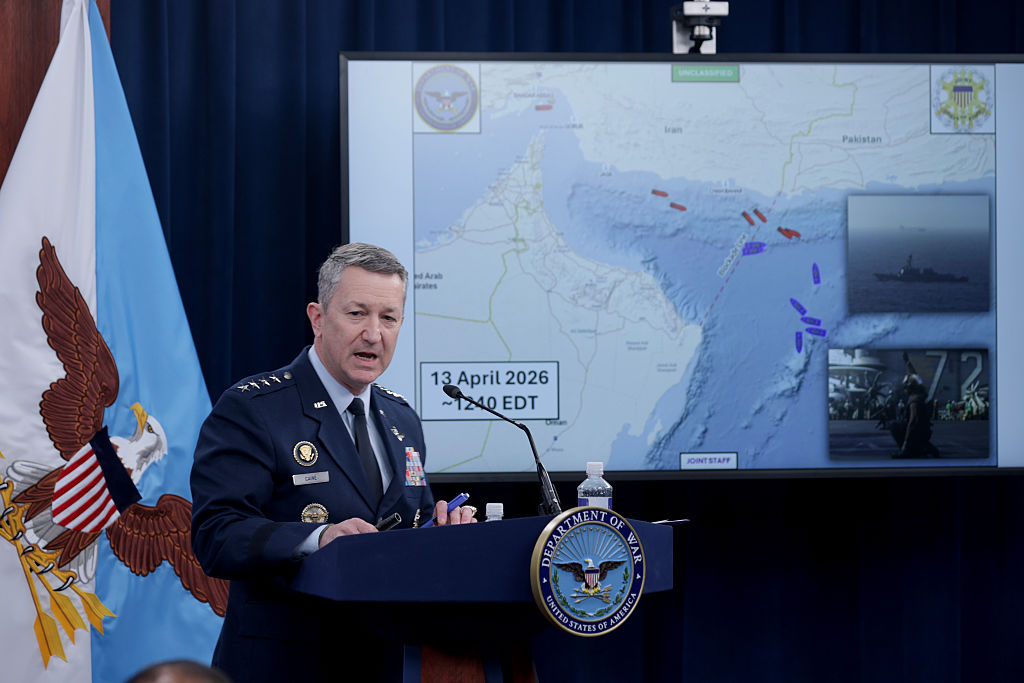
Iran can impede traffic with mines, drones, and missiles, and even U.S. warships would be at risk with little time to react. Mines pose a particular danger since the Iranians laid them in the waterway after the conflict started, and the U.S. Navy’s mine-sweeping capabilities have atrophied over the years. Stopping drone and missile launches would probably require U.S. troops to occupy the Iranian shoreline along the strait, and even that would provide no safeguard against longer-range missiles and drones.
The navy could probably accomplish the mission, but it would take a massive commitment of resources and run the risk of having ships sunk and service members killed. James Stavridis, a retired U.S. admiral and former NATO supreme commander, emailed me: “Opening the Strait militarily is a full-time job for an aircraft carrier with 80 Navy aircraft, a dozen guided missile cruisers/destroyers, a half-dozen minesweepers, 75-plus U.S. Air Force aircraft, 35 army helicopters and probably 5,000-10,000 ground troops around the Iranian part of the littoral. Whew.”
Even such an ambitious operation, which would severely tax a navy with fewer than three hundred deployable warships, would not necessarily be successful, because all it would take would be a single Iranian drone striking a single merchant ship for many shipowners to shy away from the risk of sending ships through the strait.
In sum, the lack of good military options for reopening the strait forced Trump to rely on diplomacy—and to pay what is in essence a massive bribe to Iran to let merchant traffic flow. But that may offer only a temporary respite—if ships even truly begin to trust the safety of the waterway—because the MOU only commits Iran to allowing traffic without tolls for sixty days. After that Iran could try to impose “user fees” (tolls by another name), and Trump will have to decide whether to accept Iranian interference with freedom of navigation.
If he does not, he will be back where he started, facing two unpalatable options: either give Iran more payoffs or run the risk of a military confrontation. Both are a result of the war of choice he recklessly launched.
Why Hormuz’s Reopening Won’t Fix Global Energy Markets Anytime Soon
Clara Gillispie is a leading expert on Asian energy security strategies and their implications for U.S. national interests.
The interim U.S.-Iran peace agreement paved the way for oil and gas flows through the Strait of Hormuz to restart. However, the answer to when—or if—these flows will return to their pre-closure levels and patterns is anything but straightforward. The fragility of the current peace notwithstanding, there is simply no precedent for unwinding a market disruption of this magnitude; that is, a shut-in equivalent to more than 10 million barrels per day of oil supply and roughly 300 million cubic meters per day of LNG for over 100 days.
Optimistic assessments envision that the majority (but not all) of this supply could return to global markets within a few months, even if the U.S.-Iran war could be far from over. The more pessimistic assessments envision that it will be nearly impossible to avoid an uneven regional recovery marred by periodic setbacks, contributing to a weak market case for a full recovery on any timeline.
The outcome will depend on the various technical, commercial, operational, and geopolitical factors that could constrain the pace and nature of the strait’s reopening. But both optimistic and pessimistic assessments generally agree that returning the Persian Gulf’s seaborne energy flows will require careful sequencing of at least the following four critical, interdependent tasks: clearing trapped vessels, increasing inbound tankers, restarting production, and repairing damage.
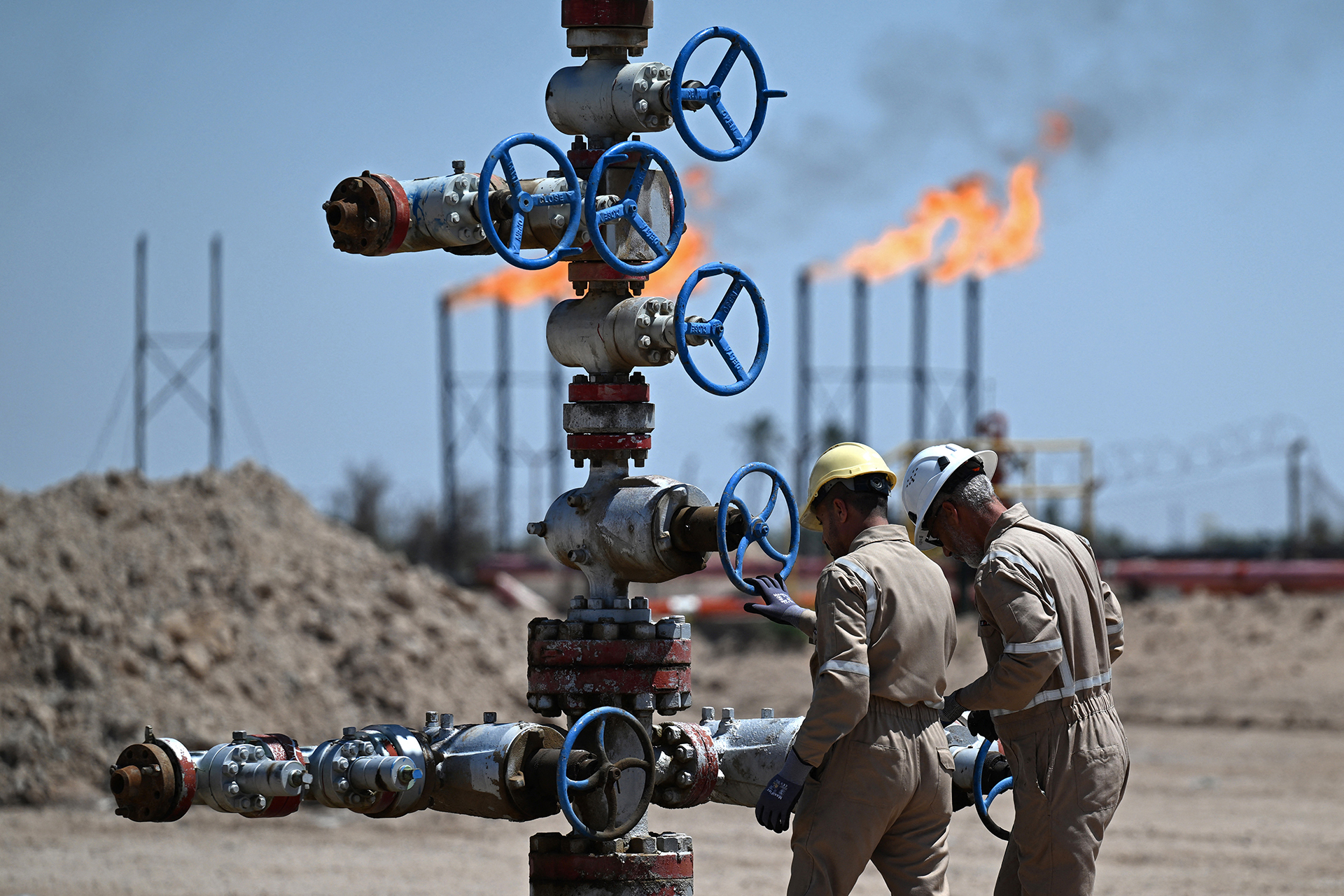
Elements of these tasks can be managed concurrently, compressing their otherwise implied aggregate timeline. Even so, some of the damage to-date from the war with Iran will shape regional energy export levels for years, rather than just months. In the case of LNG, the damage to QatarEnergy’s production facilities at Ras Laffan is expected to take up to five years to repair. Repairing this and other damage is expected to be incredibly costly—to say nothing of the revenue loss that this damage represents.
Where consensus about expectations for the restart process breaks down is not on the tasks themselves. Instead, disagreement arises around how to account for the ongoing and uncertain risks that cut across these tasks—including who might be willing to assume these risks, and for how long.
Even if the strait’s gradual reopening continues, safe routes for navigating the waterway remain extremely limited, with an estimated eighty mines still in the strait’s main navigation areas. The interim deal commits Iran to clearing these mines, but the timeline and process involved remains unsettled. In turn, this ongoing situation means seaborne exports will (at least for the near-term) rely more heavily on alternate routes out of the Gulf that are notably closer to either Iran or Oman. This will, at least theoretically, amplify the influence that these two economies can exert over seaborne trade flows. In such a landscape, some traditional importers of Gulf energy supplies—including in China—have moved quickly to snatch up new, returning oil supply, buoying the demand signals needed to sustain a restart. But many others, including those in India, appear to be hedging their bets.
The roadmap for restarting Gulf oil and gas flows is relatively straightforward. The outlook for a true recovery is not.
The Gulf’s Recovery Depends on Cooperation Its Members Have Long Resisted
Elisa Ewers’s expertise covers the Middle East and North Africa, security cooperation, Congress, and U.S. national security decision-making.
The $58 billion in damages to oil facilities in the Gulf can be repaired and expanded with time and resources. Trust and confidence are harder to rebuild. The region’s recovery from the U.S.-Iran war will be a test between its instincts towards internal competition and mistrust and its need for cooperation to protect the Gulf states’ shared strategic and economic interests.
If Trump’s Iran deal holds, the timelines for recovery will vary from country to country. On the short end, some estimates set the clock at six months—others on the longer end set it at several years. Gulf states will continue to mobilize capital quickly, deploying nearly 40 percent of the world’s sovereign wealth to aid in their recovery and hardening, especially in the energy sectors. But the region’s existing pipelines—or even expanded versions—do not facilitate the movement of petroleum products that are vital to the global economy. The building of the infrastructure for those products will require much. In many of these endeavors, cooperation between several Gulf states and neighboring countries could provide more options and better outcomes.
Saudi Arabia’s largest undertaking, arguably, is expanding the lines and port terminals associated with its east-west Petroline to allow more product to move to the Red Sea. Still, it might also consider options that expand its overland capability by collaborating with neighbors—using Iraq and Turkey, and at some point even Syria—to expand access to the eastern Mediterranean.
[Video: https://vimeo.com/1205918756]
The United Arab Emirates (UAE) similarly will need to expand its Abu Dhabi Crude Oil Pipeline, which goes west-to-east, and harden its ability to move its product out through the port of Fujairah. It has already begun addressing the damage caused to some of its refineries, ports, and other infrastructure. The UAE, too, could see some benefit by deepening its cooperation with neighbors, whether by tapping into the India–Middle East–Europe Economic Corridor to connect infrastructure across ground, pipelines, and fiber-optic cables.
Other states have fewer options. Notably, it will take at least a year, likely longer, for Qatar to repair the damage to its Ras Laffan LNG complex, resulting in a tight market for 5 percent of the world’s natural gas and 20 percent of its LNG supply. Bahrain and Kuwait, as well as Iraq, will have fewer resources and paths to circumvent their reliance on the Strait of Hormuz, but they will use what is available to them. They will likely now have to overcome the political and practical challenges that have plagued the Kirkuk-Ceyhan Oil Pipeline, a potential route for circumventing the Strait for Iraqi oil—and, more surprisingly given the need for new overland infrastructure, perhaps a future option for Kuwaiti oil. Here too, expansion and hardening will be necessary to accommodate flows from the south. Bahrain will need to partner with both Saudi Arabia and UAE to find alternative routes for its products as well.
Recovery will require persistent resources and commitment. However, the resulting integrated rail, pipelines, and other infrastructure that run through numerous states to the Red Sea and the Eastern Mediterranean could prove to be a potentially constructive outcome from the war. Just as defense against Iranian attacks proved to be a collaborative effort among Gulf partners, so too could be recovery. It just requires breaking from deep-seated instincts and building political will to do it.
Humanitarian Needs Will Have to Be Prioritized as Traffic Resumes
Sam Vigersky previously served as a senior humanitarian advisor to the U.S. ambassador to the United Nations and has two decades of experience as a field aid worker and policymaker.
Weeks before the U.S. and Iran agreed to reopen the Strait of Hormuz, the World Food Program issued a blunt warning: even if the conflict were resolved, the hunger fallout would last for months. Disruptions to humanitarian supply chains, energy, and fertilizer markets would not sort themselves out overnight.
New numbers confirm the warning. Forty-five million additional people are now facing acute food insecurity because of the war’s cascading effect. This includes surging food and fuel prices in humanitarian settings already reckoning with back-to-back years of donor cuts. Families are now increasingly forced to share one meal across multiple mouths—if there is a meal to share at all. Sudan, South Sudan, and Somalia are at risk of famine in the coming months. The worst outcomes can still be avoided if the United States and Iran prioritize a humanitarian passageway through the strait. To do this, the two countries will have to allow the United Nations to act on the following.
First, the UN should be permitted to activate its existing blueprint to prioritize shipments through the Strait of Hormuz to countries most at risk. A UN-run Task Force—led by the UN Office for Project Services, in coordination with UN Trade and Development, the International Maritime Organization (IMO), and the International Chamber of Commerce—developed a technical mechanism to do this back in late March. The objective: move fertilizers, urea, sulphur, and ammonia through the Strait to countries facing humanitarian crisis, particularly those in the northern hemisphere in the middle of planting season.
The IMO has a separate role to play: evacuate more than 11,000 stranded seafarers in the Persian Gulf. Working with the Sultanate of Oman, the IMO has established a temporary maritime corridor with two separate routes and a phased departure system to mitigate collision risks. The operation involves coordination with the United States, Iran, and the maritime industry. On June 25, Iran’s Islamic Revolutionary Guard Corps attacked a Singapore-flagged ship using an IMO route. Three additional ships were struck by Iran on July 7 in Oman’s territorial waters, according to a U.S. official, exposing the limits of the United Nations’ ability to ensure safe passage.
Then there is the matter of life-saving supplies stranded in warehouses at Dubai’s Humanitarian City. Here, the United Nations can centralize inventory stocks and work with the private sector to expedite their release through the strait. These items—food, medicine, and shelter—can reach humanitarian destinations faster and cheaper when shipped by sea.
Finally, the UN Secretary-General should offer a unified vision for managing this crisis. The WFP and FAO deserve enormous credit for their timely forecasting, but the broader UN system has fallen short. Historically, the UN performs best when it integrates advocacy, resource mobilization, operations, and political will into a single campaign. A Member State conference should be convened with a single mandate: ensure humanitarian needs are prioritized as maritime traffic resumes.
This work represents the views and opinions solely of the author. The Council on Foreign Relations is an independent, nonpartisan membership organization, think tank, and publisher, and takes no institutional positions on matters of policy.