Talks on Gaza Truce and Other Headlines of the Day
By experts and staff
- Published
- CFR Editors
Welcome to the Daily News Brief, CFR’s flagship morning newsletter summarizing the top global news and analysis of the day.
Subscribe to the Daily News Brief to receive it every weekday morning.
Top of the Agenda
Hamas and Israel endorsed different proposals over the weekend for a return to a cease-fire in Gaza. The reported gap between their stances remains significant after weeks of indirect negotiations and as aid organizations warn of food shortages in the enclave. Israel kicked off a return to fighting in Gaza earlier this month and has blocked the delivery of food, fuel, medicine, and other supplies. Hamas has seen grassroots protests from Gaza residents in the last week, including rare open denunciations of the militant group’s rule. Both Israel and Hamas are under pressure to return to a truce—but differences persist in what each side is willing to do.
The Egyptian-Qatari proposal. A top Hamas official said Saturday that the group had accepted a proposal endorsed by mediators Egypt and Qatar that would reportedly:
- have Hamas release five hostages per week, unnamed security sources told Reuters, and
- return to Israel and Hamas’ original cease-fire framework, an unnamed Hamas source told CNN. That would entail the resumption of aid as well as talks on a second phase involving an Israeli withdrawal from Gaza.
Israel’s reaction. Prime Minister Benjamin Netanyahu’s office said that it responded with a counterproposal that had been coordinated with the United States, the third mediator. An unnamed senior Israeli security official told CNN that the counterproposal foresees the release of eleven living hostages and half of the deceased ones in exchange for a forty-day truce.
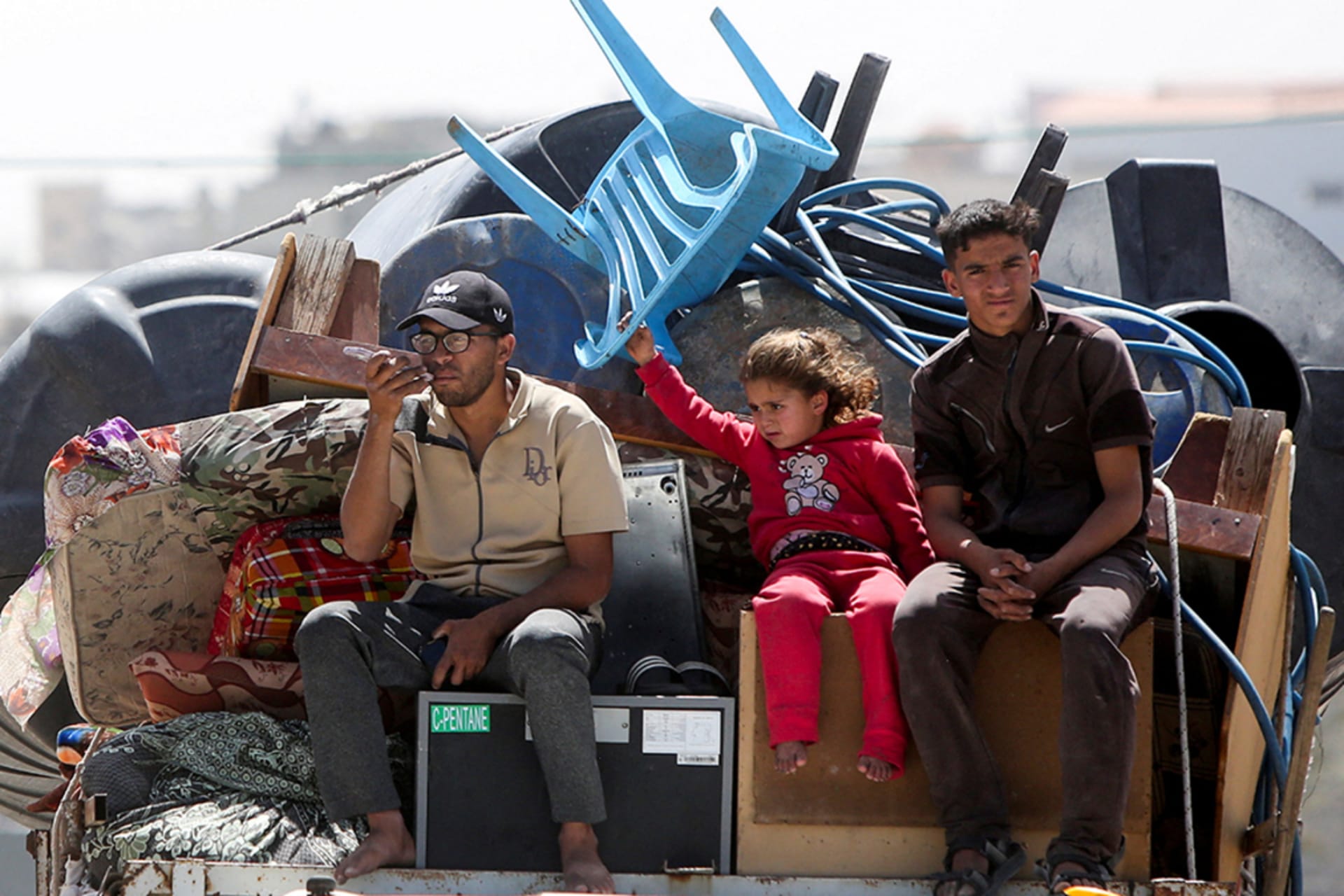
Separately, Netanyahu said Sunday that Hamas must “lay down its arms,” and that Israel planned to implement U.S. President Donald Trump’s “voluntary migration plan” from Gaza. Last month, Trump suggested that Palestinians be removed from Gaza to Egypt and Jordan. Today, the Israeli military said it was “returning to intense operations” in the southern Gaza city of Rafah and told tens of thousands of the area’s residents to evacuate.
“Israelis have pursued basically two, I don’t want to necessarily say contradictory, but difficult goals in this war—and that is to win the release of Israeli hostages and others, as well as to destroy Hamas. But wanting to win the release of those hostages has made it somewhat more difficult for the Israelis, given all of the fire power they’ve used. It still made it more difficult for the Israelis to destroy Hamas.”
—CFR expert Steven A. Cook, The President’s Inbox
Across the Globe
Hegseth’s trip to Japan, the Philippines. The United States and Japan will speed up work on a preexisting plan to create a new joint military command in Tokyo, U.S. Secretary of Defense Pete Hegseth said on a weekend visit to the city. Hegseth called Japan a “model ally.” He traveled there from the Philippines, where he also pledged to increase bilateral military cooperation.
Trump’s threats to Russia, Iran. Trump would consider putting tariffs on buyers of Russian oil if he believes Russia is at fault for the continuation of the war in Ukraine, he told NBC yesterday. He said he was “very angry” at Russian President Vladimir Putin’s recent criticism of Ukrainian President Volodymyr Zelenskyy’s leadership, though later in the day, Trump told reporters he did not think Putin would “go back on his word.” Separately, Trump said that he was considering secondary tariffs on Iran and that “there will be bombing” if Tehran does not make a nuclear deal. Iranian Supreme Leader Ali Khamenei said today that a U.S. attack would be met with a “strong reciprocal blow.”
France’s Le Pen convicted. A French court found far-right leader Marine Le Pen and her National Rally party guilty of misuse of more than $3 million worth of European Union (EU) funds and banned her from running for office for five years. Prosecutors had accused her of using the money to pay France-based party staff. Le Pen denied wrongdoing and said the accusation was politically motivated; she has said she will appeal.
Strikes amid Myanmar quake relief. The junta carried out air strikes in the country following a Friday earthquake that killed at least 1,700 people. The junta did not respond to a Reuters question about the strikes, which prompted international calls for restraint. An opposition group linked to some anti-junta militias said on Sunday that those under its command would halt offensive fighting for two weeks in quake-affected areas, while the junta today declared a week of national mourning.
Syria’s new government. Interim President Ahmed al-Sharaa named a twenty-three person cabinet Saturday that kept the defense, foreign, and interior ministries in the hands of close allies but also included religious minorities and one woman. Meanwhile, the head of the volunteer rescue group White Helmets will be emergency minister. Western countries such as those in the European Union have been watching for the inclusivity of Sharaa’s government before making further decisions on aid and sanctions relief.
Taliban releases U.S. woman. Afghanistan’s Taliban government freed Faye Hall from detention, according to a post by former U.S. Ambassador to Afghanistan Zalmay Khalilzad. Hall was arrested in February, the Guardian reported. Earlier this month, another U.S. detainee was released following a Trump advisor’s meeting in Kabul. Washington shortly thereafter lifted multimillion-dollar bounties on some Taliban members.
New U.S. curbs on Venezuelan oil. French firm Maurel & Prom, Spanish firm Repsol, and Italian firm Eni said the United States revoked licenses that had allowed them to operate in Venezuela despite U.S. sanctions. Last week, Trump said he would establish tariffs on countries that buy oil from Venezuela as a way to pressure Caracas on a range of issues, including migration.
Somalia’s ports offer. Somalia is prepared to give the United States exclusive control of air bases and ports, including those in the breakaway Somaliland region, the country’s president told Trump in a letter seen by Reuters. Somalia’s foreign and defense ministries did not immediately comment. The Heritage Foundation’s Project 2025 envisions U.S. recognition of Somaliland, and a Republican lawmaker introduced a bill to recognize it last December. Somaliland’s foreign minister called the letter to Trump “desperate.”
The Day Ahead
The foreign ministers of France, Germany, Italy, Poland, Spain, Ukraine, and the United Kingdom meet in Madrid to discuss European security.
The U.S. Senate is due to vote on the nomination of Matthew Whitaker as ambassador to NATO.
A Latin American and Caribbean forum on sustainable development begins in Chile.