Ten-Day Ceasefire Takes Effect in Lebanon
By experts and staff
- Published
Welcome to the Daily News Brief, CFR’s flagship morning newsletter summarizing the top global news and analysis of the day.
Top of the Agenda
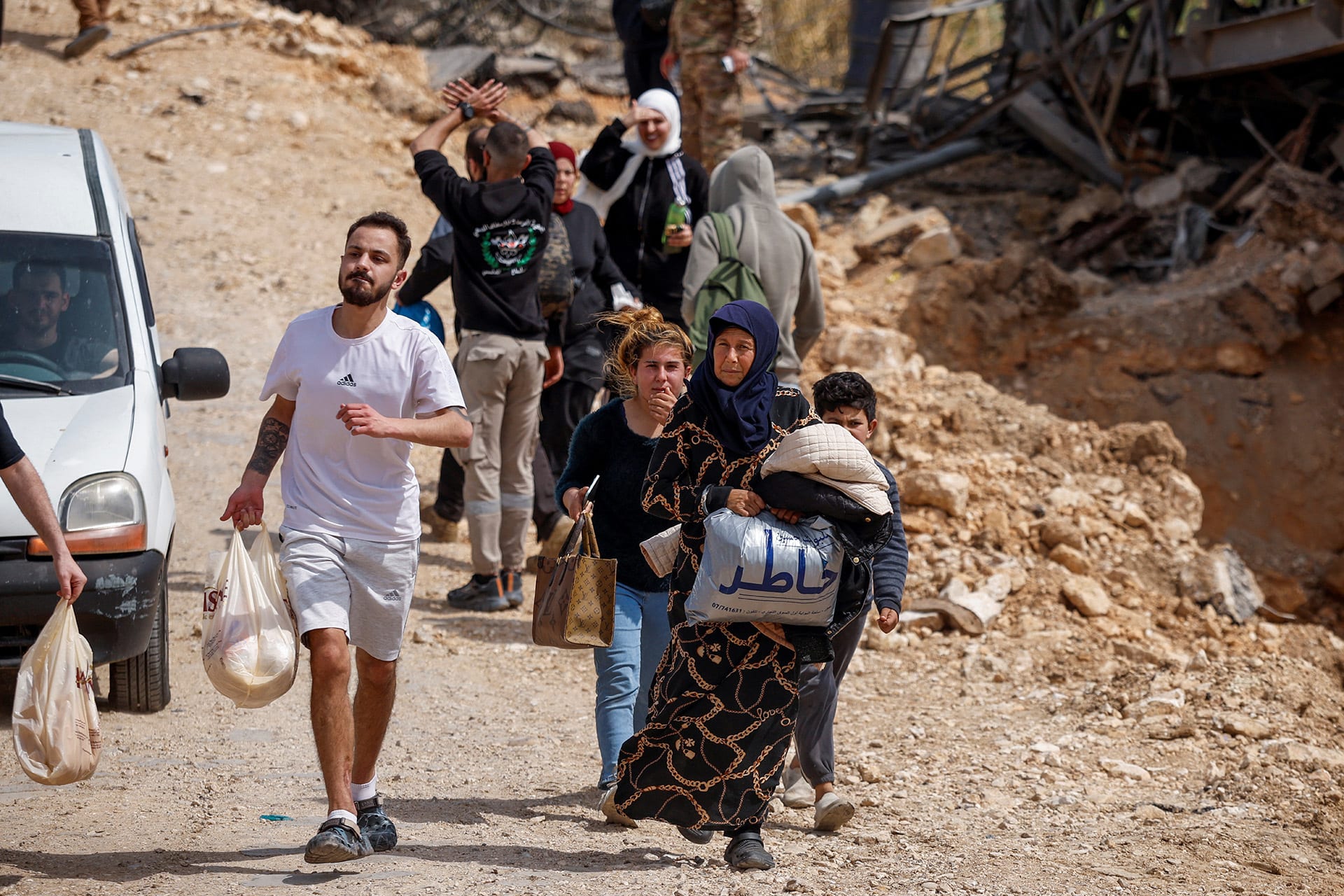
A ten-day ceasefire in Lebanon largely held overnight, raising hopes that regional tensions could cool. The truce, announced byU.S. President Donald Trump yesterday,removes a critical obstacle to U.S.-Iran peace talks, as Tehran said any truce must also halt fighting between Israel and Hezbollah. After weeks of war in Lebanon triggered mass displacement, some displaced people began to return to their homes today. The ceasefire coincides with another diplomatic push: a meeting today cohosted by France and the United Kingdom (UK) on their strategies for securing passage through the Strait of Hormuz, where Iran has restricted shipping and the United States has enacted a blockade on Iran’s coastline recently.
The Lebanon truce. The ceasefire’s success hinges in part on the actions of a group not officially party to the formal agreement: Hezbollah, the Iran-backed proxy that has been Israel’s primary combatant in the country. A document outlining the truce published by the U.S. State Department said both countries had agreed Lebanon would work to prevent Hezbollah from attacking Israel, while Israel would cease “offensive military operations” against Lebanese targets in Lebanon. Israeli and Lebanese officials agreed to the truce, while Hezbollah acknowledged it in public statements but said its actions would be based “on how developments unfold.” The document underscores Israel’s right to self-defense.
Talks on Hormuz measures. Today’s France and UK-hosted call includes dozens of countries and was slated to discuss “purely defensive” measures to ensure safe shipping through the strait “when security conditions allow,” French President Emmanuel Macron wrote on social media. Germany is open to deploying minesweepers and maritime reconnaissance equipment in the waterway if an international mandate to do so is agreed upon, an unnamed German official told Politico.
“Iranian leaders don’t want Lebanon to slip from its grasp and become the next Arab country to normalize relations with Israel. I suspect that Tehran sees this as tactical and will work hard to undermine negotiations.”
—CFR expert Steven A. Cook on X
Across the Globe
IEA warning on jet fuel. Europe has roughly six weeks of jet fuel stocks left due to restrictions on the Strait of Hormuz, the head of the IEA told the Associated Press. Flight cancellations could come “soon,” he added. Dutch airliner KLM is cutting around 1 percent of its total European routes next month due to rising fuel costs, while Delta Air Lines said it was monitoring the “potential jet fuel supply issue” but anticipated no immediate impacts.
DRC cobalt reserve. The Democratic Republic of Congo (DRC), the world’s largest cobalt producer, has created a strategic reserve for cobalt and other minerals, its minerals regulator announced yesterday. It will reserve 10 percent of exports for the reserve. The DRC operates a quota system for countries that import its cobalt, and any unexported allocations will also be funneled to the reserve.
IMF and World Bank back in Venezuela. The International Monetary Fund (IMF) and World Bank announced yesterday they are resuming formal relations with Venezuela, which were suspended in 2019 amid the country’s political crisis. Once formally restored, IMF ties would give Caracas access to an estimated $5 billion worth of reserves at the fund. The World Bank’s last loan to the country was in 2005.
U.S. ‘trade over aid’ push. Secretary of State Marco Rubio ordered U.S. diplomats to rally global support for a forthcoming U.S. declaration endorsing trade over humanitarian aid, the Washington Post reported yesterday. The declaration reportedly says the global aid system “has often created dependency, inefficiency, and corruption.” The State Department said in a statement that it would continue to fund lifesaving assistance.
U.S.-Philippines manufacturing zone. The two countries announced plans yesterday to establish a joint high-tech manufacturing zone on the Philippine island of Luzon. The area will have diplomatic immunity and will operate under U.S. common law, the Wall Street Journal reported. Specific commitments about which companies will participate and what they will build were not disclosed.
India nixes bid to host COP. India has withdrawn its application to host the 2028 UN climate summit, its foreign ministry said today. A ministry spokesperson did not give a reason for the withdrawal but said New Delhi would still fulfill its climate pledges. Prime Minister Narendra Modi had announced India’s hosting bid in 2023, saying it demonstrated India’s commitment to the UN climate treaty. Some analysts said the pullout suggested the UN climate conference is declining in relevance.
House bill to protect Haitian immigrants. Ten House Republicans joined Democrats yesterday to pass a bill extending temporary deportation protections for Haitian migrants. The bill’s fate in the Senate is uncertain, and the White House has said Trump would veto it. Haitians are one of several groups whose deportation protections the Trump administration has sought to end in his second term; a Supreme Court decision on the Haitians’ status is expected in the coming weeks.
U.S. sanctions on Nicaragua. The Treasury Department sanctioned several Nicaraguan individuals and companies yesterday accused of supporting the country’s dictatorship. Nicaragua has aggressively cracked down on dissent in recent years, including by jailing opposition figures, but has so far avoided the military threats the Trump administration has leveled at Cuba and Venezuela.
What’s Next
- Today, Turkey begins hosting the Antalya Diplomacy Forum.
- Today, the UN Security Council discusses Sudan and South Sudan.
- Sunday, Bulgaria holds a parliamentary election.