The Bay of Pigs Invasion
One of the great U.S. foreign policy fiascos shows that presidents sometimes ignore the advice to hope for the best but prepare for the worst.
By experts and staff
- Published
 James M. LindsayCFR ExpertMary and David Boies Distinguished Senior Fellow in U.S. Foreign Policy
You are president of the United States. Your advisers present you with a plan to overthrow a hostile government. The plan would solve a major national security problem if it works. But you worry that it may not. What do you do?
President John F. Kennedy found himself in just that situation shortly after taking office in 1961. A year earlier, President Dwight D. Eisenhower had directed the Central Intelligence Agency to develop a plan to unseat Cuba’s Fidel Castro. Now the CIA wanted a green light to proceed.
Kennedy swallowed his qualms and gave the CIA approval to proceed. The result was the Bay of Pigs, one of the great debacles of U.S. foreign policy. A recent survey I conducted on behalf of the Council on Foreign Relations with members of the Society for Historians of American Foreign Relations ranked the Bay of Pigs operation as the thirteenth worst foreign policy decision in U.S. history.
Castro’s Cuba
The road to the Bay of Pigs began two years earlier. On January 1, 1959, Fidel Castro’s revolutionary forces entered Havana and ousted the U.S. backed dictator Fulgencio Batista. Castro moved quickly to remake Cuba economically and socially.
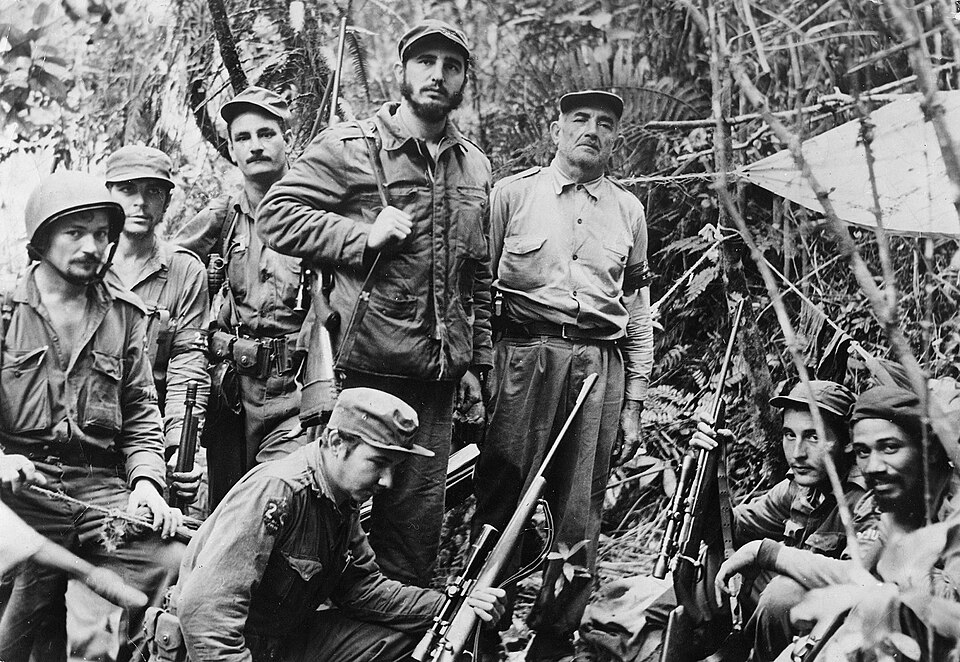
That meant reducing the longstanding influence that the U.S. government and U.S. companies had on Cuba, which Castro blamed for the country’s impoverishment. As he put it, his revolution ensured that Cubans “no longer live in times when one had to worry when the American Ambassador visited the [Cuban] Prime Minister.” To that end, Castro evicted the U.S. troops that had protected Batista, shuttered casinos run by U.S. gangsters, and seized U.S.-owned businesses.
Castro did not stop there. He seized land from wealthy Cuban landowners, canceled elections, and had many Batista supporters executed. He also repeatedly and publicly called for revolutions throughout Latin America to take back power from elites aligned with the United States.
From Bad Blood ….
Relations between Havana and Washington quickly soured. Although officials in the Eisenhower administration did not see Castro as a communist, they worried that his words and deeds threatened U.S. interests across Latin America. He was, in Eisenhower’s view, “going wild and harming the whole American structure.”
Eisenhower initially sought to pressure Cuba economically. In mid-1960, he blocked the import of sugar, Cuba’s main export and the backbone of its economy, and stopped U.S. exports to the island. The moves quickly showed how heavily Cuba depended on the United States as its main economic partner.
But Eisenhower’s hostility had a perverse consequence. Rebuffed by Washington, Castro turned to the Soviet Union for help. The Kremlin was more than willing to oblige. As Soviet leader Nikita Khrushchev subsequently told Kennedy: Castro had not begun as a communist but “you are well on your way to making him a good one.” The United States was now looking at the possibility that the Soviet Union would have an ally just ninety miles off the U.S. coast.
…To “Bumpy Road”
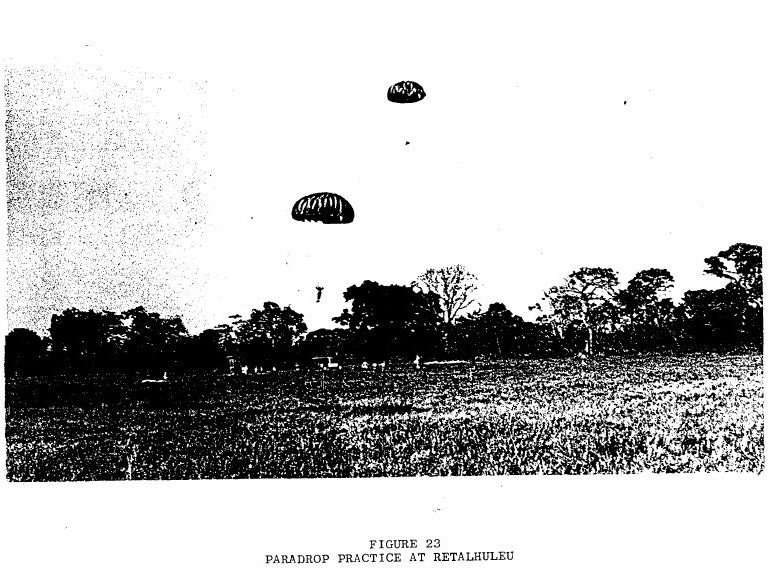
In March 1960, Eisenhower took a fateful step. He authorized the CIA to develop a plan to train Cuban exiles to overthrow Castro. The plan, eventually code-named “Bumpy Road,” rested on the premise that a properly organized attack by Cuban exiles would trigger a popular uprising to overthrow Castro. While the United States would organize, train, and equip the exiles, U.S. forces would not participate in the invasion. That would enable the exiles to portray their attack as a homegrown effort and in theory give the United States plausible deniability if the invasion failed.
Eisenhower had reason to think the plan might work. Covert operations to overthrow or pressure disfavored leaders had become one of his administration’s favored policy options. In 1953, the CIA had helped engineer the ouster of an Iranian prime minister who had nationalized Iran’s oil industry. The following year, the CIA orchestrated the overthrow of a leftist government in Guatemala.
Operation Bumpy Road could not be executed before Eisenhower left office. The decision on whether to proceed would be left to his successor.
Campaign Promises and Skeptical Aides
Kennedy had charged during his presidential campaign that Eisenhower should have done more to face down the communist threat. He used his inaugural address to tell the world that his administration would “pay any price, bear any burden, meet any hardship” to ensure “the survival and the success of liberty.” Nine days later, in his first State of the Union address, he warned Americans that “each day we draw nearer the hour of maximum danger, as weapons spread and hostile forces grow stronger.” He had no intention of shrinking from what the moment required.
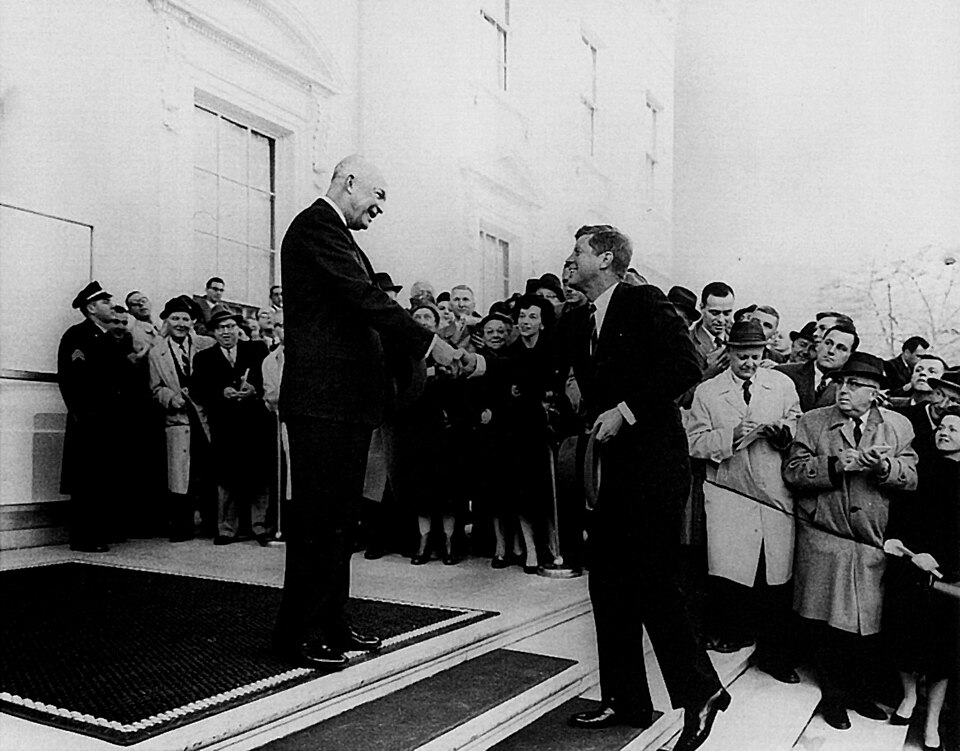
Allen Dulles, director of the CIA, had briefed Kennedy on the outlines of Operation Bumpy Road in late November 1960. The president-elect raised no objections to the proposal, which Dulles took as an authorization to proceed.
Kennedy convened his first White House meeting on Operation Bumpy Road in late January 1961. He had some concerns about the plan. A decision to intervene in Cuba would be criticized at home and abroad. Moreover, some of his advisers questioned the merits of the plan, as did some senior members of Congress. As Secretary of State Dean Rusk later described it:
White House aide Arthur Schlesinger, Jr., wrote a stiff letter of opposition, and Undersecretary of State Chester Bowles strongly opposed it as well. I reported Bowles’s opposition to Kennedy ….. Vice President Lyndon Johnson appeared skeptical about operation, but he did not attend any of our meetings on it; he seemed to think that the invasion was a harebrained scheme that could not succeed. William Fulbright, chairman of the Senate Foreign Relations Committee, also opposed the invasion and told the president so.
Rusk also wrote that he “expressed my opposition privately to President Kennedy.”
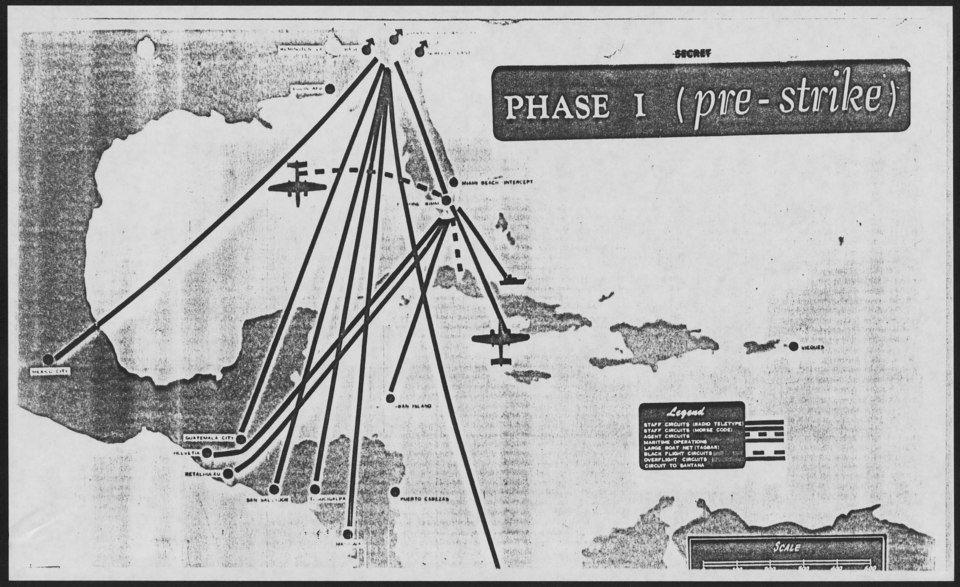
But JFK knew that ousting Castro would be a major political victory. He would be matching his campaign words with deeds and strengthening his hand in dealing with the Soviets. At the same time, killing Operation Bumpy Road would be politically costly. Some of the hundreds of Cuban exiles who were preparing to fight, and probably a few of the U.S. government officials organizing them, would tell the press that he had abandoned the plan that would have liberated Cuba. Charges that he was soft on communism would inevitably follow.
Kennedy put his doubts aside. Not even learning that the New York Times planned to run a story on the impending invasion, which followed up on numerous other press reports about Cuban exiles receiving military training in Guatemala, led him to question the wisdom of the CIA plan. Instead, he personally called the Times’s Washington Bureau chief to ask him to sit on the story. The Times changed a few aspects of the story but still ran it on April 7. Kennedy was furious to see the story in print. “I can’t believe what I’m reading!” he told an aide. “Castro doesn’t need any agents over here. All he has to do is read our papers. It’s all laid out for him.”
A Greenlight—With Conditions
JFK made two critical decisions when he greenlighted Operation Bumpy Road. First, because he wanted to minimize overt U.S. involvement, he ruled out U.S. air support for the mission. CIA and U.S. Air Force officials accepted the restriction because they assumed Kennedy would change his mind if the operation ran into trouble.
Second, he directed the CIA to find a more remote landing spot for the exiles to come ashore. The site the CIA selected was Bahía de Cochinos—the Bay of Pigs. It was remote, but it was less than ideal for an amphibious landing. It was a narrow inlet with mangrove swamps on both sides. The exiles would not be able to disperse easily if they encountered opposition when they landed, and sympathetic Cubans would find it difficult to come to their aid. Castro had also vacationed frequently at the Bay of Pigs and was well liked by the locals.
Disaster Awaits
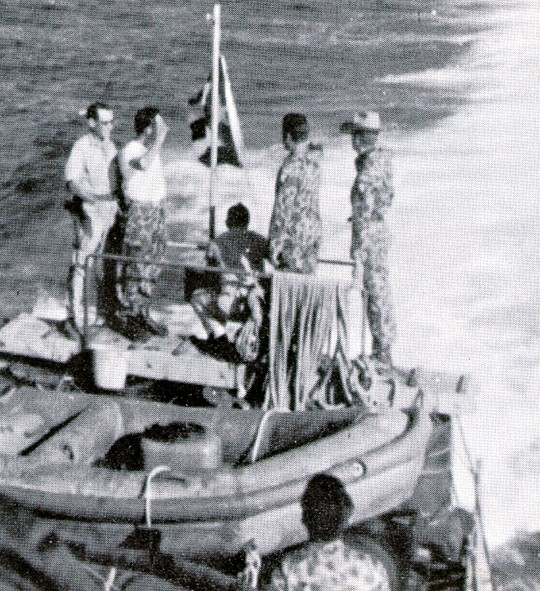
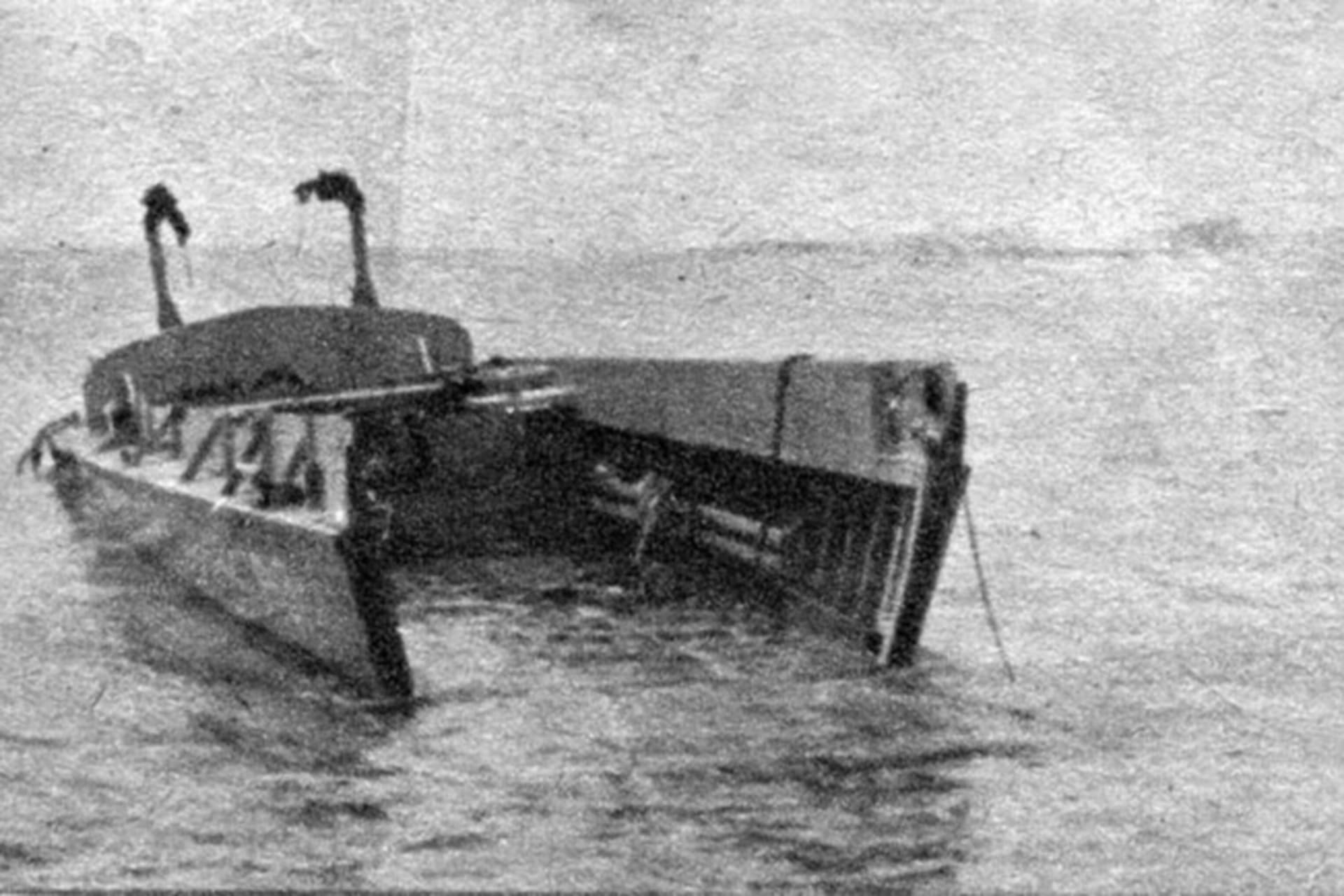
Operation Bumpy Road began on the morning of April 17. An invasion force of 1,511 exiles, known as Brigade 2506, hit the beach at the Bay of Pigs. It was a disaster from the start.
The operation had assumed that the landing would be unopposed. But Havana knew that Brigade 2506 was coming. Preparations for the invasion had been an open secret among Cuban exiles living in Florida. That was how the New York Times had gotten wind of the CIA plan. It had not helped that two days earlier Cuban exiles had attacked a Cuban air base with World War II-era B-26 bombers. The idea was to destroy Cuba’s ability to attack Brigade 2506 from the air. The attacks did little damage but put the Cuban military on high alert. As a result, 25,000 Cuban troops were waiting when Brigade 2506 came ashore.
Another assumption underlying Operation Bumpy Road also proved to be wrong. No Cubans came to the aid of the invasion force, and units did not defect from the Cuban military. Castro enjoyed far more popular support, and had done far more to intimidate critics, than Washington had recognized.
No Cavalry to the Rescue
Pinned on the beaches of the Bay of Pigs by the Cuban military, Brigade 2506 was strafed from the air by Cuba’s small air force. It quickly became clear that only direct U.S. intervention would save the operation. The CIA begged Kennedy to authorize the U.S. Air Force to provide air support to the rebels. He refused.
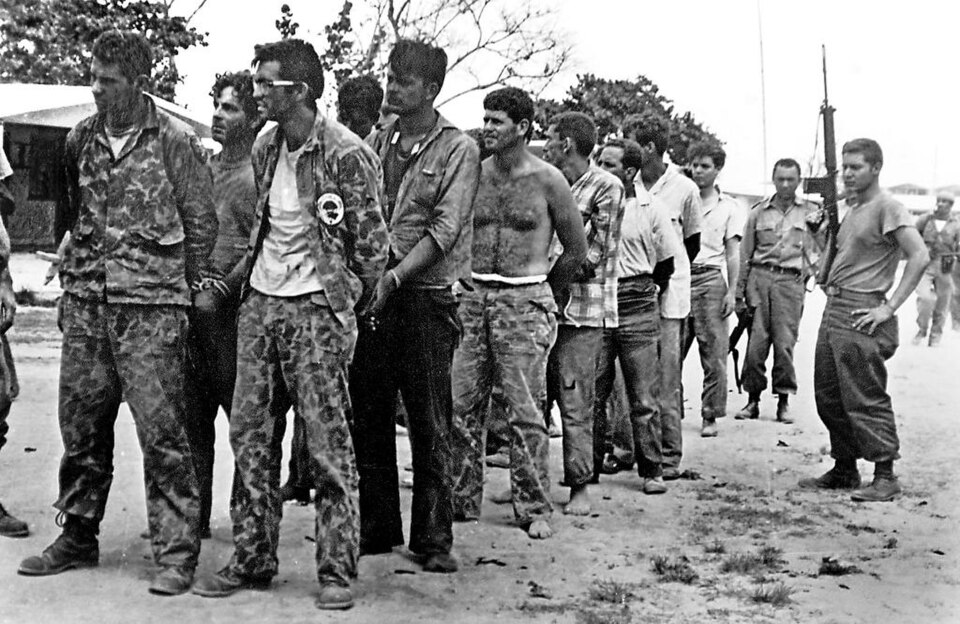
That decision doomed the operation. On April 20, Brigade 2506 surrendered. Their final message was terse:
We are out of ammo and fighting on the beach. Please send help. We cannot hold on.
No help came. The three days of fighting left 140 Cuban exiles dead. Nearly 1,200 were captured. Castro remained in power.
Anger and Regrets
The debacle at the Bay of Pigs left Kennedy furious. Forgetting that many of his advisers had questioned the wisdom of the invasion, he complained that “I was assured by every son of a bitch I checked with—all the military experts and the CIA—that the plan would succeed.”
Kennedy’s frustration no doubt reflected his recognition that he would pay a political cost for the Bay of Pigs. Many of his supporters criticized him for intervening in Cuba; his opponents accused him of fecklessness. Governments across the world lambasted the invasion. And he had signaled weakness to the Soviets. Khrushchev would take note. Although Kennedy would never know it, the Soviet leader asked his son in the wake of the Bay of Pigs, “Can he really be that indecisive?”
In private, Kennedy blamed the CIA for bad planning. His fault was not bad judgment, but his failure to ask tough questions:
How could I have been so far off base? All my life I’ve known better than to depend on the experts. How could I have been so stupid, to let them go ahead?
Months later, he forced Dulles to resign as CIA director.
Initially and publicly, though, Kennedy refused to shift the blame to anyone else. On April 21, he held a press conference that constituted a masterclass in how to manage a setback. When asked why his administration was not providing more information about the invasion when the United States was “taking a propaganda lambasting around the world,” Kennedy answered:
There’s an old saying that victory has 100 fathers and defeat is an orphan.
He then added:
I have said as much as I feel can be usefully said by me in regard to the events of the past few days. Further statements, detailed discussions, are not to conceal responsibility because I’m the responsible officer of the Government—and that is quite obvious—but merely because I do not believe that such a discussion would benefit us during the present difficult situation.
Americans appreciated Kennedy’s embrace of responsibility. His public approval rating went up, not down.
The Lessons of History
The Bay of Pigs was one of the biggest U.S. foreign policy fiascoes of the twentieth century. Castro’s hold on Cuba was solidified, and Havana moved closer to Moscow. Khrushchev concluded that Kennedy was weak and indecisive. Worried about continued U.S. threats to Cuba and convinced that JFK could be bullied, Khrushchev agreed to install nuclear missiles in Cuba. Even friendly governments privately questioned the competence of the new U.S. administration.
Operation Bumpy Road failed for many reasons. The premise that ordinary Cubans were itching to rebel was wrong. The invasion was poorly organized and managed. The geography of the Bay of Pigs was unfavorable. Havana knew the attack was coming. Even if Kennedy had agreed to the CIA’s request to order the U.S. Air Force to provide close air support, Operation Bumpy Road likely still would have failed. The CIA’s own post-mortem of the operation concluded that the plan had been fatally flawed from the start.
The Bay of Pigs attests to the importance of anticipating failure and planning accordingly. JFK doubted the feasibility of the CIA’s plan, and he knew that he would not order a direct U.S. military intervention. But he never asked how the operation might go wrong, how likely failure might be, and how those risks could be mitigated. Instead, he bet that Operation Bumpy Road would work. It didn’t. Had Kennedy considered how the invasion could go awry, he might have canceled or fundamentally reshaped it.
Kennedy was hardly the first president to hope for the best while failing to prepare for the worst. Nor was he the last. To judge by what we have learned so far about the origins of Operation Epic Fury, President Donald Trump similarly failed to ask tough questions about how airstrikes on Iran might go awry. The desire to assume the best and ignore potential risks tempts all people, including presidents.
Oscar Berry participated in the preparation of this article.