The Iran War is Causing Energy Chaos in Asia
In the wake of U.S. and Israeli strikes on Iran, supply disruptions caused by Tehran’s closure of the Strait of Hormuz are straining energy stores across Asia to their breaking point.
By experts and staff
- Published
 Joshua KurlantzickCFR ExpertSenior Fellow for Southeast Asia and South Asia
- Annabel RichterResearch Associate, Southeast Asia and South Asia
The Iran war has clearly upended energy markets around the world. Oil futures closed at $95 yesterday, even as some countries have released reserves in an attempt to prevent the oil price from going even higher. As Agence France Presse (AFP) has reported, strikes on the massive Ras Tanura refinery in Saudi Arabia, Ras Laffan gas processing base in Qatar, and the complex housing the Ruwais refinery in the United Arab Emirates, combined with Iran’s blockage of the Strait of Hormuz, has resulted in a drop of Gulf countries’ oil production by 10 million barrels per day, as compared to March 2025. AFP further reported that the amount of oil passing through the Strait of Hormuz has fallen to less than 10 percent of pre-war levels.
The impact can be felt everywhere, but in Asia – where nearly every country is highly dependent on Middle Eastern oil – the war has caused outright energy panic, with governments scrambling to respond and having few short-term answers. After all, Asia is the most exposed to the effects of the war on oil prices, since it is the region that relies most heavily on oil and gas shipped through the Strait of Hormuz. The level of consumer panic, in particular, is so great in some Asian states that it could soon lead to not only major economic shocks but even violence over limited energy supplies.
China is the world’s biggest oil importer – it imports significant amounts of oil from Iran as well as Venezuela, which is no longer an option for Beijing – and other major Asian economies like Japan, Singapore, Taiwan, South Korea, India, and Thailand are almost completely dependent on foreign oil. In 2024 alone, 84% of the oil and 83% of the liquified natural gas (LNG) shipped through the Strait was bound for Asia.
In many Southeast and South Asian states, consumers are panicked, stockpiling fuel, cutting spending dramatically on everything but essential items, and trying not to leave the house. These actions, along with inflation, are likely to depress growth across the region, even if the war ends relatively soon, since it will take time for the Gulf’s oil producers to rebuild and get production back up to pre-war levels.
Asian governments are in constant energy triage, but even with these attempts to manage the crisis, many Asian states could run out of oil within the next month. (Malaysia, Brunei, Japan, and China are exceptions to some extent; Malaysia and Brunei are oil producers and exporters, while Japan has a stockpile, and both Japan and China have the ability to release more reserves than other Asian states.) Many have cut government workweeks, called for reductions in air-conditioning, and begun releasing whatever strategic reserves they have.
As the Associated Press (AP) recently reported: “In the Philippines, officials have switched to a four-day workweek to cut back on fuel consumption and reduce the government’s energy use by a fifth. Offices have been told to switch off computers during lunch breaks and keep air conditioning no lower than 24°C (75°F). Vietnam has urged people to work from home… In Thailand, the prime minister has even asked officials to take the stairs instead of elevators.”
Many countries are also enforcing fuel rationing and directing limited fuel supplies to essential locations like hospitals. But along with reduced consumer demand, governments’ triage of where fuel goes – while necessary – is hurting Asian economies. Factories in the region’s export-dependent economies are shuttering or operating part-time. Some hotels and restaurants are closing down for now or cutting operations, though tourism – also battered by high prices for air travel due to expensive jet fuel and cancellations by scared travelers – is critical to economies like Thailand, Vietnam, Singapore, and many other Asian countries. Already, in the first week of March, tourist arrivals to Thailand fell by about nine percent year-on-year and hotels in major tourist sites in the kingdom are reporting occupancy rates as low as ten percent.
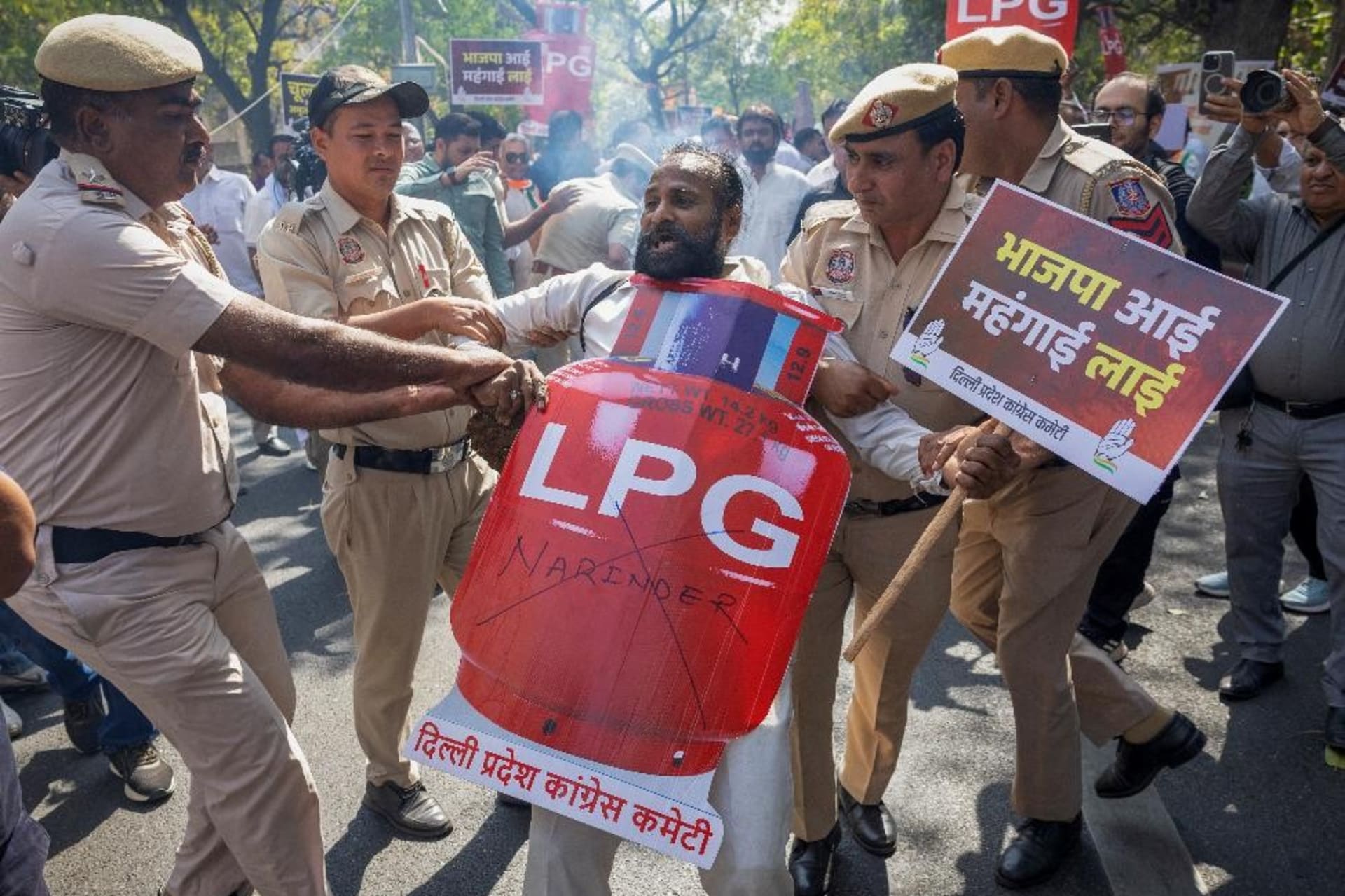
With consumers and companies desperate about the skyrocketing cost of fuel – an issue that has in the past led to many large street protests in South and Southeast Asia – many governments are providing subsidies to absorb the increases in the price of fuel. As the AP reported, India’s government “has absorbed more than half of the increase [in fuel prices in India] driven by global market disruptions under a federal scheme to keep prices low for poor households, [according to] Indian Petroleum Minister Hardeep Singh Puri.”
Most other governments in the region are using similar tactics. Thailand has been subsidizing diesel fuel, Vietnam is using its state fuel spending reserves to keep fuel costs down, Singapore is offering rebates on some consumer costs to help people absorb price rises, and Taiwan has set limits on how much gas stations and other fuel sellers can raise prices, while also offering targeted subsidies to certain industries. Meanwhile, Manila has been giving modest cash handouts to people in some of the industries most sensitive to fuel price increases.
Indonesia’s government has promised to keep fuel prices at their pre-war level via state subsidies, at least until after the Eid al-Fitr holiday that runs from March 19 to March 20. But just like every year in Indonesia, a massive exodus is anticipated this week as many Indonesians who work on the island of Java travel to their home towns and cities for Eid, a phenomenon that will cost the government staggering sums in subsidies. In fact, as the South China Morning Post reported, “the Ministry of Transportation estimates that 143.9 million journeys will be made” across Indonesia before and after Eid.
Subsidies are not a sustainable strategy. Only the richest states in the region can afford them for long. Indonesia’s subsidies are already likely to cause a budget deficit above three percent of GDP. As the South China Morning Post notes, “That would breach the country’s legal deficit cap of 3 per cent, a fiscal rule that has long helped prop up investor confidence in Southeast Asia’s largest economy.” And even while going above three percent, Jakarta cannot sustain this level of subsidies without emptying state coffers and massively impacting growth. Similarly, in India, the most populous country in the world, government subsidies simply cannot last. The AP reports: “The scale of demand in India, the world’s most populous nation, limits how long it can cap prices to shield consumers. The situation could worsen within a week if government subsidies lapse, said Duttatreya Das of the think tank Ember, noting gas supplies were the most immediate concern.”
Indeed, LNG is widely used in the region, but most industries do not have the capacity to store much of it, even if it is subsidized. Some, like many small businesses and agricultural companies, will be forced to close soon.
As the war continues, regional leaders should be bracing for political shocks. Joseph Rachman, who writes Foreign Policy’s weekly Southeast Asia brief, has saliently reminded readers that Indonesia’s 1998 popular uprising – violent at times and ultimately resulting in the end of the Suharto regime – was partly sparked by a sharp rise in fuel prices amidst the Asian financial crisis. Indonesia has witnessed multiple riots since then over fuel prices as well as protests last year related to the cost of living. After Eid, and the possible end of subsidies, the Indonesian government is likely to face demonstrations again, which in September of 2025 turned violent and were crushed by the security forces.
South Asia faces similar dangers. India, like Indonesia, has a long history of large, sometimes violent strikes and protests over fuel prices, and nationwide protests about fuel are starting up again. In Bangladesh, another country with a history of protests and violence over fuel costs, the newly-elected government has closed universities and placed the military in charge of oil depots, but still faces a high likelihood of street protests and possible violence. And even in countries in South and Southeast Asia with less of a history of fuel-related protests, the shortages and quotas and long lines for fuel have sparked violent incidents between drivers, between drivers and gas station owners, and between drivers and police.
The war is now but twenty days old. If it lasts through the summer, it could have calamitous effects on Asian growth and political stability.