The Iran War Is Reshaping Asia’s Energy Security Strategies
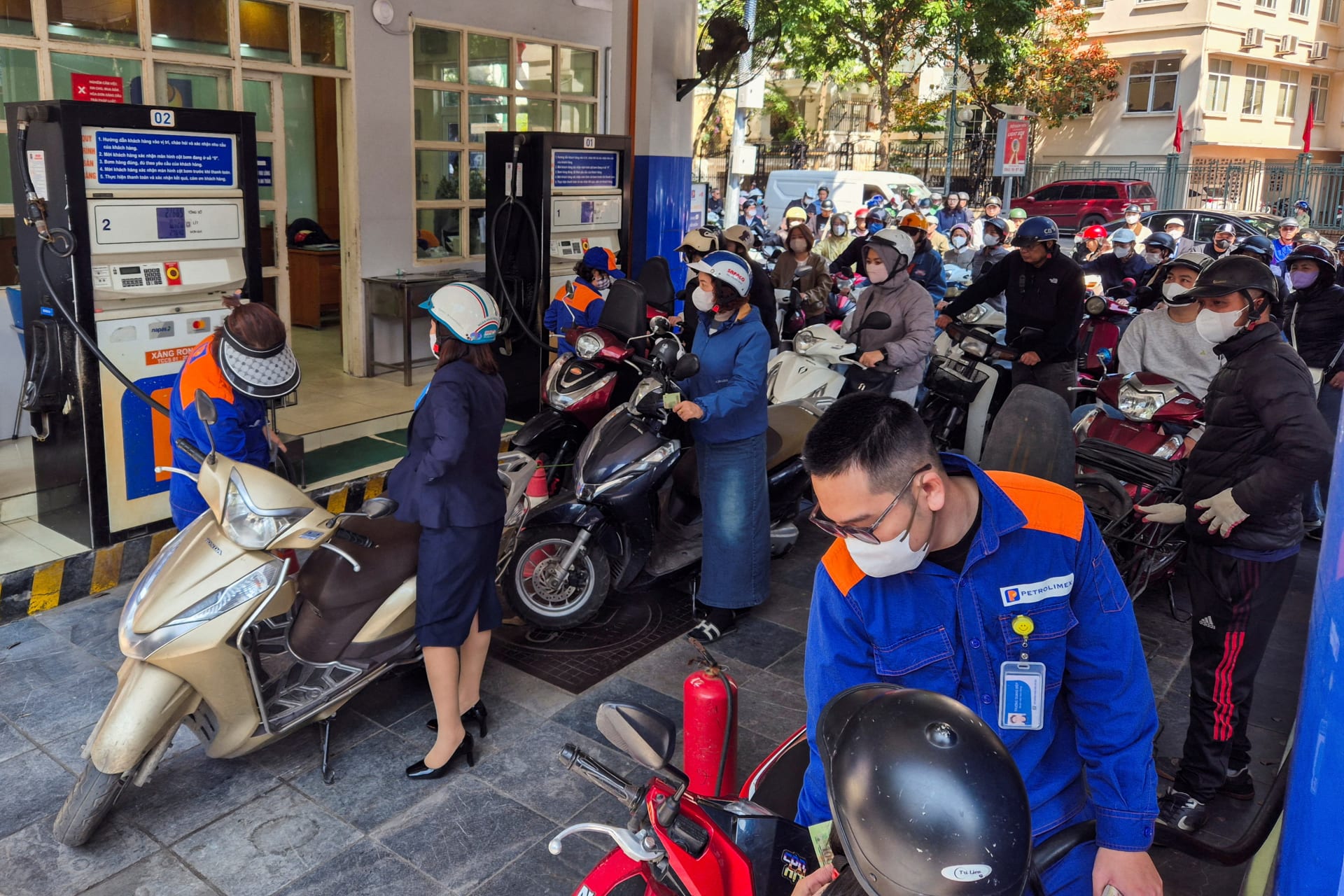
The impact of the oil and LNG shock has been pronounced in Asia, where many leading economies produce limited amounts of nuclear energy and depend heavily on imported fossil fuels from the Middle East.
By experts and staff
- Published
 Joshua KurlantzickCFR ExpertSenior Fellow for Southeast Asia and South Asia
- Annabel RichterResearch Associate, Southeast Asia and South Asia
This piece was originally published by World Politics Review.
In a matter of weeks, the Iran war has generated massive uncertainty about the future of the Middle East and rocked the global economy. The price of oil has skyrocketed as Tehran has essentially closed the critical Strait of Hormuz and many oil and liquefied natural gas producers in the Persian Gulf have shuttered or cut back operations. Every major stock market has fallen since the war started, and central bankers, economists and policymakers have projected that a drawn-out war could cause inflation to spike and undermine economic growth worldwide.
According to the International Monetary Fund’s managing director, Kristalina Georgieva, a 10 percent increase in energy prices that lasts a year would increase global inflation by 40 basis points and slow global economic growth. Indeed, the war has already plunged the world into its “largest-ever” disruption in oil supplies, according to the International Energy Agency.
The impact of the oil and LNG shock has been pronounced in Asia, where many leading economies produce limited amounts of nuclear energy and depend heavily on imported fossil fuels from the Middle East. And most Asian economies are only going to see their energy needs skyrocket in the next decade due to their young populations, the expansion of AI data centers and rapid economic growth.
Like many crises that drive structural change, the Iran war has dramatically altered how the region’s governments are planning to ensure energy sufficiency in the future. Studies conducted by the Economic Research Institute for ASEAN and East Asia suggest that most Southeast Asian countries have enough reserves of oil and LNG to last only 20 to 50 days.
Japan, which possesses the third-largest strategic petroleum reserve in the world and is still in the process of restarting some of its nuclear plants after pausing them in the wake of the 2011 Fukushima disaster, has ripped up its past plans and is rethinking the future of its energy supplies. The country is now leading the region’s new embrace of nuclear energy, even though much of the Japanese public remains skeptical about the safety of nuclear reactors. Prime Minister Takaichi Sanae has vowed to ultimately achieve 100 percent energy self-sufficiency, largely through a nuclear comeback.
Now, amid the energy crunch caused by the Iran War, Takaichi’s government is reportedly looking at speeding up its timeline. The conflict may also shift public opinion toward a greater embrace of nuclear power.
Other Asian states are thinking similarly. China had already planned to build 23 new nuclear reactors in the next decade and is now fast-tracking those plans. Poorer Southeast Asian states such as Vietnam and the Philippines, which had already explored nuclear power, are stepping up the pace of their nuclear development, too. The World Bank’s decision last year to begin funding nuclear energy projects is likely to aid their efforts.
And in South Korea, President Lee Jae Myung recently convened an extraordinary Cabinet meeting to examine the implications of the war in the Middle East. South Korea is already one of the larger producers of nuclear energy in the world, but it must import enriched uranium due to concerns about nuclear proliferation on the Korean Peninsula, making real energy independence impossible. Because of its dire need for greater energy security, the Lee administration appears potentially prepared to ignore those concerns, which would entail breaching a civil nuclear agreement Seoul signed in 2015 with Washington to limit its enrichment capacities.
However, such a decision would carry major geopolitical risks, including tensions with the United States, South Korea’s only security ally, as well as with North Korea, which would likely not respond kindly to Seoul boosting its enrichment abilities. Still, Lee is forging ahead with efforts to renegotiate the civil nuclear deal with the United States and prepare the country for domestic uranium enrichment.
Despite their impact on air quality and health, Asian states are also re-embracing coal-fired power plants, since many have domestic reserves of the dirty fuel and coal plants are often relatively cheap to open. As The New York Times recently reported, Bangladesh, India, Indonesia and Pakistan have all been developing new coal plants.
Many Asian states are also rapidly convening meetings with European counterparts to learn from the continent’s progress toward decreasing dependence on fossil fuels in recent years, after the Ukraine war demonstrated the dangers of Europe’s reliance on Russian oil and gas. In 2025, for instance, more electricity was generated by wind and solar than by fossil fuels within the European Union for the first time ever.
There is enormous potential for renewable energy development in Asia. A report released in 2026 by the World Bank noted that East Asia has “vast, untapped renewable resources [that] can accelerate its clean energy transition — boosting competitiveness, creating millions of jobs, and strengthening energy security.” Yet many Asian leaders have long disdained renewables as unreliable, expensive and unsuitable for lower-income or middle-income states. The same World Bank report noted that just four countries—China, Indonesia, Vietnam and the Philippines—could generate a combined 65,000 gigawatts of potential renewable energy, but that 97 percent of this potential remains untapped.
In the wake of recent events, regional leaders are rethinking their attitude toward renewables. Indonesia’s government—not known for moving quickly—is making concerted efforts to speed up solar and geothermal power projects. “In the current geopolitical situation and with ongoing war, we cannot guarantee the long-term continuity of energy supply. Therefore, we must optimize all domestic energy resources,” Energy and Mineral Resources Minister Bahlil Lahadalia said earlier this month, while adding that construction of new solar and geothermal power plants is slated to begin later this month.
To be sure, not every Asian state will have to shift its energy strategy. As Sebastian Strangio of The Diplomat has noted, Brunei and Malaysia are oil producers and exporters. China has some domestic oil production and has boosted its renewables and other energy sources in recent years, and, like India, has access to significant imports of Russian oil. China also stockpiled oil before the Iran War, a move that seems extremely wise in retrospect.
But for now, most Asian countries are set to face major short-term problems. Avenues that were immediately available to Europe as it responded to the Ukraine War and the loss of Russian oil—rapid LNG diversification, aggressive demand reductions and intensive storage policies—are simply not available to many of the states across Asia.
Ramping up renewables takes time, even for rich economies, and Europe’s gradual drawdown of Russian imports in the wake of Moscow’s invasion of Ukraine is still not complete. Unfortunately states across Asia—and their populations—are expected to face lasting economic pain for as long as the Strait of Hormuz remains all but shut.