The Mar-a-Lago Accord’s Economic Ripple Effect Widens

Rebecca Patterson is a senior fellow at the Council on Foreign Relations, a globally recognized investor, and macroeconomic researcher.
The so-called Mar-a-Lago Accord is becoming a reality.
The original paper, titled “A User’s Guide to Restructuring the Global Trading System” [PDF] and written by Stephen Miran—who served as chair of President Donald Trump’s Council of Economic Advisors until his appointment as a voting governor at the Federal Reserve—proposed several strong-arm economic tactics to upend the world order in the United States’ favor.
A surprising number of those policy proposals now align with events on the ground: tariffs are being used to help reshape the global economic order, foreign states are investing more in their defense, policies aimed at lowering energy prices through greater supply have been enacted, and efforts are underway to weaken the dollar while keeping it globally dominant and limit any rise in Treasury bond yields.
Given this level of implementation, the Accord could provide clues as to what could come next. Three of Miran’s policy proposals stand out as increasingly likely near-term: currency intervention to weaken the dollar, a closer partnership between the Treasury Department and the Federal Reserve to limit Treasury bond yields, and potential taxes on foreign investments.
An optimistic scenario for the White House would see a weaker dollar supporting American exports as lower Treasury yields help household and business borrowing, not to mention interest payments on government debt. The risk, however, is that a weaker dollar contributes to sticky inflation and limits Fed rate cuts. Meanwhile, questions around Fed independence and the attractiveness of U.S. debt, especially to foreign investors, could raise market volatility, push longer-term Treasury yields higher, and weigh down economic growth.
Miran has three proposals in the Accord that could be considered Trump administration goals in the year ahead—perhaps bringing new economic risks. Uncertainty is the common thread tying their disparate potential outcomes together.
Goal: Currency intervention to weaken the dollar
“To strengthen their own currencies, reserve managers must sell dollars,” the Accord says. “As their currencies appreciate, the United States will receive a competitiveness advantage helping our tradeable and manufacturing sectors.”
Miran is suggesting currency intervention should be used as a tool to weaken the dollar and help U.S. exports. Taking a step back, American intervention authorized by the Treasury Department and executed by the New York Federal Reserve has occurred only three times since 1996: buying Japanese yen in June 1998, buying Euros in September 2000, and selling yen in March 2011.
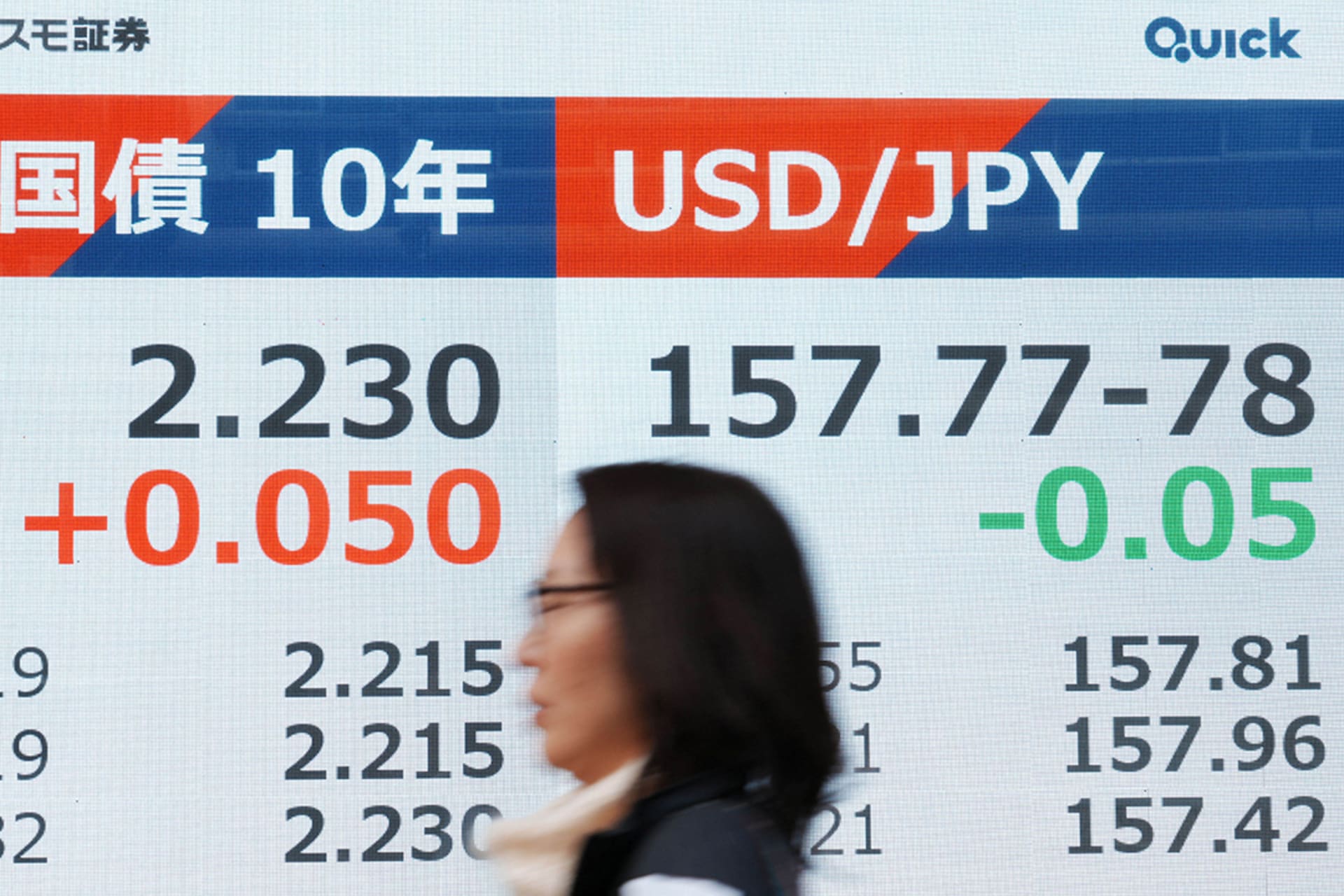
Media reports suggest that another intervention round might be forthcoming. On January 23, the New York Fed reportedly reached out to currency trading desks on instructions from Treasury to check the dollar-yen exchange rate. Historically, such “rate checks” have been a way to signal that joint intervention could follow. The dollar immediately weakened against the Japanese currency, as well as against other major currencies like the euro.
This is an unusual moment where both U.S. and Japanese policymakers have an interest in a stronger yen. Japan’s corporate sector has significant cross-border exposure, including imported products. It values currency stability or at least predictable, gradual currency trends to help manage its effect on profits. Separately, Japan’s inflation rate, over 2 percent since early 2022, has contributed to household cost-of-living concerns. A further weakened yen could drive up inflation through higher import costs and continue to undermine household sentiment.
Meanwhile, the U.S. Treasury is focused on supporting local manufacturing and exports. All else equal, a weaker dollar would make U.S. goods more competitive overseas. The challenge is that intervention rarely has a lasting market effect without accompanying monetary or fiscal policy that encourages the desired currency trend.
In Japan today, Prime Minister Takaichi Sanae has suggested fiscal easing to help household finances, but that could rely on her securing political support in the February snap election. Stronger domestic growth could lead to monetary tightening, boost sentiment towards corporate earnings, and bring foreign capital into the country. Higher interest rates should also make the yen relatively more attractive.
However, fiscal stimulus against the massive debt levels could also exacerbate concerns around Japan’s fiscal outlook and lead investors to reduce exposure to Japanese government bonds—a scenario that appears to have dominated recently, contributing to higher long-term bond yields and a sharp weakening of the yen.
Put simply, Miran’s suggested intervention could weaken the dollar and strengthen the yen, but it’s far from guaranteed to have any lasting impact. Historically, relying on intervention to sustain a currency trend and achieve economic goals has a mixed track record.
Goal: A Treasury-Fed partnership to keep yields low
Miran acknowledges that currency intervention to weaken the dollar and strengthen overseas currencies like the yen would require the overseas players to sell U.S. Treasuries in the process. Such selling could increase upward pressure on U.S. yields, which in turn could weigh on economic growth by lifting costs for things like auto loans and mortgages.
But he has a solution. As the Accord notes: “There is precedent for cooperation from the Fed in capping interest rates increases that occur as a side effect of Treasury’s intervention in foreign exchange markets.”
Relying on a 1977 amendment to the Federal Reserve Act passed by Congress, Miran states that the central bank not only has goals of stable prices and maximum employment, but also “moderate long-term interest rates.” (In subsequent years, Fed officials have suggested that achieving the first two mandates would result in less volatile, controlled longer-term interest rates so that the third mandate could be implicit rather than explicit.)
Regarding the third mandate, Miran notes that the Fed can intervene in bond markets “if interest rates spike as a result of shifting currency policy” and cites the so-called Operation Twist of the early 1960s as precedent. In an attempt to support economic growth, the Federal Reserve sold short-term Treasury bills and bought longer-term bonds, while the Treasury shifted the duration of bonds it issued. The joint effort was aimed at lowering longer-term yields and flattening the yield curve (that is, reducing the difference in yields of different bond maturities). The Fed conducted another Operation Twist from 2011 to 2012, which was replaced with Quantitative Easing when it failed to materially improve growth.
Miran’s proposal is timely because Trump will name a new Fed chair to take Jerome Powell’s place this May. Indeed, several potential candidates for the post have agreed with comments from Treasury Secretary Scott Bessent that the Fed and Treasury need to rethink how they work together, with some suggesting a new “Treasury-Fed accord.”
Miran underscores in his Accord that for such a partnership and efforts to work, “the Fed will likely require guarantees of its independence to use short rates to achieve its inflation and employment mandates. This combination would effectively set a limit on the yield curve, not the absolute level of long rates.”
This independence, taken for granted for decades, is no longer straightforward. Earlier in January, Chair Powell said that politics had motivated a Department of Justice investigation and possible criminal indictment regarding his testimony to Congress about a renovation of the Fed’s headquarters.
Some business leaders and members of Congress are pushing back to protect the Fed. In particular, Senator Thom Tillis (R-NC), a member of the Senate Banking Committee, said that he would “oppose the confirmation of any nominee for the Fed—including the upcoming Fed Chair vacancy—until this legal matter is fully resolved.”
That makes it far from clear whether this Accord goal will be achieved, at least in the near term. Indeed, any sudden, material change in how the Fed and Treasury work together (including but not limited to a new Twist operation) could now be perceived as politically driven, push up longer-term bond yields as investors demand a greater return to loan the government money, and raise inflation expectations if pressure on the Fed continued to be biased towards boosting growth.
Goal: Tax capital flows to influence asset prices and raise revenue
In an effort to make the dollar more competitive, Miran suggests in the Accord that the White House could make U.S. assets less attractive to foreign investors. (The idea is that foreign investors would need fewer dollars since they would be buying fewer dollar-denominated assets.) As an example, he suggests imposing “a user fee on foreign official holders of Treasury securities, for instance withholding a portion of interest payments on those holdings.”
While Congressional efforts with this goal in mind didn’t make much progress last year, it seems some form of this policy is still under consideration. The Internal Revenue Service (IRS) published a proposal in December that would rewrite part of the tax code (Section 892) that applies to sovereign wealth funds and some foreign public pension funds that currently get an exemption from United States taxes on certain “investment activities” (versus what are defined as “commercial activities.”) The public comment period runs through mid-February.
Under the potential new IRS guidelines, these foreign entities would be liable for tax on activities such as direct lending to companies or taking an active role in restructuring defaulted bonds or loans. They would also raise questions around certain private-equity-related investments.
It’s unclear what the final changes to the tax code will include. This proposal in particular appears relatively limited—an incremental step rather than something that would significantly change cross-border capital flows anytime soon.
Still, the United States’ actions over the last year have made at least some foreign investors rethink how much exposure they want to U.S. assets. Pension funds in Sweden and Denmark have said they are reducing or removing Treasuries from portfolios, for instance. China and other central banks continue to gradually diversify holdings, too, including reducing dollar exposure and adding gold.
While Bessent supports the weaker-dollar goal, the Treasury secretary clearly knows that achieving it through less foreign demand for Treasuries would be risky—particularly today. He is aware of the need to manage Treasury demand and supply risks so that longer-term yields do not rise (especially in an election year), and as a result, is looking to mitigate any moderation in foreign purchases of longer-term Treasury bonds.
Bessent is attempting to offset these risks by promoting dollar stablecoins to increase demand for Treasury bills. Further, by reducing capital requirements, he hopes to see increased Treasury demand from banks. Meanwhile, Treasury has signaled it will lean towards short-term maturities for new debt through late 2026.
However, even with these efforts, Bessent and Miran are unlikely to lower longer-term yields without a meaningful slowdown in growth that pulls down inflation rates, simply given the deficit’s trajectory. The Committee for a Responsible Federal Budget estimates that U.S. debt will increase from 100 percent of gross domestic product (GDP) in 2025 to 120 percent in 2035. The organization suggests that it could spike to 134 percent by 2035 if the Supreme Court does not strike down Trump’s tariffs and if temporary provisions in the One Big Beautiful Bill Act are made permanent.
Thoughtful cost-benefit needed
Trump’s first year back in office saw several Mar-a-Lago Accord economic policies fulfill their objectives: Tariffs reset trade relationships, overseas countries increased their defense spending, the dollar weakened around 9 percent on a trade-weighted basis, and increased energy supplies lowered crude oil and, as a result, retail gasoline prices.
These efforts did not come cost-free. Historically strong alliances have been tested, inflation has moderated but only slightly—leaving many U.S. households concerned about day-to-day living costs—and there are significant concerns that politics could taint economic decision-making.
Potential policies that could shape 2026 also come with trade-offs. Policymakers should look for ways to minimize those risks now, and businesses and investors should consider them in their scenario planning.
This work represents the views and opinions solely of the author. The Council on Foreign Relations is an independent, nonpartisan membership organization, think tank, and publisher, and takes no institutional positions on matters of policy.