The Senate Approves the 1795 Jay Treaty
The vote to approve a treaty with Britain set many precedents that govern the treaty-making process to this day and created an irreparable rift between George Washington and Thomas Jefferson.
By experts and staff
- Published
 James M. LindsayCFR ExpertMary and David Boies Distinguished Senior Fellow in U.S. Foreign Policy
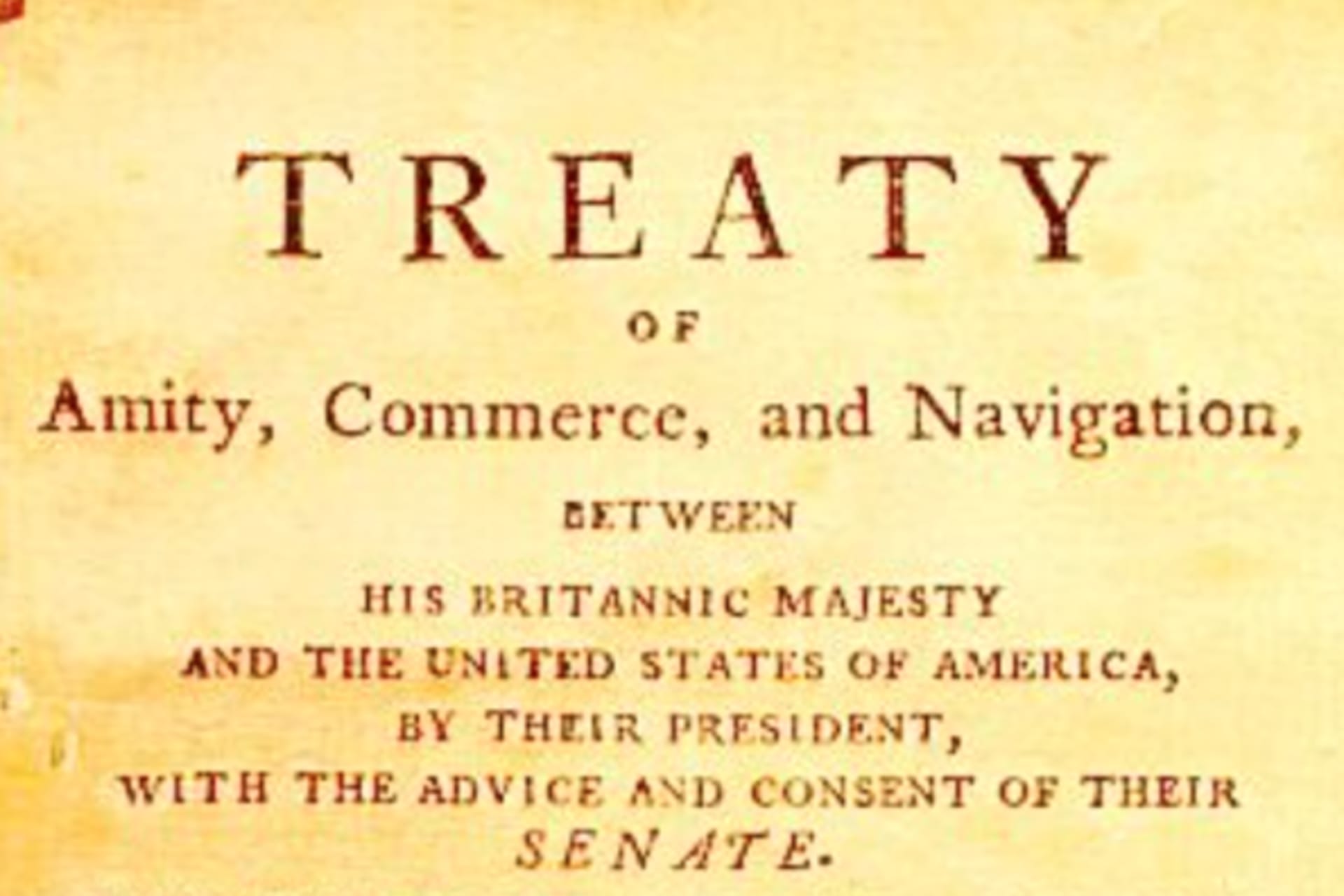
Today marks the 231st anniversary of the Senate vote to approve the Jay Treaty, or more formally, the Treaty of Amity, Commerce, and Navigation, Between His Britannic Majesty and the United States of America. You’re forgiven if you don’t have the date marked down in your calendar. Chances are your high school U.S. history class didn’t make much of the Jay Treaty. But to the Americans of the time it was as controversial and consequential, if not more so, than the vote on Treaty of Versailles would be 124 years later. The Jay Treaty didn’t just set precedents that have governed executive-legislative relations on foreign policy for more than two centuries. It also showed that even early on, politics didn’t stop at the water’s edge. It helped spur the formation of America’s first political parties, the Federalists and the Republicans, and it created an irreparable rift between the man who wrote the Declaration of Independence and the man who won the War of Independence.
A Weak Country in a Dangerous Neighborhood
The United States in 1795 was a long way from the superpower it is today. It had won its independence, but it was a weak country. It lacked both a standing army and significant naval forces. Its first attempt at self-government—the Articles of Confederation—had been so disastrous it was scrapped after less than a decade. A new government had been operating for just six years. Many Americans wondered whether it would be any more successful than its predecessor.
Making matters worse, Europe was at war. The French Revolution in 1789 had triggered a series of military conflicts across the continent. The most important for U.S. interests came in February 1793 when France declared war on Britain. The French declaration put President George Washington in a difficult position. The United States had won its independence in good part because it had signed a military alliance with France. But alliances cut both ways. If the United States returned the favor, it would put itself at great risk. Britain was America’s largest trading partner, and war would, at a minimum, bring British attacks on American shipping. War might also mean an invasion from British Canada and intensified raids across the northwestern frontier by Native American tribes allied with Britain. The result might be the end to the experiment in liberty.
An Alliance Obligation—Or Not
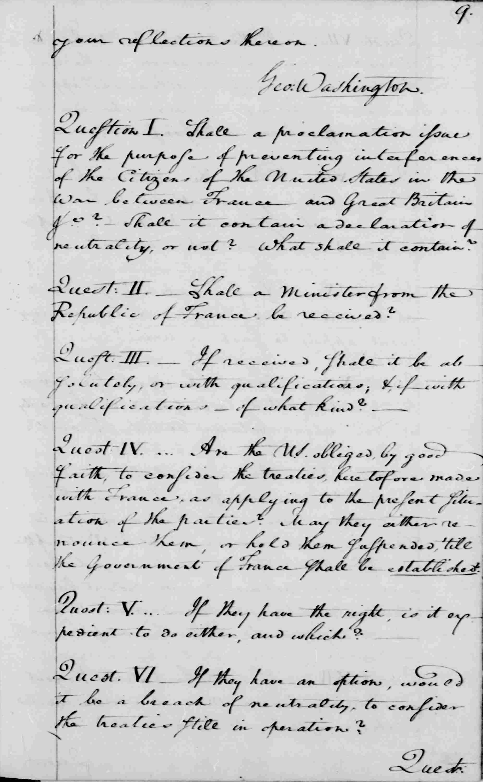
On April 19, 1793, Washington met with the four members of his cabinet: Secretary of the Treasury Alexander Hamilton, Secretary of State Thomas Jefferson, Secretary of War Henry Knox, and Attorney General Edmund Randolph. The previous day Washington had given them a list of thirteen questions prompted by the news that Britain and France were at war. Several of the questions dealt with how the United States should deal with what was now a new government in Paris. But the critical question was whether the United States was bound by its 1778 military alliance to side with France.
None of the cabinet members argued for siding with France. But their reasons for this conclusion differed significantly. Hamilton believed that the economic and security interests of the United States depended on reconciling with Britain. Siding with the increasingly radical government in France would undercut that goal. He argued that the United States had the right to abandon the 1778 treaty on the grounds that the government in Paris had changed. Simply put, the pledge the colonists made to King Louis XVI did not carry over to the French Republic.
Jefferson saw the French Revolution as a continuation of the American Revolution and viewed Britain as the threat to continued American independence. He argued that treaties were binding agreements between nations and not between governments. So the military alliance with France remained in effect despite the demise of the French monarchy. However, in Jefferson’s view it was premature for the United States to decide whether the treaty’s terms should be invoked. The United States could pursue a policy of neutrality provided it publicly avoided using the term, as that would imply it was revoking the treaty commitments it had made fifteen years earlier.
The Neutrality Proclamation
While sympathetic to Hamilton’s arguments for limiting tensions with Britain and his concerns about the direction the French Revolution had taken, Washington opted to pursue the course Jefferson suggested. On April 22, the president issued what history came to know as the Neutrality Proclamation, though in keeping with Jefferson’s advice, the word “neutrality” was not used. The United States did not terminate the alliance with France or formally declare itself neutral. However, it announced that it intended to stay out of Europe’s war and that it would prevent its citizens from aiding either side.
Washington’s decision angered many Americans. They saw it as aiding the hated British and abandoning a valued ally that had also thrown off the shackles of monarchy. The president suddenly found himself being denounced by people who had previously applauded him as the country’s indispensable leader. Vice President John Adams later described the spring of 1793 as a time “when ten thousand people in the streets of Philadelphia,” then the nation’s capital, “day after day, threatened to drag Washington out of his house and effect a revolution in the government or compel it to declare war in favor of the French Revolution and against England.”
The protests highlighted the fact that while the technical diplomatic question was what treaty obligations the United States had to France, the broader political question was how the United States should position itself toward Europe’s two leading powers. Hamilton spoke for those Americans who believed that U.S. economic and security interests lay in repairing relations with Britain. Jefferson, in contrast, spoke for Americans who feared that the United States might fall back under British control. Those Americans who shared Hamilton’s views became the core of the emerging Federalist Party, while those who shared Jefferson’s views became the backbone of the emerging Republican Party. (Those Republicans were the antecedents of today’s Democratic Party; the modern Republican Party was founded in 1854.)
No War and No Peace
The Neutrality Proclamation avoided outright war with Britain. It did not, however, resolve tensions with London. Those quickly worsened. British warships began seizing American merchant ships entering or leaving French ports in the West Indies, violating the traditional norm that neutral ships were allowed free passage provided they were not carrying munitions. The Royal Navy also began stopping American merchant ships and carrying off, or impressing, sailors it judged to be British deserters. Congress responded by debating a range of anti-British legislation, including one bill that would have banned all trade with Britain if it did not change its policies.
Congress eventually passed a month-long embargo on all foreign trade on the theory that it would halt attacks by the British Navy. Federalists feared, however, that this temporary expedient would soon give way to more antagonistic actions toward Britain. Worried that the country was heading toward a war it did not want and could not afford, a small group of Federalist senators agreed that one of them should encourage Washington to send an envoy to London. They hoped that diplomacy could end the attacks on U.S. merchant ships and settle a range of other disputes that roiled relations between the two countries.
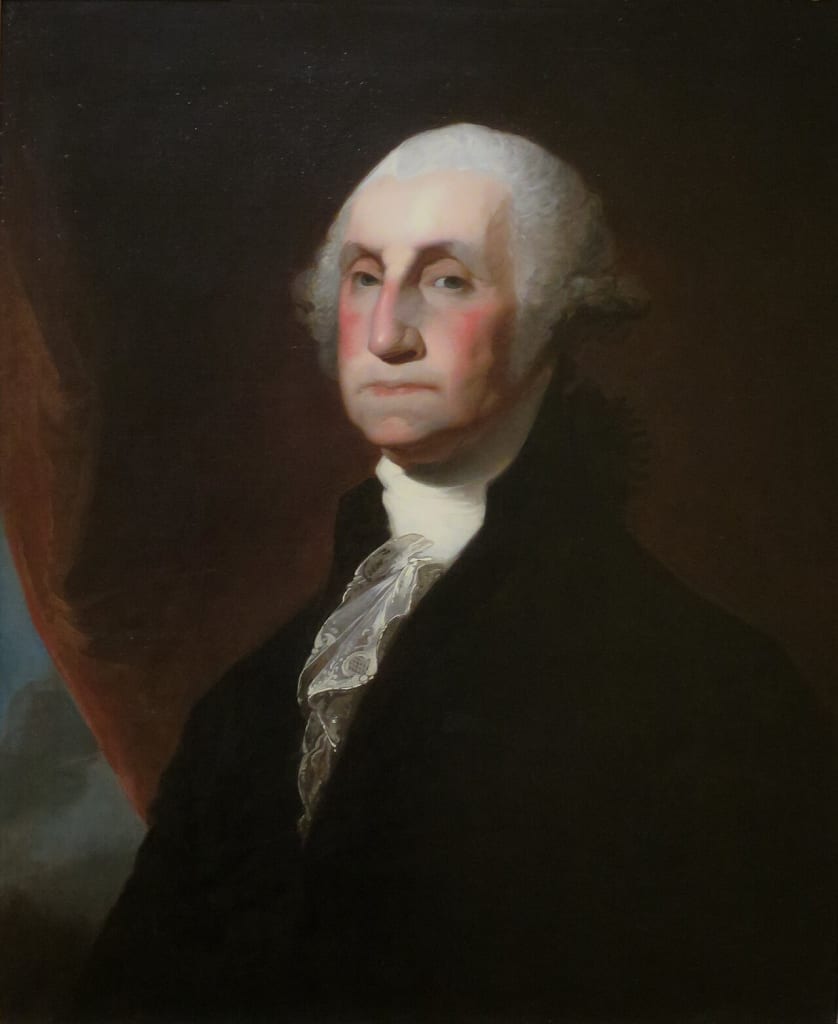
Washington was initially cool to the idea of sending an envoy. London might rebuff the diplomatic overture and humiliate his administration. After several weeks of reflection and as tensions with Britain rose, Washington changed his mind. The question then became, who should he send to London?
The Search for an Envoy
The Federalist senators hoped that Washington would send Hamilton. Although the president had immense respect for his treasury secretary, he dismissed the idea. The practice at the time, though one that did not last much beyond Washington’s presidency, was that the Senate had to confirm anyone the president sent abroad to conduct negotiations. Winning Senate consent for Hamilton’s nomination would be difficult. Even though Federalists dominated the Senate, the treasury secretary’s pro British views and his efforts to build a stronger national government had made him a lightning rod in American politics. As Washington gently put it, “Col. H. did not possess the confidence of the country.” Even if the Senate could be persuaded to confirm Hamilton’s nomination, any treaty he negotiated would be suspect to much of the country.
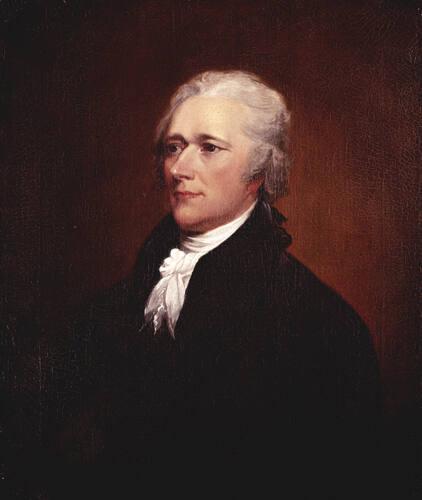
Hamilton made things easier for Washington by reading the room and asking not to be considered for the post. It would not be the last time in U.S. history that an administration would base its decisions on policy or personnel on judgments about the traffic Congress would bear.
Enter John Jay
With Hamilton no longer a possibility, Washington turned to John Jay, the chief justice of the Supreme Court, whom Hamilton had recommended. Jay had impeccable credentials for the position. He had been a president of the Continental Congress, served as a U.S. minister to Spain, spent five years as secretary of foreign affairs under the Articles of Confederation, and, along with Hamilton and James Madison, contributed essays to The Federalist Papers.
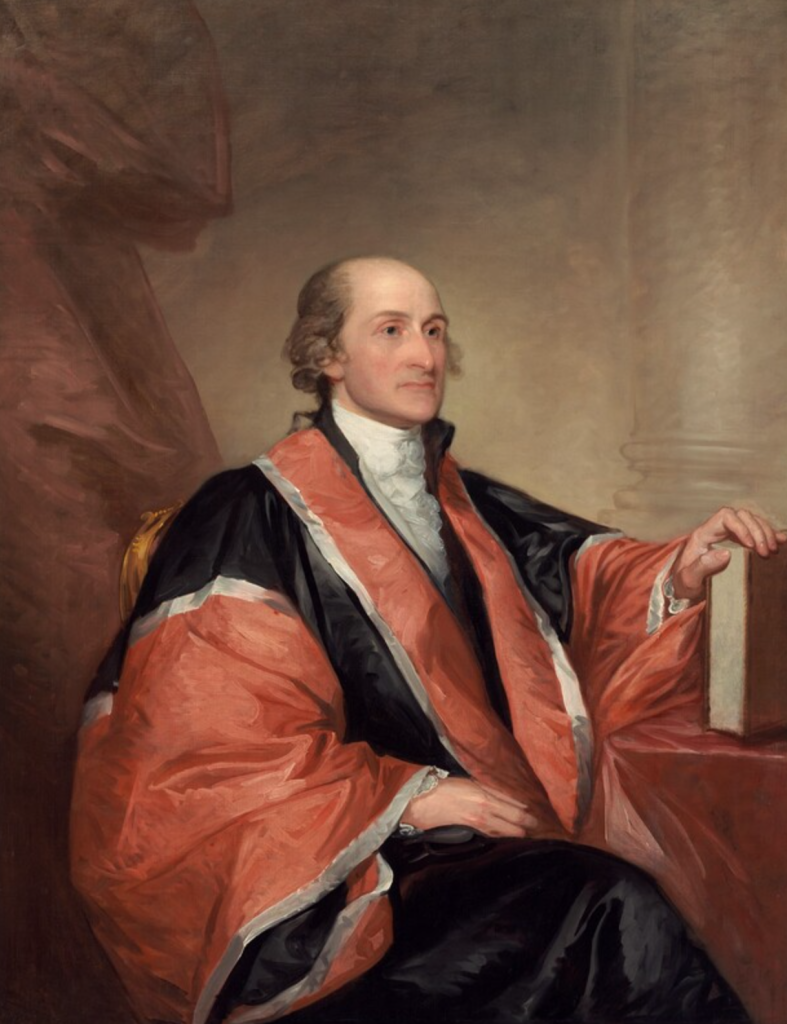
Even with this sterling record, Jay’s nomination sparked controversy, in part because he intended to continue as chief justice. (The Supreme Court in the 1790s had neither the importance nor the workload it has today.) Critics reasonably questioned the propriety of a justice negotiating an agreement that might one day come before his court. The deeper issue, though, was that Jay, like Hamilton, was seen as favoring Britain over France. But these qualms were quickly overcome. On April 19, 1794, the Senate confirmed Jay’s nomination by a vote of 20 to 10. (Jay would not be the last Supreme Court justice to take on side responsibilities; Justice Robert Jackson, for example, served as the chief prosecutor at the Nuremberg trials.)
Avoiding a Political Donnybrook
As important as who would represent the United States in negotiations with Britain would be the goals of the talks. The framers of the Constitution had envisioned the Senate as an advisory council to the president on treaty-making, offering not just consent at the end of the process but advice at the beginning. Washington, who had chaired the Constitutional Convention, had put that idea into practice in his first term by formally asking the Senate to approve negotiating instructions.
Such an approach worked when the Senate and the president broadly agreed on what they hoped to accomplish with diplomacy and the question was a matter of tactics. That was hardly the case with Jay’s mission. The divisions within the Senate (and the country more broadly) over what could and should be gotten from Britain meant that any debate over negotiating instructions would trigger a political donnybrook. Rufus King, a leading Federalist senator, quickly concluded, “From the Difficulty of passing particular instructions in the Senate, it seems to me the most suitable that the Pr. sh. instruct, and that the Treaty sh. be concluded subject to the approbation of the Senate.”
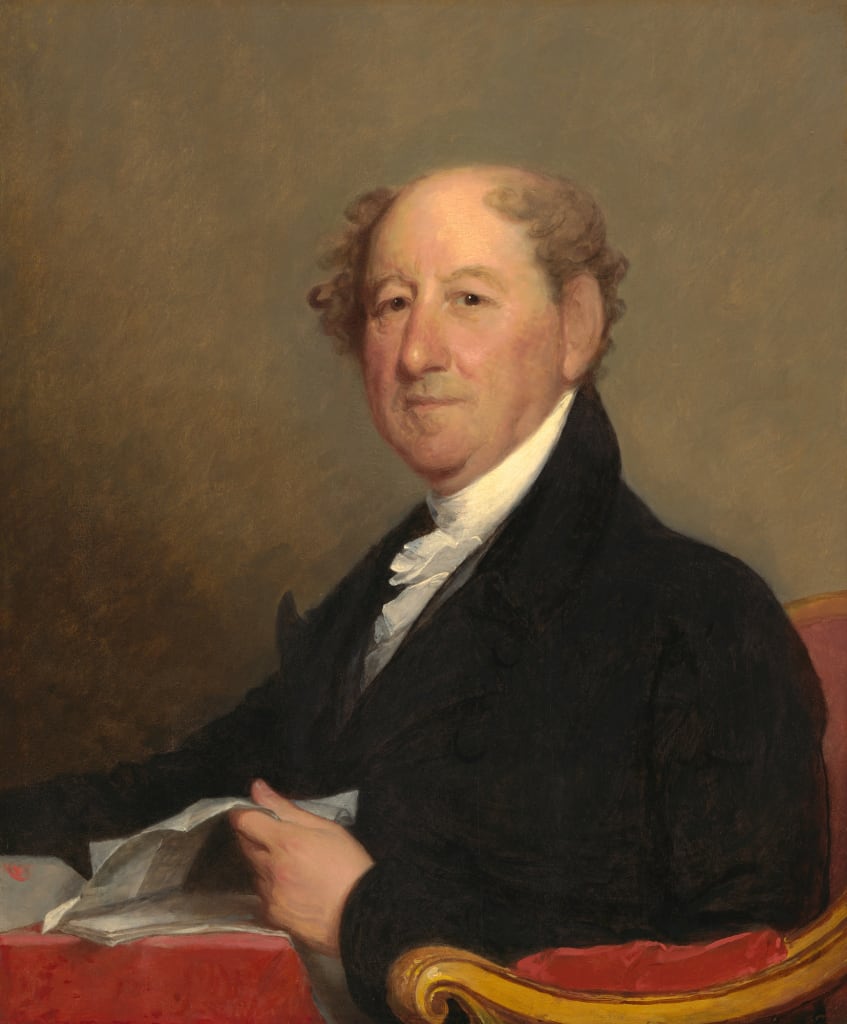
So when Republican senators moved that “the President of the United States be requested to inform the Senate of the whole business with which the proposed Envoy is to be charged,” Federalist senators voted down the resolution. This solved their immediate problem, though at the cost of unwittingly ceding a power that the Senate would never reclaim. Future presidents would not feel compelled, as a matter of constitutional duty as opposed to political expediency, to formally solicit the Senate’s collective views before opening diplomatic negotiations.
Jay Strikes a Deal
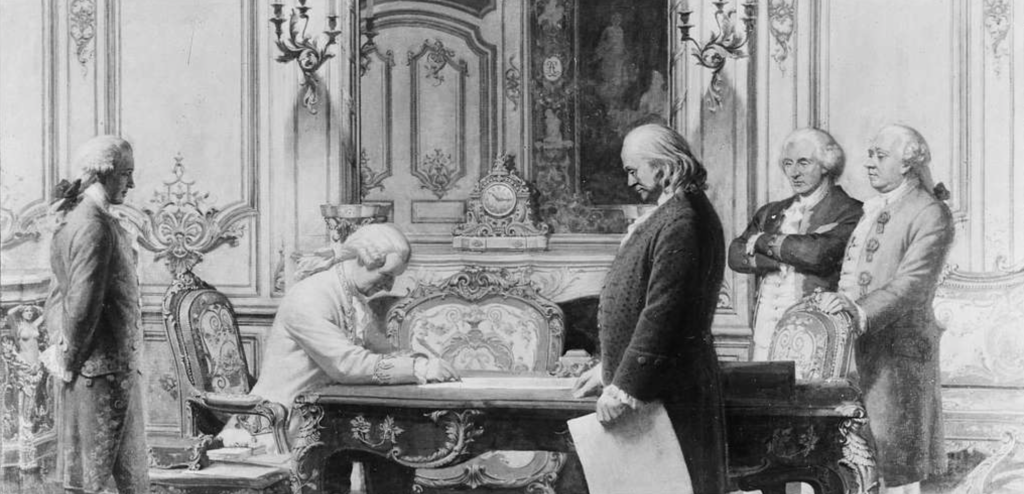
Jay sailed for London on May 12, 1794. By November, he had a deal. Given the dangers of mid-winter crossings of the North Atlantic, the official version of the treaty did not reach Philadelphia until March 7, 1795.
Whether Hamilton or anyone else could have struck a better bargain is debatable. What is not debatable is that Jay’s deal left even his supporters disappointed. On the positive side, he had reduced tensions with London, and with it, the chance of war. And he had persuaded the British to fulfill their earlier pledge to dismantle forts in the Northwest Territories and to agree to arbitrate claims left over from the Revolutionary War.
Beyond that, however, Jay had seemingly given up a lot in exchange for little. In particular, he had failed to persuade London to respect neutral trading rights or to end the practice of impressment. Worse yet for the Federalists, for whom merchants were a major constituency, the treaty’s Article 12 denied American shipping full access to the lucrative trade with the British West Indies.
The Senate Debates
Fearing public reaction, Washington kept the terms of the treaty secret while waiting for the Senate to reconvene for a special session in early June. (Congress had adjourned just days before the ship carrying the treaty arrived.)
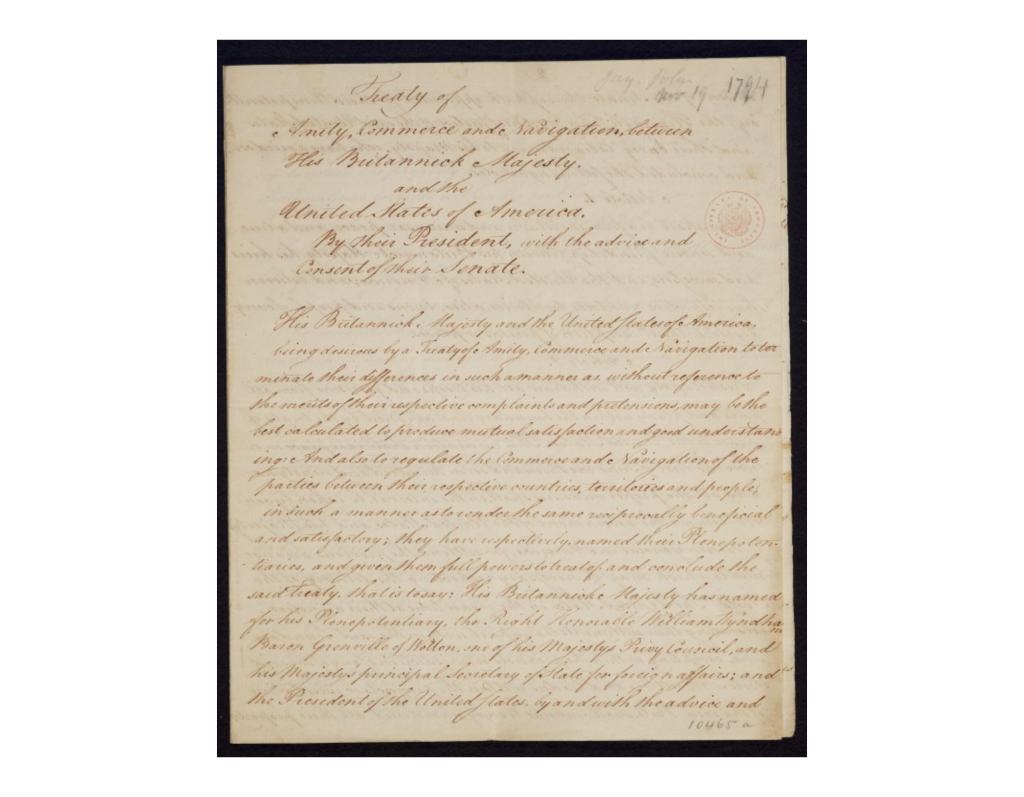
When the Senate debate eventually began, critics first moved to force publication of the treaty’s terms. They calculated—for the same reasons Washington had—that making the terms public would derail Jay’s handiwork. After that move was defeated, the debate turned to Article 12. Senator Aaron Burr proposed directing Washington to renegotiate Jay’s deal. It was a pivotal moment. Had Burr’s motion passed, the treaty-making process might look quite different today. As one scholar summarized it:
Washington might well have considered such an act as notice that, in the future, the Senate would expect to participate in the determination of the conditions under which a proposed treaty would be signed; at the very least it would have suggested forcibly the expediency of always consulting them before opening negotiations. It might also have led the Senate to expect such consultation and thus have made it easier for Senators or groups of Senators to demand it.
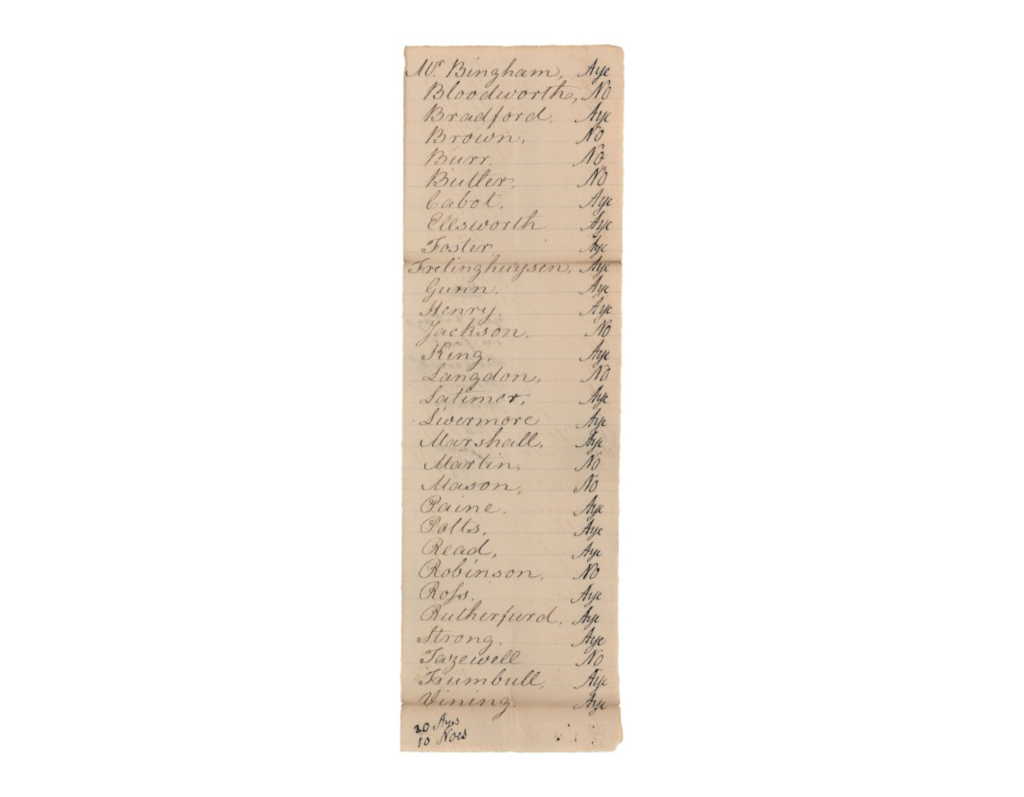
Burr’s motion lost 20 to 10 on what today would be called a party-line vote. A related effort by Southern senators to direct Washington to reopen negotiations with Britain to demand compensation for slave-owners whose enslaved peoples had been freed by the British during the Revolutionary War fared only marginally better.
With the idea of shelving the treaty itself shelved, the Senate turned to the position that Federalist senators favored: conditional approval. On June 24, 1795, the Senate voted—again by a margin of 20 to 10, the minimum support needed for passage—to approve the treaty. The Senate, however, added a caveat to its approval. It demanded that Article 12 be revised to address its concerns.
The Senate’s request was a novel, and perhaps even presumptuous, move. At the time, treaties were considered to be binding unless negotiators had strayed materially from their negotiating instructions. No one argued seriously that Jay had. Instead, senators were throwing tradition aside, inserting in its place what would become the distinctive Senate practice of modifying treaties through reservations, understandings, and declarations.
Diplomatic and Political Problems
The Constitution said nothing about conditional approval of treaties. So a question immediately arose: If London agreed to the proposed revision, would Washington have to resubmit the treaty to the Senate? Republican senators certainly thought so. That would give them another opportunity to defeat a treaty they detested, or as Jefferson, who had stepped down as secretary of state at the end of 1793, put it, “give the majority an opportunity of correcting the error into which their exclusion of public light has led them.” However, the decision was Washington’s to make and not Jefferson’s. After consulting with his cabinet, Washington concluded that resubmission was unnecessary.
As Washington was sounding out his cabinet, he was faced with a more immediate political problem: the terms of the Jay Treaty had become public. Senator Stevens Thomson Mason of Virginia, convinced of the “importance that the People should possess a full and accurate knowledge of the subject to which their attention may be drawn, and which I think has already been improperly withheld from them,” leaked the treaty to the editor of the Aurora, a pro-Republican Philadelphia newspaper, which published it on July 1.
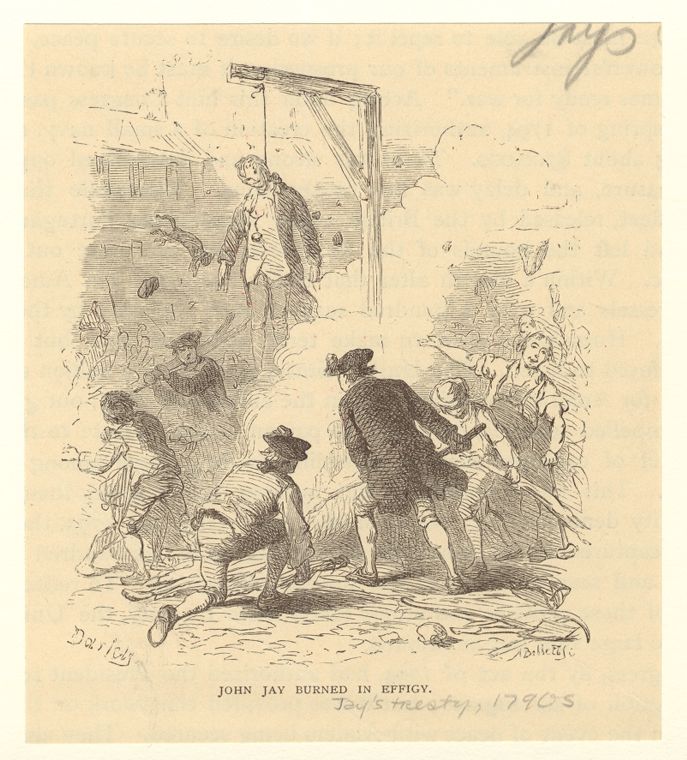
With the publication of the treaty’s terms, protests erupted “like an electric velocity” hitting “every part of the Union.” Washington’s house was “surrounded by an innumerable multitude from day to day, buzzing, demanding war against England,” while some Republicans called for a “speedy death to General Washington” and newspapers ran political cartoons showing him being taken to the guillotine. Jay, who had just stepped down as chief justice to become governor of New York, was burned in effigy in so many towns and cities that “he said he could have walked the length of America by the glow from his own flaming figure.” Hamilton was heckled, jeered, and then struck in the forehead with a rock when he publicly defended the treaty in New York City. Washington himself said “the cry against the treaty is like that against a mad dog and everyone, in a manner, seems engaged in running it down.”
Washington Decides
Washington returned to Mount Vernon to decide whether to ratify the treaty. (While it is common to talk about the Senate ratifying treaties because it votes on resolutions of ratification, ratification is the step presidents take after the Senate provides its consent. And yes, presidents can and have declined to ratify treaties the Senate has approved.) Noah Webster, a Federalist and the man who gave Americans their own dictionary, described Washington’s political dilemma:
The peace of our Country stands almost committed in either event. A rejection of the Treaty leaves all the causes of hostility, unadjusted, with the double exasperation of temper. A ratification threatens evil commotions, at least in the Southern States. A rejection sacrifices Mr. Jay & perhaps many of his friends, a ratification threatens the popularity of the President, whose personal influence is now more essential than ever to our Union.
In mid-August, Washington made his decision: he would ratify the treaty and seek Britain’s consent to the changes the Senate had directed. He calculated that for all its flaws, the treaty would buy what the United States needed most—time. As he subsequently explained it:
Twenty years peace, with such an increase of population and resources as we have a right to expect; added to our remote situation from the jarring powers, will in all probability enable us in a just cause to bid defiance to any power on earth. Why then should we—prematurely embarrass (for the attainment of trifles comparatively speaking) in hostilities. the issue of which is never certain—always expensive—& beneficial to a few only (the least deserving perhaps) whilst it [must] be distressing & ruinous to the great mass of our Citizens.
Perhaps to Washington’s surprise, the British agreed to the Senate’s changes. On February 29, 1796, Washington proclaimed the treaty publicly. Neither the Senate nor individual senators protested the decision not to resubmit the treaty to the Senate. A vigorous public relations campaign by Hamilton likely played a role. Over the course of the previous seven months he had written twenty-eight essays under the pen name “Camillus” defending the treaty.
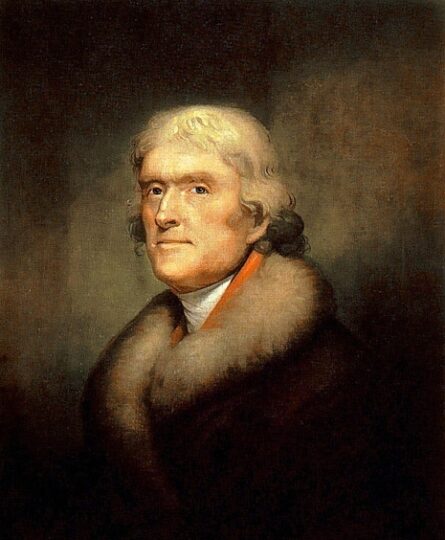
Hamilton’s determination did not persuade Jefferson to change his view on the Jay Treaty. The man from Monticello continued to view the agreement as “really nothing more than a treaty of alliance between England and the Anglomen of this country against the legislature and people of the United states.” But Jefferson did grudgingly admit: “Hamilton is really a colossus to the antirepublican party. Without numbers, he an host within himself. They have got themselves into a defile, where they might be finished; but too much security on the Republican part, will give time to his talents & indefatigableness to extricate them.”
A Rearguard Action
Washington’s proclamation of the Jay Treaty’s ratification should have ended the debate. But it didn’t. That spring, House Republicans, led by Madison, made a final run at derailing the agreement.
They first voted to demand that Washington provide the House with Jay’s negotiating instructions. This demand faced an immediate constitutional objection; the Constitution explicitly left the House out of the treaty-making process. Madison worked around that problem by claiming that the Jay Treaty extended to trade matters, and the Constitution explicitly gave the House a role in regulating foreign commerce.
(Madison’s argument ran counter to the position he had argued for at the Constitutional Convention. That point was not lost on Washington. He knew what arguments the delegates to the convention had made. He was its presiding officer. The minutes of the Constitutional Convention were still secret at the time.)
Washington believed that providing the documents would “render the Treaty making power a nullity without” the House’s consent. He denied the House’s request, noting that the Constitution had not given the House a role in treaty making: “To admit … a right in the House of Representatives to demand to have as a matter of course all the papers respecting a negotiation with a foreign power would be to establish a dangerous precedent.“ Washington’s refusal set the ground for the modern concept of executive privilege, though, as he himself noted, the requested papers had been shared with the Senate pursuant to the discharge of its constitutional duties.
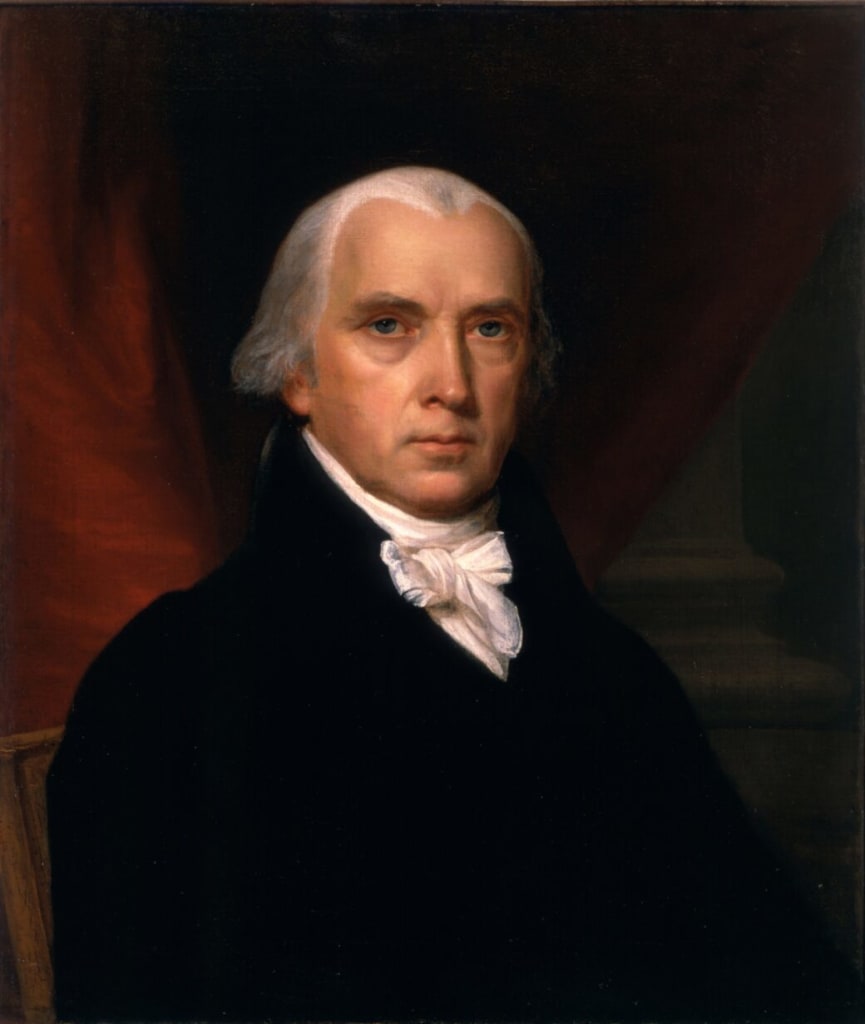
Washington’s dismissal of the House request prompted the first party caucus in the House. Republican members debated what to do. They did not reach agreement, but Madison and his supporters pushed ahead nonetheless with an effort to deny the funds needed to implement the Jay Treaty. The move exploited a silence in the Constitution: Could a treaty approved by only the Senate obligate Congress to appropriate funds? Oliver Ellsworth, the new chief justice of the Supreme Court, issued an advisory opinion—a practice the modern Supreme Court steadfastly avoids—saying it could and did because a treaty is an “organized & perfect compact which binds the Nation & its Representatives.”
Ellsworth’s opinion, however, counted for far less than how House members voted. On April 29, Madison looked to be on the verge of success. A critical vote ended in a tie. Everyone expected Speaker of the House Frederick Muhlenberg to break the tie in Madison’s favor. But Muhlenberg went the other way. It was a courageous vote that cost him dearly. His brother-in-law stabbed him for deserting the Republican cause, and he lost his reelection bid.
On April 30, 1796, the House voted to appropriate the funds needed to implement by a 51 to 48 vote. A diplomatic, as well as constitutional, crisis was averted, in good part because of practical politics. Many lawmakers from what was then the western United States voted to fund the implementation of the Jay Treaty despite having vociferously opposed its ratification. Their constituents had been writing them for weeks to urge them to pass the appropriation bill because it would fund the forts needed to protect them from Native American attacks. Blocking the bill would leave them defenseless. As the saying goes, all politics is local.
The Legacy of the Jay Treaty
More than two centuries of hindsight has vindicated the Jay Treaty. As the historian Joseph Ellis put it:
While the specific terms of the treaty were decidedly one-sided in England’s favor, the consensus reached by most historians who have studied the subject is that Jay’s Treaty was a shrewd bargain for the United States. It bet, in effect, on England rather than France as the hegemonic European power of the future, which proved prophetic. It recognized the massive dependence of the American economy on trade with England [and] linked American security and economic development to the British fleet, which provided a protective shield of incalculable value throughout the nineteenth century. Mostly, it postponed war with England until America was economically and politically more capable of fighting one.
Whether you accept the historical consensus or not, the Jay Treaty debate clearly established the outlines of the treaty-making process as we know it today, just as it hardened the divisions between Federalists and Republicans.
The debate over the Jay Treaty also produced a lasting break between Washington and his fellow Virginians, Jefferson and Madison. Washington never forgave Jefferson for encouraging his allies in the Republican press to vilify his character and to dismiss him as Hamilton’s pawn because of his support for the treaty. When Martha Washington later called Jefferson “most detestable,” she likely was reflecting her husband’s views. Washington’s anger at Madison, who had once been one of his closest aides, went perhaps even deeper because of his duplicity in claiming a role for the House in treaty-making. America’s first president never spoke to his former aide again.
The United States celebrates its 250th anniversary in 2026. To mark that milestone, I am resurfacing essays I have written over the years about major events in U.S. foreign policy. A version of this essay was published on June 24, 2020.
Jack Patton assisted in the preparation of this article.