The Time Is Ripe for Russia-Ukraine Peace Talks, But Putin Could Escalate Conflict
Resolve at the NATO summit to bolster Ukraine and President Donald Trump’s newly supportive comments could create momentum for negotiations to end the war. But Russian President Vladimir Putin, despite a string of setbacks, appears ready to ramp up his aerial assault on Ukraine.
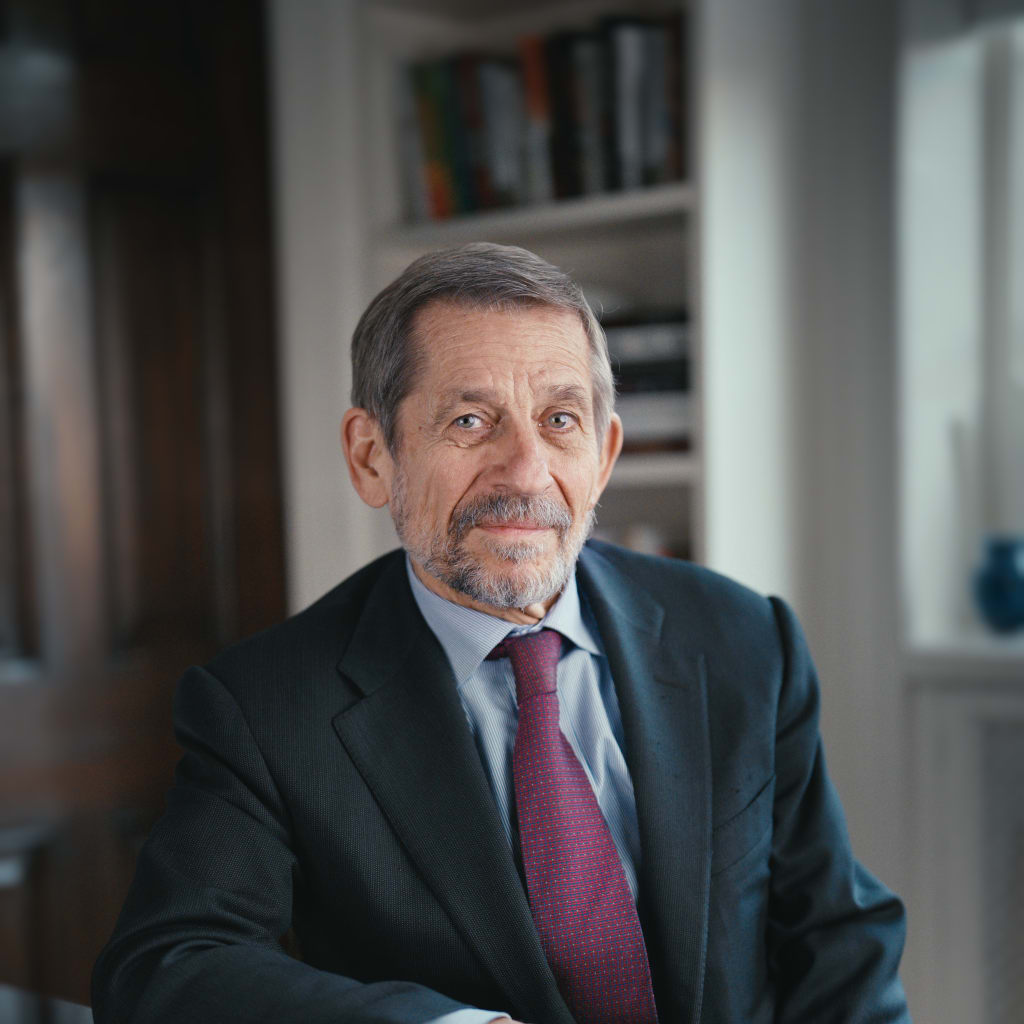
Thomas Graham is a former senior director for Russia on the National Security Council staff and author of the book Getting Russia Right.
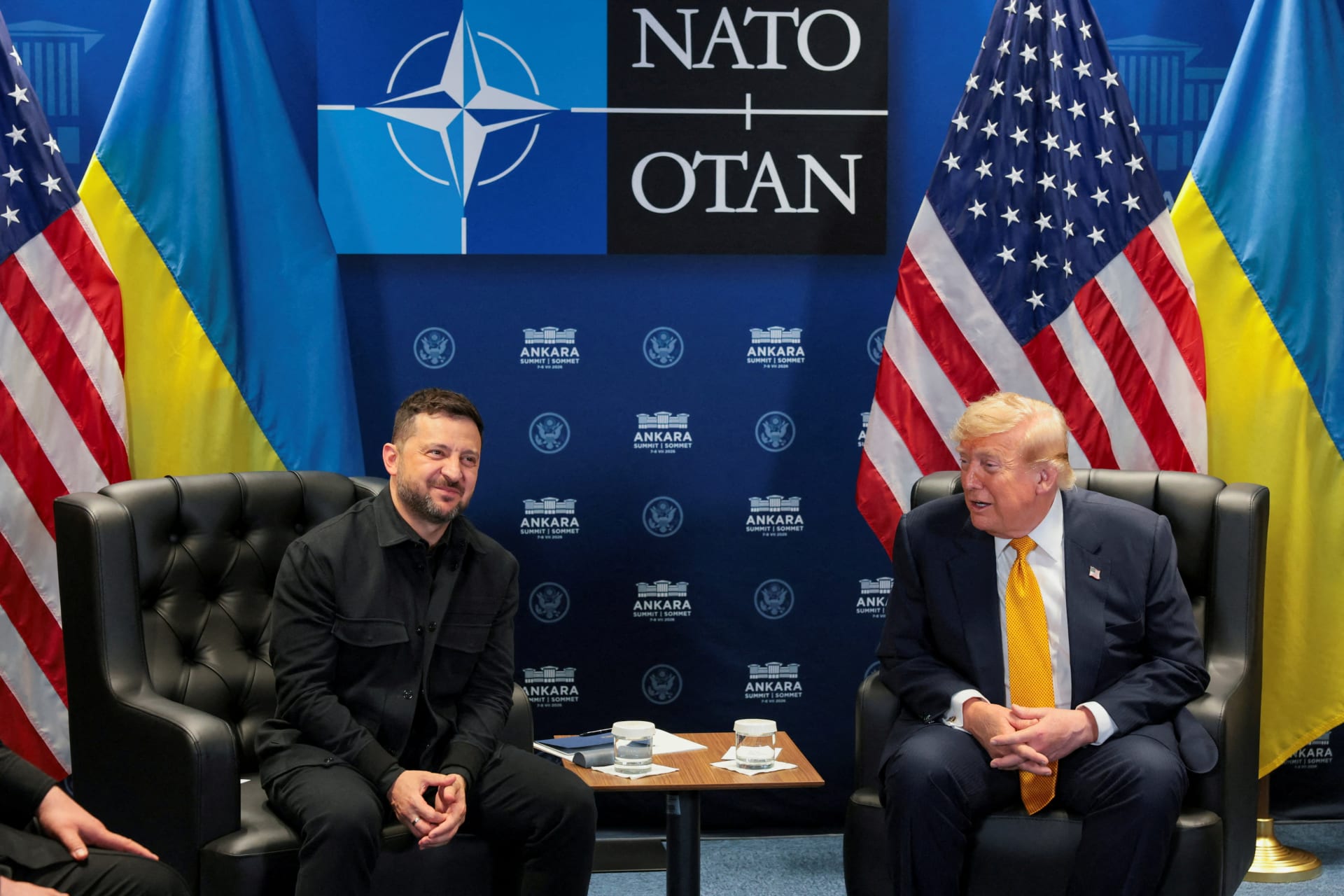
President Donald Trump’s cordial July 8 meeting with Ukrainian President Volodymyr Zelenskyy on the margins of the NATO summit in Ankara has reinforced the prevailing Western narrative that the tide has turned in Ukraine’s favor in its war with Russia. Trump praised Ukraine’s recent success on the battlefield and suggested that its deep strikes into Russia’s heartland could persuade Russian President Vladimir Putin to begin good-faith negotiations. He also answered one of Zelenskyy’s urgent requests by agreeing to license the production of Patriot interceptors to Ukraine.
The meeting is the latest positive news for Ukraine in recent weeks. Ukraine has brought Russia’s advances on the battlefield to a halt. Its deep strikes against energy infrastructure in Russia have caused a gasoline shortage across the country and reduced Russian oil exports, which provide critical revenue for its war machine. A well-executed campaign of drone strikes is isolating Russian-annexed Crimea from the rest of Russia.
The gasoline shortages are only one manifestation of mounting political and socio-economic troubles in Russia. The economy is on the edge of a recession, and a budget crisis is looming. Popular and elite discontent with the war is growing, and Putin’s popularity rating is steadily falling.
Nevertheless, it is premature to say that the tide is turning in Ukraine’s favor. Ukraine’s recent diplomatic and battlefield successes have done little to alleviate the devastating impact of continued warfare. The country struggles with a deepening demographic crisis, growing economic havoc, and the mounting costs of reconstruction. Ukraine needs to end this conflict as soon as possible.
Putin’s hard line
Putin is not backing away from his maximalist demands. To the contrary, he has just expanded them, calling for the liberation of not only the Donbas but also Novorossiya, a loose historical designation that includes thousands of square miles of land stretching from Kharkiv province in Ukraine’s northeast to its border with Moldova and the enclave of Transnistria in the southwest. Rather than moving toward good-faith negotiations, Putin has stepped up massive air strikes on Ukrainian cities, exploiting widening gaps in Ukraine’s air defenses. Trump’s decision on Patriot interceptors will do nothing to close that gap in the near term. Ukraine will need months, if not years, before it can produce the interceptors locally.
The European Union has moved in recent months to bolster material and diplomatic backing for Ukraine and the continent’s NATO members have ramped up spending on their own defenses. But alliance members worry about Russian retaliation. While an overt Russian invasion of a NATO ally remains a remote prospect, the Kremlin will likely ratchet up hybrid attacks to test the alliance’s resolve and unity. Meanwhile, Moscow is raising alarms about what it views as Europe’s rapid militarization (while ignoring that it might be a response to its own belligerence). Persistent warnings by officials in Europe and Russia of a coming war, in the absence of any substantial diplomatic contact, only heighten the risk of accidental war.
Intensive diplomacy is urgently needed now to break the escalatory spiral and press for a settlement. Only Washington can lead this effort: it alone can talk to all the parties to the conflict—Moscow, Kyiv, and key European capitals. The Europeans may be trying to open a diplomatic channel to Moscow, but their inability to agree on the right approach and Moscow’s deep skepticism of their strength and intentions augur ill for success. Zelenskyy may be calling for direct talks with Putin, but the Russian president is loath to grant his Ukrainian counterpart the legitimacy such talks would bestow.
In the past two months, Moscow has made clear it wants to resume talks with Washington. That Putin initiated two phone calls to Trump in April and May, in large part to discuss Ukraine, underscores his desire to renew talks that broke off in February after the United States launched its war against Iran.
Washington as broker or spoiler?
There is good reason to be skeptical of the Kremlin’s aims. Nothing from the public statements of Russian officials or media reporting indicates that Putin wants to use Washington as a mediator in good-faith negotiations to end the war. More likely, his goal is to counter Europe’s and Ukraine’s influence on Trump, especially after the U.S. president agreed to the June G-7 leaders’ statement in Evian, France, promising “unwavering” support for Ukraine and Trump’s cordial meeting with Zelenskyy. That Trump failed to call Putin shortly after that meeting, as he had promised, will only heighten concerns.
Washington could, nevertheless, launch a process of intense shuttle diplomacy—between Kyiv and Moscow, and including European capitals—to press for a framework to guide future negotiations on ending the war and an accompanying ceasefire.
To succeed, Washington would eventually have to offer its own vision of a balanced framework agreement as a basis for negotiation. And it would have to be willing to use the leverage it has over all parties to the conflict to force agreement. Its leverage over Ukraine might be diminishing as Kyiv develops and produces more of its own weaponry, but Kyiv still relies on the United States for critical battlefield intelligence and urgently needs more Patriot interceptors.
With regard to Moscow, that leverage consists of both pressure (military support for Ukraine, stricter sanctions on Russia, and continued efforts to narrow Russia’s geopolitical space worldwide, but especially in the former Soviet space) and incentives (promises of calibrated sanctions relief and small steps toward the normalization of relations that gives Moscow a sense of the greater benefits to come once a ceasefire is in place).
The framework of a deal
Despite the sharpening rhetoric on all sides, the contours of a framework are already visible: a ceasefire along the line of contact (Kyiv will never cede land Russia has not seized on the battlefield); closer security ties between Ukraine and the West without formal NATO membership; and agreement on no further NATO expansion eastward. Such a settlement would offer both Kyiv and Moscow an outcome they could claim as victory. Kyiv would have preserved Ukraine’s sovereignty, independence, and European ambitions. Moscow could claim success in countering the collective West’s alleged effort to inflict a strategic defeat on Russia and halting NATO’s eastward expansion.
Such an agreement would be fragile. Much would remain to be done to stabilize the long frontier between Russia and the West and to negotiate a more permanent security arrangement in Europe that satisfies the needs of both Europe and Russia. Negotiations to end the Russia-Ukraine conflict are but the first step in a longer negotiation over European security that could stretch out for years, if not decades. But it would be a critical first step.
This work represents the views and opinions solely of the author. The Council on Foreign Relations is an independent, nonpartisan membership organization, think tank, and publisher, and takes no institutional positions on matters of policy.