Is the Trump-Tinubu Collaboration Working?
Despite undeniable progress, insecurity in Nigeria remains by and large intractable.
By experts and staff
- Published
 Ebenezer ObadareCFR ExpertDouglas Dillon Senior Fellow for Africa Studies
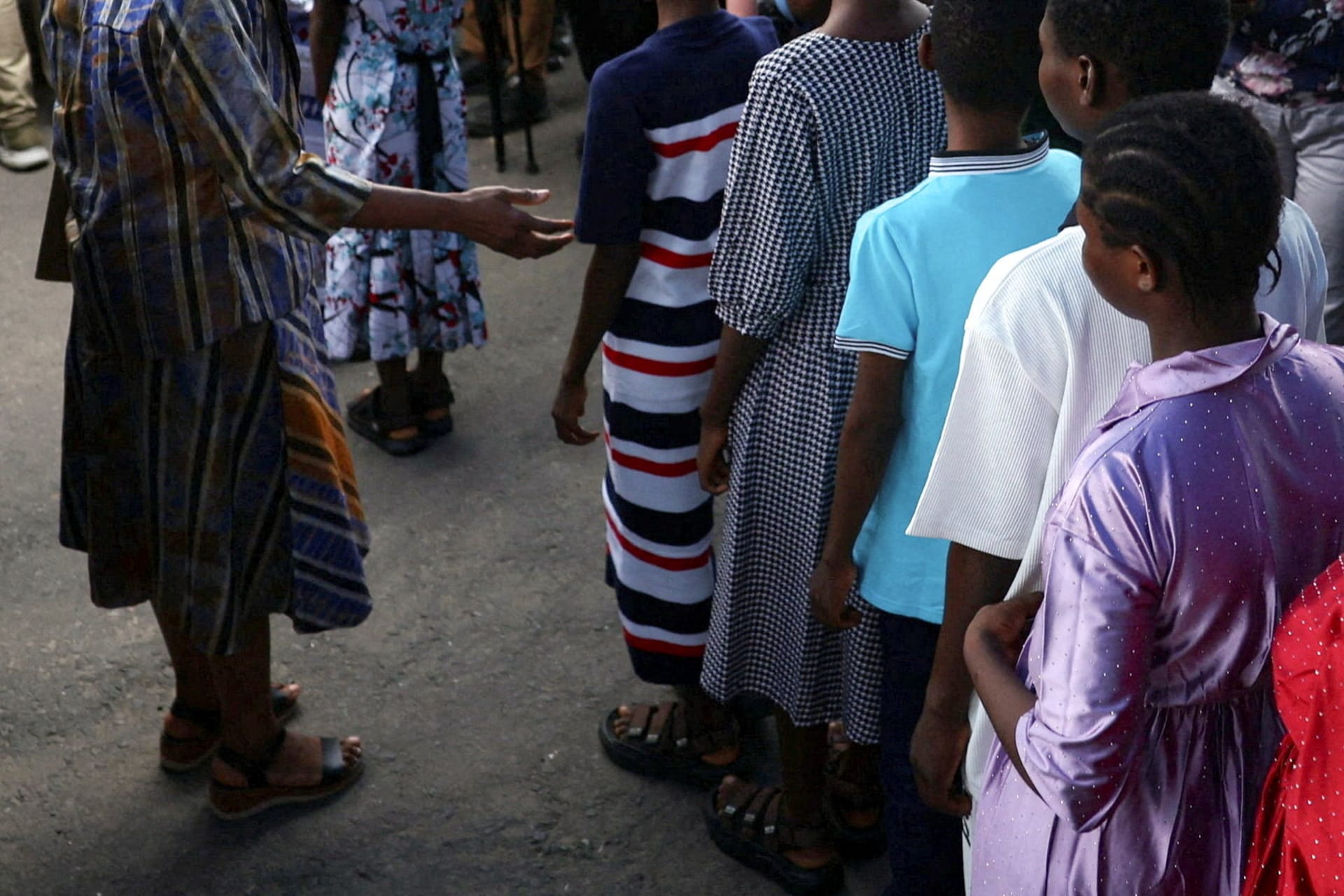
Earlier this month, Nigerian security forces stormed a forest hideout inside Kainji Lake National Park near New Bussa in Niger state and freed a total of 308 hostages. The liberated hostages had been held in captivity by gunmen linked to diverse extremist groups who abducted them during coordinated attacks on various communities in the North-Central Kwara and Niger states last February. Jointly undertaken by the military and intelligence forces, the hostage-freeing operation has been trumpeted by the Nigerian authorities as the largest and most successful of its type in Nigerian history, and a delighted President Tinubu has chalked it up to “stronger coordination among Nigeria’s military, police, and intelligence institutions.”
The Nigerian President has every reason to be delighted. The Lake Kainji joint operation is the latest in a chain of successful rescue operations by Nigerian security forces against various terrorist targets since the start of the year. Last month, security forces rescued forty-four schoolchildren and teachers who had been abducted earlier in May after gunmen with connections to the Ansaru terrorist group attacked schools and villages in Oriire Local Government Area of Oyo state. Over the past month, there have been other successful rescue operations in Edo (July), Kogi (August) and Niger (August) states, respectively. The year had begun on a positive when the Nigerian Army rescued eleven kidnap victims during a late-night counterterrorism operation along the Kaduna-Abuja Expressway corridor in January. At the time, the Defence Headquarters had boasted that “the operation was made possible through the use of high-definition, long-range CCTV surveillance, which enabled troops to locate and intercept the terrorists’ movement in real-time.”
Other operational successes have followed. In May, a helicopter-borne assault by combined members of the United States Navy’s SEAL Team 6 and Nigerian army commandos on a location in the northeastern state of Borno led to the killing of the Islamic State’s global second-in-command, Abu-Bilal al-Minuki, and an estimated forty of his senior lieutenants. Similar operations specifically aimed at decapitating the leadership of terror groups active along Nigeria’s northern corridor have claimed senior Boko Haram/ISWAP leader Julaibib (January); Boko Haram commander Abu Khalid (February); and ISWAP media chief Abu Salim al-Barnawi (July). Indeed, if the Theatre Commander of Operation Hadin Kai—code name for the Nigerian military’s counterinsurgency campaign—Major General Abdulsalam Abubakar is to be believed, “over 1,000 terrorists, including several senior commanders, were eliminated during the first quarter of 2026” alone.
On the whole, it would seem that the tide has turned in favor of the Nigerian authorities in their prolonged campaign to arrest the jihadist insurgency and restore some semblance of normalcy in the affected parts of the country. At the barest minimum, the situation seems totally different from the status quo at the end of last year when, under intense pressure from Washington, the Tinubu government agreed to establish a Joint Working Group, co-chaired by the national security advisers of both countries. That group subsequently agreed on joint training, intelligence sharing, and coordinated military operations, culminating in the 2026 U.S.-Nigeria Defence Cooperation Roadmap.
Abuja has not been shy in touting the benefits of this cooperation, as demonstrated by the above hostage rescue and terrorist leadership decapitation operations. Last month, the Nigerian presidency was proud to make public a letter of July 6, 2026, from President Trump to President Tinubu, describing U.S.-Nigeria collaboration as “crucial at a time where conflict has spread across West Africa and around the world,” praising Tinubu’s “decisive leadership on behalf of the Nigerian people,” and underscoring that “[they] both share a mutual goal of confronting terrorism in all its forms.”
Abuja’s remarked successes have not been entirely down to the security partnership with Washington. For his part, Tinubu has augmented the collaboration with a raft of decisive domestic policies, including a record 5.41 trillion naira 2026 defense budget, declaration of a nationwide security emergency, the proposed recruitment of thousands of additional police and military personnel, and salary increases of up to 80 percent for members of the armed forces.
Notwithstanding, the administration would be delusional to think that it has things under control. As a matter of fact, and for all the creditable efforts of the Tinubu administration, highlighted by the collaboration with Washington, the security situation across the country remains critical. For instance, while the Nigerian government’s achievements must be acknowledged, we cannot ignore the fact that an average of twenty-seven lives continue to be lost daily to various forms of violence across the country; or that, as reported by Amnesty International, at least 1,100 people were abducted across northern Nigeria in just the first four months of this year. Overall, Nigeria recorded 237 more terrorism-related fatalities in 2025 than in the previous year, according to data from the 2026 Global Terrorism Index [PDF].
For this reason, it comes as no surprise that “two out of three Nigerians say that the country is no safer today than it was five years ago.” A recent survey by NigeriaPolls shows that “57 percent of Nigerians feel unsafe in their own neighborhood, a figure that rises to 72 percent in the North-West and 68 percent in the North-East.”
Part of the problem is the by-now-familiar variegated nature of Nigeria’s security challenge. On a spectrum, it features the well-documented and constantly evolving jihadist insurgency on one end, to random acts of everyday violence, including kidnapping for ransom, on the other end. What this means is that it is inherently resistant to a one-size-fits-all remedy, precisely because what works for the insurgency may not necessarily work for other forms or generators of insecurity.
Given this reality, it is encouraging that President Trump’s letter to President Tinubu expressed the White House’s openness to “continued discussions” with Nigeria. There is every reason to surmise that, for the foreseeable future, Nigeria will need the “skills, tools, and intelligence” that only the United States is able to provide.
For now, the collaboration seems to be working, but a declaration of victory is premature.
Nathan Schoonover contributed to the research for this article.
This work represents the views solely of the author(s). The Council on Foreign Relations is an independent, nonpartisan membership organization, think tank, and publisher, and takes no institutional positions on matters of policy.