The U.S. Economy Was Shaky Before the Iran War. Now It’s in Real Trouble.
While the U.S. economy grew strongly in 2025, it is currently on shaky ground. Spiking inflation, static interest rates, the ongoing Iran war, and other dynamics have contributed to a difficult economic moment ahead of midterm elections in November.
By experts and staff
- Published
 Roger W. Ferguson Jr.CFR ExpertSteven A. Tananbaum Distinguished Fellow for International Economics
- Research Associate, International Economics
Roger W. Ferguson Jr. is the Steven A Tananbaum Distinguished Fellow for International Economics at the Council on Foreign Relations. Maximilian Hippold is a research associate at CFR.
Iran’s closure of the Strait of Hormuz after the February U.S. and Israeli attack has sparked a global economic supply shock. The resulting damage could exceed the disruptions caused by Russia’s invasion of Ukraine in 2022. Despite a two-week ceasefire, traffic through the strait has hardly resumed to the level that President Donald Trump had promised, and countries around the world have started to feel the effects.
Asia has been hit particularly hard: more than 80 percent of the oil that typically transits the strait goes to the region, which means several countries have had to implement fuel-saving measures because of the conflict. In Bangladesh, garment factories are sitting idle; Pakistan has begun closing schools; and countries like the Philippines and Sri Lanka have shortened the workweek. Even wealthier economies such as Australia and South Korea have started to encourage conservation efforts.
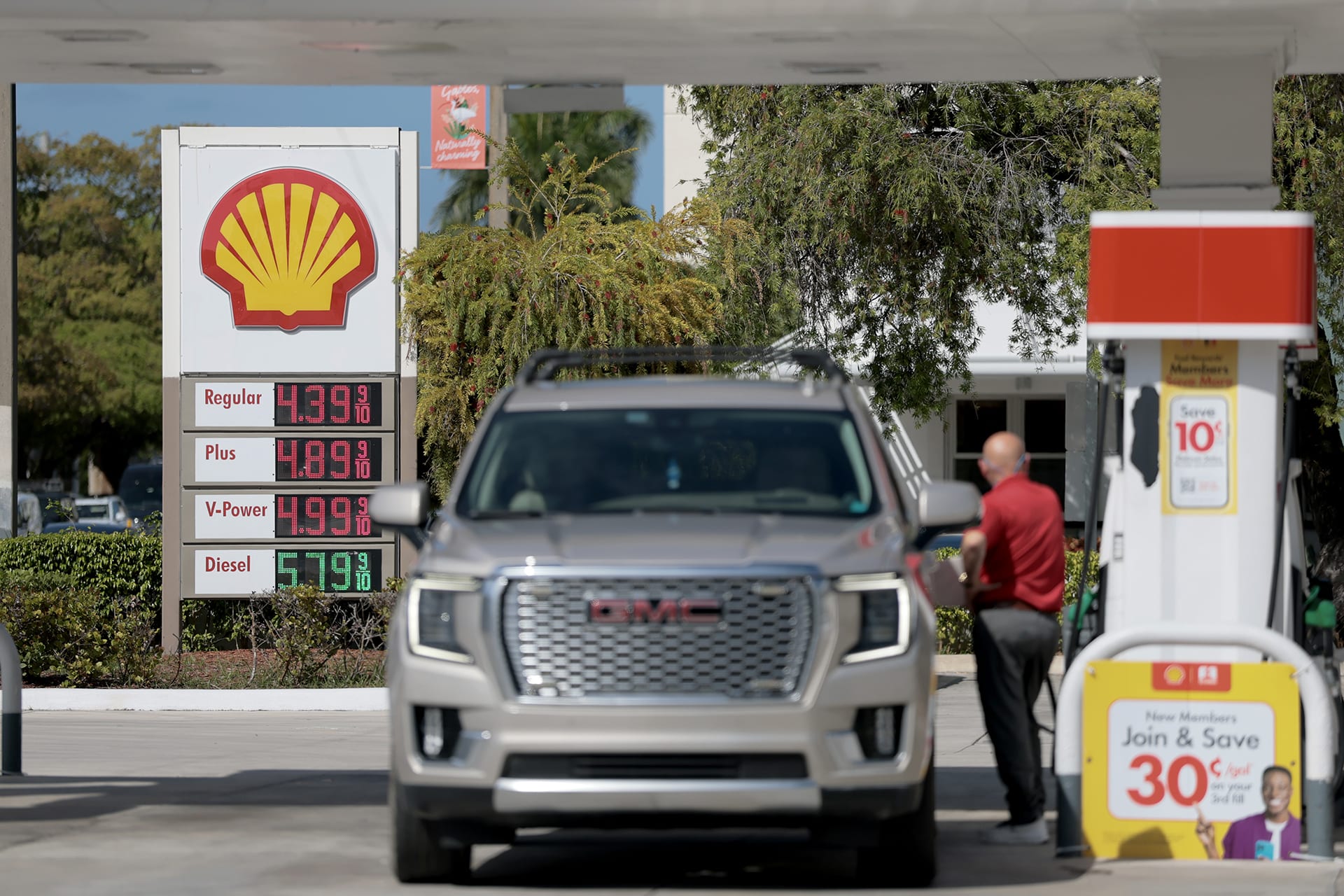
The United States, the world’s largest oil producer and a net exporter, is not immune to these global developments. U.S. consumers see the effect every time they pass a gas station where prices have risen by more than a dollar to above an average of $4 per gallon. These price shocks are likely to intensify in the coming months and will spread well beyond the gas station. The conflict’s economic repercussions could prove pivotal—and political—during a midterm election year in the United States. Many Americans are still feeling the strain of years of elevated inflation, and the concept of affordability has remained a top voter issue ahead of November. The risks of higher inflation, slower growth, and rising unemployment could tighten the screws on the U.S. economy and the electorate.
Beyond the consequences of the conflict, the U.S. economy faces several additional sources of uncertainty. Recent layoffs at major tech companies like Amazon and Meta are raising fears about large-scale job displacement. College graduates in particular are growing anxious about their job prospects. Analysts continue to speculate about an AI-driven bubble, while others have raised concerns that private credit—loans issued by nonbank financial institutions such as private equity firms, rather than traditional retail banks—could pose systemic risks comparable to those of the subprime mortgage crisis that triggered the 2008 financial crash.
Businesses are also confronting renewed uncertainty about long-term trade policy after the Supreme Court struck down Trump’s tariffs. The administration’s current emergency tariffs are set to expire after 150 days, and questions remain about whether alternative legal foundations for renewed tariffs would survive judicial scrutiny. For businesses weighing decisions about supply-chain restructuring and the reorientation of manufacturing hubs, this uncertainty is particularly unwelcome.
While the U.S. economy grew strongly in 2025, it is currently on shaky ground. Below are critical aspects—inflation, interest rates, the Iran war, and more—that help contextualize the economic moment.
The Iran war’s economic ripple effect
The Strait of Hormuz handles roughly one-fifth of the world’s oil shipments, and it is a vital passageway for fertilizer, liquefied natural gas (LNG), and helium used in high-tech manufacturing such as semiconductor production.
The International Energy Agency (IEA) has warned that the world is experiencing its largest oil-supply shock on record, and it has recommended drastic demand-reduction measures, including carpooling, remote work, and lower highway speed limits. Higher global oil prices will drive up costs at the pump and ripple across other areas of daily life. This includes airline tickets, plastic-derived products, and imported goods from around the world.
Farmers worldwide—including those in the United States who had not already purchased and stored fertilizer ahead of this year’s planting season—are facing sharply higher input costs. Both imported and domestically produced food prices are set to rise as a result. The United States is thus exposed not only to domestic supply disruptions but to the broader inflationary pressures building across the global economy. With growth also threatened by higher prices, uncertainty, and supply shortages, the U.S. economy risks sliding into stagflation—a combination of rising prices and stagnant growth.
The effects on the United States as well as the global economy are likely to be long-lasting. Iranian strikes on oil and gas infrastructure in the Gulf have caused damage that could take years to repair in some cases, and fertilizer shortages cannot be remedied mid-season. Even a full reopening of the strait and an immediate end to hostilities would not spare the economy from significant pain in the months ahead.
With midterm elections approaching in November, the emerging economic crisis risks becoming a political one for Republicans. Only 30 percent of voters approve of Trump’s handling of the economy. The Trump administration, in coordination with the IEA and partner countries, has released oil from the Strategic Petroleum Reserve, and lawmakers in Congress are discussing a temporary reduction in the federal gas tax to offer relief at the pump. These measures could provide some near-term cushion, but there is no straightforward remedy for the long-term damage—to global fertilizer supplies, to oil infrastructure, and to the confidence of consumers and businesses—that the closure of the strait has set in motion.
Inflation spikes in the United States
A 21 percent surge in gas prices was the primary driver of a recent jump in inflation, which rose from 2.4 percent in February to 3.3 percent in March. Inflation, therefore, remains above the Federal Reserve’s target of 2 percent. Similarly, core inflation, which excludes volatile food and energy prices, remains above target at 2.6 percent. The personal consumption expenditures price index, the Fed’s preferred measure of inflation, as it, among other benefits, reflects changes in spending patterns more quickly, reported inflation at 2.8 percent and core inflation at 3 percent.
Importantly, the supply shocks stemming from the conflict have only begun to trickle through the economy. With inflation already up from 2.4 percent in February, next month’s figures are expected to be higher still. The Organization for Economic Co-operation and Development, a grouping of mostly wealthy nations, recently warned that inflation in 2026 could reach as high as 4.2 percent. This could be bad news for Republicans in an election year, especially after Trump promised to bring down inflation rates further.
The job market wobbles
The most recent jobs report beat expectations. After a volatile start to the year—with 160,000 jobs added in January and 133,000 lost in February—the U.S. economy added 178,000 jobs in March. The unemployment rate held steady at 4.3 percent. While monthly job numbers remain uneven, the labor market is showing broader signs of stabilization, moving toward a low-hire, low-fire equilibrium. Risks nonetheless remain.
Higher prices could weigh on demand, in turn slowing economic growth. Job displacement driven by widespread AI adoption—while not yet prominently reflected in the data—is gaining anecdotal support, including from Amazon’s and Meta’s recent large-scale layoffs. The current economic climate also appears to be falling particularly hard on recent graduates, who are struggling to find entry-level positions.
Consumer and business confidence conflict
Given this uncertainty, U.S. consumer confidence has declined sharply. The widely followed University of Michigan Survey of Consumers reported a drop to a new all-time low of 47.6, falling below the previous record of 50 set in June 2022 during President Joe Biden’s administration.
Business confidence told a different story—at least initially. In the first quarter of 2026, the measure rose to 59, well above the neutral threshold of 50. Released two days before the first U.S. and Israeli missile strikes in February, the survey found that business leaders, particularly at larger companies, were reporting an optimistic outlook for both their own industries and the broader economy.
Fed policy and interest rates
After ending the previous year with three consecutive cuts of 25 basis points, the Federal Reserve has held rates steady at its last two meetings of the Federal Open Market Committee, the interest rate-setting body. The target range for the federal funds rate currently stands at 3.5 to 3.75 percent.
Given the heightened inflation risk, further rate cuts in the near term appear unlikely. The central bank will want to observe how the supply shock ripples through the broader economy—beyond immediate concerns such as fuel prices—and assess how persistent these effects prove to be before acting. The conflict in Iran risks placing Fed policymakers in a difficult position if the institution’s dual mandate pulls in opposite directions. Should the labor market begin to cool because of a wider economic slowdown, the Fed could find itself caught between fighting inflation and dealing with higher unemployment. Kevin Warsh, nominated by the president to succeed Fed Chair Jerome Powell in May, is expected to fulfill the Trump administration’s preference for lower interest rates—but the current economic environment may force him to do the opposite.
As a further risk to monetary policy, five years of inflation above the Fed’s 2 percent target threatens to entrench higher inflation expectations among U.S. consumers. Given the important role such expectations play in wage negotiations, the Fed will be closely watching for signs of a wage-price spiral, in which inflation expectations become self-fulfilling.
Growth persists, as do stagflation concerns
Despite a year of economic turmoil stemming from Trump’s “Liberation Day” tariffs, the U.S. economy grew by 2.1 percent in 2025, down from 2.8 percent in 2024 and 2.9 percent in 2023. Among the Group of Seven nations, the United States recorded the strongest growth, followed by Canada and the United Kingdom.
The conflict and the resulting closure of the Strait of Hormuz now risk pushing the economy toward stagflation—a combination of high inflation and weak growth. The International Monetary Fund has recently warned that the global economy faces recession risk if conditions do not improve.
Mixed news for U.S. housing market
The housing market remains a concern for many Americans, though some encouraging signs had begun to emerge before the conflict. For the first time since 2022, the average thirty-year fixed mortgage rate dropped below 6 percent. A significant bipartisan piece of legislation aimed at cutting red tape, restricting large institutional investors from purchasing single-family homes, and expanding the supply of affordable housing is also advancing through Congress, having already cleared the Senate with a large bipartisan majority.
The economic fallout from the conflict is now casting a shadow over these developments. Mortgage rates have climbed to an average of 6.25 percent or above, and the prospect of Fed rate cuts—which had offered some hope to prospective buyers—has dimmed as persistent inflation raises the likelihood of rate increases instead. The White House has further acknowledged the scale of the challenge, noting in a recent report that the United States is short by as many as ten million homes.
This work represents the views and opinions solely of the authors. The Council on Foreign Relations is an independent, nonpartisan membership organization, think tank, and publisher, and takes no institutional positions on matters of policy.