Three Geopolitical Constraints on South Korea’s Foreign Policy
By experts and staff
- Published
- Scott A. SnyderSenior Fellow for Korea Studies and Director of the Program on U.S.-Korea Policy
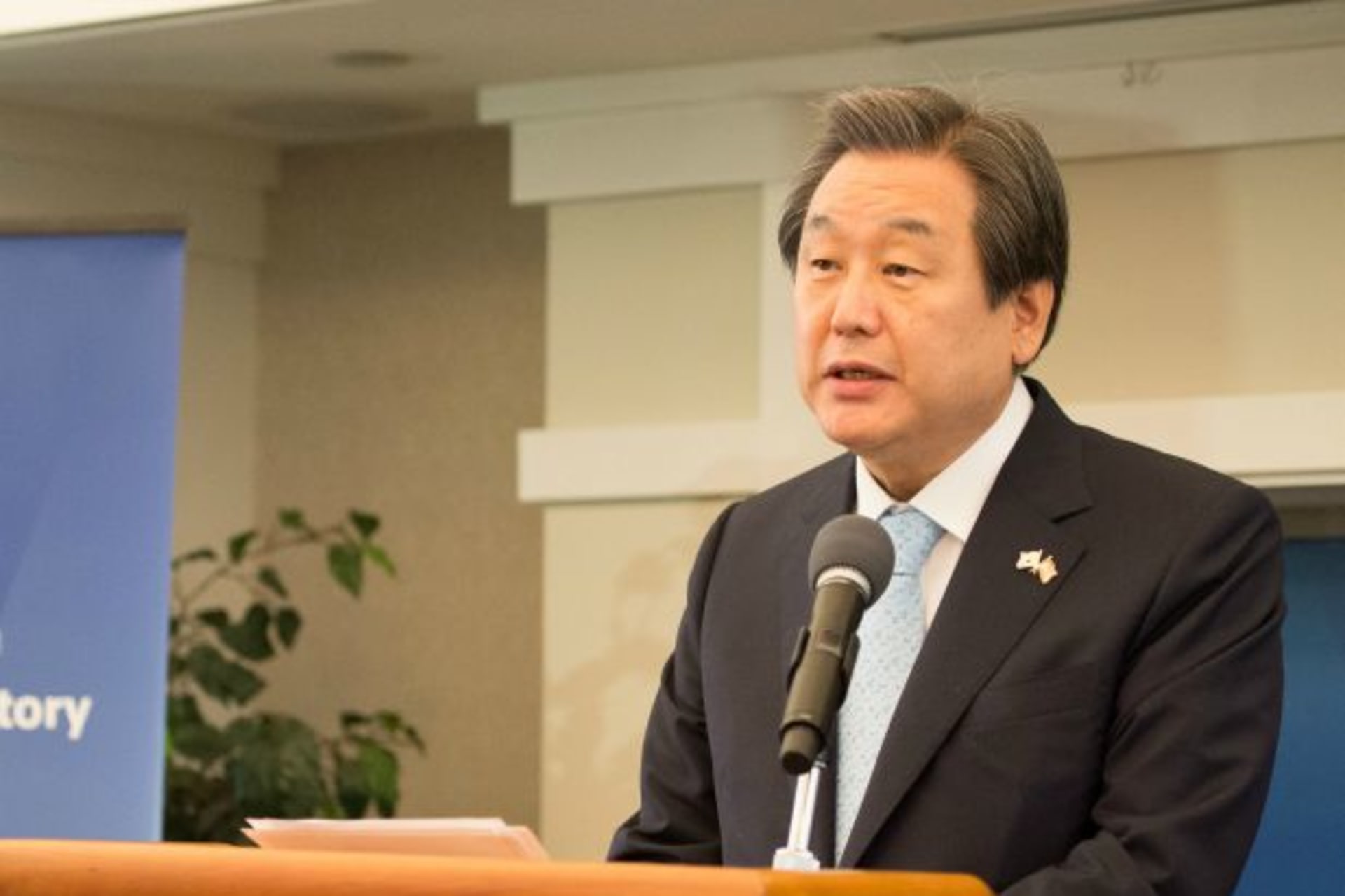
Ruling (Saenuri) Party Chairman Kim Moo-Sung led a South Korean National Assembly delegation visit to Washington this week and gave a speech at the Woodrow Wilson Center for International Scholars. His speech included three points that nicely summarize the constraints South Korea is currently facing in its foreign policy.
The challenge is that there are some clear prerequisites that must be addressed for South Korea to play such a role. First, there is a need for strong South Korean political leadership that is neither hobbled by internal domestic division nor excessive focus on North Korea. Both of these factors are inevitably perennial influences on South Korean foreign policy, but they must not be allowed to inhibit South Korea’s capabilities to play a regional leadership role.
Second, South Korea’s power as a connector depends on the South Korea to simultaneously maintaining productive relations with both Tokyo and Beijing. Without these two, South Korea risks being an outlier as the regional powers trudge forward without them.
Third, while South Korea’s capability to play this role will continue to derive from its close alliance with the United States, its effectiveness will lie in South Korea’s ability to be a partner to the United States with sufficient strategic weight to offer both ideas leadership and connective capacity to achieve tangible regional outcomes.
I imagine that most foreign observers may doubt whether South Korea’s political leadership can achieve even one of these prerequisites for it to exercise leadership in Northeast Asia. But if South Korea truly wants to transform its geography from a curse into a blessing, such a transformation will only occur through effective South Korean political leadership. If South Korea can achieve these goals, it wouldn’t be the first time that Miracle on the Han exceeded expectations.