Trump Coordinates With Europe on Ukraine
By experts and staff
- Published
- CFR Editors
Welcome to the Daily News Brief, CFR’s flagship morning newsletter summarizing the top global news and analysis of the day.
Subscribe to the Daily News Brief to receive it every weekday morning.
Top of the Agenda
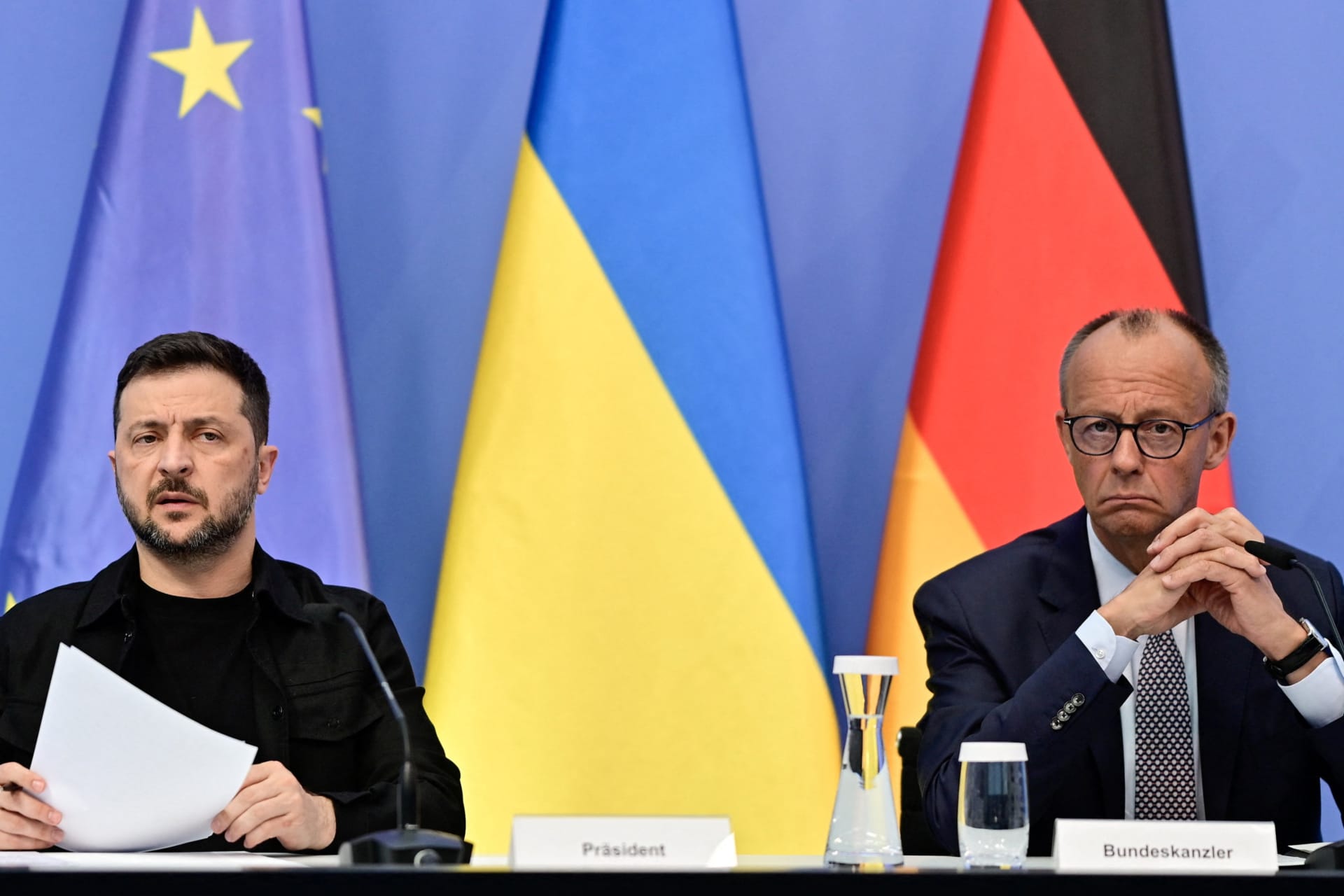
U.S. President Donald Trump voiced willingness to pressure Russia and floated the possibility of a U.S.-Russia-Ukraine meeting after speaking with European leaders yesterday. In a virtual summit, the leaders of countries including France, Germany, and Ukraine laid out common positions ahead of Trump’s meeting tomorrow with Russian President Vladimir Putin. Trump said afterward the call was “very good” and that Russia would face “very severe consequences” if it does not agree to end the war after tomorrow’s meeting.
The Europe-U.S. call.
- Trump told European leaders that he would not negotiate territorial matters, which needed to be decided between Putin and Ukrainian President Volodymyr Zelenskyy.
- Trump’s goal for tomorrow’s meeting in Alaska is “to obtain a ceasefire,” French President Emmanuel Macron said. Kyiv has called for a truce before any further negotiations.
- Trump also accepted that future security guarantees for Ukraine would come jointly from the United States and Europe, according to Macron.
- Zelenskyy said after the summit that Putin’s pursuit of peace is “bluffing” and that talks should be held trilaterally. On social media, he wrote that the United States, Ukraine, and Europe were pursuing a “common course.”
What comes next. While Trump has been vague in comments about the details of a potential war settlement, Russia as well as Ukraine and its European allies have staked out public positions.
- A Russian foreign ministry spokesperson said yesterday that Moscow’s stance remains unchanged, referring to a speech in which Putin said Russia seeks the entirety of certain Ukrainian territories that it currently partially occupies as well as for Ukraine to forego ambitions to join NATO.
- Zelenskyy wrote that “diplomacy on Ukraine and Europe must be conducted together with Ukraine and Europe,” and that “security must indeed come with strong guarantees.”
- France, Germany, and the United Kingdom said in a joint statement that partner countries would “deploy a reassurance force” after fighting stopped and that there should be “no limitation” on Ukraine’s military or its partnerships with other countries.
Trump and Putin are due to meet in Anchorage, Alaska, tomorrow at 11:30 a.m, local time. Trump has pledged to update Ukraine and European allies afterward.
“Ukraine’s very survival as an independent sovereign state is at stake. More attention needs to be paid to the question of how a ceasefire agreement can enhance Ukraine’s ability to deter future Russian aggression. That question is not just vital to Ukraine’s security, but to NATO’s, too.”
—CFR expert Paul B. Stares
Across the Globe
Ruling on foreign aid cuts. The Trump administration can continue to freeze billions of dollars that Congress earmarked for HIV and AIDS programs and other global health spending, a federal appeals court ruled yesterday. Aid groups had sued against the freeze, saying it exceeded presidential authority. The court did not rule on that constitutional question, but said the case did not warrant an injunction.
South China Sea tensions. China’s military yesterday said it “drove away” a U.S. ship from an area near the disputed Scarborough Shoal. It was the first known U.S. operation near the shoal in at least six years; Washington said it was still following international law. One day earlier, the Philippines had accused China of “dangerous maneuvers” in the area.
Norway dam sabotage. Norwegian police believe Russian hackers were behind a dam malfunction in April that affected water flows, they said yesterday. Russia’s embassy in Oslo called the accusation “unfounded.” European officials have blamed Russia for a wave of suspected hacking incidents across the region since Russia invaded Ukraine.
Tariff response stimulus. Brazil will issue $5.5 billion worth of credits for companies hit by U.S. tariffs, President Luiz Inácio Lula da Silva said. The plan was temporarily enacted through an executive order but still requires Congressional approval within four months. U.S. tariffs on many Brazilian goods stand at 50 percent. Lula said Brazil would not retaliate with countertariffs “for now.”
Russia crackdown on calls. Russia is restricting some calls on WhatsApp and Telegram, saying the step was necessary in order to fight crime. Telegram did not immediately comment, while a WhatsApp spokesperson said the app “defies government attempts to violate people’s right to secure communication.” Russia listed Meta as an extremist group in 2022 but had allowed WhatsApp to operate as usual.
South Africa-Iran ties. South Africa’s government disassociated itself from comments the country’s top general made while visiting Iran this week, saying they do not represent official foreign policy. The general criticized Israel and expressed solidarity with Iran, calling for deeper ties. South Africa is trying to negotiate a deal with the United States to reduce 30 percent tariffs.
Proposed UN Gaza mission. Spain said yesterday that it endorsed a French proposal for a UN-mandated international mission to stabilize Gaza in the aftermath of the current war. Macron floated the prospect on Monday, saying it should protect civilians and work to support Palestinian governance, without giving further details.
Peru’s pardons for security forces. President Dina Boluarte signed a law pardoning security forces for alleged abuses during the 1980s and 1990s amid operations against leftist rebels. Deaths and disappearances of rural Peruvians were widespread during the conflict. The pardon would wipe 156 sentences and 600 pending trials, the country’s human rights coordinator said. The Inter-American Court of Human Rights spoke out against the pardon.
What’s Next
- Today, Russian Prime Minister Mikhail Mishustin begins a visit to Kyrgyzstan.
- Today, global negotiations on a potential plastics treaty are due to conclude in Geneva.
- Tomorrow, Mexican President Claudia Sheinbaum and Guatemalan President Bernardo Arévalo will meet on the countries’ shared border.