Trump Is Pulling Troops From Germany. The Missiles Are a Bigger Problem.
The United States is pulling troops from Germany, but the troop numbers aren’t the story. Canceled missile deployments and dwindling weapons stockpiles are quietly eroding the foundations of NATO deterrence.

Liana Fix is a senior fellow for Europe at the Council on Foreign Relations. She is the author of the forthcoming book Germany Rearmed: The Return of War and the End of Illusions.
President Donald Trump’s recent announcement that the United States would withdraw five thousand troops from Germany—with the threat of “cutting” more from U.S. bases across Europe—has taken U.S. allies by surprise. The decision seems to be driven less by strategic calculations about burden-shifting within NATO and more by a desire to punish Europeans for their criticism of and limited support for the Iran war.
While this move does not appear to threaten the minimum number of seventy-six thousand troops that Congress has mandated to be stationed in Europe, it does add to a list of issues that have lasting consequences for European security. This includes depleted U.S. stockpiles due to the Iran war and delayed arms deliveries to Europe, but the possible cancellation of Tomahawk cruise missiles that were planned to be stationed in Germany in 2027 is of particular concern.
It was long expected that, in the context of the Pentagon’s so-called Force Posture Review, the United States would reconsider its current troop level and basings in Europe. However, Europeans had been reassured by U.S. NATO Permanent Representative Matthew Whitaker, who said that any adjustments would be pursued in coordination with U.S. allies to ensure that there were no “strategic gaps” that could leave Europe more vulnerable. At a time when Europe has only begun to rearm itself, these troop withdrawals could weaken the credibility of U.S. deterrence in Europe.
The decision is particularly painful for Germany, which, in many ways, has been a model NATO ally given the Trump administration’s expanding demands. Berlin is massively investing in its own defense and will reach NATO’s goal of 3.5 percent of GDP by 2029. Germany is also the biggest aid contributor to Ukraine, and it has just published—for the first time in its post-1945 history—a military strategy that had received praise from Elbridge Colby, the U.S. under secretary of defense for policy, as recently as April 24. It also ordered a German minesweeper to be deployed to the Strait of Hormuz once the United States and Iran reach a stable ceasefire. But it appears Chancellor Friedrich Merz’s criticism of the Iran war, meant for a German domestic audience, has triggered a reaction from Trump.
At first glance, however, the effect of the withdrawal itself is rather limited. Five thousand troops represent about one-seventh of the roughly thirty-eight thousand service members currently stationed in Germany. These forces mostly serve U.S. global interests, with the military depending on bases like Ramstein Air Base to support its operations in Africa, Europe, and the Middle East. And even if the Trump administration wanted to make further adjustments to the troop levels in Europe, Congress has created its legal baseline of seventy-six thousand deployed service members that would bar the White House from withdrawing more. The House and Senate Armed Services Committees, on a bipartisan basis, also criticized the withdrawal and warned against any further steps that could weaken the eastern flank.
More concerning than the immediate troop withdrawal is the possible cancellation of the long-range Tomahawk cruise missiles that are to be stationed in Germany in 2027. This was agreed upon by former German Chancellor Olaf Scholz and former U.S. President Joe Biden in 2024 and intended to counter Russian missiles stationed in Kaliningrad. It would be the first stationing of long-range, ground-based missiles in Germany after the end of the Cold War and the end of the Intermediate-Range Nuclear Forces Treaty. Although the possibility of a cancellation is unsurprising, given that U.S. stockpiles of Tomahawks are rapidly depleting due to the Iran war, it could leave Europe lacking a critical capability that it cannot immediately replace on its own.
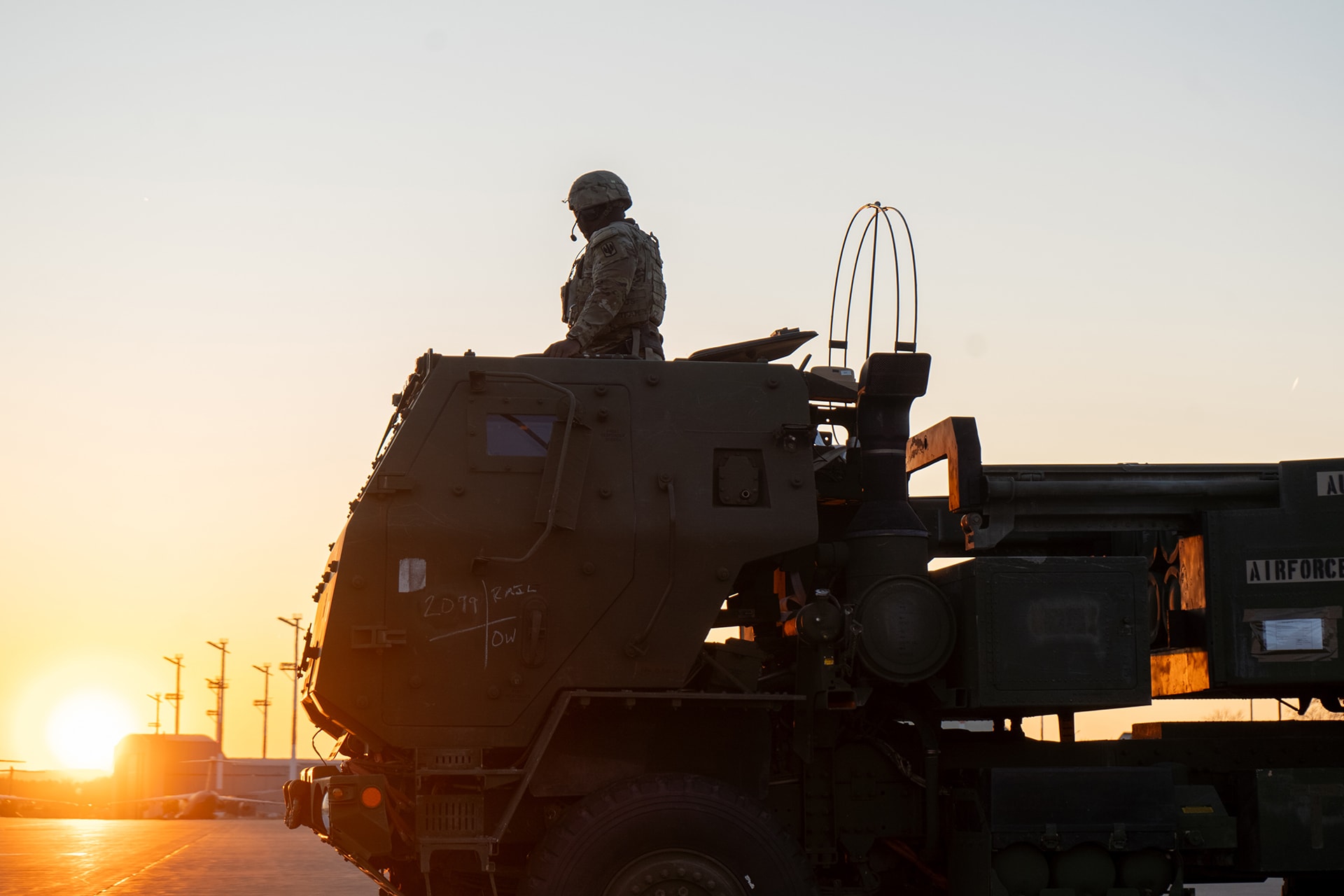
In addition, the rapid depletion of U.S. stockpiles during the Iran war leaves Europe and Ukraine with a significant lag in U.S. deliveries. A delay of National Advanced Surface-to-Air Missile System (NASAMS) and High Mobility Artillery Rocket System (HIMARS) munitions has already been reported, and Patriot air defense interceptor missiles are expected to be affected, too. European leaders have invested significantly in U.S. systems since Russia’s invasion of Ukraine in 2022, arguing that it is a way to keep Trump in NATO. They also argued that it is faster and cheaper to order off the shelf from the United States rather than rely on European-made air defense systems and interceptors.
But U.S. stockpile shortages and Trump’s desire to punish Europe could force European leaders to reconsider this position. Patriot air defense interceptors are especially in dangerously short supply, creating a gap that Ukraine and Europe now will have to race to fill.
All together, these announcements, ongoing transatlantic tensions, as well as shortages will undermine the credibility of U.S. deterrence in Europe, particularly from Russia’s perspective. It’s another drop in an increasingly full bucket for Europe, leaving the security of U.S. allies in a more vulnerable situation than it has been before.
This work represents the views and opinions solely of the author. The Council on Foreign Relations is an independent, nonpartisan membership organization, think tank, and publisher, and takes no institutional positions on matters of policy.