Trump’s Project Freedom Isn’t Going to Open the Strait of Hormuz
Trump has tried bombings, a blockade, and now a vaguely defined escort operation—and Iran still controls the Strait of Hormuz. Only diplomacy can lead to a true resolution.
By experts and staff
- Published
 Max BootCFR ExpertJeane J. Kirkpatrick Senior Fellow for National Security Studies
Max Boot is the Jeane J. Kirkpatrick senior fellow for national security studies at the Council on Foreign Relations.
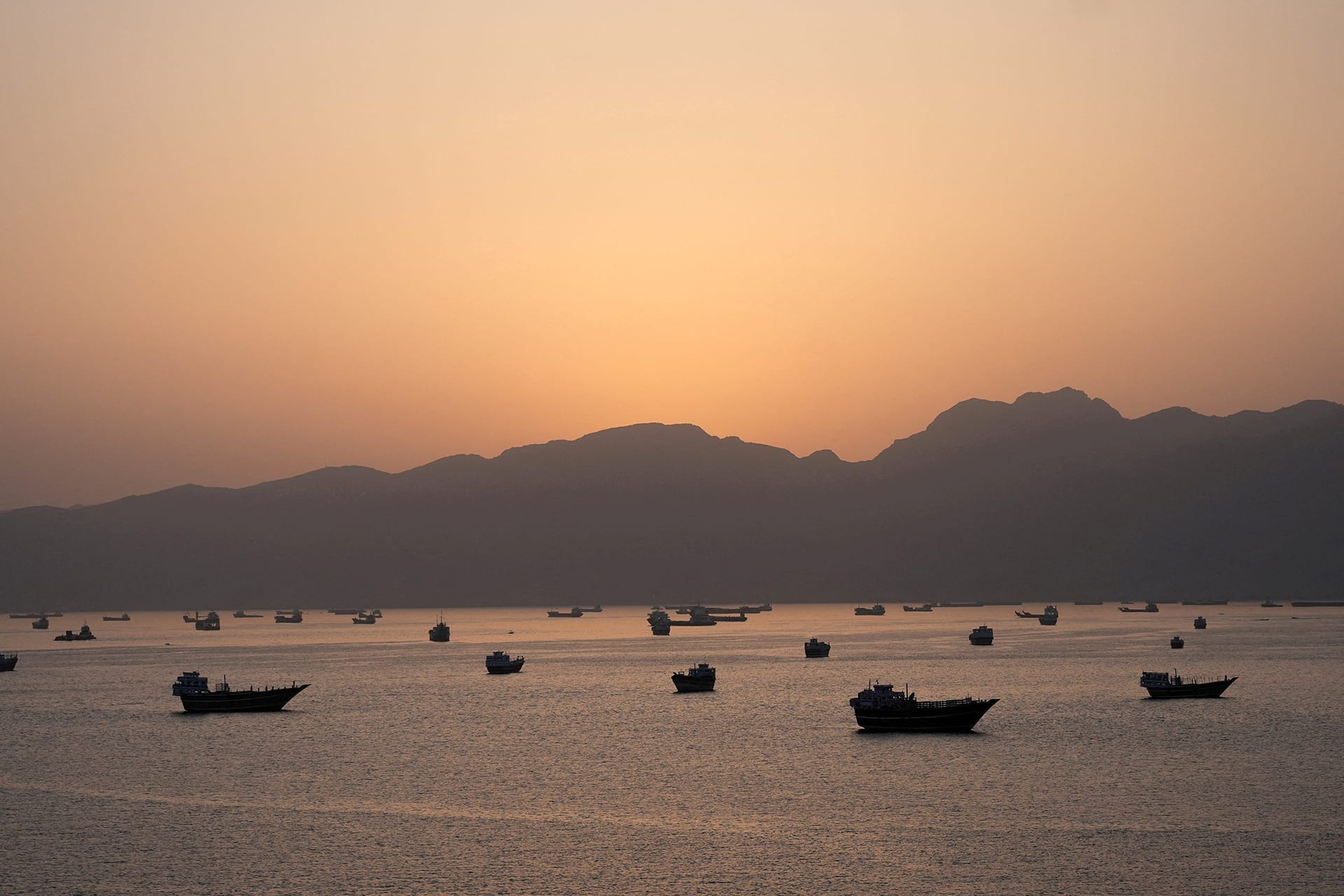
President Donald Trump announced Sunday that the United States would launch an operation to help tankers and cargo ships trapped in the Persian Gulf transit the waterway. Two U.S. destroyers entered the Persian Gulf on Monday, and two U.S.-flagged commercial ships exited it. Iran hit back by attacking commercial ships and targeting the United Arab Emirates with missiles and drones for the first time since the ceasefire began on April 8. Iranian forces also fired on U.S. warships, and U.S. forces responded by destroying six Iranian small boats.
Trying to open the Strait of Hormuz by force could reignite the wider conflict and expose U.S. warships to Iranian attacks in a narrow waterway with little time to react. All of this could quickly render “Project Freedom”—with its vague pledges of military help but no announcement of actual convoy operations—another improvised half-measure in a conflict that has lurched from misstep to misstep. As long as Iran remains capable of attacking commercial vessels, few shipping lines will risk running the gauntlet.
When the United States and Israel launched their war against Iran on February 28, Trump appeared confident that the death of Ayatollah Ali Khamenei would lead to the overthrow of the clerical regime that has ruled Iran since 1979. He even demanded its “unconditional surrender” and expressed confidence the war would be over in “four to five weeks.”
More than two months later, this latest effort is another illustration that the war hasn’t gone as Trump had hoped. The Iranian regime hasn’t been overthrown and the death of Khamenei has led to the rise of a cabal of hardline Islamic Revolutionary Guard Corps generals who have no interest in U.S. demands to give up Iran’s nuclear program, missile program, or support for regional proxies. Rather than cave, the Iranian regime has lashed out, using drones, speedboats, and mines to effectively close the Strait of Hormuz, the chokepoint through which 20 percent of the world’s oil passes.
Trump initially tried to coerce Iran into compromising by threatening to bomb its energy infrastructure and bridges. The president warned on April 7 that “a whole civilization dies tonight, never to be brought back again.” But he did not carry out his threats, presumably because Iran said it would retaliate against energy infrastructure in the Arab Gulf countries. Instead, Trump declared a two-week ceasefire (now nearly a month old) and launched negotiations with Tehran while also imposing a blockade on Iranian shipping leaving the Strait of Hormuz on April 12.
Trump appears to think the blockade is the magic bullet that will finally bring Iran to its knees. “If they don’t get their oil moving, their whole oil infrastructure is going to explode,” Trump told reporters on April 23. Last week, he said: “Well, the blockade is genius. Now they have to cry uncle. ‘We give up.’ That’s all they have to do.”
Trump’s confidence in the power of the U.S. blockade appears to be based on overly optimistic projections that Iran will soon run out of storage capacity for oil it can’t export, and that if it tries to shut down wells, it will do permanent damage to its production infrastructure. Most energy experts are skeptical of those claims.
Robin Mills, an oil industry expert, wrote for Columbia University’s Center on Global Energy Policy that “the U.S. blockade of Iran’s oil exports will not cause catastrophic, or even very serious, damage to [Iran’s] upstream oil industry. If and when the blockade is relaxed, Iran will probably be able to resume production promptly at about 70 percent and regain most of its pre-war capacity within a few months.”
That is not to say that the U.S. blockade won’t impose considerable economic hardship on Iran. It has already done so. The Wall Street Journal noted that “the war has imposed a heavy cost on Iran’s economy, with more than a million people out of work, soaring food prices and a prolonged internet shutdown that has slammed online businesses.”
But Iran is not a democracy, and antiwar protests are not permitted. A regime that was willing earlier this year to slaughter tens of thousands of protesters to maintain its grip on power is unlikely to buckle because the Iranian people are facing greater economic hardship. The Islamic regime has faced U.S. sanctions in one form or another since 1979, and has proven capable of adapting and surviving. Tehran is now rerouting trade away from the Persian Gulf to the Caspian Sea and overland routes to neighboring states such as Azerbaijan, China, Pakistan, Turkey, and Turkmenistan. Iran is not an island like Cuba that can easily be isolated by a naval blockade.
Perhaps that is why Trump is now contemplating resuming airstrikes on Iran. U.S. Central Command has reportedly prepared a new list of targets in Iran, and some hawks are telling Trump he can “finish the job” with a few more weeks of airstrikes. But there is no reason to think U.S. airpower will be any more decisive in May than it was in March—and every reason to fear that U.S. airstrikes will prompt more Iranian retaliation against energy targets throughout the Gulf. The U.S. efforts to help commercial ships transit the Strait of Hormuz in the face of an Iranian blockade could have the same effect. That will only worsen the pain from a conflict that UN Secretary-General António Guterres has warned is “strangling the global economy.”
The sooner that Trump accepts there is no military solution to the current crisis, the better. Only diplomacy can get the world out of this quagmire. According to Axios, Tehran is now offering a one-month deadline to negotiate an opening of the Strait of Hormuz and permanently end the wars in Iran and Lebanon, and another month of negotiations to settle the nuclear issue.
The deadlines may be overly ambitious, given that the 2015 Iranian nuclear accord took nearly two years to negotiate, but it should be possible to quickly reopen the Strait of Hormuz if both sides lift their respective blockades. As I previously argued, an “open for open” deal could avert a global economic crisis and provide breathing room for nuclear negotiations, provided Iran does not try to exact a “Tehran toll” on shipping.
In short, the best we can realistically hope for now, after the epic failure of Operation Epic Fury, is for a restoration of the status quo before the war, when the Strait of Hormuz was open to all.
This work represents the views and opinions solely of the author. The Council on Foreign Relations is an independent, nonpartisan membership organization, think tank, and publisher, and takes no institutional positions on matters of policy.