Trump’s Iran Deal May Be Over, But It Is Clear What the Regime Wants
The collapse of the memorandum of understanding revealed Iran’s core priority: control of the Strait of Hormuz. But with both sides locked in an escalating battle of wills, the question is whether a lasting deal is still possible.
By experts and staff
- Published
 Ray TakeyhCFR ExpertHasib J. Sabbagh Senior Fellow for Middle East Studies
Ray Takeyh’s areas of specialization are Iran, U.S. foreign policy, and the modern Middle East. He is, most recently, the author of The Last Shah: America, Iran and the Fall of the Pahlavi Dynasty.
President Donald Trump signed a memorandum of understanding (MOU) with Tehran in June. It was supposed to end hostilities between the United States and Iran, reopen the Strait of Hormuz, and allow the two sides to negotiate a larger deal. “Ships of the World, start your engines,” the president wrote on social media soon after the signing. “Let the oil flow!”
Four weeks later, the sixty-day ceasefire is dead. Iran’s Islamic Revolutionary Guard Corps (IRGC) resumed its attacks on commercial shipping flowing through the Strait of Hormuz, which triggered a fresh round of U.S. strikes on Iran. Trump has since notified Congress that the United States had returned to war, and he later announced that he would reimpose a U.S. naval blockade of the strait.
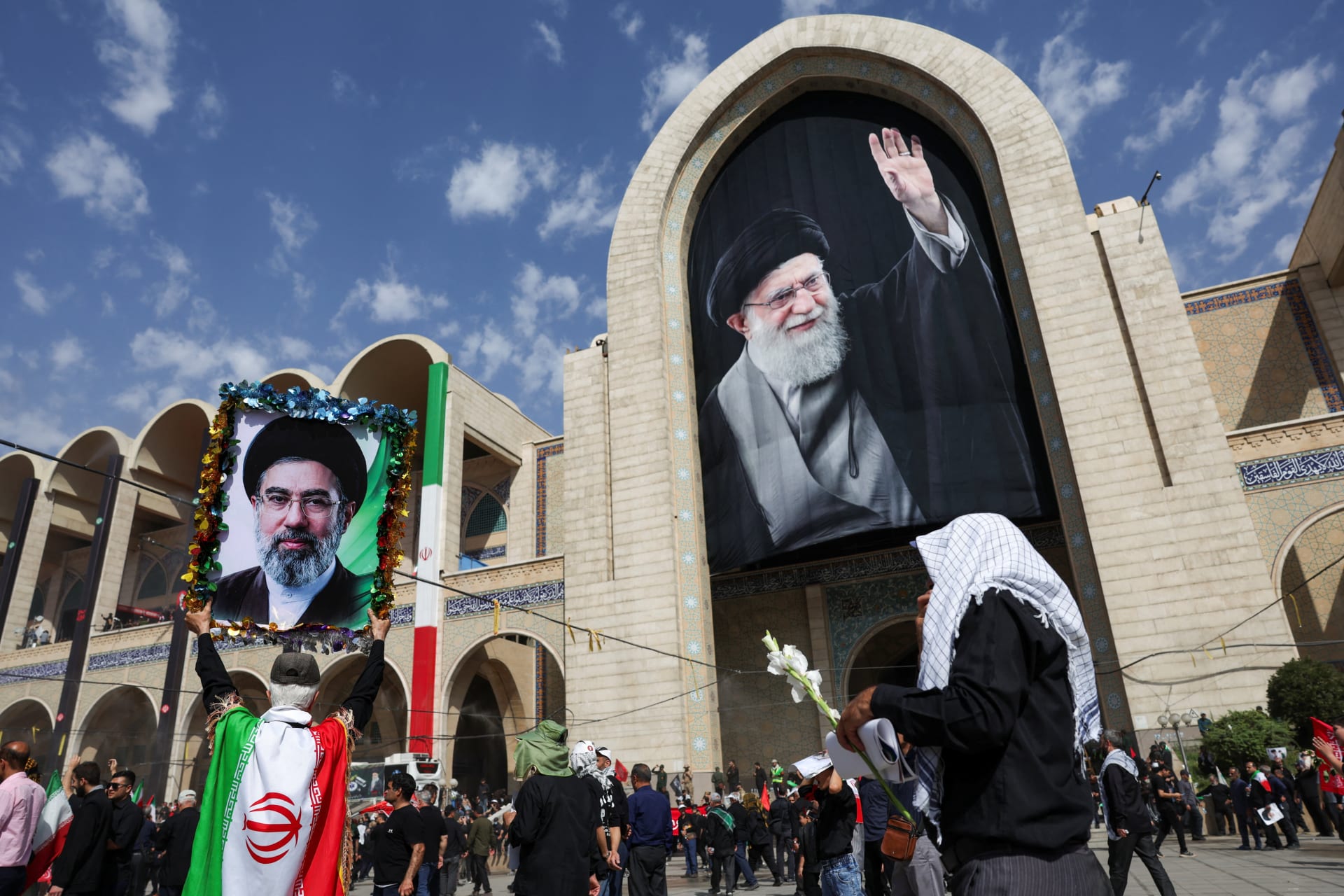
Inside Iran, the regime is navigating its own turbulence. Former Supreme Leader Ayatollah Ali Khamenei, killed in the opening strikes of the war, has been succeeded by his son Mojtaba, who has yet to appear in public. It also appears that hardliners and pragmatists within the country are openly at odds, torn between pursuing a negotiated settlement with Washington and asserting control over the waterway by force.
CFR Senior Fellow Ray Takeyh has spent decades studying the Islamic Republic. He explains how the Iranian regime is approaching the conflict and where things could go from here.
How has the regime changed and remained resilient against U.S. pressure?
The Islamic Republic has always had a multilayered elite structure. The regime has a much wider network of allies dispersed throughout the country than its monarchial predecessor. It may be autocratic in nature and hierarchical in its structure, but its tentacles reach deep within the country. And the regime continues to have small but vocal supporters that it can mobilize with ease.
The death of Ali Khamenei was undoubtedly a shock to the system, as was the decapitation of so many members of the ruling class, but the regime bounced back and quickly replaced its dead. The absence of the new supreme leader, Mojtaba Khamenei, from any public functions must be a cause of concern. Through his public declarations, the elder Khamenei communicated the government’s priorities to the masses. That is an indispensable function of that office which is not currently being fulfilled. But for now, the Islamic Republic is muddling through.
It must also be stressed that the regime came out of the popular insurrection of January 2026 stronger. Its elite held together and its security forces performed their task with efficient brutality. Thousands of protestors were killed in a brief span of time. The population today is perhaps sullen and disgruntled, but it is not in a rebellious mood after the regime’s killing spree.
Can the United States and Iran reach another deal?
The MOU may be dead for now, but it could be resurrected in some form. Both Iran and the United States have an interest in opening the Gulf traffic. Iran benefits from selling its oil and can ill-afford to continually alienate China, a major purchaser of Middle Eastern crude and one of its few great power allies. The United States has similar interest in ensuring the stability of the global markets and its own economy. The two sides are currently locked in an escalating battle of wills, but they remain open to third-party mediation. It is possible that an off-ramp will suggest itself and then aspects of the MOU could resurface.
For example, the MOU reveals that Iran is serious about charging tolls. The deal’s contested fifth provision seemingly granted Iran that right in conjunction with Oman. The Iranian regime insists that all Gulf traffic be subject to its authority and was displeased when the United States began escorting a limited number of vessels through a corridor bordering Oman. This issue may be susceptible to some arrangement, thus averting a larger crisis.
The Trump administration has already scaled down its objectives. The notion of regime change has been cast aside. The nuclear issue still lingers but given that the Gulf is a more essential priority for Iran, this issue can be resolved. Iran’s nuclear infrastructure was largely destroyed during the U.S.-Israeli military operation in June 2025, and the highly enriched uranium is still buried. Iran has signaled that it is open to down blending its high-grade uranium and allowing inspectors to roam around its nuclear facilities to verify compliance. Washington does not seem to appreciate that the nuclear program today is not Tehran’s foremost priority—the Gulf is.
Now, more than ever, the White House needs a plan. Today, the Iran war is unpopular with the American people, the entire Democratic Party, and much of legacy media. The Trump administration has done a poor job explaining its motives and objectives. Message discipline has never been this White House’s strong suit but the shifting rationales for war and over-the-top rhetoric have damaged the United States’ credibility. The president’s stated claims have varied from ending Persian civilization to normalizing relations with the Islamic Republic.
Congressional oversight could prove to be a salve, which is why it is sensible that the Trump administration notified Congress that the United States has returned to war with Iran. Congress has largely abdicated its wartime role despite its substantial Article I authority. It should not squander this important opportunity.
By conducting hearings and scrutinizing the administration’s strategic objectives, Congress can shed better light on a conflict whose costs are more apparent than its benefits. The White House may even obtain some political cover for any compromises it may need to forge to end the Iran war. Perhaps through greater congressional participation, the United States’ path out of this war will become more evident.
This work represents the views and opinions solely of the author. The Council on Foreign Relations is an independent, nonpartisan membership organization, think tank, and publisher, and takes no institutional positions on matters of policy.