Trump’s ‘Maximum Pressure’ Campaign on Cuba, Explained
The Trump administration has tightened sanctions and restricted oil shipments to Cuba. The moves are part of a broader pressure campaign aimed at driving significant economic and political change on the communist-led island.
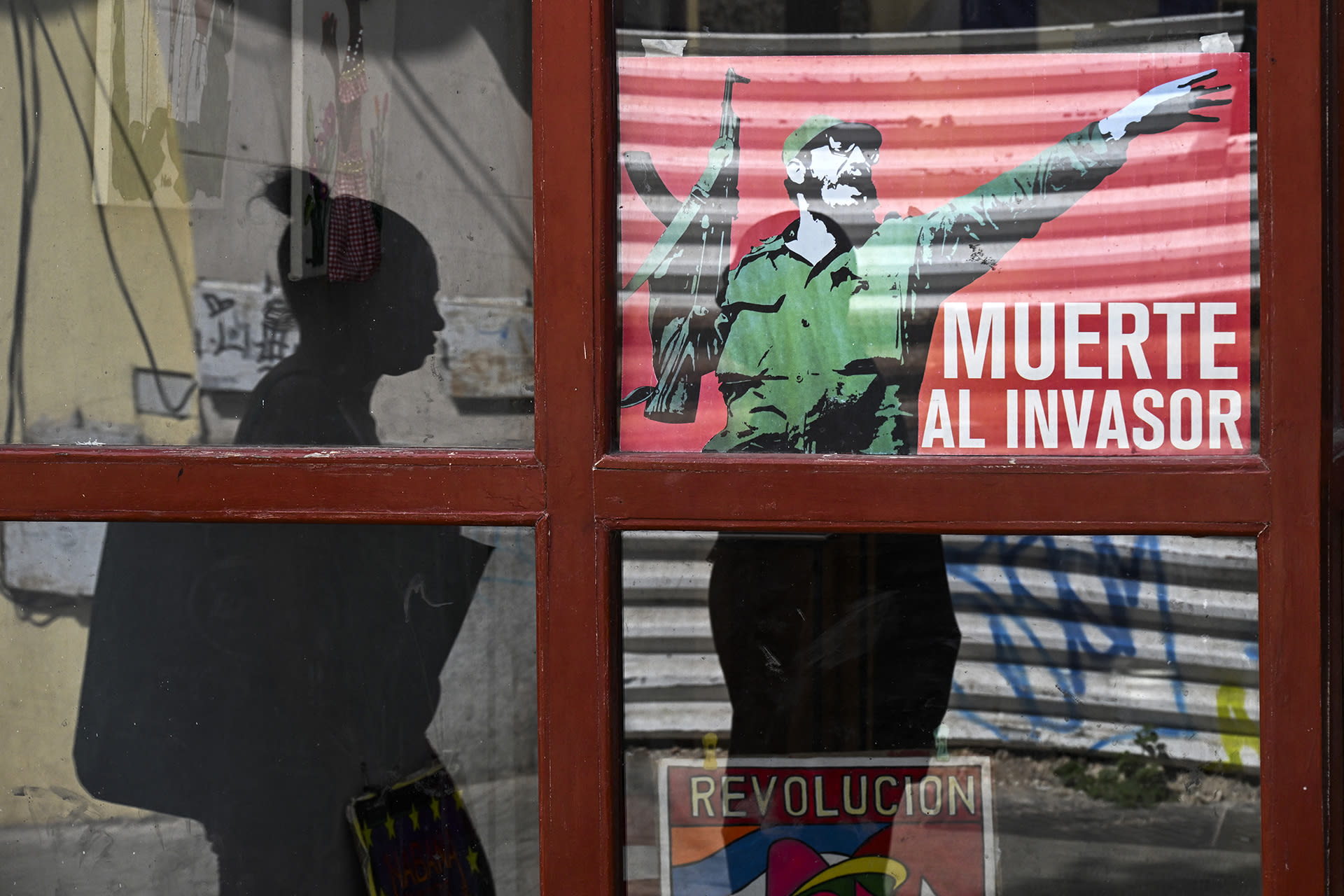
Since January, the Donald Trump administration has severely limited oil shipments to Cuba, a decision which has sparked fuel shortages, sharp price increases, and prolonged power outages—the country has already experienced three nationwide blackouts in March. Cuba’s recent economic and energy crises stem from a combination of long-standing structural challenges and policy decisions, including underinvestment in the energy sector, but Trump’s hard-line policies and economic sanctions have exacerbated these difficulties since he returned to office in 2025.
Senior U.S. officials have indicated that the end goal of these policies is to bring about political and economic liberalization in Cuba, including the potential removal of President Miguel Díaz-Canel from power. “Cuba has an economy that doesn’t work and a political and governmental system that can’t fix it. So they have to change dramatically,” said U.S. Secretary of State Marco Rubio on March 17. “They’ve got some big decisions to make over there.”
Despite the increasingly aggressive rhetoric and growing economic pressure, experts said that the Trump administration’s goals remain unclear and doubt that a Venezuela-style military takeover of Cuba is likely—particularly as the United States remains engaged in a widening conflict with Iran.
Michael J. Bustamante, chair in Cuban and Cuban-American Studies at the University of Miami, told CFR that the Trump administration’s approach “seems very, very unpredictable.” But part of the strategy, he added, could be to “try to keep Cuban counterparts guessing.”
Trump has repeatedly claimed that the Cuban government is nearing a breaking point due to the U.S. embargo, saying the island is “seeing the end” and suggesting that the United States could pursue additional action soon—though he has not indicated what that would be.
These comments have drawn sharp rebuke from the Cuban government, with Díaz-Canel vowing to respond with “impregnable resistance” to “any external aggressor.” Cuban Deputy Foreign Minister Carlos Fernández de Cossío later said that the island is preparing for potential U.S. “military aggression” as tensions between the two countries mount. But Díaz-Canel publicly confirmed on March 13 that Cuba is in negotiations with the United States to find solutions to the two countries’ differences, with talks currently in their initial stages.
Why is the Trump administration targeting Cuba?
During his second term, Trump has implemented a “maximum pressure” campaign against Cuba as part of a broader strategy to assert U.S. primacy in the Western Hemisphere and limit the influence of adversaries such as China and Russia.
Both the Trump administration’s National Defense Strategy and National Security Strategy prioritize the Western Hemisphere, emphasizing threats from foreign adversaries and transnational gangs and the need to reassert U.S. dominance in the region to protect Washington’s interests.
“This is an administration that perhaps senses an opportunity—a sense that the Cuban government’s got its back up against the walls and can be pressured to concede on things that they, frankly, [have] never conceded on before,” Bustamante told CFR.
The president moved quickly on that apparent opportunity upon returning to office. Within days of his inauguration, Trump issued an executive order declaring that Cuba “constitutes an unusual and extraordinary threat” to U.S. national security, citing its ties to hostile actors like Russia. The administration also authorized tariffs on goods from third countries that sell or provide oil to the island.
The White House intensified its economic pressure on Cuba in June 2025, when Trump reimposed strict travel restrictions on U.S. tourism to the island, restricted financial transactions with entities controlled by the Cuban military, and doubled down on support for a decades-old economic embargo that severely limits trade between the two countries.
Following the U.S. military operation in Venezuela that removed longtime leader Nicolás Maduro from power in January 2026, Trump signaled that Cuba would soon “fall of its own volition.” Venezuela is the primary source of oil for Cuba, which relies heavily on oil imports for most of its energy supply. While Trump didn’t call for a military intervention in Cuba, he has referred to the island as a “failing nation” and repeatedly raised the possibility of a “friendly takeover.”
Tensions between the United States and Cuba escalated further in early March. At the inaugural summit for the Shield of the Americas, a U.S.-led multinational military and security initiative involving leaders across Latin America, Trump warned that “Cuba’s at the end of the line.” The situation there and in Venezuela, he added, should make clear that the United States “will not allow hostile foreign influence to gain a foothold in this hemisphere.”
Is regime change likely in Cuba?
The 1996 Helms-Burton Act legally ties the lifting of U.S. sanctions to specific political change in Cuba, requiring the emergence of a “transition” or “democratically elected” government before the embargo can be raised. However, de Cossío, Cuba’s deputy foreign minister, said in late March that regime change is “absolutely” off the table.
Cuba has been under the same one-party political system since 1959, when political leader Fidel Castro overthrew the U.S.-backed government in Havana and established a socialist state. In the nearly seven decades since, the country has had just two other leaders: Fidel’s brother Raúl, who stepped down in 2018, and his successor, Miguel Díaz-Canel, who now also serves as the first secretary of the Communist Party—the country’s top political role.
Cuba’s constitution describes the Communist Party as “the superior leading political force of the society and the State.” The party controls all aspects of Cuban life, including the economy, government, media, and the military. Independent watchdog Freedom House classifies Cuba as “not free,” citing restrictions on civil liberties, a prohibition on political pluralism, and the suppression of dissent.
Experts have said that this tightly controlled system makes internal collapse or rapid regime change highly unlikely. Díaz-Canel’s replacement would be largely symbolic, Will Freeman, CFR fellow for Latin American Studies, said. “I think it is more likely we simply see reshuffling within the regime—perhaps the military taking a more prominent role ruling the island, which it already does de facto,” he told CFR. Trump administration officials have reportedly held talks with Raúl Castro’s grandson, suggesting Washington could be exploring alternative avenues of influence within the regime rather than dismantle it outright.
Trump has already forced two major leadership changes since retaking office. In January 2026, the U.S. military removed Venezuela’s Maduro in an early-morning operation, and in February, joint U.S. and Israeli air strikes killed Iranian Supreme Leader Ayatollah Ali Khamenei. However, Cuba’s political structure is believed to be more centralized and loyal compared to Venezuela’s, making significant changes to the broader political system more difficult to accomplish.
“After nearly seven decades of communist rule, there is no Cuban leader capable of bringing substantive change to the country,” wrote Rut Diamint and Laura Tedesco for Foreign Affairs. “Too many inside government are loyal to the regime, and the opposition is divided and lacks a plan.”
Regardless of how the situation in Cuba plays out, the island’s revolutionary political model isn’t expected to collapse immediately. Even a significant shift, such as a transition to a military-led system more open to private investment, would not necessarily improve Cuba’s forecast.
“If the transition is some kind of negotiated political opening to opposition—which would then need to organize itself into an electoral force on the island; this is no Venezuela, with established opposition parties—Cuba’s outlook is at best highly uncertain,” Freeman said.
What’s the state of Cuba’s economy?
Cuba is enduring one of its worst economic crises since the “Special Period” of the 1990s, when the fall of the Soviet Union—a critical economic lifeline—triggered widespread deprivation. The current crisis is characterized by a near-total collapse of the island’s aging power grid, a scarcity of basic goods due to soaring inflation, severe fuel shortages, and reduced tourism. The Economist estimates that since 2021, the number of Cubans on the island has dropped from more than eleven million to less than nine million.
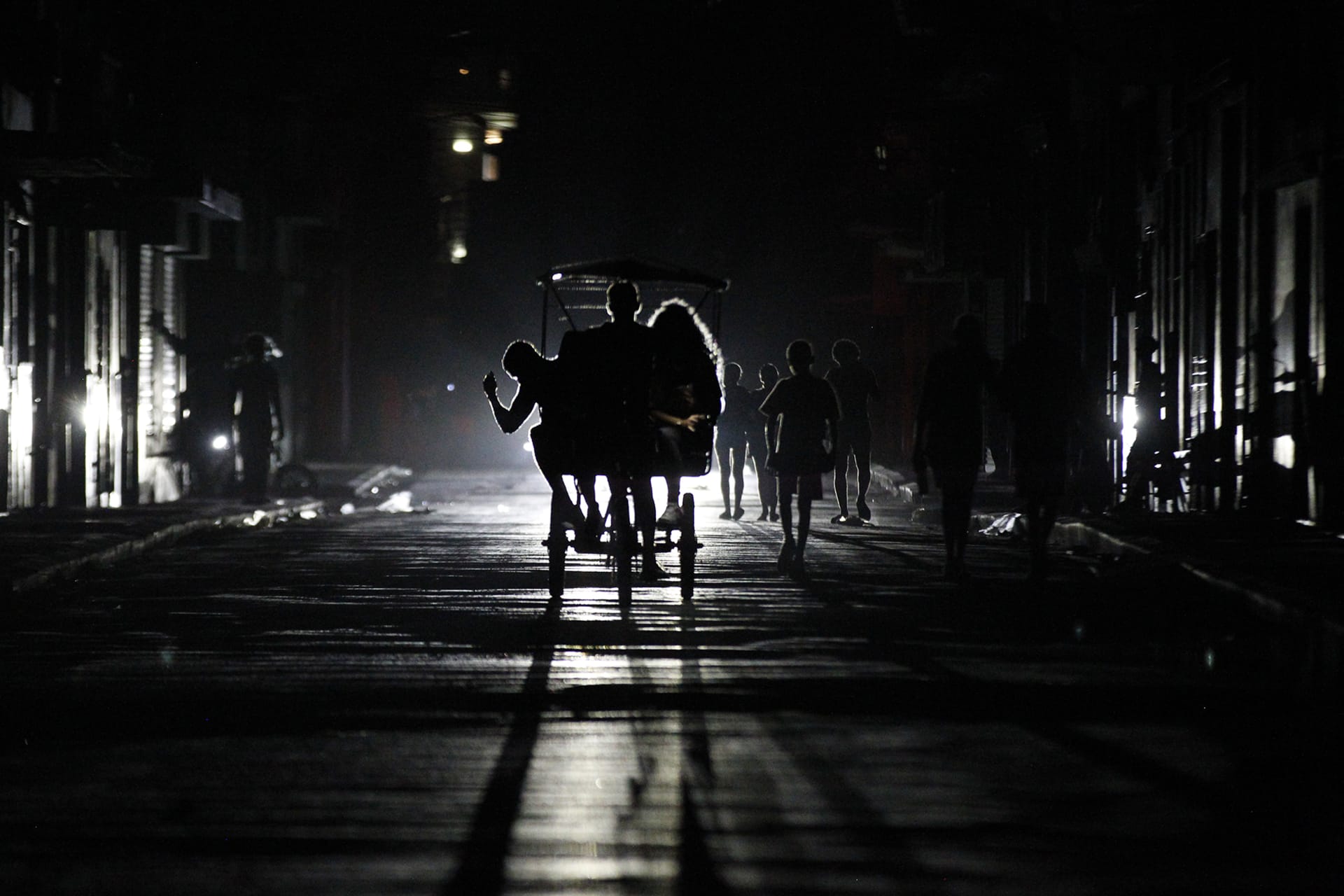
The U.S. blockade is hastening Cuba’s economic deterioration. When the island’s oil supply was cut off following Maduro’s capture in January, the Cuban government was forced to enact emergency measures to address widespread fuel shortages, even as the Trump administration has allowed companies to seek licenses to resell Venezuelan oil to Cuba’s private sector—a measure that has done little to ease the island’s crisis. In early March, Díaz-Canel said Cuba had not received any oil shipments in three months.
Meanwhile, Cuba’s economy remains dominated by GAESA, the military-controlled business conglomerate that oversees much of the island’s tourism, finance, retail, and imports. A 2025 Miami Herald investigation based on leaked internal financial documents found that GAESA has as much as $18 billion in dollar-denominated assets, $14.5 billion of which are held in bank accounts or GAESA’s own financial institutions.
The worsening economic situation, which has sparked rare public protests, has also affected Cuba’s overseas medical missions, a central pillar of its economy. The U.S. State Department has urged countries to stop accepting Cuba’s medical diplomacy, which it previously said amounts to “forced labor,” and several countries have recently ended or scaled back arrangements under which Cuba sent medical brigades abroad and collected the bulk of their wages.
Amid the energy crunch, Díaz-Canel has called for immediate economic and social reforms to stabilize the country. According to state-owned media, at a meeting of Cuba’s Council of Ministers on March 2, he emphasized the need for greater foreign investment in the energy sector and for municipalities to manage economic partnerships between state and non-state actors. A top Cuban official told NBC News on March 17 that the government is also allowing Cuban nationals living abroad to begin investing in companies on the island. The move represents a significant shift for a country that has long had a state-controlled economy, though U.S. officials said the new measures aren’t enough to resolve Cuba’s economic crisis.
What has been the response from other countries?
Most countries in the region have criticized the U.S. blockade of Cuba. During a four-day summit in Saint Kitts and Nevis in late February, members of the Caribbean Community—a regional grouping known by the acronym CARICOM—raised concerns about the humanitarian situation in Cuba and the potential regional fallout. The island is experiencing “severe economic hardship, energy shortages, and growing humanitarian strain,” said outgoing CARICOM Chair and Jamaican Prime Minister Andrew Holness. If crisis conditions in Cuba persist, the situation “will affect migration, security, and economic stability across the Caribbean basin,” he added.
Secretary Rubio, who also attended the summit, used his speech to call for deeper regional cooperation on tackling transnational criminal organizations, saying that they constitute “the most urgent security threat in the region.” Since last September, the United States has carried out controversial strikes on dozens of vessels suspected of drug trafficking in the Caribbean Sea.
Russia has also reaffirmed support for Cuba, a longtime ally. On March 25, Russia’s energy minister confirmed that Moscow is sending shipments of oil to Cuba, despite a U.S. sanctions waiver prohibiting Russian oil transactions involving the island. A Russian tanker arrived in Cuba on March 30, Russia’s transport ministry said; Trump later told reporters he had “no problem” with the oil’s delivery. China has also shown its support for Cuba, announcing in January an aid package that included approximately $80 million in financial assistance.
Still, experts said that Cuba has few real options for relief.
“The question for the Cubans is: are either the Russians or the Chinese, at the end of the day, going to stick out their necks enough for them to help?” Bustamante said. “I have my doubts.”
Colophon
Data Visualization
- Will Merrow
- Austin Steinhart