Trump’s New Tariffs Rates on Chips, India, and Pharma
By experts and staff
- Published
- CFR Editors
Welcome to the Daily News Brief, CFR’s flagship morning newsletter summarizing the top global news and analysis of the day.
Subscribe to the Daily News Brief to receive it every weekday morning.
Top of the Agenda
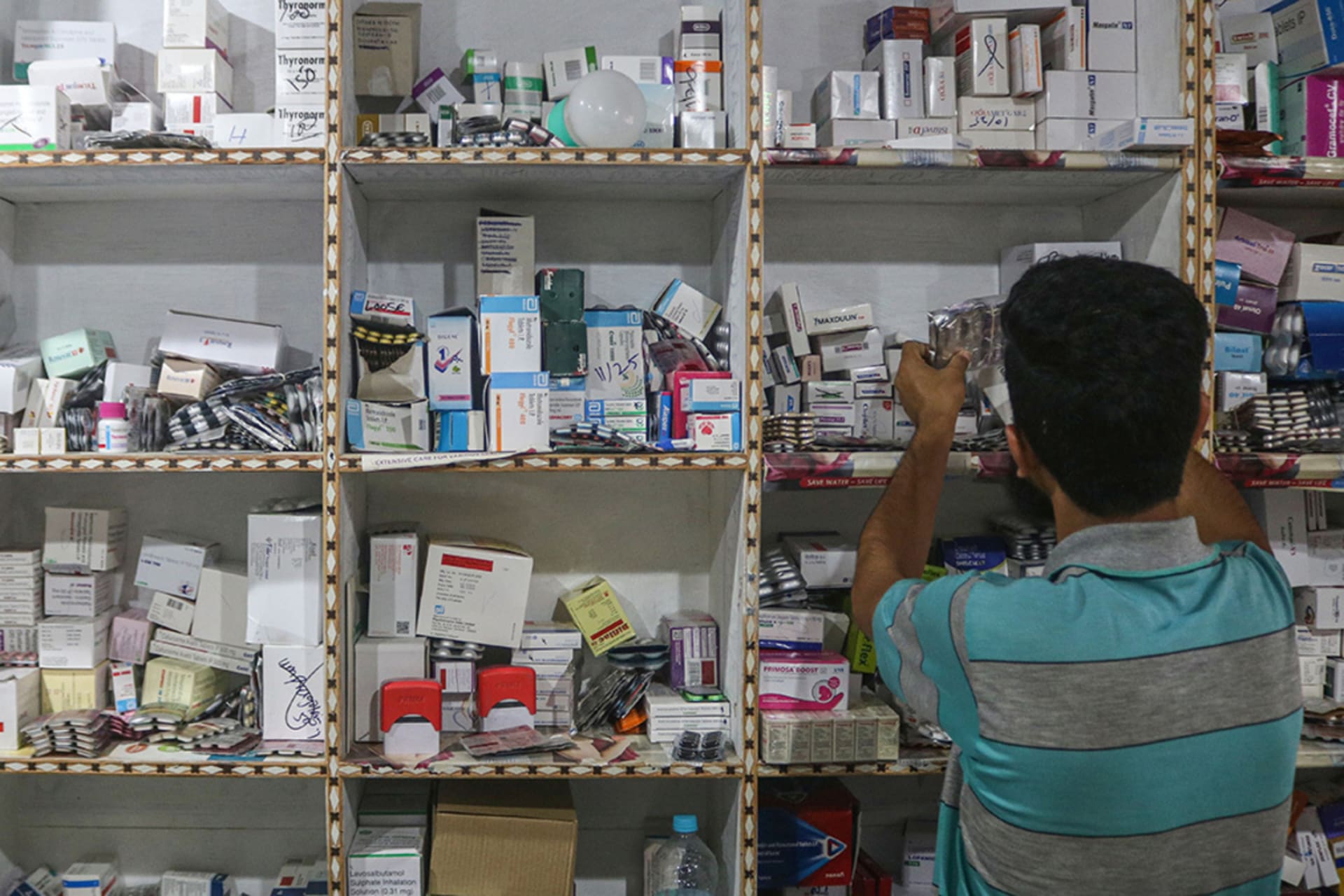
Trump’s steep tariffs on dozens of countries took effect overnight, just hours after he announced new duties on semiconductors and Indian goods. Most chips will get a 100 percent tariff, while the rate on Indian goods will rise to 50 percent. Earlier in the week, Trump said forthcoming duties on pharmaceutical products could rise as high as 250 percent. The announcements underscored that while the newest rates are some of Trump’s largest yet, they are likely not his last.
The latest details.
- The new country-specific tariff rates reflect how governments have responded to trade and other U.S. concerns voiced since April, the White House said.
- Trump cited India’s purchases of Russian oil when ordering a hike in duties on its products from 25 percent today to 50 percent on August 28.
- On chips, Trump warned that a 100 percent tariff is forthcoming for companies that do not commit to building in the United States. Apple received an exemption, because the firm said yesterday it plans to invest an additional $100 billion in suppliers on U.S. soil.
The big picture.
- Bilateral talks with a range of targeted countries continue. The president of Switzerland left Washington yesterday without a trade deal.
- While the delay in implementing India’s 50 percent tariff rate suggests potential room to negotiate, the duties mark a rise in tensions with a major U.S. partner. Unnamed Indian government sources told multiple news outlets yesterday that Indian Prime Minister Narendra Modi plans to visit China in the coming weeks for the first time in seven years.
- Most components of iPhones will still be manufactured outside the United States, but Apple said that glass for phones and watches will be made in Kentucky and that it would invest in semiconductor projects with several U.S. tech companies.
“Every [trade] deal should more or less be viewed as an interim deal, one subject to future changes, because that’s how the president thinks about tariffs. He doesn’t think of them as a set level. He thinks of them as a variable that he adjusts based on what he thinks is in America’s interests.”
—CFR expert Brad W. Setser in a YouTube Short
Across the Globe
Ukraine war talks. There is a “very good prospect” that Trump, Russian President Vladimir Putin, and Ukrainian President Volodymyr Zelenskyy will meet together, Trump said yesterday after his envoy held talks with Putin. A U.S. and Russian president have not met in person for at least four years. Today, Putin aide Yuri Ushakov said that Trump and Putin could hold bilateral talks next week, but a three-way meeting “was just something mentioned by the American side.”
UAE leader in Moscow. Emirati President Sheikh Mohamed bin Zayed met with Putin today to discuss trade ties as well as regional security issues and conflict in the Middle East. Putin said afterward that the United Arab Emirates (UAE) could host his meeting with Trump. Abu Dhabi has mediated a series of prisoner swaps between Kyiv and Moscow in recent months.
Lebanon’s weapons plan. The Lebanese government directed the army to draw up plans for moving all weapons in the country under state control. Hezbollah currently holds many of those weapons and has opposed such a move. Israel and the United States have urged Lebanon to take action to curb the group’s strength.
Sudan strikes suspected UAE plane. Dozens of Colombian mercenaries traveling to fight in Sudan were reported dead after Sudanese air forces attacked the Emirati aircraft carrying them, Sudan’s state media said. They were reportedly slated to fight on the side of the paramilitary Rapid Support Forces (RSF). The UAE, which Sudan accuses of aiding RSF, separately banned Sudanese planes from its airports yesterday. The UAE foreign ministry denied it was playing a role in Sudan’s war.
Rebel toll in Congo. Rebels backed by Rwanda in the eastern Democratic Republic of Congo (DRC) killed at least 319 civilians in July, one of the deadliest months on record since the M23 rebel group surged in 2022, the UN human rights chief said yesterday. The DRC and Rwanda signed a peace deal in Washington late last month, and M23 and the Congolese government say they are also working toward a peace deal.
Cambodia-Thailand truce. The two countries will allow observers from the Association of Southeast Asian Nations (ASEAN) to monitor a truce along their disputed border, which began late last month after renewed hostilities. ASEAN’s current chair Malaysia will lead a team of military attachés based in both countries, Thailand’s acting defense chief said today.
Pakistan’s monsoons. Rainfall that caused deadly flooding in Pakistan last month was 10 to 15 percent heavier because of climate change, a study by the international science group World Weather Attribution found. Hundreds of people were killed. Pakistan incurs outsized harm from climate change: it is the source of less than 1 percent of greenhouse gases in the atmosphere, while its deadliest monsoon season in 2022 killed over 1,700 people and caused an estimated $40 billion in damage.
U.S. Army base shooting. A sergeant injured five soldiers yesterday at one of the country’s largest Army bases in the state of Georgia. He was then tackled by other troops and detained. Authorities probing the incident said he used a personal handgun. At the same base, a soldier fatally shot a sergeant in 2022.
What’s Next
- Today, the UN Security Council holds a briefing about West Africa and the Sahel.
- Today, the Melbourne International Film Festival begins.
- Tomorrow, Russia faces a deadline from Trump to make a deal on Ukraine.
- Tomorrow, the leaders of Armenia and Azerbaijan visit the White House.