Unclaimed Boat Strikes in Ecuador: Has Trump’s Operation Southern Spear Opened a Hidden Front?
New reporting indicates that Trump’s boat strike program could be more secretive, larger, and more resistant to oversight than previously known.
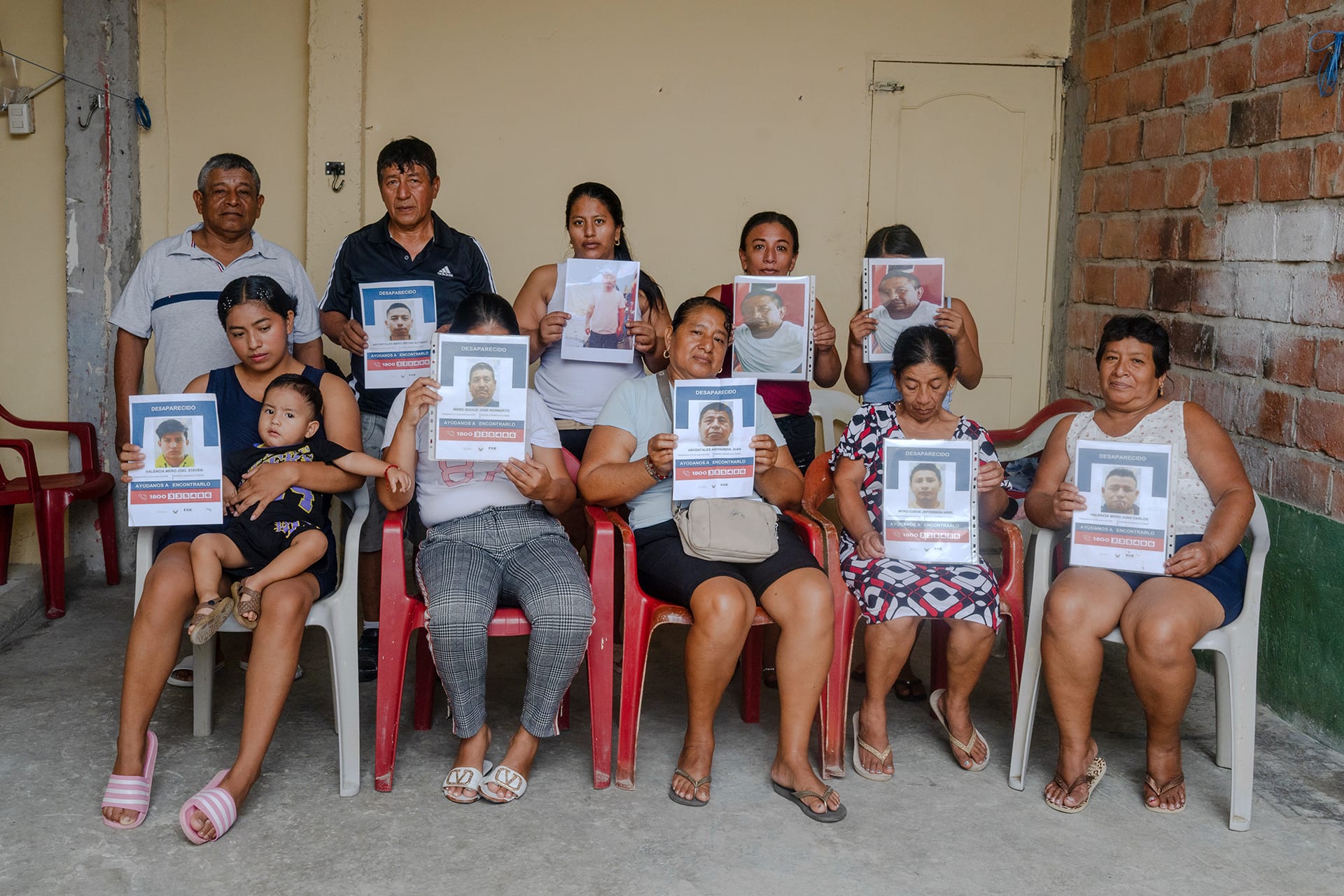

Will Freeman, whose research focuses on organized crime in Latin America, traveled to coastal Ecuador to interview the survivors and the families of those who crewed a missing Ecuadorian fishing vessel, the Fiorella. In the New Yorker, Freeman published one of the first investigations into the boat’s disappearance that new reporting indicates could be the result of a covert U.S. operation.
The Washington Post and the New York Times published stories last week that build on an investigation I reported over months and published in June in the New Yorker.
All three stories concern the same events: the January disappearance of the Ecuadorian vessel Fiorella and eight of its ten crew, and March attacks on two more boats, the Negra Francisca Duarte II and the Don Maca. For months these were unexplained mysteries; the Pentagon and Ecuador’s Defense Ministry denied any knowledge of or participation in the strikes. Now both papers offer early answers to the question my piece left open: whether the attacks were a covert U.S. operation.
Read together, the three accounts point to something larger: Operation Southern Spear—the Trump administration’s campaign of strikes on alleged drug-smuggling vessels, ongoing since September 2025—could be bigger, more secretive, and run by more actors than previously understood, making congressional oversight both more important and harder.
The strikes also sharpen an inquiry led by a growing number of members of Congress. They are demanding the Trump administration answer who is being targeted and on what basis. Legal experts have called Southern Spear a program of extrajudicial murders, citing laws barring U.S. forces from deliberately targeting civilians who pose no imminent threat, even suspected criminals. The administration has countered that its targets are “unlawful combatants” in a “non-international armed conflict” between the United States and a secret list of drug cartels, insisting the boats are carefully selected based on intelligence.
But no evidence has surfaced to link any of the three crews—including the eight fishermen still missing—to drug trafficking.
A Boat Vanishes
A fifty-two-foot longline boat called the Fiorella and its ten-member crew left Jaramijó, a small town on Ecuador’s Pacific coast, for a routine three-week voyage on January 13, 2026. The Eastern Pacific off Ecuador had by then become Operation Southern Spear’s main theater, but fishermen kept going out to sea, relying on their catch for income.
Around January 16, the crew spotted an aircraft and drones. Cristhian Flores, one of two crew who eventually returned to shore alive, later described the plane to me as white, very loud, and circling the boat “like it was hunting.” I reviewed text messages from the captain to his family that also described plane and drone sightings. Crew members also sighted a distant patrol boat and thought they could see a U.S. flag.
[Video: https://vimeo.com/1215560320]
Early on the morning of January 20, four crew took two skiffs out to lay longline: miles of baited hook used to bring in marlin, tuna, and other species. The captain called his father, reporting he could still hear distant engine noise. Otherwise, the surveillance appeared to have stopped.
At 1:00 p.m., Flores and Dimas Ignacio Álvarez, who had piloted one of the skiffs about fifteen nautical miles away from the Fiorella, saw black smoke rise on the horizon. They heard the other skiff trying to contact the captain over its radio before it suddenly cut out, and their own radio calls to the Fiorella went unanswered. Unbeknownst to them, at 1:06 p.m., the Fiorella’s satellite tracking device had also gone dark. Flores and Álvarez were eventually rescued by a passing ship and returned to shore, but the other eight men never reappeared.
The missing crew members’ families remain convinced this was a U.S. strike on men innocent of drug trafficking. Evidence I found seemed to back them up: of the ten crew members, two had criminal records, for unpaid child support and fishing a protected species, but nothing drug related. Three years of the boat’s GPS track showed it at sea with its tracker on routinely throughout the year, running common fishing routes. It never ventured to points west of the Galapagos, where Ecuadorian ships involved in trafficking sometimes hand off drugs or fuel to larger narco-vessels, or skirted the Colombian coast, another common route for illicit activity.
Ecuador Refuses to Search
President Daniel Noboa’s government, closely aligned with Trump, appeared to go out of its way not to search for the Fiorella. The boat’s owners alerted authorities on January 22 and gave them its last coordinates. The navy activated a protocol, but it then waited nine days to send a ship that never came within ninety nautical miles of the site. The Defense Ministry told me in writing it had asked Colombia for help, but Colombia’s navy told me no such request ever came. César Cordova, Ecuador’s Defensor del Pueblo—a cabinet-level official charged with investigating rights abuses—was blunt about why Ecuador had not sought U.S. help investigating: it could imply Ecuador suspected its closest ally, and that could damage the relationship with Trump.
In March, drones struck two more boats. The Negra Francisca Duarte II was struck March 17, just hours after the Ecuadorian coast guard inspected the boat for illicit activity and cleared it, according to Human Rights Watch. The Don Maca was attacked March 26. Both crews said they were pulled from the water by English-speaking men in uniform, then hooded, blindfolded, handed off to the Salvadoran navy, taken to El Salvador, and issued emergency passports to return home—several seriously injured. I reviewed the digital copies of more than half a dozen of these passports, and photos of the Negra Francisca crew in El Salvador.
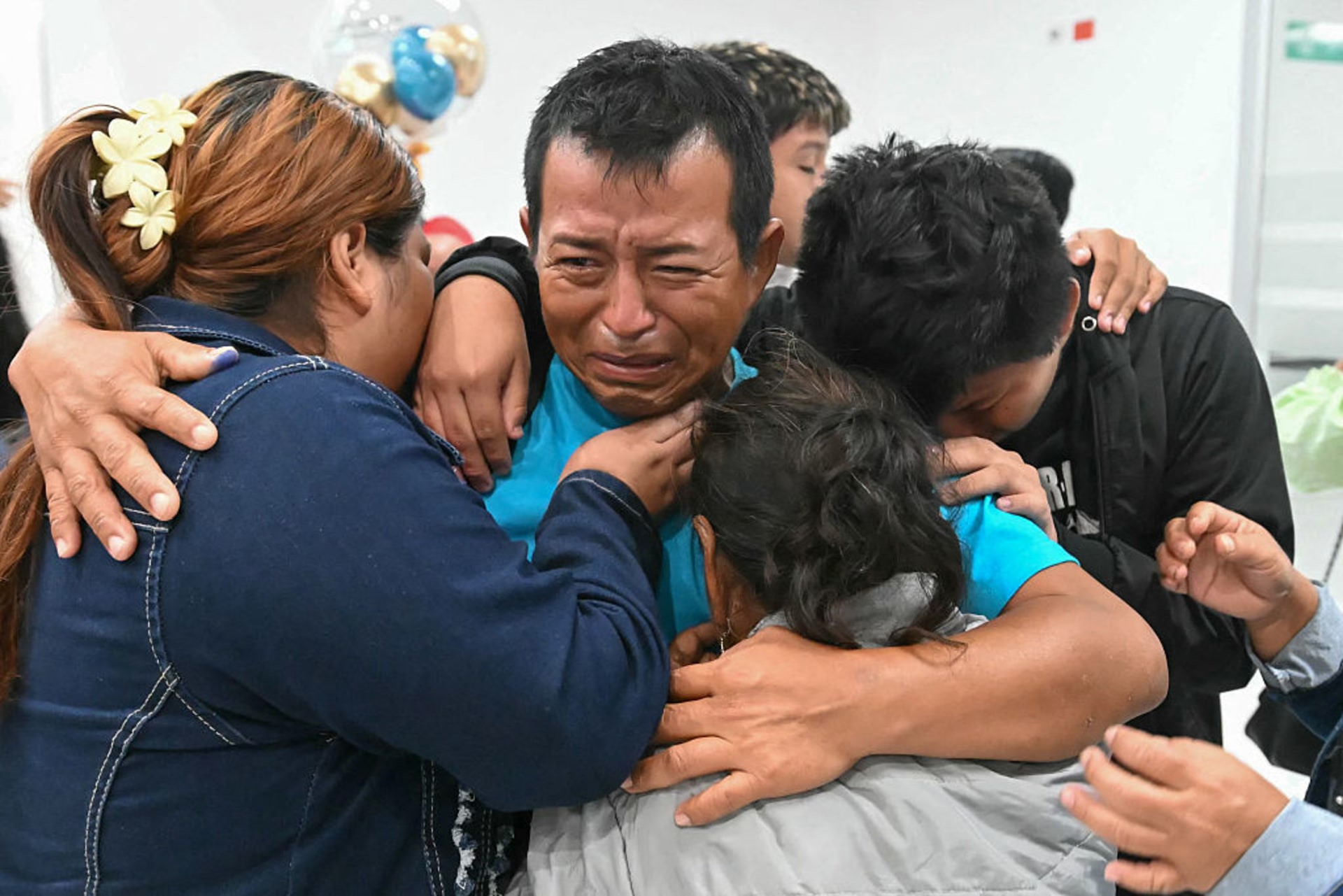
Despite the Noboa government’s mounting pressure on the press and civil society, Ecuadorian reporters and a human rights organization had pieced the basics of this story together by April 2026. That month I traveled to Jaramijó and Quito, the capital, interviewed more than two dozen people—including two Fiorella survivors and the missing men’s families—and gathered documents. In June, I published the first full narrative account of the Fiorella’s disappearance in the New Yorker. The piece reconstructed the survivors’ and families’ account of the events and documented the Ecuadorian government’s refusal to search.
It left open who was responsible: U.S. Southern Command denied involvement, as did Vectus Global, the private military firm run by Erik Prince, who had previously discussed a partnership with Ecuador. The Ecuadorian Defense Ministry included a curious detail in its own carefully worded denial that seemed to leave open the possibility of covert activity: it had no information, it said, on foreign aircraft or vessels that never reported their presence in international waters.
The Breakthrough
In August, the New York Times and then the Washington Post published critical new evidence. Using flight-tracking data and satellite imagery, the New York Times identified a white maritime patrol plane operating from a base in El Salvador that flew toward all three boats in the days before each attack.
The aircraft repeatedly adjusted course toward them before turning off its transponder. It made four flights in the direction of the Fiorella between January 16 and 20, the very days the crew reported being followed. Hours before the boat vanished, on January 20, the plane was recorded flying north, away from its last position. It had flown from Tennessee in November 2025 to a small Salvadoran airport used for CIA operations against Nicaragua’s Sandinistas in the 1980s. Air traffic control recordings caught pilots speaking English with American accents, being told to park on the airport’s military side.
The Washington Post reporters added that an anonymous source from within the U.S. government called the strikes a “covert action” involving the CIA. They also discovered photos that showed the plane was equipped with specialized surveillance gear and learned that its registration number appeared in no public Federal Aviation Administration records—required of civilian aircraft, but not those serving “national defense” purposes—and had been reserved by a company listing its address as a UPS Store in Virginia.
Questions Left Unanswered
A covert action looks increasingly like the most plausible explanation for the mysterious strikes. However, it is still not certain who attacked the three boats: the CIA, a private military contractor, or some other actor. Nor is it clear what turned these three boats into targets.
None resembled the “go-fast” boats often hit in past Southern Spear strikes: smaller, lighter vessels equipped with outboard motors that are ideal for running cocaine or fuel to drop points. Perhaps whoever struck the boats acted on bad intelligence or tracked the wrong target. Another unresolved mystery is the murder of the lead Ecuadorian prosecutor who was investigating the three boat strike cases, Alexandra Bravo Cedeño. She was shot dead by unidentified assailants in the city of Manta on June 14, shortly after the prosecutor’s office transferred her to a new jurisdiction (investigators have not publicly announced any leads or established a motive).
Still, these cases call into question how many strikes have really happened, and how much of an ostensibly highly public campaign is operating in secret. Sixty-six attacks have been confirmed since September 2025, according to the New York Times. What remains unknown is whether there are more cases involving people, such as the Fiorella’s crew, with no evident drug ties.
They also raise questions about who is doing the killing, and who, if anyone, can hold them accountable. Congress was already struggling to obtain basic information about Operation Southern Spear when the U.S. military alone seemed to be carrying out the strikes. Now its oversight is even more necessary, but it will likely face additional hurdles. Congress should demand a full accounting: who carries out the strikes, who runs the surveillance behind them, under what legal authority and legal agreements with foreign governments, and by what targeting criteria.
Finally, these cases show how a policy of quid-pro-quo could be taking root across Latin America. Governments such as Ecuador’s provide a platform for the United States to expand its militarized anti-drug campaign within their land and sea borders, facilitating or possibly ignoring these U.S. operations. In return, Washington stops criticizing the erosion of democracy and the rule of law under these governments and even stays silent on their own drug corruption scandals.
Ecuador is the best example. Noboa has declared himself a security partner and welcomed U.S. joint strikes, one of which led to the bombing of a dairy farm and the torture of several farmers by Ecuadorian troops, according to a New York Times investigation. In exchange, the United States has provided roughly twenty million dollars in security assistance and, maybe more important, issued no public criticism of the rise in enforced disappearances under Noboa’s own crackdown, the suspension or banning of several opposition parties ahead of November local elections, or the forced exile of Carlos Serrano, an anticrime judge who received death threats after defying pressure from the head of Ecuador’s judiciary to favor a Serbian money launderer.
Last week, Defense Secretary Pete Hegseth announced that Colombia, Guatemala, and Honduras have joined Ecuador in authorizing joint land strikes (Guatemalan President Bernardo Arévalo denies this).
Latin America does need better ways to curb trafficking and the violence it produces. The Trump administration is right that the status quo approach to counternarcotics was not, on its own, enough. But nothing concrete suggests the boat strikes are working. U.S. Customs and Border Protection seized slightly more cocaine in the ten months after Southern Spear began than in the ten before; street prices and purity in major U.S. cities suggest supply is undiminished.
Meanwhile, the costs—legal, ethical, and above all human—are rising. Months after visiting Jaramijó, I still get calls from the father of the Fiorella’s missing captain, waiting for any news, still imagining his son alive somewhere, not helped in any meaningful way by his own government. “We want a response,” he says often. “A response is what we are looking for.”
This work represents the views solely of the author(s). The Council on Foreign Relations is an independent, nonpartisan membership organization, think tank, and publisher, and takes no institutional positions on matters of policy.