Can Trump Carry Out His Foreign Policy Promises?
Updated
President Donald J. Trump has wide latitude to enact the sweeping changes to U.S. foreign policy that he has promised, but his executive authority is constrained by congressional legislation, treaty obligations, and bureaucratic processes.
Introduction
President Donald J. Trump has promised sweeping changes to U.S. foreign policy. Trump vowed to reverse many of President Barack Obama’s signature achievements, including the Asia-Pacific Trans-Pacific Partnership (TPP) trade deal, the landmark climate change accord signed by 197 nations in Paris, and an agreement with Iran to restrict its nuclear program. He promised to continue and intensify border enforcement policies undertaken under Presidents George W. Bush and Obama and finish building a wall on the U.S. border with Mexico. His energy policy would represent a break with Obama’s push for a less carbon-intensive economy, while his willingness to place a U.S. embassy in Jerusalem could send shockwaves through an already volatile region.
In many of these areas, the president holds significant executive authority and can unilaterally enact change. In some instances, however, Trump will be constrained by treaty obligations, the prerogatives of the U.S. Congress, the requirements of the federal rulemaking process, or rulings by the U.S. Supreme Court:
Upending Trade Policy
Strengthening Immigration and Border Enforcement
Reversing Obama on Energy and Climate
Reopening the Iran Deal
Moving the U.S. Embassy to Jerusalem
Colophon
Staff Writers
- Claire Klobucista
- Zachary Laub
- James McBride
Additional Reporting
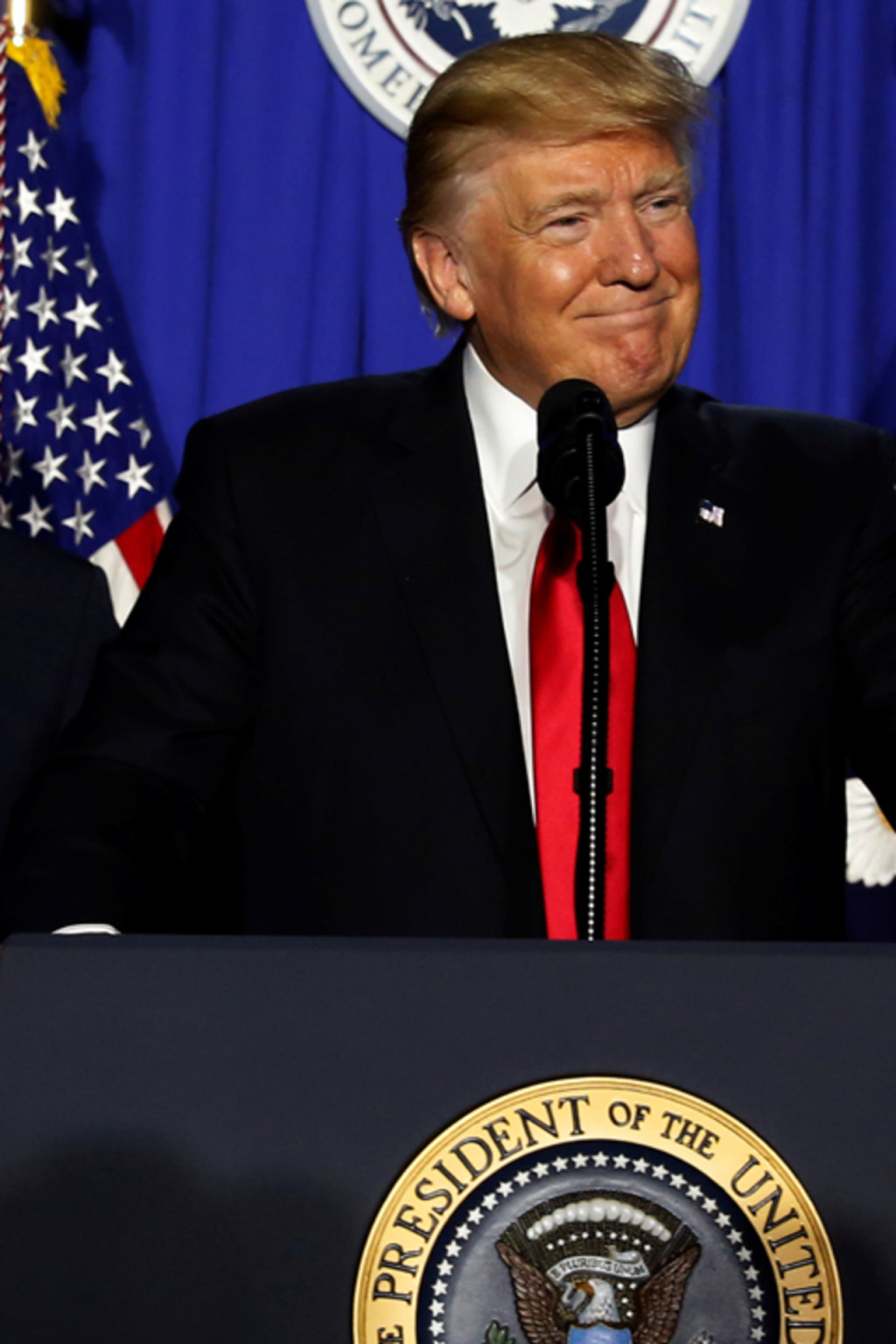
Header image by Jonathan Ernst/Reuters.
 Backgrounder
 Backgrounder
 Backgrounder
 Backgrounder