A Conversation With Kuwait Petroleum Corporation CEO Sheikh Nawaf Saud Al-Sabah
Event date
Speaker
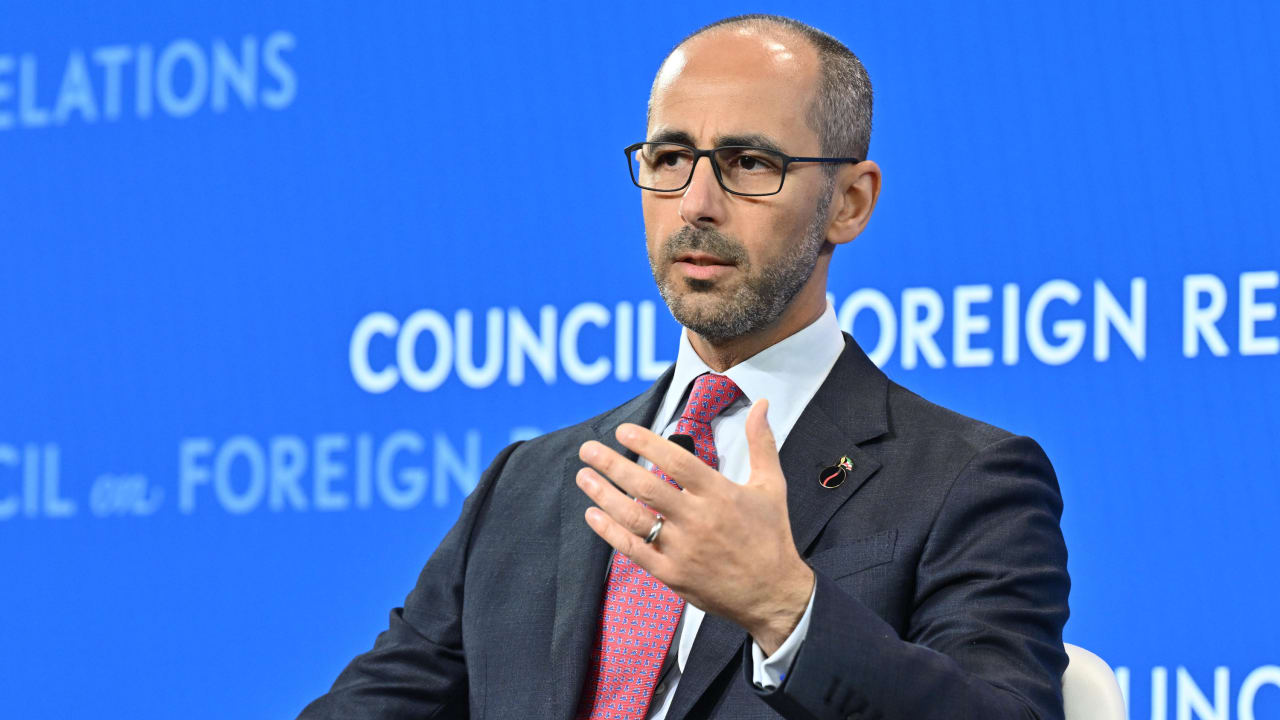
- Deputy Chairman and Chief Executive Officer, Kuwait Petroleum Corporation
Presider
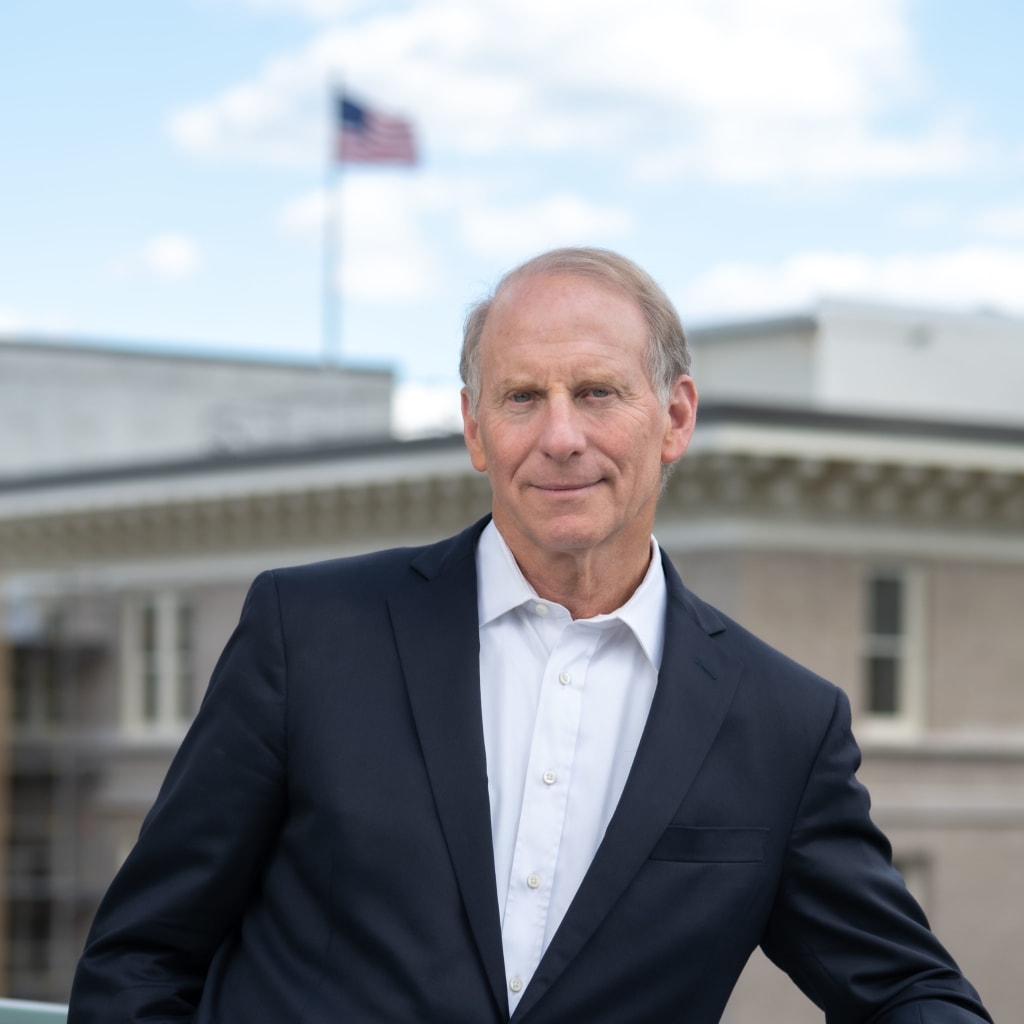 Richard HaassCFR ExpertSenior Counselor, Centerview Partners; President Emeritus, Council on Foreign Relations
Kuwait Petroleum Corporation Deputy Chairman and Chief Executive Officer, Sheikh Nawaf Saud Al-Sabah, reflects on the legacy of the 1990–91 Gulf War and the enduring strategic partnership between Kuwait and the United States. He explores how this longstanding relationship continues to navigate regional challenges, the role of the United States in supporting security in the Arabian Gulf, and the implications of ongoing regional tensions for energy security and global oil supply.
This meeting is presented by the Greenberg Center for Geoeconomics and the Energy and Climate Program.
HAASS: Well, good afternoon. So this—timing is a lot in life, and the timing of this meeting could hardly be better. One, as rumor has it, there’s one or two things going on in the Middle East and in the energy sector, so I doubt that Sheikh Nawaf and I will lack for things to talk about. But also, tomorrow—Saturday—is an important day. You are going to have the—I don’t—I don’t know what the technical word is, unveiling? What’s the word?
AL-SABAH: Inauguration, I think.
HAASS: Inauguration of the—a monument, you know, not too many blocks from here marking the war—basically, Desert Shield and Desert Storm, and the war of liberation of Kuwait, which was a remarkable accomplishment. Beginning with Kuwaitis themselves, the United States helped forge an international coalition. And it’s important, I would argue, that this war get the attention and be seen in historical perspective. So tomorrow is a welcome and important day. It brings back, you know, some difficult memories, but also some extraordinary memories of what was accomplished. And we’ll actually talk a little bit about that this afternoon.
As you know, the gentleman on my right is Sheikh Nawaf Saud Al-Sabah, who’s the deputy chairman and CEO of KPC, Kuwait Petroleum Corporation. I should probably say that for those of you who have memories of our work as well, my name’s Richard Haass—(laughter)—and I have a long association with this institution.
What we’re going to do is have a conversation, Sheikh Nawaf and I, for about half an hour. And then we will open it up to you all, to our members. I should say that today’s discussion is part of the programming of the CFR Greenberg Center—that’s Hank Greenberg, going strong still at, I think, a hundred and one—
AL-SABAH: Wow.
HAASS: —if I’m—if my numbers are right—for Geoeconomics, and Energy and Climate. So, again, Sheikh Nawaf and I will begin, and then we’ll save the tough questions for you all.
Like I said, we’re going to start with things a little bit historical. It’s a good, what, thirty-five—
AL-SABAH: Thirty-six.
HAASS: —thirty-six years since the events that began in the summer of 1990, the Iraqi invasion. And then, six months later, you had essentially the air war, then the ground war, and the successful liberation of Kuwait in the last—you know, by the—by the spring.
When this is—well, let me start with the question which a lot of societies deal with: How is this taught in Kuwait? To what extent is it taught? Young people, you know, you went through it—we should—full disclosure: Sheikh Nawaf’s father was the Kuwaiti ambassador at the time. I was the special assistant to President Bush the father. And his father and I spent a(n) extraordinary amount of time during that year working together. It’s when I first met a much younger, still beardless—(laughter)—either that or you were very well-shaven at the time—teenage version of Sheikh Nawaf. To what extent and how is this taught so this younger generation in Kuwait—and basically, anyone under the age of, what, forty-five would probably have very little memory or direct experience. How is this—how is this marked in your country? How is it taught in your schools?
AL-SABAH: First of all, thank you very much to the Council; to you, Richard. You have done a fantastic job as president and doing still a great job as president emeritus at the Council.
HAASS: It’s much easier, by the way. I recommend it. All of you—all of you should aspire in life to be something emeritus. It really—it’s not bad. (Laughs.)
AL-SABAH: But also, when you look back at that time, you and I had here at least—
HAASS: That’s true too.
AL-SABAH: But the way it’s taught in Kuwait, first of all, is an understanding of what makes Kuwait special in the region, and then why this happened in the first place, and how then the response came about.
So, from Kuwait’s perspective, small country in a very rough neighborhood. We’ve gone through adversity before. We have faced challenges before. This was not the first time that Iraq had threatened Kuwait. So you go back to the earlier part of the twentieth century, and that’s—this is how history is taught in Kuwait. It goes back to the earlier part of the twentieth century and the tail end of the Ottoman Empire, when Iraq was essentially created out of the remnants of the Ottoman Empire. There were Iraqi claims trying to assert sovereignty over Kuwait even in the 1930s, and the response to that—and we always show through our history books—is that Kuwait actually predates Iraq. Kuwait was a—was a city-state playing in world politics from the middle part of the eighteenth century, well before Iraq was even a state.
Moving it into the current realm, then you get to the early part of the—the early 1960s, when Kuwait achieved its independence from being a protectorate of the British Empire. We replaced the protectorate agreement with a defense cooperation agreement, and immediately upon the independence of Kuwait the Iraqi regime at the time laid—put out claims on Kuwait. And in fact, the accession of Kuwait to the U.N. was slightly delayed when the Soviet Union acceded to Iraq’s demand to essentially delay the entry of Kuwait into the United Nations. It was very quick thereafter, then, Kuwait did enter the U.N.
But you move on to 1973, Iraq then had its first shooting contest, if you will, with Kuwait, and that was at a border post—border police post when Iraqi troops attacked a border checkpoint, killed Kuwaiti guards at that checkpoint; again, another escalation. And then that also brought in international response.
I’ll go back to 1961, right after the independence. When Iraq started making claims against Kuwait at that time, it was a response that came from the British, the Jordanians actually. The very first troops to land in Kuwait in 1961 to protect against the potential aggression were actually Jordanian troops, and the British and others, and the Americans as well.
In 1973, there was a claim.
And then you get to the 1980s with the Iran-Iraq War. And in the Iran-Iraq War, things changed quite dramatically. Kuwait supported Iraq during that time. Quite a bit of our port facilities were open to the Iraqis to move material into and goods into Iraq. So the idea, then, was perhaps Iraq’s claim was going to be superseded by time. It was never a legitimate claim. It was always a false one. So we thought, well, that might actually be a positive outcome of all of this. In fact, the late emir, Sheikh Jaber of Kuwait, visited Iraq after the end of that war, and the—and the Iraqi president at the time awarded him the highest honor in Iraq, and had reportedly told his highness the emir at the time that Kuwait’s borders, as far as he’s concerned, could extend all the way to Mosul, and Iraq’s borders would extend all the way down south; that we’re essentially—you know, whatever is in the past is forgotten.
It wasn’t even two years later that they invaded.
HAASS: To bring it ahead to now—and I’m going to violate my own rules because I wanted to do this more structured, but I’m not—we’re, obviously, living in a moment where I would say 80 to 90 percent of the attention is on the war and the challenge posed by Iran. Maybe 10 to 20 percent of the attention is on the challenge posed by the Houthis to Yemen and conceivably to Saudi Arabia. To what extent is Kuwait still conscious of the challenge posed by Iraq? How much is that, if you will, a present and future concern as opposed to just a historical concern?
AL-SABAH: The relationship—and this is perhaps getting out of my expertise here, but the relationship—
HAASS: Actually, make—I just want to say—I’m going to interrupt for a second—which is I was a little bit unfair because I was going to say Sheikh Nawaf is here as the head of KPC and we’re going to keep the focus on energy, and I’m already violated that. (Laughter.) Madam Ambassador, please forgive me. So you’re free to skirt whatever is—you’d like to.
AL-SABAH: No, it’s fine. And I’ll—and I’ll say the relationship with the government of Iraq is actually quite good. There are still voices within Iraq that we hear come out with echoes of the past, and that’s a problem.
But just to complete that first question, though, you know, how it’s—how is it taught, moving to the actual invasion itself and occupation, what we see is the tremendous sacrifice that every Kuwaiti made to defend Kuwait. And really remarkable in history is that there was not a single Kuwait Quisling. Not a single Kuwaiti supported the Iraqi invasion. And this was at a time where we had political transitions in Kuwait, and the thinking that Saddam had was he was trying to—he wanted to split the Kuwaiti population and try to find a single person. People actually sacrificed their lives rather than accede to Saddam’s pressure to try to form an alternative government. People were killed when they refused to do that.
And moving then on to the actual liberation, we have tremendous gratitude to the United States and the coalition of countries that came to our assistance. I see at least two former U.S. ambassadors to Kuwait in the room. And I go back to one of your predecessors as well, Ambassador Skip Gnehm, who famously says that when he came back to Kuwait after the liberation of Kuwait, he said he had the only U.S. embassy in the world where the graffiti on the walls was actually pro-American. (Laughter.)
HAASS: “Americans, don’t go home,” yeah.
OK. I want to—we could go down memory lane, but we’re going to resist that unless you raise it in your questions. So here we are, basically a few days away from the end of the eighth month of this war. Set a little bit of a baseline for it. Where was Kuwait’s—what was your energy situation, oil and gas production, and so forth, exports—what was the baseline February 27, before things began?
AL-SABAH: Sure. February 27, we were producing 2.7 or so million barrels a day of oil; refining about 1.4 million of that, so more or less half of that amount; and selling the refined product—a lot of it being diesel, jet fuel, and fuel oil; and then the other half, selling it as crude oil. At that time, we were the largest importer of jet fuel into Europe. The—
HAASS: You were the largest exporter of jet fuel—
AL-SABAH: Well, from Europe. Like, from Europe’s perspective.
HAASS: Yeah. Got it.
AL-SABAH: Their imports of—
HAASS: Oh, I see. OK. I’m with you.
AL-SABAH: —of jet fuel. The largest supplier, let’s say. The largest supplier of jet fuel into Europe was KPC. The second-largest supplier of diesel into Europe was KPC. And we had, and we continue to have, multidecade relationships with refining companies, mostly in Asia and in other places around the world, that bought the crude oil.
Just before that date, February 27, when we saw—when you were in Kuwait for a conference just two weeks before and we were discussing potential military action that might or might not be coming, and the realization was that this was likely to happen, what we did was bring back our tanker fleet. We have a strategic tanker fleet of thirty-two—thirty-one tankers that were all over the world delivering to our customers. We pulled them all back, loaded them up, and took our stocks essentially significantly down—loaded those tankers, and then started pushing them out of the Gulf because of a fear of interdiction of free transit through the Gulf.
What happened after that is—well, most of those went out, and I remember my colleagues saying: Look, we don’t even—we don’t yet have the customers lined up for these tankers. And the response was: Send them out anyway and they’ll be useful. That, plus strategic storage that we had in Asia and other places, we were preparing ourselves for what might come. I don’t think anybody in our system or any other system around the world prepared themselves for the extent of time that the interdiction would continue.
HAASS: And what’s the situation now? So here we are, again, ending the eighth month of this war. What is—what is Kuwait able, not just—what it’s able to produce? Has it refilled the storage? What it’s able to export? And I think it’s a lot of interest in how you’re, no pun intended, navigating a rather difficult Strait of Hormuz.
AL-SABAH: Look, we don’t have a port outside the Gulf. We are—we’re all the way up in the northwest side of—
HAASS: Geography has not been Kuwait’s friend.
AL-SABAH: Yeah. Geography is actually Kuwait’s friend in in some cases. You know, we—from a natural resources perspective, it actually has been a great friend of ours.
HAASS: (Laughs.) (Inaudible)—yes.
AL-SABAH: And from having a great neighbor in Saudi Arabia, it has been a great—a great friend. We have had to navigate the other relationships, and we’ve—and we we’ve done that and continue to do so.
But you know, geography, like facts are stubborn things, we can’t change that. We’re stuck with the position where we are. And we are now in a—in a position where, after a few months of essentially no oil production for export—we were producing—it went down from 2.7 million barrels a day to a very low number of what we needed only for domestic consumption in Kuwait, which is very little, plus some sales within the Gulf. And remember, the Iranians attacked our facilities, but also the facilities all the way up and down the GCC in the—in the Gulf. And we were selling gasoline to the Saudis. We were selling diesel to the Qataris. We were selling—to the Emiratis and others, and the Bahrainis. We had a brisk sales force working just within the Gulf. And we have a—actually, we have one tanker that we kept of that fleet that we sent out. We kept one in the Gulf to do those types of shuttles. The Arabic name—the name of that tanker in Arabic is Shegardiah, which is a very sort of colloquial Arabic—colloquial Kuwaiti word that means “the feisty one.” And sure enough, it is actually quite feisty because it was—it was making a brisk, brisk set of sales in that Gulf. And we—and I keep joking about how we sold gasoline to Saudi Arabia, which is selling ice to the Eskimos. (Laughter.) But that’s how we work together as a GCC, and that’s how we work together as Gulf countries and national oil companies around the Gulf supporting each other.
So about two months of that—or more than that, actually—where we were at essentially the lowest level of production, just to meet local demand. Working, again, with our partners and allies in the United States, and most—and quite specifically CENTCOM and the U.S. Navy, we’ve been able to move tankers through the strait and gradually ramp up production with those—with those tankers. Instead of delivering to customers around the world, we now only deliver to a(n) offshore position outside the Strait of Hormuz, and we do ship-to-ship transfer to commercial tankers that then take the product out everywhere in the world. In the meantime, our tankers then come right back in and do the shuttle service. It’s something that actually we learned in the 2003 Iraq War, when shipping was not hit at the time but certainly the insurance rates became sky high. And we used the tanker fleet at that time, and we learned how to innovate and elaborate on how we—how we responded.
So we’re back up—let’s say numbers-wise we’re back up over 2 million barrels a day. We’re probably around 2.1 or more million barrels a day from the 2.7 (million). The only restriction on our ability to reach the 2.7 (million) is not the fields, not the facilities we’ve repaired or damages that have occurred to our facilities; it’s actually just having the tanker ability to enter and exit the Gulf. And we’re working with our customers and our partners around the world to try to get more tankers to come into the Gulf.
HAASS: So if I were going to interpret what you just said, this sounds to me, while it’s not optimal, this is an—what’s the word—sustainable situation.
AL-SABAH: No, because—certainly, it’s not optimal. It is not sustainable if Iran continues to attack tankers coming through. And it’s probably not getting a lot of press, but those attacks continue on a nightly basis. So you can have an attrition rate, and people can throw out numbers of what the attrition rate might be in terms of attacks on tankers versus how many transits are going through on every night, but if you remember, if—just keep in mind that a tanker that is hit is not going to be back in service the next day, especially when the Iranians are targeting more so than ever the engine rooms. And that will take out a tanker for a few months at least, and in some cases it may not actually reenter service. So if you maintain an attrition rate of 5 percent, that is—that makes it not sustainable for the period of time.
HAASS: And you said you had thirty-odd tankers at the beginning.
AL-SABAH: Yes.
HAASS: And have you been—is there now a—explain the tanker market.
AL-SABAH: The tanker market is one of the most opaque markets you can—you can find. And that is, you know, lots of families own tankers, lots of companies. And there’s been consolidation of ownership, specifically of very large crude carriers, the ones that carry 2 million barrels a day of crude. And there’s a—there’s a dearth of product carriers. And the reason—I’ll go back to the—you know, the—
HAASS: “Product” meaning refined?
AL-SABAH: Refined product.
HAASS: OK.
AL-SABAH: Diesel, jet fuel, those types of products, naphtha.
The difference between our 2.7 (million) prewar and our 2.1 (million) right now is, as I said, solely due to the inability or the unavailability of tankers. And that is because you have—you have pipelines across some of the countries—East-West Pipeline in the Kingdom of Saudi Arabia that originally was carrying 4 ½ million barrels a day of crude. I know that the Saudis have been able to ramp it up to about 7 million. The Emiratis, as well, have just under 2 million barrels of capacity through the Habshan-Fujairah pipeline, and they’re certainly trying to build that up.
But the problem—and remember this—those are crude. Those pipelines can only carry crude. And you’re seeing this in the markets now, with oil prices, crude oil prices, relatively stable at a sustainable hundred dollars a barrel or so, but you’re seeing diesel prices go through the roof. You’re seeing jet fuel prices. And that is because the world market sees an abundance of crude in the system, but you have about 5 or 6 million barrels a day of refining capacity that is bottled up inside the Gulf that needs an egress route. And the egress is only through the strait.
You can’t build pipelines for products because, very simply, a refinery, when it cracks a barrel, will produce probably five or more types of products. Each of those types of products, if you want pipelines, would have to be shipped in a separate pipeline. It makes it economically infeasible and actually security-wise a risk.
So you cannot substitute the Strait of Hormuz with a pipeline. Security-wise, strategically, it cannot happen. There is no substitute for transit passage—free transit passage through the strait. And you’re seeing the result of that now. And that’s why, Richard, I say it is—it is a system that is unsustainable over a longer period of time.
HAASS: That was actually useful—almost like we’re getting Transit 101 here, which was useful.
AL-SABAH: (Laughs.)
HAASS: Say a little bit about to what extent has Kuwait’s energy infrastructure—its refineries, production, and so forth—been hit? And what have you learned—I mean, you said an interesting thing, I thought, about with the better targeting of tankers—possibly with external help that Iran has received, I will say—it’s taken—it takes tankers out of commission, or out of operation, rather, for, you know, months. What have you learned about the resilience of your energy infrastructure when things get hit? How serious has it been? And what’s the lessons learned?
AL-SABAH: Look, as I said—and I start off with a short history lesson just to show that this isn’t the first time we face this type of adversity, and we’ve learned from each step of the way. And we’ve—and what we have—actually are the most—we’re most proud of is the resilience that we have in Kuwait. And I put two words: It’s resilience and defiance.
We don’t accede to extortion. And we are firm believers, just—and to tie this in with the first part of the discussion—we firmly believe that our security relies on us believing in international law and the primacy of international law, obviously with strategic partners and allies from around the world. But the focus always returns to international law and respect for that.
So the hits that we’ve gotten on our facilities we’ve repaired, as I said. We’ll do—we’ll put everything back together. We built—we rebuilt the state of Kuwait after 1991, after total destruction not just of oil infrastructure; critical infrastructure, hospitals, schools. Everything was destroyed, and we rebuilt it in significant time—a significantly fast period of time.
We had 700 wells on fire, and we worked with partners from around the world to put those fires out. I remember one of the oil well fires—firefighters came and testified to Congress, saying the way the Kuwaitis are running this it’s going to take a few years for them to put these fires out; it’s a total disaster. And we saw that testimony and told him: Thank you very much. You no longer need to come back to Kuwait. (Laughter.) And we put the fires out within seven months because we worked with people from the United States and around the world.
We need to do that again now. It’s not so much about rebuilding infrastructure; it’s actually maintaining what I call our above-water pipeline. You know, the Saudis and the Emiratis, as I said, have physical pipelines. We’ve built our above-water pipeline using our own ships coming back and forth. But we need to protect that. And we protect those, along with everybody else, going through the strait.
And that’s why it’s important for our customers to be part of a risk burden sharing operation that we’re doing. And for—governments from around the world, as consuming nations, need to participate in this as well.
HAASS: So, given where we are and given history, it would obviously be naïve to assume that the future is going to be peace for all time. So when you think about Kuwait’s energy security in terms of its ability to operate, to produce, refine, as well as export, you’re probably looking at a Middle East where Iran is going to, shall we say, have a somewhat outsized role going forward. What is—what are the options, then? How is it—Kuwait, like, again, you can’t change geography, but there are certain things you can say, well, we want to—in particular, are there ways for Kuwait to reduce its dependence on the Strait of Hormuz? You know, it would conceivably—are there long-term projects that make sense for a country like Kuwait to somewhat reduce its vulnerability to future interruptions?
AL-SABAH: I think, Richard, you were very precise in the word you used about “reduce.” Yes, reduce, but not eliminate. And we’re doing that. We are working with Saudis, with the Emiratis about pipeline routes. We’re working with our partners outside the Gulf to increase storage of crude and products at locations close to our customer bases. But remember, those storage tanks are non-replenishing. If you can’t get product to them, then—it’s a buffer that can be used, but it’s a buffer that will ultimately disappear once it’s used. And you’re seeing that right now on the international market. The release of SPRs from the United States and the industrialized countries of the world, China as well throttling down the crude purchases that that it had been doing.
HAASS: Were you were you an exporter to China?
AL-SABAH: Yes. China is our largest customer on that. And they took down their crude purchases for a certain period of time. But you see them now coming back up. So that increase in demand can’t be met with the supply situation that we have now. So we will have pipelines. We will do more storage. And we’ll build out our tanker fleet to have even more tankers of our own come through.
And the reason it’s important for us to talk about our own tankers as opposed to commercial tankers is when you’re chartering a tanker from the OPEC tanker fleet, if you will, OPEN tanker market, you are very much beholden to owners deciding when or if they will let their tankers into the Gulf. And that’s actually what some of our partners have experienced who went out and chartered quite a large number of tankers before this war started, and found that quite a number of those tanker owners are not letting their tankers into the Gulf. We have our own tanker fleet, and we have our own crews, and we’ve got Kuwaitis on those crews. And for them, it’s a matter of national pride to ensure transit passage.
In fact, I spend quite a few nights a week when I’m home sitting in the evening in our operations center monitoring our tankers as they come in and out. And it is an amazingly professional operation that goes on. Even when a tanker is hit, I watch how everybody is calm and how they react professionally to that adversity. But at the same time, I get phone calls from retired executives from our tanker operations, ship captains, retired ship captains, calling me up and saying the equivalent of, you know, put me in, boss. I’m ready. People stepping up, saying, I want to—I want to contribute to this. I have the ability to do that. And that is—that’s really what makes us in Kuwait really very proud. It goes back to—you know, tying this back to 1990, seeing how people reacted in 1990 within Kuwait, the opposition to—the resistance to the Iraqi occupation was homegrown Kuwaiti. And it was—it was people putting their lives at risk for their country.
HAASS: I’ll ask one last question. If we had—and then I’ll open it up. If we had had this conversation—a conversation like this at the same time you and I had one in Kuwait, but we had done it on more me asking you questions as opposed to vice versa, we would have talked about things like energy transition, climate change, and so forth. And now this war has come for eight months. To what extent, though, is the old agenda simply somewhat parked to the side? Or is it—I mean, what is—what has permanently changed? When you think about how these eight months have changed your job and changed Kuwait’s energy future, how do you think about it?
AL-SABAH: I’ll tell you that not a single project—of our expansion plans to expand our production capacity up to 4 million barrels a day by 2035—not a single project of that plan has been put on hold, delayed, or revisited. We are absolutely convinced that we need to increase our production capacity because the world needs more hydrocarbons. Our energy transition policy and plan is to reach net-zero scope-one and scope-two emissions by 2050. We are well on our way to doing so. We’ll spend about $110 billion to get there. And we know that the climate crisis is real and it doesn’t go away because other things come up in the world. But it is something that we will—we are continuing to invest right through. It doesn’t capture the headlines as much.
But I think what people are starting to understand more so is what’s often called the energy trilemma, where energy should be affordable, available—I forget—secure—and secure. A lot of focus in the past during the times when everybody was concentrating on energy transition was to make it affordable. And you forget about the security. We’re in a state where security actually matters.
We would say, yes. We continue to work on the trilemma of issues. But also understand that it’s actually not a transition. We’re not transitioning away from fossil fuels. I think the realization has come, more and more so, is that we are in a state of energy augmentation. The world will demand 50 percent more primary energy than it is using right now by 2050. Where’s that energy going to come from? If you count all of the fossil—all of the non-fossil fuel energy, renewables, hydroelectric, even if you count coal, everything that is in discussion even, it will only satisfy somewhere around three-quarters of the world’s energy demand at 2050. Where’s that last quarter going to come from? It’s going to have to continue to be oil. And what we are facing is the challenge to further decarbonize our barrel.
We start off in pole position with the lowest carbon intensity barrel in the world. And we will take that down to zero by 2050. So that is what we are contributing to the world, making sure that the world has the energy it needs to survive. And the challenge, though, is all of that energy, that energy projection that I mentioned increasing by about 50 percent to 2050, those are numbers before you started factoring in increased AI use.
HAASS: And datacenters.
AL-SABAH: And datacenters. So that deficit is actually even going to go bigger. And there is no substitute for—not enough renewables are out there to satisfy all of that demand.
HAASS: In that case, you will not be out of a job anytime soon, Sheikh Nawaf.
AL-SABAH: We do not anticipate that happening, certainly in my—in my career and lifetime.
HAASS: (Laughs.) OK. We’re going to get microphones around to you. And I assume people still introduce themselves and say who they are and what they do. Chris.
Q: Thanks very much. My name is Chris Isham with CT Group.
Could you talk a little bit about the mechanics of how your tankers are getting out of the Gulf? What routes are you using? How is the coordination with CENTCOM? I’d just be interested in just kind of the mechanics of how you—how are you going about it. And what kinds of threats are you facing from the Iranians? Are they using small weapons, drones? Or what are—what are, kind of, the threats that your folks in the tankers are facing?
AL-SABAH: Sure. You’re asking me to give you a playbook that the Iranians can review. But I’ll do the following. I’ll tell you, we are working very closely, hand in glove, with CENTCOM and the U.S. Navy to follow a playbook that allows us to use, you know, routes that we consider safer than others. I’m not—I’m very careful to say “safer,” because there is no yet safe route. The Iranians have been able to attack any position. Now they unfortunately seem to be attacking ships not necessarily even in the strait. And we’ve experienced that as well. It’s not a surprise that, you know, the routes are using—
HAASS: Do you mean in ports, or in the Gulf of Oman?
AL-SABAH: Both.
HAASS: Oh.
AL-SABAH: You’ve seen tankers attacked sort of in the middle of the Gulf offshore Bahrain, offshore Qatar, and in addition to the ones that have been attacked within the strait. They’ve been especially nefarious in how they do it. If they disable a tanker in the middle of the strait with an attack against its engine room, they’ll come back and hit the tanker again while it’s disabled, and trying to fight a fire. You know, this is not an attack against economic activity. That then becomes an attack against the crew and against the people. And at the same time, we continue to take those risks because we recognize our responsibility to deliver energy to the world. So the cooperation with CENTCOM is extremely tight. But we’re not going to get into, you know, exactly where they go and how they do it. That is—that’s about as much as I can say on that publicly.
HAASS: OK. Odeh Aburdene.
Q: Odeh Aburdene, the Capital Trust Group.
You made a very persuasive argument about the stability of the oil markets going forward. We hear reports this morning that—
HAASS: Can you put the microphone a little bit closer?
Q: The war may restart after the midterm election. If it does start, what are the consequences for Kuwait, for the oil markets, and for diesel prices and jet fuel?
AL-SABAH: We faced attacks against civilian infrastructure, and against military infrastructure especially, along with the oil infrastructure in Kuwait during the first phases of this war. I cannot speak to exactly what capabilities countries have in terms of what their attack capabilities and what the defense capabilities are. Certainly, our air defenses have improved. We’ve invested quite a bit in that. But I would imagine that attack capabilities on the other side have probably also improved, or at least been more focused.
We are preparing for eventualities, whatever they may be. But you have to understand that the system, the worldwide system now, no longer has the buffer that it had on February 27. The SPRs are down to critical stock levels, meaning there’s probably not that much more releases that can happen on crude. On product, it’s much, much tighter. And I’ve already discussed—to discuss—I’ve already discussed that. So the effect—
HAASS: Plus, allow me to interrupt, you mentioned one other thing before, which is China took its demand down four or five million barrels. That’s beginning to come back up.
AL-SABAH: Yes.
HAASS: But the bottom line is, 100 percent right, the buffers won’t be there to nearly the same extent as they were over the last eight months.
AL-SABAH: You know, but in terms of how the international system responds, and this is—and, Richard, I think we talked about this before we came on—is that, you know, when we were in Kuwait together, and you very graciously did a retrospective on decision-making during the Gulf War, I was asking the questions all the time, most of the time, and you were—and you were telling your story. So I’m going to actually ask you that, you know, that question, how you see a—you know, if there is a potential resumption of hostilities sometime soon. You know how does that play out?
HAASS: I was hoping we would avoid this. One is, I have no special information. I only know what people are saying. Whenever people threaten to use military force, they could either mean it or they could be using it as a threat to hope it achieves diplomatic ends. I don’t know what this might be. I think the answer to the question is, if force is used by the United States and/or Israel, a lot of the snare depends upon the extent of it. One of the interesting—one of the other buffers of this war for the last eight months has been the rather, I wouldn’t say absence, but it’s been quite minimal the amount of direct attacks on energy infrastructure. And if there were serious attacks on energy infrastructure, that would be a very different scenario. We saw a little bit early on with the attack on the South Pars field in Iran, against Qatar. But there’s been, I think, a tacit understanding, almost tacit deterrence, not to go there.
Well, if we end up going there—and a lot depends upon both what is done militarily by the United States and/or Israel and what is articulated in terms of the war aims. Is it to do this on the nuclear? Is it to do this on energy? Is it capitulation on some agreement that’s been put out? Is it regime change? So I think in many ways the combination of what is done and what is articulated about war aims very much affects how this is—this plays out. So you could have a situation from something very small, where the administration has a narrow, limited aim, and hopes maybe that it actually leads to negotiation. Or you could have something where they really want to accomplish much more militarily, which is something very different. All of which is to say, I haven’t the foggiest idea how to answer that.
It’s a very hard war. I’ll say one last thing. All wars are hard to predict. This one’s harder than most, given the nature of Iranian decision-making, and, I would say, the nature of American decision-making. See, my diplomatic skills are getting better since I’ve left the Council. And I would just say, this is a hard one to predict. But I think, quite honestly, we’ve got to be prepared for eventualities which are limited uses of force to something that’s quite extensive. Also, something we talked about the other day, to formal negotiations and agreements to tacit arrangements. We could have some version of a status quo like this become the new normal for an indeterminate amount of time. So I think the menu of possibilities now is quite large. And I would just think, for people in your job, you’ve just got to plan against a lot of uncertainty. You don’t have the luxury of single scenario planning right now.
AL-SABAH: Yeah.
HAASS: Sir.
Q: Thank you. Salamu alaykum, Sheikh Nawaf. I’m Atif Choudhury. I work at the Qatar Cultural Attaché Office.
You know, our students from Qatar have a special relationship with students from Kuwait. Such a really wholesome, they love each other. But I would be really curious to know where does KPC send their students? I know, like, University of Oklahoma has a petroleum program. But just really curious about that. Thank you.
AL-SABAH: Actually, KPC doesn’t send any students. We hire engineers who have already gone to students. The country, the state of Kuwait, does send people. Honestly, I know a bunch of schools where they go, but our ambassador is here and she covers—she covers all that. So I’d ask you probably to ask her afterwards because I honestly don’t know. But some of the best schools.
HAASS: Not just Princeton, I hear. (Laughter.)
AL-SABAH: Princeton doesn’t have a petroleum engineering department. (Laughter.)
HAASS: Well, I think that that could be—that could be remedied. (Laughs.)
Sir.
Q: Hi. Roy Awabdeh from the Senate Foreign Relations Committee. Thanks for doing this.
I was wondering how you and maybe other GCC partners you talk to think about the possibility of having to pay fees to Iran and/or Oman, especially because it’s possible at some point CENTCOM won’t forever continue to provide security.
AL-SABAH: Let me go back—this is where we start off with a little bit of history. Let me go back to Elizabeth I.
HAASS: This meeting is going to end at 3:00, by the way. (Laughter.)
AL-SABAH: No, seriously, because she was talking about freedom of navigation. Now, mind, this is quite rich from the head of a British Empire that ruled half the world. But also talking about freedom of navigation. Moving on to, as a lawyer, a recovering lawyer, sort of one of the fathers of international law, Hugo de Groot, Hugo Grotius, said the same thing. That it is—freedom of navigation is one of the central pillars of international law. Moving all the way through, the U.N. Convention on Law the of the Sea is explicit. It defines how we, as a set of civilized nations, interact with each other. And that is—and I think it’s Article 44 of that, that says quite clearly that transit passage through a strait is always free and unrestricted.
And, by the way, it is not innocent passage. There’s a huge difference in, you know, the—we’re in Washington, so probably three quarters of you are lawyers. But there’s a huge difference between transit passage and innocent passage. Innocent passage is where a country can actually restrict and curtail and charge fees when it’s going through its territorial waters. Transit passage, when there are two international bodies of water on either side, the littoral states, the coastal states, cannot charge anything under international law. That’s not only under UNCLOS. And when I—and if I talk about UNCLOS, my Iranian counterparts will say, well, we never signed UNCLOS, so we’re not actually restricted or bound by it.
HAASS: We never ratified it here, so our—
AL-SABAH: And you never ratified it either. The problem is, actually, those provisions were not created in UNCLOS. They are codified in UNCLOS, but they are part of customary international law well before UNCLOS came about. And therefore the community of civilized nations are bound by customary international law, even if you don’t sign a treaty that just merely codifies things that already existed. So, I go back to the point—and my central statement here is, when I said there is no alternative to free and safe navigation through the strait, I mean exactly those words.
HAASS: So I’m going to interrupt and say two things. I agree with you, except the MOU that the United States signed with Iran in June said that after sixty days Iran is free to charge tolls.
AL-SABAH: It actually said that Iran—there would be a discussion about what happens afterwards.
HAASS: But will they agree on that? I’m just saying that—
AL-SABAH: I mean, we’re not party to the MOU.
HAASS: So you could be—I thought the question was going at something else. I thought you were also—tell me if I’m wrong—I interpreted it not about the question of transit tolls or access, but—and if I’m wrong here—whether there was any mechanism for offsetting the costs of the American military involvement here, whether Kuwait and other GCC countries are offsetting any of the costs of what the U.S. military is going, where the feeling is everybody’s experiencing costs so everybody’s got to bear their share?
AL-SABAH: Well, you were part of tin cup diplomacy thirty—
HAASS: Elegantly named, yes.
AL-SABAH: Thirty-six years ago, when you, and Secretary Baker, and others, did a fantastic job reminding the world that the aggression against Kuwait was an affront to the international community, and not just to one country, and that there is burden sharing from all around the world. And in fact, and you’ll see one of my favorite—not that I really love to read government accounting office reports—(laughter)—but my favorite report is actually the report that they issued after the war, where they said actually that the United States in that war, in Desert Storm, ultimately netted a profit, if you will.
HAASS: It was not my favorite report, for that reason. (Laughter.)
AL-SABAH: That the burden sharing was so robust in the response by the international community, and the war was so well conducted, that it ultimately ended in more contributions than actual cost of the war. Moving that to, you know, this situation, we are—my job is to get tankers through the strait and deliver energy to the world that everybody needs to survive, honestly. And, remember, you are relatively isolated here in the United States. Not isolated, but you have a good buffer—
HAASS: Protected.
AL-SABAH: Protected against some of the issues facing other places. And the Global South, Africa, South Asia in particular, are feeling huge consequences from the current energy climate and the inability to get access to energy resources. And something very simple. You know, we all know that 20 percent of the oil that goes around—that is traded in in the world comes from the Gulf, and goes—and passes through the Strait of Hormuz. People forget that 20 percent also of the world’s LNG goes out through the Gulf. LNG can’t be put on a pipeline. It has to go out by ship. On top of that, even more, a higher percentage, somewhere between a quarter to up to a third of the world’s fertilizer comes from the Gulf. And, again, fertilizer cannot be transported except by ship. And the ships can only go through the strait.
So you saw the cutoff of fertilizer going to world markets just before the planting season this year. I’ve never known anything about crop yields in my life, but I started learning them this year because you’re seeing now the result of that planting season now in lower crop yields, because fertilizer was not abundant. Especially in the Global South, where food security is almost a daily concern. This is a burden that is on the entire world. And that’s why we remind our partners and colleagues from around the world that this is something that has to happen together to respond to this and to ensure free navigation through the strait.
HAASS: Yes, sir. In the back.
Q: Prashant Yadav, CFR.
Thank you for sharing your insights. I would love to learn if you think there will be long-term structural shifts in product mix, what gets refined where, not just at the upstream level but also downstream. Cracking capacity, where do we make what? Will that change or not?
AL-SABAH: I’m thinking out loud right now. Other than the Dangote refinery in Nigeria that recently came online, can you name me another major, huge refinery that was built to produce product somewhere around the world? The United States, the last new refinery was, I think, in the 1970s, or even before. There’s not a lot of new refining capacity that is being built outside the strait. We built a refinery in Vietnam, as partners with Petrovietnam and Idemitsu Kosan, a Japanese company. We built a refinery in Oman, fifty/fifty partners with OQ, the national oil company of Oman. And we are fifty/fifty joint venture partners with Eni in Sicily at Milazzo. Combined, those are—could take 630,000 barrels a day of Kuwaiti crude. All three of those refineries are designed to take 100 percent Kuwaiti crude.
Put that into perspective. We also built in Kuwait a refinery, Al-Zour Refinery, that takes 615,000 barrels a day of Kuwaiti crude. Basically, the same as those three outside the strait. That refinery alone cost us north of $15 billion to build and more than five years to get up to running. It’s not easy to build refining capacity anywhere in the world. So when you have five, six million barrels a day of refining capacity in the Gulf, you’re not going to give that up and replace it with new refineries outside the Gulf. You’re not—there’s simply just not enough existing refining capacity in the world. And it’s not easy to build new capacity.
Now, will the product streams change? I don’t see that happening yet. And simple thing is, refineries are designed for a certain type of crude. And most of the refineries in Asia, for example, and those in the United States as well, are designed for essentially the equivalent of Arab medium crude, a medium-grade, relatively sour crude. They’re not designed, for example, the lighter crude that is coming out of the shale belt here in the United States. So while the U.S. will sometimes say, we’re self-sufficient in in energy, actually you’re not. You are a net exporter of oil now, but you’re not self-sufficient on oil because the refineries on the Gulf Coast cannot all handle the shale oil coming out of the United States. They still need—you still are importing crude to run those refineries, and exporting more to other refineries around the world.
So I don’t see—I don’t see that as an easy outcome. Just very simply, my friend, the Qatari oil minister—energy minister, he’s also CEO of Qatar Energies, was asked whether he should build a pipeline for gas out of Qatar. And I thought that was one of the strangest questions to ask, because they’ve built tens of billions of dollars’ worth of liquefaction facilities in Qatar. And that can only go out, as I said, by ship. To build a pipeline means that you’re only—you’re shipping in that pipeline natural gas compressed, but not liquefied. So wherever that pipeline ends up going, you’re going to have to rebuild 50 (billion dollars), 60 (billion dollars), $70 billion dollars of LNG liquefaction to be able to ship that LNG, that gas, around the world. So it doesn’t really work. Thank you.
HAASS: OK. I apologize. Forgive me, because I know there’s certain of you waited, but at least—do we still have the tradition where we end meetings on time? There we go. It’s nice to know some things continue. Great. I want to thank you all for being here. Again, this is on the record, so use it as you will. But I really want to thank Sheikh Nawaf for coming here today and walking us through this, and educating us. And I really want to urge every person in this room at some point in the not-too-distant future, walk down to, what is it, near 23rd and Constitution? Is that about right, 23rd and Constitution? Go down there and look at this new memorial. And it’s a great chance to bring some, perhaps, younger people who don’t know the history. But it’s an extraordinary piece of history.
AL-SABAH: And it’s one of—one part of the message that we have to the United States, that reflects our gratefulness to the existing bonds. And, actually, if I can close out with one thing. That you and I were in the Oval Office, and probably thirty seconds. You and I were in the Oval Office just after February 26, when Kuwait was liberated, 1991. I was there with my late father, as you said, the ambassador at the time. It’s actually quite interesting. He had requested a meeting with the president to thank President Bush and the United States for liberating Kuwait. That meeting was rejected by the White House. And instead, the president was summoning the ambassador to congratulate him on the liberation of Kuwait. It was an amazing piece of history.
And I was privileged beyond belief to have accompanied my father on that visit. And we were sitting, both of us, next to each other on the sofa in the Oval Office. And President Bush, at the time, congratulated my father on the liberation. My father thanked him. And the president then turned over—with all the cameras there—turned over to me. And he said, it’s especially fitting that the ambassador’s son—I was nineteen at the time—the ambassador’s son is here to represent a next generation of cooperation, friendship, and alliance with the United States. So I thought it was an interesting way to close us out today, as we go to tomorrow with the inauguration of that memorial.
HAASS: Amen and thank you.
AL-SABAH: Thank you. (Applause.)
(END)
This is an uncorrected transcript.