American Views on Global Leadership

Event date
Speakers
- Rebecca LissnerCFR ExpertSenior Fellow for U.S. Foreign Policy, Council on Foreign Relations (speaking virtually)
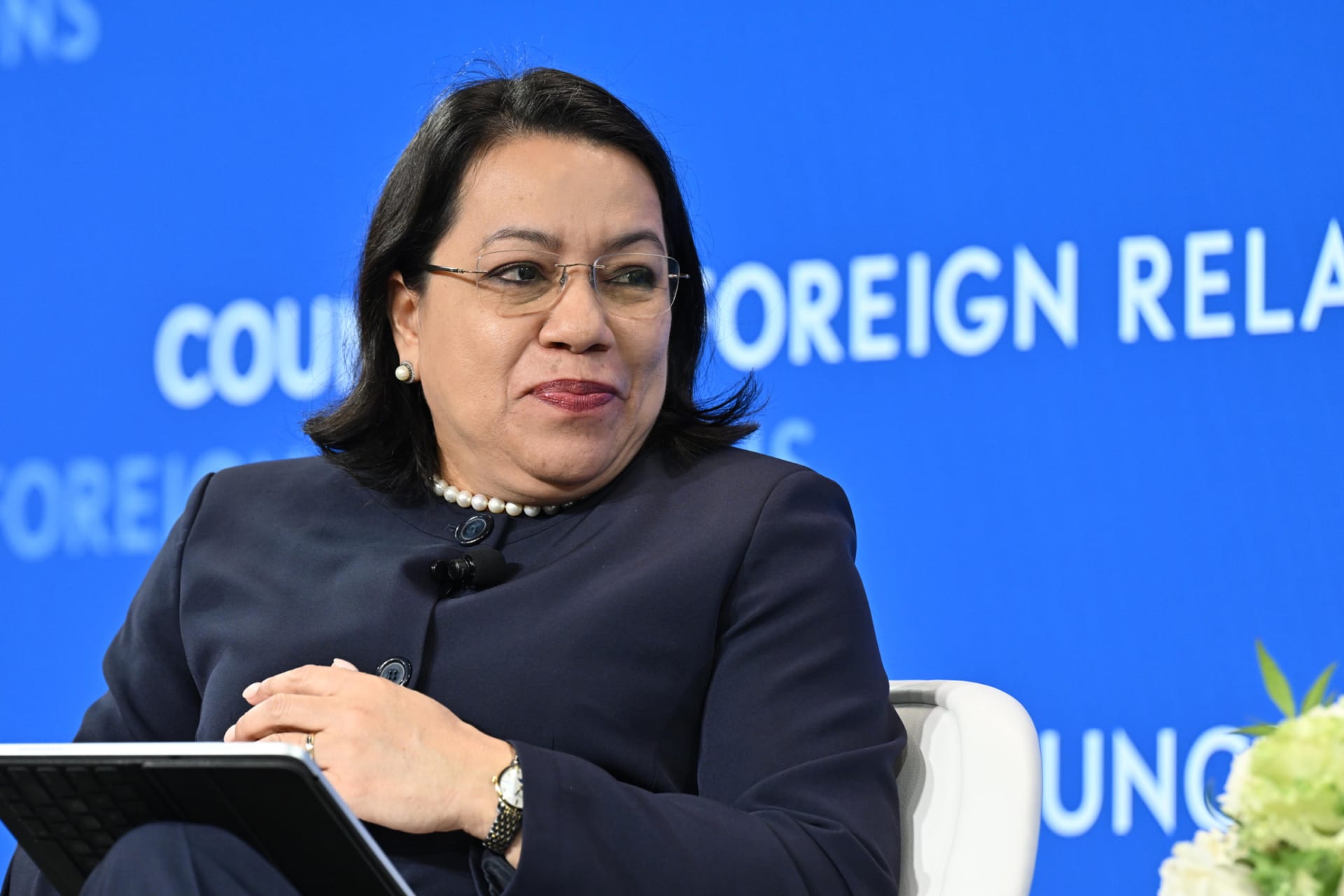
- Senior Fellow and Director of Foreign and Defense Policy Studies, American Enterprise Institute; CFR Member
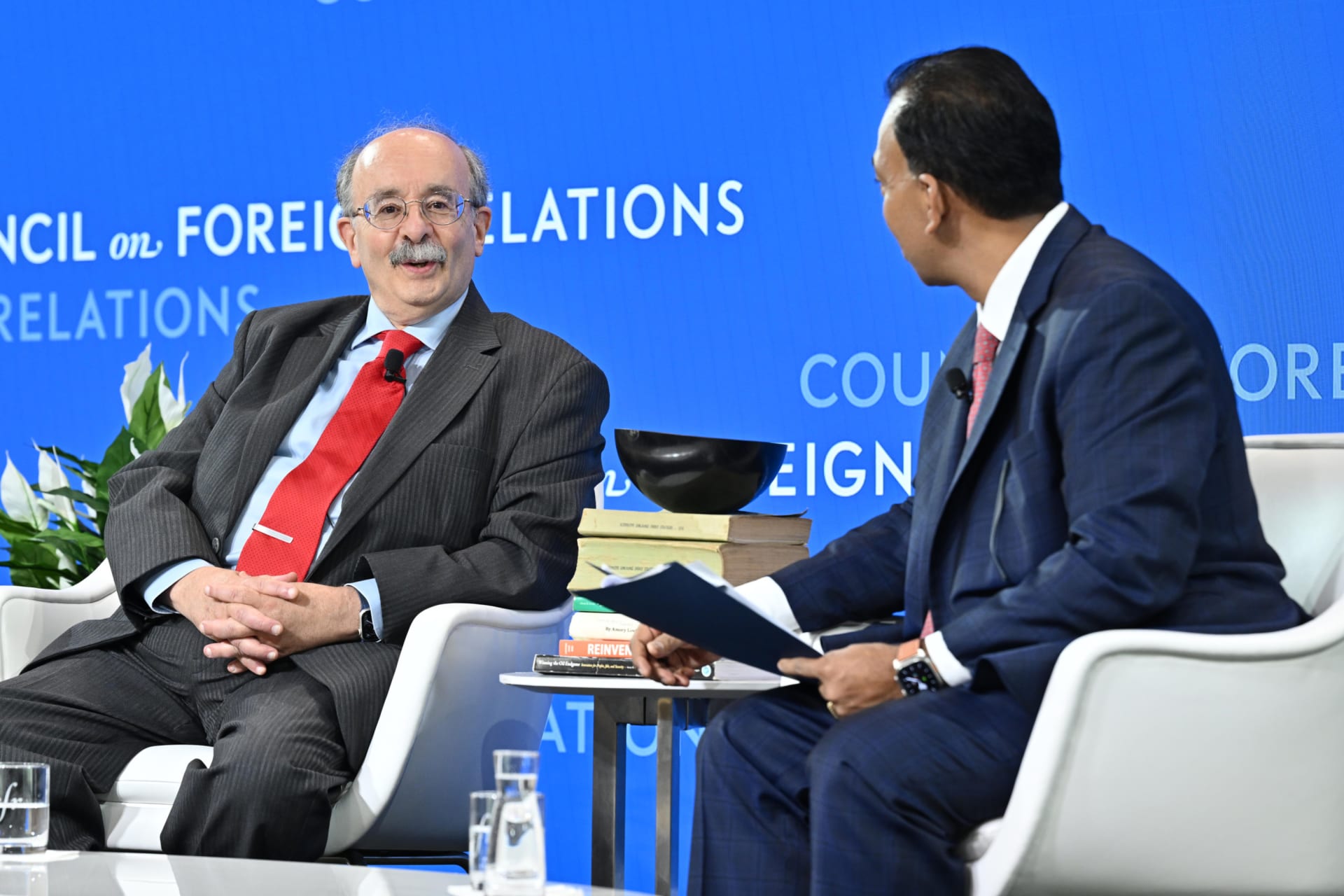
- Director, Ronald Reagan Presidential Foundation and Institute
Presider
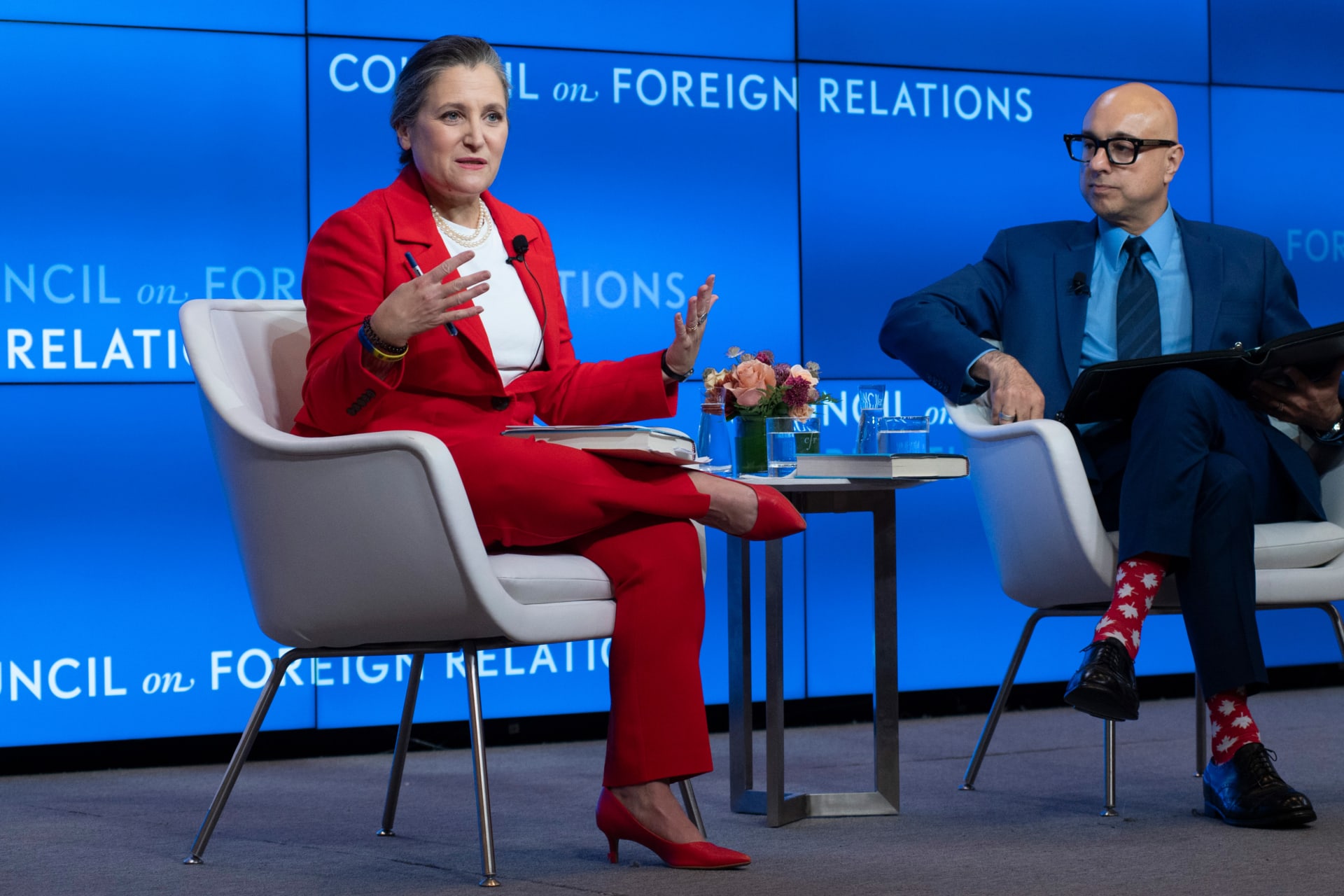
- Advisor, Evenflow Macro, LLC; CFR Member
Panelists discuss American views of national security and global engagement, and how public sentiment may shape the future of U.S. foreign policy.
For further reading, please see the Reagan Institute’s Summer Survey results on American views of foreign policy and national security.
CONLEY: Well, good evening, everyone. My name is Heather Conley. I am a senior advisor to Evenflow Macro and, as of a few weeks ago, a nonresident senior fellow at the American Enterprise Institute. It is fantastic to have you here. I’ve been looking forward to this conversation and unpacking a lot of interesting data.
We are so fortunate to be joined by three spectacular minds who are going to help us walk through all of this. Let me begin with the lady on our screen: Rebecca Lissner, senior fellow for U.S. foreign policy here at the Council. And then to my left, Kori Schake, senior fellow and director of the Foreign and Defense Policy Studies at the American Enterprise Institute. And Roger Zakheim, director of the Ronald Reagan Presidential Foundation and Institute.
As I know you were told, just to reinforce, this is on the record. I understand at the very end if you want to do a little binge watching one more time, there’ll be a recording and a transcript after. It’s going to be so good, you’ll want to go back, for sure. And just to give you the roadmap for about the next hour, we’re going to chat amongst ourselves up here for about thirty minutes. I consider myself the warm-up band. And then I’m going to turn it over to you for the next thirty minutes, and our online participants, to join this conversation. And the goal is to end promptly at 7:30 so you can enjoy the rest of this beautiful evening, and hopefully give you some things to think about as you return home.
So if you had done your homework when you got the invitation, you probably saw in a link the Reagan Institute summer survey. And I’m going to ask Roger just to give us a quick update on sort of what the summer survey is. And I asked him, what were the a-has that came from that summer survey, and then bring Kori and Rebecca into that conversation. So let me begin by welcoming you, and thank you all for joining us. And tell us about that summer survey, Roger.
ZAKHEIM: Absolutely. Thank you so much. And thanks to the Council for having me. And, Michael, appreciate so much the opportunity to join with the Council. And I have to acknowledge one very distinguished member of the Council, Dr. Dov Zakheim here. (Laughter.) It’s critical for family happiness that I acknowledge. You know, him as a doctor. We think of him as the grandfather of my five children. So with that business out of the way, critical for my children’s inheritance—(laughter)—I really am so pleased to talk about this.
And I’ll give the origins of our survey. And it stems from my time on Capitol Hill as a staffer in the Armed Services Committee. And every time a member of Congress wanted to say something impactful, it does happen on occasion—and certainly they try—he would say, the American—or, she would say: The American people believe X, Y, or Z. And there’d be zero evidence to back that up. It was quite clear that this was the decided view of this elected official. That was not—but the notion that somehow reflected the views of the American people. And then when I got to the Reagan Institute, kind of looked at the level of polling that focused on foreign policy, national security, and defense questions. And there’s not a lot out there. Gallup asked a few questions. You have the Chicago Council on Foreign Relations. But for the most part, it doesn’t come close to what you see on domestic policy.
And so we wanted to get after that gap. And so we do polling. Started out in 2018 once a year, now we do it twice a year, on these sorts of questions. And it’s fascinating what you get, both in the trends and on the kind of annual—or, you know, the now twice a year questions that are somewhat timely, tied to current events. So that’s what we try to do. And we pay professional pollsters to do this. It’s balanced. It represents not just American voters, but the American people. And we can get into the details if you’re skeptical of what you’re about to hear. But here’s the aha. Here’s the big—the big one that Republicans, and particularly those who identify as MAGA, make America great again, tracking those voters and Americans, they are not just wildly behind America’s leadership in the world—that is to say, they are not isolationist in their outlook—but they outperform on that question what non-MAGA Republicans believe.
So we saw this year overall 62 percent of those surveyed believe Americans should lead in the world. The MAGA numbers outperform that 62 percent to 73 percent. Flip it, and I’ll end with this. Those who want to be less engaged in the world—so you give them an opportunity, say, I don’t want to be more engaged. I really want to go full Rand Paul. We didn’t call it that. We just talked about less engaged in the world. And Democrats come in at 24 percent, Republicans come in at 22 percent—that would be both MAGA and non-MAGA Republicans. I got a nod from Michael Froman. My work is done here tonight. I’m going to—you know, we’ve accomplished the objective. MAGA Republicans, 20 percent. That is to say, those who believe that America should be less engaged in the world, the MAGA folks have a lower number than Democrats. Blow your mind, Kori Schake. But that’s what we see from the survey, and why the work is really important.
CONLEY: So I want to start with Rebecca. Any reaction to that? Maybe you had a chance to dip into this survey. Does that sound right? I question—Roger, I think this is tribalism. The person in charge that I support, I support where they go. And it—and it flips a little bit. So, Rebecca, I’ll go to you. And then, Kori, I want you to jump in. What stands out to you on that—on that survey result?
LISSNER: Well, thanks so much to the Council for having me. Sorry I can’t be there in person. Thanks, Heather, for presiding. And, Kori, I’m glad you’re there to handle the hecklers in real life so that I don’t have to do it virtually. And congrats to Roger and the Reagan Institute on this really terrific contribution, in the form of the poll.
So I would say a couple of reactions to the poll itself and to what Roger said. And, you know, as he indicated, some of the most interesting findings I think are actually buried there in the cross tabs, deep in that Excel file that only the political scientists and real politicos are digging through. But especially on these differences between MAGA and non-MAGA Republicans. So I guess three key takeaways for me that somewhat align with Roger’s and somewhat diverge a bit.
So the first is that I really agree that MAGA isolationism is a strawman. And the Donald Trump wing of the Republican Party is not the same as the Rand Paul wing of the Republican Party. And we see really strong support amongst MAGA-identifying respondents in favor of U.S. global engagement. And they actually think U.S. involvement is beneficial for the world. And when you look at the cross tabs of Trump and Harris voters, their responses are almost identical in terms of the level of support for global engagement. So that’s really interesting. And then you dig into the issues. And MAGA Republicans and other Republicans, Trump and Harris voters, are surprisingly aligned on the importance to U.S. security and prosperity of the war in Ukraine, a potential war over Taiwan, supporting Israel, preventing Iran from acquiring a nuclear weapon. Obviously, major debates to be had about how you do all of those things, but a lot of alignment there that I think is really striking.
But there are two important caveats. One is, I think when you look at these top-line responses on global engagement, it matters a lot how you answer—how you ask the question. Do you see really strong support across ages and party lines when the question is framed in terms of active rather than passive U.S. global engagement and leadership? And within this frame, MAGA does support global engagement more strongly than non-MAGA Republican, than Trump and Harris voters are really close to each other when you ask it that way. But if you ask the question in terms of whether respondents favor withdrawing from international affairs in order to focus on problems at home, then you actually have a small majority of respondents who respond in favor of the idea of withdrawing from international affairs. And there’s significantly stronger support there amongst Trump voters, and especially MAGA voters under forty-five. So what this tells me, and it aligns with what we see in other polls too, is that foreign policy messaging resonates best with voters if it’s connected to domestic priorities. And so that’s a key difference.
Last thing I’ll say. Global engagement does not mean the same thing to everyone. So again, if you look at some of the questions posed here there’s remarkably strong support for territorial expansion that is overwhelmingly driven by Republican respondents. So you see a small majority that supports pursuing territorial expansion with respect to the Panama Canal and almost 50 percent that supports territorial expansion in Greenland and annexing Gaza. These numbers are very low among Harris voters, but very high among Republicans. Which does speak, I think, to the influence of the presidential bully pulpit in framing how many voters are thinking about foreign policy. So I’m eager to hear what Kori has to say, so I’ll leave it there. But a lot of interesting results to discuss this evening.
CONLEY: Rebecca, thank you. Kori, over to you.
SCHAKE: So I had two reactions. The first is, I too was concerned that the poll numbers were driven by tribalism. But tracking back from 2018, and particularly from 2024 forward, there’s actually very strong consistency. And so I don’t think that these numbers should be questioned as simply a response as Trump voters supporting Trump when they wouldn’t have supported those positions if President Biden were president, because we saw continuity in the data.
The second thing, I agree with Rebecca’s very good point that presidential leadership actually really matters, and it shows up a lot in the NATO numbers in the poll, which are—which are genuinely concerning, given the treaty obligations we have undertaken to thirty-one other countries’ security. And there, I think, it is the result of a continuous barrage of presidential comments. I’d be interested what we find in December, now that President Trump has had a successful NATO summit and has discovered that European political leaders actually also love their countries and intend to defend them. But I do think the numbers are stronger than tribalism would suggest. But also, the numbers show that leadership really matters on these issues. It does move public attitudes. I think you see that on public reaction to the strikes on Iran as well.
CONLEY: Yeah, we’re going to unpack Iran in a second. Well, I think there’s good news here. Without tribalism that means there’s consistency, there’s going to be something beyond so this moment.
SCHAKE: So, one last thing. In 2015, when Jim Mattis and I were writing our book, Warriors and Citizens, we did the largest survey of American public attitudes on military issues that had been done since the Triangle Study in the 1990s. And two things struck from that data that I felt like I also heard in this data. First, the American public is woefully ignorant on these issues, because we live next door to Canada and Mexico, and they don’t have to care. But the second thing is, their judgment is terrific. And so, you know, they can’t come within a factor of six of the size of the Marine Corps, but they understand that the president’s responsible for strategy on going to war.
And the last thing I noticed in—or, I concluded from what I saw in the data, was I think a lot of—a lot of public concern about American engagement in the world has been the long shadow of the mistakes of the wars in Iraq and Afghanistan. And what I thought I saw in the data, both last year and this year in the Reagan polls, is that the American public is getting over that now. And they are worried about an international order where the United States actually isn’t shaping outcomes. They are less worried about us doing too much than they were even a couple of years ago. And I think that’s actually quite positive for America and the world.
CONLEY: Yeah, absolutely. I and I think, Rebecca, one thing that you said that struck me, it was connected to domestic priorities. This connecting to the American citizen to that policy. And I think equally, their judgment is terrific. They know right from wrong. It comes through that. I think it’s that how and the engagement that’s super, super challenging.
SCHAKE: Yeah. And in some surprising ways as well. I mean, the support for advancing democracy and human rights. There’s a lot of inconsistencies in American public attitudes, though.
ZAKHEIM: Well—
CONLEY: You want to pull on that? And then we’ll go to our next round, yeah.
ZAKHEIM: Yeah. I’ll try do this succinctly. But Kori’s spot on. And they can hold two points of view that own mind that seem entirely inconsistent. So Rebecca was right to highlight how 57 percent—to give the number—but 57 percent agree, I have the language here because language is important, that the U.S. is better served by withdrawing from international affairs and focusing more attention on problems here at home. And MAGA came out 68 percent on that, OK?
So you’re like, oh, that reinforces everything I’ve read in the Washington Post. But that same person—OK, I’ll be one that surprised me—agree that the U.S. has a moral obligation, again, the language from the poll, to stand up for human rights and democracy whenever possible in international affairs. Eighty-seven percent of Democrats signed up for that. Probably doesn’t surprise you. Eighty-one percent of Republicans signed up for that, may surprise you. Eighty-four percent of MAGA Republicans signed up for that, a values-driven foreign policy. How could both those things be true, right?
And I think what we’ve come up with at the Institute—and it tracks what you just said, Kori, and wrap up with this—is that, hey, we care about human rights, right? That’s important to us. And democracy is important to us. But that can’t come at the cost of—at the expense of problems at home, right? And that is actually not a uniquely Republican consideration, right? Democrats, and Democratic leaders, and elected officials have said, hey, let’s rebuild that home, right, not overseas. So, anyway, I think that’s one, perhaps, pathway to explain how you can—you can articulate both points of view.
CONLEY: And I think that’s the pathway to restore more fulsome American support for American foreign policy in the future, to make sure they understand the value proposition, the investment that it takes, and that they are connected to that.
SCHAKE: So, Rebecca, if only somebody would write a piece in Foreign Affairs arguing for a zero-based assessment of American strategy in the world. Would you get on that, please? (Laughter.)
CONELY: Would you like to share?
LISSNER: Will do, Kori, but only if you write an article in the same issue? (Laughter.)
CONLEY: Love that. Love that. Let me turn a little bit—and, Roger, forgive, because I’m going to use some YouGov—I’m going to use some other polling. So forgive.
ZAKHEIM: Oh, we didn’t negotiate that.
CONELY: Forgive. But what I want to do is, sort of, what does the—we’re now at the six month mark. So what does public opinion tell us about President Trump’s foreign policy? So this is the aggregate for RealClearPolitics. Only 42.7 percent approve of the president’s handling of U.S. foreign policy, 54.1 percent disapprove. Since he entered office, YouGov has the president’s approvals on foreign policy underwater by 11 percent. I just want to give you one snapshot. I’m going to talk about Ukraine. This is from July 18 and 21. This is the YouGov/Economist poll.
More and more Americans say Trump has not been supportive of Ukraine. Forty-one percent say he has not been supportive enough of Ukraine. Only 7 percent say he has been too supportive. Sixty-five percent of Americans sympathize more with Ukraine in its war. Four percent sympathize with Russia. Twenty-two percent are neutral. Americans are slightly more likely to expect Russia to be the ultimate winner of the war than to expect Ukraine to win. So 27 percent expect Russia to win, 17 (percent) Ukraine. Sixty-eight percent of Americans would prefer the war to end with Russia controlling no Ukrainian territory, but only 11 (percent) expect this to occur.
So in some ways I want to—this is the holding two thoughts in your head. And for me, the gap is—and, Rebecca, I want to start with you—where is there the gap? Their judgment, they’re assessing, they understand. But the gap is, well, what is U.S. policy? What is U.S. leadership? Are we doing something about it? Should we do something about it? How do you answer that? And, Rebecca, obviously, in the Biden administration messaging, communicating the Ukraine war policy was really challenging. How do you—how do you square that? They know where they want to go. They know what they want to see. Where is U.S. leadership involved in that?
LISSNER: Well, U.S. leadership is, of course, crucial to that, Heather, as you know very well. And here, I would say support for Ukraine has been remarkably robust and enduring, even amongst Republicans, but amongst Americans of all partisan affiliations, for almost the duration of the war. And yes, it’s flagged a bit. But it hasn’t flagged as much as many expected that it would. And Congressman Meeks was at the Council just, I believe, yesterday or two days ago. And he was saying that even amongst his House Republican colleagues he still hears support for continued support for Ukraine, including potentially an additional supplemental.
And so what I think we see is a disconnect between the policy that the Trump administration was pursuing, at least up until very recently, and what the American people want to see. Now, of course, the question of how you end the war in Ukraine is a very challenging one. And nobody has a silver bullet answer. But where the Trump administration started is not where the American people are. And where the Trump administration is moving is actually closer to what the American people want to see in terms of enduring support to Ukraine.
Now, going back to something we were just discussing, I do think that there is an important point here about connecting Ukraine support back to issues that matter for the American people. And I think, just being self-reflective about what we found in the Biden-Harris administration, it can be hard to get the American people fired up about defending a rules-based international order. That sounds abstract. It doesn’t sound like it’s connected to their own kitchen table issues. And this survey shows, I do think rallying the American people behind support for the cause of democracy, sovereignty, more support for that.
But the other piece of this is, of course, so much of the funding that Congress has appropriated to go to support Ukraine has actually gone into our own defense industrial base. And that’s a part where I think we tried, in the Biden administration, to really hit home, the fact these are actually investments that were creating union jobs in the United States, as we were replenishing U.S. defense stocks that were being sent to Ukraine. But those are the threads that I think we need to pull going forward, showing why this isn’t just the right thing to do strategically for the United States but is also the right thing to do in terms of putting money back into the U.S. economy in ways that benefit the American people.
SCHAKE: So I absolutely agree with Rebecca. And I wish the president of the United States, or somebody else in the Biden administration, had made that case regularly, routinely to the American public. Because it’s a very strong, strategic case. And as the polling numbers show, the public responds to whether a president commits political capital to what they are doing. And I think my criticism of the Biden administration is that they were exactly right about that. And should have been publishing it in the Cleveland Plain Dealer and the San Diego Union-Tribune. And my team mapped every congressional district in the country that benefited from aid to Ukraine. And we ran articles in their local newspapers. And you can see it does shift public attitudes. I think the outreach by the administration, if it had been stronger, would have made it harder for the—for President Trump to be able to hold up the aid to Ukraine for the last year, year and a half.
CONLEY: Roger, what did the survey—
ZAKHEIM: I’ll hit on the survey and then react a little bit to what Rebecca and Kori have said. So the survey shows a very commonsense distinction, but it gets—sort of people get focused, particularly inside the Beltway, on only the question of what should U.S. support in the form of security assistance look like? But there’s a baseline question which has to do, is it—do we want Ukraine to win? Do we support Ukraine? And on that question, overwhelmingly Americans—and, like, you know, plus—70 percent-plus want to see Ukraine win. You know, Ukraine’s the good guy. Russia is the bad guy. That is quite clear. Everyone. So the debate is really just, what’s the nature of the support, how much. And this kind of goes back to this discussion about what are we giving up, if anything, by supporting Ukraine? And that’s an important policy debate.
And on the question of supports, they look to leaders. And so it very much reflects where President Trump was. You know, parenthetically, Speaker Johnson, when asked about—when they ultimately let that vote go through for the security systems for the supplemental—how’d it impact Republicans? Not a single Republican who supported the supplemental lost a primary. If all of you are aware of that. And it gave Speaker Johnson a lot more sort of political authority inside the Republican conference to stand behind the position that he was for throughout his tenure as speaker.
I’m quite curious to see how it changes, the polling changes, given the fact that President Trump has changed the policy and made it quite clear that Ukraine needs security assistance, given Putin and what Russia has done. But consistently it’s been just over 50 percent that supported it. So, you know, even with the shifts and the political drama that’s paid out prior to the election, during election, now in the administration, it was always sort of something that conservatives, Republicans generally, were wondering, hey, where is this going? How many times should Congress vote and provide supplemental support to Ukrainians?
And I think here’s where the critique of the Biden administration is warranted, which is, like, the word “win” never came out of the mouth of president of the United States. And I think generally Republicans and Americans overall are far more supportive of engaging, either financially or otherwise, in a conflict if they know there is an end state and there’s a chance for the U.S. to win. And to the extent that political leaders don’t have that, or don’t engage with the population on that, they’re not going to enjoy the support, particularly on partisan lines, but I think even outside of just narrow partisan lines.
SCHAKE: So can I ask Roger a question?
CONLEY: Sure, please.
SCHAKE: How sensitive do you think the polling is going to be to the avalanche of messages that this administration barrages us with every day, right? So if the Biden administration should have communicated more, is the Trump administration blowing all the circuit breakers by, you know, no corn syrup in Coca-Cola, and—I mean, are we going to get overwhelmed and people are not going to be able to make—
CONLEY: As Stalin would say, quantity has a quality all of its own.
ZAKHEIM: Yeah. Yeah, yeah. Well, the point I was making on Ukraine, actually, is not a question of quality—you know, quantity of communication. It was the nature of the communication. My own view is that the Biden administration did not do enough to say we want Ukraine to win, and the policy reflected that. It was, in many respects, a policy that allow the conflict to remain in a steady state. And then that made it more difficult to get the political support the Biden administration needed, and I think supporters of Ukraine wanted. In terms of what happens going forward on this, I think it’s probably just the fixed views continue because you don’t know—you know, the volatility, the variability is so widespread and so robust that people won’t really know what the leaders are prioritizing and focusing on. They’ll go back to their instincts, which is what we see. I mean, there are a couple of examples I could point to.
CONLEY: Well, that’s what makes the tribalism so—you know, that these are consistent values. This isn’t just necessarily following the leader.
ZAKHEIM: Yes. Yes.
CONLEY: I have to pitch my own experience being out in the heartland talking about Ukraine in whistlestop, people understood it. They needed a conversation about what the investment would mean, and what did we want to accomplish, and what did it mean for them. And they have to be brought into the conversation, in my view. They understand all the values, but they are very, very interested in understanding what will come out of it, what the result that we want to achieve.
ZAKHEIM: Timeline is important.
CONLEY: Timelines are important, yeah.
ZAKHEIM: I mean, both president—just real quick—but whether it’s President Obama or President Trump, they both use the language of forever wars. They instilled in the mindset of the electorate that it’s bad for America to do things for extended duration without a clear end date. And when you had a Ukraine policy that did not have an end state, however long it takes sort of outlook you’re playing into sort of thing that presidents of both parties say is bad for America.
CONLEY: Yeah. Absolutely.
LISSNER: If I could just on that—
CONLEY: Oh, please.
LISSNER: Just quickly. Yeah, sorry, thank you. One of President Trump’s major attack lines during the last campaign was that there were no wars on his watch and all these wars on President Biden’s watch. And that was a key part of his pitch. So, Roger, I hear what you’re saying in terms of wanting to channel an ambitious policy objective and a clear policy objective to the American people. But that also, I think, needs to be weighed against the need to project realism, manage expectation, manage escalation, and be sensitive to the fact that the American people don’t want to see the United States involved in another long war in which U.S. troops are deployed.
And Kori hinted at this, but one of the most stable features of American public opinion over the past several decades is resistance to the idea of U.S. troops being deployed in prolonged foreign wars. And if I could just take a step back for a second, I think too often our debate about the parameters of U.S. global engagement are focused narrowly on those use of force issues. So you’re right, Kori. There’s been this massive hangover from the global war on terror, from Iraq and Afghanistan, where we thought, well, if you’re against U.S. interventionism overseas then you’re against global engagement.
But what I think we see now is an opportunity to really broaden the aperture, where we see broad swaths of the American people who are hungry and calling for more American global engagement, but are looking for definition about what the scope and scale of what that engagement should be. And President Trump has offered one set of answers. Others will offer other sets of answers. But it’s less the isolationism versus engagement questions so much as the question about what are the appropriate objectives for U.S. policy globally and what are the appropriate tools for use of them—to include appropriate use of force. But I think we shouldn’t be too myopically concerned on that as the central axis for this debate going forward.
SCHAKE: I think that’s a good point.
CONLEY: So I want to turn very, very briefly, because I want to bring the audience in here, to talk about—a little bit about Iran, and sort of the concept of what the Trump doctrine is coming into play. So, Roger, your summer survey overwhelmingly captured, 84 percent want to prevent Iran from acquiring a nuclear weapon. It’s very, very clear. After the end of June, as we are heading into, you know, potential conflict, Quinnipiac University survey released 53 percent disapproved of President Trump’s handling of the Israeli-Iran war. And an NBC poll at the same time said a plurality Americans, 45 percent, opposed the strikes. So you have that conflicting information of, well, I don’t want this, but I don’t want to get involved. And I think you sort of see the same play out in Ukraine.
So this brings me to understanding what the Trump doctrine is. And thankfully, Vice President Vance gave us the perfect explanation of the Trump doctrine. It’s quite simple. I quote, “Number one, you articulate a clear American interest, in that, in this case, Iran can’t have a nuclear weapon. Number two, you try to aggressively diplomatically solve that problem. And, number three, when you can’t solve it diplomatically, you use overwhelming military power to solve it. And then you get the hell out of there before it becomes a protracted conflict,” unquote. So is that peace through strength, Roger? I call it strength without commitment. We look strong. We use our leverage. If it doesn’t work, next. We don’t have the commitment to see it through and we move on. So how do we balance the peace through strength, Vice President Vance’s understanding of what we’re communicating to the American people about what our policy is? How do we lead? How does this look?
ZAKHEIM: Well, I think on items one and two of the Vice President Vance list, I think pretty much every president would say that, across both parties. He was obviously responding to Iran and explaining the president’s decision on Iran, given that the—what was clear from our survey is that the narrow, isolationist slice of MAGA, right, he needed to explain it to them. Look, the piece that’s missing that was, I think, the secret sauce to an emerging Trump doctrine, if somebody’s daring enough and stupid enough to try to articulate one—because, I mean, that’s the last thing you want to do. I mean, it’s like—it’s like predicting, you know, like, we figured out the Middle East. You say that, the next thing you can expect is a war in the Middle East. You say you have a Trump doctrine, tomorrow, you know, it will be the exact opposite. Having given that disclaimer, I’ll articulate the Trump doctrine. (Laughter.)
SCHAKE: Thank you, Roger.
CONLEY: Thank you so much.
ZAKHEIM: And I’ll be quick. So items one and two, the vice president articulated. And then two—between two and three, we’ll call it two and a half, is get your allies to do the work for you. And that’s what happened in Iran, right? Kori is ready to disagree, so I’ll be very quick here, right? But what happened was, right, President Trump did something that no American president has done for Israel, which was green lit an operation to take out a nuclear weapons program that the United States had a real significant interest in seeing that that regime did not obtain. And then, interestingly, when it looked like that was a successful strike, got behind it on a Truth post. And then finished a job would be two bombers, because the Israelis either wouldn’t have been able to do it or it would have taken longer than President Trump thought would have been good for U.S. national security, or domestic support, or a combination of both.
That, ladies and gentlemen, is the Trump doctrine. And in case you say, well, that’s kind of sui generis. It’s not going to happen again. I bring you NATO. And I bring you Europe. And I bring you Ukraine. And the moment that President Trump perhaps changed his approach to giving security assistance to Ukrainians, it happened, well, shortly after he got the NATO allies to do something that no prior president—I think I can go full stop there—has been able to get the NATO allies to do, which was to increase their security—commitment to their security to 3 to 5 percent. So those two, of two of the three most important regions in the world, you see an element of a new, emerging Trump doctrine, which is find out—you know, you get the national security interest. You go ahead and you engage diplomacy. You get your allies to do as much as they can. You press them like hell to get there. More in the case of Europe than Israel. And then we’ll step in. In the case of Ukraine, it’s getting the weapons over to Zelensky and the Ukrainians.
CONLEY: Kori and then Rebecca.
SCHAKE: I’m skeptical that—
ZAKHEIM: I got that from body language. (Laughs.)
SCHAKE: That the Trump administration is linear and consistent in the way that Roger suggests they’re likely to be. But I do agree with him that there are—that there are characteristic Trump administration moves. Two things I think that stand in the way of it being consistent as a doctrine. They like the declarative statements. So, for example, peace through strength. And yet the president’s budget submission is actually a $31.7 billion cut to the last Biden administration defense budget. So the connectivity between declaratory policy and what the administration is actually willing to budget and take risks in order to accomplish, I think that chasm is dangerously wide, and is also perceived by America’s friends and adversaries as a dangerous vulnerability.
And the second thing is—so I agree with your point that the president would like allies to do much more. I was frankly surprised that we didn’t sell Israel the bombers, refuelers, and bombs to do this themselves. I actually thought that was more consistent with President Trump’s approach to those things, which is we make money off it and they take all of the risks. But I think they are not actually calculating the risks of fire a bullet and leave the OK Corral, because others get to fire too. And I think they don’t, doctrinally, have an answer to what to do when that happens.
But, Rebecca, what’d I miss?
CONLEY: Strength on the cheap. I’m going to—I’m going to keep coming up with some mottos here so we come out tonight with our version of what—
ZAKHEIM: I want to respond to that one, but I don’t want to get ahead of Rebecca.
CONELY: Rebecca.
LISSNER: Sure. I like strength on the cheap.
So my take on the Trump doctrine is there really isn’t one. Part of that is because unpredictability is a core feature of President Trump’s approach. And we’ve seen that he escalates, and sometimes he carries through on a threat, sometimes he caves. I will believe that there might be a Trump doctrine with respect to the use of force when we see it play out in more than one instance. But it’s hard to extrapolate from the Iran case, particularly as Iran didn’t retaliate in the way that many expected, and it could have drawn the United States in much further. So you could say that that was a very cunning read of the strategic situation that President Trump made in his decision to get U.S. forces involved in bombing the Iranian nuclear program, or you could say that, you know, through some combination of luck, the balance of power, circumstance, Iran didn’t respond in such a way that required us to go another round and another round, and could have drawn the United States in much further.
I think more broadly, though, it is underappreciated the extent to which the Trump administration’s national security strategy—I don’t mean that in a proper noun sense—is poorly defined. There are a lot of ways that the first Trump administration has created a certain hangover where people attribute certain qualities to this Trump administration that really don’t exist. And I think this is most clear in the case of China, where the first Trump administration was serious about great-power competition, a term that they put forth in their National Defense Strategy. This Trump administration doesn’t seem to be at all serious about great-power competition. And in particular, its China strategy doesn’t amount to much of a strategy at a time when the Trump administration is tariffing our closest allies in the Indo-Pacific, selling H20 advanced computing chips to the PRC, that they can use for their military intelligence purposes, making trade deals with China. None of that really amounts to a clear strategy.
And so, you know, there may be a one-off post-hoc rationalization for why and how the president decided to use force in the case of Iran, but I do not think that this adds up to a coherent picture. And I don’t think that the world sees anything like a predictable pattern coming out of Washington that they feel that they can respond to. Which is why our allies and our partners and our adversaries are reordering the international system around us in a way that places the United States less as a center, because we can no longer be trusted and because we’re seen as far less reliable and credible than we were in the past.
CONLEY: Thanks, Rebecca. I’m going to now bring the audience in. Good, got lots of hands. Did you want to come in?
ZAKHEIM: I’m not going to take—
CONLEY: OK, quickly.
ZAKHEIM: I mean, a lot Rebecca packed in there that I’ll just say I disagree with and maybe will come out in questions in terms of how people respond to the Trump administration or even the China policy, although part of that I agree with.
I do want to make one point, that is on the peace through strength. It’s not on the cheap, yet.
CONLEY: Caveat, yeah.
ZAKHEIM: Here’s why. It’s going to be a trillion dollars if you include the reconciliation dollars. That is a substantial sum. And if you ask Trump administration officials, they want to do it again next year. And that’s sort of not intuitive. Why using reconciliation and not your base budget? There are important reasons. But they wanted, as a policy matter—this is the OMB director’s goal—is to remove the parity that has afflicted, from a defense hawk standpoint, between domestic spending and defense spending. So the way you get a dollar for—increase a dollar in defense spending is you have to increase domestic spending. That’s been the formula inside the Congress. With reconciliation, you got that $100-plus billion without a corresponding $100-plus billion increase in domestic spending. So it’s not ideal, if it doesn’t repeal—kind of repeat year over year. But for the fiscal year that’s in front of us, that will be a trillion dollars in defense spending, which would be as much needed and as important. More to say on the defense point.
CONLEY: Gotcha. Anders, why don’t we start here? If you could just—the microphone, and introduce yourself, and keep that question short because we’ll have a lot to say after that.
Q: Anders just Ukraine. I guess it’s primarily for Roger.
I mean, this is the big missing part here. Trump is dead against Ukraine, ambushing Zelensky, stopping military deliveries to Ukraine twice, stopping all financial assistance, et cetera. How can this be in the U.S. interest? How can this be U.S. leadership? And calling Putin a genius for his invasion, a war of aggression against Ukraine, not protesting against anything that Putin does, introducing no new sanctions on Russia, et cetera?
ZAKHEIM: Well, I can’t explain everything that’s happened and the Trump administration approach, but I think as observing events, just like you have, and imagine all of you in the room, is what seems to have changed President Trump’s decision on supporting Ukraine, giving security assistance, and also entertaining sanctions, either from the administration or Senator Graham’s bill, is Vladimir Putin. So what’s played out is kind of let Putin be Putin, and he’s spoiled any opportunity he’s had to get the Trump administration to agree to some sort of outcome that Ukrainians would not have wanted. And as a result of Putin being Putin, we’ve seen a dramatic shift in President Trump’s rhetoric as it relates to Putin and Ukraine.
Q: Is Trump making sense?
ZAKHEIM: I couldn’t—
CONLEY: I think we’ve definitely seen the spectrum. When Special Envoy Witkoff first went to Moscow, this was a wholesale sellout towards the Russian position. We’ve arced, obviously, in a better place. I think those animal spirits still live there, but, you know, as I see, there are all policy options on the table. Which shouldn’t give us comfort, but at least the American people are clear. And I think that’s a good indication.
We have an online question. So I’m going to let that online question come.
OPERATOR: We’ll take our next question from Christopher Preble. Looks like we’re experiencing some technical difficulties. We’ll take our next question from David Nachman.
Q: Hi. Thank you very much for this.
I want to connect two points in asking this question. Roger’s data, you all observed, makes a critical distinction in terms of how you ask the question. When folks feel that engagement abroad comes at the expense of taking care of problems here, they have a different response. Kori made the point that the messaging around Ukraine was not very cost effective and cost sensitive, failed to point out that the primary beneficiaries of our economic largesse were American companies.
Why do you think that the pro-engagement community, of which the Council and most of the people present today are representatives, have failed to make the cost-effective case for not just USAID funding but diplomatic funding, which is the—at a greatly increased scale—which is the way, with all respect, Roger, to get what some of us regard is an obscene trillion dollar mark way down, through much more effective diplomatic expenditure. The cost case for diplomatic engagement, why do you think that’s been so underdeveloped, both by the public at large and even by the Trumpies, if they really want to avoid the viceroyalties that characterize the past and that are very expensive?
CONLEY: David, thank you so much. I think that last question is really great. Why we’re pushing diplomacy and ending wars, but we’re curtailing our diplomatic efforts? Kori, do you want to take a swing at that? And we’ll go to the next question.
SCHAKE: So diplomacy requires patience, privacy, extended, careful thoughts about compromises. And the American public is, in general, incredibly impatient about wanting problems solved and wanting things fixed. And so I think there is a tendency—I love the way Walter Russell Mead in Special Providence describes it as the Jacksonian tendency. And I think it comes through in the figures in the Reagan administration. Americans care about the world. They care about advancing democracy and values. They want it to be easy. They want it to be clear. They want to go back to the things that are affecting their daily lives. And I think that’s the reason.
LISSNER: Can I just jump in?
ZAKHEIM: So I think you have to—go ahead, Rebecca.
LISSNER: On, no, I’m sorry.
CONELY: No, Rebecca, go ahead.
LISSNER: OK. Well, just two things here. I mean, one, we all know that Americans consistently overestimate how much the United States actually spends on diplomacy and foreign assistance by many orders of magnitude. So there is a public education gap that I know many of us have tried to fill but have not been successful in doing so. But I did just want to point out, to me this is one of the grand contradictions of the Trump administration. Because on the one hand, they are more committed to diplomacy than many post-Cold War presidents we’ve seen. They’re willing to talk directly to Iran. They’re willing to talk directly to Russia. They’re willing to talk directly to Hamas. And we can debate the wisdom of any of those decisions and the legitimacy of those conversations, but it is notable that they’re willing to have them, and actually bringing a lot of Republicans along with them.
One of the things that I found most striking in the survey results was that Trump and Harris voters were exactly the same level of support for an Iran nuclear deal. That’s surprising. Republicans have been super opposed to an Iran nuclear deal, to include that was a key issue that President Trump ran on the first time. So on the one hand, a lot of boldness and the willingness to consider heterodox diplomatic plays. On the other hand, a gutting of the State Department, a gutting of the NSC, a gutting and dismantling of USAID, and all these instruments that are actually critical to conduct that diplomacy. And I can’t pretend to explain why that is so. But I think on the one hand they deserve the acknowledgement that they are taking diplomacy seriously in some cases, and, again, quibbles about how, and the objectives, and so on. But then, on the other hand, that they’re really stymieing their own ability to see those practices through and deliver results for the American people.
ZAKHEIM: So I will venture to explain why these things are true, why it could coexist. On the one hand, you can gut foreign assistance, or entities that you would generally associate with diplomacy and advancing U.S. interests. And that is because, from the Republican mindset, I think, overall, and certainly for those who are MAGA and those certainly serving in this administration, they don’t see these institutions as advancing the type of diplomacy that the Trump administration wants to advance. So you have to—you have to sort of disaggregate the institutions that everyone here associates with carrying out diplomacy with support for diplomacy. Absolutely, I take Vice President Vance at his word that he wants to engage in diplomacy and doesn’t want to engage in armed conflict of any kind of armed conflict. And that same outlook would say there’s no way in hell I’m allowing USAID to take U.S. taxpayer dollars and engage in, you know, kind of as a soft power tool.
Why? Because he doesn’t trust USAID. And, frankly, most Americans don’t either. It comes out in our survey. And they’re quite concerned that the interests that were advanced by USAID and other entities were actually carrying out things that were counter to President Trump’s view of what is in the U.S. national interest. And so if you take the view that these entities, these institutions, were not advancing the president’s kind of outlook for what is and is not in the U.S. interests, you’re not going to rely on them and you’re not going to invest in them. Now all everybody here could kind of raise their arms and say, what do you mean? These are fantastic institutions that do advance U.S. interests. But there’s probably big difference between what you think is in the interest of the United States and President Trump and some of the people who work for him.
CONLEY: Well, results and outcome, proof will be in the pudding. We’ll see how the diplomacy of the Trump administration achieves its goals, for sure. We have a question over there. Sir, please.
Q: Hi. Trooper Sanders.
So, question. Did you see any difference in the data between the sentiments that people had and what they might vote for, how they might reward or punish candidates for foreign policy views?
SCHAKE: Hmm, good question.
CONLEY: Super. Who wants it?
ZAKHEIM: Well, short answer, on the Reagan survey, is no. We don’t get at that. So I couldn’t kind of glean or pull the thread in terms of, OK, well, if this doesn’t happen, right, then there’ll be sort of a shift in how I vote. But—there’s a but—is there are certain responses here that demonstrate, like, huge support. And so that for any political actor you’d be wary of departing from. For example, you noted at the outset, 85 percent of Americans said that what mattered most to them was to prevent Iran from obtaining a nuclear weapon. Eighty-five percent. I mean, you can’t get 85 percent of Americans to agree—I don’t know what falls on of category, particularly in the world of policy or politics. So to the extent that is not a priority, that some would say we—you know, this is—you know, I think there’s some risk there. And there are other examples. That’s one that jumps out at me, because the poll came out on June 2, and Israel strike played out, you know, ten days later. And so I would expect that clearly mattered to the voter. And some of this, we’ll see how it shakes out.
CONLEY: Yeah. Yeah. Rebecca, I actually want to bring you in on that a bit because I think there’s a correlation to what you said about the willingness to try new things and to reach out. And I think that is some of the strength, the peace through strength part, that it’s my strength that I can talk to Xi, and Putin, and that I can reach out. And I’m doing different things. There’s a strength in new approaches. Do you think that’s fair? Or do you see where the voter might be more inclined to action? It gets, Kori, to your point of the Jacksonian. We act. We take charge. We shape. We influence.
LISSNER: Yeah. I would say that there are a couple things at play here. One is that President Trump always polls very strongly when it comes to military strength. People perceive him as the tough guy. Notwithstanding all the diplomacy he may be willing to do, he’s been able to capture this really interesting political space where on the one hand he’s the guy who said, no more wars, no wars on my watch. And then on the other hand, he’s seen as being really forceful and strong in representing the United States, including militarily, on the global stage. So that’s kind of an interesting tension.
The other thing I would say is that, you know, alongside Iran, which Roger just pointed out, one of the other top five most important national security issues that appears in the Reagan survey is the southern border. And when you think about what are those issues that are at the seam of domestic and foreign policy, those are issues that President Trump has really focused on—the border and trade. And so even as it is the case that I think as a general matter Americans don’t vote on foreign policy and are actually willing to probably tolerate a broader range of specific policy positions than we have traditionally accepted within the Beltway, it is also the case that they care a lot about having strong borders, and that—especially in some very important states, but even more broadly—they care a lot about fair trade and making sure that America is getting a fair shake on the global field, and that China and other countries aren’t taking jobs away from the United States.
And that is really a political sweet spot that President Trump has occupied. Now, whether tariffs actually result in rising prices and inflation here in the United States, and whether that actually then turns this issue against President Trump, is a critical issue to watch, and I think will be very politically salient going forward, exactly because it takes these foreign policy issues and brings them back to being kitchen table issues.
CONLEY: Rebecca, I think you just put your finger on it. I think that connection between the domestic and the foreign, and they understand that, is the secret sauce, because then they have a sense of understanding—it means something to them, and it connects to what we are doing.
SCHAKE: Another way to say that is that Americans—because we are so well-insulated from most of what happens in the world—Americans have the luxury of not caring about most issues. And the places where it touches American domestic policy are the places that America—that you see Americans vote on foreign policy.
ZAKHEIM: One nugget on this point. I mean, I generally think that—I agree with what you both said. When we—in this survey we give a number of things what matters most. And the immigration issue mattered—it mattered a lot in the ’70s. But it mattered less than Iran obtaining a nuclear weapon.
CONLEY: That’s interesting.
ZAKHEIM: Thank you. I thought that was interesting too. And I think part of the reason why is that—we were in the field at the end of May. Well, look what was happening across the border between, let’s say, February and May. President Trump got after that problem. May not have liked how he got after it, but you know this, the data is quite clear, it’s less of a problem. It was less of a problem in May of 2025 than it was in May of 2024. So when the issue is addressed the urgency around it goes down. They feel like it’s problem solved, and they’re looking elsewhere.
CONLEY: Interesting. Do we have another online? Or, no, we’re going to stay here. Great. OK. I’m going to swing over here, sir, right there. We may have to get a little permission to extend ourselves. We got some hands going on.
Q: Thanks. Michael Hirsh with Foreign Policy.
This question is for Rebecca and also Kori, if you want to chime in. So, setting aside the Iran strike, which may have been a one-off, there definitely is a strong school of so-called restrainers in this administration. Bridge Colby, defense undersecretary, probably—perhaps leading the way here. And just an attempt to scale back—not eliminate, but scale back—U.S. presence, particularly in military sense, but also the diplomatic picture may be part of it. And, Rebecca, I was just curious, as the author—the coauthor, of An Open World back in 2020, whether you think there is common ground here going forward between, you know, those in the current administration, people on this side of the aisle, and those like yourself who are—who are advocating for a scaled down presence that would still sustain a global system in which the U.S. could be safe and prosperous.
CONELY: Rebecca, over to you.
Q: And I’d like to know Kori’s—
LISSNER: Yeah. Well, so thanks for the question. I certainly don’t identify myself with the restraint school of thought when it comes to American foreign policy. And the book was actually an argument in the first Trump administration in favor of robust U.S. global engagement, but doing so in a more disciplined manner than we had seen for much of the post-Cold War period. And so we weren’t recommending troop withdrawals or any such thing in that book. That being said, I do consider myself a realist. And I don’t think that we should allow the Bridge Colbys or the restraint school of the world to claim that mantle, because you can have a very robust debate about what the appropriate posture is for U.S. military forces around the world. You can have a robust debate about whether their presence there is an incitement to war or actually a deterrent of war. And we should have that debate.
Now, what I will say is that this administration does seem interested in doing something that the last Trump administration did too, which is scaling back some U.S. troop deployments overseas. I’m particularly looking at what happens in Germany and what happens on the Korean Peninsula. There is a version of that that is probably not what I would do, but more minimally damaging and responsibly conducted. There’s another version of that that has the risk of creating real deterrence and security gaps. And so I think as we’re talking about readjusting American military posture around the world, we need to think about the what, but we also need to think about the how. And as we’re transitioning to a framework where U.S. allies take more responsibility for their own defense, which isn’t necessarily a bad thing, how can we manage that transition in a way that doesn’t create capability gaps and doesn’t create invitations to adversaries to take advantage of any transitional period in such a way that it would make all of us net less secure?
CONLEY: Kori.
SCHAKE: So I would just say that it’s actually quite striking, given the number of people in the administration with known views of that kind, how very little influence they actually have over the president’s choices. You know, what you saw in the signal chat exchanges makes everybody’s position pretty clear. And none of it actually affected the president’s choice. And so I think what we are seeing is an administration where not only is this not Abraham Lincoln’s team of rivals, it’s also not Joe Biden’s team of competent staffers in the Cabinet. It’s a Cabinet of amplifiers. It’s folks who the president wants to watch on TV having those—you know, making the case to the American public of what the president wants to do.
There doesn’t appear to be an enormous amount of influence by the Cabinet on the president’s views. And I think the president wants it that way. He has structured an administration—Steve Hadley’s fond of saying that every president gets the interagency process they deserve. And President Trump actually doesn’t want much of an interagency process. He’s confident in his own judgments. As Rebecca has pointed out, his views are quite heterodox. And he’s confident that the administration should do what he wants done, which, again, is not that different from what every American president aspires for in forming a government. And they succeed to greater or lesser extent.
CONLEY: Fantastic. I’d like to take one, like, micro question. We have to squeeze this in, and then we’re going to wrap it up. Sir. A microphone is coming to you.
Q: Alejandro, JPMorgan.
My question stays with the domestic, because I think on the recent big, beautiful bill it seems like it was completely detached from, sort of, you look at AI, and now AI is scaling, and the use cases are advancing, and displacement in corporate America, and less and less jobs, the economy is trying to come down. The amount of social cuts on the bill, actually, I think that everybody’s kind of celebrating, but I think that the future, it doesn’t look that promising in terms of the domestic social condition at the moment. Is there anything that you worry about in terms of, like, you know, five, ten, fifteen years from now we will look back—lack of foresight? Did we do this well? What could we have done differently?
CONLEY: From a national security perspective, One Big Beautiful Bill. I’d say debt.
SCHAKE: I was going to say the exact same thing. The explosion of national debt, is sooner or later, the law of gravity is going to kick in on the United States. And when it happens, we are going to have to make draconian choices that are damaging to American families. And so I really, really wish that we were actually being less profligate with our children’s money.
CONLEY: Roger, and then, Rebecca, and then I’ll let you have the last word.
ZAKHEIM: I will take a heterodox view here.
CONLEY: Please.
ZAKHEIM: Does it—making those—the tax rates permanent, from the way I look at the world, that invites growth. Bending the curve on entitlement spending, which started happening with the Medicaid component of the big, beautiful bill, is a step in the right direction. More should happen, but I think if we’re going to go ahead and get after the entitlements then we have an opportunity to deal with the debt. We haven’t done that. And it ain’t going to happen on trillion dollar, you know, bills that just increases spending on these special measures, which didn’t happen in this bill.
CONLEY: Rebecca, I’m going to give you the last word. Thoughts on the national security implications or broader implications of One Big Beautiful Bill Act.
LISSNER: Sure. I mean, I think when you take that piece of legislation, in particular, to me the most salient beyond the debt, which I agree with, national security implication is the continuation of process of really ceding climate leadership to China. So under the Biden administration and the IRA you had a concerted effort to establish American leadership in the clean energy economy, which is going to be the twenty-first century economy, whether the United States likes it or participates in it or not. And by stepping back from that commitment, I do think that we put at risk the ability to create an ecosystem that centers on the United States, that will be what oil was to the twentieth century but for the twenty-first century.
And to me, that’s just of a piece with what is a feature of so much of this administration’s domestic policy, which is actually undercutting the very foundations of American competitiveness. And so when you make it harder for global talent to come to the U.S., when you cut science and technology research and basic research, when you call into question the strength of the U.S. dollar and the United States as a safe destination for global capital, these are all things that have made America strong for decades. And the Trump administration is systematically going after so many of those underpinnings in a way that will be very, very hard to recover from.
CONLEY: Thank you. This was a fantastic discussion. I apologize; I’m four minutes late. But thank you.
OK, I’m going to—I have a new doctrine name. Ready for it?
SCHAKE: Oh.
CONLEY: OK, “strength through contradiction and connection.” Eh? OK. We’ll work on it next Council on Foreign Relations conversation. Please join me in thanking Rebecca, Roger, and Kori for a great conversation. (Applause.) Have a great night.
(END)