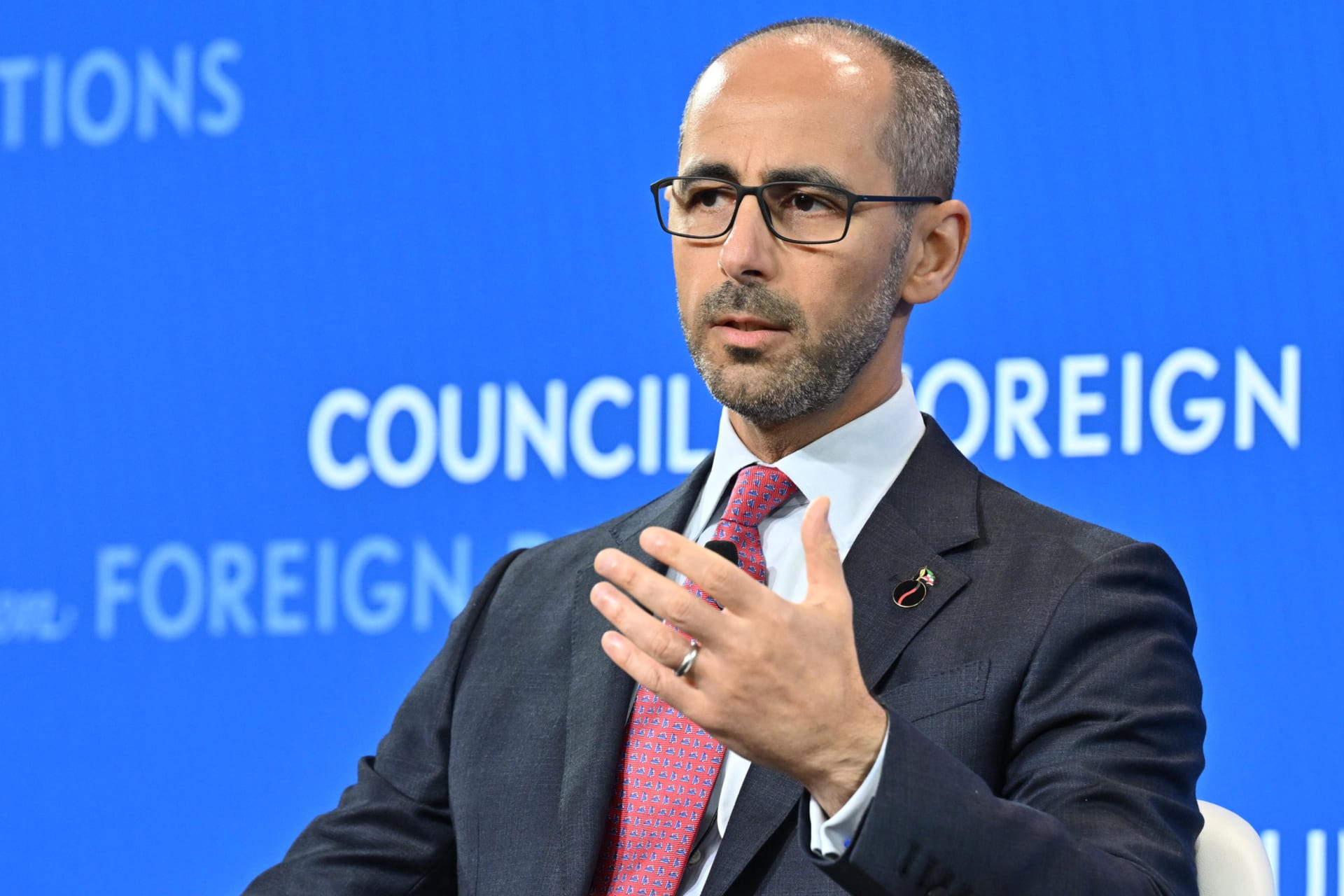
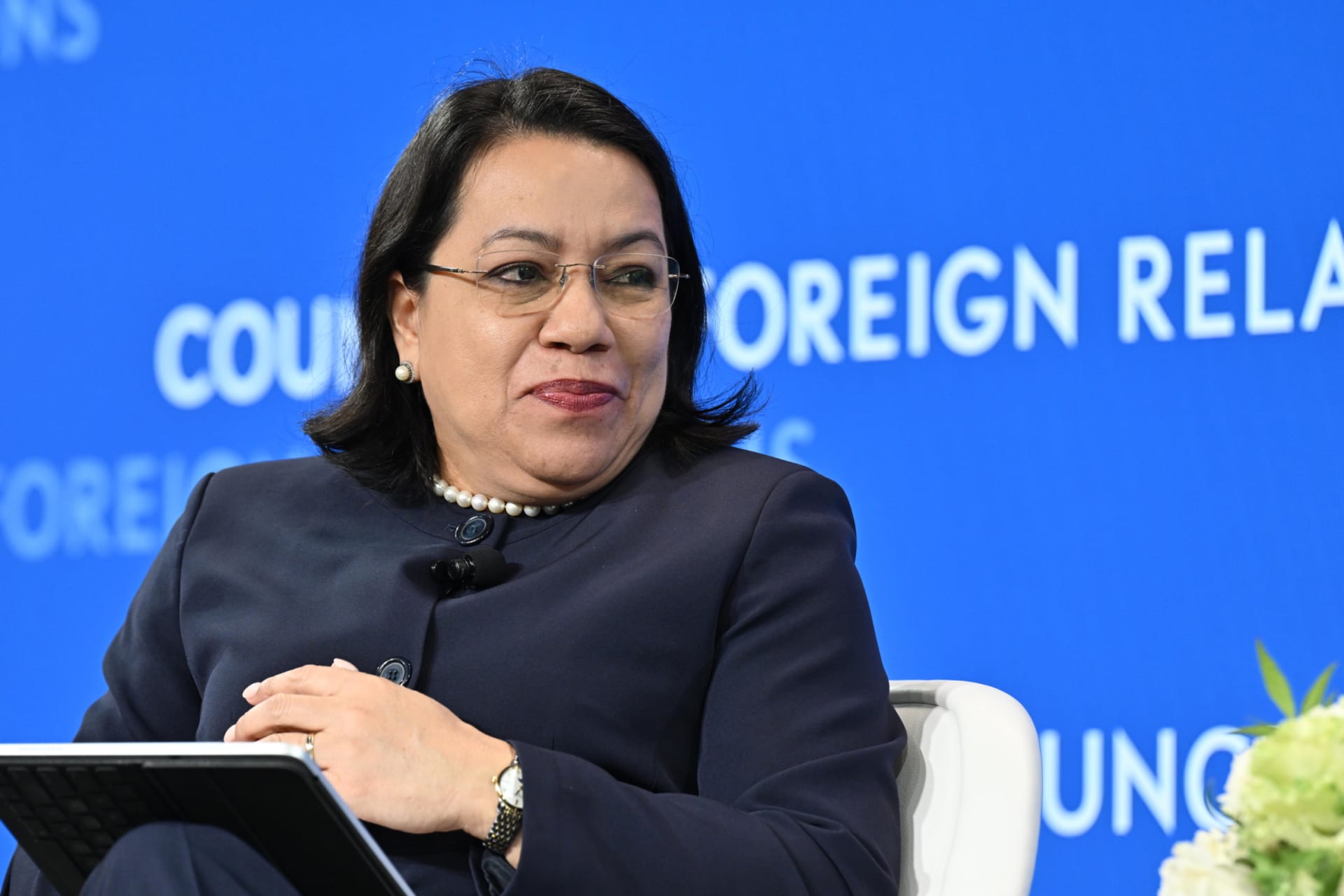
Breaking the Ice: Emerging Threats and the U.S. Strategy for Arctic Security
Event date
Speakers
- Author, Sea Change: America's New Great Game in the Arctic Circle; Global Business Columnist and Associate Editor, Financial Times; CFR Member
- Rush DoshiCFR ExpertC.V. Starr Senior Fellow for Asia Studies and Director of the China Strategy Initiative, Council on Foreign Relations
- Senior Fellow, Foreign and Defense Policy, American Enterprise Institute; Former President of the German Marshall Fund of the United States; CFR Member (speaking virtually)
Presider
- Vijay V. VaitheeswaranCFR ExpertPhilip D. Reed Senior Fellow and Director of the Energy and Climate Program, Council on Foreign Relations
Panelists examine the strategic implications of a rapidly changing Arctic, focusing on emerging shipping routes, intensifying global competition for resources and maritime access, and the requirements for a strengthened U.S. presence in the region.
Copies of Sea Change: America’s New Great Game in the Arctic Circle will be available for purchase.
This meeting is presented in partnership with CFR’s Energy and Climate Program.
VAITHEESWARAN: Welcome, ladies and gentlemen, to today’s convening of the Council on Foreign Relations and our special meeting “Breaking the Ice: Emerging Threats, and U.S. Strategy for Arctic Security.” I’m Vijay Vaitheeswaran. I’m the Philip D. Reed senior fellow and the director of energy and climate here at CFR. It’s my great honor and pleasure to have such a sparkling group of panelists to discuss this absolutely essential and timely topic. It is an on-the-record meeting and we also have many of our members joining virtually, so we welcome all of you in person here in New York as well as those online.
I will introduce our speakers in just a moment, but I thought I’d start by reminding us of the frame that their great work has pursued—including a new book by Rana, you’ll find copies in the back of the room, which I recommend to you having had the privilege of reading it in prepublication. It’s about to be published in a couple of days. You’ll hear more about it in a moment.
But I want to invoke another great author who wrote in 1901, anticipating perhaps some of the conversation we’ll have today. “Now I shall go far and far into the north, playing the great game.” That was, of course, Rudyard Kipling. And while he may have had in mind the Himalayas, we’re going to the real north now, the North Pole, in our conversation with the Arctic. And with that as something of a frame, a teaser to think about, let me introduce to you our speakers today. And I do see we have a microphone problem. Thank you. Very good. Hopefully the technical difficulties will end there.
So welcome to all of you. Welcome to our speakers. I have to my immediate right, as advertised, Rana Foroohar, author of Sea Change: America’s New Great Game in the Arctic Circle, as well and known to all of us as a global business columnist and associate editor at the Financial Times and a CFR member; Rush Doshi, my colleague here at CFR, who is a C.V. Starr senior fellow for Asia studies and director of the China Strategy Initiative; and joining us remotely we welcome Heather Conley, senior fellow foreign and defense policy at the American Enterprise Institute, former president of the German Marshall Fund of the United States, and a CFR member. So a round of applause to warm them up, welcome them to the stage, get them going on the topic of the hour. (Applause.)
Let me start with you, Rana. You’ve just written a terrific book, both in terms of the theme and the exciting color you share with us, having actually gone out on a Coast Guard icebreaker. Won’t be that hard to figure out which one, because we have only one that spends its time in the Arctic.
FOROOHAR: Exactly. (Laughter.)
VAITHEESWARAN: The United States does. But more than that, really, getting your timing impeccably right, as I think now China has started service from China over to Europe, with the help of climate change, sadly, able to make the passage. Can you tell us a little bit—and frame this for us. Maybe what motivated you to take on this topic, and give us a sense of what’s at stake here. We’re a country of vast coastlines, and yet one that, in some ways, has abandoned the defense of those coastlines and the capacity to think strategically about them. So tell us how you see the problem, frame the problem for us.
FOROOHAR: So thank you for that, Vijay. And thanks, everyone, for being here and for having me to speak.
So it’s a huge topic. And it is really a new great game, what we’re seeing in the Arctic between the U.S. and China. And there are nineteenth century echoes, which I think we’ll talk more about. But I actually got interested in the topic because, for my thirty-four years being a global business journalist, I thought a lot about the efficiency versus resiliency problem which is, I think, something that is now in the ether. You know, not just at CFR, but amongst the voting public in general. You know, we came from, most of us, growing up in an era in which it was all about efficiency, getting things from point A to point B to point C quickly and cheaply. There was a cheap capital for cheap labor bargain with China. That is now over, as everyone knows.
When the Biden administration was coming in, I had known a lot of people that were going in. I’d talked to them over the years. I had admired their work. And I knew industrial strategy was going to be an important part of what was being done. We saw what was done with chips. But I got very, very interested in ship, not only because I’d been talking to some of the unions about what they were going to push for in terms of sending a strong demand signal, as China often does—and we’ll hear more about that from Russia and Heather—in in terms of building an ecosystem. If you are going to say, post-COVID, post-war in Ukraine, post-pandemic, hey, maybe you need to have some control over your own supply chains, maybe you need to have a certain amount of resiliency economically and from a security standpoint at home, then, what would you want to do first, and how would you want to do it?
So I got interested in ships. But I knew having written, let’s see, three other ideas books, that if you want something to sell you need what they call a ripping yarn. And then I saw Jake Sullivan and some others, Rush and others, you know, that were in the Biden administration, cut a very, to me, extremely interesting deal on the sidelines of a NATO conference. Got very little press but was a jewel of what, you know, Janet Yellen first called friendshoring. This idea that, hey, let’s try building icebreakers, which are going to be more important in a region where climate change is opening up new commerce pathways, places where you can mine for rare earth minerals, natural resources, fisheries, et cetera.
You’ve got—and particularly if you look top-down at the map of the world—you’ve got Russia that owns about, you know, two thirds of that area, is militarizing it again. And the Chinese declaring themselves a near-Arctic nation and now starting, you know, as you mentioned, Vijay, a weekly transpolar shipping route, which helps with chokepoints. I thought, hey, this is a good book. And then I called up Jake and said, can I get on an icebreaker? And he’s like, why not? (Laughter.)
VAITHEESWARAN: Well, it works as a device, for sure. But more than that, I think it was, in fact, Jake Sullivan who coined the phrase, ships are the new chips, if I recall. And that points to what’s happened with our shipbuilding capacity in America. Can you give any—a quick statistic or a quick snapshot of where we stand relative to, say, China’s prowess?
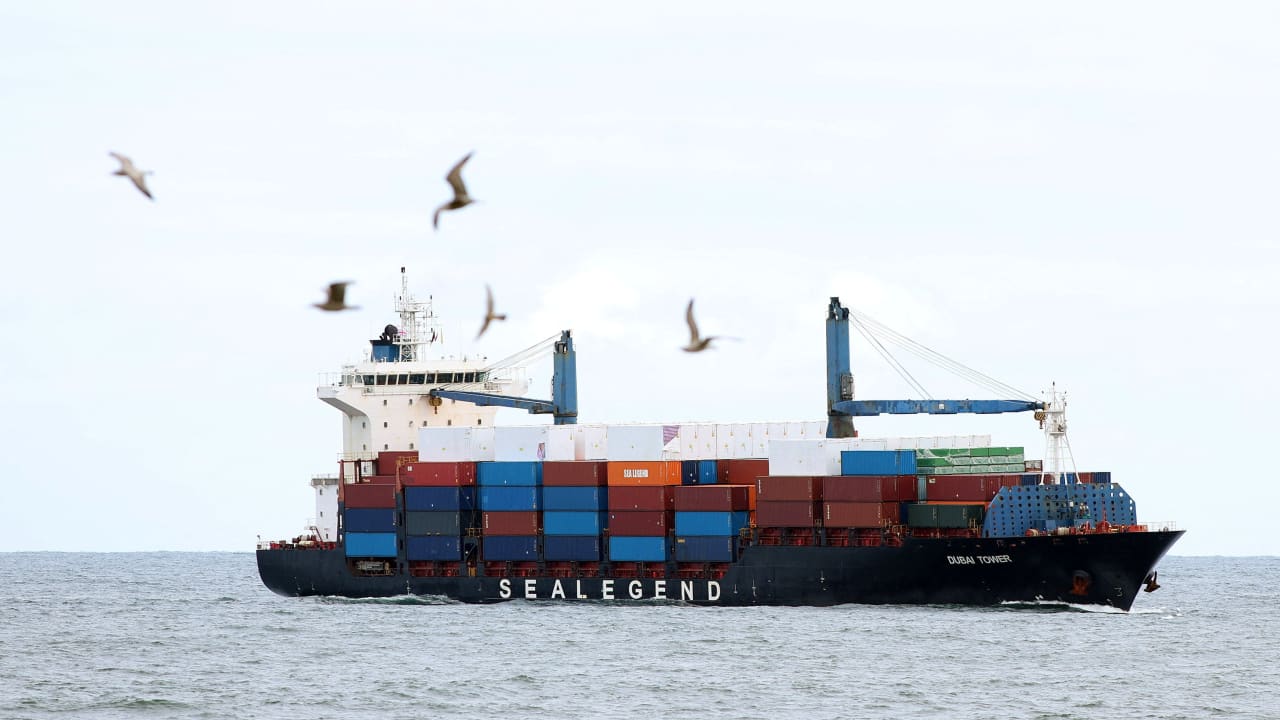
FOROOHAR: For sure. And there you’re seeing—it’s just a perfect map of the flip in how the U.S. has moved from being a country that used to make things to a country that’s highly financialized. So in the seventies, the U.S. was the major global shipbuilder. Today the U.S. builds 0.2 percent of all ships, by tonnage. China has, say, 5,500 ocean-going vessels. The U.S. has 189. Why does that matter? Well, for starters, if you’re going to, say, have a blockade in the South China Seas, you know, you want to have maybe more ships. If you want to be dealing with certain chokepoints around the world, maritime capacity becomes more important.
China actually made the sector for the last twenty years or so a strategic part of a larger commerce and logistics ringfencing, while the U.S. actually split apart the commercial and military arms of shipbuilding—which, of course, resulted in the commercial going completely to Asia, and the military becoming fat and inefficient. So, you know, you get this complete flip, which I think is part of the larger problem of neoliberal economics, which is something I’ve written about previously.
VAITHEESWARAN: Indeed. Indeed. It’s a subject of great fascination for you and now the world, thinking about what comes next in a fragmented world of slowbalization, as my old employer, the Economist, put on the cover a few years ago, and thinking beyond the old paradigm to what comes next. But you were ahead of your time in writing about the role of industrial policy and American renaissance. And, Rush, you were ahead of your time thinking about China and shipbuilding. I remembered a report written for Brookings five years ago, but you reminded me just a few minutes ago of something you’d written fourteen years ago that escaped my attention, thinking about, was it, the commercial shipbuilding in China. So you’ve thought about this deeply for a long time.
Rana’s done a good job of sketching the landscape a bit of the current Arctic and Chinese interest in that area. Can you tell us, from your China perch, what are China’s intentions? And can you parse out the inexorable, inevitable rise of an economy from malicious intent, from geopolitical intent, from a desire to dominate versus being a trading power and seeing an opportunity in the melting seas to sell its stuff ever cheaper?
DOSHI: Well, thanks. It’s great to be with all of you, and to be with Rana—whose book I commend to you, it’s available in the back, and whose recent piece in FT really captures, I think, the long-term nature of Chinese planning, both for geostrategic competition and for industrial policy.
Let me just make two quick points. The first one maybe on shipbuilding and the second maybe on the Arctic. On shipbuilding, it’s true that China’s capacity is maybe 200 times greater than ours. You know, one Chinese shipyard exceeds all of the U.S. many times over. It’s also true that this is a phenomenon that happened very quickly, but it took them a long time to get there. You know, twenty, thirty years ago. China was starting out on this path. The Japanese and the Koreans were dominant in shipbuilding. And they said, what I would like to do is learn how I can be as good as they are. And they brought a lot of Western firms, including American firms, in to help transfer technology to China’s commercial shipbuilding industry. And with that technology in the commercial shipbuilding industry, it was just a short hop, skip, and a jump to the military industry. And so you can see throughout the kind of upgrading of China, the integration of civ-mil the sort of defense space was a critical part of their success.
Fast forward to today, and you look at all of China’s major defense companies. It’s really remarkable. You know, they look like American defense companies a long time ago. Chinese defense companies today get more than 70 percent, sometimes 60 to 70 percent, of their revenue from the commercial market, from the commercial industry, and a smaller portion from the military sales that they engage in. Our primes get more than 90 percent from the U.S. government, from the military, and less than 10 percent from the commercial market. So what that does is it means that technology upgrading that happens normally when you’re in the commercial market doesn’t spread into the military shipbuilding industry, which is why our ships are getting more and more expensive and why we’re falling behind. Why our workers might be one-third to one-half as productive as Japan and Korea.
VAITHEESWARAN: What is the takeaway? If you were to offer a prescription for a shipbuilding renaissance in the U.S., what is the lesson of China? Or, and if I may interject an idea of, you know, learning from others, what the Koreans, for example, or Japanese know, because we don’t have to look only to China for some expertise in this area—although they’re, by far, the biggest. Is there an opportunity for the U.S. to be a little bit humble in this and say, we can learn from those who know, but then we can apply capital, scale markets, the things that America is very good at?
DOSHI: Yeah. I think you’re exactly right. I don’t think it’s just a question of humility. It’s a requirement. I mean, the U.S. will need some allied support to be able to move quickly in any of these areas. And that’s not just true in shipbuilding. It’s true in many other industrial sectors. But in shipbuilding, as you’re seeing the current administration try to do, maybe you can get Hanwha and the Koreans to come in and help. Maybe the Japanese one day will come in and help. There are others. And it’s a complex industry—as Rana mentioned, it’s an ecosystem not just one industry—where you’d want others to come in and help. And what the U.S. can offer is a lot, right? I mean, we have a large market. We are a major importer and exporter. And we can create a regulatory environment and an industrial policy environment that also supports the manufacturing of commercial vessels.
But maybe really quickly, I’ll just end with this. I mean, we should hear from Rana on what we can do on shipbuilding. But the icebreaker effort in the Biden administration was an effort to do this in one area, to create an initial spark of capability that could then spread. And the theory behind it was certain kinds of ships are not that widely available commercially. And maybe you can get a moat there, and you can start using from that—you know, from that beachhead you can expand outwards into the sector.
VAITHEESWARAN: It’s right to give credit, of course, to the Biden administration in this area, but I think, Rana, in your book, you’re careful also to give some credit to the Trump administration for practical application, allowing the first four ships of that deal, the ICE Pact, as it were, between Finland, Canada, and the U.S. to be built, where they know how to build them.
FOROOHAR: Right, and it’s important—
VAITHEESWARAN: While, in a sense, having Americans as apprentices learning on—and then bringing the remainder of the building in the U.S., if I understand correctly.
FOROOHAR: Yeah, no, absolutely. Two points, just to echo what Rush said. I mean, the original ICE Pact was to build icebreakers with the Finns, who design 80 percent of them globally and build 60 percent, and the Canadians, who also had, you know, building capacity, but also, you know, skin in the game from a geographic point of view and capital. So Trump saw this. And, by the way, this was the seventh Finnish ambassador, I think, that approached Trump during Trump one—the seventh Finnish ambassador to say, let’s build ships together. And Trump, with his limbic brain, said, oh, you know, good idea, yeah, Arctic, you know, Russians, that might be. But then the Biden administration comes in and puts meat on the bones of, oh, look, here are two NATO allies who want to strengthen their position strategically. One of them is actually building the majority of icebreakers. We’ve only got one. The Russians and Chinese together have fifty. What a good idea.
VAITHEESWARAN: Now there is a ghost at this banquet. (Laughter.) And I don’t just mean Heather, because she’s hovering above us like an angel. I mean Russia. We have not talked about Russia yet. But thankfully we have a scholar who can. Welcome, Heather, to the conversation. Sorry to keep you waiting there. As someone who follows these same topics very closely, the great game in the north, but also who studies the Sino-Russia relationship very deeply, can you tell us, what is Russia’s perspective on this? And for those who don’t follow it that closely, of course, the Chinese ships that pass under the new passageway made feasible by the melting ice, do so under, I believe, very strict “protection,” quote/unquote, of Russia—of Rosatom specifically. And so, in effect, have we created a—has the world created a new chokepoint, the new Hormuz?
CONLEY: Yeah, Vijay, thank you so much. Rana, congratulations on the book. I felt like I was on the Healy. Thank you for taking us on that journey. (Laughter.) And, Rush, always great to be with you.
Well, just to be really clear, I mean, Russia is a great power in the Arctic. Fifty-three percent of the coastline is Russia. And, you know, the Kremlin has always had an extremely ambitious economic vision for the Arctic. Really, that’s their future—their oil and gas, particularly their LNG, future. And they do want to see the northern sea route, which traverses over the Russian Arctic, to be a much more significant maritime route, international maritime route.
The challenge, exactly as you said, is that they needed international investment and development to see that vision through. And after Russia’s full-scale invasion of Ukraine in 2022, the West really pulled out and pulled back, certainly Western energy companies which the Russians really needed to sort of jumpstart particularly their LNG technology and facilities on the Yamal Peninsula. And then, of course, in 2022 Russia pivoted to China.
And so where we see—and, Rana, your framing of sort of this journey from efficiency to resiliency, I would argue resiliency to diversification, which in itself is dual use. And I want to get back to that, because China’s vision of the Arctic—Rush, happy to have you weigh on this as well—is one of diversification of maritime shipping routes, of energy, of protein resources, of critical minerals, and really seizing the strategic commanding heights of the Arctic, both from the seabed, the seafloor, to space. And so just the geographic location.
But for Russia, after 2022, it needed to rely more and more on the Chinese to help, not only with shipping but to gain those energy resources. China is very selective and very price sensitive. They’ll wait for that lowest price point. So it hasn’t been this abundance of Chinese investment. It’s been very selective. But really over the past six to twelve months, we’ve really—and this, of course, corresponds with the conflict in the Strait of Hormuz and in the Middle East—now that diversification strategy is starting to pay some dividends. And so you see China now, a weekly container, the sea line to go through the northern sea route. You see where the LNG—Chinese LNG is going up to the Russian Arctic, coming back to Asian markets.
And, Vijay, to your point, so your geography—we need a map up there—the Bering Strait, that narrow strait, and Russia and America’s management of that maritime border, that’s going to be a much busier place. And the United States does not have the infrastructure, whether it’s the deepwater port that we’ve been trying to build in Nome, Alaska, or the military facilities, to monitor increased traffic, whether that’s commercial or increasingly Chinese scientific vessels that are very interested in our EEZ and our extended continental shelf claims—something we can talk about later. So we’re definitely seeing where Russian sovereignty is, I believe, becoming eroded by the increase of Chinese presence, commercial presence—
VAITHEESWARAN: Well, that points to something I want to ask all of us to comment on, and that is a question of trust. A lot of what we’re talking about will depend on renewed trust in the friendshoring side amongst U.S. and Europe, with, again, Greenland as an issue that’s been hovering over that problem. But Russia and China, I know from my own research in energy topics and having been bureau chief in China for many years, the Chinese do not trust the Russians. And I’m sure that the feeling goes both ways. And so they’ve been careful, with their LNG and oil purchases and other relationships in the past, never to let them become too great a share of their input. So that’s why they’ve always tried to diversify, but not become over reliant on the Russians. And it’s taken many, many years of negotiations in which the Chinese just never quite signed the final dotted line that would have made them dependent on piped gas, for example, in large quantities.
What’s different this time? Do you anticipate a similar kind of trickle of ships, but not over reliance? Because, of course, it would give Russia the power to cut off Chinese shipping, if it were to be too important—too important.
CONLEY: Yeah. So this is the challenge, I think, of those of us that have focused on the Arctic. It’s incredibly important, but the urgency doesn’t feel like it is right there at that moment. And it never propels policymakers to move quickly. So, just a quick diversion, the icebreaker conversation is perfect. It is the reason that we needed ICE Pact so desperately, because our icebreaker capacity is—it’s a wing and a prayer right now. The Healy just had a—the one that you were on, Rana—just had a mechanical failure two weeks ago. We don’t have any capacity. So we need to lean into those allies.
But you’re absolutely right. We’re going to see this uptick in traffic. It’s not massive numbers. We’re not talking about the Suez Canal. But if we don’t build the infrastructure today, we’re already behind. We are not going to have the ability to monitor our own territorial waters. And this is where, again, what I see is creeping Chinese commercial activity all along the Russian far east. Russia depopulating. And it will be slow. It’ll be incremental. Last year, the Chinese were doing some submersible activity in the Central Arctic, the Gakkel Ridge. The Russians did not want the Chinese to do that. The Chinese did it anyway. So you see this—you’re right, this contestation. But the Chinese are moving ahead with or without you know Russian permission or, you know, seeking their permission for it.
VAITHEESWARAN: Rana.
FOROOHAR: Can I just amplify three points—important points Heather made? One, just a first person, when I was on Healy we actually saw a Russian science vessel. And it was fascinating. You know, the protocol is you stop. There’s about thirty minutes where the flags go up and everybody’s kind of—I’m like, what’s going on? Oh, this is normal. But it shows how close things are. (Laughs.) There was a lot of worry on the part of the scientists, many of whom were there from NOAA to do sonar mapping so that they could isolate where these continental shelves are and start to establish sovereignty around things like the natural gas feature that we found while we were on the boat. You know, I mean these things are really happening in real time, and I saw them firsthand.
Second point, I think Heather, who I know knows so much about the great—nineteenth century great game, and agrees with that analogy, you see these—you know, there’s a great-power conflict between the U.S. and China. But there are other countries that are coming in and out of it, sometimes in collaboration, sometimes in competition, always in alliances that are ever-changing and fragile. So that coalition building is super-duper important. One of the things I was really bummed about with ICE Pact is that, you know, we should have—we should have not alienated Canada, frankly, in Trump two. I mean, that was just the biggest own goal. That’s a different panel, perhaps.
But then the third point is this Chinese long-term planning—which, frankly, as somebody that’s always—I’m the daughter of an engineer. And the first time I landed thirty years ago in China I was, like, oh my gosh. Like, why does anyone think this country is going to come seamlessly into the Bretton Woods system? (Laughs.) You know, this is a whole different thing. And it is working—it’s going to work very well for China, and it’s going to be very complicated for the West. And you’re seeing that. The Arctic is a perfect example of how all these different threads of logistics, industrial policy, you know, thinking about where energy resources, protein resources, and people are going to end up. And you need a twenty-year time horizon to do this.
DOSHI: Well, I think that what’s just been said is really comprehensive. I’ll just add a little bit of color on the Chinese, you know, plan in the Arctic too. You know, more than twenty years ago—well, actually, beginning in the 1980s, China thought, well, it’s time for us to be more involved in the Arctic and the Antarctic. And part of the belief here, and this became more true later, was that certain areas of the world were basically what we call the common heritage of mankind, right, in sort of U.N. lingo. Those include the poles, the deep sea that is the seabed, space, right? These kinds of domains—Arctic, Antarctic, the deep sea, and space.
And so the Chinese have grouped these together for a long time as the new strategic frontiers. And the idea is that the last frontiers were carved up by the West and China missed out. And these new frontiers will be up for grabs today or tomorrow. And this time, they won’t miss out. So you’ll see, for example, writing about how science stations in Antarctica—this is in—this is from Chinese scientists—are meant to serve as foundations for future territorial claims when that is possible for resource exploitation. The same is true sort of in the Arctic. That the purpose of some of the scientific vessels and exploration of the Arctic is dual use. It’s to show presence. It’s to map, you know, the sea floor. But it’s also to build capacity that could later be converted into some strategic capacity.
And I’ll give you a few quick examples. In Iceland there was a Chinese billionaire who, in 2016, tried to purchase a significant part of the country to open up what would have been a golf course in the windiest part of Iceland. (Laughter.) So you can’t play golf in that part of Iceland. But, you know, just in case, you wanted to also build an airfield next to the golf course. The idea is you’d fly in the VIPs. God knows what you would fly out of there. But the point is that that really happened, right? It was also the case that a very successful Hong Kong billionaire linked to the mainland tried to purchase a Swedish submarine pen that he would then lease back to the government. There are many, many stories like this throughout the Arctic. Another case of the attempt to purchase, in Greenland, of a former military base for some unknown purpose, again, through a shell company.
And so sometimes it’s shell companies. Sometimes it’s scientific. And, for example, in Norway and Svalbard the Chinese have a large facility for scientific purposes, but it’s basically closed off to the Norwegian government. And, you know, it can house something like thirty people. And there’s real concerns about what activity takes place there, the same way there are concerns about Chinese activity at military installations in Argentina which we know are really frequented by the People’s Liberation Army. So here’s the bottom line. A lot of activity in the Arctic is long-term, as Rana mentioned. A lot of it is deniable. That is, you do things for one reason but in actuality there’s another reason. And that’s what makes this like the great game of the past.
VAITHEESWARAN: I understand the Pentagon’s new Arctic strategy is due, maybe this week at some point, coming very soon. Heather, do I remember that you’re following it? Can you tell us what to anticipate, and how might it represent a departure from and maybe taking on some of these issues more seriously.
CONLEY: Yeah, of course. So I think really the departure and real important shift in U.S. Arctic policy was stated in the National Security Strategy, elaborated in the National Defense Strategy, and then I think we’re just going to see a continued articulation of that. Is that the Arctic is now considered U.S. homeland defense. And this is a big shift.
The Arctic region, really, for the last—you know, post-Cold War, last twenty-five years, it was always that distant region that is a big budget that no one wants to have drained, and no one really has full responsibility over it. And I think there was also an understanding, sort of a bipartisan concern, that we don’t want to militarize the Arctic, we don’t want to, you know, securitize it. Well, as Russia began to securitize the Arctic 2007-2008, that began to shift. And then, exactly to Rush’s point, this is—the Chinese, really 2012-2013, really began to take much more demonstrable steps. We began to see a shift. And the U.S. was caught a little bit behind, I think, in trying to understand that.
So homeland defense. So this is a different character. Now in our threat assessments we see, you know, the Arctic is mentioned in a threat assessment department. So I think what you’re going to see—don’t know for sure, and we don’t know when that strategy is coming out, but I think very soon—but it will, again, be very clear that we need to focus on the Pacific Arctic. There will be, I think, a very forward-leaning posture for Alaska. You know, reestablishing some dual-use facilities, the deep-water port. We have to monitor and be able to respond to increased commercial and military traffic in that area.
And I think we’ve all been well acquainted for the last eighteen months with the Atlantic Arctic strategy. And this is Greenland. And a little unnoticed thing, last June the Trump administration, for the second time, moved Greenland into U.S. Northern Command’s—into their area of responsibility. This is significant because U.S.-European Command for the entire Kingdom of Denmark, as a NATO member, was in U.S. European Command. But now we’ve split the Kingdom of Denmark into two military theaters. So you’re going to start seeing where, again, the Arctic, the U.S.—
VAITHEESWARAN: And just a sentence on, operationally, what does that mean? What does that mean in practical terms?
CONLEY: Well, I think, just to say, both of these military commands—and we can even talk about Pacific Command because they have a role to play and are involved as well—they have to work so closely together. But this gets, I think, to the challenge of whatever the strategy will be released in the coming weeks. We need new command and control areas because NORTHCOM now takes care of the territory of Greenland. Those new facilities, that new agreement that was just released the other week. But they have to work very closely with European Command, because it is NATO that takes care of the North Atlantic and Arctic, the protection and defense of that.
And, of course, many of America’s cold weather fighting capabilities are based in Alaska. And they’re assigned to Pacific Command. This gets very messy very quickly. So this is why an Arctic strategy will help focus on the homeland and help America strengthen, with our allies, the Pacific Arctic and the Atlantic Arctic, as we hopefully increase our own security presence throughout.
VAITHEESWARAN: It’s almost time to come to members for questions, but before we do, anything—any follow-on on specifically the Pentagon and our strategy, what to anticipate?
FOROOHAR: Well, I think—you know, I’m hopeful, actually, that the Greenland agreement kind of takes that issue a little bit off the table as something that’s contentious. Going back to my point about don’t alienate Canada, well, like, maybe let’s not alienate the Europeans if we’re trying to make the Arctic more secure, if we’re—you know, if we’re trying to bring NATO together. I mean, not that this administration is, per se, but, you know, I just think this is going to require friends. (Laughs.) It’s going to require friends and allies, not just to build, but to think about security.
DOSHI: Yeah. And the only thing I would add is that I think that there wasn’t a real significant, existential threat to Greenland from China or Russia, at the moment anyway. And so some of this issue was clearly just, I think, a little bit about the president just doing his thing. But doing his thing really undermined U.S.-Europe relations in a way that actually was really important right now on China, so on industrial competition and other issues. So the Arctic matters. The Chinese have a strategy there. But it’s also important for us to right-size the threat and understand that a lot of the long-term challenge that we see isn’t going to be, you know, Chinese vessels landing on the shores of Greenland, but it’s going to be this kind of—you know, this other effort that’s going to be through science, and investment, other stuff to increase their presence.
VAITHEESWARAN: Great. I think that’s a good moment to turn to our members for your questions. I want to remind everyone that this is on the record. We’ll start here in New York. Please identify yourselves. We’ll get a microphone to you. As always, let us know your name and affiliation. And make it a question.
Q: Hello. I’m Mark Simonoff. I’m the former legal advisor to the U.S. mission to the U.N.
And several of you have mentioned the extended continental shelf off the coast of Alaska. So the U.S. has actually mapped that extended continental shelf and published it, but doesn’t have access to actually submitting it to the Continental Shelf Commission, which is a body created by the Law of the Sea Convention. The Russians have actually submitted their limits to the Continental Shelf Commission. So the question is, do you think the U.S. should be a party to the Law of the Sea Convention? The Bush two administration had tried, the Obama administration had tried, but now there appear to be no efforts to do that. But for national security interests, in order to be able to have that final limits established by the Continental Shelf Commission, I’m wondering what your views on whether the U.S. should try again to become party to the Law of the Sea Convention.
VAITHEESWARAN: Who wants to jump in on Law of the Seas? Of course, apart from not wanting to pursue it, I think the Trump administration has encouraged deep-sea mining companies to go, perhaps in contravention of what arrangements are being made with—under the Law of the Sea. But anyone have a view on what the U.S. should do, or will do? Heather.
RANA: Heather, go ahead.
CONLEY: I’m happy—the answer—easiest answer: Yes. The United States should join and ratify the Convention on the Law of the Sea. But I think increasingly we’re going to see more challenges to the Law of the Sea Treaty. We’re seeing that globally, and not only the U.S.—and you mentioned the deep-sea mining in the Western Pacific—but this is where I think there’s a wedge issue here with the Chinese. Their seabed research, in particular the Chukchi border and the Gakkel Ridge I mentioned, are areas where there’s a lack of clarity on the extended continental shelf. And I think that’s where they want to shape and have access to that. And it’s something we can’t ignore.
Russia also violates the Law of the Sea Treaty in, you know, putting—treating the north northern sea route as an internal passageway, which we haven’t really challenged. We have the same concern with Canada with the northwest passage. They consider that internal waters. We don’t. We consider that international waters. But we found ways in the past to manage that difference. So I see us continuing to challenge the law of the sea, sea floor, the High Seas Treaty. And I see China, to Rush’s point, shaping the future of the governance areas that will be critical for the Central Arctic.
VAITHEESWARAN: Another question from our New York members? If not, why don’t we go to the virtual. I think we have a question.
OPERATOR: We will take our first virtual question from Mr. Trooper Sanders.
Q: Hi. Thank you. Trooper Sanders with the State AI Safety Roundtable from Detroit, with a deep affection for Canada. And I’ve been to the U.S. Arctic in Utqiagvik.
Question: For the next president-elect’s transition team, what would you advise them, one step on policy and one step on presidential personnel, to reset our approach? (Laughter.)
VAITHEESWARAN: Great. Specific questions. Sounds like you may have a view yourself, caller, but let’s turn to maybe Rush. You’ve served on the inside. What would you advise, as you maneuver for a spot yourself, my friend? (Laughter.)
DOSHI: No, no, I work at the Council. (Laughter.) But, no, I think it’s a big question, right? There’s so many places where you could take that. If it’s on the Arctic, I will defer to Heather for an answer. But if it’s more broadly, you know, thinking about the China policy questions, I think probably we need more people involved in that effort who are going to think about how to build partnerships with U.S. allies to create industrial scale. We can’t go it alone. We’re not going to be able to rebuild shipbuilding or these other sectors we’ve lost overnight on our own. We’re going to have to do it with partners. But the actual technical work of working with the Japanese, or the Koreans, or the Europeans, that kind of policy is new, in a sense. True allied industrial cooperation, technology cooperation, is innovation.
So we need a cadre of people. Hopefully in the next few years people will think more about these questions that could help lead something like that. And that also answers the policy point as well. I mean, when you think about Chinese manufacturing capability, it’s twice America’s value-add. It’s nine times—it’s larger than the next nine countries combined. So you’re going to need a strategy to be able to deal with that fundamental gravitational fact.
FOROOHAR: Can I just add a couple things there? You know, the Ships for America Act, which is bipartisan, is sponsored by Todd Young from Indiana and Mike (sic; Mark) Kelly from Arizona, would actually create a certain amount of capacity. The Congress may punt until after the midterms because it’s all about funding and where are you going to get the funding, but, frankly, there’s I think an easy solution there. You could create—the same way we have a highways trust fund, you could create a maritime trust fund. It would make a lot of sense. It would take the funding of, you know, some of the capacity building out of the election cycles. Extremely bipartisan.
And, by the way, maritime states are bipartisan. So I could imagine this actually becoming a 2028, not just a maritime issue but an industrial strategy issue. And it’s about capacity. This is not—you know, we’ve been talking a lot about China. And, yeah, there’s 100 percent a geostrategic angle here. But pull back. Even if we time warped back to 1994, I would actually argue it’s a good thing to have a little more variety. Not put all your—92 percent of all your high-end semiconductors in one very geopolitically contentious island, you know, not have so much concentration. That’s the problem here.
VAITHEESWARAN: Yeah. Another question from members? Do we have a question online? Well, I have a question for our panelists here. And this is a bit of a lightning round question. So you must choose one of these following, even though it’s highly unscientific. If there was an extra kitty of a few billion dollars, and you had to choose one of the following priorities, and you’re only allowed to choose one: icebreakers, developing a port in Nome, Alaska, air and missile defense, seabed sensors, or climate science, what would be your top choice? I’ll start with you, Heather.
CONLEY: Oh my gosh. Well, science is the foundation of everything you’ve just listed. It’s not just climate science, but our scientific understanding of the region. And then the one thing you didn’t mention, uncrewed systems and polar orbital satellites would be the areas where I would spend our investment dollars.
VAITHEESWARAN: How about you, Rush? What would you say?
DOSHI: I think I agree with Heather as well. I would probably try to split them between uncrewed systems and science. And the two are—and climate science. And the two are—they actually relate to each other pretty strongly. And uncrewed systems that can operate in that particular climate will be important.
VAITHEESWARAN: Rana, I can count on you to go with the icebreakers, am I right?
FOROOHAR: Well, I’m going to go with the icebreakers because I think that it actually sends a demand signal for a lot of the other things. You know, you can start to think about how do you rebuild an ecosystem, how do you develop a post-neoliberal trade and economic partnership framework, something that acknowledges that we are living in a—you know, I won’t say a less globalizing world. We’re living in a new, more regionalized world in which the map is changing, you need to think about things differently. And I like the idea of a real project. And I will give the Trump administration credit, actually, in Trump two, for coming in and saying—you know, for self-interested reasons, but, hey, you know who cares—we’re going to get eleven icebreakers out by 2028. We’re doing it. And here’s how we’re going to do it. You know, and just signing the papers. I think that there is something to that, because then you get things moving.
VAITHEESWARAN: So how realistic is it that we’ll see the 2028 deadline met?
FOROOHAR: I think it’s pretty darn realistic, particularly working with the Finns. I spent a lot of time in the Finnish shipyards. Unbelievable. I mean, they are a machine to do this kind of stuff. I mean, they have to be.
VAITHEESWARAN: They’re the Chinese of the north.
FOROOHAR: They’re the Chinese—well, they’re the Chinese of the icebreakers, because every port freezes over so they would—(laughs)—they’d be in big trouble, you know, every winter if they didn’t build these things. But, sorry—
DOSHI: I was going to say, I think the Chinese even had to learn from the Finns when they began their icebreaker program.
FOROOHAR: Right. Right, right. So, yeah, it’s just a great way to kind of jumpstart industrial strategy. Which kind of—if I can just make one more point. I feel like there has been a mythology, and I grew up in the rural Midwest, my dad ran factories, so, like, I always had a felt experience that we have a lot more capacity than we think we do. And I think that the semiconductor debate, when we actually created fabs—not at scale, but in terms of speed and production quality—within eighteen months, as to what was being—you know, comparable to what’s being done in Taiwan, you can do this. You just need the right bipartisan, long-term demand signal.
DOSHI: Could I just add to that, that those fabs that we did build ended up having yields higher, in some cases, than Taiwan, too. And remember, before those fabs were built, the view was, well, Americans can’t do this. They’re too lazy. They don’t know how to build. They don’t understand the engineering. And it was all wrong. So this idea that the U.S. can’t be an industrial country is obviously not true. In fact, since 1870 that’s been our heritage. We still are the second-biggest manufacturer. And I’ll end with this quick point. You know, people talk about how we’ve depleted all our munitions in Iran, right? Like the Patriots, for example. And it was asked, could our defense primes perhaps build more shells, the bodies for those Patriots, quickly? In the end, the Pentagon went to GM to build those. And the prime said it would take over a year, maybe two years, to build them. And GM did it in twenty-two days. And so my point is that you look at our commercial manufacturing capability, we’re real country. We just have to be willing and confident to put capital behind this, and consistent demand behind it as well.
VAITHEESWARAN: I believe we have a question online.
OPERATOR: We will take our next question from Laurie Garrett. Please remember to state your name and affiliation. Ms. Garrett, please accept the unmute now prompt.
Q: Yes. Thank you for putting this conversation together. I’ve spent a lot of time in the Arctic—Siberia, Alaska, Svalbard, Greenland, Iceland, you name it. And I don’t understand why Svalbard never seems to come up in conversation. It’s a weird legal entity. It’s sort of Norway and not. And it has a large Russian settlement that I’ve spent a lot of time in. And it’s definitely not a comfortable place for an American. (Laughter.) And it would be a great launching point if Russia wanted to expand closer to the North Pole. Why isn’t Svalbard a much more overt part of the conversation?
VAITHEESWARAN: Go ahead, Heather.
CONLEY: Well, you’re so right. It certainly is a bigger part of the conversation. And Rush had alluded to it. Why do we have so many countries that have research stations on Svalbard? Well, that’s the unique element of the 1920 Spitsbergen Treaty, which gives Norway jurisdiction over the Svalbard archipelago. But it’s very unique that allows those countries that are signatories to the treaty to have—to benefit from the economic scientific nature of it. Which is why—in part why the Chinese in 2004 began their research station. Even North Korea has signed this treaty. So you could see a North Korean station there. They can’t stop it.
But Svalbard also does not allow a military presence there. That was also a unique element of the treaty. But this has not prevented Russia to doing a series of hybrid activities, to include the severing of the Svalbard undersea cable. We have seen the use of the Russian Orthodox Church, World War II, the Great Patriotic War, testing fishery boundaries, even testing the sanctioning policies of Norway. So it is quite an active arena. And it’s because Svalbard’s location is so close to Franz Josef Land, which is where we’re seeing Russian pretty significant modernization of their Arctic forces. Even there was a NATO exercise on Jan Mayen Island. NATO is exercising more and understanding that this is NATO territory, and the protection of it. And I can understand why you were a little uncomfortable during your visit. (Laughter.) There’s quite a significant presence on Svalbard, to be sure.
DOSHI: And I’ll just add, the Chinese presence there is, as Heather alluded to, it’s quite significant too. Their research station that they built in 2004, it’s their largest Arctic station. And it has, you know, almost twenty-five to thirty people that can be accommodated there. And the question of dual use activity at these kinds of locations is not trivial. I mean, for China, for them to do satellite tracking, they need the ability to access geographies in the southern hemisphere and also in the Arctic. And there are ways in which that presence can be useful for that purpose.
VAITHEESWARAN: I think we have another question online. Do I understand?
OPERATOR: We will take our next question from Josette Sheeran.
Q: Hi, Vijay. And thank you for an excellent discussion. Thank you to all the panelists.
I first started on this issue as undersecretary of state under Condoleezza Rice. I now spend a lot of time, like our previous questioner, in the Arctic, and have a home in the remote Arctic Circle. I’m also an investor in Greenland. There’s almost zero U.S. private-sector investor(s) in Greenland. Very limited capital markets. Huge infrastructure needs there. Now that there’s, hopefully, peace between U.S., Greenland, and Denmark, and we can get on to the real business of looking at what would benefit the people of Greenland and the presence for Western security, what should be the top priorities of the U.S. there? Our consulate there has, I think, three employees now, maybe 3.5. Until recently, it was a tiny little Greenlandic house. Our bases, I’ve been to many of them, are empty, even though there’s former movie theaters and other things there. Where should we start?
VAITHEESWARAN: Where do we start, Rana?
FOROOHAR: Well, thanks—
Q: Could I just ask the speakers just one last question? When we sold all these bases back in ’93, I think it was, for a dollar, why did we do that? (Laughter.)
FOROOHAR: That is such a great—you know, I didn’t know it was for a dollar. That’s amazing. It’s such a great question. I’m glad you brought Greenland up again because I actually, again, want to give the president a little bit of credit here. I sometimes think that Trump two comes at really right questions in the wrong way. And I felt that that was what happened with Greenland and the sort of rhetoric around Greenland. But there’s no question that Greenland has been on the front lines, post-Cold War, of security in that part of the world. And, to your point, Josette, about not having enough business presence, I think that’s something that American companies should be thinking about, because the whole point—and it wasn’t just the president that thought this.
But a lot of defense folks, I think, on both sides of the aisle, were concerned that if Greenland eventually became independent from Denmark, that you would have a sort of a race to, you know, put in infrastructure and commerce. And in that kind of a race, the Chinese have shown that they do pretty well. I mean, that’s what the One Belt, One Road pathway is all about. And there is a polar Silk Road that has been articulated by the party. So I think, you know, getting American business interested in this area and then sending demand signals, again, through, all right, is there going to be a mining operation, what’s the strategy around capacity in, say, things like rare earths, can we do port building, can we do defense in that area? Great questions. Great projects.
DOSHI: Maybe I’ll just add that there was a long-standing interest by China for more mining projects in Greenland. I mean, they were thinking, you can read in strategic texts, about what they would do when Greenland became independent, and how they would be able to position for that moment. Because they also saw it as critical for establishing a foothold as a near-Arctic state or, as they call themselves sometimes, an Arctic great power—by the way, a phrase they don’t use in public-facing documents, but they use internally, jídí qiángguó, polar great power. And so in this particular case, I think that, you know, maybe there was an approach that would have been less disruptive to transatlantic relations that we could have pursued, like investment, you know, screening and other kinds of measures like that. But in the end, Greenland does matter.
And to just kind of put a point on it, during World War II the U.S. sort of occupied Iceland and Greenland so the Nazis couldn’t use them as a springboard. But even so, there were moments where American troops were patrolling parts of Greenland and would come across Nazi facilities that they did not know existed that were just there. There was, like, four guys in a radio, and they were they were holing up there. And there were, like, actual firefights in Greenland on the coast, because it was this vast area and the Germans did set up shop. So it’s not as if that’s the fundamental risk we face. The real risk we face, as Rana mentioned, is could they have changed Greenland’s political orientation, should it become independent, with investment? They also were trying to buy military bases. The ones that we sold for a dollar, the Chinese were trying to buy them in Greenland not that long ago. So there is something here where China buys low and sort of sells high when it comes to influence in these parts of the world.
VAITHEESWARAN: We have a question in the room. We’ll get a microphone to the gentleman near the front.
Q: Thank you very much. Joe Gasparro, Royal Bank of Canada.
Rana, congrats, again, on your latest book. You wrote this really striking piece in the FT in late August about the Indiana State Fair. (Laughter.)
FOROOHAR: A totally different topic, yes.
Q: And how voters were very much concerned with affordability, and jobs, and maybe loss of economic agency. Great-power of competition was not really top of mind. How do we help voters in Indiana, or really anywhere in the U.S., understand that rebuilding our U.S. industrial base is actually essential, and maybe could help with jobs, et cetera? Thank you.
FOROOHAR: Well, you know, it’s funny. I was kind of thinking, wow, how am I going to connect the Indiana State Fair to the great game? But, actually, it’s energy, and it’s Iran, and it’s chokepoints. And that is something that I think you are absolutely seeing in the polls. And it gets to where I sort of began with this conversation. Anybody that has grown up in the industrial heartland has always known, gosh, we have a real problem if we outsource all of the industrial capacity to our biggest geostrategic ally. (Laughs.) But it takes things like, you know, supply chain bottlenecks, like the war in Ukraine, like what’s happening in the Strait of Hormuz, to bring that felt experience home into people’s pocketbooks.
And I will tell you, I’ve been doing a lot of pre-midterm reporting in swing states and in red states. And that message is 100 percent getting through. And this idea of chokepoints, which is something—I mean, you know, I think Biden actually mentioned chokepoints in some speeches. I mean, who was using the word chokepoint? Now it’s something that I think people are aware of.
VAITHEESWARAN: Another question online, please.
OPERATOR: We will take our next question from Mark Feldman.
Q: Thank you. I’m a Washington lawyer of a certain age, with a long interest in maritime boundaries.
And my question, to any panelist who has a thought on the subject, is: What are the strategic implications, if any, of the U.S.-Russian maritime boundary in this big game, new game?
VAITHEESWARAN: Heather, I see you waiting to jump in here. Do you want to take this?
CONLEY: Oh, it’s starting to get my attention. Well, I’m so glad you raised it, because the 1990 Baker-Shevardnadze Treaty, which delimited that maritime boundary, the Senate has ratified that treaty. The Russian Duma has not. And I think that is a concern for us as Russian ultranationalists believe that that treaty was done at a moment of Russian weakness. And there are three special areas, that are certainly fishery rich, that, you know, there there’s certainly been some noise in ultra-national circles that this is something that they should claim back.
When Vladimir Putin went to Anchorage last August for the summit, you had his spokesman Dmitry Peskov speaking about Alaska as Russian America. So, you know, these nationalists lean into that narrative, but we should keep our eye on it particularly because we’re seeing Sino-Russian military activity much more near and around the Pacific Arctic, testing, probing U.S. airspace, as well as testing, you know, our response times in territorial waters. So something to watch.
Just if I can, Vijay, just to comment on Josette’s excellent question, and I think the throughline here is we really haven’t seen great U.S. investment in Greenland. And it’s not because the Greenlandic government hasn’t been welcoming. It hasn’t been that they haven’t been encouraging it, as well as Denmark. I think it’s an infrastructure challenge. But this is where I think, whether it’s the Canadian Arctic Security package, the Kingdom of Denmark now with the U.S. after the Greenland Agreement, we need to see where there’s greater military-civilian use for infrastructure. Indigenous communities in Alaska as well as in Canada, how do we make these facilities that you can get commercial benefit as well as military benefit?
And it’s just, finally, on the great—why do we sell things after great victories? We have to change our paradigm. When there’s a great victory we say, boy, we’re done with that. Now we’re going to pull all that money out of it. And, actually, after the victory is where you redouble the investment. And we never have that mindset, unfortunately.
FOROOHAR: Can I just amplify? That is such a true point. And it’s funny. I cover business typically. And that’s a truism in business, that you invest into a downturn, you grab market share on the upside. Long tradition in that. I’ve never heard it referred to in quite this way geostrategically. And something I have a whole chapter in my book about the peace dividend, and how we basically gave up on maritime, in particular, and ended up splitting commercial and military because the idea was, you know, at the end of history we don’t have to worry about any of this stuff anymore. When instead, as you say, that might have been the time to be thinking ahead.
VAITHEESWARAN: Well, there might be a reason for it, though. While I agree with the logic of what you say, the wisdom. It’s not an effective political pitch to say, let’s spend a lot now to win, so we can spend even more later. (Laughter.) Doesn’t quite sound right, even though that might well be the case. The Marshall Plan might be a good example of such an investment.
I think we have another question online.
OPERATOR: We will take our next question from Mel Immergut. Please accept the unmute now prompt.
Q: OK. Hi. Mel Immergut from Milbank.
I just returned last week from ten days in eastern Greenland. East Greenland is twice the size of Texas and there are 250 people that live there. I mean, it’s just—you talk about the empty quarter of Saudi Arabia, it’s that multiplied. Somebody talked about Svalbard not being a topic of discussion, but eastern Greenland is a multiple of that. And nobody talking about. Any thoughts on the future of an enormous part of the Greenland island?
VAITHEESWARAN: Well I thought we had gone beyond, but this is the back of beyond. Who wants to comment on eastern Greenland?
FOROOHAR: I think this is a Heather topic.
VAITHEESWARAN: Sounds like a Heather topic here. (Laughter.)
CONLEY: Yeah, a Heather topic? Well, I think this is both the challenge and the opportunity. We are going to continue to see much more vessel activity in the future on the east coast of Greenland. Again, that is incredibly important—Greenland, Iceland, United Kingdom gap. But you’ve pointed to the challenge, the sparse population, and just complete lack of infrastructure. So, to Rush’s point, you know, somebody will take advantage of that. Will we have the awareness to know who is where and what? And this is why you do need more satellite coverage. You need to know what is happening, where it’s going on.
But as I said, we also need to find a way that both we can meet this challenge of the future with infrastructure, and help certainly indigenous communities realize, if they wish, greater economic potential. But the infrastructure needs are massive. And a very clear multiyear plan is needed. And that, if I—Vijay, your question of, like, if you would advise the next administration what to do? Bipartisan multiyear investment plan that everyone understands the logic, and there’s such a strong linkage back to U.S., you know, fantastic technology industrial capacity. That’s the ticket. We just haven’t achieved it in twenty-five years.
VAITHEESWARAN: We have a question here in New York. Let’s get a microphone here.
Q: Hi. David Kirkpatrick. I’m a journalist.
I guess big picture question, probably for Rush, primarily, but anybody’s thoughts. You know, in conversations like this so often we hear these logical, rational projections of what should, could, might happen. Long-term thinking is needed, and this and that. We’ve heard it multiple times here today. We are at a moment in our country which is at the pinnacle of short-term thinking, or no strategy whatsoever. Meanwhile, China is brilliant at thinking long term. So I guess I’d love to hear anyone’s thoughts, but particularly Rush’s, on is there any—and you did say that nice comment about the chips, which was encouraging to hear. And I didn’t exactly know that quite that way. Is there any realistic hope that the U.S. could really begin to think longer term, given that China is going to continue to relentlessly think strategically and big picture?
DOSHI: It’s a great question. And it’s one we think about a lot, because people will say authoritarian regimes have the benefit of long-term planning, democratic regimes do not. But there are pros and cons to that equation. Authoritarian regimes might think long-term, but they can be wasteful. They can make enormous mistakes. They can cause famine. They can cause a cultural revolution or a great leap forward, right? Authoritarian regimes can be long-term disasters as well. And democratic regimes can be short-term. That’s true. But they can also diversify the sources of their dynamism beyond the state to the society. And if you look at our problems today, some of them in the industrial base are because we’ve created a larger structure that is actually—like, how do you go from being the top manufacturer in the world to shoveling this stuff to other countries? It’s not that that happens accidentally. You create a structure that rewards that kind of disincentive for manufacturing, right? So we created a system that hollowed ourselves out.
I mention that because when you look at our industrial base today, a lot of it looks—doesn’t look fully capitalist anyway. It looks like, in many cases, you’ve got the government as the sole purchaser of a particular good, and you don’t have commercial markets doing their work. So how do I put it all back together? First, I think you are seeing bipartisan consensus on a wide variety of policy fronts. You see it in Congress too. You see it in ways you couldn’t have imagined ten years ago. Ten years ago you wouldn’t have seen Republicans in Congress talk about industrial policy. Secretary Rubio did that, you know, in 2016, and all of a sudden they’re all there now, right? In fact, some of them are even more there than some Democrats.
Second, you see that a lot of the things that we need to do are actually quite technocratic. You know, funding a subsidy account for shipbuilding is a technocratic policy decision. It isn’t the kind of thing that is necessarily in the political space that people will vote on and worry about. Even CHIPS and Science, elements of that have well endured into the current moment, even though other parts of it have been removed. So there’s a technocratic insulation from some of those swings. And a lot of what we have to do can be done with regulatory fixes, or subsidy programs, or loans programs that will not necessarily be subject to the vagaries of election cycles.
But I think the third part is that, again, if we can get the macro structure right, this gets back to my earlier point, then the private sector can start doing what it does best. And so if we are going to have to do industrial policy as an exception to the macro structure, we will fail. It’ll be like going uphill. And eventually you run out of energy and you fall back down. If we can change the structure—to use another metaphor—if we can carve rivets so the water flows to the purposes that we believe are most relevant for capital to go after, it’s different. And Rana already mentioned what that looks like, right? That looks like careful subsidy or loan programs for certain industries, but it also looks like the structuring of offtake, clear, consistent demand signals so the private sector can mobilize around that demand.
This is what we did in World War II when we wanted to build up capacity very quickly. And the only element that I would add to that equation is we are extremely blessed, because we’re a rich country with a lot of capital, with a lot of capability, and with the best allies you could ever ask for. And if you take all of America’s industrial capacity and get it to all the allies, we are 50 percent bigger than China as an industrial state. We are three times their technological innovation capability. We have three times the number of patents. We have three times the number of top-cited academic publications. And so that—the unlock for this period is going to also be pulling in the allies into that story. But I agree with you. They’re going to plan long-term. And they’ll probably shove capital into some bad practices. And we have a chance to do better.
FOROOHAR: Can I just—
VAITHEESWARAN: Rana, thirty seconds.
FOROOHAR: Yeah, thirty seconds. I want to just add, David. I actually think it takes about three administrations to change any story. It is very interesting. I’ll bring it back to icebreakers. Trump one, the idea. Biden, the strategy. Trump two, sign the document. And is anybody in 2028 going to win by saying we’re going back to 1994 and let’s let the markets, you know, do their thing? I don’t think so.
DOSHI: Yeah.
VAITHEESWARAN: Right. So you heard it here first. In conclusion, I want to take us back 400 years, because the topic that we broached today was actually one that Sir Walter Raleigh offered these words on. “Whosoever commands the sea commands trade. Whosoever commands the trade of the world commands the riches of the world and, consequently, the world itself.” I think the wheels of time and history turn. And we are back to an age in which those words might once again become relevant. I want to thank our panelists. Please join me in showing our appreciation for shedding some light on this topic. (Applause.) And encourage you all to stay connected with the CFR. And those in New York, please buy Rana’s book. Thank you.
(END)
This is an uncorrected transcript.