Cuba on the Brink: The State of U.S.-Cuba Relations
Event date
Speakers
- Executive Director, Cuba Study Group; CFR Member
- Cofounder and Executive Director, Free Society Project/Cuba Archive
- Energy Institute Senior Research Collaborator, University of Texas at Austin
Presider
- Managing Director, McLarty Associates; CFR Member
Panelists discuss the impact of U.S. sanctions, the potential for U.S. military action, and the ongoing energy crisis in Cuba.
MCKEAGUE: Thank you, Liz. Good afternoon, and welcome to today’s Council on Foreign Relations virtual meeting, “Cuba on the Brink: The State of U.S.-Cuba Relations.” My name is Kezia McKeague and I’m a managing director on the Latin America team at McClarty Associates. I’m delighted to preside over today’s session.
Before we begin, just a brief personal note. Despite my not obviously Cuban surname, my mother is Cuban American and I’ve traveled to the island multiple times over the last twenty-five years, first time in 2001. And that experience has given me a real appreciation for the complexity of the issues we’ll explore over the next hour. I’m also a proud member of the Cuba Study Group, which is led by Ricardo Herrero, one of our panelists today.
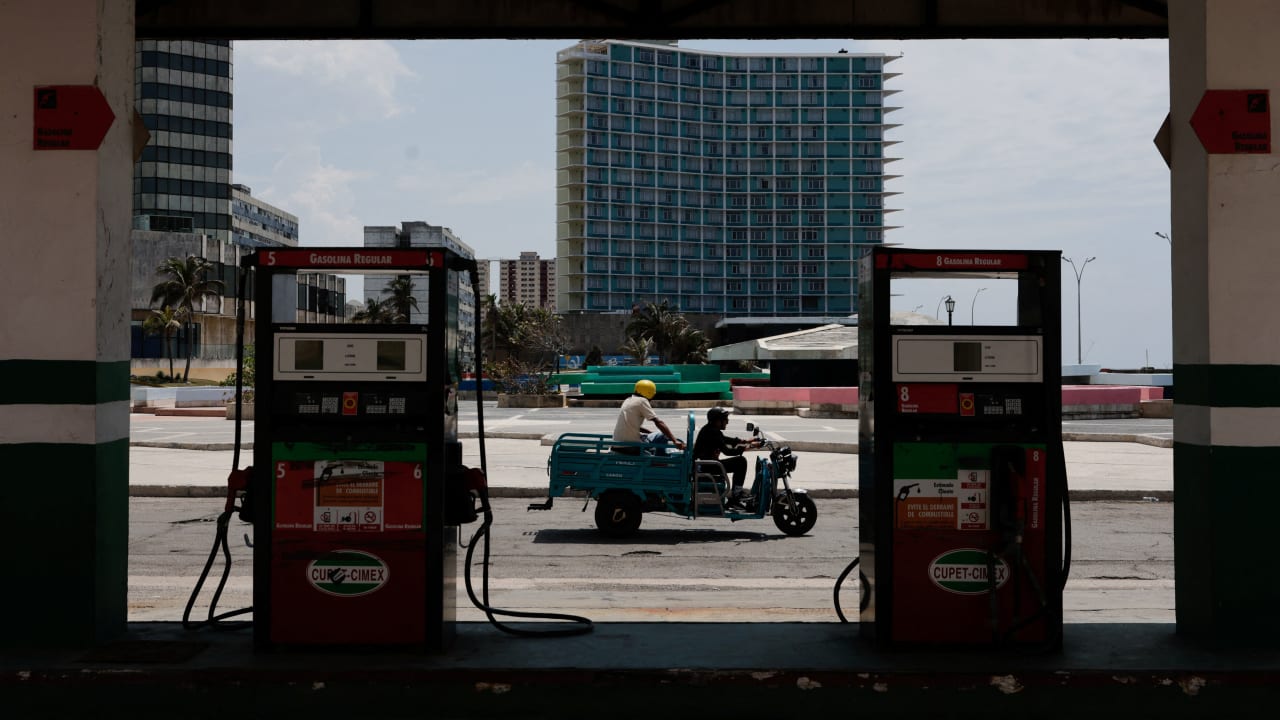
Cuba began 2026 facing an unusually precarious combination of economic fragility, a deteriorating energy system, and the absence of reliable external support in the wake of the U.S. military operation in Venezuela, that had helped it sustain it through previous crises. At the same time, the United States government sharply intensified economic and diplomatic pressure, particularly on Cuba’s access to oil. Several months later, the stakes are even clearer. As a recent Financial Times editorial put it, Cuba is experiencing the kind of economic collapse more commonly associated with wartime. Electricity is only available for only limited periods. Basic services are deteriorating. The humanitarian strain continues to grow.
The crisis can’t be attributed to any single cause, as we’ll discuss. U.S. pressure has compounded the hardship clearly, but decades of underinvestment, centralized economic control, and resistance to meaningful reform have left the country extraordinarily vulnerable. Most recently, in June, the Cuban government approved a potentially far-reaching package of economic reforms. We’ll talk about that. And one of the chief questions I’d like to address today is whether those measures will be implemented quickly and deeply enough to alter the country’s trajectory, and whether this moment of exceptional pressure leads to negotiation and change. Cuba watchers have been waiting for change for a long time, meaningful change. Or, instead, to deeper deprivation, renewed migration, and uncontrolled stability.
To help us examine those questions, I’m pleased to be joined by three distinguished experts: Ricardo Herrero, executive director of the Cuba Study Group; Maria Werlau, co-founder and executive director of the Free Society Project, also known as Cuba Archive; and Jorge Piñon, senior research collaborator at the University of Texas at Austin’s Energy Institute—and there’s no greater expert on Cuba’s energy sector. So delighted to have you with us today.
Rick, let me begin with you to help us set the scene. How would you describe the situation in Cuba today? And a quick advertisement as well for your recent Foreign Affairs article, which I recommend to everybody, which you co-authored with Mike Bustamante, our fellow CSG member. In that article, you argue that Cuba has been brought to the precipice by both intensified U.S. pressure and decades of failed domestic policy, and that Cuba really only has one choice which is to negotiate with the United States. Do the reforms approved in June materially change that assessment? And when our title describes Cuba as being “on the brink,” on the brink of what? And what choices remain for both Havana and Washington? Over to you. Thanks.
HERRERO: Thank you, Kezia. And thank you for that plug. Thank you for CFR for hosting us today, and for everyone watching on the call.
So yeah, as Kezia mentioned, the title of the discussion is “Cuba on the Brink.” She asks, on the brink of what? I would say there are at least three cliffs in the immediate horizon that are worth exploring, and that will help set up today’s discussion. The first one would be a state collapse. Cuba today bears many of the hallmarks of a failed state already. It’s a country that’s experiencing a slow motion, multi-dimensional collapse that is grinding down the population’s basic quality of life, with no end in sight. Of that collapse, the energy crisis is the defining feature. And I’ll leave it to Jorge to walk us through its magnitude and implications, but suffice it to say that Cuba has experienced approximately ten national blackouts since 2024, with rolling brownouts being a fact of life for most Cubans in the country today. Its GDP has contracted an estimated 11 to 15 percent since 2020. Cuba, which was in some form of economic crisis or other since the end of the Cold War, never really did recover from the pandemic. It’s been on a steady decline economically since then, with no bounce back whatsoever.
Its official inflation rate, it’s somewhere around 18 percent—though alternative estimates suggest it is much higher than that. The peso has collapsed. And the economy has been partially dollarized. To give you a sense of what the inflation is like, in 2020 the exchange rate was one dollar to twenty-four pesos. Today, a dollar will buy you approximately 660 pesos in the informal market. Outward migration has been unprecedented in recent years. Cuba has lost an estimated 2.5 million inhabitants, roughly 10 to 15 percent of its population, just in the last five years—including a disproportionate share of working age and reproductive age people. You know, add to that it’s facing a demographic time bomb. Cuba currently has the fastest aging population in Latin America, with over 26 percent of its residents being sixty years of age or older. This is also—this crisis is also driven by a plummeting birth rate, which has hit historic lows in recent years, compounded by that migratory exodus.
And what makes the moment particularly grave is that the state apparatus, what is the Cuban government and its bureaucracy, its party, has essentially lost capacity to respond to any of these needs or make any real comprehensive decisions to correct course. Now, there were a series of 176 long-delayed economic measures that were announced last month to address this crisis. Many of them have been implemented already, and we’ll get into them later. But as of today, the government does suffer from a severe lack of credibility as to whether it has the capacity to see through comprehensive reforms, or, you know, commit to them in any decisive way. This is, arguably, the least desirable of all the cliffs. It could lead to large-scale maritime migration, narcotraffickers, or foreign adversaries gaining a foothold in the island. We would basically have a failed state with a landmass four times the size of Haiti just ninety miles off U.S. shores.
That second cliff and the next two cliffs will be much quicker. Would be a potential regime change. This one is the one that would be most desirable to many in the Cuban diaspora and many on the island, but this is a regime that, for sixty-seven years has long been defined by strong elite cohesion within its leadership and within the party, and a robust state security apparatus that heavily surveils and keeps control over the population. While there are fissures among the different factions of the state that are more visible than ever, there’s still no signs of a rupture occurring anywhere. And the regime’s opposition remains largely fragmented, unorganized, and today either in jail or in forced exile. Even if there were some sort of regime—the regime itself were to collapse, or we would see some change in that—in the current government structure, the question is what do you replace them with? Who would be in charge? Would democracy rise from the ashes of this regime, or would it be replaced by a different dictatorship? We really don’t know.
The last cliff I want to mention before I leave—I open it up to the others is a potential negotiated recalibration in power in Cuba. And that is really what has changed since January 3, with Venezuela and what’s happening there serving as a potential blueprint there. What we’re seeing happen in Venezuela presents us with the clearest picture yet of what the Trump administration may be looking to build as it holds decisive leverage over some defeated adversary. And so I’m sure we’ll have a chance to explore that further. This is probably not the outcome that many in the Cuban diaspora are hoping for. It is an increasingly real outcome as conversations between—at high levels, between the United States and Cuban governments continue.
You’re muted, Kezia.
MCKEAGUE: Apologies. Thank you. Just briefly, before we move on to the energy crisis with Jorge, what do you make of the recent—well, over the last several months—the veiled threats from Washington about a military intervention?
HERRERO: I think—I mean, I think there were there—they should be taken seriously. I think that the highest—the greatest possibility for them occurring was before July. We’re now in the third quarter of the year. We’re moving into midterm campaign season. You have a war in Iran that does not seem to reach a conclusion. You have a situation in Venezuela growing more complex now with the hurricane relief effort and the resources that have been devoted to that. It’s hard to see what that could look like if there were to be such military action. We got to also keep in mind, military action can take different forms. It could be some sort of kinetic strike against military dual-use assets. It could be an extraction operation similar to what we saw in Caracas on January 3. It could be a full-blown invasion. We don’t see the accumulation of forces and assets around the Caribbean right now for that third one.
But I would—it’s something that remains on the table. I do think that these different cliffs, if they don’t reach some sort of agreement with the United States, and you do have a further downward spiral into a state collapse, and you have—you end up with basically an ungovernable landmass ninety miles off our shores, that itself could prompt some sort of stabilization operation. But I think right now what both parties are looking for is a deal. Now, the terms of that deal have been set pretty high by Secretary Rubio. But I think it seems right now—all signs suggest that even with the heavy sanctions campaign and now the IEEPA sanctions that have been imposed on Cuba, that that is what both parties are looking for, seeing if they can come up with some sort of workable deal not unlike what we’re seeing in Venezuela.
MCKEAGUE: Indeed. Thank you.
Jorge, I mean, we’ve already alluded to the frequency of national blackouts. In fact, there was another one that Cuba suffered just yesterday. So let me turn to you for the energy crisis discussion, which is just really one of the most immediate manifestations of Cuba’s broader economic deterioration. Can you describe for us the anatomy of this crisis? How much is the result of the long-term structural deterioration of the electricity system? How much is attributed to the current fuel shortage? And what would a realistic path towards stabilization require?
Piñon: By the way, thank you for the invitation.
The challenge is structural. The sixteen operating generating units in the country are old. They’re tired. They haven’t received any capital maintenance for at least ten to fifteen years. So the challenge that Cuba faces is structural. Those units are operating at less than 80 percent of capacity. And we have to remember, and the frequent—the recent—(inaudible)—in the last twenty-four hours shows it. The system is totally interconnected. So when one of the units goes down, which is already operating at 80 percent of capacity, the rest have to pick up the gap, which they can’t. And then you have a domino effect, like you did here in the last twenty-four, forty-eight hours.
There is no solution to that problem. There is no Band-Aid that can take care of the problem. Those units are old. And they require maintenance. And Cuba just doesn’t have the money and the capability to do it. On top of that, they burn Cuban crude oil, domestic production, as a fuel. And this is a crude with a high sulfur content, high metals, which is highly corrosive. So it’s a vicious circle. They’ll fix the units, and within twenty-four, forty-eight hours they’ll have to process this heavy crude. And then the units go down. So there is no short-term solution.
Long-term solution is convert the whole system to an LNG natural gas combined cycle system. It’s going to take between three to five years. It’s going to take over $5 billion really to put it in operation. Short term, they can go back to the Turkish power ships that they brought in in 2019—which, by the way, they exited the island in 2024 because Cuba could not afford the payment. Rumors are, we haven’t proven it, that the Cubans owe over 100 million (dollars) to the Turks for those power barges that have left the country.
The other short-term solution that we talked about quite a bit is, of course, renewables, principally solar. But solar already has its challenges. They already have built fifty-four units of about twenty-two megawatts each, donated by China. That’s close to 2,000 megawatts. But they don’t have any utility-scale batteries. They’re now trying to put two of them on stream. So those only operate when the sun is shining. In fact, the most recent—(inaudible)—report shows that they were only able to generate 50 percent of its capacity here about forty-eight hours ago. Again, nothing wrong, it’s just that there are clouds and there is rain in central Cuba, and there is no spare storage capacity available to help the system.
So in renewables, the only long-term proposal, that we keep pushing every chance we get, is sugar cane. Sugar cane is not only sugar. Sugar cane is ethanol. Sugar cane is biomass. Look at Brazil. Six percent of the generation, electric generation, in Brazil comes from the sugar cane industry. So they have a challenge in their hand. Short term, units that are old are continuously breaking down. Yes, lack of fuel, particularly diesel, to supply the distributed generation. That is the 2007 unit of the Revolution—La Revolución Energética that was introduced at that time. But some of those systems are down. And, again, those do lack fuel. So if there’s a fuel impact in diesel, particularly in distributed generation, but certainly not in the thermoelectric power sector which runs basically on Cuban crude oil.
MCKEAGUE: Thanks for that very good description.
Just turning to Maria now, as these economic and energy conditions worsen in Cuba, what are you observing in terms of repression? Is the government becoming more coercive, or actually, are some of the recent releases this year under U.S. pressure of some political detainees indicative of a change in approach? What are you observing?
WERLAU: Well, what I observe is that the regime continues to excel in what it does best. And that is why it’s not a failed state. They have been able to adapt the repressive apparatuses, keep funding it, and divert the resources of what is a totalitarian military regime under one-party communist rule. That hasn’t changed. And in fact, they have been able to adapt to the point that people, you know, wonder until when can this military conglomerate, GAESA, that diverts resources and has systematically looted the state’s resources, keep the repressive apparatus going? I mean, Cuba has a huge network of prisons, a huge population in the prisons in custody and forced labor and different schemes of incarceration and continues to commit systematic crimes against humanity.
And the interesting thing is that the other thing that the regime has continued to maintain, and very effectively, is its international propaganda and influence. Cuba has a first-rate intelligence service that continues working strongly in the world, a network of embassies that surpasses any country in Latin America, surpasses Canada’s, Spain’s, Italy’s. It’s huge. We have a table at CubaArchive.org. At present, forty-seven diplomats at the U.N. mission in New York. And we see the effects of that. And the effect is that mostly the international community is silent about repression in Cuba, has not imposed sanctions. To the contrary, opposes U.N. sanctions to pressure for change. And that they continue to do pretty effectively. The question is, how long will they keep it going? Will at some point the leadership say, it’s time to go?
You know, they have funds all over the world that have been in hiding for years. I wrote about this in 2005. This is not new. This is—GAESA is now the face of that. But before there were other ways to do that. So I think that’s a scenario that I thought would be more important, that we would have seen the leadership maybe flee. And it’s not happening. And there’s a phenomena there that is going on that surprises some analysts. But, you know, Hitler sent fourteen-year-olds to defend Berlin when the war had ended. The Japanese didn’t surrender. We’re seeing it in Iran. I think that’s happening in Cuba right now. So it’s hard to tell what could happen, what kind of a transition scenario could happen.
You could see a transition led by the oligarchy, like you saw, perhaps, in Belarus, in Russia, in the initial phases of Romania, Bulgaria. I think that the reforms a lot of people feel that have been announced that are—a lot of them are recycling of old announcements and measures that were never implemented. And some, you know, are led to perhaps a privatization pinata that, you know, might work. I don’t think so, but, I mean, that’s the intent. So there’s a lot of things that that are new to the Cuban situation that were not there before. My remarks were almost exactly what Rick has said. I concur with his appreciation of the situation. But then you see these two elements in the Cuba phenomena that are remarkable, and especially the lack of support of the international community for a change in Cuba to democracy, and the lack of outrage for the crimes of the regime.
MCKEAGUE: Rick, do you share Maria’s assessment? Do you differ in any way? Just a little bit of a debate here on how you would characterize the Cuban government and the current economic collapse.
HERRERO: Sure. Oh, I’m muted. Hold on. Sorry. I guess where I would say I’m a little less surprised that the regime has been able to hold strong. Again, it’s been a defining feature of this regime dating back sixty-seven years how cohesive it is at the top ideologically. More so, it’s—I mean, part of it is, sure, Marxist thought and the fact that they’ve organized around the Communist Party. But a lot of it is just its militarized nationalism, like, radical nationalism, defined as the revolution. And they are the keepers of Cuban sovereignty. And they have—they came to the conclusion long ago that the only way that they can safeguard that sovereignty is by running that island as a prison and panopticon. You know, making it completely unpalatable for the United States to try to come in and absorb it in any way.
You know, perhaps this is just me speculating, but I do believe that when the fall of—the fall of the Soviet Union came and the rest of the countries in the former Soviet bloc decided to embrace markets and democracy, Cuba doubled down on socialism not necessarily—perhaps not entirely because it was—because they really believed that they can perfect this model, but because they knew what would keep the exile community in the United States at bay, if they just stayed a porcupine, ideologically, politically, economically, for U.S. and exile interests.
And now—and since then, despite having a change in leadership, the fact that you have now people in government who did not descend from La Sierra, did not fight with Fidel and Raúl, running the show, and people that don’t have the legitimacy that that revolutionary generation have—and have many critics internally. You see this in in officialist outlets and other pro-regime friendly voices online. They are very critical of the current leadership. But even to them, there’s this phenomenon where one thing that helps contribute to this elite cohesion is U.S. policy.
You know, maybe I’m dating myself a little bit here, but for those who are Games of Thrones fans, if you recall, all the kingdoms are constantly warring with each other, but the one thing that brings them all together at the end is the threat of the White Walkers. We’re the White Walkers in this scenario. It is the United States, its aggressive sanctions campaign. Is the understanding that the—it’s the United States’ intent to crush them all, take no quarter, and trying to put in a U.S.-friendly regime to replace them, that contributes, to a great extent, to that internal cohesion among the leadership.
So I don’t—
MCKEAGUE: Is the—go ahead. No, go ahead, Rick.
HERRERO: No, so I—so, again, it doesn’t surprise me. I think now with the changing of—you know, with the—sort of the generational shift that’s happening, and you’re having other people who are seeing how the world has evolved in many other places, and you’re seeing—you’re hearing more and more people speak out now using rhetoric and talking points very similar to what you heard in China and Vietnam, talking about generating wealth in order to preserve social justice, to preserve their socialist system. You’re seeing a difference in thought among people and leadership as to how you actually help that system survive. But, again, we’re not seeing any real fissures as of yet.
MCKEAGUE: Right. Maria—
HERRERO: I mean, any real fractures as of yet.
MCKEAGUE: Indeed.
HERRERO: The fissures are obvious.
MCKEAGUE: Maria. please go ahead.
WERLAU: Yeah, I think this is a fascinating debate. I don’t entirely agree with Rick on this one, because who is the elite? What percentage of the population is the elite in Cuba? Much less than in Venezuela. It’s mostly the Castro family and a few cohorts that are able to drain resources from the state apparatus. And then, what is the new updated model that they’ve been trying to name for the last twenty years, since the Lineamientos, and the—you know, the succession from Fidel to Raúl? They can’t come up with it. There is no ideological cohesion here. So the question is, how many of these, you know, generals, who don’t participate in the pie, who cannot, you know, rob the state of resources—like in Venezuela you have a lot of them, in Cuba not—are really just looking to see who’s watching them? You know, because that does work. The military counterintelligence within the Ministry of the Interior is very strong still, apparently. And the system is built on that terror, even from within their structure.
So how much support for that revolutionary sort of rhetoric? I wonder. And I’m seeing for the first time clear signs that even the mass population is calling for a U.S. invasion, a U.S.—the U.S. to come to save us. Which is surprising when you have this very hardcore nationalism built into the propaganda and the system, and for more than six decades. So I wonder about that. And I wonder what percentage of the population is really the one with access to capital and participating in exclusive luxury privileges that are very much in the face of the population in the luxury hotels, in the way the elite dresses, eats, does not go in line, does not have to use the Libreta to feed itself. And that is now also very obvious with social media available. So I wonder about that. The level of legitimacy, credibility, and support, I think, has completely collapsed.
HERRERO: Can I just respond real quick? Because I don’t see much of a disagreement here, actually. It’s just sort of I guess a matter of degrees. But Maria’s right—I would say, mostly right. The elite, as we would define them in Cuba, is largely concentrated among the Castro family, the military forces, Ministry of Interior, state security, GAESA, which is a military-run business conglomerate that runs the most productive sectors of the economy. And then you have the bureaucracy and the party. But you’re seeing right now some of those fissures play out in recent days, where you had Raúl Alejandro, Raúl Castro’s grandson, give an interview to USA Today. Someone who holds no official role in government. He’s a colonel in the Ministry of Interior. He oversees personal security for most of the top ministers and top generals in the country. But he doesn’t have a formal role in the state in policy making or in the party, in the Communist Party, for that reason. And nonetheless, he’s out there giving an interview to USA Today.
All of a sudden, there was an uproar online. All sorts of pro-regime voices or people that are members of the Communist Party speaking out, questioning who is this—who is this princeling? Who’s this—basically the grandson of Raúl to come out and speak out on behalf of the Cuban government, or to position himself as an interlocutor in conversations with the United States? Really questioning his legitimacy in even being in this role, right, or pretending to be in this role. And almost immediately, you saw the ideological department of the party, the prime minister, and others within the state and the party leadership come out and say, oh no, no, no, he’s with us, and we recognize his right. He’s part of the team. And he can lead the talks with the United States. So you saw a fissure, and then all of a sudden you saw that cohesion come back in.
And so—and it’s a constant wrestling match amongst them to try to keep all that together, but they’re still able to do it in a fairly efficient way. Not in a way that helps run the country. You’re now running a country again. You’re running a prison and panopticon. But enough to keep them in charge, so far.
MCKEAGUE: Very interesting. And just reminds me of so much of what we’ve continued to talk about as Cuba watchers for a long time now when it comes to U.S. Cuba relations. But perhaps one thing that’s different this year is how the U.S. government has normalized the idea of the objective of a controlled transition, of negotiation with the Cuban government. So we can explore that more in the next half hour, but I do want to open up now to invite members to join our conversation with their questions. And just a reminder that this meeting is on the record.
OPERATOR: (Gives queuing instructions.)
We will take our first question from Tom McDonald.
Q: What a great panel. Former U.S. Ambassador to Zimbabwe, Tom McDonald. I’m a partner at the Taft law firm.
Just to get some feedback here, what is the current relationship between Cuba’s exporting of doctors in return for getting oil or other resources? I had a personal hand with Shay Badjula (ph) and the UNHCR in getting two Cuban doctors safely out of Zimbabwe to a safehouse in Sweden, and onto Miami-Dade—one a doctor, one a dentist. This was in the year 2000 after Rodolfo Sarracino, at the time the Cuban ambassador to Harare, made sure they got jailed, and we were worried about a rendition to Angola, and so on and so forth. What is the current state of play as to, in this chaotic period, this downward spiral, for the island? Are they still bartering with their—you know, they have some great doctors and dentists. Where is that right now?
MCKEAGUE: Maria, I know you’ve looked at this topic closely. Do you want to tackle that one?
WERLAU: Yes, sure. We have a whole project dedicated to that issue. Cuba reports still around 2,200 health workers—exported health workers around the world, including Zimbabwe. And in the last year and a half we have seen the State Department increase the threat of sanctions, and actually has delivered sanctions to a few functionaries, especially in the Caribbean, who are participating as government partners in the trafficking in person of Cuban doctors. I mean, I’ve written about this extensively. We have a whole thing dedicated to that. The question is that the countries that have terminated the mission or that drove people—that drove Cuba to remove the mission before they offer direct hire—Jamaica, Honduras, Grenada, Guyana, and there are several more that are looking into hiring these doctors directly—that those numbers, either they return them to Cuba and send them to missions like in Gambia or Mexico. So in terms of revenues, it doesn’t seem very affected.
The thing is that Cuba reports officially in revenues doesn’t jive with the numbers that they give out. Cuba is reporting around $5 billion a year in revenues from the missions, but they group them with the sports, cultural, cruise ships workers. So it’s hard to tell how many are in the health sector. But Cuba has suffered a blow in credibility and access to these countries because of this. So. I think the State Department is doing a good job. This is a law from the year 2000. It’s not new. They’re just implementing for the first time consequences for trafficking in persons. And it’s growing over time.
The important mission that you mentioned, the oil for doctors program that Venezuela had, already we have seen, I think, a perceived decline in the revenues that Cuba was making in Venezuela. But still, Cuba reported over 12,000 workers in Venezuela by the time the Maduro operation took place. And it’s a big question mark, because most of those missions are there. A lot of doctors and nurses have defected, but a lot are still in place. And the question is, who’s paying? It’s clear that it was not for oil that Cuba was being paid, as it was told. So it’s a big question mark. And that would have a significant effect, I think, if that is removed.
MCKEAGUE: Liz, we’ll take the next question.
OPERATOR: We’ll take the next question from Paula DiPerna.
Q: Hello. Thank you very much. My name is Paula DiPerna, as you heard. I’m a writer. I wrote the first travel guide to Cuba during the Carter administration. I made a film in Cuba with Jacques Cousteau, spent much time on the island.
And the main thing I want to bring out is that we secured a release of fifty political prisoners at a time when the State Department and the Cuban government were not even talking. So my question has to do, is why don’t we speak about a “humanitarian-led intervention,” quote/unquote? No one talks about the Cuban people. You talk about deterioration of infrastructure as if it wasn’t the United States who intervened every single time the Cubans tried to surface a solution of any kind.
And the cohesion of the Cuban people around the United States being the White Walkers is because of a constant bombardment by U.S. policy. And in Iran and in all these wars that seem to be endless, we never talk about people. Cuban’s a big coastal line. Why does the U.S. want to intervene in Cuba? It’s to build more hotels on Varadero Beach. I mean, it’s just like Gaza. And so we need to talk about the Cuban people, institute humanitarian-led discussions about any kind of intervention, and abandon this bullying of a small island ninety miles off the coast that’s filled with the most vivacious people in the world.
MCKEAGUE: Who wants to tackle that one. Rick, please.
HERRERO: I can take that one. Thank you, Paula. I agree with much of what you said. The humanitarian situation on the ground is grave. Right now, you mentioned humanitarian intervention, I had mentioned before that military action could take many forms. One of them would be a mass humanitarian assistance operation, led by U.S. military forces. Of course, the only way you could do that is through some sort of agreement with Cuban security forces that will allow those forces in, because otherwise that humanitarian assistance operation is an invasion. So if the Cubans—(laughs)—if the Cubans allow it, then it would—it is an option that perhaps will be explored.
As of right now, we’re not hearing that as a—at least, it’s not being discussed publicly whether that is such an option. What we are hearing is there’s another $100 million in funding that’s been committed by the U.S. government that is supposed to start making its way to Cuba through religious organizations, starting in September. This follows another 9,000 that have been donated by the U.S. government to date, mostly to address hurricane relief after last year’s hurricane hit the island. Melissa, I believe was the name.
But I will say, it’s a drop in the bucket given the needs on the ground. There’s so much more that we can be doing, and there’s so much more that this administration could be doing, to enable all sorts of private actors, NGOs, other religious organizations to support humanitarian—not only to support humanitarian efforts, to launch new efforts, and to scale existing efforts on the ground. There are organizations right now working with entrepreneurs on the ground to procure food, to distribute it throughout the country. There are entrepreneurs on the ground that are building distribution chains with trucks and storage facilities to get food from port throughout all the provinces of the island.
Right now there is no clear signal from this administration that they welcome the expansion of those efforts. Not only that, those entrepreneurs on the ground would need access to U.S. banking so that they can be paid, so that they can receive all sorts of cash transfers that they would need to conduct these transactions. They don’t have access to U.S. banking, even though it’s allowed under U.S. regulations. This is a regulation that was put in place by President Biden in 2024. However, not a single U.S. bank has moved in to service or onboard any Cuban entrepreneurs, because there is no clear guidance from OFAC as to what the due diligence standard would be to be able to onboard someone who is an independent private entrepreneur.
Basically, how do you establish that this this actor is indeed independent and not someone that would otherwise be on an SDN list or sanctioned under the multiple restrictions under the Cuban asset regulations—Cuban asset control regulations? That guidance would be very helpful right now. But that’s not something that this administration has been—has been willing to allow. It seems that they want to keep it very controlled. It does seem that, to some extent, they are looking to push that system to the brink—and that includes the people—hoping that that’ll force the regime to make concessions at the negotiating table. But it’s coming at the huge expense of life and quality of life in Cuba, because, again, the humanitarian situation is really, really bad right now.
MCKEAGUE: Well said. Maria, you wanted to chime in?
WERLAU: Yes, Paula, thanks for the question and for caring about the Cuban people, because in the end this is about the Cuban people. And sometimes I see a lot in the narrative that forgets the Cuban people. The medical missions is one thing that I deal with almost daily. You know, the media of the world now is interested in covering the U.S. sanctions on countries that participate in trafficking of Cuban workers but never mention the fact that the sanctions are imposed because there is trafficking and exploitation of these workers. And in many of these—of this coverage you don’t even hear their voices.
What I want to say is that this debate can go on and on. You know, sanctions and pressure vis-à-vis engagement. But the U.S. is the only country that has imposed sanctions. We’ve never seen a multilateral approach like we had against South Africa, with Apartheid, or Chile under Pinochet, or the military dictatorships in Latin America. And we have had countries like Canada, Spain, and many others—most of the world—saying that commercial engagement with no conditions under the regime’s terms, as it has worked, will bring about change. And that hasn’t happened either. So I think this debate is very important. What can we do different? And how can we focus the narrative on the suffering of the Cuban people, and how the Cuban people can gain their sovereignty to get self-determination to determine their own destiny?
MCKEAGUE: Mmm hmm. There’s almost an unofficial national motto in Cuba, hay quiero resolver (ph), which I’ve always liked—basically, “you have to improvise and hustle to get by.” But I don’t think, even in these circumstances, that it’s so easy to—(laughs)—resolver (ph). Thank you for that question.
Liz, we can move on to the next one.
OPERATOR: Thank you. We’ll take our next question from Carlos Anchondo.
Q: OK, thank you. This is Carlos with Politico.
If there was regime change in Cuba, do you think that President Trump, or a future administration, would push in the same way that President Trump has for U.S. companies, particularly oil and gas companies, to go and invest in Cuba? Thank you.
MCKEAGUE: Great question. Perhaps Rick on that one as well.
HERRERO: I could, though—
MCKEAGUE: I can also chime in there. (Laughs.)
HERRERO: Jorge, you want to take it on?
MCKEAGUE: Or, Jorge, on oil and gas, you’re right. (Laughs.)
PIÑON: Yes, Cuba today produces about 40,000 barrels a day of oil. And it really doesn’t have the deep-water potential that it was supposed to have. You remember they were drilling offshore back in 2012. And all of those drilling operations became non-commercial or dry wells. So the oil potential for Cuba, regrettably, is not there. And even if it was there, it’s a long-term project. I mean, those offshore deep-water wells will take anywhere between two to three years to put those projects together and to really drill exploratory wells. So long term, maybe short term, regrettably, Cuban inherent domestic crude oil production is not the answer.
MCKEAGUE: Quite a different situation from Venezuela, clearly. Let’s take the next question. Oh.
HERRERO: If I could—I just wanted to add, we are seeing movement around foreign enterprises, U.S. companies, that are looking to acquire either Cuban distressed assets or current concessions held by foreign companies that had a joint venture with a state-owned enterprise that now finds itself on an SDN list. It does seem that part of this policy is to find U.S. buyers for Cuban distressed state assets. Primarily U.S., but also of U.S.-friendly countries. There’s not a lot that’s been reported yet. We saw it around Sherritt. But we’re hearing a lot of chatter in this regard. And it would be consistent with what we’re seeing in Venezuela. But I would not be surprised at all if that were—if we do find out soon enough that it is very much a key component of this policy. And I would wager that in the coming weeks we’ll see more and more of that taking shape. Of course, in order to acquire Cuban state assets, there needs to be a seller. And right now there’s also no indication that the Cubans are looking to sell. But we’ll see where it goes.
MCKEAGUE: More to watch. Thank you. Very interesting.
Liz, we’ll take the next one, please.
OPERATOR: We’ll take the next one from Theodore Roosevelt IV.
Q: Thank you very much. I’m Ted Roosevelt. Theodore Roosevelt IV is way too formal for me. I’m just Ted Roosevelt. I’m a banker at Barclays.
It seems, from what you’ve said, that the potential for blowback against U.S. interests and our policy is enormous. And that would, naively from my perspective, suggest that we need to see a significant change in U.S. policy. But I suspect that, given who the decisionmakers are, that possibility is remote. So I’d like your views on that.
MCKEAGUE: Rick, you may want to go first on that as well.
HERRERO: If Maria wants to take it on, or?
WERLAU: To what? (Laughs.) To what U.S. policy? For instance, going back to Paula’s question too, Cuba has had an enormous rate of debt forgiveness, external financing, humanitarian aid, billions of dollars in annual subsidies. I mean, and this regime has not been able to produce any change. So thinking that the U.S. should get on that bandwagon to help the regime solve its own problems, I think it—I can’t buy into that argument. So my question is, yeah, it would be good to find a policy, but which one? Probably a multilateral approach that shares goals would be a good thing, or something in the right direction. But I see very little chance for that to happen.
HERRERO: I would add, you know, we’re seeing blowback, but blowback takes different forms. There’s sort of rhetorical, political blowback, where people express their—you know, their disgust or disagreement with current policy. And then there’s real blowback, where governments take steps to respond to U.S. policy to protect themselves from these policies, to counter them in any way, shape, or form. We’re seeing a lot of the rhetoric but we’re not really seeing much of—we’re not seeing the world come to Cuba’s rescue. Cuba’s own allies, politically—countries like Russia, China, Iran—are barely doing so. We did hear about Cuba acquiring 300 defensive drones from Iran. It’s not really much of a stockpile. But beyond that, they’re not doing much.
In Cuba, if you follow the chatter online, it seems like there is a—you know, and not just a chatter. There’s also—there’s been polls. There was a poll that’s been—that that was run by elTOQUE that surveyed thousands of voices on Cuba and its diaspora. It seems that there is significant support for some sort of an intervention by the United States because the situation is just so desperate. Shortages are rampant. People find it really hard to live without electricity or running water. And so this desperation has led for many people to be open to the idea of some sort of military intervention by the United States.
If anything, you’re hearing the chatter online now where people are saying, Trump, you know, where are you? You’re taking too long. You promised us that you would come in, that Cuba was next, and now you’re all talk. That doesn’t necessarily mean that they’re aligning with U.S.—with the U.S. government, or with U.S. foreign policy priorities, or anything of the sort. They’re just desperate. And they want to see change. They want to see it quick. So I don’t—you know, and, at the same time, to Maria’s question—I mean, Maria’s point, the Cuban government is in arrears with all its creditors throughout the world. Their own allies are frustrated that they have refused to open their economy up until very recently, when they announced these economic measures that I mentioned earlier that are very—the most pro-market package of measures that have been rolled out in Cuba in sixty-seven years.
But right now, again, we’re not seeing government step up in Cuba’s defense, besides the rhetoric, besides the vote in the U.N. And even the vote in the U.N., there was more abstentions than there’s been in close to thirty years in favor of Cuba’s position. So we’ll see where—we’ll see where it goes. Maybe it builds. But as of now, the world’s not stepping up and coming to the Cuban regime’s rescue. And it doesn’t seem like the Cuban people right now would be sad to see the current leadership leave either.
MCKEAGUE: Indeed. Let’s go to the next question.
OPERATOR: We’ll take our next question from William Wescott.
Q: Great. Thank you very much. I’m a sustainability and innovation advisor.
And growing up in Miami, my thoughts always went south and in 2017, had the pleasure of visiting Havana and meeting with the leadership of Cuba Emprende, supported by the Catholic Church and I think the only officially recognized entrepreneurship organization in the country. And my question is to pick up on two things Rick said, as well as Jorge. At that time, I thought renewable energy is so perfect for Cuba. Especially, you know, micro solar at, like, a household level, like Pakistan has done. How can we get to scale, perhaps collaborating once again with the Catholic Church, maybe with Cuba Emprende, and focus on the energy needs at the household level?
MCKEAGUE: Well, thank you for raising Cuba Emprende, which does really important work as a sister organization of the Cuba Study Group, so Rick knows it well. But why don’t we—
HERRERO: Yes, I’m an advisor to the project. Have been for many years—a proud advisor to that wonderful project that was launched, in part, by many of our members. I’ll talk about sort of micro solar before Jorge scoffs at all of this. But, yes, I do think that we should be leveraging the private sector as much as possible to help bring solutions to Cubans who right now don’t have electricity. It’s happening on its own organically. Private sector is importing all sorts of solar panels. EcoFlow batteries that help you, you know, save electricity that then you can use during a blackout. And all sorts of hardware that will allow you to live life off the grid—generators, diesel generators.
A lot of the diesel now that’s being imported in Cuba is coming in through ISO tanks that are being imported through the private sector. That is something that Secretary Rubio allowed earlier this year, that the oil that is making into the island is light fuel exported mostly from U.S. companies to private sector operators in Cuba. Also, that includes propane as well for cooking. But as Jorge will now tell you, it barely scratches the surface. It doesn’t solve the problem. It’s a very imperfect Band-Aid for a country that hopes to operate—that functions in the twenty-first century.
Take it away, Jorge. (Laughter.)
PIÑON: Yeah. Rick took my word from my mouth, and that was Band-Aid. I support roof-scale solar. It’s being used today. It’s being used in Puerto Rico. It’s being used in the DR. So we support it. From my point of view, I’m looking at scale because I’m looking for that engine of economic growth that will take Cuba into the twenty-first century. And, regrettably—yes, solar is good. We support it. But solar, without the capabilities of storage capacity, long-term storage capacity, really is just temporary. Roof tops, yes, by all means, we support it. And, by the way, it’s growing, and that is positive.
But again, Rick, what I’m looking for is that engine that will attract really the investments, both Cuban and from overseas, to grow industry, to grow the transportation sector. I mean, where are the big sources that will help us get that engine running again in Cuba? Solar will help. Fuel will help. I mean, a cargo of diesel, 50,000 metric tons of diesel a month, is what will be needed to bring the group of electógenos at least 400 megawatts back. Somebody has to settle the debt that Cuba has with the Turks on the floating power plants. Those floating power plants, short term, will help, but remember they also run on fuel. So you will need a fuel supply to come along with it. So all of those little Band-Aid solutions, Rick, they help. We support it. I’m still looking over the horizon for that really scale project in in energy that will propel the country into the twenty-first century.
MCKEAGUE: We have time for another question, Liz.
OPERATOR: Yes, we’ll take our next question from Theodore Leonhardt.
Q: Hi there. Ted Leonhardt. I’m a lawyer at Cleary Gottleib.
Are there any updates on the view of the Cuban government and the prospects for settlement of U.S. claims for expropriated property that date back to the Cuban Revolution? Particularly after the Supreme Court decisions in the past two months that ease the path to recovery against third parties that traffic in that property under the Helms-Burton Act? Thank you.
MCKEAGUE: Thank you. That’s a hot topic, and a complicated one too. (Laughs.) I don’t know who among the three of you—
HERRERO: The short answer, the Cuban government has stated repeatedly in the past that they are willing to engage in in a dialogue with the United States over property claims and look for solutions. They often present their own counterclaims, based on the billions that the embargo has cost the Cuban economy over the decades. There were two rounds of talks during the Obama opening, and then there haven’t been any talks since. There’s just been the same talking point, that they’re willing to sit back down and present their own counterclaims. The more interesting recent development is that Raulito, El Cangrejo, Raúl Castro’s grandson, in the USA Today interview, said that he was very willing to look to settle property claims with Cuban Americans and other—and Americans, and so contribute to actually getting that process off the ground. But we haven’t seen anything more concrete than what’s been stated. I don’t know if Maria or Jorge has anything to add.
WERLAU: I agree.
MCKEAGUE: Yeah. Just since I think we are short on time for another audience question, but while we’re on the Cuban American community, anything you’d like to add about the role the Cuban diaspora could be playing in what is—well, the various scenarios we’ve talked about over the coming months, but hopefully eventually a transition and recovery period?
WERLAU: Maria.
WERLAU: Oh, the question is for me?
MCKEAGUE: Any of you.
HERRERO: I’ll take it too, but go ahead.
WERLAU: The Cuban diaspora has shown, regardless for when people came, a deep commitment to see Cuba free. And that is very encouraging. On the other hand, a failure to come together in a coalition to push in the same direction, or to come up with real plans instead of wishful thinking for a transition. So I’m not seeing much of a difference in either thing. People care deeply. They want regime change. And that is even more so in the newer exile waves. They’re even more hardline than the former ones, which is surprising. And they do want sanctions. They want pressure to get rid of the regime. But there is no organizational capacity really, in my opinion.
MCKEAGUE: Any views from—given your background in South Florida and your vantage point in Washington, Rick?
HERRERO: No. I think I concur with everything Maria said. I’d add that that same community today, even with those positions, many are supporting the private sector on the ground today. They’re the partners on the U.S. side, helping to procure goods that then they’re exporting to their business partners, who are in many cases family members, friends on the ground in Cuba. Much of that bilateral trade that is driven—that is running through the private sector and is breaking record numbers every month runs through the diaspora. The diaspora remains the primary source of remittances all through informal channels today to Cubans on the ground, and the primary source of support.
In many ways, Cuba has become dependent on the United States—a dependency on the United States, because of the support of the diaspora. They’re the ones that are the primary source of—or, a primary source of hard currency, a primary source of household staples like chicken, cooking oil, milk, et cetera. But then also, at the same time, that moral support, that push for change. You will not be surprised to find people wearing a MAGA hat supporting regime change, supporting sanctions, and also supporting the private sector in Cuba today in South Florida.
MCKEAGUE: All at once. I think one of the reasons that when you start working in Cuba you stay working on Cuba for a long time is it’s full of fascinating contradictions like that one. So on that note, we do have to conclude, even though there’s so much more we could discuss. Thank you so much for joining today’s virtual meeting. And thank you, Ricardo, Maria, and Jorge, for their time this afternoon.
HERRERO: Thank you.
PIÑON: Thank you.
(END)
This is an uncorrected transcript.