Iran’s Internal Dynamics and U.S. Objectives
Event date
Speakers
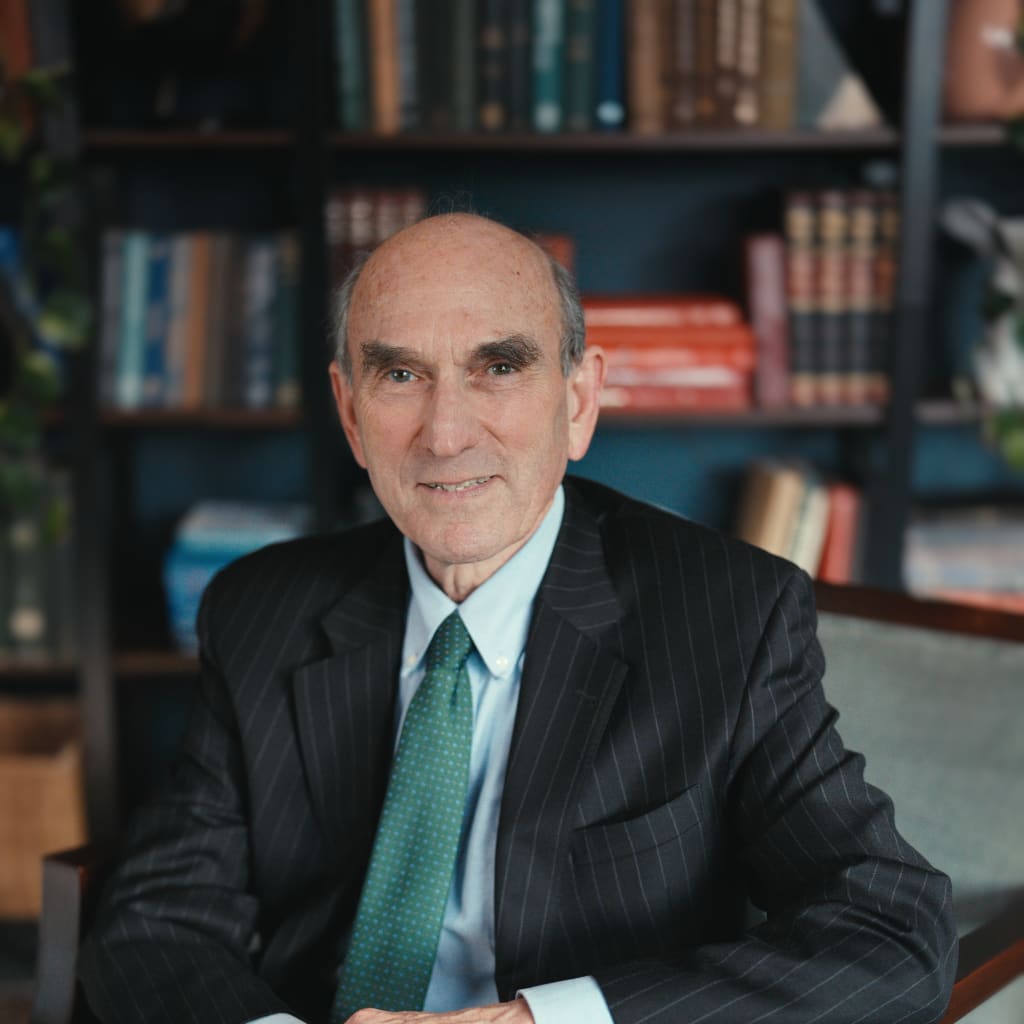 Elliott AbramsCFR ExpertSenior Fellow for Middle Eastern Studies, Council on Foreign Relations
- Professor, University of Oslo; Founder and Director, Iran Human Rights NGO
- Professor of Practice, School of Advanced International Studies, Johns Hopkins University; Visiting Fellow, Brookings Institution; CFR Member
 Ray TakeyhCFR ExpertHasib J. Sabbagh Senior Fellow for Middle East Studies, Council on Foreign Relations
Presider
- Ferris Professor of Journalism, Princeton University; CFR Member
From Middle East Program.
Panelists discuss Iran’s current political climate, concerns for civilians on the ground, and how the rapidly evolving internal dynamics are shaping U.S. objectives as well as broader regional and international considerations.
AMOS: Thank you. Welcome to this virtual meeting on “Iran’s Internal Dynamics and U.S. Objectives.”
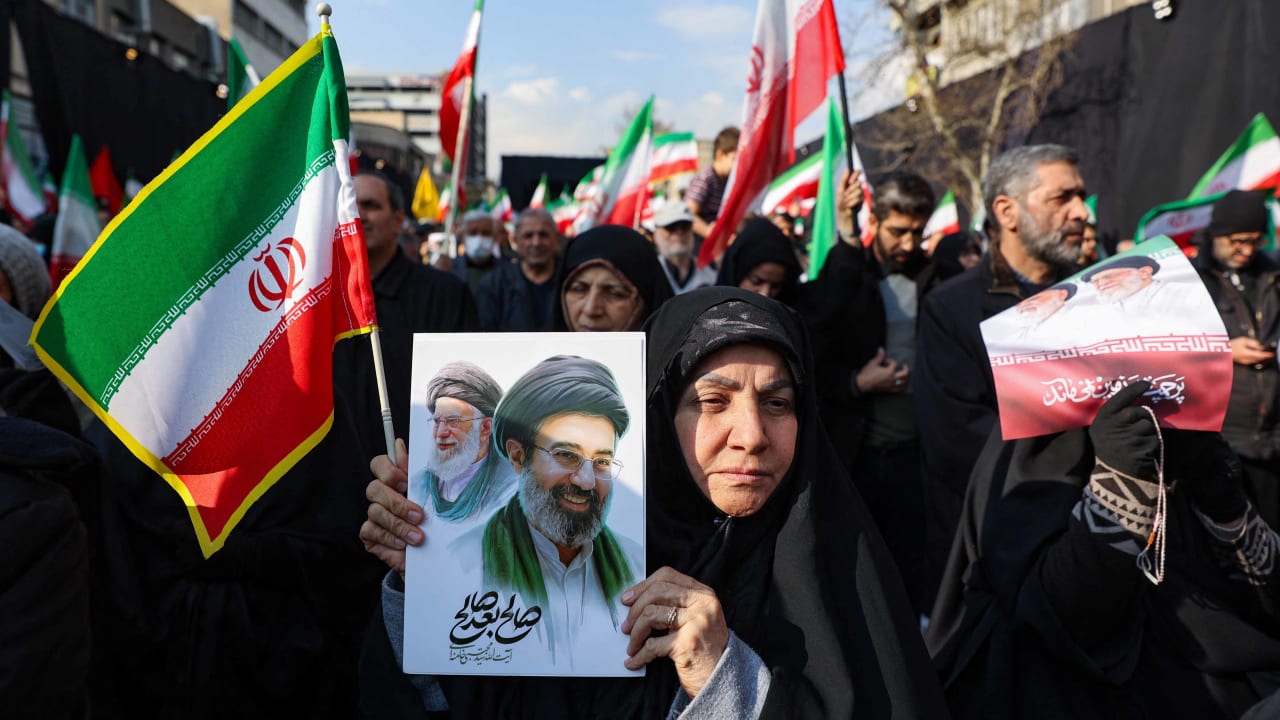
We’re now in our second week of war. On February 28, the United States and Israel launched surprise airstrikes on Iran, killing Supreme Leader Ali Khamenei and other Iranian officials, and starting a war that’s since spiraled far beyond its opening hours. The scope of this conflict is staggering. At least twenty countries are now involved. The energy shock has punished nations far from the front lines. In the U.S., a majority of Americans, 56 percent, oppose or strongly oppose U.S. military action in Iran—the most unpopular war ever.
Our panelists will examine how we got here, what’s happening in Iran, where this is going, and what, if anything, a path out looks like. We’ll discuss for about forty-five minutes. I repeat, again, that this is on the record. We will take your questions after forty-five minutes. Let me introduce our panelists.
Elliott Abrams is a senior fellow for Middle East studies at CFR. Mahmood Amiry-Moghaddam is a professor at the University of Oslo and director of Iran Human Rights, an NGO. Mara E. Karlin is a professor of practice at John Hopkins University and a visiting fellow at Brookings. And Ray Takeyh, the Hasib J. Sabbaugh senior Middle East fellow for Middle East studies.
I want to start with a simple question. I’ll start with you, Elliott. And this is it: How did we get here?
ABRAMS: Good question. I would argue that we got here because of Iran’s national security policy. That is, the regime’s continuing pursuit of nuclear weapons. Its mammoth—we now see—mammoth missile and drone program. Its interference in countries nearby—Syria, Iraq, Lebanon. Its support of terrorist groups. This has been a gigantic problem for every American president since 1979. There was a negotiation that ended recently between the U.S. and Iran, at least on its nuclear program. But that negotiation broke down. The American negotiators felt Iran was not serious about the limitations on its nuclear program. And so President Trump did what his three or four predecessors have done in saying, we’re not going to let Iran get a nuclear weapon. Only he acted on it.
AMOS: Ray.
TAKEYH: I don’t have anything to disagree with Elliott about. I think the course of events and what he suggested is—seems reasonable to me. To just add one thing, I think we’re here because Iranian militancy remained undiminished by diplomatic mediation. And the president did something that others had talked about but never engaged in. So I don’t have much to add to what Elliott already said.
AMOS: And Mahmood.
AMIRY-MOGHADDAM: Well, you know, when you ask how did we get here, I can tell you how Iranian people got here. Because, you know, that’s the other side of the story. I would say that the Islamic Republic has never had so little legitimacy among its people. And I think the timing, you know, right after probably the largest mass killing of protesters in our time, at least in Iran, and right after that massacre I would say that I have never seen so many Iranians calling for or asking for some kind of intervention. You know, last year in the twelve days war that was not the situation. You know, the country was divided. Some people thought that, you know, an intervention would lead to the regime change, but many people opposed it. This time it was different. And we saw that, you know, the in the beginning, at least the first couple of days, many people were happy. But of course, right now the situation is changing because, you know, like any war, civilian casualties are increasing. And that has an impact.
AMOS: Mara, let me ask one—let me put one more word into the question, which is how did we get here now? You know, Elliott and Ray did the history, but we’re here now. Why now?
KARLIN: That’s exactly the question to ask, Deborah. I mean, there’s an inside and an outside story to this, right? Inside, as Mahmood highlighted, you saw these massive protests across Iran in January, that likely led to the deaths of tens of thousands from across the entire country. You’ve also seen the Iranian military as weak as it’s been for a number of decades. And its supports a terrorist, which was supposed to historically kind of compensate for not having a terribly worthwhile military, has also been severely degraded. Hezbollah and Hamas being the perfect examples here.
And so I think that that’s what’s gotten us here. What I still don’t totally understand is why now? And I don’t really think we’ve gotten that answer from either United States or from Israel. Instead, we’ve kind of gotten the dim sum menu of reasons, many of which we’ve all just discussed—nuclear program, missile program, support to terrorists, efforts to kill American servicemembers in Iraq, et cetera, et cetera. I assume part of it is Washington and Jerusalem thought because the inside piece was getting so loud and so strong that a little bit of effort might lead to collapse.
AMOS: Mahmood, let me ask you this, and I hope the others will chime in. And that is, President Trump and also Benjamin Netanyahu have called on Iranians to take back their country. Is that a realistic ask?
AMIRY-MOGHADDAM: Well, I mean, many—I think most Iranians want to take back their country from the regime of ayatollahs. You know, in the last, I would say, particularly since 2015-16 I think most Iranians have given up hope to reforms within the system. And since then there have been protests every two or three years, nationwide protest with the aim of making ayatollahs go. So that’s what they have wished. But, you know, when you ask people to come out and take over institutions and take back your country, we should keep in mind that on one side we have unarmed civilians and on other side we have heavily armed Revolutionary Guards, IRGC, that, you know, not only in Iran but in many countries in the Middle East, they have been involved. They were the ones who saved Assad, at least contributed to saving Assad, after the Arab Spring.
So I think empty-handed civilians taking back the country and confronting heavily armed IRGC, who are willing to do whatever it takes to save the Islamic Republic, it’s not realistic. But I think many people in Iran were hoping that there were some plans. You know, when President Trump called for Iranian people to come out on the streets and take over institutions, I think many Iranians thought that there are some people, some organized groups, who are going to support them. That’s why so many people went out on the streets.
AMOS: Elliott, could that change a year from now? Could that change depending on how this conflict ends?
ABRAMS: Yes, I think so. I think, for one thing, the success of this effort by the Trump administration should be judged today and when the war ends, but also at the end of his term. If the Iranian regime falls in a year or two, then I think we’ll all look back and say, well, the date was presumably brought forward by what happened in 2026. The regime, when this war ends, is going to be much weaker. The leader is even—I mean, he’s certainly much less legitimate than either of the two predecessors, Khomeini or his father. He is a dynast. I mean, it’s nepotism. He’s not—like his father, he’s not an ayatollah. No one—I mean, everybody in Iran knows that. The regime may be even more repressive, and certainly the economy will be even worse off at the end of this war. So I think this regime is going to be facing a lot of trouble when this war ends.
AMOS: Ray, is the opposition united enough to come together to be a strong enough force to make that happen?
TAKEYH: I would say in a sort of a revolutionary situation, which we what we’re talking about, the opposition in its initial phases doesn’t have to have a structure or a leadership. It has to have resilience. It has to be able to continue to be on the streets. And then I think you’ll see that organizational structure and leadership emerge. I would argue that in 1979, Ayatollah Khomeini was not the initial leader of the movement. The movement recruited him. So the problem with the Iranian opposition has been—has been sporadic. It has come to the surface and has had much protest throughout the street, but then it has died down, and both the regime and the opposition try to regroup.
So the challenge for the opposition is to establish that kind of endurance and resilience. And the more it does so, not only it will more cohere as an opposition movement, but will further fracture the regime that’s remaining. As Elliott suggested, those security forces are battered and bruised. So that’s the theory of the case. Would the Islamic Republic collapse when the next inevitable protest movement come about? I can’t exclude that from possibility. I don’t think anybody should exclude anything from possibility, given how all our assumptions have been upended over the past couple of years. In the realm of probability, I will still say the regime has the upper hand, for some of the reasons that were mentioned.
But this is a dynamic situation. And one thing I learned, living through a revolution and studying it, is assessments that you make today, March 11, may not necessarily be true on April 5, and certainly may not be true on November the tenth. So to answer that question today, and I want to emphasize, today, the probability is with the regime. But for that answer to be reliable, we have to come and revisit it depending how the situation evolves. This is—as I always say to people, during this particular time you have to be a watchmaker. You have to take yourself apart and put yourself back together every day, because this is a dynamic situation. And it requires profound degree of intellectual flexibility.
AMOS: Mara.
KARLIN: I really appreciate what Ray was just highlighting. It seems to me then it’s worth considering, what are the indicators that we’re all looking at to figure out when we have moved somewhere else? So the two that I keep looking for, one are defections. Are you seeing senior folks from political, military, security services defecting? I haven’t seen that yet. The other big indicator I’m looking at is who has the weapons, right? And right now it appears it is—it is still the weapons of the state. It appears as though those with weapons are still showing up to work. They’re not staying at home, nor are they turning their weapons against the regime. Depending on what happens with both of those indicators, we could be in a different place. But we’re not right now.
AMOS: Mahmood, I want to go back to you one more time before we move on. And that is, you are the closest to the opposition. You talk with them a lot. And I wondered if you thought that they could coalesce, that things would change on the ground. What’s your assessment?
AMIRY-MOGHADDAM: Well, you know, as a human rights organization, we have tried to have kind of—or, engage the opposition groups in a dialogue on minimum human rights principles. You know, Iranian opposition is very divided. Many of them, in my view—you know, there is lots of emotions and very little politics sometimes. You know, that’s the impression I get. And very much stay in the past. You know, they are still have not overcome the 1979 revolution. You see the discussions that, OK, who were on the revolutionary sides and who were not. And I think—so we have tried to make them—or create this dialogue. And we are going ahead, but, you know, not fast enough.
And I must say that, you know, the resilience that—I mean, Ray very correctly referred to—that’s what’s needed. But, you know, the Islamic Republic, they have the experience of the 1979. They know why shah fell, because he did not show the brutality that they are showing now. He let protests continue day after day, week after week. But what they have learned also is that, like, you know, after Arab Spring in Syria, and that if you suppress with brutality, killing thousands, it actually can save you. And this is what they do. You know, normally people in Iran are not allowed—you know, they are not—the authorities don’t let them gather on the street. Even before gathering, they arrest people who may be in the position of mobilizing. You know, they get arrested. And this time, you know, in January these protests started in Bazaar, which is traditionally pro regime. And I think that’s why they couldn’t stop it immediately. And that was enough to get a nationwide protest.
And I must—you see, today the chief police of Tehran said on Iranian TV that he warned people that anyone repeating what the enemy has been saying will be treated as enemy. Basically, what he’s saying is that protesters will be treated as enemy, and that their hand is on the trigger. So I think that they will not let this, you know, protest continue. They will do whatever they can to stop it. And, as Mara said, OK, who has the weapon, I think. So the opposition in Iran is very polarized. In my opinion, none of them are representative enough—like, representing the whole country. I think a successful opposition will be both representing the whole country, you know, Iran, with all its ethnic groups in central parts of Iran, and it needs to be organized, because, you know, there are some parts of opposition which are organized, but they are either belonging to the ethnic groups—like Kurds, they are well-organized but they are not in all over the country. And the other organized groups, they are—they don’t have popular support. So they can complement each other, but they are not standing together right now.
AMOS: Ray, as military leaders have always pointed out, the enemy gets a vote. How do you assess the Iranian strategy? And it appears that the White House was surprised by it. I may be wrong about that, but it appears that way. So let’s start with your assessment of the strategy, and we’ll move on to was the White House surprised. You’re muted. There you go.
TAKEYH: They’re doing—as I think Mara said—they’re doing exactly what they said they would do. You don’t have to intelligence about this. They said: This is what we’re going to do. We’re going to engulf the region. We’re going to put costs on the global commerce. We’re going to deal with the oil supplies and maritime traffic. There’s nothing surprising about what they’re doing. None whatsoever. And I think if this war ends tomorrow, next week, assuming the regime survives, both antagonists, the United States and Iran, will have a narrative of success that has some plausibility. The American narrative can suggest, very correctly, that they degraded Iran’s proxies, they degraded its conventional military capabilities, further buried the nuclear program in rubble, and decapitated important and nefarious and experienced leaders. That’s the definition of success.
The Iranian definition of success is, we survived. We survived. And we also put cost on the international community in terms of economic cost, in terms of terrorizing their neighbors. Most people have suggested that these missile attacks have not hit targets and led to mass casualty events, but they have terrorized the neighborhoods. They have stopped many things from happening that ordinarily would happen. So they have—essentially came out of the June war and believed that by exercising a measure of reticence, if that’s how you want to explain their conduct, they were subject to another attack. So by raising costs in all the ways they have, with whatever capabilities they have, they will cause the next Americans or Israelis who contemplate this attack some measure of hesitation, perhaps. Because this is not going to be completely without burdens imposed on the economy, on the on the local states, and on maritime traffic, and so forth. So what was their strategy? Exactly what they said they would do. And I think if they survive, battered, bruised, but survive, they’ll have some kind of a narrative to justify their conduct.
AMOS: Elliott, a success?
ABRAMS: I agree with Ray. For them, it’s easy to write. That’s all. If they’re there, that’s their narrative. Our narrative is a lot harder, partly because the administration is so bad at it. I mean, the president says—the president speaks to the press every day. And every day says something different. And so do Hegseth and Rubio. And I think the administration’s in danger in a sense of winning the war and losing the narrative, because no one can quite say what you’re—what are they trying to do? Is it the nuclear program? Is it the conventional military? Is it simply degrading? What are we trying to do here? Or is it regime change? And I think the administration, which presumably has several days, if not weeks, ahead, really ought to, for its sake and for the country’s sake, try to get one single message. Because in the end, people are going to ask you a question, OK, it ended yesterday. Who won? Was it a success? And the administration really ought to be trying to carve out a message now for that day.
AMOS: Mara.
KARLIN: So we should recall that the—if the bar is just survive, that is an exceedingly low bar. I completely agree with Ray and Elliott that it is what is in the head of Tehran right now. But that’s really, really low, I think, in terms of whether or not the administration was surprised by a lot of the response we’ve seen by Iran, it actually does appear as though they were surprised. Look, we always knew the Strait of Hormuz would be an issue any time you think about this conflict. They appear to have made no preparations whatsoever to try to reshape the oil market. We would always know this war would be big, would involve a conflagration, including at least the Gulf states and Israel, if not more. So then you have to plan to get hundreds of thousands of Americans out. It appears as though there was no effort to try to bring assets to the region and to try to facilitate that. There were no meaningful warnings for most of the region’s diplomats even, most of the American diplomats in the region, until just before this. So they appear flabbergasted. And it’s not in any way clear why that’s the case.
AMOS: Mahmood, if success for the Iranian regime now is survival, how does that play with the opposition?
AMIRY-MOGHADDAM: Well, I think many Iranian—many people in Iran would also consider it a success for the regime if they survive, because they are expecting—I mean, they have been hoping at least—that they would fall. I think the opposition, the lesson that they get is that they have to be—they should force themselves to get together. You know, we have a—we have a regime that has been ruling a country for more than forty-seven years now. And you see Iranians were relatively more modern, if you want, you know, Westernized. And they had only—I mean, together with Taliban—Islamic republic using, you know, the methods that we have seen, you know, ISIS use, Taliban use. And it’s—you know, the economy is poor, despite having all the natural resources a country would, you know, want to have. Those ruling the country are incompetent to solve people’s daily problems.
But they still survive. And I think this is a very serious signal to the Iranian opposition that a regime that people don’t want it, the international community doesn’t want it, they have nothing to offer, but still they survive. And so I hope that they will be—they will force themselves to get over, you know, whatever they have been doing so far, and try to sit together and see how they can save Iranians, because, you know, Iran has been through wars because of this regime. And you never know, you know, how far—there is one thing. There is one principle in the Islamic Republic which is holy. And that’s to save the Islamic Republic. That’s the holiest principle of all. So they are going to do whatever they can. And if they survive, they feel that they have succeeded.
AMOS: Let me just open the lens a teeny bit wider, because there’s actually two wars in the Middle East. One is in Iran and the other one is in Lebanon. More than 700,000 Lebanese have been displaced, all moving north to Beirut. There’s tens of thousands who have crossed into Syria. What does this conflict mean for Lebanon and the region? And this part of the war has been carried out mostly by Israel. Do the U.S. and Israel have the same goals in Lebanon? We’ll do it by how I see you on the screen. Elliott, go ahead first. (Laughs.)
ABRAMS: Yes, I think—I think so. The goal is to have the government of Lebanon be sovereign in Lebanon. It is to have the government rule Lebanon, not Hezbollah. It is to have the Lebanese Army first push Hezbollah north of the Litani, and then eliminate it as a military force. And here, I think we could say, even if the regime in Iran survives at the end of this war, it’s still very bad news for Hezbollah because they dragged Lebanon into this war. It didn’t have to be involved. We’ve now seen the president of Lebanon harshly criticize them. We’ve seen a break with them by Nabih Berri, the Shia speaker of the National Assembly. So Hezbollah is going to emerge from this weaker, much more unpopular among other Lebanese.
And here, I think, I got to say, I think that, you know, for us—for the United States to say to Iranians, you know, now you should rise up, it’s a lot because we know the regime has just murdered thousands and thousands of citizens. I think that message is a lot fairer in Lebanon. This is the time for the government and the army to take advantage and say, it’s over. And the government will now start taking over all of Lebanon, ruling all of Lebanon as a sovereign government. And start negotiating with Israel on border issues and on peace. So I think the United States does want that. And I hope that at the end of this war we continue to push that.
AMOS: Ray. Ray.
TAKEYH: I would defer to Mara, who actually has worked on Lebanon far more.
AMOS: OK. Let’s do that. Mara.
KARLIN: So, look, I would say what happens in Lebanon, and vis-à-vis Hezbollah, is really high on Israel’s priority list right now, and pretty low on the U.S.’ priority list. Which is pretty unfortunate because it’s actually a very important moment. So you’ll remember around two years or so ago, when the Israelis pretty impressively devastated Hezbollah’s leadership, a number of its operators, and a whole bunch of its weapons. Following that ceasefire there was a whole lot of debating and potentially dithering, but nevertheless about seven months or so ago, eight months or so ago, the Lebanese military actually started doing something they had never done before. Which is to go out and begin disarming Hezbollah. And in fact, they have done that south of the Litani River. I would just note that U.S. Central Command said in early winter that the Lebanese military had gotten more than 10,000 or so rockets across Lebanon and about 400 or so missiles. And this was even before the declaration of the disarmament south of the Litani.
So the military was starting to do the things. We have evidence of that. The government was as well. And then, of course, Hezbollah kind of goes on this suicide mission of a dying patient by kicking off another round of this war. Elliott noted some of the important things that have happened since, including the government banning Hezbollah. This is huge. The government wanting to talk to Israel to figure this out. The challenge is, this is all happening under the specter of this massive Israeli attack. As you noted, Deborah, the displacement of hundreds of thousands of Lebanese. And so while on one level there’s a lot of perturbation inside Lebanon, frustration, a willingness to finally push back hard and further on Hezbollah, folks are doing this under major duress. And unless there is a way to actually bring the Israeli and Lebanese militaries and political institutions together to figure this out, I really worry that Hezbollah will find a way to kind of rise from the ashes through this moment.
AMOS: Mahmood.
AMIRY-MOGHADDAM: Well, I’m not an expert on—but I think certainly it’s a big defeat for the Islamic Republic to lose all their proxies, one after each other. So, you know, that’s what they have been trying to do to keep the enemy outside Iran’s border. But they haven’t managed it.
AMOS: I want to go back to something, Mara, that you wrote in the New York Times. It was a pretty scathing editorial about the failure of the Trump administration to plan for American citizens abroad. Have they gotten better at it in the past couple of days? And what does it tell us about the preparation for this war?
KARLIN: Again, the bar is really low here. And so yes, they have absolutely gotten better. They have started to take some steps to take Americans out. But if you’re going to launch a war, any real war planning requires branches and sequels, right? And, of course, you have to assume there’s going to be the responses that we’ve talked about earlier. And, of course, part of the duty of the government is to take care of Americans overseas. In 2006, Elliott and I were stuck in the White House and in the Pentagon trying to pull 15,000 Americans, highest number of Americans we’ve ever had to try to get out in a noncombatant evacuation. So that was one country. We didn’t know the war was going to happen, obviously. And we had to raise a whole bunch of platforms, assets, commercial ships, et cetera. And it took about three weeks.
Here you’ve got fourteen countries, hundreds of thousands of Americans, and, again, no evidence that folks really prepared for this. So, yes, there are now efforts to get Americans out, but just a couple days ago you had mid-level State Department officials tweeting: Get out now. Depart now—when there’s actually no feasible way for folks to do so. It’s really quite negligent.
AMOS: Anybody else want to comment? Otherwise I’ll move on. OK. So I wanted to ask Ray, to start with, you know, the leadership in Iran has elected a new leader. What does it tell us about the message of this guy? There were others who were probably more qualified, but they chose what looks like, you know, a dynastic succession in Iran, which many there said we don’t want. So what’s up with that?
TAKEYH: Well, as you mentioned, dynastic succession is not what the Islamic Republic does. However, I should say, the system is full of nepo babies. (Laughter.) So they may not elevate you to the top leadership, but they’re all sons of somebody. So that does happen in that system. A lot of the sons, what they call ahohzadez (ph)—have gone into sort of private business, which means corruption. The idea of the seance of the leaders getting into commercial and other things has been an area of controversy. So what is the message they are trying to show?
First of all, it is, to some extent, the commemoration of the martyr leader. It is a sort of a respect to a family that has been decimated. Ali Khamenei, his wife, his one daughter, one granddaughter, and another sibling had—so this is a sort of honoring the family of the martyrs. The second is to be defiant toward the United States and the international community, by choosing someone who is purported to have ideological inclinations pushing him on the hard line. And, to say the least, when your mom, dad, wife, son, sister die, you’re got to hold some grudges. You know, so he’s coming in with certain manifests animosities toward the United States. So it was the two messages of reverence for the leader that died and defiance of the United States. I think, particularly after the president said he should pick the next leader of Iran. And one of the many things that he said which were out there, that kind of pushed them in that direction as well.
Now, they also have chosen a leader that lacks experience in government, that his father did, and lacks theological erudition that the founder of the revolution did. So it’s not just the elimination of the egalitarian pillar. It’s someone who, by the diminished standards of the Islamic Republic, doesn’t meet the bar. Initially the founder of the revolution had charismatic authority and religious credentials of significance. They downgraded that in 1989 constitutional revision to appoint Ali Khamenei, who was not so—who was not so learned in religious sciences. But he had experience in government and revolutionary commitment. So they said, well, that’s good enough. Now he’s got neither. So this is a—there’s a domestic audience and an international audience. This may have been aimed more at a(n) international audience. And domestically, at least for a while, you’re going to have a supreme leader who’s not very strong. And you have a coalition government approach to the system, to governing that country, at the time of its most intense hazard.
AMOS: Mahmood, do you agree with that analysis for the domestic audience?
AMIRY-MOGHADDAM: Well, you see, you know, when they—of course, you know we, as a human rights group, we would rather see Ali Khamenei be tried and held accountable for what he has been doing. But, you know, taking him out, I think, offered an opportunity that maybe someone from within the regime could emerge—could emerge and be more flexible, and divert from—divert from the Islamic Republic policy. And I think picking Mojtaba showed clearly that the Islamic Republic has chosen continuity to the same policy. You know, Mojtaba has been behind the scene. We don’t have so many—you know, he hasn’t publicly appeared. I think there is only one speech, or a small video about him. But what we have heard about Mojtaba, ever since, I think, 2005, you know, one of the elections, that he is very close to the IRGC. And he has been involved in, you know, different elections, presidential elections, trying to promote his own candidates.
So to some extent, at least many Iranians think, that he has enough power and authority among the IRGC and among people in the regime. And being, you know, a Khamenei, I think, you know, at least it appeals to the supporters that, OK, one Khamenei is gone but another is continuing his part. And, you know, it gives them some kind of, I think, hope and feeling that, OK, it’s not completely defeated. But I think one of the reasons why the United States and Israel did that was to see whether, you know, that new faction within the system would appear. But I think the Islamic Republic has towed through it. You know, Khamenei has removed basically anyone who could be in a position to challenge the continuity in the regime.
AMOS: Elliott, how did that news land in Washington?
ABRAMS: Well, you remember the president said he was not acceptable. I think it is a sign. I mean, I don’t disagree with anything that’s been said on him. It’s a sign of no change. It’s a sign that one can expect—I mean, there are people who are viewed as reformers within the system. Former President Khatami was viewed that way. There are people who have been put under house arrest for decades, like Mousavi and Karroubi. Now you’re getting, in a sense, the purest of the pure, Khamenei’s son, who everyone says is connected to the IRGC and who’s connected to a lot of money. So this is the regime, if anything, on steroids. And from the American point of view, that’s bad. The only good thing you can say about it is it heightens the contradictions. And if in one or two or four years the regime falls, then think people will look back and say he was a bad choice. He couldn’t hold it together.
AMOS: Maura, do you want to take up the last words on this question?
KARLIN: The only point I would highlight is the president has been given us a panoply of reasons, obviously, for why this war is happening, but it’s clear a piece of it is to collapse the regime. And this selection demonstrates that is just 100 percent not happened.
AMOS: I want to widen the lens one more time and look at the other power players in the equation. Russia is an Iranian ally, reportedly supplying Iran with intelligence about U.S. bases. Ukraine has joined the war, supplying drone expertise to Arab states, after he was asked to please help from Washington. China is watching carefully. Who benefits? Let’s start with you, Elliott. And we’ll go down the normal way that you’re all appearing to me on the screen.
ABRAMS: You know, I think it’s partly a matter of are we talking about this week? Are we talking about during the war? Are we talking about longer range? I think one thing that’s come out of this war is the realization that, from an energy point of view, the United States is in a uniquely wonderful position. Yeah, we—this is not 1973. We have no oil or natural gas supply issue. The Europeans do. The Asians do. China does. We don’t. We’ll have an—we have an increase of prices at the pump, but our energy situation is infinitely superior to that of China.
I would say the other thing we see is, as we did in Midnight Hammer and in Venezuela, the quality of the U.S. military is pretty extraordinary. We are the only really global power. And I would hope that Xi Jinping looks at that—the Xi Jinping who has fired approximately half of his high command—and wonder if it really is a great idea to invade Taiwan.
AMOS: We have about three more minutes before we open to questions. So let’s go quickly. This will be our lightning round. Ray.
TAKEYH: I think one of the casualties of this is the impression in Iran that they had allies of significance in China and Russia. Russia may have been giving Iran intelligence information. Obviously, it’s not working very well. And the Chinese have been bystanders and have not helped Iran in any way. Iranians have to recognize that most of China’s investment the Gulf are on the other side of the Gulf, and they tend to be very mercantile and exploitative in their treatment of the Iranians. They will purchase oil, but they will do it at a steep discount. So for a lot of people in Iran, some of the commentary you see is, it’s time to go back to the original founding principles of the revolution, self-reliance and self-determination. And that actually leads you to the notion of having an independent nuclear deterrent. It is the hardest—it is the easiest answer to the dilemma and the hardest path of getting there.
AMOS: Mahmood.
AMIRY-MOGHADDAM: Yeah. I agree. Actually, I don’t think Islamic—I mean, they realize clearly that they basically don’t have any strategic friends, and because nobody considers them as a reliable and stable ally. So, but they don’t have so many other options. So the only ones probably who can help them out are some of the, you know, militias in different neighboring countries. But they clearly saw that neither Russia or China basically did anything to help them.
AMOS: Mara.
KARLIN: Look, I think if you’re China, if you’re taking this wider aperture, operationally you continue to be awed by the conventional capabilities of the U.S. military, by the U.S. military’s ability to project power almost anywhere at any time. And yet, operational success does not necessarily result in strategic wins. One of the big Chinese newspapers just yesterday even ran a great cartoon about the U.S. getting trapped in the cobweb of the Middle East. And I would just note, per Elliott’s point, yes, Xi Jinping has fired a whole bunch of his senior military leadership. Unfortunately, that has also happened to the U.S. military over the last year as well.
AMOS: Is this good or bad for Ukraine?
KARLIN: Bad. I think fundamentally this is bad for Ukraine. It diverts attention from the war that’s happening. It will help Russia make a whole lot more money to run its part of the war. And, look, at the tactical level you now have a bunch of countries who are interested in the Ukrainian training tactics and procedures, and probably in purchasing drones and anti-drone capabilities, but fundamentally very few folks, fewer than even before, are going to be able to spend money or give any attention to the conflict that’s happening there.
AMOS: OK. I am going to give this up. I have many more questions, but I’m going to behave. And we are now going to move into the Q&A. So I’m going to turn this over to Talia to give us questions, not me but to all of you, from our audience. Talia.
OPERATOR: Thank you so much, Ms. Amos.
(Gives queuing instructions.)
We’ll take the first question from Governor James Gilmore.
Q: Good. Thank you very much. What a great conference. This is Jim Gilmore. I’m the former ambassador to the OSCE and the former governor of Virginia.
Look, you made a comment here that they want to survive, and the fact that they have the guns. My view continues to be that if you’re going to do a coup d’etat anywhere, including here, you have to have the support of either the police or the military, or both. And so it seems to me that the policy that’s being followed right now is to kill everybody that might be in charge of this government—everybody. And while I don’t think that sounds like American policy, it does sound like Israeli policy. And so my question to you all is this, if we do proceed to kill everybody, then will there be any movement among the community to go into the offices, declare themselves a legitimate government, and take over, or not?
AMOS: You’re on your own.
TAKEYH: Well, I would say that I’m not sure if United States and Israel are in a position to kill everybody, because this is a fairly deep cadre. And they’re capable of reanimating their position, at least in the bureaucratic structure. The question is, and to which the answer has to be continuously reevaluated, is whether the weakness of the security apparatus will cause it to be overwhelmed by a determined popular protest movement. And the more the latter succeeds, the more fractures and divisions and defections you’ll see in the former. That’s the dynamic that I think happens in a successful revolutionary movement, which is why so many revolutionary movements are ultimately not successful.
AMOS: Anybody else? OK, another question.
OPERATOR: We’ll take the next question from Madison Schramm.
Q: Thank you so much for your comments. I really appreciate it.
I just wanted to ask, understanding the multiple reasons that have been given for the war itself, understanding that it’s possible it’s multicausal, what is the vision for the day after? Or have you heard any vision for the day after? In other words, why is it that a more, potentially, unstable Iran with a harder line leadership would actually produce better outcomes? Thank you.
ABRAMS: Well, let me try that one. Iran is going to be a lot weaker after this conflict. It will be a lot further from a nuclear weapon. It will be further from having this massive missile and drone supply. Its economy will be weaker because of the destruction that’s underway. I assume that the sanctions will remain in place. That’s a good outcome from the point of view of the United States because Iran is an enemy. It’s the only country in the world going around saying death to America. It is supporting terrorist plots against Americans in Europe and in the United States. It has been for years taking Americans hostage to sell them back to us. So all of that, I think, is beneficial for the United States. Even a less stable Iran is beneficial for the United States because what they do with their money and abilities and stability is act against our interests in the Middle East.
TAKEYH: Can I just say—yeah, just say one thing. My friend Gideon Rose wrote a book, How Wars End. America almost never thinks systematically about a day after. That’s one of the hallmarks—(laughs)—of American planning, or not planning. And too often I think when people talk about the day after, they inevitably catastrophize the day after in order to prevent the action that they’re opposing. Donald Trump didn’t think about the day after. That’s obvious. But his achievements are not inconsequential. One of the reasons why they’re consequential is because he wasn’t harbored—he didn’t harbor received wisdom, because he was unaware of it. (Laughs.) And sometimes that’s not a bad thing.
AMOS: Mara.
KARLIN: Yeah, look, I would just add, I think, two points. One, in looking at the day after, it doesn’t appear as though either the U.S. or Israel have actually figured out who’s going to fill the space. So you can bring down buildings, you can kill a bunch of leaders, but then who is going to populate as the alternative? And we just don’t see any evidence of what that is. I’d also just like to tackle this point on instability. It seems to me a pretty unstable and fragmented Iran can also be really problematic for U.S. national security interests, particularly around the region. And for that, I would look at a much, much smaller case study, which is Syria, whose civil war led to a massive refugee crisis, shaped, you know, elections in Germany, to say nothing of, obviously, the deaths of hundreds of thousands, the displacement of millions, et cetera. And so, look, the regime there is highly problematic. No one should shed tears for them. And also, simultaneously, fragmentation and instability can be also really problematic for our interests.
AMOS: Mahmood.
AMIRY-MOGHADDAM: Yeah. I think it all—you know from, Iranian people’s perspective, you know, we know that the regime is going to be weaker, the economy is going to be worse, but if the repression that they are going to practice from the day after, the way they have signalized, if that leads to traumatizing a whole generation, then—you know, then we have lost. But if that—if this base, because of this situation, the opposition gets united, more organized, and, you know, brings back hope, then I think many people will think that, OK, it was—maybe it was worth it, because, you know, the regime has been there for forty-seven years and people have been suffering. And, you know, those who were born during the revolution are around fifty years now. And for many years, you know, Iranians—for many years, they—we still do that. We say next Nowruz we celebrate in Tehran. We have been saying it, like, more than forty years, I think. And so it remains to be seen. I really hope that, you know, either new oppositions emerge or the current start revising the way they have been, and get organized, united, and so that the Iranian people can have a normal life.
AMOS: Talia.
OPERATOR: We’ll take the next question from Christopher Isham.
Q: Thank you very much. It’s a very good discussion.
Just to wonder if you could focus for a minute, we’ve touched on oil, but specifically on the Straits of Hormuz. There was some contradictory statements coming out of the administration yesterday, with Secretary Wright saying that they were going to escort tankers through the straits. That was—that tweet was deleted very quickly, or removed. And so far, there doesn’t seem to be any evidence that we are escorting tankers through the straits. Is that—would that be advisable? Why have we not done it? What steps can be taken to ensure the free flow of oil, to reassure the insurers and the shippers, so that the pressure on the global economy is eased?
ABRAMS: Well, I’ll offer a comment or two. One, you know, if the war ends this weekend or a week later, yeah, there will have been a disruption of three weeks or something, which will not destroy the world economy. What could be done? I don’t think it’s—personally, I’d like to hear Mara on this—but I don’t think it’s wise for us to be escorting tankers because I don’t want to see the tankers or our naval ship sunk with potentially loss of life. I think it would be more sensible to do an insurance scheme,. And the United States—the president has talked about that. Although, frankly, it’s not our oil. So why don’t the Emiratis or the Saudis offer some kind of insurance scheme?
I would also like to see at the end of this war, which is not the first time the Straits of Hormuz have been a problem, more of the kind of thing that the Saudis did when they built their pipeline that goes to Yanbu on the Red Sea. People like the Kuwaitis, or the Iraqis, or the Bahrainis, or to be in that pipeline system, or maybe they—but they do need a larger, new pipeline so that instead of five, six, seven million barrels a day being able to get out without the Strait of Hormuz, it will be fifteen. That would make a big difference to the world economy. And it’s—from an engineering point of view, it’s easy.
KARLIN: I think the U.S. military escorting tankers is really dangerous. When you think about, like, what are the gamechangers that could happen in this war, it could be a U.S. ship going down. Then I think we would see a dramatic and spectacular reaction. To date, seven Americans have unfortunately died in this war from the U.S. military. That’s really sad, and also not the sort of number you would see were we to potentially take on that mission. But one thing the U.S. could do is actually just put more supply on the market, right? You could work with a bunch of countries. If you’re most worried about the demand, you change the supply. Can’t do that for terribly long, but if you need to get through an interregnum it could work.
AMOS: Anybody else? All right. We have, like, a squeaky little bit of time for one last question. Want to try it, Talia?
OPERATOR: We’ll take the next question from David Aaron.
AMOS: David appears to be muted.
Q: There we go. Well, let me just say that I think that all of the reasons that have been induced for the war are all good ones. They don’t have to have a single reason. All these reasons are good reasons. The only thing that is a mystery is why now? And why now is also not a mystery. It’s low poll numbers and Jeffrey Epstein. It’s domestic U.S. politics. And let me ask you a question about the Strait of Hormuz. Doesn’t that also constrain the Iranians from being able to ever ship oil? If they’re strangled there, they’re just as—I mean, their recovery is deeply, deeply limited, I think. Is that so?
TAKEYH: I will say, Elliott sent me a Wall Street Journal story today that actually said Iranians are shipping oil out of the Strait of Hormuz, and doing so. So Elliott can talk about that more. But, you know, I would say this opens up the conversation about taking over the Kharg Island. And David Aaron was part of an administration called the Carter administration that initially contemplated that during the hostage crisis. So everything comes around in a circle. (Laughs.)
AMOS: Elliott, do you want to—
ABRAMS: Yeah. I think we should, by the way, be contemplating taking Kharg Island. That would prevent the Iranians from doing what apparently they’re doing now, which is allowing ships—these sort of ghost fleet ships that are clearly going to go to China to get through without their being attacked by Iran. And then, of course, they will attack other ships. So we should really—you know, I haven’t done the study of this—but Kharg Island is about ten, fifteen miles offshore. It ought to be doable for the United States. It’s worth thinking through.
KARLIN: I would just add that, as we’re looking to add missions to the U.S. military role in this war, it’s already juggling a whole bunch of things. It appears the U.S. military has spent about $10 billion or so, so far. And it’s a pretty young war. So, you know, as we consider how and in what ways this war is going to evolve, we just should recognize the longer it goes the more expensive it’s going to be, and the higher the likelihood of U.S. casualties—additional U.S. casualties.
AMOS: All right. Lightning has struck. We can go to 2:45. This never happens at the Council on Foreign Relations. That must mean there’s a whole bunch of questions. So, Talia, next question.
OPERATOR: We’ll take the—yeah. We’ll take the next question from Ambassador Michael Skol.
Q: OK. I’ve enjoyed this conversation. It’s good to see a group of experts, for a change, not being able to absolutely predict the future.
This attack came right after the Venezuela event. And it’s obvious that the Trump administration hoped for parallel reactions and continuity. It didn’t happen. There’s no Delcy Rodriguez, an intermediary, to deal with. Are there any parallels? Is there something that we learned in Venezuela that will have an effect on policy in Iran? And I might add that there are people in Washington very closely watching all of this, because the next place is Cuba. And the expert opinion seems to be that the reaction in Cuba is going to be somewhere in between Venezuela and Iran, in terms of the ability to deal with the old regime, or institute a new regime. Well, how do you—how do you compare Venezuela and Iran, and if you feel like it, Cuba?
KARLIN: Look, I don’t think they’re terribly analogous. So picture a continuum of regime change. On one end, you get Venezuela, in which you decapitate the head of the regime, and then that’s it. Every other institution looks exactly the same. You have all of the same folks in power, just the head is gone. Go to the opposite end of the of the continuum and you get the U.S. war in Iraq in 2003. Completely changing and transforming the entire leadership and all of the institutions. You’ll recall, if you had been a Ba’ath Party member you weren’t going to be able to serve in the government, in the military, et cetera. This is probably going to be somewhere in the mushy middle. It’s not entirely clear where. But we have already moved very, very far away from what we saw in Venezuela.
ABRAMS: I would just add one thing, which is that it’s useful to the United States. I don’t want to exaggerate it. The numbers are not very big. But it’s useful to have control of Venezuelan oil. It’s, again, part of the—if you look at the energy picture of the United States, Canadian oil, Mexican oil, our own massive amounts of oil and natural gas. To this, we add Venezuela today, and potentially a much larger amount in a few years from now. Again, it’s a reminder of the position of the United States in the global energy supply scene. If we ever got control of Iranian oil as well, which, by the way, if we have Kharg Island we largely would, it’s a real worry for China.
AMOS: Mahmood, you want to jump in on how Iran is not like Venezuela?
AMIRY-MOGHADDAM: Well, you see, I think the Islamic Republic has a structure that enables it to—you know, it’s not dependent on one person. And beside the regular army, you know, you have this ideological part. This is something that Ayatollah Khomeini, I think, thought up very early, that, you know, you can’t rely on the ordinary army. There must be people who are dedicated to serve the Islamic Revolution. And I think that’s what makes it more difficult. You know, they are actually people who don’t care about anything else than saving the Islamic Revolution. And I assume that’s not the case in Venezuela.
AMOS: Ray, anything? OK. We can move on. Talia.
OPERATOR: I’ll take the next question from David Skorton.
Q: Well, thanks for a wonderful conference. David Skorton from the Association of American Medical Colleges.
I wonder if we could talk just for a minute about civil society, just for a moment, speaking of the day after. So I could have these numbers approximately wrong, but in the decade before 1979 I believe the most numerous international students in U.S. colleges were Iranian students. And a few years ago, I was part of a delegation to visit Iran and visit some of those folks who are now professors and so on. And we had did terrific conversations. You know, this is at a much different level, of course, than what you’re talking about. But someday civil society has got to be brought into this, because everything is not going to be done by militaries. So what do you see the prospects for somehow having those linkages again, which we had so strongly in years gone by, and still have connections because so many of those folks did their undergraduate and graduate training in the U.S., or the U.K.? Thanks for any thoughts.
AMOS: Ray.
TAKEYH: I would refer to Mahmood on this, but I would just say a few things. There is a strong civil society in Iran. There’s a high degree of literacy. There is a middle class that understands its plight. And there’s experience with politics, with political institutions that have some degree of reverence in the public imagination, like the parliament that goes back to early twentieth century constitutional reform. I tend to be sanguine about the future of Iran in the post-Islamic Republic period. This is a dynamic country overseen by a medieval republic. And I think emancipated from that I tend to be very optimistic about the future of Iran.
AMOS: Mahmood.
AMIRY-MOGHADDAM: Yeah. I mean, you know, we are always optimistic. I agree with Ray that, you know, the Iranian civil society—Iranian society is dynamic. You see, I think that the international community has not taken advantage of this civil society for years. You know, most of the dialogue or dispute between international community and Iran has been on the nuclear issue or other geopolitical issues, but, you know, the core of the problem has been that it’s a regime that is not in line with its own people.
I remember during the Green Movement, right after that, I happened to be in the States. I spoke with someone at the Foreign Ministry—the State Department. (Laughs.) And you see at that time I think there was an opportunity, you know, to back the Iranian civil society, to have that as the main focus, to push for, you know, more democratic changes because, you know, as long as the ambition is to get a nuclear agreement, the most you get out of this negotiation is a nuclear agreement. And that’s it. And we know, with the Islamic Republic, you know, a regime that does not have its own people’s support, any agreement will be a temporary agreement because they have to do whatever it takes to survive.
So I miss a more long-term foreign policy. We always, you know, get into action to solve crisis, and very often ends up with a war. But thinking long term, we could have—you know, I think if international community had pushed for—like we did, you know, eventually in South Africa. South Africa had the nuclear program, but the main issue was Apartheid. And that was what the international community was pushing for. And that’s how, you know, it empowered the opposition, empowered the civil society. Unfortunately, with regards to Iran, it hasn’t been like that. I think—I agree. You know, the civil society will emerge. Of course, the regime will do whatever it can to stop it, but it will come. But we have to learn if the regime doesn’t change now we need to think long term, that any negotiation, any dialogue, must be about rights of Iranian people, must be about democratic change.
AMOS: Mara or Elliott?
ABRAMS: Well, let me just say just one comment here, which is there is a problem that it’s worth—that is worth mentioning. We may get into a negotiation with Iran. Conceivably, it doesn’t look like it with this regime, what if they say, OK, OK, fine. We’ll accept the nuclear terms that Witkoff offered weeks ago and that we turned down. And we won’t rebuild the missile program. And President Trump says, victory. I’m lifting the sanctions. That’s an abandonment of the Iranian people. That’s an enrichment and empowerment of the regime, which will increase its life. So there is a contradiction here that’s going to be very difficult—well, that might be very difficult to steer through. Of course, if the regime, as is probably the case, just says no to everything, we don’t face that problem.
AMOS: All right, Let’s take one more question.
OPERATOR: We’ll take the next question from Jonathan Paris.
Q: Hi.
I have a question about deterrence. It seems to me that Iran needs some sort of deterrent. So, in the absence of regime change, they will strive to rebuild their ballistic missile arsenal, et cetera, et cetera. Use terrorism, whatever it is that will give pause, as the panel has discussed, from other attacking them. So it just goes on and on. I’ll mow the grass, and then you buy a few years, and then they come back, because they need to deter others. That’s why I wonder how you can get over that. Any thoughts?
TAKEYH: I would just say one thing. After June war, the point that was made is that disarmament of Iran is likely to require kinetic action as opposed to diplomacy. And that means it’s something you would have to do periodically. And the Israelis understand that. The question of the interval between this attack and the next one is how successfully Iranian defenses have been degraded, and how quickly they’re committed to rebuilding them. But there will be round three and four. The disarmament of Iran through kinetic action, in my opinion, is now coterminous with the lifespan of the regime. And that’s the commitment that was made in June. This is the second part of that. This is the second check that’s come due. There’ll be a third one at some point. So that is something that needs to be considered in this country, because I do think the Israelis understand that. They weren’t as triumphant in June as some in America.
AMOS: Anybody else want to talk about mowing the grass?
KARLIN: I mean, you’re absolutely right that Iran will—assuming the regime survives, it’s going to have to find a way to deter future attacks. It seems to me the way to do that is to focus domestically. You know, deal with any opponents domestically so you can solidify your power, purchase a whole bunch of air defenses, and distribute them, and spend a lot of money on low cost, slow moving, potentially high-impact drones.
AMOS: Anybody else? Talia, do you want to go for one more?
OPERATOR: Yes. We’ll take the next question from Angelo Lisboa.
Q: Hi. Thank you guys for the excellent panel.
I know history doesn’t repeat itself, but very often rhymes. And I think Mara mentioned the example that happened with Syria. But going back to other ones, even to the first Iraq War, right, when Saddam—clearly Iraq lost, the regime left defeated, weakened, the United States even fomented a rebellion, only to let them be slaughtered by their government, right, by the regime. And the regime, even weakened, survived and even became even more dangerous. When we have other examples where actually the United States did help the opposition and toppled the regime. Libya was one example, another regime that didn’t even have the external influence but was toppled. And that created a civil war. So I see scenarios where regime survives weakened, but it’s still very, very bad. One that the regime is toppled and the civil war and the infighting is also extremely bad. What do you—what makes you think that Iran can escape any of these two really bad outcomes?
TAKEYH: Well, I would just say because Iran is a different country. There are examples of successful regime transitions. South Africa was mentioned. Eastern Europe was mentioned. I do believe that Iran has antecedents of success. It’s not a fragmentary ethnic state, like Libya, cobbled together by external powers. It is a real country with real history and a real experiment with representation. And I would argue that the Iranian people in the twentieth and well into twenty-first century have sought responsible, representative, accountable government. And they’ve been resisted in that aspiration by a series of central governments. I also would add to that list, secular and liberal. I tend to be optimistic about the future of Iran post-Islamic Republic. And I think it will have its own case of successful transition, along with the examples that you mentioned.
AMOS: Anybody else?
AMIRY-MOGHADDAM: I would just add that, I mean, it’s the last question, right?
AMOS: Yes.
AMIRY-MOGHADDAM: Yeah. I think that, you know, if the regime continues, what international community can do is to put conditions. And the conditions should not be about missiles or nuclear program, but to have a referendum, an improvement of human rights as a condition to any improvement in relation with any countries. Because they will need to improve their relations. You know, the regime cannot survive. They know that. But, you know, they can keep people down by repression. So having a referendum enter under international—with international observers would be a condition that many people would support.
AMOS: So, Talia, we are on time now, 2:45. Shall I say everybody’s name and say goodbye?
OPERATOR: Yes.
AMOS: OK. Thank you. (Laughs.) I’d like to thank Elliott Abrams. I’d like to thank Mahmood Amiry-Moghaddam. I’d like to thank Mara Karlin. And Ray Takeyh. It’s been a terrific discussion. Thank you all very much. And thank you all for listening and tuning in.
(END)
This is an uncorrected transcript.