Memorial Museums and the Legacy of Terrorism
Event date
Speakers
- Executive Vice President and Museum Director, 9/11 Memorial & Museum; CFR Member
- President and CEO, Oklahoma City National Memorial and Museum
- Director General, Museum-Memorial of Terrorism, France
- Director, 22 July Centre, Norway
Presiders
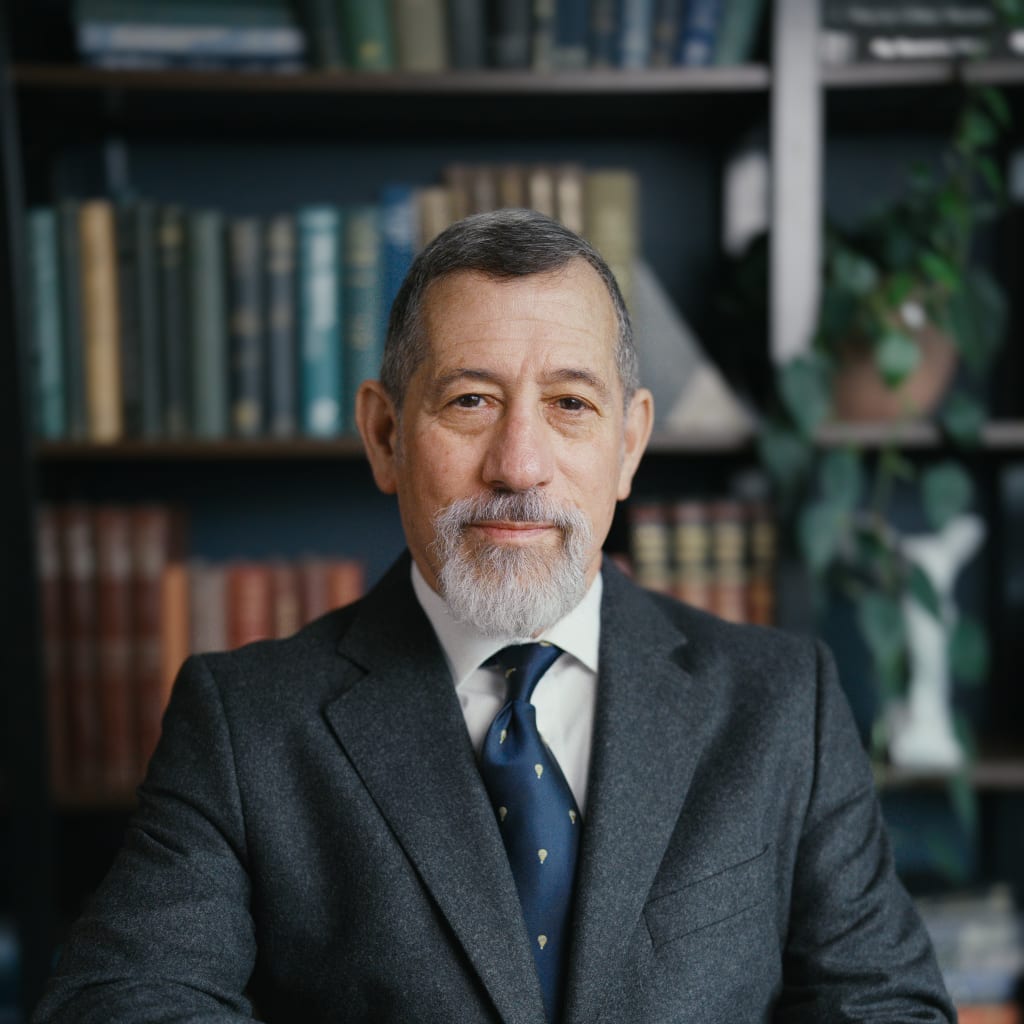 Bruce HoffmanCFR ExpertShelby Cullom and Kathryn W. Davis Senior Fellow for Counterterrorism and Homeland Security, Council on Foreign Relations
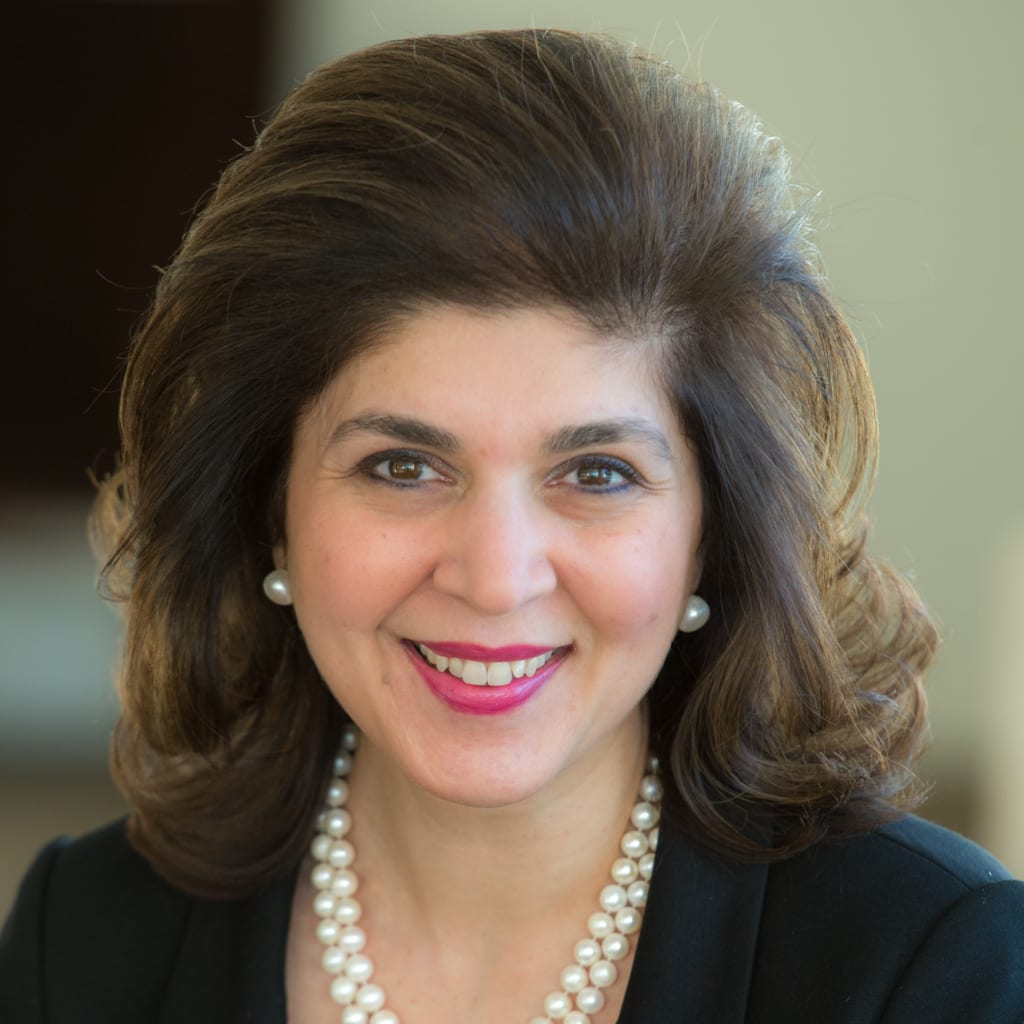 Farah PandithCFR ExpertSenior Fellow, Council on Foreign Relations
Twenty-five years since the 9/11 attacks, terrorism continues to shape global affairs and the ways societies remember its victims and interpret its consequences. Within this evolving landscape, memorial museums created in the aftermath of terrorist attacks have emerged as vital spaces for preserving memory, interpreting history, and confronting the enduring impact of these events on individuals and communities. Panelists examine how the role of these institutions has evolved and how they shape the ways societies live with the legacy of terrorism.
This meeting is part of the series, Twenty-Five Years Later: Reflections on 9/11 and the War on Terror, which examines how the legacy of the 9/11 attacks and the war on terrorism continues to shape U.S. foreign policy, domestic security, global affairs, defense strategy, and national security.
PANDITH: Good morning. My name is Farah Pandith. I’m a senior fellow at the Council on Foreign Relations. And, together with my colleague Bruce Hoffman, we’re delighted to welcome you to this special event today. It’s part of our series, “Twenty-Five Years Later: Reflections on 9/11 and the War on Terror,” which examines how the legacy of 9/11 attacks and the war on terror continues to shape U.S. foreign policy, domestic security, global affairs, defense strategy, and national security.
HOFFMAN: Hello, everyone. I’m Bruce Hoffman. And I’m the Shelby Cullom and Kathryn W. Davis senior fellow for counterterrorism and homeland security at the Council. We’re delighted that you could join us today for this very important meeting, the title of which is Memorial Museums and the Legacy of Terrorism. Today’s Council on Foreign Relations meeting is being held in partnership with the 9/11 Memorial and Museum and museum director and our old friend and colleague, Clifford Chanin.
I’d like to introduce our speakers. We have Lina Fahre, the director of the 22 of July Centre in Oslo, Norway. Elizabeth Pelsez, the director general of the forthcoming Museum Memorial of Terrorism in Paris. We also have Cliff Chanin, who I just introduced from the 9/11 Memorial and Museum in New York City. And we’re hoping that Kari Watkins, the president and CEO of the Oklahoma City National Memorial and Museum, will be able to join us. She’s been caught up with some legislative meetings in Oklahoma City, so we’re not entirely sure.
Let me begin—oh, before I begin, let me remind everyone that we have members of both the Council of Foreign Relations and the 9/11 Memorial & Museum joining us today. And I want to emphasize that, unlike many Council on Foreign Relations meetings, this one in fact is on the record.
So let me begin by turning to Cliff. The 9/11 Memorial & Museum, of course, just last month commemorated twenty-five years since the apocal 9/11 attacks of September 2001. Cliff, your fellow panelists and yourself lead memorials and museums across borders in different spaces with different processes for creation. Many of them were developed in response to different types of terrorist attacks, all tragic but still nonetheless unique. And also, you’re all at various stages of development and history of your centers. I wonder, Cliff, if you could walk us through the different museums and memorials gathered here today, and perhaps say a few words about how they differ, what the commonalities are, and how you’ve built a strong network with one another. And also, what the shared mission means given today’s geopolitical and foreign policy landscape.
CHANIN: Thank you, Bruce and Farah. I’m very appreciative of the ongoing relationship we’ve had and the friendships we’ve developed through these programs, and even much earlier. And I’m happy to be with everybody today.
It doesn’t take much detail. We recognize that the events that ultimately led to the creation of each of our museums are different. And so the commonality, though, is an assault on each of our societies by someone or some group which has a grievance that, in their mind, justifies the violence that they enacted. And so, we can talk about the commonalities. And, Bruce, you and Farah have delved in other programs into sort of the spread of violence across the extremes of left and right that somehow bring them closer together. And we’ve seen that, I think, in our conversations with the different causes of terror that we deal with. But it’s also true that the creation of our institutions represents a response by society to what has been done to them, and a statement by each of our societies that not only must these events be understood and remembered, but that, in fact, the creation of a memorial or a museum in response is a demonstration of the resilience of the society, and its commitment to go forward in spite of the assault that has been carried out.
And so we find, I think, great commonality in terms of what we have each dealt with in terms of the aftermath of these terrorist attacks within our societies. We are dealing with comparable phenomena. Most principally, and with the greatest sensitivity and difficulty at times, with the families of those affected by terrorist acts. There is a somewhat distinction between the Oslo Museum and ours here in New York, in that we are both focused on individual terrorist acts, although we program around broader issues. The French Museum in planning will span fifty years of terrorist attacks generated by different ideologies and different beliefs. But all of those activities bring us back to the aftermath of these events and the role that our museums play in commemorating, in educating, and in representing a forward view for each of our societies, despite the violence and despite the assault.
PANDITH: I am really grateful for that overview, Cliff. Thank you very much, because it helps to sort of ground us. I want to turn to Elizabeth, if I could, to ask you to talk a little bit about the Museum Memorial of Terrorism, which is forthcoming, as Cliff just said, with anticipated completion in 2031. It’s commemorating the attacks since 1974. I want, if you would be kind enough, to talk about the challenges that you’ve dealt with in developing this, and particularly because it’s covered decades. And how do you manage the tension between the different groups and ideologies? Thank you so much, Elizabeth.
PELSEZ: Thank you so much to have invited me. It’s a great honor for me to take part in this meeting.
And the question you raise is the main question we have to face, because as you said, we cover a long period of history. And we cover from the sixties to today. So we have to speak about different kinds of terrorism, even if we use the singular word “terrorism.” We have to deal with terrorism coming from the extreme far-right wing, from the left extreme wing, from jihadism, and from regionalist movements such as in Corsica or in Basque countries. So it’s a very difficult situation to speak about those different kinds of terrorism. But we try to say that terrorism is a modus operandi. And we try to define these different groups, but also to define their ideology and to relate always to the victims we have been—which have been generated.
So it’s a very long period, as you said, but it’s part of our history. And it’s also very interesting to note that at certain period of time, for instance during the eighties, there were movements of terrorism coming from the left wing and from the Hezbollah, for instance. So it means that at certain time in France there were different kinds of terrorism which were on our territory. So it’s a long, long period of time. And it’s difficult also because we don’t focus on one event. And it’s not an ended phenomenon. There are still terrorist attacks. And we have to deal with them until the museum will open in 2031 or 2032.
So it’s a real challenge. And we have to try to balance those different events because in France the memory of these events is focusing on the terrorist attacks which took place in 2015, the Bataclan, and, after, the Nice terrorist attack. So a lot of people don’t know anything about the ancient terrorist attacks. And we have to speak about them. And we have to evoke all consequences. And we don’t have to give too much importance to the terrorist attacks which took place in 2015. Otherwise, the museum will be only on these events, and it’s not our purpose.
PANDITH: Elizabeth, if you would permit me to just follow up with a question. As you’re designing the space, as you’re trying to be balanced about how you tell this story, are there particular things that you’re doing as you curate the museum to make sure that the things that you’ve just described take place?
PELSEZ: Yes. We try to collect items from all different terrorist attacks. So it means that we have to meet with victims who were affected by terrorist attacks in the sixties, in ‘74, in the eighties. And it’s also very difficult to get some items from these periods which are ancient. But we have a specificity. We work with the judiciary members and with the courts. And we get some exhibits from the courts, which can be also some tangible items, which will evoke all these terrorist attacks, even if they were in the past.
PANDITH: Thank you.
HOFFMAN: Lena, the 22 of July Centre opened its permanent national space just this past summer, but it was first established in 2015. Can you talk about the last decade of development, and also say something about the Norwegian Ministry of Education’s role in helping to shape the center?
FAHRE: Yes, Bruce, I can. And, first of all, thank you so much for inviting me. It’s a pleasure to be here. And I’m looking forward to this conversation. So thank you so much.
I would like to start in the beginning, in 2015, because in Norway, as you probably know, we had a right-wing extremist attack, both in the governmental quarter with a bomb and then the terrorist went to the island of a Labor youth organization, where he killed sixty-nine people on the political camp there. So in the early aftermath, this was a trauma for Norway. It hasn’t been that violent since the Second World War. So it came as a really huge surprise that we actually had a terrorist attack in Norway. And in the early aftermath, the national support group and the Labor youth organization tried to build a national memorial. And, of course, everyone who has worked with national memorials, they know it’s quite painful. It’s controversial. And it’s difficult to agree and get together in the first phase of trauma.
So the first suggestions were actually so controversial that they had to shut the program down. And because of that, the support group and the Labor youth organization wanted to have an information center in 2015. In the beginning, it was supposed to be there for three years, but when they opened the first exhibition in the governmental building where the bomb went off, people started to have a reaction of common grief and discussions. And the school pupils were coming every day, and also affected and bereaved after the terror attack, of course. So the governmental people, they saw that they couldn’t shut this down. So in 2017, they decided that we should build a national museum in Norway.
But it has been a very long journey before we could open this year. And it has been three different phases in a way, because the first phase of exhibitions were just based on the judgment text. And then after ten years, we had a huge change of narrative, because then the anger came out because in Norway it was a lot of rose marches, and focus on democracy, and that we should keep together. But in the tenth anniversary, people wanted, and especially the Labor youth organization, wanted to take part of the discussion. And from that point, we could actually talk through the truth about this terror attack, because we said that it was a political motivated attack against the Labor Party and the Labor youth organization. The terrorists wanted to kill the future of the party.
And that has been very, very important in Norway, that every political party is agreeing on this now. But it’s quite difficult to balance the discussions, because the political party is attacked and they’re at the same time running a country, and also with right-wing parties in Norway. So it’s a lot of discussions in Norway about that. But we are quite pleased of being part of the Ministry of Education and Research. They have taken over the center from 2019. And that’s when I started there. The best thing about this is, of course, the finance situation. They are 100 percent financing the project.
And it’s the government and it’s the state. Some people are angry about the state because of the first response and how they dealt with it. So I would say that the best thing about being a part of that is that we now in Norway have the 22nd of July as a part of the national curriculum. And all the pupils from fifteen years and upwards have to learn about this. And that’s why we do all these educational programs, and also we focus on educating the teachers so we can spread out.
But I would love to assure you that the international cooperation has been so important all this time. First of all, because the experiences and the huge effort in building the Oklahoma Museum and, of course, the 9/11 Memorial & Museum, which came to Norway in the early aftermath and has been a very, very important cooperation for us all the way until, of course, the opening this year.
PANDITH: Let me—oh, sorry, Bruce, go ahead.
HOFFMAN: No, jump in.
PANDITH: No, please. Please go—you go first.
HOFFMAN: I’d like to ask a follow-on question, clarification. Is the controversy mainly coming from the survivors and how they feel this needs to be commemorated and represented? Or am I hearing from you that there’s a politicization involved in this process, that’s inevitable because it was an attack on one political party, that really is the source of the controversy and the complications?
FAHRE: Yes. It’s a very good question. It’s actually both, because we know that, as you know from New York and Oklahoma and in France, that the victims are struggling years after the terror attack. So in one way the center is built to have a commemoration project. We have a lot of documentation projects. So it’s very important for the victims and the victims’ family. But since they are almost 2,000 members, it’s controversial between them. They are not always agreeing, although they are managing to keep in one organization. It’s a lot of discussions, because some of the victims are doing quite well, but others are not able to work, and there are some hardly injured. And some of the families has just started their process in healing. So it’s a lot of controversies there.
But also on the political side, because, as you know, the Labor Party is in charge in Norway now, but we have a right party, which is not a right-wing extremist party, but, as in the rest of Europe, the right-wing movements are increasing. So it’s starting now to have a huge balance in these political discussions as well.
PANDITH: What I was going to follow up on—and, Elizabeth, I’d love your thoughts on this as well—you mentioned the funding for your museum being 100 percent from the government, that this—which, as an American, it’s like, wow, that’s—we have that, but in a different—in a different format. I just wanted to make sure I had that fact correct.
FAHRE: Yes.
PANDITH: But, Elizabeth and Cliff, if you both would just, for our guests who are listening today, for those who don’t know, if we could just ask the same question of you. How do you get your funding to do the work that you do? Perhaps, Elizabeth, you could go first.
PELSEZ: Exactly like in Norway, the state is responsible for the funding, 100 percent.
PANDITH: And Cliff?
CHANIN: Well, it’s not the same here, as you know. There are moments where I’ve been quite jealous of both Lena and Elizabeth. On the other hand, you have to be careful what you wish for, because when there are hiccups in the process, when there’s only one source of funding or oversight then things really do stop and they get off track. Which, I admit fully, was part of our early development process, but we had multiple tracks to proceed on. So we are funded now largely by the revenue that we earn from ticket sales and other things that bring people to the museum. We did have a very successful fundraising campaign this year for the twenty-fifth anniversary.
And I do think, you know, our way of doing fundraising, and the tradition that we have in this country of donation and such, is not comparable to what France and Norway and Europe in general has. So we have benefited from that. And we do get some money from different levels of government. That has increased in recent years. We hope for it to increase further. But we are still, compared to most museums, heavily reliant on the gate and on generating the revenue that keeps the operation of the museum going, and also maintains this free site for visitors that is the memorial.
PANDITH: Cliff, I appreciate that. Kari is not with us so we are not talking about the Oklahoma Museum, but perhaps I could ask you the one of the questions I was going to ask her that’s related to this. Could you give us just a general overview of that museum and sort of the pieces of past, and how they came about building it, so we have a little bit of context for another American story? Because I want to connect it to funding as well for the Oklahoma, because I think it’s important as we’re having this conversation about the importance of museums and memory and why it matters, for the majority of this audience, that is American, we have another museum that we had hoped to be part of this today. So could you take a moment and just give us an overview, if you wouldn’t mind, Cliff? I’m sorry to put you on the spot.
CHANIN: No, of course. You know, the Oklahoma City bombing, which was motivated by an extreme right-wing nationalist group, very small group, Timothy McVeigh being the principal perpetrator, took 168 lives. And it was targeting a federal office building in Oklahoma City. And the memorial itself and the museum are on the site of where this occurred. I will say that Kari Watkins, who may join us or not, but has been the director of the project since the beginning, really was a pioneer in this. And, you know, the work that we’ve all done has built on those who went before us. And so Kari really has sort of made a huge contribution, not just in Oklahoma City, but to the general sense of how do you do this kind of thing.
And so they are active since the bombing, I think it was in 2000 or 2001, early in the year. I can’t remember when they opened. But they opened in a relatively short time, compared to us here in New York. (Laughs.) And they certainly raised a lot of money for that, and they still do. I think they get state support to a considerable degree, but I’m not really clear on the finances so I don’t want to speak too much into that.
But they too, as we all have, went through a kind of evolution in the process of how they tell the story. And I would refer to the Norwegian case as well. In both cases of Oklahoma City and in Norway, the initial representation of the perpetrator was extremely, extremely careful, in the sense that in the Norwegian case they didn’t even want to mention the name of the perpetrator in that first museum. Now, today, it is directly confronted. And, as Lena said, the first text panels in that first center were drawn entirely from the judicial proceedings. It was as if, you know, the makers of the museum did not want to be able to characterize anything. They were relying on the judicial system to do that for them. And that is not exactly the same as what happened in Oklahoma City, but it’s comparable.
The upshot of all of this is that in both cases in the current dispositions of the museum—and OKC has gone through a couple of renovations in the years it’s been operating—the role of the perpetrator is much more foregrounded than it once was, and there is a greater exploration of the ideology behind these attacks. In our case, we have not done a renovation of our main exhibition, but we certainly explore the who and why behind the attack. I think we probably give a little less space to that than people might anticipate, but it is pretty direct and, in some cases, has been controversial for us. Elizabeth hasn’t got a museum yet to actually present this, but they will have, and they’ve already had in terms of their internal debates, similar kinds of questions about dealing with the perpetrator.
PANDITH: Elizabeth, do you want to comment before Bruce asks his question?
PELSEZ: Yes. It’s a very interesting question, because some victims are against the heroization of perpetrators. Some of them want that nothing is said about perpetrators. Some others think that it is very important to put names and to know exactly who did what. We think that it is important to name the perpetrators. We have a very good example. In 2012, there was an awful terrorist attack which was committed in Toulouse and Montauban, which are two towns in the south of France, where Merah, Mohamed Merah, committed terrorist attack. And especially he killed three military people, but he also killed in a Jewish school three kids and a teacher. And we had a very close relationship with the grandfather of those—of two of the kids. And he always said, please don’t make about this man a hero. Don’t make a hero, but try to take into account that we must know who he was.
And it’s a challenge for a museum, because we know that there will be a lot of young pupils who will come. Some of them can be attracted by some personalization, some characters. And we must avoid this. But we also have to tell the truth. And we had a lot of discussions with Cliff, Lena, Kari, and our Spanish colleagues about the role that our museums will play now and in the future to tell the truth. Do I put a capital letter to truth? I can’t say. But we are in a period of time where fake news are very numerous. IA (sic; AI) can produce any sort of contents. We are in the reality of things because we have many, many historical sources through the items, through the testimonies. In France, we record all trials. All these historical sources make a narrative. And we perfectly know that people need to hear testimonies. They need to see real items. They need to understand what happens. And it’s our role. And we have to do it, especially for the young generations who are on screens, who are in a digital world. And it’s not a rule. It’s a mission.
HOFFMAN: You know, if I could go off script for a for a minute and add something, when I went to the Oklahoma City Museum what to me was so powerful about that is it really situates why the perpetrator—and I won’t honor him by naming him—but it really situates how he came to this decision. It has a copy of the Turner Diaries, which was this futuristic dystopian novel that was so central. And then it had a T-shirt he was wearing when he was arrested, something to the effect—I think it was Thomas Paine said, “The tree of liberty needs to periodically be watered with the blood of tyrants.” And you really understand why he perpetrated this horrific act. And that’s, I think, why these museums can be so important, in explaining the context that a lot of people, especially school children, will have forgotten, just because it’s so long ago.
But let me just—
PANDITH: Bruce?
HOFFMAN: Yes?
PANDITH: Just before you go off, can I put you on the spot for a moment? And, I’m sorry, this is totally off script. But, I mean, you’ve taught generations of students who are learning about these events. Why do museums matter to how they understand in the classroom? I’m really curious what you’re—what you’ve learned from these museums, and how it contributes to the education of the next generation.
HOFFMAN: Well, Elizabeth hit the nail on the head. There’s so much fake news and so many contending narratives—which is something Lena also talked about in how these things become politicized—that when you see the items, you can understand the context and you can situate exactly the chain of events that led to this. And we understand that terrorism doesn’t occur in a vacuum, that it reflects the tensions of society. But how extremists seize hold of these tensions and attempt to hijack them from itself. So I think it’s so important, not only for schoolchildren to have these museums and to see them, but I think it’s absolutely essential for government officials, and especially for law enforcement.
And I know the 9/11 Memorial & Museum has done an incredible job of bringing FBI agents, NYPD, other police officers in, and many elected officials. I mean, this is absolutely critical. So it’s not just the schoolchildren, or it’s not just students who may not even been born when these events occurred, but also those who are serving our societies and are keeping us safe from terrorism. It’s absolutely vital that they have this opportunity to see firsthand exactly what happened and understand it themselves, because that’s not going to be taught in academies.
CHANIN: You know one—
PANDITH: Sorry to put you on the spot, Bruce.
HOFFMAN: No, no, absolutely.
CHANIN: One of the odd things about the passage of time, and it’s twenty-five years since 9/11, is that the next generation includes adults. And, you know, when you—when you hit a certain age, that becomes surprising but inevitable. And, you know, you see, as Bruce said, you know, the young firefighters who are taking on the same roles that the 343 honored on 9/11, those young men and women need to know what their job could entail. And having spoken to—and it’s true of the police officers and the FBI agents and so on—we’ve spoken to so many of them over the years. And, you know, they come to the museum with a true sense of purpose. One of our FBI colleagues, in speaking to the FBI trainees, says: You need to find your “why” for doing the job you do. And we have understood over the years, we had to learn it, that coming to the museum is an important part for many of them of understanding their “why.” Now that is, as Bruce said, for the young people who are charged with protecting us, but it’s also for young schoolteachers, and so many others who play critical social functions, they are the next generation. And increasingly, they weren’t even born when 9/11 happened.
PELSEZ: Yeah, I could add two things. We often speak in France about two main directions of our project—resistance and resilience. And those places are exactly the place where we can speak about those two aspects. Resistance, it’s also to show that to fight against terrorism involves a lot of people in the society. And we have to speak about the role of the police forces, intelligence services, because they do a work which is very often in the shadow. And we have to explain to people how we can fight terrorism, how we can increase the cooperation between countries, and how they can be protected. So it’s also places where people can understand how the society tries—try to protect themselves.
FAHRE: Yes. Can I just add something as well? As you have been discussing now, the work against conspiracy theories is very important these days, also in Norway and all of our museums and institutions. And people tend to think that when time passes by, this conspiracy theories disappears. For instance, we have this example from the Holocaust. But it’s actually the opposite in Norway. That it’s starting now, fifteen years after, with all these conspiracy theories that it was more perpetrators, that the Labor Party did it to themselves, when we have people asking when should you tell the true story about this. So I think to show artifacts and be very, very strict to knowledge what we are presenting, and also combined that we are talking the truth and mention the perpetrator’s name, is very important.
Not because he is going to be a hero, but to try to identify ideas which can be similar, and we can maybe try to prevent further attacks. That’s sort of a goal. And I think in Norway we wouldn’t have had so much attention to the perpetrator in 2019 if it hadn’t been for Christchurch, the attack there. It was actually inspired from Breivik. And then we got attack on the mosque in Oslo. We actually have two right-wing extremist attacks in Norway. And of course, we have seen, unfortunately, that Breivik had inspired, for instance, the attack in Buffalo. So this continues. So that’s why we have to talk about this. This isn’t some monster who came out of nowhere. It’s actually how we can try to identify these dangerous thoughts and the willingness of violence. So that’s one of the reasons we are talking about the perpetrator in our exhibitions.
PANDITH: We are incredibly—I was just going to say, we are just so incredibly grateful for the work that you all do, and your colleagues who aren’t on this—on this call, because of the things you just outlined. You know, the multiple levels of impact that the museums have. It’s just—it’s so important, the work that you’re doing.
Bruce, I didn’t mean to interrupt you. I know that we’re going to be questions in a couple of minutes, but I know that you had one other question you wanted to ask, maybe, before we turn to questions.
HOFFMAN: Well, I was just about to say, Lena actually answered the question. It was about the mission of the 22 of July Center, never again starts with understanding. And, Lena, you just provided the perfect response to that. So maybe should we turn to questions? Or, Farah, did you have any left?
PANDITH: Sure. I think, Cliff, I may come back to you during the Q&A to go a little bit deeper, because I am interested in a couple of aspects of the 9/11 Museum that we didn’t touch. But because we have several people on the call that I know want to ask questions, perhaps we turn it to Olivia to remind our participants how to ask a question. I also want to remind you that you’re on the record. And I’ll turn it over to Olivia now.
OPERATOR: Yes. We’ll take the next—the first question from Dr. Sherwood-Randall.
Q: Good morning. Can you hear me? Or good afternoon.
PANDITH: Yes. Hi, Elizabeth. Please introduce yourself, for those who don’t know who you are, which I can’t imagine they don’t. But, please.
Q: Yes. I’m Liz Sherwood-Randall. And I was the homeland security advisor to the president from 2021 to 2025. And I have huge admiration and appreciation for what these institutions are doing.
And I wanted to pick up on the conversation about this challenge of deciding how to represent the perpetrators in the aftermath, and describe what we felt, what we faced, and what we encountered in dealing with the growing threat presented by young violent nihilist extremists. And we discerned from the data, importantly, that the immediate aftermath of a violent act can create mobilization and incitement to further violence by other young people, and that it was hugely impacted by press coverage about the individual, and by the way in which online viralization of the incident, including livestreaming by the perpetrator, would then create the impetus for others to copycat, to replicate what they were doing. And so we worked with a not-for-profit on the promulgation of a protocol that enabled us to quickly alert the social media companies about the imperative of shutting down any livestreaming or promulgation of the act, and the celebration of the individual or individuals who perpetrated them.
And we now see, if you look at the 2026 Global Terrorism Index, a very good piece on this rising nihilistic violent extremist ecosystem. I recommend that to you if you haven’t seen the article. And my question to you is—each, in your own context—is how can we use what you are doing to address this growing challenge? So the specificity of your responses has been about what we do in the creation in the museum of the identity, the explication of the motivation, and who these individuals are. But more generally, what more can this community that cares about countering violent extremism do to address this youth mobilization, and the use of online chatrooms and encrypted communications, to meet younger and younger people where they are and persuade them this is the way to define their lives? Thank you.
PANDITH: Who would like to answer that first? Lena, please.
FAHRE: Yes. Thank you so much for this interesting and very important question. This is a huge debate in Norway. And I would like to say that we have really experienced, unfortunately, a rise of extremist talks and point of views the last year, maybe the last two, three years. And I think it’s because the more extremist political sort of statements is in the internet now. So the problem is how to balance this. And what we did in Norway, we just thought that if we are not telling the truth about the perpetrators, it will—it will be a lot of information, false information, on the internet anyway. So what we tried to do regarding the next question I had, that we made an exhibition, the first one in Norway, about radicalization online and especially the TikTok culture, with all this humor, this dog whistles, this rabbit holes that young and vulnerable boys, especially, can be dragged into. And we are cooperating with the intelligence service in Norway to try to understand what’s going on in the extremist commission in Norway.
So we try to tell the truth about what’s happening in this TikTok culture, and try to provide false news. And it was a shock for a lot of visitors in my generation that they actually didn’t understand that your feed is different from your thirteen-year-old son, because the algorithms is so important to understand now. So we made this exhibition about radicalization online and how we can define early radicalized persons, and what to do about it. And the fifteen-year-old pupils who are coming to our museum every day, they are totally agreeing this is their reality now. But for my generation, it’s very, very difficult to understand this. So that’s why we call it, never again starts with understanding. We have to understand how the youth are exposed to all these algorithms and false news. So that’s why we’re trying to focus on that in our exhibition and educational programs, to understand this. Thank you.
PANDITH: Elizabeth or Cliff, do either one of you want to comment on this?
PELSEZ: Well, for us, it’s also a very important question. And I should say that, because we deal with a long period of time, it’s interesting to show how things have evolved throughout the years. Because if you take the example of left wing, extreme wing, Action Directe, which was a very active terrorist movement in the seventies, eighties, the way the young people became radicalized—and when I say young people, I speak about young adults—is completely different if you compare with the way young people today are getting radicalized. And it’s a way to show the visitors that the danger has increased because it’s quicker. Very often, it’s without names. People don’t give their identity. And there are some different types of digital, social media, TikTok, and so on. And it’s to make the visitor aware of the danger for very, very young people. And in France, the young guys who are only thirteen or fourteen are committing terrorist attacks now. So some people are not aware of it. And the exhibition will show some different examples of radicalization and the consequences.
PANDITH: Thanks, Elizabeth. Cliff.
CHANIN: Yeah, I would only add—I would only add, and it’s very striking from what Liz said, you know, it seems to me we are living on a different planet from this generation that is in this hermetically sealed world that we of a certain age do not understand, and don’t even know how to get there. So, you know, it’s troubling to think that the museums that we represent—which have enormous outreach and impact. I mean we do an annual anniversary program, an education program online, and we had a million and a half students take part in it this year. And so it’s not as if we are restraining ourselves or not trying to work outside the walls of the museum. But we work with a lot of teachers who are on the frontlines of this in the classrooms. And, you know, you hear their stories of what they’re confronting and how they are dealing with, essentially, the network of lies that propagates itself in relation to these young kids. And it’s a serious problem that we are very clear in terms of what, I think, anyway, from our experience here, has an impact.
Whether it can penetrate those other worlds, I’m not sure, but—and it’s been alluded to by my colleagues—the first person accounts, the story that someone tells of he or she in the moment of the terrorist attack, and the transformational impact that this has had on their lives, we see every day the impact of these stories on young people in the museum, in our online programs, and through teachers in the classrooms. So, you know, but my question is, are we intersecting with the world that’s been described to us? Or are we working along a kind of parallel track where what we do is what we do, and what they do is what they do? And how do we get across from one lane to the other to try to figure out how these very impactful efforts—and I can speak to the French and the Norwegian and Oklahoma City as well. They do a program of conversations among young people that is an ongoing part of their work that is just taking on these kinds of questions. But, you know, are the tracks inevitably going to be parallel? Or is there a way for us to cross over into that other realm?
PANDITH: Before we go to the—go to the next question, I just want to remind the audience that, in fact, the European context around the Digital Service Act, compared to where we are in the United States, the consciousness and the awareness of populations in Europe about technology companies, is in a very different place than the American audience. So I just—everybody knows this. I just want to remind us that that is a reality that we are facing.
Olivia, I’ll go to you. I know we have a lot of people on the queue.
OPERATOR: We’ll take the next question from Jeffrey Toobin.
Q: Hi. I’m sorry that Kari isn’t on this call. I wrote a book about the Oklahoma City bombing. And I spent a lot of time at the museum, including with the oral histories. And I think that’s just a point worth adding, that those are tremendous resources, along with the physical exhibits. We also were allowed to use some of it for a podcast that went with my book. And I just think oral histories are very useful.
But my question is really about the passage of time in these museums, because at one level you are introducing new—you know, people who have no actual memory of these events. But also, you want to have people coming back. And how do you keep the exhibits fresh and interesting to people who have—you know, have seen them before? This is—it’s a related problem at presidential museums, I’ve found, that they quickly seem very stale and out of date. And I wonder how you think about museums about discrete events over time.
PANDITH: Great question. Who would like to jump in?
CHANIN: Well, let me—I’ll start, if I could. So the challenge of keeping things fresh can’t just be posed to museum exhibitions, which are extremely expensive to mount, take a long time to develop, and once you get them up you are invested in that narrative at least telling its story for some reasonable, let’s say, amount of time. So we opened our museum in 2014. So that’s twelve and a half years now. And the main historical exhibition, while it’s had certain tweaks along the way, has not changed. At some point, we will take another look at that and figure out what needs to be altered in it. But the one thing that we have done is add new elements to the story in what are essentially nonconventional exhibition spaces within the confines of the museum. I’m not talking about the online stuff and all that, because that’s infinitely expandable. And we do a lot of work online with exhibitions and such.
But one of the stories that we did not do justice to in the initial version of the museum was the story of the health impacts of the toxic dust that was created with the—(inaudible). And we heard about this from the affected communities. We have worked closely with them over the years. And it was three years ago or so that we added—in an area of the museum that had never been programmed for an exhibition—we added a small exhibition that tells that story. Now, if we had a full gallery and so on and so forth, we would do more. We will eventually do more. But in that context, we were really able to address the core elements of that story, and it’s, I would say, a relatively text-heavy installation in the museum, compared to some other things. And I’ve been thrilled and impressed by the amount of time that our visitors are willing to spend reading the text panels and getting the full story.
People may know but I will just repeat for those who don’t, more people have died since 9/11 from these toxic exposures than died on the day itself. And the numbers in the first responder communities are absolutely astounding. So, 343 firefighters on the day, more than 600 firefighters—active duty and retired members who came out of retirement to work after 9/11—more than 600 have died since from toxic exposures. The police department, NYPD, lost twenty-three members on the day. More than 500 have died since. So this reflects the ongoing narrative, the sort of longitudinal terrorism, that faces the impact of that event. We’ve added military stories into this, in a very small scale but nonetheless. Obviously, the wars on terror, which are the focus of much of what Bruce and Farah have done over the last year, obviously a related story. We are now looking at the transformation of one gallery space into a place that we will be able to use for more storytelling, including military stories.
And then we do programs. I mean, we have a very active set of public programs. Bruce and Farr have both been numerous times in the museum for these programs, including wide-ranging programming. And that is another way to keep up with the transformation of the story.
PANDITH: Elizabeth or Lena, do you want?
FAHRE: Yes.
PELSEZ: Maybe I can—oh, Lena. Lena, go on.
FAHRE: Yeah, maybe I can comment on that, because that was actually some something we really considered when we should build this new center, because we have and own space for temporary exhibitions. So we have this main exhibition, who are artifacts and, sort of, the knowledge about this terror attack, but then we have saved some space for temporary exhibitions. And every year we have a new project, so we can have people coming back to the museum and have different perspectives. And when we are planning new exhibitions, we’re actually organizing a user service, so we know kind of what people are interested in and how we can use that information to build new exhibitions. And it’s also important, as a museum director, to save some money in a project to do the second phase of an exhibition. So what I did when we have opened this exhibition now, I said that one-third of the budget is not going to be spent the same year, but with the year after, after we have some reactions to it.
And the last thing I would add is that we need ambassadors for the exhibition, people who are interested in this. And also some critical voices, actually, because if we don’t have the opportunity to make discussions about what we are presenting, it’s not really a success. We need discussions to progress and find new solutions. Thank you.
PANDITH: Elizabeth, you wanted to say something.
PELSEZ: Yes, because there is something which is always said with my team, if we open the museum on the 5th of January 2032, and if there is a major attack which occurs on the fourth, the day before, will we speak about it in the museum? And we have planned to have a special room, and we call it Salle d’Actualité. It means it will deal with the most recent terrorist attacks. It’s a challenge, because we don’t know exactly how we will speak about them. But it’s our goal. And we will try to establish partnerships with different types of institutions to deliver something which is different from internet, something which comes from the museum, and which is the analysis made by the museum. It’s difficult, but I think our institutions have to stick on the reality.
CHANIN: Can I add one thing as well? And the question of repeat visitation is a significant one for all museums, like—all museums in general, but ours in particular, I think. But there’s a real distinction in terms of the visitor to our kinds of museum, than an art or a natural history museum, or perhaps even a presidential library. Certainly, in our case, and I think, Lena, this is going to be true for you as well, the visitor needs to be committed to the visit in a way that’s not necessarily the case for another kind of museum. There is an emotional threshold that some people need help crossing, but that visitors will cross. And they understand they’re going to cross that emotional threshold in coming to our museum.
Now, most of our visitors tell us that it’s an extremely enriching experience for them to cross that threshold. There are people who won’t do it. And you can understand that. But, you know, there’s a real difference between being sad and being moved. And people come to our place with a certain expectation, I think, that maybe it’s sad, but overwhelmingly—and there is certainly sadness in the stories that we tell—but overwhelmingly it is a deeply moving experience for our visitors. And that is a very, very different dimension to the visit. And I’m not trying to disparage art museums, which in their own way are very moving. But the emotional impact of this is so much broader and deeper and, I want to say, impactful on people than they anticipate themselves. And so we do get some—we get people who come five, six times, because they so feel connected to that kind of experience. But there’s an element in coming to our museum that is very different. And our visitors are very conscious of what that is when they make the plan to come see us.
PANDITH: Thank you very much.
Olivia, we could go to the next question, if you would.
OPERATOR: Yes. We’ll take the next question from Amina Tirana.
Q: Hi. Thank you so much. My name is Amina Tirana. I teach at New York University. I’m also a documentary photographer.
And I really would like to thank you for this rich discussion, especially on the balance of needs of memory and mourning culture and history over time. But what I’d love to ask for your perspective is on—for memorials beyond terrorism specifically, and any lessons. So in particular, how do memorials respond to the desire for quick recognition, right, especially when the needs and perceptions may evolve, as you’ve so eloquently discussed? And also, Elizabeth talked a little bit about this, when the underlying event or issue is still ongoing. You know, do you rush to build a physical place or permanent approach right away? Thank you so much.
PANDITH: It’s a great question. Elizabeth, do you want to start?
PELSEZ: Well, I didn’t understand exactly if you mean how memorials are built.
PANDITH: I think the question had to do with sort of what happens beyond a museum on terror. Like, how you think about memory. If Amina wants to come back in and explain, perhaps we can—yeah, there we go.
Q: Farah, you got it exactly. So moving beyond terrorism specifically, but for memorials. Thank you.
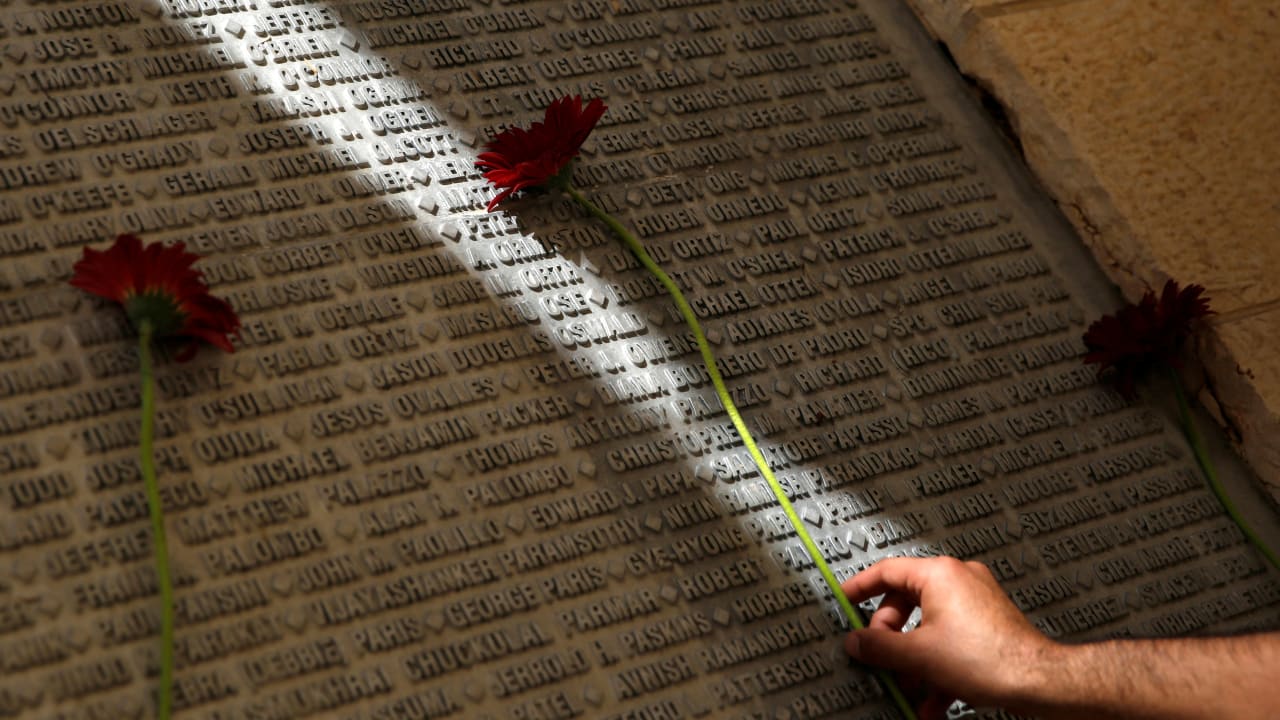
PELSEZ: Yeah. The way we thought about our memorial is the place where there will be the names of the people who died on the French territory, whatever their nationality is, since 1974, and the French victims abroad. We have about 1,000 names. And we will try to obtain from the families photos, some words about the people who died, and their consent for the names to be written in the place where the memorial will be. It’s very important to know that our places combine a museum and a memorial. So it means it’s a place of knowledge, knowledge which is the museum, and a place of other knowledge, which is the memorial. And those two aspects of our memorial and museums are not so common in the world.
Very often, you have plenty of memorials all over the world for all sorts of events. But combining those two aspects, a memorial where you learn, you know what you are speaking about, and a memorial which pays tribute to victims, it’s very important. The link between the two institutions, between brackets, memorial and museum, has to be thought very carefully. And we got inspiration from the Norway institution, from New York, from Oklahoma, from Spain, because it means that when a visitor comes to the museum, he must try to think about the memorial, but he’s not obliged to go. Some people will only go to the memorial. Some will go to the memorial and the museum. But it’s a way also to try to associate the victims to the conception of the whole institution, both the museum through their testimonies, their donations, and the memorial, where the names will be written.
PANDITH: Great. Do either one of you want to comment on that piece about memory and a memorial beyond terrorism?
FAHRE: I can just add in. Elizabeth explained it very, very good, I would say. But I think it’s quite interesting with the processes of a memorial, it’s just—it’s very important. It’s not just the memorial itself, but it’s the process to build a memorial. And in Norway, we have seen, as many other places, that the first reaction when something this brutal happens is to tear things down, to make things disappear, especially maybe the buildings who are affected by a terrorist attack. So in Utøya, the island of Utøya, it was a huge discussion how they should do this memorial project. And we’re very thankful for Cliff and all the others who actually managed to keep the building there, and sort of build a memorial area and a memorial building around the rooms where you can see where the guns were shooting, and so on.
So I think it’s a struggle always that some people don’t want memorials. They don’t want to be affected by it again. But other one thinks it’s very, very important to raise some monuments to help them grieve, and for us as a society. But it’s not very easy to build memorials in Norway.
PANDITH: Cliff, did you want to comment on this?
CHANIN: Yeah. I would just add that it’s very striking to me how widespread the expectation that a memorial should be built for something, how that has grown over the years. And it really is part—the story of our memorial and museum is a reflection of that, but the public expectation that there’s going to be a memorial, and obviously there are all of these spontaneous memorials that are, you know, put out in the streets by people as soon as something happens. But the expectation that there’s going to be a memorial, that that is the right way to respond, I think, you know, fifty or 100 years ago—I though there are war memorials, we certainly know that—but I think the expectation has really democratized, I guess you might say.
The first proposal for a memorial—so Philippe de Montebello was the director of the Met in 2001. By the end of September, before the end of September 2001, he’d written an op-ed in the Times about this should be the memorial. And what he what he proposed was that shard of the facade of the building that was sort of leaning sideways, that was one of the sort of iconic images of the aftermath of 9/11, he said, that should be the memorial. Now, the thing weighed 100 tons, or whatever it weighed, and it wasn’t particularly practical. But the point is, this was already popular and widespread, but also, at sort of the elite cultural levels, the expectation was this needs to be memorialized.
PANDITH: I think we have one—we can fit in one more question before we end. Olivia, if you wouldn’t mind.
OPERATOR: Yes. We’ll take the last question from Sewell Chan.
Q: Hi. Thank you. I’m Sewell Chan. I’m a journalist who helped cover the Paris and Nice terrorist attacks in 2015 and ’16. Thanks for a great panel.
I’m curious about what impact the legacy of Holocaust and Shoah memorials has had for your institutions, maybe particularly for Elizabeth and Cliff. And I’m also interested in the question of, to what extent should museums attempt to address the broader legacies of violence by the state? So obviously, in all the museums discussed here, we’re talking about terrorist actors, private actors. But there is a context of involvement of countries in warfare. Certainly, in the case of the Holocaust, the legacies of state mobilization of violence. And how do we address that in the context of these memorials? Thank you.
FAHRE: Cliff, you answer first. (Laughs.)
CHANIN: No, no. Go ahead. Go ahead. All right. So, well, ours is a very specific event. So the question of state violence figures in different ways. As you well know, Sewell, the current lawsuit involving the Saudi government is, in fact, based on a claim by the family groups that there was a state role in the 9/11 attacks. And that’s being adjudicated now. And as that evolves, and as the information emerges, that may well change aspects of the narrative in general, in terms of what the museum is doing.
The question about Holocaust museums is a very interesting one. We certainly—and Alice Greenwald, who was our first director, came from the Holocaust Museum. And that model was clearly, you know, something that we could refer to. But on the other hand, I’m not sure the model completely transfers into the context of museums based on terror attacks, for exactly the reason that you outline there. You know, the state violence of the Holocaust was directed against not just civilians but citizens of the very state. And that is a very, very different model from the story we are telling, where a state is attacked but a state, for better or worse in different ways, comes to the defense of its own citizens. And so that sort of is an element of a disconnect between the two models.
But I will say, the Holocaust Museum reliance on the testimony of victims or bystanders, or in some cases even perpetrators—the reliance on these first-person accounts, again, a kind of democratization of the narrative, if you will, that is something that is a throughline to what we did here, certainly in Oklahoma City, and in the other examples that are represented on the panel. So I think it’s a little tricky in terms of, you know, the perfect symmetry between the two. But in terms of the idea of individual civilians being targeted simply because of their status, whatever it is, as civilian, that is a follow line through these different events that we’re talking.
PANDITH: Elizabeth, or Lena?
PELSEZ: Yes. I totally agree with what Cliff said. And the director of the Shoah Memorial in Paris is a member of our institution. He inspired us for two things. The first one, to collect testimonies, as Cliff said. The second one is the way they collect items. It was so interesting to understand when we met with Jacques Fredj, who is the director, that he said to us: Be patient with victims. They have their whole life in front of them to come to you. It was one of the main lessons I got from him. It means that if we create a memorial, a museum, we need artifacts. We need items. Most of those items could come from the victims. We have to give them the time to make donations. It’s a question of respect. It’s a question of an understanding what they have suffered. It’s a question of trust. And that’s the only parallel that I could make in building such places, one dedicated to the Holocaust, another one dedicated to terrorism.
And to answer the question about the state role, I would say that, for me, in the French project, there are two answers. Some states had a specific role in terrorism. In France, we will speak about Iran and Libya. And we will give very specific examples of terrorist attacks for which we have very interesting items, evidence courts too. And the second thing is something we didn’t speak about, is to mention also the failure of the state in some inquiries to prevent some terrorist attacks, when they got some information from the intelligence services. And we will speak about that, because we have recorded the trials. And the journalist said that he covered the terrorist attacks in Paris in 2015 and in the Nice attack. And those two trials were registered. And there were a lot of moments during the trials where these—the role of the state was evoked.
PANDITH: Lena, did you have anything you wanted to say? We have about a minute left.
FAHRE: Thank you. It’s the same situation in in Norway. We are cooperating together with the Holocaust Museum in Oslo, and they have learned so much to us about the oral history, how we can document the witnesses projects, and also how to build an exhibition on these very, very painful issues, actually, and painful part of our history. So it’s—we are very thankful for them. And in Norway, we also—as you might know, we had the first extreme Islamist terror attack in—three years ago. So how the state should cope with this story, and also the Holocaust narratives and story, it’s a huge discussion in Norway. But I think we need to focus on how we can cooperate and use the witnesses as a huge resource for the futures, especially the young students.
PANDITH: We’re at time. And I’m going to turn it over to Bruce to close us out. But I just want to acknowledge the fact that Alice Greenwald is in fact participating on this call. And, Alice, if I could just give you the mic for a minute, if you wanted to say anything about this. You were an extraordinary leader. And you’re a friend. And I want to honor you with an opportunity to say something on this important question.
Q: Thank you, Farah. I really appreciate that. And, hello, Bruce. (Laughs.) And, hello, everyone on the panel.
You know, I have so many thoughts in response to these really excellent questions. And I guess the biggest one for me comes down to, you know, in the end we can present this information, and it has many purposes. Memorial museums have many purposes. They provide clarity and a catharsis for the people who went through the events. They educate the next generation about what happened. They give us access to the human reality of terrorism, that it is not something that hits a country—obviously a country is a target of attack—but it hits real human beings with families, and lives, and aspirations, and all of those things. And because of that, I think they are incredibly resonant because each of us looks at the people who were victims of these terrible events, and we see ourselves in the story.
That alone should mobilize people toward resistance, as Elizabeth said earlier. But I’m not sure. I’m not sure. And I have been a practitioner of memorial museums for a very long time. I am not sure it works. I mean, I go back to Elie Wiesel chastising President Clinton the day the memorial, the Holocaust Museum, opened. And said, I can’t sleep at night because of what’s going on in Bosnia. So I think the question for us—so never again was never, OK? And that was sort of the point. If never again is never, how do we use these incredibly powerful narratives, these incredibly powerful locations and experiences, to mobilize a broad human response that says, this is unacceptable? How do we get there? And I think that’s the question that we’re all struggling with. And it’s actually the motivation for the work we do.
PANDITH: Alice, thank you so much. And appreciate you coming in on the spot. It’s very kind of you. I’m going to turn it over to Bruce to close us out.
HOFFMAN: Well, thank you, Alice, too, for an excellent closure to this session. This has been an immensely rich and fascinating discussion. We’re very much in your debt, Elizabeth, Lena, and especially Cliff. This was actually Cliff’s idea, so we’re so glad that you suggested it. This has really been one of the most important sessions that we’ve had this year.
I’d be remiss as well not to thank Dahlia Azran, your colleague at the 9/11 Memorial & Museum, and Farah and my colleagues at CFR, Meghan Rahill, Robert Michaels, Ezra Hess, Marley—I’m sorry—Molly Carlough, and especially the terrific Olivia Morrison, who shepherded us through this entire process. And lastly, let me thank the audience, both Council members and supporters and friends of the 9/11 Memorial & Museum, for taking time today to share in this discussion. So, thank you, Cliff, Elizabeth, and Lena, again, and thank you to everyone for attending.
PELSEZ: Thank you to you.
FAHRE: Thank you.
(END)
This is an uncorrected transcript.