Media Briefing: Previewing the NATO Summit
Event date
Speakers
 Liana FixCFR ExpertSenior Fellow for Europe, Council on Foreign Relations
 Charles A. KupchanCFR ExpertSenior Fellow, Council on Foreign Relations; CFR Member
 Stephen SestanovichCFR ExpertGeorge F. Kennan Senior Fellow for Russian and Eurasian Studies, Council on Foreign Relations; CFR Member
Presider
 Rebecca LissnerCFR ExpertSenior Fellow for U.S. Foreign Policy and Director of the Future of American Strategy Initiative, Council on Foreign Relations
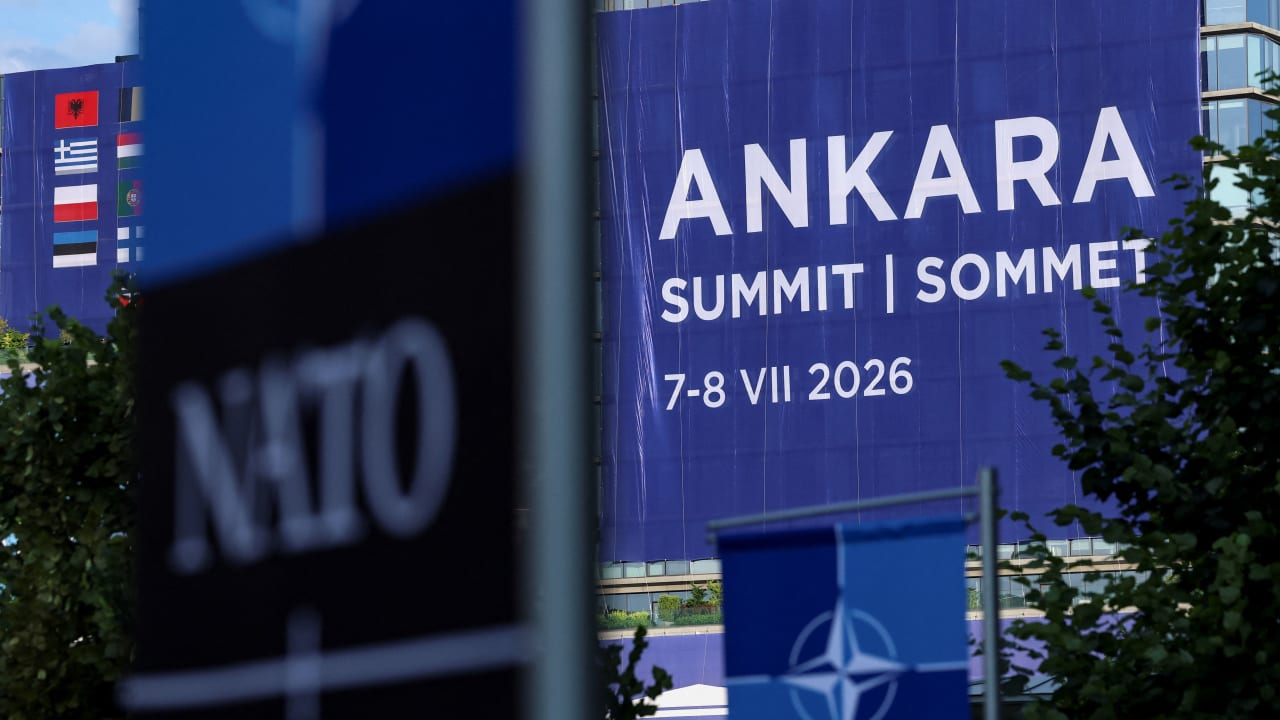
CFR experts will preview the upcoming NATO Summit taking place in Ankara, Turkey, on July 7–8.
Read “In Ankara, Europe Faces an Accelerating U.S. Decoupling From NATO” by CFR expert Liana Fix.
CHANG: Hello, everyone. My name is Ben Chang, and I’m the VP of global communications here at the Council on Foreign Relations. Welcome to today’s—welcome to today’s CFR briefing on the upcoming NATO summit, featuring four CFR experts who will preview what may take place as eyes pivot from the pitches of the World Cup to the meeting rooms in Ankara. The contents of the discussion and Q&A will be on the record, and a recording of this will be posted online at the conclusion of the briefing.
This briefing is part of the Council’s ongoing mission to inform U.S. engagement in the world, work that also includes the analysis and resources posted across our channels including on ForeignAffairs.com and CFR.org—such as the recent piece by Liana Fix in Ankara, “Europe Faces an Accelerating U.S. Decoupling from NATO.” Thanks very much to all of you for joining, and to our speakers.
Let me now hand off to Rebecca Lissner, senior fellow for U.S. foreign policy and director of the Future of American Strategy Initiative. Over to you, Rebecca.
LISSNER: Terrific. Thank you, Ben. And thanks to all of you for joining us today. It looks like a terrific group, lots of interest in the NATO summit. Of course, President Trump heads off to Ankara tonight for the NATO summit. And he set the stage over the past week or so with a slew of Truth Social posts, including one on Thursday that said, “It’s ridiculous for the USA to continue along this one-sided path when the relationship is not reciprocal. They were not there for us!!!” with reference to America’s NATO allies, and a chart posted below with some alleged tallies of defense spending numbers. So that’s a bit of a preview of where the president’s head might be going into the summit.
And it’s, of course, been a really tumultuous year for the NATO alliance. I think last year when NATO leaders met at The Hague, many allies, many trans-Atlanticists breathed a sigh of relief when the summit proceeded without a blow up. President Trump seemed pacified by the new 5 percent, or 3 ½ plus 1 ½ percent of GDP defense spending target. But that reprieve proved short-lived. And the months that followed really saw one crisis after another for the alliance.
Most recently, the harsh criticism coming out of Washington for Europe’s lack of support for the war with Iran. We saw President Trump’s threats against Greenland earlier this year. Late last year, a National Security Strategy that was stridently critical of Europe, and followed by a National Defense Strategy that took a similar tone. And there, of course, been several flurries, none recently, but over the past year of pro-Russia diplomacy in the administration’s spasmodic effort to end the war in Ukraine. All of that then also comes on top of the announcements of some U.S. troop withdrawals from Europe and Secretary Hegseth’s launch last month of a six-month further review of U.S. troop presence in Europe.
So I think, looking ahead, this week’s summit is going to probe whether NATO Secretary General Mark Rutte’s visit to the White House last week and the alliance’s overarching progress towards meeting President Trump’s demands are sufficient to secure a harmonious summit in Turkey. And we have to remember that there are a lot of tough issues that remain outstanding. We’ll talk about these on the call today. We’ve seen uneven progress towards the 5 percent of GDP defense spending target—most notably with the U.K. and France lagging behind, critical NATO allies.
We’ve seen bottlenecks in industrial production in Europe, as Europe attempts to ramp up its defense industrial base. There are, of course, ongoing tensions over the EU’s buy European requirements versus the Trump administration’s preference for buy American. And the war in Ukraine, which is ongoing—and we’ll talk about this—in many ways has turned in Ukraine’s favor recently, but has also seen some real intensification and escalation, in particular Russia’s recent strike campaign against Kyiv.
So I think against this whole backdrop we have to take stock of the fate of the alliance. I think you’ll hear a variety of views about the overall health of NATO. I personally have argued in a piece a few months ago in Foreign Policy, and I know that colleagues will disagree on this, that regardless of what happens this week NATO has already become a zombie alliance. Yes, leaders will meet in Ankara, officials do their jobs in Brussels every day, militaries exercise together.
But fundamentally, the life force of NATO has always been a U.S. security guarantee backed by U.S. extended nuclear deterrence. And frankly today, for me, it’s hard to see President Trump fulfilling that guarantee and electing to send U.S. servicemembers to fight to defend NATO against Russian aggression. And if that’s the case, then no matter what happens this week, whether the press conference goes well or poorly, NATO is in serious trouble. Perhaps not terminally dead, but also very much not alive and well.
So to discuss all of this on our call today we have our great CFR team—Liana Fix, who’s senior fellow for Europe here at CFR; Charlie Kupchan, senior fellow at CFR and professor at Georgetown; and Stephen Sestanovich, the George Kennan senior fellow for Russian and Eurasian studies at CFR and professor emeritus at Columbia.
So I thought we could just start the conversation pretty broad. I’ll moderate for the first forty-five minutes or so, but those on the call should feel free to raise their hands if you have questions and we will go to you and try to get through as many of those as we can.
But just to begin to frame out this conversation I’ll go to each of the participants here and just ask: What do each of you expect to be the key outcomes of the summit this week in Ankara? What are you expecting to see? What are you tracking? And I’ll go to Liana first to kick us off.
FIX: Thanks so much, Rebecca.
I think one issue to watch at the Ankara summit is, first of all, that the gap between what is being said in public by European leaders and NATO leaders and how the reality looks like is even wider than it has been at the Hague summit. And that’s important to note, because right now European security lives in two different realities. We have almost two parallel worlds. In one world, there’s a commitment to a NATO 3.0, towards more burden sharing among the alliances, where European leaders will say we spend more, we contribute more, this will end up in a stronger alliance. And there’s the other world, where European leaders are actually very concerned about the U.S. commitment to Europe and advancing plan Bs for their own security, in case the United States does not come to their help. These are the two parallel worlds that European leaders are living in right now.
In terms of the concrete outcomes of the summit, the best-case outcome for European security and for NATO would be a very clear roadmap that Americans and Europeans agree on which capabilities the United States is going to withdraw from Europe and when and how Europeans are going to fill this in. It is unfortunately not very likely that it will happen because of the announcements of the past weeks. Because we’ve seen that the United States has decided to go ahead unilaterally, even if that creates significant strategic gaps for the Europeans that they cannot fill easily and will not be able to fill easily.
So the perhaps more realistic outcome for the Europeans would be that the United States commits to fill crucial gaps that the Europeans cannot fill themselves, and that is particularly the air defense sector. Both for Ukraine but also for Europeans, the question of air defense and of Patriot interceptors, the possibility of coproducing those in Europe instead of relying on depleted stockpiles of the United States, relying on very long wait time for these capabilities, will be a crucial outcome.
Another issue that will be on the agenda is the question whether the United States’ nuclear deterrence, especially for Poland and Lithuania, could be strengthened. Not by placing U.S. bombs into Poland and Lithuania—this would be seen as too provocative—but as designating, for example, Polish aircraft to be able to carry those bombs. That would be at least one step that could reassure that even if the United States withdraws conventionally, the nuclear umbrella still somewhat holds. Although, of course, there are serious doubts about that too.
Those are the two issues that I would watch—what is happening on the conventional side in terms of filling strategic gaps, and what is happening on the nuclear side to keep the U.S. commitment credible. But overall, this really is a summit, I would argue, where, once again, NATO is very much—the existence of NATO and of the credibility of NATO—not as an organization that has its headquarters, it will stay that way—but the credibility of NATO as an alliance will be watched very closely in Moscow.
LISSNER: Thanks so much, Liana. That’s great. A lot to come back to and unpack there. And I did want to commend to everyone Liana’s excellent curtain-raiser piece that she did for CFR, which Lilly just sent around in the chat. Great preview of the summit.
Charlie, let’s go to you next. What are you tracking and expecting?
KUPCHAN: You know, Rebecca, I don’t expect big headlines on either the downside or the upside. I think it’s a blessing for all concerned that the war in Iran and the Gulf has, at least for now, come to an end, and that the strait is reopening, and that oil is getting out onto the global market, because I do think that if that were not the case this would be an unpleasant summit. And that’s because Trump would be grumpy, and he would be saying, why aren’t you helping me? And the Europeans would be defensive, and accusing Trump of not having a strategy. And so I think this NATO summit will go a bit like the G-7 did, right, which occurred just after the MOU was signed. And that is that, you know, not a whole lot is going to get accomplished—sort of, I guess, a kind of steady-as-she-goes summit.
Steady as she does doesn’t mean that all is well. As both you, Rebecca, and Liana indicated, this is an alliance that is in some respects going through its first real existential crisis since inception. I’m a little bit less alarmist about where we are than either of you. I don’t think it’s a zombie. I don’t think we’re witnessing decoupling. I would put it this way, that we are passing through a needed period of rebalancing with Europe doing more as the United States reallocates its assets and rejiggers its priorities. But it’s being handled very poorly, right?
This started, really, a long time ago, most acutely during the Obama presidency when the Russians first went into Crimea and Obama got a 2 percent commitment. And now Trump is pushing for a 5 percent commitment, but the underlying dynamic is there. And my best guess is that three years from now, or two-and-a-half years from now when Trump leaves office, NATO will be NATO. There may not be 75,000 troops in Europe, but there will probably be 50,000. NATO headquarters will be there. The worker bees are going to go to work. And so I don’t think that what we’re witnessing here is the end of the transatlantic alliance. I think that the institution is intact.
I don’t agree, Rebecca, that if Putin were to attack Estonia that Trump would basically say: Well, that’s too bad. We’re busy. Good night and good luck. But I do think—and this will be my final comment—that the—that the most important thing that’s changed is the underlying sense of trust and solidarity that if you are an American ally now, whether it’s Germany or Poland, or—let’s switch to the Indo-Pacific—Japan, and South Korea, you simply have no choice but to wonder whether Uncle Sam is going to be there for you. My answer to that is I think yes, but that uncertainty forces countries to have a plan B, forces countries to say we need to be able to take care of ourselves just in case the United States doesn’t show up the next time there’s a crisis.
Europe’s problem is that it is not yet close to achieving that level of strategic autonomy, and I think that’s why Europeans are right to play the long game. They are right to work with Trump. They are right to invest in their own defense capabilities, but under the awareness that they’re going to need American help for the foreseeable future to secure their continent’s well-being.
LISSNER: OK. Thanks, Charlie.
I want to come back on that strategic autonomy point, but first let’s go to Steve. Steve, what are you expecting in terms of key outcomes for the summit this week?
SESTANOVICH: Well, I think it’s pretty easy to define the OK result and the not-OK result. Since both Charlie and Liana have broadened their answers, let me put myself on the side of saying that, you know, there has been a significant weakening of the U.S. global position as a result of the damage done to NATO. And we can come back to that.
But about OK results and not-OK results, you know, the OK one that everybody is hoping for is you get the agreed formulas on defense spending, on joint production. Remember, there’s going to be this big defense industrial forum going on alongside the summit and there are going to be lots of ways in which businesses, European and American, will be underscoring their partnerships.
You’ll also have, according to Trump advisors who’ve been foreshadowing this, a—you know, some significant-sounding announcements about new support for Ukraine. One number that’s been used is $70 billion over the next couple of years. That won’t be from the U.S. itself, but financed by Europeans with a special emphasis—this would be an OK-plus result—a special emphasis on air defense. And all of that will be a strong message to Putin; won’t like the result.
But it’s also easy to describe the ways in which you can get a less-positive result: lots of warnings from the U.S. about penalties for shortfalls on spending, emphasis on controlling access to U.S. technology, arguments about whether we see Russia as the prime threat that needs to be deterred. You think that would be something sort of fundamental, but it may—it may crop up and not be a matter of agreement. You can have squabbling about whether Europeans should have a seat at the table to negotiate an end to the Ukraine war. You can have revived disagreements about Iran. All of those—any of those and all of those can erupt as sources of unhappiness within the—within the group.
But I think Charlie is right to underscore, as he did at the beginning, that Trump has basically been on pretty good behavior in large groups of late. You know, he didn’t throw a fit at the G-7. And you know, the secretary general of NATO, Rutte, is a famous Trump whisperer, and they’re trying to basically send the message to the U.S., you know, NATO—there’s a lot that’s good for the US economy in NATO. That’s the OK result.
LISSNER: Great. Thanks to all of you.
So let’s circle back on this question of strategic autonomy. For a long time strategic autonomy felt like a French fever dream, and now it’s become more of a watchword for many U.S. European allies for the EU, for NATO. And I’m curious how you would assess the progress that our NATO allies have actually made in translating these defense spending commitments in terms of target numbers into actual military capabilities, and whether it would be accurate to call the path that they’re on anything approximating strategic autonomy—which is to say the ability to operate, whether conventionally or more than that, independent of the United States. Liana, you’ve been doing a lot of work on this, so why don’t I start with you? And then, Charlie and Steve, please jump in if you want to add.
FIX: Yeah. I think the short answer to your question, Rebecca, is that even the French—even President Macron, who invented strategic autonomy and went for that, is in the game of keeping Trump in with all means available. And I think that alone gives you a very clear indication that strategic autonomy, the way how the French have thought about that, it’s even clear to the French that it’s very far out in the future for the Europeans and that in the meantime, the in-between period—the kind of waiting period from transitioning to where we are now to strategic autonomy or more independent Europe—is the most vulnerable and the most dangerous period that the Europeans are in. And that is why, again, even President Macron is flattering Trump and trying to keep him in to get Europe safe, safely through this waiting period.
The hope was from a European side that they would—the Americans would decrease their capabilities, the Europeans would increase their capabilities, and they would meet at some point that would be pretty high in terms of European defense. The problem that we see right now, that this is not happening; the Americans are withdrawing faster than the Europeans can fill. So there’s actually—there’s actually a really vulnerable—it’s actually a really vulnerable period for the Europeans.
What can they not easily replace in terms of these specific capabilities? On some capabilities they might be—the Europeans might be well-situated in a few years, especially capabilities like airlift, refueling. We also have seen Europeans position—the Germans have a brigade in Lithuania. There was an announcement that the Dutch-German brigade will move to the Baltics. So on the conventional troop presence side, on the airlift, on the refueling side, on the military satellite communications side, logistics side, mobility side, things are happening that could see actual improvements within a few years’ time.
But then there are those areas where the dependency on the United States will really prevent European strategic autonomy for at least ten years out. That is, of course, strategic bombers, but especially air and missile defense, and the nuclear conventional shield from the—from the United States. France, obviously, came in with its own ideas about forward deterrence, which is different from extended deterrence. But what is complicating the European calculations about strategic autonomy is not only that they have to replace some European capabilities; since the beginning of this year they are also thinking about whether there could be a situation within NATO where the United States is hostile towards Europe and does not allow Europeans access to certain capabilities within NATO. That could be a renewed Greenland episode, but that could also be a situation where—not an invasion of the Baltic states, but let’s say drone swarms attacking eastern flank countries, and the U.S. administration believing Russian claims that this is a Ukrainian false flag attack. This is a scenario which could very well happen.
And in that scenario, Europeans not only should replace U.S. capabilities; they have to think about duplicating U.S. capabilities that are still in place, out of fear that they might not be able to access those. And that complicates the calculation. Are we heading towards the ideal scenario of a more European NATO, or will we see a crisis scenario over Greenland, over the U.S. not engaging in a Russian provocation, that will lead to a situation where the Europeans need their own command and control and need their own systems? Basically, a European defense system independent from NATO and the United States. It’s a worst-case scenario, but it’s something that Europeans are thinking through since the beginning of the year.
KUPCHAN: I’ll just add three quick points, Rebecca. I think understanding Europe’s handling of Trump requires recognizing that Europeans are confronted with real strategic threats and fear, because of what Russia is doing in Ukraine, the penetration of NATO airspace by drones and aircraft, the cyberattacks. And Europeans know that they are not yet ready to handle this threat on their own. And, as a consequence, they’re bending over backwards to keep Trump on side. And so that’s why I think even though they stood up and drew a red line on Greenland, they are still kind of holding their noses and doing whatever they can to find a constructive way of engaging Trump. And I think that’s simply a reality that stems from strategic deficiency.
The second observation, in some ways Europe doesn’t have a really hard choice to make here because, under the best of circumstances, right, they start spending more on defense. And they’re making progress. I mean, Germany has, in some ways, really turned the corner on defense spending. And then, under the best of all worlds, Europe becomes more capable, and as a result the alliance is stronger because the United States pays more attention to a stronger strategic partner. Under the worst-case scenario, the U.S. does drift away and Europe is left on its own, but then it has at least had time to invest in its own capabilities.
The third observation is that in some ways what I most worry about is not the defense spending. It’s not the industrial base. It’s not their ability to actually buy tanks and have helicopters that fly. It’s their ability to move toward pooling of sovereignty. Because each individual European country is too small. It doesn’t have the economy of scale, right? And what you—so what you really need here is coordination of defense policy at the EU level. But that’s far away. And in some respects, I think the politics on the ground are heading in the opposite direction, towards more ethnonationalism, right, strengthening of Reform UK, strengthening of National Rally, strengthening of AfD, strengthening of the right in Italy. And if that continues, you’re going to get less Europe, not more Europe. And that’s going to undercut the ability to aggregate defense capability.
LISSNER: Steve, anything you want to add on this? Or should we keep going? I have—
SESTANOVICH: Just one sentence. Charlie and Liana have not focused as much as I think Europeans do on the way Ukraine itself fits into this equation. Europe needs a window in which to address its defense capabilities. In that window, they need the Ukrainians to do well, to weaken the Russians to show that war and aggression do not pay. And so it’s especially urgent from a European standpoint that the Ukraine war turn out OK. Because otherwise Putin, you know, is the validated conqueror. And that’s what they’re especially afraid of.
On top of that, Ukraine is, you know, a potentially very, very valuable defense partner. They’re obviously not going to have nuclear capabilities, but they have a lot of other capabilities that have been, you know, shown to be, you know, technologically in advance of much of Europe. So that the way in which Europe will address its defense needs will depend a lot on what kind of partnership they can build over time with Ukraine.
LISSNER: That’s great. I mean, Liana, you had a terrific piece in Foreign Policy, I think it was last week or the week before, on how Europeans are thinking about integrating Ukraine in the plan B scenario for their future defense. Do you want to add a couple points, just amplifying what Steve just said?
FIX: Yeah. I would put it in even starker terms. I think the more the U.S. withdraws from Europe, the more Ukraine becomes a security guarantor to Europe. So the balance is shifting here. And I think the balance is very much shifting in Ukraine’s favor, because Ukraine is the country that will help Europeans through this waiting period until they get to a better outcome. So that’s why Germany and Friedrich Merz have come forward with the idea to include Ukraine into some EU integration processes, even if not giving it full membership. Because of the security side, of the security contribution that Ukraine makes to Europe.
Zelensky has said at the G-7 summit that Ukraine does not only demand, it has the right to this kind of accession, to the accession of any kind of defense integration with Europe. And that signals a clear understanding on the Ukrainian side, the weaker Europe becomes because of U.S. withdrawal, the more important becomes Ukraine to Europe’s security. And that is the tendency of burden sharing between Europe and Ukraine—or, discussion of burden sharing between Europe and Ukraine that the Europeans will need to have. Not about the burden that Ukraine is for the Europeans, but about the burden that Ukraine has defending Europe at a time of U.S. withdrawal. That’s where the trend is headed.
LISSNER: So let’s say that this summit lands in the sort of OK to good territory. And I think then we’ll expect to hear a lot from the Trump administration about how much progress President Trump has made in strengthening the alliance, how we’ve seen success in higher defense spending by Europeans, more purchases of U.S. hardware, continued flow of weapons to Ukraine. So all they’ll say is, you know, far from being weakened, actually, NATO is emerging stronger now, a year and a half into the Trump administration. I’m curious—and starting with you, Steve—do these realities mean that there’s merit to that argument? Is Trump’s approach to this alliance, at minimum, if not alliances in general, actually proving to be remarkably successful?
SESTANOVICH: You know, Rebecca, it’s probably inappropriate to answer in a brief media briefing like this with an old Moscow joke, but the joke goes like this, and it’s relevant to NATO’s future. Somebody who’s very, very sick calls an ambulance. And they come. And he doesn’t recognize the route that they’re taking to the hospital. And he says, hey, where are you going? And they say, oh, to the morgue. And his—he responds, but wait, I’m not dead yet. And the driver says, that’s OK. We’re not there yet.
So the—you know, the question for NATO is whether these small successes, you know, addressing, you know, question of, you know, defense contributions from individual partners, you know, those are going to be good numbers. There’s, you know, arguably, you know, the biggest increase—I mean, I think some Europeans have said the biggest increase in their defense spending since the end of the Cold War. On the other hand, you know, the real question—the real strategic question for the United States isn’t whether European defense capabilities increase. It’s whether the alliance itself is a source of strength.
And here, I think, at a time when American adversaries are, you know, in a, you know, more contentious mode, more aggressive, more resistance to ideas of accommodation and partnership with the United States. And I’m thinking not just China, but Russia and Iran. Is the alliance a source of obvious solidarity, and common purpose, and strength? And I think the answer to that is clearly no. You know, it’s like the driver says: You know, don’t worry, we’re not there yet, but we’re getting there. And the ability for adversaries to take for granted the ability—you know, the solidity of the American bloc is the way I would describe it, is—that’s less. They aren’t obliged to assume that the United States has a solid bloc behind it.
And you know, so my answer is not the—is that the right way to think about what has happened to NATO is not can the Europeans fend for themselves; it’s, is NATO a source of strength for the United States? It isn’t, you know, getting the Europeans to cope with their own security issues; it’s addressing our common security issues and in particular whether the—you know, the United States seems like the superpower it once was. And I think the answer is the United States isn’t the superpower that it once was; it’s weaker. And in that context, an alliance is more important.
LISSNER: Charlie, I’m going to go to you.
KUPCHAN: Yeah. I would agree with Steve.
LISSNER: Yeah. What kind of marks do you give the president for alliance management?
KUPCHAN: Yeah. I see it very similar to Steve in the sense that if you measure success in purely quantitative terms you can say, listen, you know, it’s working: They’re going to bring more toys to the table, and as a consequence this imbalance that has been with us for a very long time—which I think all of us would agree is inappropriate and unfair—is being rectified. But if you measure success and the concept of force multiplier in a more nuanced way, I think that’s where you end up giving Trump a much worse grade if not a failing grade.
You know, I see America’s greatest strength—or, one of its greatest strengths is its partnerships, its friends. And it’s not just because those friends can put a warship on the high seas; it’s because we kind of form a winning coalition. And the quality of that coalition, the quality of those friendships, is eroding. And so what most bothers me is not the we need you to do more, and this isn’t fair, and stop free riding; it is the own goals that this administration keeps scoring by doing things that are alienating our best friends in the world, right?
And so when key figures insult Europeans, talk about civilizational erasure; when the vice president of the United States goes to Germany and tells them they need to learn how to—how to be a real democracy and embrace the AfD; there is this kind of enduring hostility toward Europe which is, I think, really deteriorating our relationships. And in some ways it’s coming from the bottom up, right, because Rutte, and Macron, and Starmer who’s no longer with us, and Meloni, right, they’ve gone out of their way to work with Trump; what does it get them? A discontented electorate, right? Why are you working with the bully? Why are you being nice to the bully? And that strikes me as a very self-destructive dynamic.
And so, yeah, there will be more weapons and more ships and more tanks in Europe, but we’re going to be in a heap of trouble if nobody likes us anymore.
LISSNER: Liana, maybe you could share some thoughts on the European perspectives here because, of course, there’s been a huge amount of angst, you know, a real breach of trust, and resentment accrued over the course of this administration with how President Trump and other senior officials have treated European allies. At the same time, behind closed doors I sometimes hear, and you probably do too, a certain appreciation that this administration is really holding European allies’ feet to the fire, because that has been the one necessary condition along with Putin that has caused them to make some hard choices and start doing some of these making hard defense choices, making some security investments that have been needed for a long time. And so I’m curious, you know, you were—you were just over in Europe and travel there frequently, talk to a lot of Europeans; you know, what’s your take on what this looks like from the other side of the Atlantic?
FIX: Yeah. I think this perspective that, you know, Trump does a good thing to European security has been very prominent last year among European capitals, but it has changed this year. And the key cause was Greenland. I think it is significantly underestimated in D.C., but also the United States and among U.S. policymakers in general. What a turning point the Greenland episode was for Europeans. Or even those countries like Poland and the Baltic states that have been most committed to the United States and most believed in the United States providing security have really been rattled. And that, from a European perspective, is something like I’ve argued, a backstabbing myth that is emerging about the U.S. commitment to Europe.
We also see a couple of divides emerging among Europeans, and we’ve seen this in the Iran war. We have countries like Spain that—Pedro Sanchez, who positions himself and portrays himself as being the one who stands up to Trump, who is not getting bullied, and he does get a lot of domestic support for that. But then if you talk to the Lithuanians or the Baltic countries, for example, they are very frustrated by that position because they say, well, it’s nice that Spain is standing up for domestic purposes, but we actually bear the burden of that. We carry the burden of that if Trump gets angry and withdraws forces from Europe.
But the other divide that we see among Europeans is the contribution divide. Right now, the support for Ukraine, especially through the NATO PURL mechanism, is very much coming from Germany, from the northern states, from the Netherlands, from the eastern frontline states. And other countries are sort of—you know, they’re still contributing, but the significant chunk of that comes from a small group of countries that are still engaging. And that creates divisions among Europeans.
The most unifying factor for Europeans would be certainly—is certainly Trump’s threat to Greenland. But the Iran war has also shown that the approach towards the Trump administration about sort of standing up to the bully or trying to flatter him shifts among European countries and leads to—leads to problems.
LISSNER: That makes sense.
So let’s turn—let’s turn to Ukraine. We know Zelensky is going to be on hand on the sidelines of the summit. He’s expected to have a bilateral meeting with President Trump. And of course, this summit is taking place at a time when the Russia-Ukraine war seems to have entered a new phase. Both sides have stepped up attacks on one another. Curious what you three think about whether these events change Ukraine’s approach to the summit—the way that President Zelensky will make his case for more support, whether to President Trump or to other NATO leaders. Steve, why don’t I go to you first, and then Charlie and Liana, on the Ukraine dynamics that we’ll see this week.
SESTANOVICH: OK. I think there—it’s pretty easy to say what the Ukrainian approach is going to be. They’ve telegraphed it publicly. Zelensky has described what he told Trump on the—on their call a couple of days ago, and this will be true in larger meetings and in the bilateral with the president.
First of all—this is always true for the Ukrainians—they’ll start with thanks, thanks for all of your help, but also putting aside difficult issues that they know the alliance can’t deal with. So there’s not going to be a search for complicated formulas about how Ukraine will move toward ultimate membership.
Secondly, and in place of that, there will be more emphasis on immediate, practical questions, especially addressing air defense. You can’t have a conversation with Ukrainians in which they, after saying thanks, then say: What about air defense? And they especially want accelerated Patriot deliveries. I think it’s true from news reports at least that in the attacks last night on Kyiv that the Ukrainians were not able to intercept any missiles, only drones. So the Patriot and other air defense interceptors, that inventory is very low and it makes the Ukrainians more vulnerable. That’s a set of practical questions involving assistance.
There will also be an attempt to sort of shape this strategic outlook of the rest of the alliance to get acceptance of the idea that Ukraine’s attacks inside Russia are increasing the chances for peace. They want that to be the view of the alliance as a whole. They want to paint a picture of Putin as isolated, as facing more cost—a more costly war with no chance of success. That’s their brief.
LISSNER: Great.
Charlie.
KUPCHAN: Yeah. I mean, I think there has been a material change on the battlefield in two respects. One is that the Ukrainians have been able to take the war to Russia in a way that makes it impossible for Putin to insulate the broader population from the conflict. Which he did a very good job of doing until more recently. And so now you have—you know, if you live in Moscow you can see oil depots burning. If you’re in Crimea, you don’t want to be there. There are lines at gas stations. So this—
SESTANOVICH: In Crimea, you can’t buy gas, except, you know, for military purposes.
KUPCHAN: Right? And so, you know, this idea that this is some distant special military operation, that’s over. And then the second thing that’s changed is, you know, the Ukrainians have succeeded in taking back a certain amount of territory. I believe in Kherson. The Russians are making a little bit of progress in Donbas, but not a lot. And so you have this combination of a relative stalemate on the battlefield in eastern Ukraine, and the war taking a toll on Russia in a way that it hasn’t. That strikes me as an opportune moment to try to end the war. And I do think that now that the Iran portfolio is less prominent, or at least less urgent, Trump, Witkoff, Kushner, they now may have more time to deal with Russia-Ukraine. And I hope they do so, because they need to do so. Because I do think that that there’s an opportune moment here.
One quick comment on what Steve said about the air defense. And it’s yet another reason that I think you really need to try to push hard to end the war sooner rather than later, because I don’t think that time is on Ukraine’s side. I don’t think that the interceptors are there. You know, I was just looking at some numbers. So far in this calendar year, we’re not even halfway through, the Russians have launched, at least according to what I saw, 521 ballistic missiles. Annual production of Patriot interceptors, 620. Given that a lot of those have already been shot in the Gulf region, as well as in Ukraine, I don’t know how many more there are floating around that you can give to Ukraine.
And the Russians have been ramping up quite quickly their production of ballistic missiles. And so even though Ukrainians are pretty good at shooting down drones and cruise missiles, it’s really only the Patriots that can stop ballistic missiles. And, you know, there’s talk of licensing so that the Ukrainians would produce them themselves. I think there are only two other countries that produce—that have a licensing agreement, Japan and I can’t remember what the other one is. But that’s a long-term investment. Maybe they can be producing their own Patriots several years down the road. So I worry. I worry that right now there just isn’t an answer to the problem of ballistic missiles coming in, other than trying to end the war.
LISSNER: Liana, let’s go to you. And then I’ll encourage folks on the call to raise your hand. After Liana’s answer to this question, we’ll open it up and take as many from the audience as we can.
FIX: Yeah, just very quickly. I think there are two concerns about the current situation, as Steve and Charlie described it. The first of all—first is that Putin, with his back to the wall, he might escalate, and he might try to use the situation, which is not in his favor, to try and test. And I wouldn’t call it a hybrid gray zone attack, because I think we are already beyond the hybrid gray zone territory, and it sort of gets muddled up. But, again, something like drone swamps and so on is an easy way for Russia to escalate without possibly provoking the United States.
The other scenario is—the other way out for Putin is to try and to get Trump back into his camp. This is what the Europeans are concerned about, that if Witkoff, Kushner, and Trump get involved again in Ukraine diplomacy, that they can easily be swayed over by Putin, and that this might actually be Putin’s best bet out of the situation to, once again—once again instill in sort of the U.S. delegation’s mind the thinking that, you know, there is an end to win this war, the peace prize—Nobel Peace Prize is in reach, but certain Russian conditions have to be met, including territory in eastern Ukraine that Putin wants to be—to get handed over without ever having conquered it. And I think those are the two risks that you can see, either Russian escalation or Vladimir Putin managing, once again, to get Trump to an agreement that is favorable for Russia and does not reflect the realities on the battlefield.
LISSNER: Terrific. All right. Lilly, I think I’m now kicking over to you and you will call on questions for the audience.
BEHBEHANI: Absolutely.
(Gives queuing instructions.)
We will take the first question from William Courtney.
Q: Thank you for this terrific discussion. Bill Courtney with RAND.
Can the Europeans meet their defense commitments—defense spending commitments, without their economies growing faster?
LISSNER: Liana, you want to take that one?
FIX: European joint debt. It’s the only way. We will not see a big European joint debt announcement, because that’s domestically not possible for many other countries, but we will see an increase of the small joint debt mechanisms that we already have—the SAFE program and, for the Ukraine support, 90 billion comes through joint debt. Those small pockets will grow, slowly but surely, in a way that Friedrich Merz will never have to publicly acknowledge that joint debt is actually taking place. (Laughs.) And those will help, especially France and other countries, to finance their defense needs. It’s going to be a patchwork of EU programs that, through joint debt, will help those countries. This it’s not the ideal way, but there’s just no other way how the other countries can catch up.
LISSNER: Great. Next question.
BEHBEHANI: We will take the next question from Barry Posen.
Q: Hi. This is a great panel.
You know, this discussion of—discussion of sort of the U.S. nuclear umbrella and extended nuclear deterrence, you know, these terms come rather trippingly off all of our tongues and are certainly, you know, raised by the summit. But I’ve been struck by how empty those terms seem lately of actual content, right? And I found myself scratching my head going, well, what rain or hail is the nuclear umbrella actually, you know, protect against? What is it expected to protect against? What is extended nuclear deterrence meant to deter? In the old days, it was really meant to deter everything. I don’t think anyone believes that anymore, but I wonder what we think people mean when they talk about these terms.
LISSNER: Thanks, Barry. I’ll just say quickly on this, I think the Trump administration is pursuing this very interesting strategy—and Liana alluded to this—where they’re attempting to do conventional burden shifting to Europe while maintaining the U.S. nuclear umbrella, and perhaps even expanding it. For example, this contemplated DCA agreement with Poland or with Estonia. And to me, it’s incoherent, right? Because what is the scenario in which the United States isn’t in the main in the fight conventionally, and then comes in and is willing to escalate on a nuclear basis, risking retaliation? It just doesn’t really make sense. But I think it is central to the sort of NATO 3.0 concept that the Pentagon is trying to advance. All to say, I think it’s exactly the right question and speaks to the deterrence gaps that, at least I think, are being created here.
Now, of course, the Europeans are trying to create their own form of extended deterrence, right? The French say, well, it’s not extended deterrence, it’s something else. But it is extended deterrence, right? And you’ve seen baby steps in that direction with the Northwood Declaration between the U.K. and France, with Macron’s new declaratory policy speech earlier this year. There are talks about European nuclear sharing, but they’re still a long ways away. And so I think it’s a really fair question, particularly at a time when, as Liana suggested, Putin is probably going back to his team and asking, what kind of escalation options do I still have? I think it’s unlikely that he’s going to elect for a nuclear escalation option, but we could hear more saber-rattling rhetoric along those lines in the near term. So, anyway, that’s just my two cents on what I think is a really important question, but Charlie or others do you want to come in on that?
FIX: Let me just say, Helmut Schmidt would turn around in his grave—(laughs)—about sort of that logic of this administration, because from a European perspective the concerns always, even in the Cold War and beyond, has been the decoupling that the United States—that they always wanted U.S. soldiers on their soil, because from their perspective the nuclear umbrella promise was worth nothing unless it was linked to a very strong conventional presence.
KUPCHAN: Yeah. I would just add that I don’t—I don’t think we’re there yet. Which is why I might differ with you, Rebecca, about calling it a zombie alliance. But we might get there soon, right? And if you have to have a plan B, and that plan B looks more realistic and near term, then I think Poland and Germany and South Korea and Japan are going to start public discussion, some of it’s already bubbling up, about a nuclear deterrent.
SESTANOVICH: Rebecca, can I just add one—a one-sentence answer to Barry’s question about what people are thinking when they say this? And I think the answer is, they’re not thinking. (Laughter.) You know, if you ask Trump or Hegseth, well, how do you envision, you know, the involvement of the United States in the nuclear defense of Europe, if necessary? You know, I think Trump’s only public comment on this was from his first term, where he said—about defending Montenegro—you know, congratulations, you’re in World War III. So he said, we don’t want to do this. They don’t have a coherent answer to this question.
LISSNER: OK. Next one.
BEHBEHANI: We will take the next question from Philip Dur. Philip, please accept the unmute now prompt. All right, we will take the next question from Alex R.
Q: Can you hear me? I’m not sure if—
LISSNER: Yes. Now we can hear you.
Q: Thanks so much. Alex Raufoglu with Radio Free Europe.
Two questions here. Senior U.S. officials told us yesterday that Trump will use the summit also to discuss security challenges in the Middle East, including the protection of maritime traffic through the Strait of Hormuz. Can the alliance simultaneously deter Russia in Europe and secure critical shipping lanes in the Gulf, without overstretching its military resources? And secondly, if I may, obviously the relationship between Trump and Meloni, this has become, you know, not so good—more strained in recent weeks. How much could that tension affect NATO unity in Ankara, if at all? Thanks so much.
LISSNER: Great. Steve, you want to take a first crack at those?
SESTANOVICH: (Laughs.) Not really. I mean, I think the—you know, the answer that European governments have given to the United States, when talking about cooperation in keeping sea lanes open in the Strait of Hormuz, is you weren’t able to do this yourself. Why do you think we can do it? Which is to say—which is their way of saying, well, we’re only going to commit to this—to any sort of involvement after the war is truly over, when you’ve got a real—we don’t have an outbreak risked by putting yourself with troops on the line.
You know, I think there is one other question that this raises, which is about the connection between European security and Middle East security issues. And something that, I think, for example, Putin will be watching rather closely. From his point of view, what the alliance—what the summit represents is American outreach and a strengthening of relations with Turkey and Syria, two countries with which Putin had imagined he had an increasing and, in case of Syria, permanent alliance relationship. And that’s gone. So from his point of view, whether or not, you know, you get an agreement on naval cooperation is less significant than the political turning of the tide against Russia in the Middle East.
And the fact that the Russians are, you know, closely allied with the—with the Iranians doesn’t really counter that, because—I mean, they did send former President Medvedev to Khamenei’s funeral. But the way in which that opens up other strategic diplomatic doors, seems to me from the Russian point of view, very limited. They have had a real setback in their relations with all the countries of the region, except for Iran.
LISSNER: That’s a—
KUPCHAN: I would just add, on top of that—
LISSNER: Just quickly on that, just to note that, you know, the bilats that they’ve announced President Trump will have, beyond Zelenskiy, are with Erdogan and with al-Sharaa.
SESTANOVICH: Yeah.
LISSNER: A very interesting signal of that orientation. Sorry, Charlie, go ahead.
KUPCHAN: Yeah, just I’m glad that Steve brought Turkey into the picture, because in some ways it may be some of the biggest news to come out of a summit, in that, you know, Turkey plays in a whole bunch of different ponds that the U.S. is very intent on focusing on now, right? In the Persian Gulf, Hezbollah, Hamas, and what happens in Syria. And the U.S. relationship with Turkey was really very strained, going back to the counter-ISIL campaign, right up until Trump moved away from the Syrian Kurds, the SDF, which he did not too long ago. And that’s kind of cleared the air. And now that you have neither Europeans nor Americans saying much about Erdogan’s further crackdown at home politically, I do think this is a summit where you’re going to see kind of a consolidation of U.S.-Turkish relations and of Turkey’s role and importance in the alliance, not because of European security but because of priorities in the Middle East.
LISSNER: Should we try to take one more question before we wrap?
BEHBEHANI: We will take the last question from Hans B. I mean—(inaudible)—it looks like. We will take the next question from Hans B.
Q: Can you hear me?
LISSNER: Yes.
Q: Hi. Good discussion.
I have a question for Charlie and Steve relating to the Ukraine issue, and Charlie’s analysis of the ballistic missile strikes. What should we be doing now to deter Russia from continuing these kinds of strikes on Kyiv and population centers? Already Ukraine has the ability with long-range drone strikes, but if Patriots are not the answer, Charlie, should we be thinking about increasing Ukraine’s ability to strike deep with ballistic missiles, and deter Russia by threatening Moscow, if necessary? Or is that too provocative?
KUPCHAN: You know, I understand the logic, Hans, of deep Ukrainian strikes inside Russia, in Crimea, against surface vessels, hitting whatever they can. But I’m also worried about a cycle of escalation, in which more and more destruction takes place inside Ukraine and in which Ukrainian cities are largely unprotected against continuing ballistic missile strikes. And I don’t think that you’re going to get Putin to cry uncle and say, you know, they’re hitting Moscow, they’re hitting this, they’re hitting that. I think what he would do is escalate. And that’s why I do think that the—that the priority right now, even as you give Ukraine what it needs or what you can give them to help defend themselves, this is a moment to push hard on the diplomatic door.
LISSNER: Excellent.
Well, I think we are right at time now, so I will say huge thank you to my colleagues Charlie, Steve, Liana. This was a really informative and rich discussion. Thanks to everyone who logged on for your questions. And I think there’s some information in the chat for anyone who wants to follow up with further media inquiries.
So take care, everyone, and have a good rest of your day.
SESTANOVICH: Thanks, Rebecca.
LISSNER: Thank you.
KUPCHAN: Thanks.
FIX: Thank you.
BEHBEHANI: Thank you all for attending today’s media briefing. As a reminder, this was on the record, and the recording and transcript will be posted to CFR’s website. For further media inquiries, please email [email protected] Thank you.
(END)
This is an uncorrected transcript.
Transcript
LISSNER: Thanks to all of you for joining us today. It looks like a terrific group, lots of interest in the NATO summit. Of course, President Trump heads off to Ankara tonight for the NATO summit. And he set the stage over the past week or so with a slew of Truth Social posts, including one on Thursday that said, “It’s ridiculous for the USA to continue along this one-sided path when the relationship is not reciprocal. They were not there for us!!!” with reference to America’s NATO allies, and a chart posted below with some alleged tallies of defense spending numbers. So that’s a bit of a preview of where the president’s head might be going into the summit.
And it’s, of course, been a really tumultuous year for the NATO alliance. I think last year when NATO leaders met at The Hague, many allies, many trans-Atlanticists breathed a sigh of relief when the summit proceeded without a blow up. President Trump seemed pacified by the new 5 percent, or 3 ½ plus 1 ½ percent of GDP defense spending target. But that reprieve proved short-lived. And the months that followed really saw one crisis after another for...