Religion and Foreign Policy Webinar: Pope Leo XIV and Human Dignity in the Age of AI
Event date
Speakers
- Director of Technology Ethics at the Markkula Center for Applied Ethics, Santa Clara University
- Associate Professor of Bioethics, Pontifical Athenaeum Regina Apostolorum; Adjunct Professor of Theology, Pontifical University of St. Thomas Aquinas-Angelicum
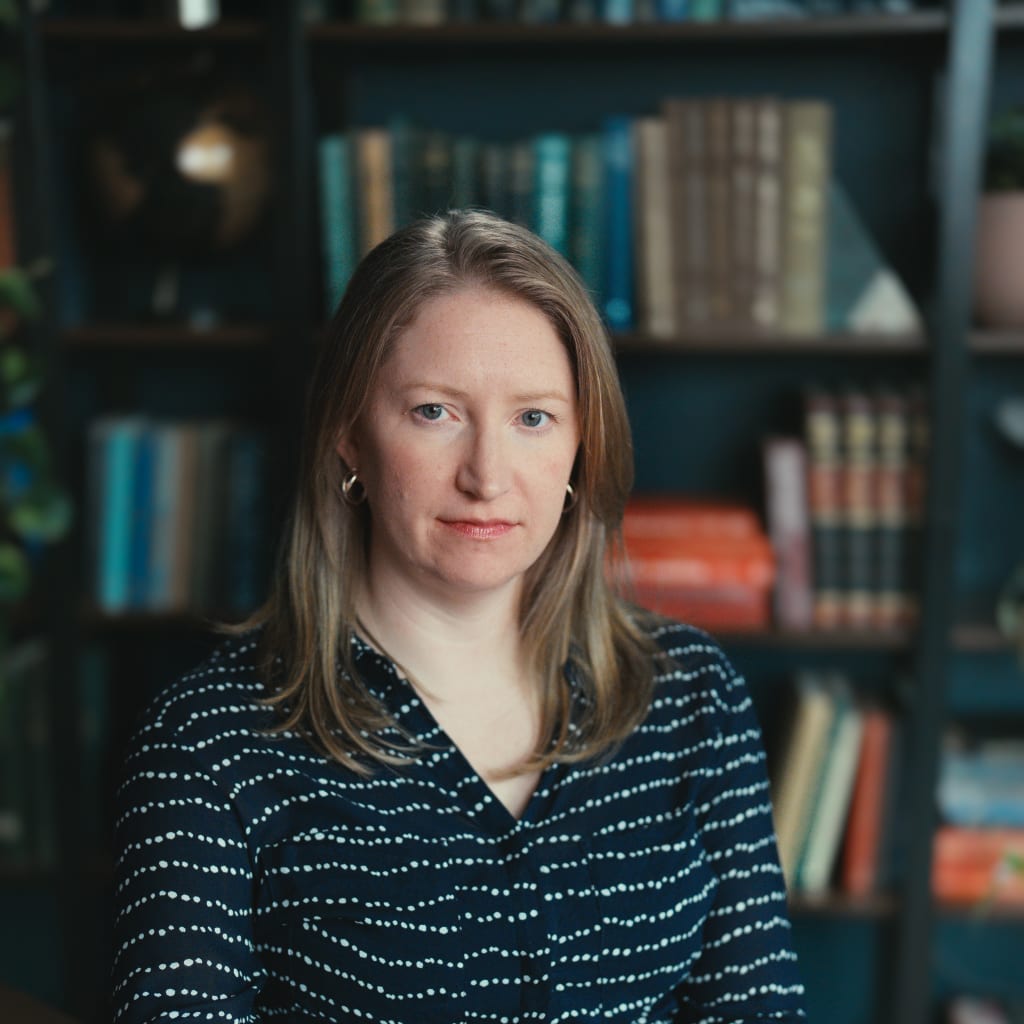 Erin D. DumbacherCFR ExpertStanton Nuclear Security Senior Fellow, Council on Foreign Relations
Presider
- Director, Initiative on Catholic Social Thought and Public Life, Georgetown University
Loading...
0:00 / 0:00
From RFP Calls.
FASKIANOS: Welcome to the Council on Foreign Relations Religion, and Foreign Policy Webinar Series. I’m Irina Faskianos, vice president of the National Program and Outreach here at CFR. Thank you for joining us.
As a reminder, today’s webinar is on the record, and the video and transcript will be available on CFR’s website, CFR.org. As always, CFR takes no institutional positions on matters of policy.
We are grateful to have Father Michael Baggot, Erin Dumbacher, Brian Green, and Kim Daniels with us to discuss Pope Leo XIV’s encyclical on AI and human dignity.
Kim Daniels will moderate today’s discussion. Ms. Daniels is the director of the Initiative on Catholic Social Thought and Public Life at Georgetown University. She is also an adjunct professor in Georgetown’s Department of Theology and Religious Studies. She served as a member of the Vatican Dicastery for Communication, the Synod on Synodality, as an expert participant and coordinator of one of the ten major synod study groups that focused on the church’s mission in the digital environment. She served as a consultor to the U.S. Conference of Catholic Bishops Committee for Religious Liberty and has advised on Catholic leaders and institutions on issues where church traditions and teachings intersect with public life. And she’s been an active voice on the pope’s encyclical on AI.
I’m going to turn it now to Kim Daniels to introduce our distinguished panelists and to moderate the conversation for about twenty-five minutes or so. And then we’ll go to you for your questions, your comments, and thoughts. So, Kim, over to you.
DANIELS: Thanks so much, Irina. It’s so great to be here and kick off this conversation. And so just to get us started, remember that in May, Pope Leo XIV released the most significant document of his pontificate so far, the encyclical Magnifica Humanitas, Magnificent Humanity, which is a landmark teaching on human dignity in the age of artificial intelligence. It provides not just a diagnosis of what’s at stake but guiding principles that meet the urgency of this moment. And when Pope Leo was elected last year, he chose his name very deliberately. In 1891, Pope Leo XIII wrote Rerum Novarum, in response to the Industrial Revolution. Pope Leo XIV signed this encyclical on that document’s 135th anniversary in response to the digital revolution, he said, and in particular advances in artificial intelligence.
And I want to say that the explosion in AI’s capabilities over the last year has really prompted a rush to understand the various concerns that its development brings about, right? Human flourishing, concerns over effects on workers and economic inequality, concerns over security and the catastrophic scenarios that could arise without proper control over AI and its development. Many opportunities as well. So at the heart of many of these conversations are conceptions of human dignity and the common good, both of which have taken center stage in Pope Leo’s thinking around AI.
And finally, I want to just mention as we get started that Magnifica Humanitas comes from one of the world’s most significant civil society institutions. It has a physical presence in communities around the world, centuries of on the ground experience, and a long tradition of engagement with these kinds of questions around human dignity and technology and labor. So today we’re going to discuss all of that—the challenges, the opportunities that AI poses for our society and our world, the roles that religious institutions and traditions of thought can play. And we just have a fantastic group joining us today. And let me introduce them right now.
First, Father Michael Baggot. He is a professor of bioethics at the Pontifical Athenaeum Regina Apostolorum, and an adjunct professor of theology at the Pontifical University of Saint Thomas Aquinas, the Angelicum. His work focuses on bioethics and artificial intelligence. And he serves on the scholarly advisory board of Magisterium AI and is a research scholar at the UNESCO chair—and the UNESCO chair in bioethics and human rights.
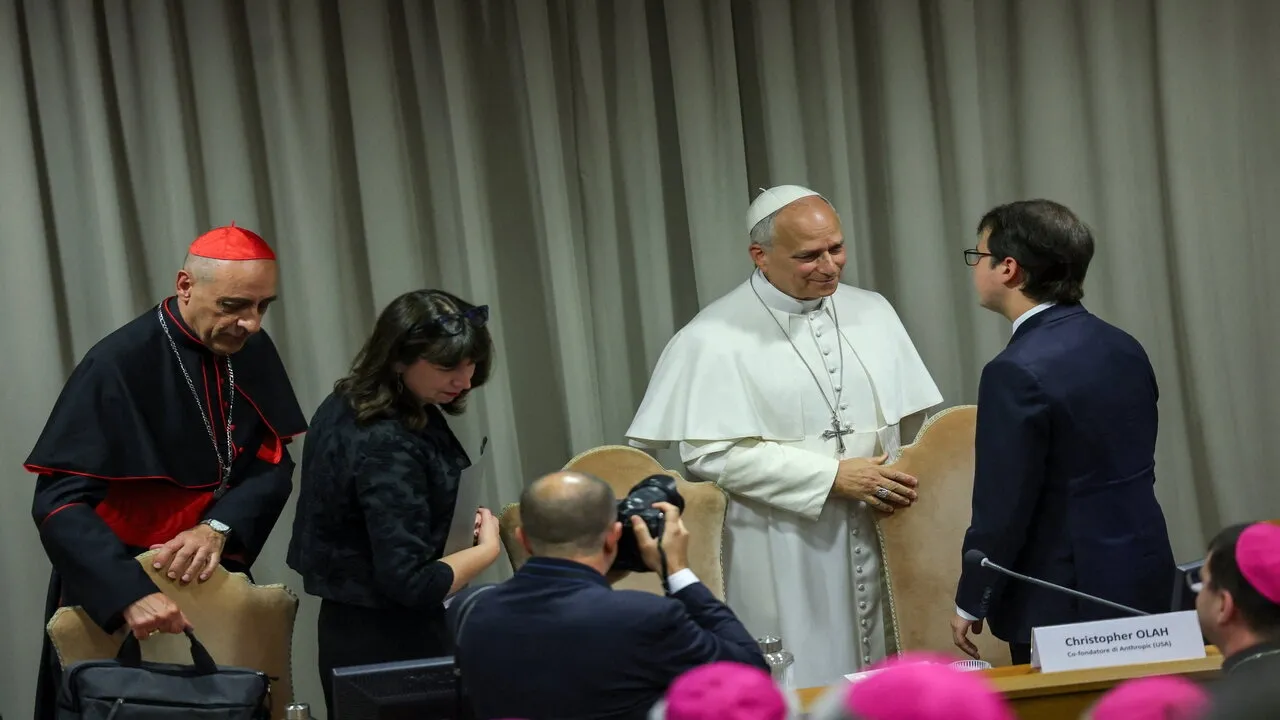
Erin Dumbacher is CFR’s Stanton nuclear security fellow and the director of the Defense and National Security Program. And her work focuses on emerging technologies, nuclear weapons, and international security. She took part this month in the Global Nobel Laureates Assembly on Artificial Intelligence and Nuclear War at Castle Gandolfo in Rome. And it was convened in response to Magnifica Humanitas.
Finally, Brian Green is the director of technology ethics at the Markkula Center for Applied Ethics at Santa Clara University, where he teaches AI ethics. He is a member of the AI research group at the Vatican’s Dicastery for Culture and Education, and he has participated in the Minerva Dialogues between Vatican officials and technology leaders. Brian’s just been involved in these conversations for a long time, and I’m really looking forward to his perspective—and all of your perspectives.
So, Father Baggot, let’s start with you. We live in a world right now where people’s worth is often measured by their achievements, by their productivity. We’re now deploying systems that will outperform many people at the work that they do. But in Magnifica Humanitas, Pope Leo says that a person’s worth doesn’t depend on what she can achieve or what she can produce. He calls this a particularly insidious view. What follows from taking that idea seriously in these conversations?
BAGGOT: Yeah. I think all of us feel the pressure to that optimization, right? We’re often bombarded by lifehack videos, and we’re trying to figure out how to be more productive. And these tools are really helpful. As a researcher, I’m able to assemble different resources more easily, more quickly. I often use AI as an adversarial thought partner to poke and prod the weaknesses of my own writing, or help students to do the same. But we do see some insidious aspects of this kind of constant push to optimization and the way AI is affecting it.
When I was reading number 117 of the encyclical, something very concrete came to mind. There is a widespread movement now, or at least an increasing movement, for so-called genetic optimization. So basically, harnessing AI technology in the IVF process to produce a large amount of embryos that then can be very quickly screened for their likelihood of developing certain diseases, but also even for the likelihood that these embryos might develop into individuals with certain desirable traits—height, athletic prowess, muscle strength, muscle endurance, IQ, a particular hair color, eye color, and so forth. And so, companies now promote themselves as offering this genetic optimization.
And the reason I thought about 117 is that the pope speaks of how sometimes in the pressure to optimize, we can sacrifice concrete humans for the sake of our vision of the future of humanity. And so we can think of all of these particular embryos, if they’re not chosen because they don’t seem to have those characteristics or qualities you want, they might be frozen or set aside and destroyed. And so I think that there’s real pressure right now in this optimization culture to include some and exclude others. So that happens at the beginning of life.
But now we’re even seeing that creep in more at the end of life. This famous, or infamous, Sarco pod, right? This sort of pod to aid people in their death now is using AI technology to give a kind of AI-driven psychiatric evaluation of whether the person has the mental capacity to decide to end their life. And so now the most—these key decisions, this precious decision about whether to continue or not in life, is being mediated through AI. And, of course, the criteria is going to be often whether they think they have the capacity to pursue sort of meaningful, purposeful activities, and will be losing sight of their intrinsic worth and value, that is not something earned. Which also—and here is the consoling message—is not something that can be lost, or even in the most troubling and difficult of situations.
So it’s a real call for all of us to meet the vulnerabilities and difficulties of others, right? To actually accompany them in those moments of need. And as I think the pope beautifully expresses, these are not just problems to tolerate and not just defects to engineer away. But these moments of the encounter with human vulnerability, weakness, suffering, sickness, are the very occasions of our growth in so many different virtues and moments that make life meaningful, and rewarding, and rich, right? It’s in encountering the weakness and suffering of others that I’m called to greater service, greater love. When I experience my own vulnerability and my dependence and need on others and their service, I grow in humility and I grow in openness.
So these—as the pope beautifully says, we don’t flourish in spite of our weakness and vulnerability, but often in and through it, in embracing it and allowing those relationships created to be areas of growth.
DANIELS: Can I ask—can I follow up on that? I thought that that was one of the most beautiful sections of the encyclical, right? This idea that we often flourish through our limits, rather than in spite of them. You’ve talked just now about vulnerabilities before people are born, vulnerabilities at the end of life, and how this insidious view, right, the idea that people are just sort of worth what they can produce or achieve, really has effects at those places. I wonder what the effects are in vulnerable—if we are increasingly in a society that thinks of people in that way, what are the effects on vulnerable people in the middle of life, right? Vulnerable people who are in vulnerable situations, not at the edges but just all of us.
BAGGOT: Yeah, great question. So I think it affects all aspects of life, right? These AI systems are being used sometimes to mediate important decisions about who’s hired, or who’s fired, or who seems to have a chance at reform in life after maybe committing a crime, or who’s able to take out a loan, right? So just these fundamental day-to-day aspects of life are being mediated by the AI systems. And sometimes that can sort of crowd out those opportunities for growth, for reform, for change in life. You know, there’s a temptation to define us by our past, right? By patterns of our own past behavior or patterns of behavior of particular demographics we might pertain to. And we can lose out on the unique value of each person, and, thankfully, the capacity that all of us, even if we do make mistakes or errors, that we have this capacity to change and break out of those patterns.
And then I think when it comes to these different vulnerabilities we run up to in life, there are so many opportunities for service to meet those needs. And I think that those aspects of service toward those who are weak, frail, and suffering ought to be a big part of how we think of the economy going forward, right? If we’re worried about job displacement or the automation of certain areas of life, well, we’ll never be able to automate out or away empathy, compassion, looking someone else in the face in their moment of need. You know, even if the medical system is greatly enriched by AI tools, and our medical diagnosis becomes more precise and more extensive, nothing will ever replace that need for a nurse or a doctor to accompany a person in their difficulties, their trouble.
And so there’s something just irreducibly human and valuable about that encounter of compassion and love and empathy. And it ought to be something that we, as humans, lean into in an AI world and value, and exalt, and educate people in embracing.
DANIELS: It’s so interesting. I feel like sometimes I have an increased appreciation for all of that at this moment as AI is advancing so rapidly. But, anyway, that’s a—it’s a very important question, and risk, and challenge of us right now.
Erin, I’d love to come to you with sort of a very different set of questions here. Your work is on nuclear security. And so can you talk to us a little bit about that, where AI is actually entering nuclear command and control and early warning systems? What about that should concern us? What keeps you up at night, as an expert here?
DUMBACHER: Yeah. I very much focus on the problems of the living—(laughs)—in my day-to-day work, and the real international security challenges that we encounter. Not just with the twentieth century’s weapons, that are still very much around and present, but also the twenty-first century’s. So I think it’s important to just set as a baseline, machine learning—which is sometimes wrapped up in a broader definition of artificial intelligence—it’s already very much present within nuclear systems in some of the highest consequence applications that militaries around the world use, especially automation, the sort of standard, rote if-then logic. I mean, that is throughout a whole series of systems, be it a satellite that’s watching over the poles to see if the Soviets and now the Russians are going to fire an intercontinental ballistic missile towards North America, or in a U.S. early warning system to try to detect that, or in some sort of mechanism that allows a distant military site to connect to what we call in the United States the national command authority, which is the president. Only the president can choose to use nuclear weapons, the most consequential—the most consequential of weapons, I would argue, in arsenals.
And so in this system, where it stands today, what I worry about is actually what we think about as the processes far left of launch, rather than the decision itself to use a nuclear weapon. And I can—I’ll say a little bit more about that, but it has a lot to do with some of the things we’ve started to discuss here, which is the information environment that AI can really alter and change, speed up, modify, dupe us into believing something that is not true because it’s a falsified image or it’s a falsified audio clip. There’s, you know, audio clips floating around on the internet of Marco Rubio, who is the current national security adviser, reportedly left messages for other diplomats in other countries that—they were falsified. They were deepfakes. There’s images on our on our mobile devices that we carry around everywhere with us, if we’re a part of any social media at all or even, you know, media that isn’t—that doesn’t have all of the sort of conventional historic guardrails to confirm, journalists and editors, to make sure that what they’re posting is verified. If we have any exposure to that kind of media at all it’s entirely possible that someone could serve us a deepfake to believe something is true that that isn’t.
And so if you add that information environment on top of what are inherently flawed processes, because they’re imperfect processes. They’re the very best in the United States that we could do to make sure the nuclear weapons are never used by accident, but humans are at the helm here. And we created these processes in a Cold War era in an effort to make sure that the U.S. president, just speaking about our own predicament here, can very quickly order a very consequential strike. And so that existing process, plus information uncertainty, is really—is really difficult. And the extraordinary power of AI to also find cybersecurity vulnerabilities, that’s become—that’s very well known in the press now, is another worry, especially as U.S. nuclear systems and systems around the world are getting digitized for the first time. Those in the audience might be aware that we are currently modernizing the entirety of the U.S. nuclear triad right now. So that’s the ground forces, the ICBMs, bombers, and submarines, as well as the nuclear command and control, and sort of all the communications equipment to link them. So as those go digital for the first time, the cybersecurity vulnerabilities that AI poses is an additional threat.
DANIELS: Thanks so much for that. What a troubling set of circumstances. I want to talk a little bit about this gathering that you were out at the Vatican, that you were at recently, the Global Nobel Laureates Assembly on AI and Nuclear War. You were there. Can you talk a little bit about it? It closed with this adoption of the Rome Declaration for a Disarmed and Disarming Peace, it’s called. And it covered AI, and nuclear weapons, and autonomous systems. And the premise was sort of what you just described, that AI is making the nuclear picture more dangerous, not less. So where did the participants converge? Where did they disagree? What can you tell us about that?
DUMBACHER: Sure. I was there, but, just for clarity, I am not a Nobel laureate. (Laughs.) There were many there in attendance. They also invited folks who are nuclear policy experts. They also invited AI experts. And it’s a bit ironic that the pope’s encyclical starts with an analogy of the Tower of Babel, because even amongst this group of folks—(laughs)—you can imagine, nuclear policy experts have been—had our debates for decades now, AI. The language that each group was using, and then you add to it Nobel laureates who have expertise in physics and economics, and they won for—they won Peace Prizes—they are also experts in their field, but it’s not exactly a concentric circle. So we had—we had some definitional and language challenges, I would say.
But, yes, the Vatican hosted this with high-level representatives from the Vatican, speakers from multiple faith communities. But it was a secular conversation, I will say. And it was—the whole point was to gather and draw attention to this intersection that I just described to you. Maria Ressa, who won the Peace Prize for her work to safeguard freedom of expression, was really one of the driving forces here. But lots of folks attended, like I said, who had won for various reasons. Also the actress Sharon Stone was there. She showed her interest and helped to bring some additional attention.
As you might imagine, as I sort of forecast, not everyone agreed on everything in the sort of debate about what the final Rome Declaration should incorporate. I won’t get too into the weeds on that, but I’ll say that in the nuclear policy field right now we have an ongoing, very, you know, long-standing debate about whether or not the primary objective should be nuclear risk reduction or disarmament. And that came to the fore here as well. There are those who believe that the only solution, even in the short and medium term, is to simply abolish the weapons. You might be able to tell from my expression that I’m more in the risk reduction category, because I think that’s more feasible in the short and medium term. There was actually less emphasis on the specifics of the encyclical language in some of the debates, but these debates—some of the language, of course, sort of peppered debates about the final Rome Declaration.
And the final conclusion that I think is really strong, that I would encourage everyone to take a look at, is the specific language around prohibiting the reckless integration of AI into nuclear command and control and communications. There’s also some notes there about the importance of cybersecurity and failsafe reviews, which is something I’ve been working on in my research and advocacy for some time now. The importance of checking the digitization of some of these systems to make sure that they are cybersecure, and that they operate as intended. Which is to say, you know, sort of the never—the never/always balance that the U.S. military has, so far, done a very good job to maintain. Which is that they’re always ready but never used, unless authorized.
There were some really incredible presentations by some participants too. I’ll just mention quickly two that those listening today could follow up and find online and read more about. But Emmy Probasco from Georgetown talked about the limits of the current military processes and technologies, which are flawed today, and the importance of really finding the right ways to promote AI in applications that support where human frailty and human intelligence—sort of what they—what that leaves behind, if you will. And then Miles Brundage is an AI expert. He talked about the risk that speed and competition will make the loss of human control much more likely. He also talked about some of the risks of AI outperforming in, for example, biological and chemical applications. How far virologists and chemists have been able to go in just some of his tests from, like, three years ago. So it’s only improved since then.
My overall takeaway, though, I think the Rome Declaration does a nice job of bringing some attention to this crossover that doesn’t always get it. And then, you know, I think the group really agreed that some guardrails and accountability for how AI is used, likely to require regulation. Although I imagine that some of the industry folks in the room and outside of the room would take umbrage with some of that. But on weapons, you know, right now Capitol Hill is debating, and in the Pentagon they’re rewriting, you know, what does meaningful human control really look like? And so this is a very live issue. And on AI, you know, we’re going to—we might need some regulations, not just for the most harmful applications, like deepfakes or how it affects children, but really whole-of-society approaches.
DANIELS: Thank you so much for that. That was super interesting and, again, troubling in many ways. But the Catholic Church is often described as, here comes everybody. And it sometimes feels like only the Vatican could have convened the group you’ve described. And I’m really glad you were there. So, thank you.
Brian, let’s come to you. So you are from, you know, Silicon Valley. You’re at the heart of these conversations, and have been for a long time. And before we get to your work in particular, I’d love to talk about students at Santa Clara for a minute. So they often go to work at tech companies, or they hope to go to work at tech companies, right? You’re right there. What are you trying to give them? What are your colleagues at Santa Clara trying to give them as they enter that world? Does it hold up against the pressures that they encounter once they get there?
GREEN: Yeah. These are great questions. We try to equip them with the ability to make good judgments, I guess, would be ultimately what we’re looking for, right? We want them to be competent in what they do, but we also want them to be able to look at their work and really think about how does this affect the world? How is this affecting other people? And yeah, we really—we really hope that when they get that out there, that happens. And we have, you know, good indications that often it does. If you—I mean, and this isn’t just a Santa Clara thing. This is many universities that require ethics courses or religious studies courses.
If you ask the engineers who have been out of their of—you know, have been graduated for decades, what classes do you remember from college? Very often they’ll talk about their ethics class, or their religious studies class, or something like that. They’ll say, oh—(laughs)—they usually aren’t going to say, oh, thermodynamics was, you know, super exciting, and that’s the thing I remember more than anything else. They might say that, and you never know, but very often it’s that the ethics class is what really stuck with me. And that’s what we really hope to be able to do with our education at Santa Clara.
GREEN: Excellent. That’s wonderful. Let’s talk a little bit about your role in these conversations. You’ve been involved in these conversations around ethics and AI for a long time now. And you’ve seen tech companies engage with ethical issues over the course of that time. So are companies listening to what they hear from the church, from other religious traditions, from other people of faith? Or will Magnifica Humanitas’ message of safeguarding the human person fall on deaf ears, in some sense? Tell us a little bit about what that context feels like.
GREEN: Yeah, this is a great question. What I would say is that it’s highly variable. It depends a lot on the individuals involved. And it depends a lot on the cultures of the organizations that those individuals are in. So, for example, if there are employees who are particularly interested in ethical issues, then it’s very likely that they’ll share those ethical, you know, concerns with their coworkers. And some organizations are more open to hearing those things, and some are not. There are some organizations that that work—I mean, that actually do work to suppress ethical thinking within their organization. And there are others that do the opposite. They very much try to promote that ethical thinking. They promote trying to solve their problems in-house. You know, if you if your employees see the ethical problems, then the ethical problems might get solved before the product is released or before the service gets out there to the rest of the world.
On the other hand, if you’re actively suppressing, you know, ethical thinking within your organization, it’s very likely that you’re going to produce a product or a service that has some sort of flaw in it, or that is exploitative, or that is harming people. And this sort of balance or structural element to it, between the individual and the organization, becomes extremely important when we’re talking about something like Magnifica Humanitas and whether people will listen to it or not. What I will say is that the Catholic Church has been in dialogue with tech companies in various ways for a long time. There’s been the Rome Call for AI Ethics, for example, where Microsoft and IBM were both very integral to that. There’s been the Minerva Dialogues, where various leaders from the tech industry have convened in Rome to talk to people about these sorts of issues.
And what we can say from that is that, once again, there’s a sort of institutional aspect to it, and also the individual aspect to it. And one of the wonderful things about Magnifica Humanitas is that it is such a broad document that there are—there there’s almost certainly something in there that, you know, someone will like, right? There’s something for everyone. At the same time, there’s also probably something in there that most people in business, or in other places, are not going to perhaps be so open to. And if you’re talking, for example, about cost-benefit analysis versus virtue ethics, or human rights, or other sorts of ideas that come up in Magnifica Humanitas about what the human person needs, what sort of structures we need to be building to really respect human dignity, and you look at that from a business perspective you say, oh, but that’s going to cost money. That’s going to—that’s going to reduce our profits.
And so this sort of balance, once again, between what business is hearing and what they’re willing to actually act on, I think becomes a really important question. You know, ultimately it becomes a question of motivation. There’s the reasoning there. There’s the social pressure, perhaps. But then it becomes a question of, do we actually want to work on this? Do we actually want to do something? And how much is it going to cost? Because a lot of the times, it just comes down to the bottom line.
DANIELS: Well, let me press on that just for a second. I know there are a lot of people who have questions. We have such a great, large audience here today. And I’ll get to that in one second. So just want—if you’re ready for that, please be ready. But, Brian, let me just ask one more quick question to kind of follow up on that. So you’re saying that, you know, often, obviously, it’s the bottom line that drives these decisions. I wonder, you’re also talking about the fact that some of these questions and some of these principles are starting to have some traction in, you know, particular companies, et cetera. What would that actually look like inside a company, right? So, in other words, how does it—does it affect what a product might look like? Does it affect sort of how it’s deployed? Like, just give us a little sense of bringing this conversation into the real world.
GREEN: Yeah. One thing I would say is that this is something that the Markkula Center has been working on for a long time. We’re an applied ethics center. We’re very interested in providing people the resources that they need in order to make good ethical decisions. So, for example, we talk a lot about operationalization of ethics. How do you make sure that you actually set up a process within your company where you start to think about ethical issues in a very structured way? How do you develop a corporate culture that thinks a lot about these things? What are the tools that an engineering team needs in order to think about this sort of stuff? So we have a whole book, for example, called the ITEC Handbook, or the longer name, Ethics in the Age of Disruptive Technologies: An Operational Roadmap, which is very long way of saying that this is just a way to figure out how to think about ethics in a corporate setting in a very concrete and applied way.
We also have, you know, all sorts of toolkits for these sorts of things. And we’ve been putting them out there for a long time. There are some organizations who have taken these ideas and have integrated them into their workspaces. And they’re doing that because they do care about ethics. They do recognize that this actually helps to build a better product in the end, a product that is going to be safer, that is going to be less biased, it’s going to be more fair. A product that actually is going to be, you know, once again, more competitive in a lot of ways. So they take their product very seriously. They also take their corporate reputation very seriously. And when you have that combination, when you see that kind of bigger picture, longer-term view of products, then you’re more likely to get better outcomes, I would say.
One of the risks, I would say, in the tech industry right now is that if you have a startup you have to think short term to a certain extent, right? You just—you have to survive each quarter. You have to survive as you’re going ahead. You have to not run out of runway. And so there’s this constant need to produce the product as fast as possible. A lot of that rushing—or, just in general, the bigger picture, as Pope Francis would call it, that rapidification of society, really kind of starts to short circuit ethical thinking a lot of the time. Ethical thinking requires deeper thought. It requires thinking, literally. And if you can institutionalize that thinking in a way, then you make sure that you don’t miss it in an organization. When it comes to Magnifica Humanitas, I think there are so many opportunities for people to think more deeply about these issues and really integrate that ethical thinking into the organization.
DANIELS: Wonderful. Thank you so much for that. And I think I was so struck in the encyclical, Pope Leo talks about sort of disarming the conversation. And part of that, that was one of his most striking terms, is sort of ending this race mentality. And yet, you talk about the—sort of the reasons that drive that idea. So I love the work that you’re doing at Santa Clara.
Now let’s open it up for questions. And I’m going to turn it over to our colleague, Sam, to explain the process one more time.
OPERATOR: Thank you. We will now begin the participant Q&A period.
(Gives queuing instructions.)
We will take our first question from Bishop John Bryston Chane. Please accept the unmute prompt.
DANIELS: Hello, Bishop Chane. You want to go ahead? Sam, I’m not sure—there we go.
OPERATOR: All right. We can move on. We will take our next raised hand from David Barstow. Please accept the unmute prompt.
Q: Hi. Yes. Thank you. My name—can you hear me? Yeah. My name is David Barstow. I’m a member of the AI working group of the World Council of Churches. Brian, we’ve met before. It’s good to see you again.
I have some comments from Martin Luther about the pope’s encyclical. Or, to be specific, Claude’s belief about what Martin Luther would have said. So, with your permission, I’ll just read what Claude thought Martin would say: “This document strikes me with both admiration and alarm. The pope rightly sees technology as never neutral. Praise God for that clarity. His warnings against digital idolatry and the concentration of power among a godless few echo scripture itself. Yet I wonder, will beautiful words move princes and merchants? The reformer in me demands not merely doctrine, but action. The pope speaks with pastoral caution, where I would speak with prophetic thunder. He names the dangers rightly—digital idolatry, concentrated power, the dehumanizing of God’s image bearers—yet wraps his warnings in such measured language that princes and merchants may nod politely and change nothing.”
DANIELS: Great. Thank you very much for that. And thank you—thank you, Claude’s version of Martin Luther as well. I wonder if I might give an initial reaction to that, and then, Father Michael, I’d love your reaction to what you heard here. First, I want to say that I was actually struck in the encyclical by how much action was actually called for. In other words, in particular from us, from individuals, from people, and our responsibilities to participate in democratic governance, to drive the kind of policy issues, policy changes, that that we’ve been talking about here today, or at least sort of implicitly talking about. And I was struck by the way in which the encyclical was received, which, in my experience, whether Pope Leo’s voice is measured or prophetic or how you want to describe it, in my experience this broke through to a wider audience and to more people in a way that that I think I’ve never seen before for a for a papal document like this.
And so with that, I’d love to—so that’s my initial reaction. But first, Father Michael, tell us a little bit about what you think about both things. How true might that have been to Martin Luther? And what do you think about just the meta question of Claude doing that conversation for us here?
BAGGOT: Well, I don’t want to put any words into Martin Luther’s mouth here. (Laughs.) So—but I think this is an interesting example of how we can use some of these tools to explore different perspectives, and maybe try to understand better the influence that figures like Luther have had, and maybe how ancient thought and insight can inform these contemporary conversations. I think all of that can be really valuable and a great exercise.
In terms of the real world impact, I’ve also been, I guess, pleasantly surprised in the conversations that I’ve had with people working in some of the frontier labs or in other sectors of the tech world, who are thinking seriously and critically about how to implement these ideas from the pope and these principles from the pope. I think also his capacity to speak as a global shepherd of a global church is really illuminating and valuable, because all of us are limited. All of us are going to have our particular preoccupations. And just the other day I was chatting with someone, and we were trying to figure out the best way to use certain tools to aid students’ critical thinking skills and make sure that they weren’t outsourcing their thoughts and, you know, just generating essays without really engaging with ideas, and so forth.
And then we paused for a moment, said, yeah, these are our concerns, but, you know, there are other concerns that people have in the world, you know, that the pope brings to light, that we’re not thinking about on a daily basis but that we do need to think about, right? The pope toward the end of the encyclical is talking about new forms of slavery and a kind of neocolonialist mentality, where a disproportionate number of people in the Global South are doing horrible things to aid many people in the Global North, right? Whether that’s the physical backbreaking labor of extracting rare earth minerals, or this terrible psychological burden of moderating and labeling toxic content of extreme violence, or sexual deviation, or bestiality, and so forth. And so the pope as a global shepherd is putting a spotlight on what some of his children are suffering and what other members of the flock can easily forget, the physical labor, psychological labor behind these seemingly magical devices that are aiding our productivity and other dimensions of our life.
So I think that is making an impact. It’s awakening consciences. It’s challenging everyone. As Brian said, there’s something here for everyone to root for and there’s something in the encyclical for everyone to feel a little bit more uncomfortable about their life, or their complacency, or their collaboration, maybe, in unjust systems. So it’s always hard to tell exactly what sort of impact the encyclicals is having, but my own limited perspective has shown me that that people of influence in the tech industry are taking this seriously. And I think that the pope did exercise a lot of prophetic office in showing us the broad, broad range of issues, and expanding a dialogue that sometimes can get narrowly focused on particular concerns because of particular interests.
DANIELS: Thank you for that. And, David, thank you for the question. And I think the—I think implicit in the question is, right, that is what Pope Leo would certainly agree with, the idea that if this is just words on a page that’s not—that’s not what he’s looking for, or certainly what other Catholic leaders are looking for. It’s about responsive action. Let’s go to our next question.
OPERATOR: We will go back to Bishop John Chane. Please accept the unmute prompt.
Q: Hello. Peace be unto you all. Thank you very much for CFR for bringing the pope’s spiritual guidance on a very important topic.
We all recognize that we humans have not been so much diligent with any new tools unless the law forces our hands. We, left to our own ethical limited devices, unfortunately, cannot manage serious, potentially very damaging, tools that God puts in our hands. So I wonder if any of the panelists can, in light of this fact, just what would you ask the pope to add to his statement to make sure that the lawmakers everywhere take this issue seriously, so that we don’t look back later on and say we wish we had regulated this.
DANIELS: That’s a great question. And I wonder if we might go to both Brian and then Erin. And, Brian, what kind of policy recommendation—like, if you had to pick one or two lead recommendations you might make for lawmakers, what are some—what are some things you might think about? Erin, in your lane as well, like, if you had to think about something that you might make as a recommendation, stemming from the concerns we’ve talked about today. First to you, Brian.
GREEN: Yeah. These are—these are really excellent questions. And there are lots of people asking this. They almost—they want the pope to give the policy recommendations so that they can implement them, right? But one of the things the Catholic Church very much wants to do is to make sure that it is presenting kind of the ethical, anthropological, and theological side of things, and then folks out there in the world who are deep into the issues can figure out how to apply those more abstract rules to the very concrete situations they find themselves in. So that’s one start.
But what I would say is that there are some very concrete recommendations within this encyclical. For example, children need to be protected from AI. There are all sorts of things that can go wrong with AI and the way it relates to children and the way it manipulates them or opens them up to vulnerability in various ways. There are all sorts of issues related to the information ecosystem, making sure that we are actually hearing the truth and not being deceived by deepfakes and all sorts of other things like that. We need to work on the educational system. We need to work on international relations.
If we want to think about particular laws, I really like the way you phrased it, how do we look at—what do we need to do now to make sure that we don’t regret things in the future? And I think that what Erin is talking about with nuclear security is a very big regret if things go wrong there. So if we can do something right now to prevent that kind of thing from going wrong, that would be an important step to take. But I think there are a lot more mundane things, particularly related to the next generation, to making sure that our children are protected from AI, to make sure that our education system is still going to work in the future. There’s a lot of very basic steps we could take right now. And if we don’t take them, we’re opening ourselves up to really big risks.
DANIELS: Thanks for that. And it feels like there are some issues around children that we can all agree on, and opportunities, you know, in all of these conversations too. But the safety risks are real and important.
Erin, how about yourself? If you had to sort of think about a policy recommendation or something in your field that stems from this, what would you talk about?
DUMBACHER: Yeah. I mean, there’s a lot, especially in the broader category of the use of AI in weapons more broadly. But if we just, for the purposes of this conversation, focus sort of on nuclear weapons, I think there are really unwieldy and AI information risks to nuclear weapons that I’ve already talked a little bit about. And the U.S. and the Chinese presidents have reaffirmed that only a human can make the decision to launch a nuclear weapon. I would like to see all countries with nuclear weapons around the world reaffirm that as well. That’s, I think, the bare minimum.
And then from there, there’s a whole host of crisis communication issues, crisis communication channels. There’s a hotline between Washington and Moscow, but there’s not one to Beijing and amongst and between all of the other nuclear states. So that’s another item for activity. In the U.S. specifically, very little U.S. nuclear policy and posture has changed since the 1980s, when we were most concerned here about the Soviet Union attacking us out of the blue. And so it would have been unfathomable, really, in the Cold War period to think about how much information and misinformation is now delivered into the hands of decisionmakers on a regular basis, and their staffs who support them, I should say, right? And so both, I think, in the U.S. legislative and executive branches need to be really thoughtful and reevaluate the nuclear weapons posture policies that were built, frankly, for a different era.
So, for example, the policymakers might require future U.S. presidents to confer with congressional leaders before they launch a first nuclear strike, or somehow require additional time, perhaps, for intelligence professionals to validate information on which they decide. And, you know, the United States and most nuclear weapons powers now have capable second strike options. So accuracy, I think, when it comes to first strike should really take precedence over speed. And, you know, AI, I think, already has shown to have the power to deceive key decision makers and members of the nuclear chain of command to potentially see an attack that isn’t there. And in the past, it was really only dialogue and diplomacy that averted misunderstandings. And so I think we need to be thoughtful about the policies and the practices that can protect in this environment that we live in now.
DANIELS: Thanks for that, Erin. So much good work that has to be done. Thanks very much for that.
Our next question?
OPERATOR: We will take the next written question from Father Greg Rozborski, assistant professor of theology at St. Thomas University: In light of Pope Leo XIV’s encyclical, how might we rearticulate the Church’s understanding of imago dei, when human creativity and decision making are increasingly mediated by artificial intelligence? Can AI participation in moral reasoning ever reflect, even analogically, the dignity of the human person?
DANIELS: That’s a great question. And I wonder if, again, Father Michael, we might start with you on that. This idea that that once you’re mediated by this particular technology, right, do we lose something regarding our creativity, regarding what makes us human?
BAGGOT: Yeah. I recall that in Antiqua et Nova, which is also referred to in the encyclical, this document that came out at the beginning of 2025 from the Dicasteries of Education and Culture, together with Doctrine of the Faith, reflecting on AI, it speaks of how instead of thinking of AI simply as a sort of artificial version of our intelligence, to think of it as the product of human intelligence, to see it as a sort of an extension of our own creativity and ingenuity. And I think that also opens up the path to think more deeply about, well, how can this technology actually amplify us, right? We all recognize ways in which it can sort of take from our work. It can be used to outsource our own efforts, whether that be something as simple as writing a paper or something as dramatic as making this key decision in in military even about lethal attacks, right? So there are all these small and large ways in which AI—we can fall into the temptation of outsourcing some of those aspects that make us most distinctly human.
But instead, I think we can lean into the technology to really amplify ourselves and also to appreciate this as an extension of our own work. So I spoke of how, you know, sometimes I use the tools to poke and prod at weaknesses of my own writing, instead of having an AI model write something for me, to really see how I can improve and maybe take into account a different perspective that I neglected. And I invite my students often to do the same. And then I think it’s so helpful for us to appreciate in the educational system the immense opportunity that we have to create a sort of more human form of education, in light of AI, right? There was this great piece in the Chronicle of Higher Education talking about how AI is sort of breaking up the multiversity. It’s breaking up this idea that we should be spending, you know, hundreds of thousands of dollars to pack students into crowded lecture halls, so that they can receive a sort of knowledge dump from a professor reading from his or her notes, when AI is already capable of disseminating information so quickly, and it can even adapt to different learning levels.
Well, what if this is the opportunity and the challenge for us to return to seminars, to the Oxford tutorial system, to more personalized experiences of education where maybe you’re using the tools, and you’re studying with the tools, but then you come to these moments in person in small communities where you know each other’s names, likes, dislikes, preferences, strengths, weaknesses. And in real time, in person, you are practicing how to articulate an argument. You are dealing on the spot with objections. You’re encountering other perspectives. You’re learning how to collaborate with each other. So AI could be abused to sort of dehumanize us, but this is also a tremendous moment for us to highlight what is most distinctly human, and enjoy it, and relish it. And I think it’s providential that Saint John Henry Newman was named copatron of education not that long ago, in this age of AI. And long before AI was a household name, he was engaging in this sort of personalized education, making specific reading lists for every student, accompanying them outside the classroom, and facilitating these kinds of conversations and exchanges. I think this will be more valuable than ever. And the church has been thinking about this and doing this for a long time.
DANIELS: Well, you know, I also—I mean, I share, in some sense, your hopeful vision. I share the idea. I teach a seminar. I taught a seminar last spring. And I’m sure, like everybody else teaching a seminar in a university setting, I really think hard about what would make it—how I was going to really fulfill our goals to really lead to the formation of students, and their really grasping the subject that we were talking about, which was Catholic social teaching. And I think it led more towards, you know, sort of less of a reliance on—more classroom discussion, more handwritten papers, those kinds of things.
But, bracketing those questions, Brian, I’d love to ask you a little bit about this. I think I would love that vision, that in some sense we have a stronger appreciation of what is really human about us and that listening to music in person and appreciating art in person and personal relational engagement, all of those things we have a heightened appreciation for it. I know that Pope Leo also identifies risks in in Magnifica Humanitas about sort of the enervation of our moral judgment and our will in terms of actually getting out and exercising things, when it’s as easy as pushing a button to have an answer to the question. What do you think?
GREEN: Yeah. I think it’s really important to consider what it is that makes us different from machines a lot of the time, right? And in terms of what AI can do with large language models, for example, all that data that it’s based on is human data ultimately, right? It comes from human language. And therefore all this human psychology and all this human morality and all this human everything about us gets stuck into these models. But then, the models do not operate like humans at all, even though they’re very much built on data and everything that comes from us. They then operate in a way which is very alien, in a lot of ways. And so we might well ask ourselves, you know, just kind of broadening the question a little bit, if we can externalize our intelligence from ourselves or our language, in this case, to be more precise—we externalize that from ourselves, and then improve upon it so that it’s better than we are, what’s left for us? What is there that remains for human beings in this world?
And I think that it really comes down to a very theological idea, which is that, at least in Christianity, we’re made in the image of a loving God, right? This is—and, you know, many religions have this, you know, idea also. Which is that God is love. We are given commandments from God to love each other and to love God. And if we are made in the image of a loving God, then ultimately that commandment to love is actually a commandment to be human, to be like God is, which is to be like God in that way of loving. It’s not just about our intelligence, ultimately. It’s much more about how we relate to each other and care for each other. And at this point, as we’re becoming more and more powerful, we really have to do this better than we’ve ever done it before, right? Some people have called AI the final exam, right? This is the point where we have to actually get it right. We’ve been dabbling in ethics, you know, for all of human history. At this point we actually have to make sure that we can somehow figure out how to be ethical and not destroy ourselves, because that is the kind of power that we are really giving ourselves at this point.
DANIELS: I love it. Thanks so much. And I also just want to add, right, that not only it’s we—in the Christian tradition here we have a loving God, we also have a God who took on human form, a human body, that was vulnerable. And that embodied quality is something essential to these conversations as well. And also the idea that intelligence isn’t just—isn’t just cognition, but it’s something much deeper than that. Just so many things to talk about here. Sam, back to you.
OPERATOR: We will take our final question from Dr. Sousan Abadian. Please accept the unmute prompt and state your name and affiliation.
DANIELS: Sousan?
OPERATOR: I can read the question aloud; it’s also in the chat: I’m curious whether the panel is familiar with AI 2040: Plan A, by Daniel Kokotajlo and the AI Futures Project, which proposes a U.S.-China agreement to deliberately slow AI development and postpone superintelligence until 2040. From your respective perspectives—ethics, theology, security, and policy—what do you see as the greatest obstacles to making such international restraint politically feasible? Is the primary barrier technical, geopolitical, economic, or, ultimately, moral?
DANIELS: What a great question. And, Erin, I’m going to take that one to you. I don’t think we have enough time to sort of go around the horn here. And you’ve been—you’ve had this experience, right? I mean, you’re the one who really works in this context of, you know, international agreements. What are the barriers here?
DUMBACHER: There are many. I’m not familiar with that particular project, but generally speaking—I started talking about disputes about even definitional. There’s even a question about whether or not superintelligence in the AI field is attainable, or something we should even be worried about. Is AI in the U.S. conception often—is it a race towards some end point? Or are the real opportunities and, frankly, also potentially the harms of AI, a slow creep, broader base, sort of wider application set of the technology, rather than a race? And I think a lot of scholars who focus on AI explicitly would tell you, and a lot of folks who think about the policy context here, would tell you that the U.S. conception of the race isn’t necessarily the most helpful construct as we start to think about both the opportunities and the harms. And so that’s the first—that’s the first point there.
Broadly, when it comes to international agreements, I mentioned earlier that the U.S. and the Chinese presidents have agreed that only a human will ever make a nuclear weapons use decision. That agreement came to be in part because it was sort of already standing policy in both systems. So I think the low-hanging fruit here, when you’re thinking about not just broader arms control-like agreements or international risk reduction, the first place I like to look is what’s already on the table here. Where can we agree? And then to take that piece and to build from it. With the Russians, for example, the U.S. and the Soviet Union, and then the Russian Federation, agreed for a really long time to not interfere with one another’s spy satellites because that would be the way that they would lose trust that their arms control agreements were still viable and accurate. And so, what is the low-hanging fruit there in an AI, and frankly still in a nuclear weapons, context where we can find common ground, things that make both sides at the table, or even more than two at the table, really be able to start from a common playing field and to build upon?
DANIELS: Thank you so much for that. I feel like that’s a good place to end, talking about trust and building trust, right? We’re facing so many really, really challenging questions. And I think the place that we need to start there is how can we build trust among each other and in different sectors so that we can answer them together. And I know that certainly that was the call of Magnifica Humanitas, for all of us to discern how best we can contribute to these challenging issues—on these challenging issues. Thank you all so much. What a terrific conversation. Irina, I’ll give it back to you. And thanks, again.
FASKIANOS: Yes. I want to second that. Thank you for this terrific conversation, to all of you for your excellent questions. I’m sorry we could not get to you all. But here at the Council we like to end on time. But we will continue this discussion.
Well, we encourage you to send us your feedback and suggestions for future topics and speakers to Religion Program at CFR. Again, we will send a link to this enlightening discussion for you to listen to again or share with your colleagues. And we thank you for taking the time to be with us. Enjoy the rest of your day.
(END)
This is an uncorrected transcript.