Divided Fed Reaches Consensus on Risk Management Cut
The Fed reached consensus on its interest rate decision, with only Trump’s latest appointee dissenting. Opinions about future cuts diverge, however.
By experts and staff
- Published
 Roger W. Ferguson Jr.CFR ExpertSteven A. Tananbaum Distinguished Fellow for International Economics
- Research Associate, International Economics
Roger W. Ferguson Jr. is the Steven A. Tananbaum Distinguished Fellow for International Economics at the Council on Foreign Relations. Maximilian Hippold is a research associate for international economics at CFR.
The Federal Reserve announced an interest rate cut for the first time since 2024 this week, a move that was widely anticipated. During its September 17 meeting, the Federal Open Market Committee (FOMC)—a twelve-member board that oversees U.S. monetary policy—voted to lower the target policy rate by twenty-five basis points, bringing it to a range of 4–4.25 percent. This decision comes after intense political pressure, the appointment of a White House official to the Fed’s seven-member Board of Governors, and President Donald Trump’s appeal to the U.S. Supreme Court to allow him to fire a serving governor.
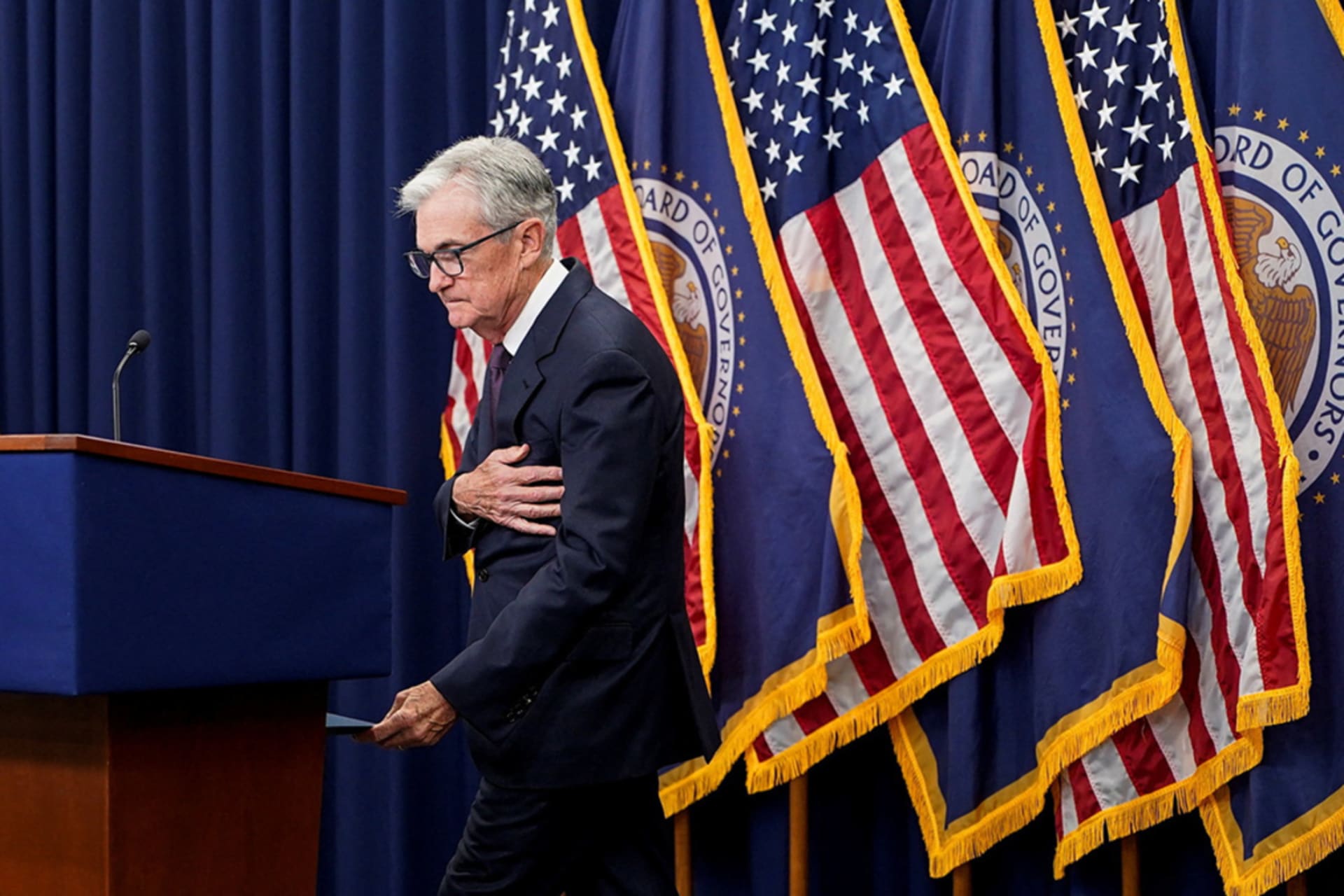
At the press conference following the meeting, however, Fed Chair Jerome Powell steered clear of politics and focused on the institution’s role and independence. He emphasized the heightened uncertainty stemming from the unusual economic conditions confronting the United States. He repeatedly noted that risks to both sides of the Fed’s dual mandate—maximum employment and price stability—remain elevated. Inflation, currently at 2.9 percent, continues to run above the Fed’s preferred 2 percent target, while core inflation, which excludes volatile categories such as food and energy, stands at 3.1 percent. Meanwhile, recent employment data and downward revisions to job growth figures suggest a cooling labor market.
Although Powell acknowledged the market expectation that there would be additional cuts this year, he said no clear path had emerged and stopped short of endorsing them. Instead, he reiterated that the Fed would assess incoming data and make decisions on a meeting-by-meeting basis.
How the Fed perceives the strength of the U.S. economy
During his press conference, Powell maintained that the broader economy remains resilient. Growth continues at a positive pace, and unemployment has held steady. He framed the rate cut as a measured response to rising risks in the labor market.
As with the previous meeting, the decision was not unanimous. Stephen Miran, sworn in as a Fed governor just hours before the meeting began, dissented in favor of a more aggressive fifty basis point cut. Nonetheless, while the United States faces growing economic uncertainty, the overall cohesion displayed by the FOMC came as a welcome surprise to many analysts.
Markets, having largely anticipated the rate cut, showed little reaction. Instead, attention shifted to the Federal Reserve’s outlook for additional rate reductions through the remainder of 2025 and into early 2026. The FOMC meeting included the release of the Summary of Economic Projections [PDF]. This document, features a dot plot illustrating anonymous forecasts from committee members. The assessment revealed a notable divergence: Nine members anticipate one or fewer cuts, while another nine foresee two cuts. One member projects more than two rate reductions ahead. This was likely Governor Miran who is closely aligned with Trump’s view that rates should be slashed despite inflation remaining elevated.
An unprecedented situation
The Federal Reserve is navigating an unprecedented period. For the first time since Paul Volcker’s tenure in the 1970s and ’80s, the central bank faces genuine risks of stagflation—a prolonged phase of sluggish economic growth coupled with elevated inflation.
The Trump administration’s tariff policies have raised trade barriers to levels unseen since the early twentieth century. Some of these costs are expected to be passed on to U.S. consumers, contributing to inflationary pressures. Meanwhile, stricter immigration enforcement has affected the labor market and introduced further uncertainty into the economic outlook.
Concerns about the Fed’s independence have also intensified. The attempted removal of Governor Lisa Cook over allegations of mortgage fraud remains under litigation. The administration has petitioned the Supreme Court to determine whether Trump can dismiss her from the Board of Governors, following previous court rulings that blocked such efforts. Adding to the controversy, Governor Miran—appointed to fill a temporary vacancy through January—has not resigned as the chair of the White House’s Council of Economic Advisors. While he has taken unpaid leave from the role, this type of dual position on the Fed has not been seen since the 1930s.
The confluence of a challenging economic environment, a divided FOMC, and questions of its own institutional integrity only serves to heighten global interest in the Federal Reserve’s policy meetings for the remainder of this year and into next year. It is important to note that Powell’s second term as chair is scheduled to end in May 2026, and the president has reportedly begun vetting his potential replacement.
This work represents the views and opinions solely of the author. The Council on Foreign Relations is an independent, nonpartisan membership organization, think tank, and publisher, and takes no institutional positions on matters of policy