Jets Over Estonia Are Putin’s Latest Check of U.S. and NATO Resolve
NATO chased away the jets a week after shooting down Russian drones in Poland. These incidents add to a troubling trend.
By experts and staff
- Published
 Max BootCFR ExpertJeane J. Kirkpatrick Senior Fellow for National Security Studies
Max Boot is the Jeane J. Kirkpatrick senior fellow for national security studies at the Council on Foreign Relations.
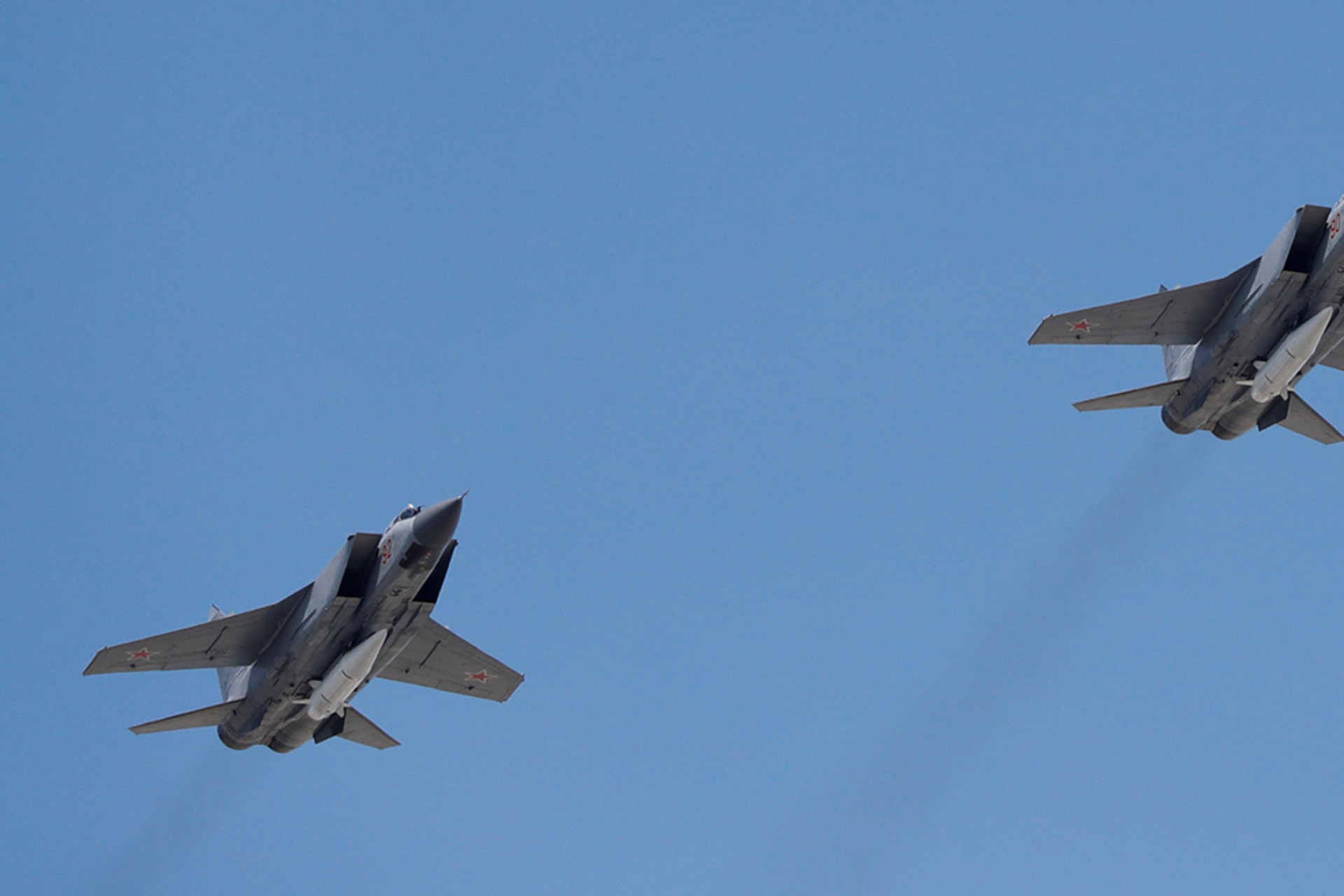
Western experts were still debating whether the incursion of at least nineteen Russian drones into Polish airspace last week was accidental or deliberate when news arrived on Friday that three Russian MiG-31 fighter jets had flown into Estonian airspace for an unusually long time—twelve minutes. NATO fighter aircraft, Italian F-35s, had to scramble to chase them away.
“Russia has already violated Estonia’s airspace four times this year, which in itself is unacceptable. But today’s incursion, involving three fighter aircraft entering our airspace, is unprecedentedly brazen,” Estonian Foreign Minister Margus Tsahkna said in a statement.
The Estonian incident comes just nine days after the Polish incursion (and only five days after a Russian drone flew into Romania), adding to the conclusion that these may not be mere accidents. Rather, Russia could be probing and testing NATO to intimidate the alliance.
There is evidence that supports that finding. Russian sabotage operations in Europe more than tripled from 2023 to 2024. As the New York Times noted last week, “Over the past year alone, officials say, Russia and other adversaries have disrupted Western energy systems, meddled in national elections, plotted to put incendiary devices on cargo planes, and hacked into health service networks and legal records in shadowy strikes designed to conceal the culprit.”
Moreover, Russia’s August 28 air attack on Kyiv, which killed twenty-three people, damaged the offices of the European Union (EU) and the British Council. This strike outraged and concerned NATO’s European leaders.
One or two incidents might be accidents. But all of them? That’s less likely.
One way to interpret all these actions is that Russian President Vladimir Putin is sending a message to Europe to reduce its support for Ukraine. Another, even more worrisome possibility is that Putin is testing NATO’s response to Russian aggression against member states, such as the Baltic republics. Will other NATO members, led by the United States, come to their aid or not?
If that is what Putin is trying to figure out, the tepid response he is getting is troubling. To be sure, NATO leaders have announced a new initiative known as Eastern Sentry to defend the airspace of frontline states. Denmark is contributing two F-16s and a frigate, France three Rafale fighter jets, Germany four Eurofighters, and more contributions are likely.
But the U.S. reaction has been underwhelming—nonexistent, really. President Donald Trump has repeatedly suggested that the incursion of Russian drones into Poland may have been accidental, even though the Polish government insists it was a deliberate provocation. Rather than condemning the Russian action, Trump wrote on social media: “What’s with Russia violating Poland’s airspace with drones? Here we go!” This sounds more like the set-up for a comedian’s riff than a stern warning from the leader of the Free World.
Asked again about the drones on Thursday by Fox News, Trump again suggested their intrusion into Poland might have been accidental, although he acknowledged they “should not have been that close anyway.” Earlier in the day, at a joint news conference with Prime Minister Keir Starmer during his visit to the United Kingdom, Trump expressed his frustration with Putin for not cooperating with his peacemaking efforts: “He has let me down. I mean, he’s killing many people and he’s losing more people than he’s killing.” But he went on to say, “It doesn’t affect the United States,” and he did not announce any intention to punish Putin for his aggression.
This is part of a troubling pattern. For months, Trump has criticized Putin, but he has not followed through with any actions against Russia, even as Putin dramatically ramps up his air attacks on Ukraine.
On September 13, Trump offered a new excuse for inaction: “I am ready to do major sanctions on Russia when all NATO Nations have agreed, and started, to do the same thing, and when all NATO Nations STOP BUYING OIL FROM RUSSIA,” Trump wrote on Truth Social, while adding that he also hopes the Europeans will impose “50% to 100% TARIFFS ON CHINA.”
The tariffs—which would hurt the European and the global economy—are a non-starter. European energy imports from Russia have already declined by 89 percent since 2022. Europe now plans to phase out all imports of Russian liquefied natural gas by the end of 2026—a year earlier than planned. The only two European countries still buying substantial amounts of Russian oil are Hungary and Slovakia, both led by Trump’s populist allies.
If the goal is to increase pressure on Putin to end his aggression, then the United States should not wait to apply further sanctions until Hungarian President Viktor Orbán and Slovakian Prime Minister Robert Fico—the two EU leaders most friendly with Putin—join the cause. But while Trump has slapped India with 50 percent tariffs, ostensibly because of its oil purchases from Russia, he has not imposed any additional sanctions on Moscow since taking office. He even exempted Russia from the “reciprocal” tariffs that he imposed on every other nation.
Given Trump’s unwillingness to get tough with Putin, it is high time for Congress to stop waiting for his go-ahead and to pass tough sanctions on Russia along with additional military aid for Ukraine. That is the only way to signal to Putin that he will pay an unacceptably high price for continuing the war in Ukraine and expanding his aggression to neighboring NATO states.
This work represents the views and opinions solely of the author. The Council on Foreign Relations is an independent, nonpartisan membership organization, think tank, and publisher, and takes no institutional positions on matters of policy.