U.S. Trade Policy Sends Geopolitical Ripples Through Pacific Rim
Five CFR fellows explain how growing concern with U.S. trade policy in certain APEC members—China, Taiwan, Thailand, Chile, and Peru—will affect U.S. economic and security relationships in the region.
By experts and staff
- Published
 Zongyuan Zoe LiuCFR ExpertMaurice R. Greenberg Senior Fellow for China Studies
 David SacksCFR ExpertFellow for Asia Studies
 Stephen SestanovichCFR ExpertGeorge F. Kennan Senior Fellow for Russian and Eurasian Studies
 Joshua KurlantzickCFR ExpertSenior Fellow for Southeast Asia and South Asia
 Will FreemanCFR ExpertFellow for Latin America Studies
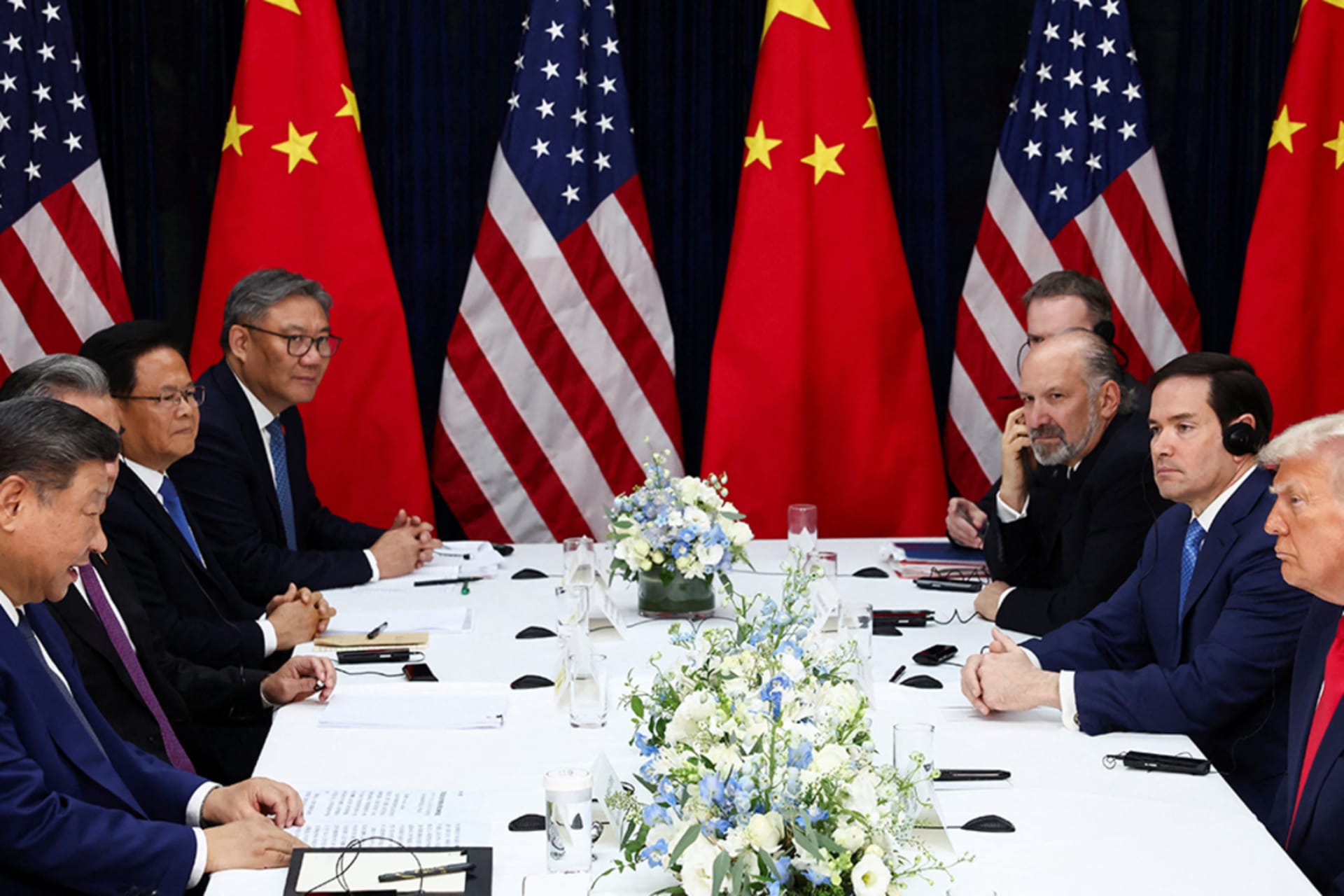
Leaders of twenty-one Pacific Rim economies have gathered in Gyeongju, South Korea, for the annual Asia-Pacific Economic Cooperation (APEC) meeting. Expectations are low for substantial outcomes from the meeting itself, but all eyes are on the surrounding events and dynamics—most notably U.S. President Donald Trump’s first meeting of his second term with Chinese President Xi Jinping.
Also hovering over the APEC meetings—and likely the subject of many hallway conversations in Gyeongju—will be the Trump administration’s still-evolving tariff policies. Every APEC economy has been subject to across-the-board reciprocal tariffs ranging from 10 percent to 35 percent, while many economies face additional duties, whether for “transshipment,” on specific products pursuant to Section 232 national security investigations, or for other reasons.
Against this fluid and uncertain backdrop, five CFR experts took a closer look at the economic and geopolitical implications of the Trump tariffs on several APEC economies: China, Russia, Taiwan (known as Chinese Taipei for APEC purposes), Thailand, and Chile and Peru.
China Can Fight a Trade War, but Its Real Test Is Growth Reform
Zongyuan Zoe Liu is senior fellow for China studies at CFR.
China’s reaction to the Trump administration’s high-pressure tariff ultimatum reflects a carefully prepared retaliatory playbook. Though Beijing may have learned to navigate a tariff war with the United States, the true test lies in whether it can shift from a defensive posture to a sustainable new model of growth. Since 2018, China has gained experience managing trade tensions with the United States, and it is now making use of hard-won lessons. It has moved methodically to diversify export markets, accelerating its drive for technology self-reliance; developed export control countermeasures against U.S. tech export restrictions; and worked to expand alternative financial systems and promote the broader use of the renminbi (RMB) and renminbi-based financial infrastructure.
China has also gone on a diplomacy offensive, presenting itself on the global stage as a more stable, pro-free trade alternative to the United States. Among these efforts are tariff concessions and duty-free access to many lower-income partners—most notably a package of preferential and zero-tariff measures toward African states and other developing countries—as part of a broader effort to diversify export markets and blunt the concentrated risk of U.S. barriers.
Judging by the most recent numbers, Chinese officials have reason to believe that Beijing is at least holding its ground, if not winning, this extended trade confrontation with Washington—and that the Trump administration overestimated its tariff leverage over China.
Read Zongyuan Zoe Liu’s full assessment of China’s response to trade pressure from the Trump administration.
Trump’s Trade Policy Feeds Taiwan’s Growing U.S. Skepticism
David Sacks is fellow for Asia studies at CFR.
President Trump’s trade policy toward Taiwan has heightened fears among Taiwanese about the durability of the island’s “silicon shield”—the idea that its dominance of semiconductor manufacturing protects Taiwan from attack—and driven worries that the United States seeks to “hollow out” Taiwan before ultimately abandoning it. Many of Taiwan’s citizens believe that the Trump administration’s push to onshore chip production, if successful, could lead to a future in which the United States stops caring about Taiwan’s security, leaving it vulnerable to Chinese aggression.
Tariffs imposed on Taiwan and the growing perception that U.S. policy toward Taiwan is fickle have amplified these fears and led to an erosion of trust in the United States. If this shift in Taiwanese sentiment intensifies and hardens, this could prompt many to conclude that unification is inevitable and that it is better to negotiate the terms of unification sooner rather than later, while Taiwan still has some leverage. China, for its part, could well increase its pressure on Taiwan, out of a belief that the United States will not assist Taiwan in resisting such coercion.
Read David Sacks’s full assessment of Taiwan’s growing concerns about the reliability of the United States given its current trade policy.
Putin Courts a ‘Global Majority’ From Russia
Stephen Sestanovich is George F. Kennan senior fellow for Russian and Eurasian studies at CFR.
No idea has a larger place in Russian President Vladimir Putin’s rhetoric than the claim that his country is shaking up the political, economic, and military hierarchy of international relations. In his view, a newly assertive “Global Majority” now challenges the old Western-led system—which he complains is characterized by “monologues, endless preaching, and orders.” This theme has had a good run in recent months, but the fall of 2025 may show how few real benefits it is producing for Russian diplomacy.
Putin himself cannot attend either of this fall’s two biggest multilateral events—the APEC summit in South Korea at the end of October, and the Group of Twenty (G20) summit in South Africa at the end of November. In each case, the reason will be the same: his indictment for war crimes by the International Criminal Court, of which both South Korea and South Africa are enthusiastic backers. Putin may rail against the international order’s oppressive “rules,” but his “Global Majority,” it turns out, likes some of them.
Even if Putin could attend this year’s APEC summit (he will send an obscure deputy prime minister instead), he would discover an uncomfortable truth about the way the hierarchy of international relations is changing. In the three decades since its first meeting, APEC has been transformed by China’s historic growth, and this summit—like many before it—will put U.S.-China talks at center stage. Every leader present at APEC will want to see whether the meeting between Trump and Xi goes well. Most will then aim to strengthen their relationship with the U.S. president, and none will be looking to Russia to bolster their security.
Read Stephen Sestanovich’s full assessment of how APEC and other major upcoming summits will showcase the increased isolation and declining relevance of Russia and Putin on the global stage.
Thailand: Slip Sliding Away From the United States
Josh Kurlantzick is senior fellow for Southeast Asia and South Asia at CFR.
The White House has imposed tariffs on Thailand (19 percent on exports and 40 percent on transshipped goods), which came after acrimonious bilateral negotiations while Thailand detained a leading U.S. academic and served as a central hub of transnational repression. These tensions have led to a chilling effect that could derail Thailand’s growth and damage a long-standing and essential U.S. relationship in Southeast Asia.
Thailand’s shift away from the United States dates back at least a decade, and there is little sign of bilateral warming today. The prior cooling toward the United States had mostly been driven by the Thai palace, the military, and elites with long-standing business ties to China, which all sparked popular anger by removing elected governments for the past twenty-five years—most recently by a harsh and economically devastating 2014 coup. Now, the general public is feeling more negative about aspects of U.S.-Thai relations, according to multiple civil society leaders and polling. A study by Milieu, a research firm based in Singapore, that was conducted after the Trump administration took office found that three-quarters of Thai citizens expressed concern or serious concern about the new U.S. tariffs. They also held an overwhelmingly pessimistic view of how White House policy will affect Thailand’s economy in the longer term.
While the public’s unease about U.S. policies does not necessarily translate into public support for China, Beijing appears to have won more hearts and minds in Thailand over the past year. China is boosting investment and aid into the kingdom, while the United States has slashed aid, a critical source of soft power. Beijing has also invested massively in cultivating the Chinese diaspora in Thailand through a range of soft power tools.
Read Josh Kurlantzick’s full assessment of Thailand’s softening stance toward China and the implications for U.S. security strategy in the region.
Tariffs Sour Public Opinion on the U.S. in Chile and Peru
Will Freeman is fellow for Latin America studies at CFR.
Chile and Peru have not been a major focus of Trump’s foreign policy—especially compared to Argentina, Brazil, or Mexico—and both have felt little economic impact from his administration’s tariffs. Still, the optics of Trump’s policies are shaping public opinion, souring both countries on the United States.
That should concern Washington, even with the long-standing diplomatic and security relationships that Santiago and Lima have with the United States. Together, Chile and Peru account for roughly 30 percent of the world’s copper reserves and 71 percent of the United States’ refined copper imports, and both countries are major suppliers of natural resources to China, their top trade partner.
But geographically far from the United States and without politically consequential U.S. diasporas, neither country is likely to become a U.S. priority soon, although closer partnerships with both could help Washington address some of its concerns over critical mineral supply chains.
Read Will Freeman’s full assessment of Chile’s and Peru’s public opinion on U.S. trade and the impact on geopolitical relations in the region.