Will Trump’s Nuclear Testing Order Prompt a Global Race?
President Donald Trump’s announcement of resuming nuclear testing has stirred questions about the type, such as live testing of warheads, and whether the United States has entered a new era of nuclear competition with China and Russia.

Erin D. Dumbacher is Stanton nuclear security senior fellow at the Council on Foreign Relations.
President Donald Trump this week posted on social media that he had ordered the immediate resumption of nuclear weapons testing “because of other countries testing programs.” The announcement stirred concern among nuclear policy experts because of its potential disruption of what has been a more than three-decades-long moratorium of live testing of nuclear explosives. Trump’s move appears to be a response to Russia’s recently publicized test of a nuclear delivery system, but raises questions of whether the president wants to risk spurring a new global race to test nuclear warheads.
What is behind Trump’s sudden announcement on nuclear testing?
Trump posted his message on social media just minutes before meeting with Chinese President Xi Jinping for a summit expected to deal with a range of economic and security issues. Although he was about to enter a room with Xi, Trump may have had Russian President Vladimir Putin on his mind when he made the statement. Russia announced on Sunday—in a setting meant for international audiences—that its new nuclear-powered and nuclear-capable cruise missile, Burevestnik/Skyfall, had traveled and maneuvered 7,800 miles. That system is designed to find the weaknesses in air defenses and what Trump hopes to achieve with his planned Golden Dome project, a vast missile defense effort with ground and space-based interceptors.
Trump may have been looking for a countering signal to Putin, not China, yet China would stand to gain the most from any global restart of nuclear testing as it expands and modernizes its own nuclear program. The United States has more data about its nuclear weapons than any other state; new tests around the world could accelerate other states’ nuclear weapons programs.
The president would also be defying an international norm against testing that forms one part of the global non-proliferation regime. More than 187 countries have signed on to the Comprehensive Nuclear Test Ban Treaty; the United States, Russia, and China are adhering to it. An international standard against testing is in place and the United States’ actions would likely have unintended consequences abroad.
What is involved in testing nuclear weapons?
Testing a nuclear warhead is not the same as testing a nuclear delivery system. The Department of Energy, historically, has been responsible for the former. The department has not conducted live tests of nuclear warheads since 1992. Between 1945 and the 1990s, the U.S. conducted more than one thousand detonations; scientists use the data and computer models from those tests today without causing any radiological contamination on or off the test site. President George H.W. Bush issued a testing moratorium in 1992.
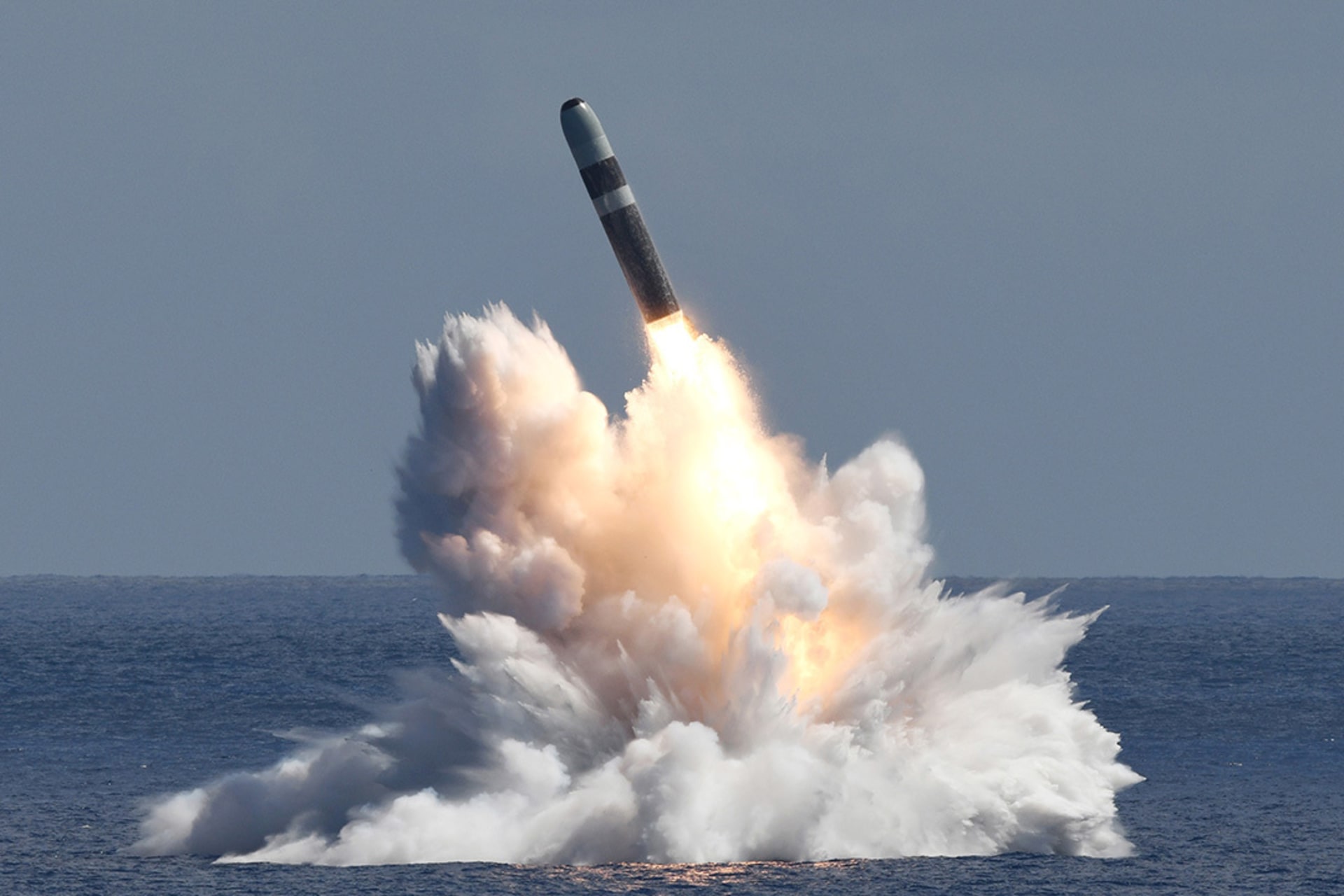
On the other hand, the Department of Defense routinely tests systems that could carry nuclear weapons, like the Minuteman III intercontinental ballistic missile test at Vandenberg Space Force Base in California in May.
Every year since 1992, the directors of the national nuclear laboratories certify that the U.S. nuclear stockpile is safe, secure, and effective without live testing. China and Russia also do not conduct explosive testing, although they have sites where they could just as the United States does in Nevada. Russia and China might reciprocate if the United States starts testing again, which could undermine U.S. advantages. Explosive testing, even if only underground and not in the atmosphere, brings the potential for unnecessary radioactive releases at sites in Nevada and abroad that serve no national security purpose for the United States.
What has been the administration’s stated policy on testing?
Trump’s post upends what was de facto administration policy. Until this week, the current administration has echoed the notion that nuclear testing is not necessary. Brandon Williams, in his confirmation testimony [PDF] before becoming under secretary of energy for nuclear security this spring, told Congress that the U.S. nuclear stockpile is safe, secure, and reliable without the need to resume nuclear explosive testing. He said he would support the robust Stockpile Stewardship Program that assures reliability, but he also told Senator Jacky Rosen (D-NV) that “the decision whether to continue […] super critical testing would certainly be above my pay grade.”
Former officials of the first Trump administration recommended a restart of explosive testing. Robert O’Brien, who served as national security advisor from 2019 to 2021, wrote in Foreign Affairs in summer 2024 that the United States should resume the practice and cited the need to “maintain technical and numerical superiority to the combined Chinese and Russian nuclear stockpiles.” But nuclear experts like Jeffrey Lewis counsel the United States “understands how nuclear weapons work much better today than it ever did when it was conducting nuclear explosions.” If the second Trump administration resumes nuclear testing, Lewis wrote in Foreign Affairs, Russia, China, and emerging nuclear weapons states would follow suit, learn from their own testing, and improve their capabilities.
It is worth noting that Project 2025, the Heritage Foundation’s sweeping blueprint for overhauling the federal government, called for the president to “indicate a willingness to conduct nuclear tests in response to adversary nuclear developments if necessary [and to direct the National Nuclear Security Administration] to move to immediate test readiness to give the administration maximum flexibility in responding to adversary actions.” Like it has other Project 2025 initiatives, the administration could be embracing this nuclear posture.
What should observers look for next on U.S. nuclear testing?
The Departments of Energy and Defense have yet to clarify how changes to nuclear testing may proceed. Under Secretary Williams and other experts will need to weigh in on the president’s statement. If the administration does seek to move forward with explosive testing, how could the national laboratories—currently running low on funds due to the government shutdown—get started on a time and resource-intensive testing program? Secretary of Energy Chris Wright announced furloughs at the National Nuclear Security Administration on October 20.
There are other ways to remind the United States’ adversaries of the strength of U.S. capabilities without explosive testing. If the president intends to signal strength and wants the Department of Defense to do so, military commanders and policy professionals can offer creative solutions without the risk of radiological consequences, without offering an advantage to China’s expanding nuclear program, and without the risk of a new global race to test nuclear weapons.
This work represents the views and opinions solely of the author. The Council on Foreign Relations is an independent, nonpartisan membership organization, think tank, and publisher, and takes no institutional positions on matters of policy.