The Dollar Boomerang Threat: Washington’s Motivations to Support the Yen
The joint U.S.-Japan intervention to prop up the yen has as much to do with protecting U.S. Treasury markets as with helping an ally manage currency volatility.

Rebecca Patterson is a globally recognized investor and macroeconomic researcher. She is the co-host of The Spillover, a weekly CFR podcast that examines the ripple effects of global events across policy, geopolitics, economics, finance, and technology.
In 1971, U.S. Treasury Secretary John Connally remarked to his peers in Rome at the Group of Ten summit: “The dollar is our currency, but your problem.”
When Connally said that, he probably wasn’t picturing the extent of the deep and complex connections that would develop between economies and financial markets over the ensuing decades. Indeed, his quote should be updated to match the United States’ present-day approach to currency policy: “Our dollar is your problem, but only until it’s our problem again.”
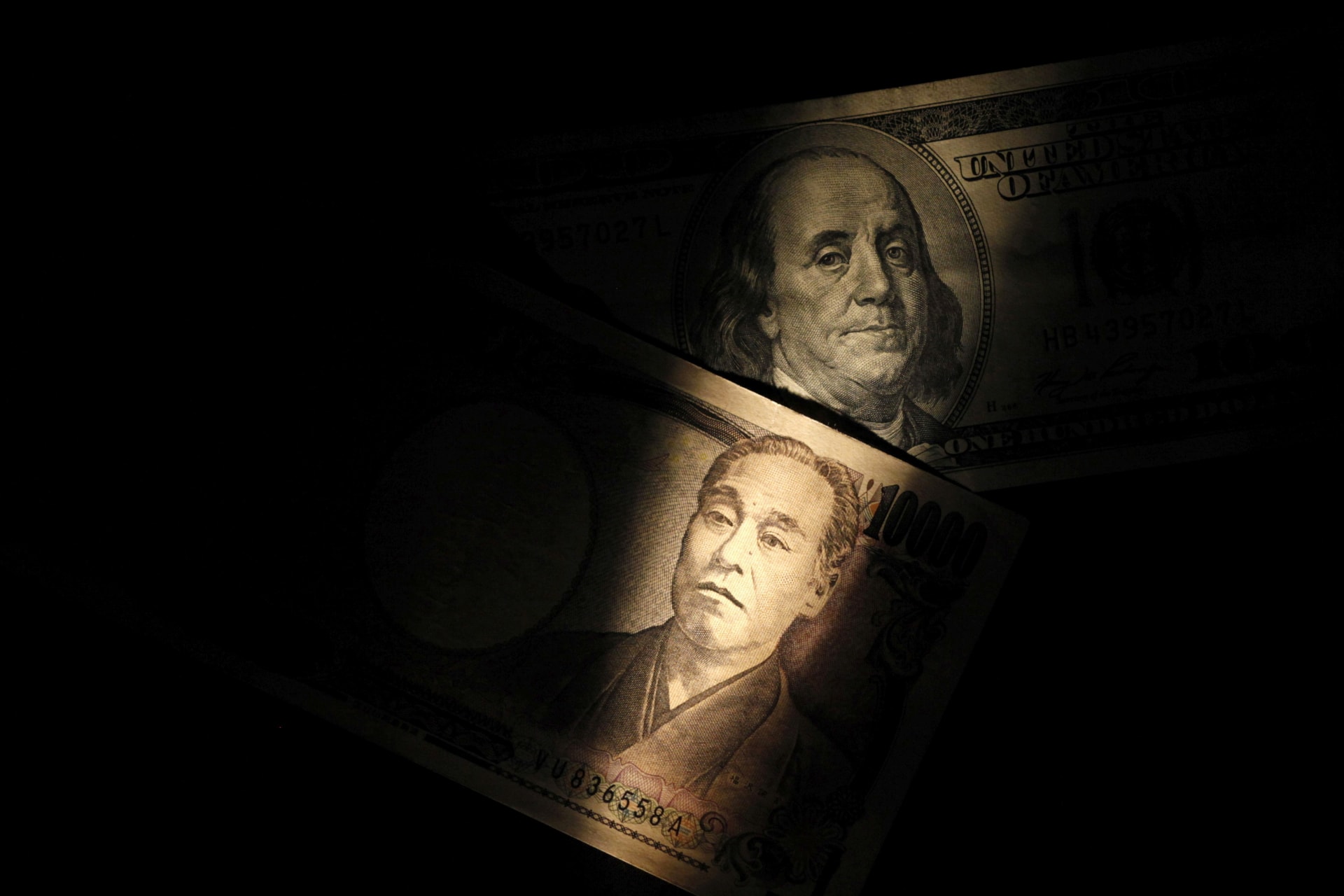
Dollar-boomerang risk is getting much-needed attention after Treasury Secretary Scott Bessent confirmed on Monday that the Trump administration had joined Japan in its first joint yen buying intervention since 1998. Unilateral Japanese intervention earlier in the year failed to prevent the dollar-yen exchange rate from nearly reaching 164 yen per dollar in late July, its weakest level in four decades. The joint steps that have followed appear as focused on limiting potential Japanese selling of dollar-based assets—especially Treasury bonds— that could slow the U.S. economy as on helping an ally manage currency volatility.
For decades, U.S. economic and financial-market dominance has given the dollar outsized global influence. According to data from the Bank for International Settlements, the dollar was represented in more than 89 percent of all currency trades in 2025—no other currency comes close.
Put another way, the dollar’s trend dominates everything else. When the dollar is strong, as it has been against the yen of late, other countries’ currency weakness can exacerbate inflation pressures, forcing central banks to tighten monetary policy more than they might otherwise. That environment of volatile currencies and rising interest rates can increase financial stability risks and weigh on growth.
The dollar has been a point of contention for non-U.S. policymakers for years. Brazil provides a useful example. In 2010, Brazil’s central bank had to repeatedly intervene to limit the strength of its currency, the real, as the dollar was declining. Then, only three years later, as the dollar recovered, Brazil complained about having to act again, this time to limit real weakness. For countries like Brazil that depend heavily on exports, sharp currency swings make it much more challenging for local companies to price export goods and anticipate profitability.
In modern history, the Fed has closely followed global economic and financial-market conditions. However, periods when overseas currency volatility came back to threaten U.S. markets and the underlying economy (to the extent that they elicited a U.S. policy reaction) were fairly rare. Perhaps the best-known recent example was the Asian financial crisis in 1997–1998. As it grew and fueled contagion to Russia and eventually brought down a well-known U.S. hedge fund, Long-Term Capital Management, the Federal Reserve eased monetary policy as an “insurance” step against spillovers that could feed into the real economy and weigh on growth.
The latest financial-market volatility and intervention in the yen suggest that U.S. policymakers, this time the Treasury rather than the Fed, are increasingly concerned about contagion back to the United States.
Two main forces are driving recent dollar gains. First, foreign capital has come to the United States, buying dollars in the process. It has sought exposure to leading artificial intelligence (AI) companies and firms supporting the broader U.S. tech ecosystem. Second, rising U.S. interest rates have made the dollar more attractive, in part driven by expectations that a resilient economy and inflation stubbornly above the Federal Reserve’s 2 percent target could lead to monetary policy tightening later this year.
The dollar’s gains have come at a particularly challenging time for Japan. Japanese households are frustrated with how inflation has run higher than the level that had become commonplace before the pandemic. The weak yen tends to exacerbate inflation sentiment.
The Bank of Japan (BoJ) has started to react to improved growth and higher inflation by lifting policy interest rates. However, worries over short-circuiting growth have led the BoJ to move cautiously, leaving the yen’s so-called yield low enough versus its peers to keep it an attractive currency through which to fund higher-yielding investments (what is often called the “carry trade”).
The BoJ also appears wary of raising interest rates more than necessary given the country’s already high government debt levels, which are likely to further increase with the government’s fiscal-stimulus plans and rising debt-servicing costs.
The combination of these forces had pushed the dollar versus the yen to its highest level in more than forty years. Multiple rounds of unilateral intervention to buy the yen (and sell U.S. dollars), executed by Japan’s Finance Ministry, only held the exchange rate below a psychologically important level around 160 yen per dollar for several weeks—before it ultimately breached and rose to nearly 164. That triggered the joint intervention that brought dollar-yen down below 158 on August 4.
Given the growing economic and political pressures stemming from the yen, it’s not surprising that Japanese policymakers have been looking for other ways to address the challenge. Earlier this summer, they floated an idea to get the Japanese Government Pension Investment Fund (GPIF) to shift its portfolio allocations, which would mean buying more Japanese government bonds and selling foreign government bonds (including U.S. Treasury bonds). Such a move could be seen as more powerful and lasting than regular intervention, especially as the GPIF could influence other local funds to follow suit.
Bessent would certainly have taken notice of the pension allocation risk, given his repeatedly stated goal to get 10-year Treasury yields down to 3 percent. The idea that the largest foreign owner of U.S. government bonds (reportedly more than $1.1 trillion as of May) could be considering a sale would come at a time when Treasury yields were already elevated. A sell-off would weigh on the U.S. housing market and come just months ahead of a critical midterm election.
Even then, it was surprising to see the United States join Japan in yen-buying intervention at the end of July, for the first time since the 1990s, without the sort of financial crisis as a backdrop that historically led to multilateral action. Bessent’s comments since, and reported details around the intervention, underscore that the Treasury’s efforts to support the yen have as much to do with the United States as they do with Japan.
Washington intervened not by selling dollars to buy yen, but rather by selling euros. (U.S. reserves include different currencies as a matter of course.) Avoiding the dollar could have been purposeful. Bessent wouldn’t want any perception that the government is trying to weaken the dollar, or that it was taking any steps that could increase upside risks to U.S. inflation.
Another notable move: Bessent suggested that the Federal Reserve’s Foreign and International Monetary Authorities Repo Facility could be increased in the coming months, presumably for future intervention. The repo facility was established in 2020 to provide emergency dollar liquidity to foreign countries during the COVID-19 pandemic as a way to avoid emergency selling of Treasury bonds. It was not designed explicitly for intervention, but it certainly provides a means for Japan to do dollar-yen intervention without needing to liquidate Treasury holdings.
Beyond a possible focus on U.S. assets, Treasury might also be thinking about Japanese investments in the United States as part of the logic behind joint intervention. To limit tariffs threatened by the U.S. government, Japan has pledged some $550 billion in investments in the United States over the coming years. A challenge in executing investments of this magnitude is the potential need to sell yen to buy dollars as part of the process. Of course, that could add to the pressure on the Japanese government to step up intervention efforts.
Historically, intervention to sustainably turn a currency trend works best in coordination with other countries and when coupled with directionally similar policies (such as unexpectedly large Japanese monetary tightening).
Secretary Bessent suggested in a CNBC interview on Monday that Japan is working on exactly such policy changes. Raising interest rates aggressively would threaten growth and fiscal sustainability, so that doesn’t seem a likely next step. And Japan’s government is firmly focused on more fiscal stimulus. The hope here is that growth will outpace debt-servicing costs, which could help improve debt-sustainability dynamics; however, it remains far from clear if and when such policies would work.
With that in mind and given the risk of yen spillovers working against U.S. government goals, more joint intervention should not be ruled out. The United States does not want the dollar to become its own problem.
This work represents the views solely of the author(s). The Council on Foreign Relations is an independent, nonpartisan membership organization, think tank, and publisher, and takes no institutional positions on matters of policy.