Criminal Violence in Mexico


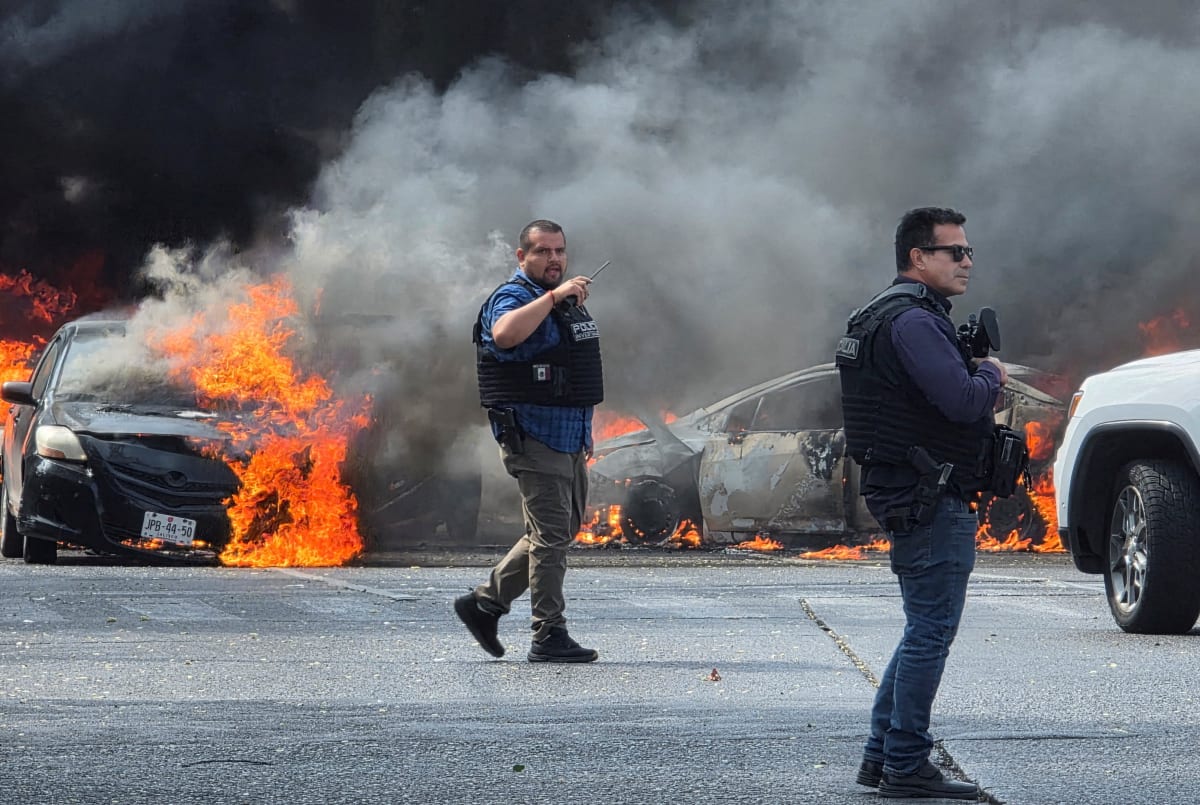
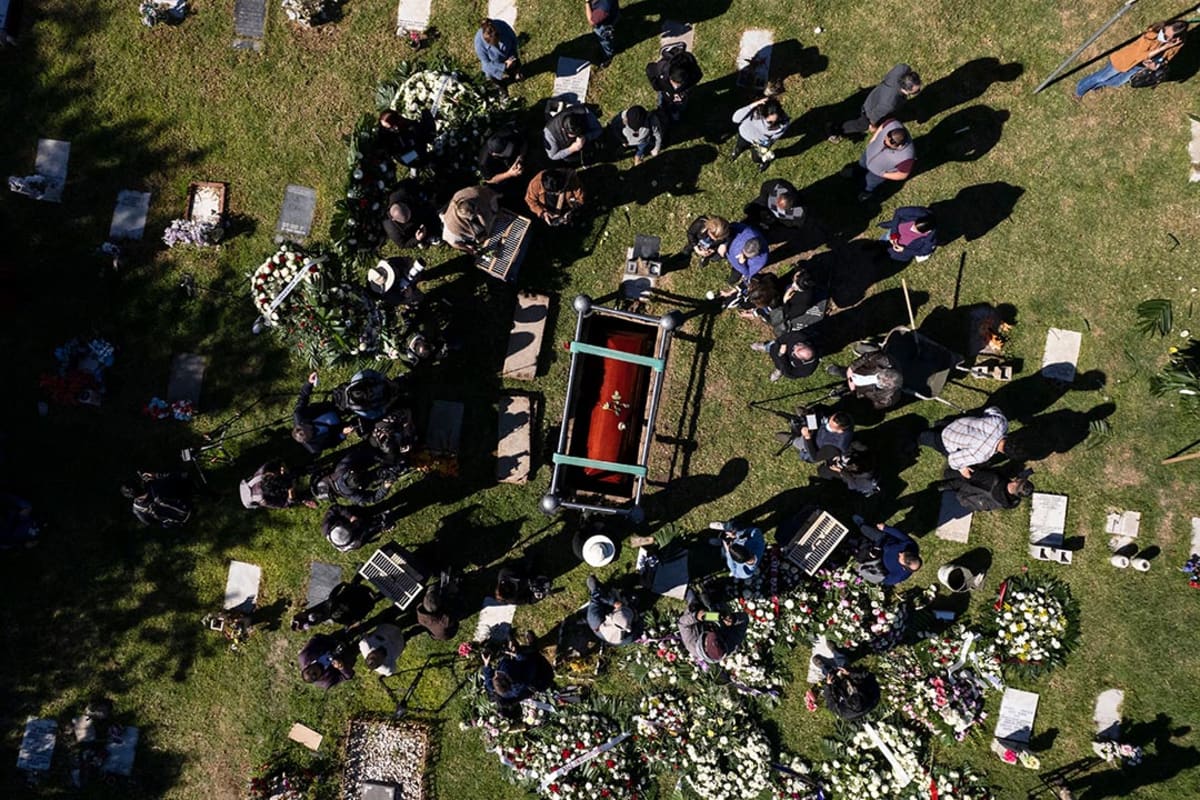


On February 22, Mexican security forces killed Nemesio Rubén Oseguera Cervantes (“El Mencho”), the leader of Jalisco New Generation Cartel (CJNG), with the help of U.S. intelligence. The operation represents one of the most significant disruptions to drug trafficking since the trade gained a foothold in Mexico in the 1980s. The U.S. Drug Enforcement Administration has designated CJNG as one of Mexico’s most powerful trafficking organizations, responsible for distributing vast amounts of cocaine, methamphetamine, and increasingly, fentanyl, into the United States.
In a retaliatory show of force, gang members instigated a coordinated wave of violence across Mexico, setting fire to vehicles, blocking roads and highways, and forcing civilian lockdowns across major cities—underscoring the reach and power cartel groups continue to wield throughout the country. Analysts warn that a CJNG leadership succession crisis could trigger internal power struggles and further destabilize Mexico’s security landscape.
Background
In the 1980s, Mexico’s criminal groups and drug traffickers became organized [PDF], assigning distinct regional areas of control for each group and establishing networks and trafficking routes. However, as production and distribution increased, the groups began fighting for territorial control and access to markets, leading to an increase in violence across Mexico.
The Mexican government officially declared war on criminal organizations in 2006 when former President Felipe Calderon launched an initiative to combat cartels using military force. In 2012, President Enrique Peña Nieto revised the Calderon government’s strategy, shifting efforts away from violent exchanges and toward improving law enforcement capacity and supporting public safety.
However, after the Sinaloa Cartel’s Joaquin “El Chapo” Guzman was arrested in 2014, re-arrested in 2016, and finally extradited to the United States in 2017, a power vacuum was created within the Sinaloa Cartel, resulting in an accompanying increase in violence between rival factions seeking new territory and influence. Moreover, despite an initial decrease in homicides following Peña Nieto’s reforms, Mexico continued to struggle with corruption and crime-related violence. By 2016, drug-related homicides had increased by 22 percent, with more than twenty thousand killed. In 2017, a mass grave containing the remains of more than 250 victims of crime-related violence was uncovered in Veracruz State. The violence rapidly intensified to a peak of 33,341 homicides in 2018, and the murder rate has dropped only slightly since then. Additionally, from 2017 to 2020, a journalist was killed [PDF] every week on average.
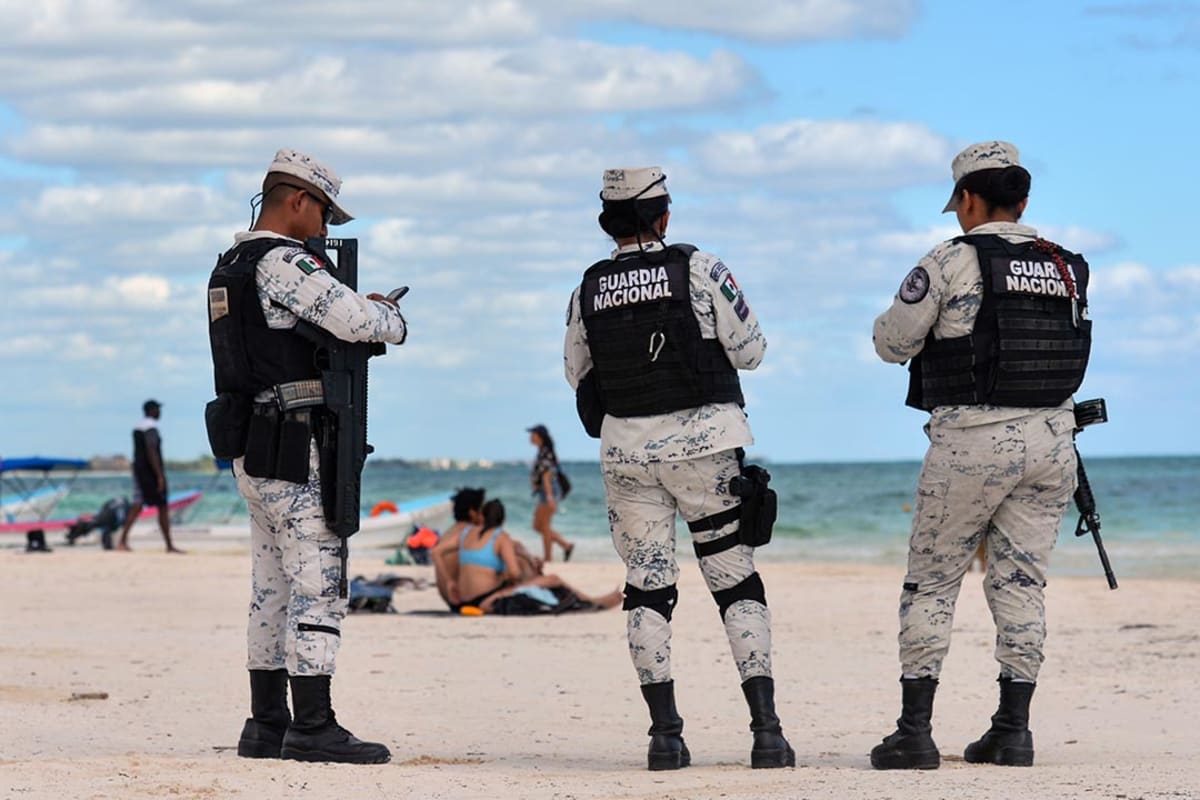
Recognizing widespread assertions that the use of military force had only increased the level of crime-related violence in Mexico—and accusations that the military had committed human rights abuses and carried out extrajudicial killings—then-presidential candidate Andrés Manuel López Obrador, popularly known as AMLO, promised on his campaign trail to revolutionize the fight against cartels and revert to a civilian-led police force. As part of his amorphous “hugs, not bullets” policy, AMLO suggested poverty alleviation programs, the legalization of marijuana, and new sentencing guidelines for drug traffickers. After winning the election and assuming office in December 2018, AMLO announced the creation of a new National Guard (a hybrid civilian police and military force) to fight cartels. In 2019, under a deal with the United States, AMLO deployed much of this force to the southern border with Guatemala to stem migration.
However, AMLO’s tactics largely failed to curb violence. Though homicide rates dropped marginally, the country still reports over thirty thousand crime-related deaths per year. Mexico’s 2024 general elections were its most violent in decades, attacks on journalists have continued at record highs, and anti-corruption reforms have floundered.
Meanwhile, criminal and drug trafficking organizations threaten to undermine the strength and legitimacy of the Mexican government, an important U.S. regional partner, as well as harm civilian populations in both countries. In 2007, the George W. Bush administration and the Calderón government launched the Mérida Initiative to improve U.S.-Mexico cooperation on security and rule-of-law issues in Mexico. It remained in place until AMLO rejected the agreement over its militarized approach and worked with the Biden administration to draft the more broadly focused Bicentennial Framework to replace it in 2021.
Recent Developments
Despite initially advocating a less securitized approach to reducing drug trafficking and violence, AMLO expanded the military’s role in policing. Though the military’s involvement was intended as a temporary measure, Mexico’s Congress passed a reform in August 2022 that allows the military to carry out domestic law enforcement until 2028. AMLO also promised to bring the National Guard under the army’s command despite an April 2023 Supreme Court ruling that it must remain under civilian control. Rights groups say military policing has eroded the treatment of civilians, who face arbitrary detention, rape, and extrajudicial killings. Nonetheless, the government appeared to double down on its approach, granting the navy full control of Mexico City’s busiest airport to combat smuggling in July 2023. It also transferred several other government functions to Mexico’s military, including large-scale infrastructure construction, tourism development, and customs oversight at ports of entry and exit.
President Claudia Sheinbaum, AMLO’s chosen successor, has said she aims to strengthen AMLO’s National Guard, hire more police investigators, and invest in more social programs for youth to address violence. Some critics argue that continuing AMLO’s militarized approach will be insufficient to tackle Mexico’s security issues.
Meanwhile, cartels have consolidated and expanded their control, battling each other with heavy weaponry and drones. Kidnappings, killings, and the targeting of journalists remain prevalent, and the state has struggled to deliver justice for victims of past crimes, particularly those committed by the military. After the kidnapping of four Americans in March 2023, some U.S. Republican lawmakers proposed sending a U.S. military force to Mexico. AMLO rejected the threat, calling it “irresponsible” and saying he would not permit an intervention.
As of May 2024, cartels controlled about one third of Mexico’s territory, according to one estimate from the U.S. military. According to the U.S. Drug Enforcement Administration, the Sinaloa and Jalisco cartels are responsible for the vast majority of drug trafficking in the United States, supplying methamphetamines, cocaine, heroin, marijuana, and other drugs. An increasingly high quantity of fentanyl, the leading driver of drug overdoses in the United States, is also smuggled across the southern border by the Sinaloa and Jalisco cartels and their associates.


Sinaloa Cartel Faction Leader Captured
Omar Oswaldo Torres, the leader of the Los Mayos faction of the Sinaloa Cartel, was captured in a raid conducted by the Mexican military in Cucliacan in the state of Sinaloa; authorities reported that eleven people were killed in the raid, and that tactical equipment and weapons were seized (Al Jazeera).
Los Lobos Leader Arrested in Mexico City
Angel Esteban Aguilar, leader of the Ecuadorian crime group Los Lobos, was arrested in Mexico City’s international airport, where he had attempted to enter the country using a false identity; his arrest was described as a collaborative effort between Mexico, Ecuador, and Colombia (Al Jazeera).
Cartels Spread Disinformation to Sow Fear After El Mencho Killing
Researchers say a coordinated propaganda campaign by organized crime groups helped spread false accounts and AI-generated images of extreme violence after El Mencho was killed; the false information reflects efforts to make the retaliatory violence appear greater than it really was (Reuters).
Sheinbaum Addresses El Mencho Raid in Press Conference
President Claudia Sheinbaum said order has returned to Mexico, citing the absence of roadblocks on Monday morning that gang members had set up in retaliation on Sunday (Reuters). Sheinbaum was joined by Security Secretary Omar García Harfuch, who stated that Sunday’s violence killed twenty-five members of Mexico’s National Guard in six attacks; he also said that thirty criminal suspects were killed in Jalisco and four others were killed in Michoacán (AP). Harfuch further stated that seventy people were arrested across seven states (Reuters).
Mexican Security Forces Kills Jalisco New Generation Cartel Leader
Nemesio Rubén Oseguera Cervantes, known as “El Mencho,” was one of the country’s most-wanted cartel bosses (NYT). Four cartel members, including El Mencho, were killed in the military operation, and an additional three later died from their injuries; two members were also detained as authorities seized armored vehicles and heavy weaponry (Axios). The U.S. Joint Interagency Task Force Counter-Cartel played a role in the military raid; the group was launched last month and specializes in intelligence collection on drug cartels (Reuters). The United States later commended the Mexican military, the White House press secretary wrote on social media (White House). The operation sparked retaliatory attacks by organized crime groups across Mexico, which blocked roads and set fire to buildings such as banks and supermarkets (Reuters).
Mexico, El Salvador Seize Cocaine in Pacific Operations
Mexican and Salvadoran naval forces seized over ten tons of cocaine in the Pacific this week, including nearly four tons recovered from a semisubmersible vessel south of Manzanillo; Mexican authorities said the operation relied on intelligence shared by U.S. Northern Command and Joint Interagency Task Force South (AP).
Controversy Over El Paso Airspace Closure
The U.S. Federal Aviation Administration (FAA) reopened the airspace at El Paso International Airport soon after announcing a ten-day closure that would have grounded all inbound and outbound flights (AP). Transportation Secretary Sean Duffy said the closure was due to Mexican drug cartels sending drones over the border, but multiple news outlets reported—citing unnamed sources—it was actually closed because aviation officials were concerned that Customs and Border Protection’s testing of an anti-drone laser posed risks to local aircraft (NYT).
Seized Cartel Ammunition Produced by U.S. Manufacturers
Mexico’s defense secretary General Ricardo Trevilla Trejo stated that of the 137,000 0.50 caliber rounds seized since 2012, 47 percent came from Lake City Army Ammunition Plant, the largest manufacturer of rifle ammunition for the United States military; General Trevilla Trejo further noted that of the 18,000 firearms seized since 2024, 80 percent came from the United States (NYT).
Abducted Canadian Miners Found Dead
Canadian Miner Vizsla Silver stated that the abducted workers from the company’s construction site in Concordia were found dead (Reuters). Vizsla Silver reported that ten of its workers were abducted on January 28 (Vizsla Silver).
Gunmen Kill Eleven in Soccer Field Attack
Gunmen killed at least eleven people and wounded twelve after opening fire at the end of a soccer match in Salamanca; Mayor Cesar Prieto appealed to President Claudia Sheinbaum for help managing escalating violence, and state prosecutors moved to enforce security (AP).
Mexico Arrests “El-Botox”
Mexican authorities arrested Cesar Alejandro Sepulveda Arellano, known as “El-Botox,” accusing the White Trojans leader of extorting lime growers and ordering multiple homicides, including the October killing of agricultural leader Bernado Bravo in Michoacan (AP).
Mexico Sends Thirty-Seven Cartel Suspects to the United States
Mexico sent thirty-seven cartel suspects to the United States, raising the total number of transferred inmates to ninety-two and marking the third major transfer in the past year (Reuters).
Mexico’s Detainee Transfer
The Mexican government sent thirty-seven imprisoned cartel members to the United States, Security Minister Omar García Harfuch wrote on social media (X). It is the third such transfer in under a year; the Trump administration has pressed Mexico to crack down on drug trafficking and threatened to carry out military strikes in the country over the matter (AP).