Trump Foreign Policy at One Year, With Matthew Kroenig
This episode explores President Trump’s foreign policy agenda in the months following his return to the Oval Office last January.
Published
Host
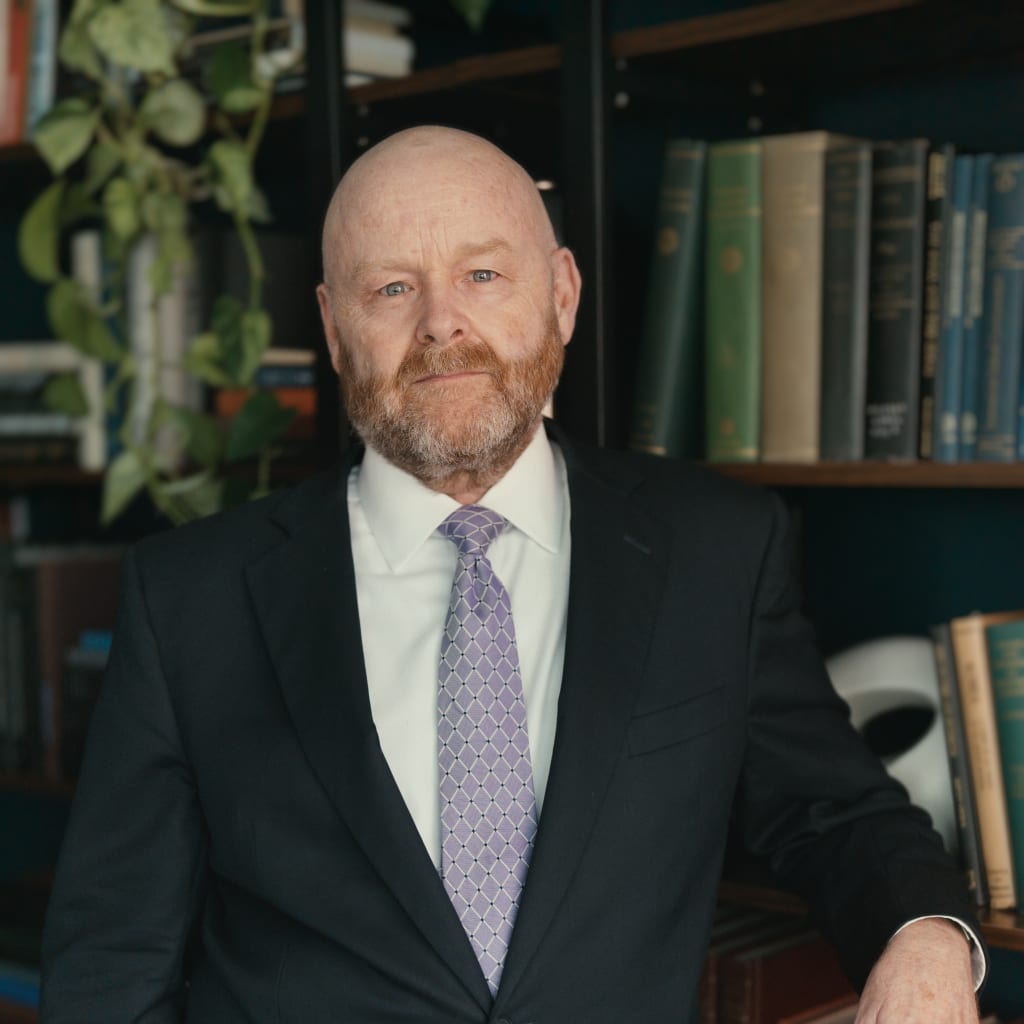 James M. LindsayCFR ExpertMary and David Boies Distinguished Senior Fellow in U.S. Foreign Policy
Guest
- Matthew H. KroenigVice President and Senior Director of the Scowcroft Center for Strategy and Security, Atlantic Council; 2011-2012 Stanton Nuclear Security Fellow, CFR
[Video: https://youtu.be/ychV0TMqjfw?si=DyoWF5FFnqmSPogF]
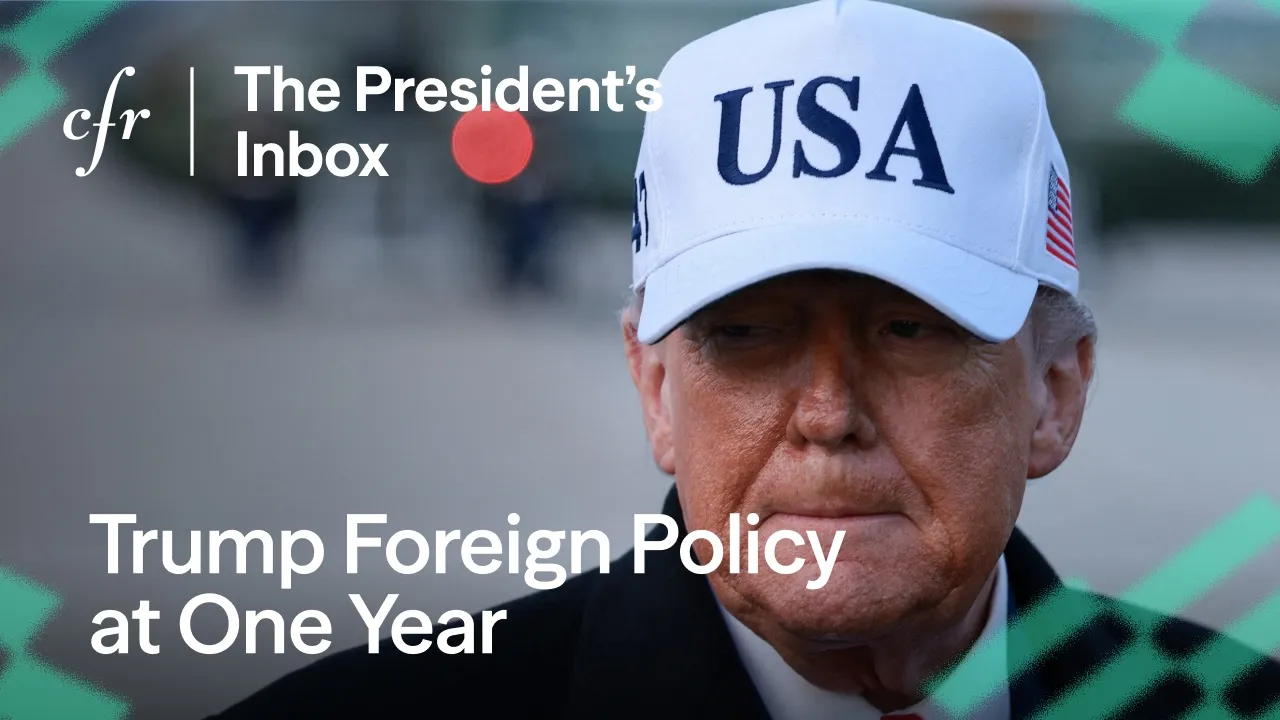
Matthew Kroenig, Vice President and Senior Director of the Scowcroft Center for Strategy and Security at the Atlantic Council, sits down with James M. Lindsay to discuss how President Trump has approached foreign policy since returning to the Oval Office last January.
Transcript
President Donald Trump:
BLOOMBERG TV: We will no longer surrender this country or its people to the false song of globalism.
LINDSAY:
Donald Trump campaigned for the presidency, promising to reshape America’s engagement with the world. Since his inauguration for a second term last January, he has been true to his word.
President Donald Trump:
NBC NEWS: My fellow Americans, this is Liberation Day, waiting for a long time.
CBS NEWS: Hundreds of workers at the U.S. Agency for International Development are cleaning out their desks.
President Donald Trump:
WFAA: You’re gambling with the lives of millions of people,-
Volodymyr Zelenskyy:
WFAA: I am the president in war…
President Donald Trump:
WFAA: … you’re gambling with World War III.
WCNC: Breaking news from overnight, the United States conducting multiple airstrikes against Iran.
NEWSNATION: An American strike in Nigeria.
CBS NEWS: The U.S. has struck another alleged drug boat in the Pacific, killing two people.
LINDSAY:
Is the Trump disruption of U.S. foreign policy working as the President argues, or is it making the United States less secure and less prosperous as his critics warn? And most important, what new disruptions is Trump likely to pursue during his remaining three years in office?
From the Council on Foreign Relations, welcome to The President’s Inbox. I’m Jim Lindsay. Joining me today is Matthew Kroenig, Vice President and Senior Director at the Atlantic Council’s Scowcroft Center for Strategy and Security. Matt, thank you for joining me.
Matthew Kroenig:
Thank you very much for having me, Dr. Lindsay. It’s a pleasure to be here.
LINDSAY:
I appreciate the honor and we can dispense with it and go with Jim from here on out, Matt. I want to sort of begin at the 40,000-foot level, if we may. And how would you assess Trump 2.0 one year in?
Matthew Kroenig:
Well, at the 40,000-foot level, I do think we’re at an inflection point in history. The post-Cold War period is over. We’re entering a new period and we haven’t quite defined it yet. So any presidential administration, it’s Trump, but if it had been Harris or anyone else, would’ve been dealing with some major changes. The new technology revolution, populist backlashes to kind of the excesses of globalization, the threat from China and the access of aggressors and others. So I think Trump came in a challenging time. And like any foreign policy administration’s record, it’s mixed. But on balance, I think the Trump administration has done some good things, strengthening NATO, addressing the threat from Iran’s nuclear program, putting in place policies to win the new tech race. And then also I think putting in place policies that address these popular concerns with the excesses of globalization, with stronger border security, reshoring manufacturing and securing supply chains. So overall, I think the influence has been more positive than negative.
LINDSAY:
Okay, I want to dive into some of those specifics, Matt, but just to start, I’d like to stick with the question of how one would describe Trump’s approach to foreign policy. Media coverage of Donald Trump during the campaign typically portrayed him as an isolationist who was looking to avoid U.S. military operations overseas. That seemed to be part of the appeal to MAGA voters. But over the last twelve months, Donald Trump has used military force in Nigeria. He used it against Iran. Most famously earlier this month, he used it in Venezuela. Has Trump’s thinking about military force changed during his second tour in the Oval Office or did we have Trump wrong all the time?
Matthew Kroenig:
I see more consistency across Trump one and the Trump two administrations. And I think a lot of the critics and outside analysts who referred to him as an isolationist misread him. So he has this doctrine of peace through strength, and I think both of those pieces are important. I think Trump is proud of his role as a peacemaker. He’s talked about the eight and a quarter peace agreements he’s negotiated in this second term. And he’s also talked with a lot of pride about how he was the only president who didn’t have a major war erupt on his watch in recent decades. So I think the peace is important, but it’s peace through strength, not peace through surrender. He’s also very proud about building up the military, building up nuclear forces.
And we saw in both the Trump one and Trump two, his willingness to use military force in short, sharp, decisive ways. So the killing of Soleimani in the first term, enforcing the red line on Syria’s chemical weapons use, the strikes against Iran’s nuclear program, and now the raid against Maduro. I think what he is skeptical of is kind of long drawn out military campaigns with no clear end in sight like Iraq, Afghanistan, and Ukraine. But I do think that again, sharp, decisive uses of force are kind of consistent with this peace through strength mantra and Trump’s vision of America’s role in the world.
LINDSAY:
And certainly it’s been the case, Matt, that all the uses of military force so far have been against overmatched opponents. We’re not talking about the use of military force against other great powers. You mentioned Venezuelan. I want to dig down a little bit on that. You were vocal in urging Trump to remove Maduro from office. Are you surprised that Trump has stopped at leadership change and has it moved on to regime change?
Matthew Kroenig:
Initially, I was surprised like everyone else when Trump expressed skepticism on the Democratic opposition and on Machado, the Nobel Peace Prize winner. But I think over the past week or so, we have seen the contours of a plan emerge, and I do think it makes sense. And in a way, it’s a reaction to the mistakes of Iraq and Afghanistan. And I think two of the mistakes in Iraq and Afghanistan were one, a military intervention without a clear strategy. Going in and getting out quickly might have worked, turning Iraq and Afghanistan into the next Germany and Japan and staying forever might have worked. Instead, the United States was half in and half out for twenty years. We essentially settled on the one strategy that didn’t work. And so I think the Venezuela plan is trying to correct for that and getting in, getting out militarily, I don’t see future military operations likely.
And then second mistake from Iraq and Afghanistan, I think was over promising on democracy and human rights and kind of smashing the existing state structures without a good plan for what comes next. And so I think the administration is downplaying expectations on democracy and human rights. And Rubio has laid out this three part plan of first, stabilization, second recovery, and third transition. So there is a vision toward moving to democracy, but doing it gradually and cautiously.
LINDSAY:
Let me ask you about that, Matt, because there seems to be an element in the Trump administration’s approach that’s essential equivalent to trying to drive a car from the backseat. The idea, as I understand it, is you put pressure on the incumbent regime in Venezuela to do the things that Washington wants it to do, the threat being either the additional use of military force or to squeeze Venezuela’s main source of funds, which is the export of oil. But at the end of the day, members of the regime have a vested interest in making sure the regime doesn’t get replaced by democracy. How do you see this working out? Are there any historical examples we can turn to where this sort of trying to control things remotely actually works the way the administration seems to intend?
Matthew Kroenig:
Well, I think you’ve described the strategy accurately. I think it is about using leverage both from the oil quarantine and threats of possible second wave strikes, as the president has described them, to coerce the remnants of the Maduro regime to changing policy. And as you know, Jim, a debate we often have in U.S. foreign policy is the goal to change the policy or is it to change the regime? It seems like in the near term, the goal is to change the policy.
And so there is some reason to believe it’ll work. Rodriguez doesn’t want to receive the Maduro treatment. There is significant leverage from this oil quarantine. And we have seen some evidence already that Rodriguez is giving into Trump demands, releasing political prisoners, promising to release tens of millions of barrels of oil to the United States. So I think only time will tell. In terms of historical precedent, it is a big bet, essentially a bet that we can turn an adversary into a partner through coercion. And so when we get to that last step of the transition, this is going to have to, for it to work, it’ll have to be planned carefully. And I think there will have to be discussions of reconciliation, possible amnesty for former regime elements, but it doesn’t seem to me impossible. And again, given the experience of Iraq and Afghanistan, I understand the desire to go slow.
LINDSAY:
Matt, I want to put what has been called the Donroe doctrine in perhaps a bit bigger geopolitical context, sort of the major policy innovation on the foreign policy side during Trump 1.0 was a notion of great power competition. The United States had to wake up to the fact that China was a pure competitor bent on surpassing, supplanting the United States first in East Asia and then more broadly globally. Does a Donroe doctrine mean that we’ve sort of put great power competition either to the side or demoted it in terms of American foreign policy priorities?
Matthew Kroenig:
I don’t think so. And if you look back at the National Security Strategy published in December, it is the case that the threat from China, Russia, Iran, North Korea wasn’t clearly spelled out. But then if you read the rest of the document, it talks about winning the technology and economic competition, that’s clearly a reference to China. It talks about maintaining a favorable balance of power in the Indo-Pacific, that’s about China. It talks about preventing hostile states from dominating important regions, that’s about China. It talks about ending malign influence in the Western hemisphere, that’s in part about China.
And I talked to a senior administration official about this kind of discrepancy and he invoked Teddy Roosevelt of speaking quietly, but carrying a big stick and kind of criticize some past U.S. government efforts and maybe best exemplified by Nancy Pelosi’s visit to Taiwan of doing symbolic stuff, poking the eye of China without backing it up. And he said the focus here is on building the hard power to compete, but not having this rhetoric calling out China as a threat. So that’s how I see it. I think they still are competing, they’re just not leading with that. They’re doing it quietly behind the scenes.
LINDSAY:
Matt, I certainly agree with you that if you read the National Security Strategy, you can find passages that appeal to, I’ll call it the people who are promoters of or defenders of the great power competition thesis. But it seems to me that the president’s actions, which at the end of the day are more important than any words in a document often don’t seem to live up to the idea that there is a great power competition. I take your point that the administration has tried to do things dealing with technology and supply chain resilience that are important, but at the same time, whether we’re talking about the president’s refusal to force China to divest TikTok or we talk about the president’s willingness to overrule his advisors to provide advanced semiconductor chips to China, it doesn’t seem to be aligned with this notion that the United States number one foreign policy priority is standing up and countering Chinese influence.
Matthew Kroenig:
I don’t know that it’s the number one priority, and I think you’re right that the president himself may not think primarily in terms of great power competition, but as you know, the U.S. government is a big place and there are parts of the bureaucracy moving out based in part on the guidance from the NSS. And so I know colleagues at the Pentagon, including of course, Indo-Pacific Command, very focused on the China threat. I know the XM Bank sees its primary responsibility right now is providing incentives for the private sector to invest in the developing world primarily to counter China. So I think there is a lot of activity going on to counter China.
And then just going to one of the examples you mentioned on the chips, I talked to a senior administration official who said that to win the new tech race, there are really two parts of that. One is to have the best technology, but the other part is to have market share. If we have the best technology, but nobody else uses it, that’s not really winning the tech race. And so they said that these chips that are being exported to China are not the most advanced. We’re still holding those back, but part of the reason of exporting them is to have China build around our technology versus us and others building on China’s technology.
LINDSAY:
Of course, the counter argument to that is China is going to rely on our technology up until the moment it can create its own technology and thereby displace the United States. I think this is a well-worn argument and we’ll see how it plays out.
You’ve mentioned the Axis of Aggressors, others might call it the Axis of the Aggrieved or the Axis of Autocracies, that seems to have receded it in the thinking of the Trump administration. And I’m particularly thinking about U.S. relations with Russia. The president does not seem to have approached Russia with a peace through strength approach. He seems, if anything, quite solicitous of Russia and Moscow’s interest. Help me understand Trump’s approach to the issue of Russia, obviously tied to the question of the war in Ukraine.
Matthew Kroenig:
Well, for whatever other criticisms people can have of Trump, I don’t think you can say that he’s not transparent. I think that often what comes out of his mouth is what’s in his head. And so I do think he believed his rhetoric in the campaign and early on that he has a good relationship with Putin. He has a good relationship with Zelenskyy and he’s going to solve the war within twenty-four hours. I think he’s learned over the past year though a number of things. I think he has learned that this is harder than he thought. I think he has learned that it’s not Zelenskyy or Europe that’s the problem, it is Putin that’s the problem. And I think he has learned that this is going to require more pressure on Russia. So he has started taking some steps in that direction and last fall for the first time sanctioned a couple of the big Russian energy giants. And I do think that that pressure is one of the things that’s got the Russians to negotiate a little bit more seriously over the late fall and the winter.
There are some other big steps I think the president will have to take if we’re going to force Putin to negotiate in good faith and we’ll see if he takes them. One of them, of course, is the Senate Bill with Graham and Blumenthal with something like ninety Senators in support and the president just tweeted recently that he’d like to see that go forward. So I think he is-
LINDSAY:
But that bill has been watered down along the way, hasn’t it? It was much tougher in its first iterations, it seems to me it’s been softened with a lot of waiver authority, discretionary authority given to the president.
Matthew Kroenig:
Well, you’re one of the countries, really the world’s foremost experts on the Congress and foreign policy. So you’re-
LINDSAY:
You’re far too kind.
Matthew Kroenig:
… probably following more closely than I am. And so maybe that’s the case. Last time I was tracking, it was something like 500 percent secondary tariffs on purchasers of Russian energy and so that would target primarily China and India, but I’m not tracking the latest.
LINDSAY:
Yeah. I mean, you’re right on the headlines, it’s more about sort of whether the president has to impose or is required to impose. It gives him, my understanding, is a fair amount of discretionary authority. But again, you were speaking about the issue of how President Trump is handling the challenge posed by Russia.
Matthew Kroenig:
Yeah, and so just to restate and summarize, I think the president really did believe that he had a good relationship with Putin and that was going to count for something. I think he’s realizing now that Putin is the one obstructing his goals in Ukraine and a tougher approach is going to be necessary.
And if I could just reflect on the first Trump administration, because this was something that was somewhat puzzling to me too, is that Trump was unwilling to criticize Putin publicly, but then behind the scenes, his administration actually had a pretty tough policy toward Russia. He approved lethal aid to Ukraine for the first time, something the Obama administration wasn’t willing to do. They killed a bunch of Russian mercenaries in Syria, built two new low yield nuclear weapons precisely to deter Russia. So there always has been this kind of disconnect between the rhetoric and the policies when it comes to great power competition with Trump.
LINDSAY:
I’m curious, Matt, you have been a proponent of taking a stronger line in dealing with the challenge posed by Russia, particularly in terms of the war in Ukraine. I think your philosophy is peace through strength and you would argue the United States has certain military capabilities that it could do more to impress upon the Russians. In particular, I think you’ve spoken of redeploying nuclear weapons to Poland, as well as adding more non-strategic nuclear weapons to the U.S. arsenal in Europe. The President hasn’t gone down that road yet, do you see any signs that this administration might do that?
Matthew Kroenig:
Yeah. And so just to start where the full scale invasion started in 2022, I think it is one of the interesting counterfactuals of history, what if the United States had provided Ukraine with everything they needed from the beginning? Could Ukraine have won decisively on the battlefield? We’ll never know the answer to that.
LINDSAY:
You’re not suggesting provide them with nuclear weapons?
Matthew Kroenig:
No, no, no.
LINDSAY:
Okay, … clear.
Matthew Kroenig:
And we published a strategy paper at the Atlanta Council that essentially said to give Ukraine all the conventional weapons they need with the goal of winning on the battlefield, but that’s not the approach the Biden administration took. As you know, they were against tanks before they were for them. They were against providing aircraft before they were for it and so on. And so now the reality is that the line of contact has barely moved. And it does seem like the best that we can do is negotiate some kind of ceasefire along the current lines that secures a kind of West Ukraine in the West and then work over time diplomatically or other ways to try to regain the rest of Ukraine even as we in the meantime acknowledge a defacto Russian control of Eastern Ukraine.
But the problem with that is it seems that Putin thinks that he’s winning and it’s hard for us to believe because it’s at such high cost and such a slow pace, but it seems like he’s still not willing to negotiate. And so to change that, you are going to have to increase the pressure on Putin.
And I think there are a lot of ways you can do that economically, but also militarily, as you pointed out, what if President Trump tweeted tomorrow that we’re going to redeploy U.S. non-strategic nuclear weapons in Europe from sites in Western Europe to Eastern Europe? And given that it’s Trump and he’s so unpredictable, he could even tweet, “We’re going to give Ukraine nuclear weapons.” I think that is the kind of thing that could pressure Putin to come to the table. He respects nuclear weapons. So far, the president hasn’t been willing to go that far, but as I mentioned, he is, I think, inching in the right direction, including with the sanctions against the Russian energy giants, agreeing to provide American military aid to Ukraine paid for by Europe, that’s something he wasn’t willing to do at the beginning of the administration. So we’re moving in the right direction just too slowly, in my opinion.
LINDSAY:
I would imagine though, if President Trump took some of the steps you just alluded to, that would create a very different sort of dynamic in Europe and a different set of criticisms of what the president was up to in the threats it posed to Europe. Maybe that’s really a good place to segue and talk about Europe. Again, if you look at American foreign policy over the eighty years since the end of World War II, the Transatlantic Alliance was the foundation of American power and American global leadership. I think if President Trump were here, he would say, “I helped revitalize the transatlantic relationship by persuading NATO members to pledge 5 percent of their GDP to defense,” even though technically only 3.5 percent goes directly to military spending. The rest is for things that might support these countries’ military.
At the same time, however, I think it’s safe to say based on my conversations with European officials that President Trump’s seeming sympathy for Putin, his talk about Europe’s civilization erasure and his threats to take Greenland from NATO partner, Denmark have raised very strong concerns on the other side of the Atlantic that we are witnessing the fracturing and end of the Transatlantic Alliance. How do you assess Trump’s actions in the context of that debate? Is this tough love that’s going to leave us better off or is this something that really does risk breaking one of the fundamental pillars of American foreign policy?
Matthew Kroenig:
I don’t think we’ll break the pillar, but I think both of those things are happening simultaneously. We are strengthening the Transatlantic Alliance even as there are doubts increased doubts in Europe about America’s future commitments. And so just first, I think getting the defense spending increase at the NATO summit was a huge success. 3.5 percent is what NATO officials estimate is needed to provide the capabilities needed for NATO’s new regional plans. We were nowhere near that before. Allies were pledging to spend 2 percent, but as you know, many of them weren’t there, so this new 3.5 plus 1.5 is needed. And I think only Trump could have gotten us there. Very unlikely, I think that a different president would have gotten us there. And I’ve talked to senior NATO officials who say there were really two factors driving that. One was the threat from Putin, but one was the need to satisfy the Americans and satisfy Trump. There was also a concern-
LINDSAY:
But I will note that the further you get away from the Ukrainian border, the less enthusiasm there is within NATO to pony up the 5 percent. And I think particularly in Spain, among other countries, it’s not clear they’re ever going to get to 5 percent in reality. So we’ll see.
Matthew Kroenig:
That’s a good point. There’s a geographic divide within Europe. And then I’d also point out, like in Washington, there’s a divide often between ministries of defense and finance ministries and elected politicians and publics. My sense is that the ministries of defense in many of these countries are much more supportive of the defense spending increases than maybe publics or finance ministries are. But overall, I think that’s a good thing.
And then this fear that Trump is going to pull out of NATO, I was at the NATO summit and at Trump’s press conference, it was almost sweet. He was talking about how NATO is not a ripoff, these are people who just love their countries. So the fear that Trump is going to pull out of NATO, I think has subsided to the people I talked to.
The big fear now is Greenland, and how can a U.S. president be threatening that military options are on the table for Greenland? And it is causing a lot of worry in Europe. The way I make sense of it is part of Trump’s negotiating style as he writes about in The Art of the Deal when he wants ten, he asks for a hundred. So I don’t think that he’s serious about using military force against Greenland, it seems like it’s building leverage for a negotiation. I think it’s inadvisable, but I’m not the president-
LINDSAY:
Inadvisable.
Matthew Kroenig:
Inadvisable.
LINDSAY:
Inadvisable. Why do you think it’s inadvisable?
Matthew Kroenig:
Well, I think-
LINDSAY:
I mean, are the critics right that this could break NATO? I mean, to me, that’s the difference between Trump 1.0 and Trump 2.0. During Trump 1.0, people were worried that Trump was going to leave NATO. I think now the concern is that Trump is going to break NATO.
Matthew Kroenig:
Yes. Well, I think that Trump is right that Greenland is important for all the reasons you and your listeners know, the melting Arctic, the return of great power competition there, critical minerals. But I think the way to address it is to work hand in glove with our NATO allies, Denmark, who’ve essentially said that they’re happy to work with us on increased facing and critical minerals and anything else. And so I just think threatening a NATO ally with military force goes too far. And again, I don’t think that Trump would follow through on that. I think he’s building leverage for a negotiation. Marco Rubio apparently told members of Congress that really what he wants to do is buy Greenland, so maybe that’s what this is about.
But I think for … For so long, the United States over the past eighty years has tried to persuade our allies and persuade adversaries that we would be willing to fight wars on behalf of allies and so going so far as to threaten them militarily, I think potentially undermines that. I think NATO’s been through a lot though over the years, Iraq, the Suez crisis going, Vietnam. I think we’ll make it through this too, but it’s definitely straining the relationships.
LINDSAY:
Yeah, this would strike me as a case in which the old adage, you catch more flies with honey than with vinegar would apply. And I would just note that the United States at one point had seventeen military bases in Greenland, so the ability to secure Greenland, I don’t think is a core issue. And I should also add that the 54,000 or so people living in Greenland should have a say and are going to have a say, they hope in how this all plays out.
Matt, I want to sort of look forward, because again, this has been by any stretch of assessment, a very turbulent time in American foreign policy. Donald Trump has gone out and done a number of things. We really haven’t dived into the tariff increases or the restructuring of the national security bureaucracy in the United States. But I’m sort of curious, looking forward, what additional kinds of disruption changes do you expect to see going forward? Do you think the president has played all the cards in his hand, checked off all of the to do tasks in his to do list, or are there some things that are going to be rolled out over the next three years?
Matthew Kroenig:
Yeah, so looking forward and maybe going region by region, I do think that Ukraine is going to continue to be a priority. We’ve seen that it was a priority in the first year. And I think that Trump is serious about wanting to get peace, about his legacy as a peacemaker. So I suspect we’ll see continued activity there.
In the Middle East, we haven’t talked much about the Middle East. I do think the president deserves credit for helping to end the conflict between Israel and Iran, including through his military intervention. Deserves credit for getting the first phase of this Gaza Peace Agreement, second, additional phases will be tougher.
And then right now we’re seeing these historic protests in Iran and what is going to happen there. My fear and expectation is probably that the regime will be successful in its crackdown, but what a remarkable transformation of the Middle East that would be if the regime there falls. So I could see …
LINDSAY:
Well, actually, let me draw you out on that. What is it that you think the United States could and should do? And I will note the president has threatened to react strongly. He hasn’t filled in the details of what that actually means, but he has threatened to react if the Iranians kill large numbers of protestors. The latest count, that number’s over 500, so something is possible. Are we looking at kinetic action, something similar to what we saw last year in terms of attacking Iran’s nuclear facilities? Are we talking about cyber attacks to further disable and hamper the regime? Something else I’m not clever enough to think about? I How do you see this unfolding?
Matthew Kroenig:
Well, I’ll just make a broader point maybe before coming to that is that people have said that President Trump is isolationist, that President Trump doesn’t care about democracy and human rights. And here’s another example of him threatening to use military force to protect democracy and human rights, so I think some of these narratives are not quite accurate. But what are the options, and the president has said locked and loaded, which strongly suggests that military option. I think you’re right that cyber could be a possibility.
One thing that I think may be most likely is that even before these protests started, there was discussion about a U.S. or Israeli strike against Iran’s missile infrastructure that Iran is trying to rebuild since the twelve-day war. So that would be maybe low hanging fruit, something they wanted to do anyway. There’s also been reporting about strikes against military bases.
And then I don’t know about you, Jim, but I didn’t foresee the raid to capture Maduro. And so maybe there are other clever special operations type things directly against the Iranian leadership that the Israelis or the United States are planning. And after the Maduro raid, I don’t think we can count anything out.
LINDSAY:
We certainly can’t. And that would obviously be a high risk gamble. Anytime you put forces in harm’s way, things can go sideways no matter how well the planning has gone. One country we haven’t talked about, Matt, that I’m really curious to get your take on is North Korea. North Korea was a big feature of Trump 1.0, barely mentioned in the first year of the Trump administration, didn’t feature in the national security strategy. Do you have any predictions or projections about what’s likely to happen in U.S.-North Korean relations in the year to come?
Matthew Kroenig:
Well, you’re right. This was the major issue in Trump’s first year of his first term. You’ll remember threats of fire and fury and the high profile summits in Singapore and Hanoi. And I think the president really thought he could get a deal with Kim Jong-un, realized it was going to be too difficult and decided to walk away and essentially put it on the back burner.
And there’s essentially been a bipartisan approach to the issue. The Biden administration didn’t make North Korea a top priority either. And you’re right, hasn’t been a priority in the first year of Trump two, wasn’t even mentioned in the national security strategy. So it’s possible it’ll just stay on the back burner. I was talking to a Trump administration official who predicted that it will make an appearance in the second term that given that the president loves negotiations, loves deals, that there may be an attempt to try to get some kind of negotiations going with the North Koreans. It’s going to be very hard as we’ve seen over the past twenty years, but I guess I’d predict that there will be some kind of an attempt to negotiate.
LINDSAY:
Matt, I want to close by coming back to the Western hemisphere and to the question of the ramifications of the Maduro raid. The President, when he has spoken about the raid, has made it very clear that his anger about drug production is not limited to Venezuela. He’s had some angry exchanges with Colombia. He’s had some very pleasant exchanges with Claudia Sheinbaum, the president of Mexico, but he has also said that the drug cartels and not President Sheinbaum are in control of Mexico. So there have been threats of using U.S. military force in Mexico against the drug cartels. Do you think that’s likely? And perhaps even more important, do you think that would be wise?
Matthew Kroenig:
Well, and expanding on the question a little bit, people have said, is the Maduro action a new precedent and will we see this coming to Columbia, Mexico, Cuba, or elsewhere? My analysis is that Venezuela in away was the low hanging fruit. Maduro was an illegitimate leader. The country was so badly mismanaged. He’d been an anti-American dictator for so long. That’s kind of the easiest place to justify.
LINDSAY:
And he wasn’t popular with other leaders in Latin America.
Matthew Kroenig:
That’s right. Or with his own people. As you and the listeners know, he lost an election 70 percent of Venezuelans voted for his opponent and he remained in power anyway. And so I guess I see Mexico and Columbia in a different category. These are legitimately elected Democratic leaders. They’ve been, Colombia in particular, but also Mexico, pretty close security and economic partners with the United States over the years. Trump, as you point out, does seem to have a good relationship with Sheinbaum. He and Petro have exchanged some words, but they reportedly had a phone call recently where they patched things up. So harder for me to see either of those resulting in military action. Cuba is the one place where I do think we could see the Venezuela model repeated because it has a lot of the same characteristics. It’s been an anti-American dictatorship for some time. They’re mismanaging the country. And I’ll just quote the Secretary of State who said that if he were in Havana in government, he’d be at least a little bit concerned.
LINDSAY:
Though I suspect the administration also might wait to see if the cutting off of economic support from Venezuela is going to do the task of toppling the regime in Havana without the United States having to do anything at all. On that note, I’ll close up this episode of The President’s Inbox. My guest has been Matthew Kroenig, Vice President and Senior Director at the Atlantic Council of Scowcroft Center for Strategy and Security. Matt, thank you very much for joining me.
Matthew Kroenig:
Thanks, Jim. It’s always a pleasure to be here.
LINDSAY:
Today’s episode was produced by Justin Schuster with Director of Video, Jeremy Sherlick, and Director of Podcasting, Gabrielle Sierra. Our recording engineer was Bryan Mendives. Production assistance was provided by Oscar Berry and Kaleah Haddock.
Mentioned on the Episode:
Matthew Kroeneg, “To Get to Peace in Ukraine, Trump Should Play the Nuclear Card,” Foreign Policy
Matthew Kroenig, “Trump Has a Strategy for Venezuela,” Foreign Policy
Matthew Kroenig, “Trump Should Oust Maduro,” Foreign Policy
Matthew Kroenig, “Trump Was Right to Oust Maduro,” New York Times
Matthew Kroenig, “Two Cheers for the National Security Strategy,” Foreign Policy
Opinions expressed on The President’s Inbox are solely those of the host or our guests, not of CFR, which takes no institutional positions on matters of policy.
Associate Producer
- Associate Producer, Video and Audio
Editorial Director and Producer
- Director, Podcasting
Director of Video
- Director of Video
More Episodes
 33:42Podcast
 36:05Podcast
 41:07Podcast
 39:26Podcast
 35:04Podcast
 31:46Podcast