Zbigniew Brzezinski, With Edward Luce
Edward Luce, U.S. national editor and a columnist for the Financial Times, sits down with James M. Lindsay to discuss what we can learn from the life, career, and writings of Zbigniew Brzezinski, national security advisor to President Jimmy Carter.
Published
Host
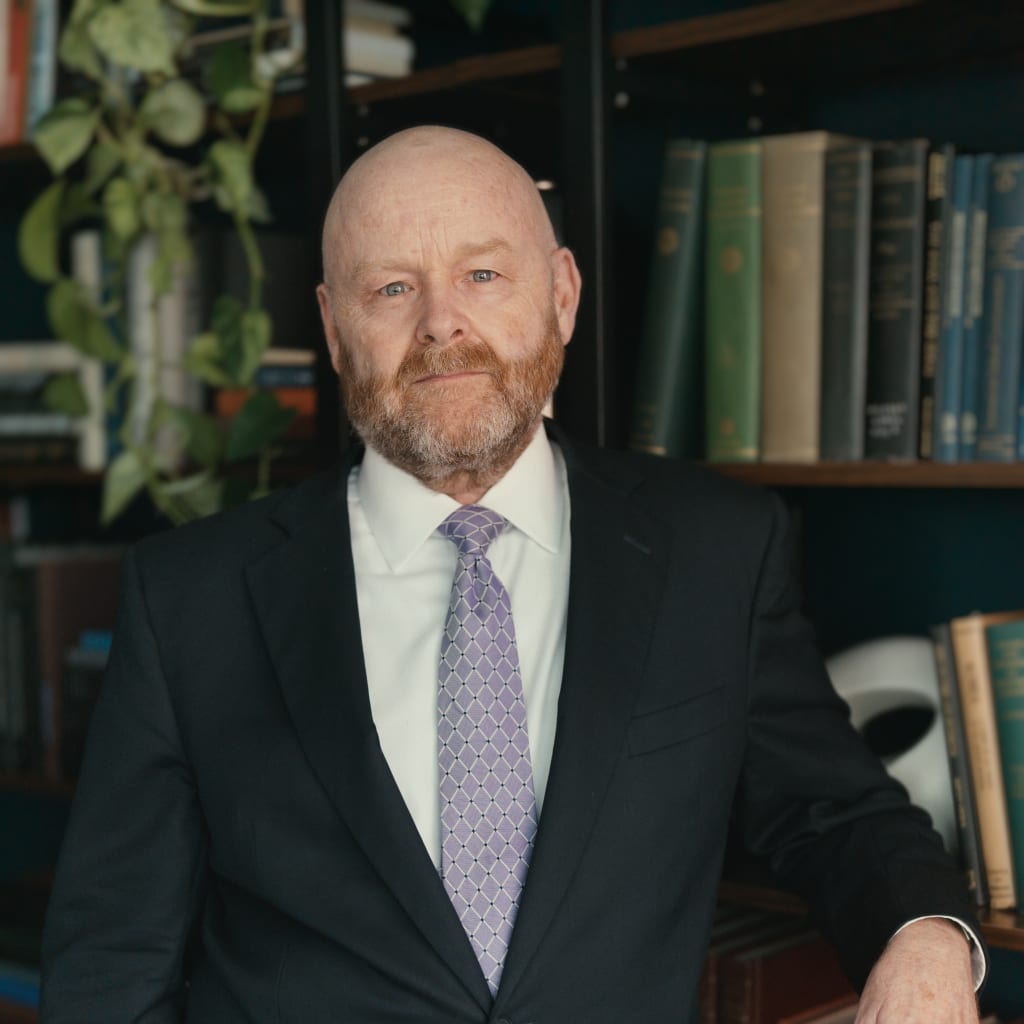 James M. LindsayCFR ExpertMary and David Boies Distinguished Senior Fellow in U.S. Foreign Policy
Guest
- Edward Luce
Show Notes
Mentioned on the Episode:
Edward Luce, The Retreat of Western Liberalism
Zbigniew Brzezinski, Out of Control: Global Turmoil on the Eve of the 21st Century
Zbigniew Brzezinski, The Fragile Blossom: Crisis and Change in Japan
Zbigniew Brzezinski, The Grand Chessboard: American Primacy and Its Geostrategic Imperatives
Transcript
LINDSAY:
Welcome to The President’s Inbox. I’m Jim Lindsay, the Mary and David Boies distinguished senior fellow in U.S. Foreign Policy at the Council on Foreign Relations. This week’s topic is Zbigniew Brzezinski.
With me to discuss what we can learn from the career and work of Zbigniew Brzezinski, National Security Advisor to President Jimmy Carter, is Edward Luce. Ed is the U.S. National Editor and a columnist for the Financial Times. A longtime journalist, he spent a year as a speechwriter during the Clinton administration for Larry Summers, the Secretary of the Treasury. Ed is also a frequent guest on Morning Joe on MSNBC, and he has written four acclaimed books, one of which has just been released. Zbig: The Life of Zbigniew Brzezinski, America’s Great Power Profit. Ed, thank you for joining me on The President’s Inbox.
LUCE:
Always a pleasure to be with you, Jim.
LINDSAY:
Ed, I want to congratulate you on the publication of Zbig. I was just looking at one review that called it “magnificent.” I think that’s obviously the kind of adjective any author wants to hear about his work. Where I’d like to start though is with a little story, which is yesterday I was talking to a recent college graduate. I said I was sitting down to talk to you about Zbigniew Brzezinski and the recent college graduate said to me, “Who’s that?” So perhaps we could sort of set the table for maybe some of the younger members listening to us as to exactly who Zbigniew Brzezinski was.
LUCE:
Yeah, that’s I think the correct starting point, and I always applaud students and journalists who asked the most direct question and the answer to that is he was one of America’s grand strategists during the Cold War. He was National Security Advisor to Jimmy Carter. But before and after that, very much the rival to Henry Kissinger. Some people have sort of compared that relationship, which spanned decades and was what I call a frenemieship, to Amadeus Mozart with Salieri in that Brzezinski was always a bit behind. But I think the reason why I believe this biography is merited is not just because he hasn’t had a full life biography, Brzezinski, but because his contribution to the Cold War in America’s peaceful victory over the Soviet Union is I believe underweighted by history. But quite apart from anything else, it’s just an extraordinary story that this Polish-born interbellum Warsaw, a Polish-born brilliant scholar could make it to the top of American geopolitics and live right up to Trump’s first administration having been born during the Stalin era. And it’s just an extraordinary life story.
LINDSAY:a
And I want to dive into the bio and sort of life story of Zbigniew Brzezinski and also some of his writings. But first I want to ask you a question. Why did you write the book? You’ve written three acclaimed books. One is on modern India, one is on America’s decline, another on the retreat of Western liberalism. This is a biography which is a different kind of enterprise than writing standard nonfiction. So why a bio and why Zbig?
LUCE:
So a bio, it’s only worth doing if you really are convinced that the person you’re writing the biography of is worth it. I mean, you couldn’t detest that person. You can worship them. I mean, I’m in between. I don’t worship or detest Brzezinski, but you need to find them fascinating because a biography is quite a different kind of challenge. It’s a different beast to the other sort of nonfiction, relatively journalistic books that I’ve written. You either do a biography properly or not at all. And it is a major undertaking and I started it during COVID. So from beginning the research to now, to the launch has been five years. And I knew Brzezinski a little bit in the last decade, 12 years of his life. I used to telephone him for stories. Anything had a geopolitical dimension during the Bush or Obama administrations. When I knew him, he would just be in a category of one in terms of the incisiveness and clarity of his response to my questions. Even if his judgment was wrong, there was just a sort of acuteness to his brain and fund of historical memory that was hard to match when he passed away, as I say early in the Trump administration. And the other reason is the family, well the middle offspring, Mark Brzezinski, came to me with the diaries that Brzezinski kept when he was National Security Advisor, a time of great geopolitics, lots of turmoil in the 1970s. You have the China normalization, the Iran Hostage Crisis, the Soviet invasion of Afghanistan, the return of the Panama Canal to Panamanian sovereignty. The Camp David talks, and I think I mentioned the Iranian Hostage Crisis, but a lot of which is still with us, but the diaries are compelling. And once I started reading the diaries and once I ascertained that these were being offered to me without strings attached, because no writer wants to be a gun for hire. In other words that the family of Brzezinski would share everything with me but only read the book at the same time as everybody else, have no editorial say in it, then at that point I realized this is a mountain to climb in terms of research and writing, but it will be worth it. And indeed, it really, really has been worth it beyond... This is the most exciting intellectual project I think I’ve done.
LINDSAY:
Well, I definitely say that you have done your research and you’ve backed it up. You have complete set of notes at the end of the book, which is to your credit. But let’s talk a little bit about Zbig’s biography and to what extent do you think his history, having been born in Poland, moving to Canada as a young man, being a child of a Polish diplomat, seeing this dismemberment of Poland coming to the United States and beginning his graduate studies at Harvard, how did that shape his approach to geopolitics?
LUCE:
I think it’s seminal. I mean those early formative decades were the decades of a young Pole, very briefly experiencing this interwar serenity in the newly born second Polish Republic. And then as you say, crossing the Atlantic on the eve of the war just after the notorious Munich agreement. And from Montreal where his dad was Polish Consul General, watching chronically and keeping to my benefit, detailed childhood early adolescent diaries about the razing of Poland, the destruction of his home country. So it couldn’t but fail to have been a really formative influence on this young, by the end of the war, stateless Pole’s view of the world. And when he graduated from McGill University, also of course in Montreal in 1950, it was with his thesis entitled “Russo-Soviet Nationalism.” And that contains really the key, that hundred-page paper, the key to the geopolitical Cold War strategy that he took with him to Harvard to Columbia, junior position in LBJ’s administration running Hubert Humphrey’s foreign policy campaign in 1968. The losing campaign of course, and then of course into the Carter, the Carter years and beyond. And that’s an extraordinary sort of, it’s not often biographies have such a clear line pointed out so early in the life of your subject.
LINDSAY:
Well, it seems to me that Zbig certainly knew what he was interested in. You talk about the diaries he wrote as a young man, I believe you write in the book at one point, I think it was a school yearbook format, people were writing about what their focus or what their great interest in and what he wrote was “foreign affairs, parentheses, Europe.”
LUCE:
Yes. And everyone else put things like yawning, playing pranks, teasing my grandmother, and he put “Europe, foreign affairs.” That was age 12. And it’s borne out by the diaries. I mean, the diaries are extraordinary. Those early childhood diaries and his mother’s very lyrical diaries and letters, all of which involved a lot of translation as well as deciphering of handwriting because they were in Polish. But this was the diary of a very precocious geopolitical brain who was obsessed. And occasionally a girlfriend would come along or he’d have an interest in a girl and he’d dispatch that within one sentence and then have five on the fall of France or something, or the Battle of Britain. I mean he was gripped and addicted by the horrors unfolding on the other side of the Atlantic. And that mounts as the war goes on.
LINDSAY:
Talk to me a little bit, Ed, about his early scholarly work because obviously Zbig’s fame rests on the fact that he was national security advisor for four years, but he earned his PhD at Harvard. He taught at Harvard, later moved to Columbia. He did, I think what people in my field would say was some seminal work on Russia, what we would call area studies. Talk to me a little bit about that part of his career.
LUCE:
Yeah, I mean I should mention that when he arrives in Montreal, just in terms of his academic abilities, when he arrives in Montreal, he doesn’t speak English, he speaks Polish, he speaks German in fact because his father had been posted in Leipzig, but he didn’t speak a word of English. And at the end of his first year at this Anglophone school in Montreal, he’s getting first prize in English literature amongst Anglophones. And this is just consistent all the way through, at McGill being an undergraduate and then a PhD student at Harvard. He keeps getting the top grades and coming top of his class. So he was very gifted and his really most important Sovietology takes place in the fifties and the early sixties. And it does carry on from that McGill thesis I outlined. He pioneers really the study of comparative communism. And this is where his Polish antecedents are very important because he said, “Look, a lot of Soviet area studies and many Sovietologists are profoundly mistaken in thinking that the Soviet Union is a monolith and that the people who live within consider themselves to be Soviet citizens.” He said, “This is a misdiagnosis, a misreading of what’s going on behind the Iron Curtain,” which I think his Polishness informed. He said, “Look, the Achilles heel of the Soviet Union is its suppressed nations, not just the captive nations of the Warsaw Pact of Poland and Romania and Hungary and countries like that, but also within the U.S.S.R., the Georgians, Kazakhs, Tajiks and Russians, Ukrainians and so on. These people perceive themselves to be under the yoke of a Russian Empire that is dressed in Marxist clothing, but that is nevertheless to them a Russian-dominated system and we should activate and nurture and stoke these suppressed nations to basically push back against the system.” And so he pioneered this field called comparative communism, the study of comparative communism, and this was really quite seminal work. This is where he really excelled as a scholar.
LINDSAY:
So tell me, Ed, how did Brzezinski make the transition from being a college professor, albeit a college professor at an elite eastern institution, to getting into politics? Was it by accident?
LUCE:
No, his yearbook in McGill and when he’s twenty-two the saying that he chose, everyone else is “Carpe Diem” and stuff like that. His is “When one is right, victory is only a matter of time.” He very much wished to be a scholar practitioner. Being a Sovietologist was a gateway to being somebody who could actually influence the conduct of a superpower.
LINDSAY:
And that was part of his reason for going to Columbia.
LUCE:
It was indeed.
LINDSAY:
And staying at Columbia.
LUCE:
But staying at Columbia, I mean because Harvard hadn’t given him tenureship and then they perceived they’d made an error and tried with increasingly generous terms to woo him back with a tenured position. But he realized that Harvard was actually way more monastic. New York was halfway to Washington D.C. or two-thirds of the way if you start the journey in Montreal. He just keeps going down the East Coast and his destination, the Beltway, Washington is never really in much doubt, but he gets to know his local senator, John F. Kennedy and starts writing speeches for him in the late fifties. It’s his first crush really as an American, as an actor—
LINDSAY:
He was not the only person to ever crush on John F. Kennedy.
LUCE:
He was not original in that respect. His last crush, by the way, was Obama. Ditto. When he moved to New York, he would write prolifically. I think he’s still the single most bylined person in Foreign Affairs Magazine. And of course he joins its parent organization, the Council of Foreign Relations, your organization, and manages to write speeches for JFK as president. He wasn’t formally an advisor, but from the outside. And then to get this junior-ish job in Lyndon Baines Johnson’s administration. So once he’s moved to Columbia in 1960, he’s pretty quickly moving towards power and he’s watching Henry Kissinger do it more quickly. So Kissinger is showing him what is possible—
LINDSAY:
Kissinger is the pacing academic?
LUCE:
I think he is. And then the real sort of moment of clarity for Brzezinski is when Kissinger is appointed by Nixon in the Pierre Hotel in New York, and I think early December 1968, as his plenipotentiary National Security Advisor making very clear foreign policy will be made out of the White House. And that day Brzezinski realizes, “Oh look, a guy with a funny name and a foreign accent who wasn’t born in America can reach the top.” And that day he actually, he would tell this story, but he went and bought a notebook at a stationery store near the White House and he put down the names of the people he would like in his National Security council when he emulated Kissinger.
LINDSAY:
And many of those people actually ended up on the staff of the N.S.C. when Brzezinski became national security advisor.
LUCE:
That’s absolutely correct. I mean including by the way, Samuel Huntington, who as a Harvard and then Columbia colleague and then he went back to Harvard, but as one of Brzezinski’s sort of lifelong intellectual friends. I don’t think Huntington was that intimate with anybody, but he became known as “Zbig’s Zbig” when he got a job working for Brzezinski in the Carter administration. And I should add just a sort of little biographical detail, Brzezinski met his wife Muska, Emilie Benes, he met her on a double date with Sam Huntington in 1954. It’s quite hard to picture that one. Muska was Huntington’s date and Brzezinski, I think it’s fair to say, was not very collegiate that evening. He poached her.
LINDSAY:
I love that story. I was not expecting to learn that when I read Zbig. Before we talk about Zbig becoming National Security Advisor, I would love that if you could tell the story of how when Brzezinski went to work for LBJ, policy planning in the State Department, how he managed to get sort of his first big break and shape a presidential speech because it speaks to his clear bureaucratic insight, how to make things happen in a big organization. I think it’s a lovely story.
LUCE:
It is a very good, it’s kind of seminal, isn’t it, to his life. Well, remember the context here. Where he is taken on as an academic secondment really at the policy and planning staff at the State Department is that LBJ is now obsessed, this is late 1966, with the Vietnam War. The whole focus of the Cold War has shifted to Southeast Asia away from the Iron Curtain, away from Brzezinski’s natural specialism. And he wants LBJ to give a speech announcing really a change in policy. And that change in policy is endorsing essentially Brzezinski’s peaceful engagement strategy. His idea was that you unlock civic sort of resistance, non-military resistance to the Soviet Union by both embracing détente, by having a relaxation of tensions so that Moscow can allow more autonomy in its satellites, but then also engaging directly with them. And he wrote the speech, it gathered dust somewhere in the corner of the White House. So he thought up of this plan, which was unfalsifiable, which is to tell LBJ’s political staff that Bobby Kennedy was going to give a speech in a couple of weeks. And Bobby Kennedy, of course was the person LBJ dreaded most in terms of a potential primary challenge. That Bobby Kennedy was going to give a speech attacking him for allowing his brother’s Cold War legacy to go to see them. They believe this and LBJ gives his speech and Bobby Kennedy doesn’t give his. Brzezinski’s given the date, even when Bobby Kennedy was alleged to give his. And Brzezinski’s answer is, “Well, because LBJ preempted him, Bobby Kennedy canceled his speech,” and I think it’s pretty clear he just made it up.
LINDSAY:
That’s the way Washington works, one has to be willing to gamble. So let’s talk about Brzezinski’s tour as National Security Advisor, Ed. You laid out many of the things that happened during Carter’s presidency. It’s a real useful reminder that it’s not just 21st century presidents who have very full inboxes on foreign policy with lots of tough issues. How did Brzezinski assess his four years as National Security Advisor? Were there things he took particular pride in, things he had regrets about?
LUCE:
Yes, there were regrets. I think chief among them was the Iran Hostage Crisis. I mean I write in the book because it became so manifestly clear during the research and my immersion in all this material, that Brzezinski’s knowledge of the Soviet Union and of Russia, et cetera, was matched only by his ignorance of Iran. And he was in good company in that regard. Nobody in the Carter administration, Washington’s sort of bingo card, did not have a revolution coming from the Middle Ages. They didn’t have theocracy in their sights. They saw revolution as something that was at least accompanied by Soviet-made tanks, if not by thousands of Soviet advisors. So he was in good company on that. But he made a couple of really seminal mistakes. And I did interview Carter very late in his life, of course, and Carter said he was badly served by Brzezinski on Iran. And these two mistakes are A, urging and succeeding in getting Carter to admit the Shah, the exiled Shah into the United States for medical treatment that allegedly could only be provided in America. A, that’s not true. And B, without attaching as a condition to this asylum that the Shah should renounce all claims to the Peacock Throne. And a little bit of knowledge of Iranian history would’ve told him that the very same Shah had been put back on the throne by an Anglo-American coup in 1953, the overthrow of Mossadegh. So that was sort of a red flag to the Ayatollahs, and the storming of the embassy happens a few days later. And then Brzezinski, again in good company, particularly with all the senior Pentagon brass, has way too much optimism about the viability of Operation Eagle Claw to rescue those fifty-two American hostages. And of course the failure of that mission does feed in, I think quite heavily to Carter’s defeat to Reagan later in 1980.
LINDSAY:
And how does Zbig look back on his policy toward the Soviet Union? The administration negotiated the Salt II agreement that was never very popular on Capitol Hill in the Senate. And then of course in December 1980, you have the Soviet invasion of Afghanistan. 1979.
LUCE:
Yes, Christmas Day in 1979, so almost 1980. I think, and that pretty much the opposite. And he was a controversial figure during the Carter years, and then in the eighties really, he was really disliked by the left, by liberals. He was known as Darth Vader by some before Dick Cheney borrowed that title. But in 1989, one of his most, I think persistent critics, Strobe Talbot, wrote this magazine cover called “Vindication of a Hardliner,” which basically said that Brzezinski’s Cold War strategy had been borne out not just by the American victory in the Cold War, but by the nature of that victory. And so I think he looked back on the Cold War legacy of the Carter administration as being pretty much an unmixed success even if it wasn’t seen by everyone at the time as having been that. And of course I’ve said elsewhere that history doesn’t thank you for what doesn’t happen. And one of the things that didn’t happen under Carter was the Soviet invasion of Poland and they were all dressed up. They had eighteen divisions on the Polish border. By the way, two of which were East Germans. So you imagine a Polish mindset of, “By God. We’ve got Russians and Germans preparing to invade again?” And Brzezinski really had by that stage activated his relationship with Pope John Paul II, the Polish born and speaking Pope, who Brzezinski knew a little bit before he’d been elected Pope in 1978 and managed to prevent this third Soviet invasion in a row. Well, fourth, if you add Afghanistan, the first two being Hungary, 1956, Czechoslovakia 1968. Brzezinski and the Pope managed to make the decision makers in Moscow think twice and thrice about the wisdom of trying to digest a much bigger, more restive, more nationalist country like Poland and they succeeded. And that I think is a legacy that is a story that isn’t properly understood. And I hope I tell it in some detail. It is a compelling story.
LINDSAY:
I also think just Brzezinski’s relationship with Pope John Paul II is quite remarkable.
LUCE:
It is, and fortunately through other sources and to some degree the family, I got hold of their trove of correspondence, which is mostly in Polish and spans many, many years. So they remain friends up to close to John Paul II’s death in 2005. But the Pope went to see Carter when he first, as Pope, landed on American soil and Brzezinski was with him. And that evening the Pope invited Brzezinski to dinner at the Vatican Embassy in Washington and they joked because Brzezinski and the Pope were talking Turkey about the Iron Curtain and the Cold War. They joked that after the conversation with Carter, it was pretty clear that the Pope was like a world leader and Carter was like a religious leader. So they had this extremely unholy kind of conversation that was very tactical and both had really deep knowledge of what civil society could do to unravel the Soviet Union and the solidarity movement, which is what prompted the near Soviet invasion, had spread like wildfire across Poland. And it was an unlicensed trade union that was puzzling enough to the leaders of this workers’ paradise in Moscow that you should need a trade union not controlled by us or need a trade union at all. But even more puzzling to the sort of Marxian mindset was that it’s poster child, its icon that were on the walls in that Lenin shipyard in Gdansk was the Pope. It was like, “How does that compute?” And so this was correctly perceived by the Soviets to be a mortal threat to the legitimacy of their power. And sure enough, nine years later, eight years after Carter’s left office, in June 1989, solidarity sweeps these pretty controlled elections that the Polish Communist government had agreed to hold. And it’s such a landslide that General Jaruzelski, the Polish leader feels he has to concede government or at least a coalition government to solidarity. And Gorbachev, by then we do have a more pragmatic younger Soviet leader, agrees. That is the day, in my view, that the Cold War ends and the Soviet Union loses. That’s the day it gives up its monopoly on power, not the fall of the Berlin Wall five months later.
LINDSAY:
Ed, I want to come back to the relationship between Brzezinski and Henry Kissinger, which you referenced at the beginning of our conversation. You describe it as a frenemieship. Can you give me a little bit more flavor about it? And if you could put it in the context of a statement I have often heard that when you look at the dozen or so people who have been National Security Advisor, only Kissinger and Brzezinski really qualify as strategists. I don’t know whether you agree with that point or not, but whether you do perhaps explain why it might be the case.
LUCE:
I think that’s a really, really good question. I mean, George Kennan was never National Security Advisor, but I would put those three Kennan, Kissinger and Brzezinski in a sort of separate category of ground strategists. Dean Acheson would be in that category too. And he was Secretary of State, but others are more practitioners. They’re great diplomats, brilliant statesmen like Jim Baker for example, or George Shultz, more latterly people like Madeleine Albright who was a protégé of Brzezinski’s. But towards the end of his life and as part of this book, Kissinger did grant me quite a lot of interview time for this biography. And he made, I think they were clearly very competitive. He saw Brzezinski as being five years behind him, both in age and in terms of career, and there’s something to that. But they shared something that he did try to emphasize, which is a sense of the tragic since they’d come from the bloodline of interwar Europe and Kissinger, of course, seeing most of his family left behind perishing in the Holocaust, Brzezinski, his country razed to the ground.
They shared a sort of what Kissinger described as something that’s not typical in the American approach to diplomacy, not quite as exceptionalist as your more standard American-born strategist might be. And I think that that was a very important insight, the sense of the fragility of societies. Now of course, they had very different strategic ways of handling the Cold War. And by that stage, by the time Nixon hires Kissinger, Brzezinski and Kissinger have known each other for 18 years. They met when Brzezinski moved to Harvard in 1950. And that rivalry sort of really starts to intensify. It had been sort of friendly and not particularly kinetic up until that point. Then it becomes quite intense. And they sort of have public fallings out with Brzezinski’s criticism of Nixon’s détente, particularly as we get into Nixon’s second term and Watergate starts enveloping things. And yet all the while they would continue to meet for dinner very, very frequently, even when they’re really at their most sort of vituperative against each other at this restaurant called Sans Souci, which is French place near the White House since closed. But they had this strong sort of attraction to debating with each other even if they had very different strategies. And very briefly on the strategies, and this is very well understood about Kissinger, that he had really the opposite of the Achilles heel line that Brzezinski touted. He believed the Soviet Union was a permanent feature of the landscape, and in fact was very pessimistic post-Sputnik about America’s ability to maintain any kind of technological lead. He thought America was in decline and détente was therefore his way of coping with a world in which it would at least be America’s equal if not more. And Brzezinski thought this was just completely wrong-headed. And he described the Soviet Union as a gerontocracy, as something that was ossifying and becoming stagnant and falling behind and would fall behind technologically the United States and therefore the role of a U.S. administration should be to peacefully accelerate its demise. And I think on that one big thing, if you think of that old Isaiah Berlin cliche, who’s the fox here and who’s the hedgehog? Kissinger’s the fox, a lot of cunning, an amazing sort of virtuosity and solace, particularly his Middle East diplomacy, but really across the board. But Brzezinski got one big thing right, and I think that was his diagnosis of the Soviet Union that Kissinger got wrong.
LINDSAY:
Ed, I want to close by talking about the subtitle of your book, Great Power Profit. What do you think it is we can learn from Brzezinski’s career from the way he looked at the world, where he succeeded and perhaps where he failed, that can inform us about how we should think about American foreign policy going forward?
LUCE:
So I’m certainly not recommending that America take in immigrants from dangerous parts of the world and assume that is a qualification. I think what the really salient sort of thing that goes to making up somebody who’s strategically supple who can think in those terms, which is quite difficult to do, goes back to Sun Tzu. It’s like study your adversaries. I mean speak their language. Immerse, travel there to test your theories against reality, which Brzezinski did frequently to the Soviet Union as a scholar on scholar visas. He did read his Pravda with his morning coffee. It wasn’t that day’s Pravda, but it was in the original Russian. So I think that would be an absolutely key thing. The reason I use the word profit is because he was remarkably, in terms of his forecasting, remarkably prescient, not just about the Cold War, but I mean, here’s two very brief examples. One was he was really skeptical, rightly so, of the “Ja-Panic” that was started to rise in the seventies, the eighties. And there was a book that said Japan will be the superpower by the year 2000. America will be left behind. And he kind of made mincemeat with that, a very short book in the early seventies called Fragile Blossom after he’d been living in Japan for a while, six months. But the more significant one for today is a book he wrote in 1993 called Out of Control, which warns that those who perceive themselves to be the losers of the Cold War to be on the wrong side of history at this moment where history is allegedly ending, those countries are going to become a problem for the United States. And he called it the “Alliance of the Aggrieved.” You could not help think of the Alliance of the Aggrieved. Russia, China, Iran, North Korea were four he mentioned, but there were other names in there.
Last month in May when Putin’s standing there with most of them, including Xi Jinping on the ramparts of Red Square for that V.E. Day celebration, that was pretty prescient. And I think his fear was the hubris, the triumphalism that naturally swept Washington and the West after we had won the Cold War, would lead us to cease to be strategic. We would stop studying other people and that we would ask them to study us and say, “If you want to reach the apogee of development, you must copy us. We have the toolkit, we’ve got the blueprint. We are prepared to help you. Realize this, but there’s really only sort of one end state here and that is us.” And that I think in his mind, Brzezinski’s mind was the beginning of the end of strategic thinking in Washington. And I don’t need to emphasize just how desperately I think the United States needs strategic thinking, whether you agree with the strategic thinkers or not, it needs that sort of level debate going on right now. And I don’t see it happening at the moment.
LINDSAY:
It seems to me, Ed, that part of what drove Brzezinski and I would imagine Kissinger as well, is the sense of the weight of history that one can’t escape from history. Oftentimes people talk about the period from 1990 to 2015, 2020 as the time when America took a holiday from history that somehow thinking that it’s a long pattern of great power rivalry, that somehow we can escape it. And Kissinger and Brzezinski’s answer is that you can’t and you can’t sort of think of trends at the moment are necessarily going to be the trends in the future. Is that a fair reading?
LUCE:
It’s actually something that Kissinger said. He said, “What we brought as Europeans, and by the way,” I should mention, I did ask Kissinger, “Where would you rank Brzezinski in terms of Cold War strategists?” And he said, “I’d put him in the top two.” But he did emphasize, he said, “Look, Americans need to realize we live in continuous history. You can’t just get off or press pause, that this is a continuous experience and there is no natural end. It goes on and on.” And I suppose that the slight flintiness, the slight realistic perspective, I’m not calling it realism because I don’t think Brzezinski was a realist in the terms of foreign policy school. I think that that is something that is worth always reminding ourselves of, that maybe we should not let the perfect be the enemy of the good. There’s stuff you can do just to keep things in check, to keep problems manageable, to prevent a spiral out of control, to hand it over to the next administration or generation with roughly some sort of hope of also being able to manage these problems. That mindset doesn’t come naturally to more American style strategic thinkers. But of course there are plenty of those. I’m not suggesting it is impossible.
LINDSAY:
On that very wise note with the caveat that Ed just applied, I’m going to close up The President’s Inbox for this week. My guest has been Ed Luce, he’s the author of the terrific new book, Zbig: The Life of Zbigniew Brzezinski, America’s Great Power Profit. Ed, thank you very much for sitting down and chatting with me.
LUCE:
An enormous pleasure, Jim. Thank you for having me.
LINDSAY:
Please subscribe to The President’s Inbox on Apple Podcasts, YouTube, Spotify, or wherever you listen and leave us a review. We love the feedback. The publications mentioned in this episode and a transcript of our conversation are available on the podcast page for The President’s Inbox on CFR.org. As always, opinions expressed on The President’s Inbox are soley those of the host or our guests, not of CFR, which takes no institutional positions on matters of policy. Today’s episode was produced by Justin Schuster with recording engineer Bryan Mendives and Director of Podcasting, Gabrielle Sierra. This is Jim Lindsay. Thanks for listening.
Associate Podcast Producer
- Associate Producer, Video and Audio
Editorial Director and Producer
- Director, Podcasting
 33:42Podcast
 36:05Podcast
 41:07Podcast
 39:26Podcast
 35:04Podcast
 31:46Podcast