The Future of U.S. Foreign Aid, With William Henagan
William Henagan, a research fellow at the Council, sits down with James M. Lindsay to discuss the current state of U.S. foreign aid programs after President Donald Trump’s reforms.
Published
Host
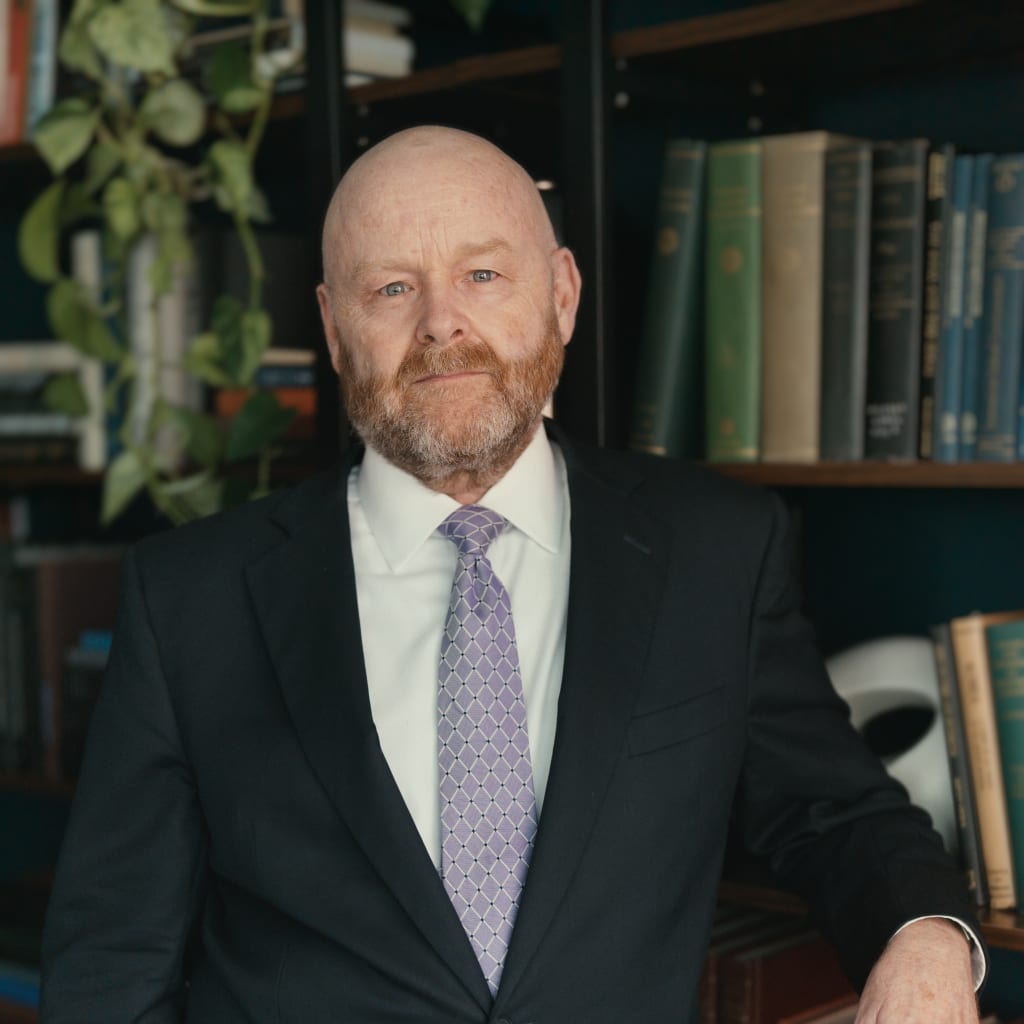 James M. LindsayCFR ExpertMary and David Boies Distinguished Senior Fellow in U.S. Foreign Policy
Guest
 William HenaganCFR ExpertResearch Fellow
Show Notes
Mentioned on the Episode:
William Henagan, “Reauthorizing DFC: A Primer for Policymakers,” CFR.org
William Henagan, “Sovereign Funds and American Investment Strategy: How to Responsibly Create a U.S. Strategic Investment Fund,” CFR.org
Transcript
LINDSAY:
Welcome to The President’s Inbox. I’m Jim Lindsay, the Mary and David Boies distinguished senior fellow in U.S. Foreign Policy at the Council on Foreign Relations. This week’s topic is: the Future of U.S. Foreign Aid.
With me to discuss the current state of U.S. foreign aid programs and the impact of President Trump’s changes is William Henagan. William is a research fellow here at the Council working on U.S. industrial policy and economic security issues. He previously served as a Director for International Economics on the staffs of the National Security Council and the National Economic Council in the Biden Administration. In that position, William was one of the lead authors of the “National Security Memorandum on Critical Infrastructure Security and Resilience,” which was the first major update to U.S. critical infrastructure policy in more than a decade. He recently wrote two research papers for CFR.org titled “Sovereign Funds and American Investment Strategy, How to Responsibly Create a U.S. Strategic Investment Fund, and Reauthorizing the Development Finance Corporation: A Primer for Policymakers.” William, thank you for joining me on The President’s Inbox.
HENAGAN:
Thanks for having me, Jim.
LINDSAY:
Let’s sort of talk big picture. There’s been a lot of changes in U.S. foreign aid programs since Donald Trump took the oath of office on January 20th. Sort of fill me in as to what’s changed and where we are now.
HENAGAN:
Sure. Yeah. So just to back up one step. I like to think about the U.S. providing sort of three kinds of direct assistance to other countries: military assistance, humanitarian assistance, and development assistance. The eight-hundred pound gorilla in the U.S. development and humanitarian assistance world is USAID, traditionally ten thousand employees, twenty-three billion dollar budget, but there are also close to a dozen other U.S. agencies that support economic growth and development activity in emerging economies around the world. Think the Development Finance Corporation, the Millennium Challenge Corporation, Trade and Development Agency. Interestingly enough, all of these agencies, with the exception of USAID, were actually created under Republican administrations. But in the opening days of the Trump administration, the President takes power and issues an executive order that halts all foreign aid programs at USAID in this constellation of other agencies. The administration then walks back portions of these. It starts tangling with the judges over whether this activity is legal. It refuses to comply with some legal orders, and then it begins to move money again. But in June, sort of most recently, the Trump administration submitted a proposal to Congress to rescind, meaning not spend, all of the foreign assistance money for fiscal years and FY24 and FY25. Now, Congress hasn’t acted on this request, but last week’s-
LINDSAY:
It’s currently debating the rescission proposals. Correct?
HENAGAN:
They’re debating the rescission proposals, some supportive initial comments by Speaker Johnson and some of the Republican leadership. But there hasn’t been an action because the Big Beautiful Bill has chewed up a lot of the time and agenda in Congress over the last couple of months, which I think most folks who are following activity in D.C. have paid attention to. We’ll see here in July before the August recess whether they pick it back up or if it gets picked back up again prior to the end of the fiscal year in September. But I think the more important thing to focus on in the past few weeks has been the Supreme Court’s decision to uphold the Administration’s ability to fire thousands of federal employees. And in particular, you’re starting to see them implement that aggressively at the State Department, USAID, and then other shuttered agencies like the Millennium Challenge Corporation. So that’s sort of a major stop work in U.S. foreign assistance activity, even if the money is still on the balance sheet and hasn’t been rescinded.
LINDSAY:
Okay. So let’s take it out of the particulars of what the courts might do and how many people are being furloughed. Just sort of big picture, how much of a decrease in foreign aid have we seen?
HENAGAN:
Well, I mean, if the U.S. government is going to put out twenty-three billion a year onto the street in expenditures and work has functionally been halted at the largest of these agencies, we’re probably going to see a twenty-plus billion stop in U.S. foreign assistance abroad over the course of the next fiscal year.
LINDSAY:
And where does PEPFAR fit into this?
HENAGAN:
PEPFAR is outside of my core area of expertise, but I think it fits within the constellation of global health programs funded by foreign assistance dollars, which are particularly important for halting the spread of AIDS and the other programs like PEPFAR that halt the spread of communicable diseases around the world. PEPFAR is probably the most salient example of a no-brainer for an assistance program where there is a clear return on investment for the U.S. taxpayer and for the U.S. government. Prevents the spread of a deadly, highly communicable disease that could affect the U.S. homeland. And this is part of the broader conversation that both Republican Party, the Democratic Party, the Administration, and the American people are having right now over what do we think is the justification or should be the justification for future foreign assistance, future development assistance? I’ve got some polling right in front of me, which it says the highest polling items for the U.S. government activity, which is providing medical supplies and medicine to developing countries. Eighty-three percent of Americans support it. But fourty-five percent of Americans disapprove of ending most USAID programs. That means the majority of Americans didn’t really care that USAID ended. That’s a major gap that we as a country are going to have to think through and grapple with what we want to do going forward.
LINDSAY:
But that’s longstanding. It has always been the case that Americans, when you ask them these sort of questions, say they like things, but liking something doesn’t mean that they’re willing to go to bat for them or to lose sleep over them. So I think this is not an atypical finding.
HENAGAN:
Yeah, certainly. I think there’s a question that both parties have been asking right now, which is, what is the role of America abroad and what is the role of America when they deploy taxpayer resources abroad? Whether it’s investment resources, humanitarian assistance, et cetera. What I would suggest is that foreign assistance now has to pass this test, which functionally is the same, whether it’s “America First” or “A Foreign Policy for the Middle Class,” which is how are you—
LINDSAY:
Joe Biden’s slogan.
HENAGAN:
The Joe Biden slogan. Yeah. Which is, how are you linking back the benefits of that particular program to the lives of everyday Americans? It’s not something that we as a country have done a terrific job of in the past twenty years, partially because there’s a basic moral imperative as the richest country in the world to provide assistance to emerging economies and to less developed countries. That’s something that has been a core tenet of American values since the Second World War. But the political economy of the United States doesn’t appear able to support that anymore, given the general lack of response by both the American people and Congress and the traditional champions of development aid who haven’t been able to halt the closure of USAID.
LINDSAY:
So help me understand the impact of the changes we witnessed, because they do appear to be sweeping. We can argue about particular dollar amounts, but when you’re talking about shuttering USAID, you’re talking about curtailing the Millennium Challenge account. PEPFAR looks to be on the chopping block. What is the specific impact of those decisions?
HENAGAN:
Yeah, I’ll speak to this from my area of expertise, which is in the field of economic statecraft, which is providing no strings attached assistance to those who need it is a moral imperative, but it’s also good U.S. national security and foreign policy and geopolitical swing states around the world, Vietnam, Brazil, we’re just coming off the BRICS Summit, they want to work with the United States. They don’t want to turn to work with America’s adversaries who are going to provide strings attached financing and assistance that have very clear linkages to policy imperatives that may not be aligned with their own particular economic growth or freedom to operate in a changing geopolitical environment.
LINDSAY:
Well, let me ask you a question just on that, because I’ve gone around the country a lot, spoken to a lot of people. Some are big fans of U.S. humanitarian and foreign aid assistance, some who are skeptics. And an argument I’ve heard over and over again from skeptics of U.S. foreign aid is we keep giving the money to the same people. Problems don’t get fixed. So there’s a belief that either the aid is ineffectual or it’s being siphoned off by people. How do you respond to arguments like that?
HENAGAN:
Yeah, what I would say is that let’s go back to the first principles of what are we trying to do when we deliver foreign assistance? And also let’s talk about foreign assistance in the context of the U.S. non-defense discretionary spending budget. We’re talking about less than fifty billion a year in spending on a budget that’s a trillion dollar a year in non-defense discretionary spending. So an incredibly small amount of money. And what’s the purpose of that money? Well, first it’s from a core sort of American justification. It’s to help maintain our economic centrality in the world. So we, as Americans, all benefit from the fact that the global economy revolves around us, and we have an advantage when we’re able to consume low-cost, high-quality goods from other markets when we have strong export markets that are able to receive our goods when the world uses our currency to underwrite its transactions, when talented people want to move here. All of those are facilitated and underwritten by U.S. foreign assistance, particularly economic development assistance.
LINDSAY:
So help me understand the Trump administration’s approach to this. Obviously, again, made big changes. What is their theory of the case? What is aid for if we’re going to do aid at all?
HENAGAN:
So I think the Trump administration’s thoughts on aid, first off, we’re not seeing a return on investment. They think about things in the lens of investment, and they were saying we don’t see a return on investment from foreign assistance in its current format, so let’s burn it down. And then let’s—
LINDSAY:
What did they think the investment was supposed to produce? And again, this gets back to the question of why do we keep spending money if the problems don’t get solved?
HENAGAN:
Yeah. I’m not going to suggest that the Trump administration has a clear and coherent policy worldview about foreign assistance and what they expect back for that return on investment. What I would say is they expect some kind of return, and I think that’s something that they didn’t necessarily feel was being provided by USAID. Now, I think that’s inaccurate. And if you go program by program, the impact metrics of programs like PEPFAR are quite clear.
LINDSAY:
I imagine it also gets you into conversations about how relevant soft power is to the success of American foreign policy. A lot of people, particularly Democrats, would argue that soft power, the ability to attract is quite important. And doing good deeds builds up goodwill that you can use on other things. And my sense is President Trump at least is a skeptic of soft power.
HENAGAN:
I think he might be a skeptic of soft power as we would traditionally define it, which is to say non-military, non-hard power. But I don’t think that the Trump administration is against economic statecraft. I think there’s actually quite a strong emerging bipartisan consensus on using economic statecraft to compete with America’s adversaries.
LINDSAY:
But isn’t that different from humanitarian assistance because humanitarian—
HENAGAN:
Certainly different from humanitarian assistance.
LINDSAY:
So sort of explain the difference for me.
HENAGAN:
So I think humanitarian assistance, there’s a tsunami and we need to respond to a crisis to prevent a region from becoming unstable. You’re providing water, food, immediate life-saving support. Economic development support is something like the Development Finance Corporation providing an equity investment or a loan to a private company that’s trying to build a road or acquire a shipyard in a strategic country that’s relevant to U.S. foreign policy interests. That’s going to then become the economic driver of activity in that place.
LINDSAY:
So this is the American answer to China’s Belt and Road Initiative.
HENAGAN:
That’s ostensibly the mission of the U.S. Development Finance Corporation. Where I think the Trump administration misses the ball is failing to understand the interlinkages between USAID and the constellation of development agencies, which create the economic circumstances that allow for the U.S. Development Finance Corporation to deploy capital into a particular economy and experience a return and then unlock additional private sector investment.
LINDSAY:
How do you see it working? What exactly are they missing in terms of the role played by your traditional humanitarian institution, USAID?
HENAGAN:
Yeah. Well, I would sort of stack the capital. So humanitarian assistance is like life-saving response to a place that needs food and water immediately. What happens after that is USAID provides capacity grants to be able to expand a particular economy’s ability to receive subsequent capital in the form of more traditional financial instruments from the Development Finance Corporation. But even when they do that, there still needs to be project feasibility work. And that’s where something like the U.S. Trade and Development Agency steps in and provides a small grant for a company to do some feasibility studies. After that, you might need money from the Millennium Challenge Corporation to fund a particular agency in the host country government to create the business environment that enables the types of circumstances required to deploy an equity investment or a loan. And then finally, DFC steps in with a private sector partner and funds the development of a shipyard or a mine or a bridge that facilitates the long-term economic growth of that particular location. And if the U.S. government is able to step in at each of those points and provide the unlock in the form of capital or the form of investment or the form of assistance, at the end of that cycle is a healthy, stable, thriving economy, which is hopefully democratic and which has an immense set of debt and gratitude to the United States. And by the way, didn’t have to rely on strings attached financing from the Chinese over the course of the process.
LINDSAY:
So just going back to USAID, it seems to me that when USAID was created, it was not created and given the mission of being this strategic investment vehicle for the United States. In some sense it was intended to insulate it from geopolitics, which is why it’s not in the State Department. Or am I missing something here?
HENAGAN:
No, no, you’re certainly right. So 1961, Kennedy administration creates USAID initially, perhaps during the Kennedy administration, more subject to geopolitical pressure than perhaps it is in subsequent iterations of the agency. But ultimately, yes, USAID has both its development mission, but also its humanitarian assistance mission, which frankly, as the richest country on the earth, it would be amoral or a misstep, you can think of it in sort of classic effective altruism terms, or you can think about it just on a sort of basic—
LINDSAY:
Can you explain effective altruism? It’s the new buzzword in Washington D.C., I guess in Silicon Valley as well.
HENAGAN:
Well. I think Wall Street and Silicon Valley showed up and got interested in effective altruism. And now that the Trump administration is here and has brought with it a variety of tech investors. Effective altruism has come back, which is to say, I’m not an expert on effective altruism, but my understanding of it is, you do things for the good of other people because you ultimately get something back in return and is the highest and most effective use of a particular dollar. It’s an obsession with efficiency in the world of do-gooding.
LINDSAY:
Is it different from what used to be called enlightened self-interest?
HENAGAN:
Yeah, I think it’s marginally different than enlightened self-interest in the sense it’s imbued with more utilitarianism and a desire to be efficient with limited resources, which is not necessarily a bad instinct when it comes to using taxpayer dollars. But ultimately, I think one of the challenges of the Trump administration is a desire to focus on hard security questions, to focus on the performance of traditional national security values and perspectives at the expense of soft power instruments, which are critical to America’s place in the world. And I think this is the core point I would make, which is that—and I think the Trump administration to some extent understands this—is that there’s a logic of mutually assured destruction between the U.S. and the People’s Republic of China, which means in the twenty-first century, competition with this adversary is going to play out in the fields of economics and technology. And so to walk away from foreign assistance, to walk away from the affirmative instruments of economic statecraft is to cede that battlefield, and that is the determinative place where competition is going to occur and be what are lost long before we reach military conflict.
LINDSAY:
Okay. So let’s talk about what the Trump administration intends to do as opposed to where we’ve been so far, what it isn’t planning to do. And one of the surprising things, and you’ve done a lot of work on this, is that the Trump administration is a big backer of the DFC, the Development Finance Corporation. It actually was created during the first Trump administration. It was a bipartisan effort, but now it’s up for reauthorization. It exists as an entity, it’s mandated by law. But that law in October goes poof. It comes to the end of its time. So help me understand exactly what the Development Finance Corporation does and why this is a piece in the foreign policy assistance realm that the Trump administration supports.
HENAGAN:
So I think the best place to start here is the history of the DFC. It was a combination of the Overseas Private Investment Corporation—
LINDSAY:
OPIC.
HENAGAN:
—which was created in the Nixon administration and portions of USAID. It was combined in 2019 in the Trump administration to create a U.S. government-run development finance institution that was able to deploy capital around the world to eradicate poverty and to enable private sector investment in less developed countries. So what does it do specifically? It invests in investment funds, it makes loans, it provides equity investments, it offers political risk insurance, it enables private sector investment in countries around the world.
LINDSAY:
So this is not about going into Indonesia after tsunami and providing tents.
HENAGAN:
It’s not humanitarian assistance. No.
LINDSAY:
Or food relief and things like that.
HENAGAN:
So this is an entity that’s able to take a ownership position in a shipyard, in a mine.
LINDSAY:
Okay. So ports, bridges, railways.
HENAGAN:
It does have a mandate to eradicate poverty and to act as a development institution, which I think is an important differentiator between the activities of the U.S. Development Finance Corporation and the activities of the entities that it was created to counteract, which are the state-owned enterprises run by the People’s Republic of China that provide sort of strings attatched financing.
LINDSAY:
The Belt and Road Initiative.
HENAGAN:
Belt and Road Initiative, traditional like that. The Trump administration, not only having created DFC, likes DFC because it is an easy-to-understand entity if you believe in the premise of investment as the approach by which the U.S. government should deploy capital around the world, which is we will put up our dollars and we will get back a monetary and strategic return. So that is easy for the Trump administration to understand, and it’s why in their FY26 budget request, despite zeroing out USAID and slashing the State Department, they asked for a two-hundred-eighty percent increase in the resources available to the DFC.
LINDSAY:
Can you just give me just a concrete example? I mean, is it a case that the DFC might go to provide Madagascar with funds to build a railroad to take something from a mine or farms and bring it to the port so it can be shipped? Is that what we’re talking about?
HENAGAN:
Yeah. One really good example of the strategic value of the U.S. Development Finance Corporation is a shipyard that it invested in Greece that was potentially going to be invested in by the People’s Republic of China or People’s Republic of China state-owned enterprise. And the DFC was able to provide, I think it was a hundred and twenty-five million in capital to that entity to be able to maintain possession of that strategic asset in Western-aligned hands and in the hands of the U.S. government.
LINDSAY:
So the Development Finance Corporation is not limited to low-income or middle-income countries because Greece, part of the EU, successful—
HENAGAN:
I think at the time Greece would have counted as an upper middle-income country. But yes, traditionally DFC has been focusing on investing in lower-income countries and middle-income countries, and it needs a waiver from the president to invest in upper middle-income countries, with some exceptions for Europe in particular, response to the crisis in Ukraine. So Congress provided some flexibility for DFC to invest in Ukraine and in Europe in order to deal with the energy crisis there. The appeal of DFC is that it’s probably the only place in the government where you actually have in-house U.S. government paid and employed investment experts who are able to say, “Okay, what is the way that we want to deploy a dollar of American government capital into a country out in the world to advance a particular foreign policy or development?”
LINDSAY:
So this is like a venture capital firm or investment firm in Wall Street or Silicon Valley?
HENAGAN:
I mean, I would think of it as more like OPIC, its predecessor, which was much more commercially oriented, was basically serviced investment funds, American run investment funds that were making investments in emerging markets where it was strategically advantage to the United States to do so.
LINDSAY:
And we’re doing so because we think either, A, this is going to keep the Chinese out or others out, or it’s going to help a country we’re friendly with or make a country that we may have some issues with more friendly?
HENAGAN:
We do it because there’s a bunch of reasons why you would want an emerging economy to succeed. You might want to facilitate regional prosperity. You might want to curry favor with that particular country. You might want to do it just because it eliminates poverty in that country and the elimination of poverty is a moral imperative. You also might do it in order to counteract the influence of the Chinese in a particular country. And yes, the creation of the DFC, the animus behind it was to directly counteract the Belt and Road Initiative by the People’s Republic of China.
LINDSAY:
Okay. So we have this plan, it involves investment. The Trump administration created the DFC, it supports its reauthorization. So that’s going to happen, right?
HENAGAN:
Well, you know, it should if everything worked according to normal and Congress was totally functioning and regular docket items were coming up.
LINDSAY:
I hear a no there.
HENAGAN:
Yeah. So I mean to back up a little bit, every year Congress and the executive branch have to work together to establish, modify, or define in law what various federal agencies have to do. This is what’s called a reauthorization process. So this year, DFC is up, and it’s up on October sixth. Its authorities to operate as an agency expire. The reason you have an authorization process is so that after a period of time, Congress can basically review the activity of an agency and make sure that that agency is still performing the activities that it intended. Every year we do it for the Department of Defense with the National Defense Reauthorization Act.
LINDSAY:
And I should point in here, this is Congress’s “twin track” process. There is an authorization process, but the fact that something is authorized doesn’t mean funds have been appropriated for that purpose. And so you need to get the appropriations done as well. And that cuts across government.
HENAGAN:
So this year, the Trump administration first had put up a FY26 budget request where it asked for an increase in resource for the DFC. Last month, they put up a proposal saying, “Hey, we’d like DFC to be reauthorized. Here’s the ways in which we’d like you to adjust the—
LINDSAY:
—and actually must want to tinker with it because this is the first time out—
HENAGAN:
—yeah, there’s a bunch of fixes that are required in statute because the mechanics of the agency changes, and frankly, the Trump administration proposal looks a lot like the Biden administration proposal, which looks a lot like the House proposal that got released last year. There’s general agreement about the mechanical changes, but right now we’re in sort of a binary, zero-one place where it’s either this entity is going to continue or it’s not. And the reason it may not continue, the reason we may not get it reauthorized, is simply because we’re about to run out of floor time. So we have a couple of weeks—
LINDSAY:
What do you mean by floor time? That’s a Washington term.
HENAGAN:
Yeah, floor time means basically the amount of time left where Congress is in session and a bill can come to the floor and all the members of Congress can vote on it and say yes, we want this, or no, we don’t.
LINDSAY:
The floor of the House and Senate are not open 24/7.
HENAGAN:
And the problem that we have is October 6th sounds like it’s a long way away, but in the middle of this, there is something called the August recess where all of Congress goes home and takes the month of August off.
LINDSAY:
No, they do not. That’s not how they would describe it. In all fairness, they say they’re going back to their districts in their home states to work.
HENAGAN:
Sure. In July, we’ve now passed the Big Beautiful Bill. There’s a bunch of legislative work that needs to get done, particularly on the confirmations calendar. And then folks are going to go home for August. They’re going to come back in September. And in September, there’s a dozen days in which Congress is open prior to October 6th.
LINDSAY:
I should point out for people who don’t follow Congress closely that Congress has various calendars and they don’t quite look the way our typical day-by-day calendars are. So on the legislative calendar, there are actually very few days to do things. There’s a lot of other competition to get on the floor at that time.
HENAGAN:
Yeah. So you’re competing with must-pass bills in the healthcare policy universe or in the month of September, the annual budget. And so there’s an opportunity for DFC to get reauthorized in the month of September, potentially on what we would call the back of a must-pass vehicle, which in September is probably going to be the budget. But that’s probably going to be what’s called a continuing resolution. And so instead of passing the bill as a standalone, they’ll basically just tack it to the back of the continuing resolution via something they would call an anomaly.
LINDSAY:
Another longstanding Washington tradition, or at least a tradition over the last three decades in which the normal legislative process is broken down.
HENAGAN:
If you can’t pass the budget, you give yourself some extra time. The problem or the concern is that there’s a lot of opportunity to miss here. So even though everybody agrees that they want to keep the DFC, Republicans, Democrats, people differ over how they want the DFC used. They differ over the investment focus, but everyone wants to see the DFC continue, and almost everyone wants to see it expand.
LINDSAY:
So it’s sort of like you and your friends agree that you want to go out for dinner and then you’re haggling over which restaurant to go to.
HENAGAN:
Exactly right. The challenge is due to no individual’s fault, but also no individual’s ownership of the particular issue. And because of the political cost to bring a particular policy issue to the floor of Congress, the DFC might not get reauthorized. So that’s the big concern at the moment. And what happens if the DFC doesn’t get reauthorized? Well, if it doesn’t get authorized, even for a single day, its authorities expire, that’s going to strand billions of dollars of its investments around the world. So if you’re an investment fund and you’ve got a capital agreement with DFC, and on October 7th you pick up the phone and call and say, “Hey, I need the money that you promised me,” and nobody picks up the phone, you’re going to be reading your capital agreement to see, “Hey, do I have to continue working with the DFC? Do I have to give the money back? How does this going to work?” It’s going to create chaos in the agency. And frankly, what it’s going to do is make it so that private sector directors around the world are not going to use DFC’s financial instruments in ensuing years because DFC provides long-term financial support. It’ll provide ten, fifteen, twenty-year debt instruments and political risk insurance and equity investments. And if you suddenly, as a investor in the world who’s trying to do a project in an emerging market, realize that your partner isn’t going to potentially be there because Congress failed to act three or four or five years from now the way that they’re failing to do right now, you may never work with the DFC again.
LINDSAY:
This is a standard thing in the investment world. They generally don’t like unreliable, unpredictable partners.
HENAGAN:
Certainly. You wouldn’t work with the partner if it was a private entity, and you certainly wouldn’t work with them if they’re a public entity because it takes a lot of work to work with the U.S. government. The U.S. has very high environmental safety labor standards. There’s a lot of scrutiny that goes on. You subject yourself to scrutiny and standards from one of the most powerful institutions in the world, and that’s a disincentive to work with them going forward.
LINDSAY:
What happens to the people at the DFC if it’s not reauthorized? Because institutions are only as good as the people who staff them. And if people leave, you lose a lot of institutional memory and know-how.
HENAGAN:
Certainly. So I mean, I think you’d have to ask the DFC’s lawyers whether everybody has to go home the day after it’s not reauthorized, but they certainly wouldn’t be able to do any of their work. They wouldn’t be able to pick up the phone. They’re not going to be able to respond to emails. They’re not going to be able to do the programmatic work. And in that instance, even if they continue to get a paycheck, which they may or may not legally be able to do, they’re going to leave. And when you lose—
LINDSAY:
Time to start polishing your resume and start finding someone who’s more predictable.
HENAGAN:
This is the great challenge of the DFC, is the DFC is trying to basically build in-house investment capability in the U.S. government. And it’s trying to do so while paying the people who do that kind of work, ten percent to twenty percent of their worth on the private market. So if you run the DFC’s loan or equity program, you are probably worth five-hundred-thousand dollars a year plus in salary at a investment firm out in the private sector.
LINDSAY:
You have a marketable skill.
HENAGAN:
You have a very, very marketable skill. And your willingness to work at the DFC is both mission driven. But ultimately, if you’re unable to perform the mission, you’re going to take those marketable skills and go back to the private sector. And so that’s the challenge with a bunch of these different authorization, reauthorization efforts, because the Defense Production Act is up late this year, next year the Export-Import Bank is up. If you lose a particular government capacity, even for a short period of time, it takes a long time to rebuild it. And while you’re trying to rebuild that, you’re not deploying capital out in the world and you’re ceding advantage to America’s adversaries.
LINDSAY:
Yeah, I was going to say, institutions are difficult to build, very easy to break. And I would note that on this score, the Chinese Polar Bureau doesn’t run into these issues. The Chinese government is able to deploy its capital around the world, and I would imagine they would point to any disruption of loans or investments as all the more reason why people should turn to Beijing for—
HENAGAN:
Why not to work with the United States. I mean, this is reauthorization and our ability to use our system of government to authorize the continuation of particular agencies on a regular basis and to run normal order business is the fundamental fight between democracy and autocracy. And we’re trying to prove that democracy is a more efficient and effective form of government versus autocracy. So the Chinese state has inherent advantages and disadvantages because it doesn’t have to go ask Congress for the authority to do things. We have inherent advantages and disadvantages, but we would suggest that it’s normatively important in our system to go check in with the representative of the American people and say, “Are we doing the right thing here? Is this what we’re supposed to be doing?” But when Congress fails to act because of gridlock or bureaucratic process or procedural issues, we’re proving to the Chinese and to our partners around the world that autocracy is a more efficient way to run a state.
LINDSAY:
Oh, just note that if China really is foreign policy job one, one of the ways to go about doing it is to take up the issue of the DFC reauthorization.
HENAGAN:
Yeah. I think that there are a host of capabilities and authorities of the state that are essential to China competition, the DFC, the Defense Production Act, some of the important national security authorities of the Department of Commerce, next year’s Export-Import Bank reauthorization. This regular order business of Congress is going to be incredibly important to facilitating our continued ability to compete with the Chinese. And if we fail to reauthorize these entities, we’re ceding our only true affirmative instruments of economic statecraft, tying basically one hand behind our back while we’re trying to fight on the particular battlefield of economic competition.
LINDSAY:
I’ll just note in that alphabet soup of authorizations and acts you just mentioned, they’re unknown to most people, but they get to the heart of having an effective foreign and national security policy. But I want to end, William, just on a broader question, basically back where we started. I mean, is it possible in your view that you can rebuild support in the United States for humanitarian assistance? I understand the case for doing it strategically. We’re trying to invest in countries either we don’t want to fall into the Chinese orbit or countries that we’re hoping can reward us in one way or another. But there is this basic issue of humanitarian assistance of helping countries because we believe it is the right thing to do. And there are general benefits, not specific tangible geopolitical benefits.
HENAGAN:
Yeah. What I would say is that America is not alone in this. Over the last two years, official development assistance has fallen by fifteen to twenty-two percent relative to 2023 spending.
LINDSAY:
Brits have cut their development assistance.
HENAGAN:
So that’s a retrenchment by Belgium, France, Netherlands, Sweden, the United Kingdom, corresponding with a global increase in military spending. So I think it’s not a particularly good sign that countries around the world are pulling back on their commitment to help less developed countries. That said, I think that we, as the United States, need to figure out what type of political economy and what type of justifications our national conversation can bear for foreign assistance. I would offer perhaps three, which is foreign assistance should fight crises abroad to keep the homeland safe. So think global health, humanitarian aid, that’s the same justification as the Department of Defense. You do things abroad in order to prevent the crisis from showing up on your shores.
LINDSAY:
Fight forward, so to speak.
HENAGAN:
Yeah. The second is just straight up competition with our adversaries. We simply can’t cede the economic and investment fight to the PRC. And if we pull back, we’re going to wake up with most of the world’s critical assets held by our primary adversaries. And then the last is foreign assistance and foreign development assistance in particular helps invest in American supply chain resilience and in export markets. So we as the largest and most effective economy in the world that has this position of centrality benefit when the economies around the world are strong. We benefit when they’re able to produce goods that our manufacturers can use to create finished products. And we benefit when those markets can sustain the purchase of the goods that we produce here. That’s probably the more powerful way to address a trade imbalance than a tariff. And so in that sense, I think those are three pretty strong justifications for why we should continue foreign assistance and other foreign development of sport.
LINDSAY:
On that note, I’ll close up this episode of The President’s Inbox. My guest has been William Henagan, a research fellow here at the Council on Foreign Relations. William, thank you very much for sitting down and educating me about the current state of U.S. foreign aid.
HENAGAN:
I’m not sure how much education I did, but thanks for having me.
LINDSAY:
Please subscribe to The President’s Inbox on Apple Podcasts, YouTube, Spotify, or wherever you listen and leave us a review. We love the feedback. The publications mentioned in this episode and a transcript of our conversation are available on the podcast page for The President’s Inbox on CFR.org. As always, opinions expressed on The President’s Inbox are solely those of the host or our guests, not of CFR, which takes no institutional positions on matters of policy. Today’s episode was produced by Justin Schuster with recording engineer Elijah Gonzalez and director of podcasting Gabrielle Sierra. This is Jim Lindsay. Thanks for listening.
Associate Podcast Producer
- Associate Producer, Video and Audio
Editorial Director and Producer
- Director, Podcasting
 33:42Podcast
 36:05Podcast
 41:07Podcast
 39:26Podcast
 35:04Podcast
 31:46Podcast