Four Charts Putting Trump’s Refugee Policy Into Perspective
The Trump administration’s indefinite refugee ban and historically low annual admissions ceiling come as the number of refugees worldwide remains high.
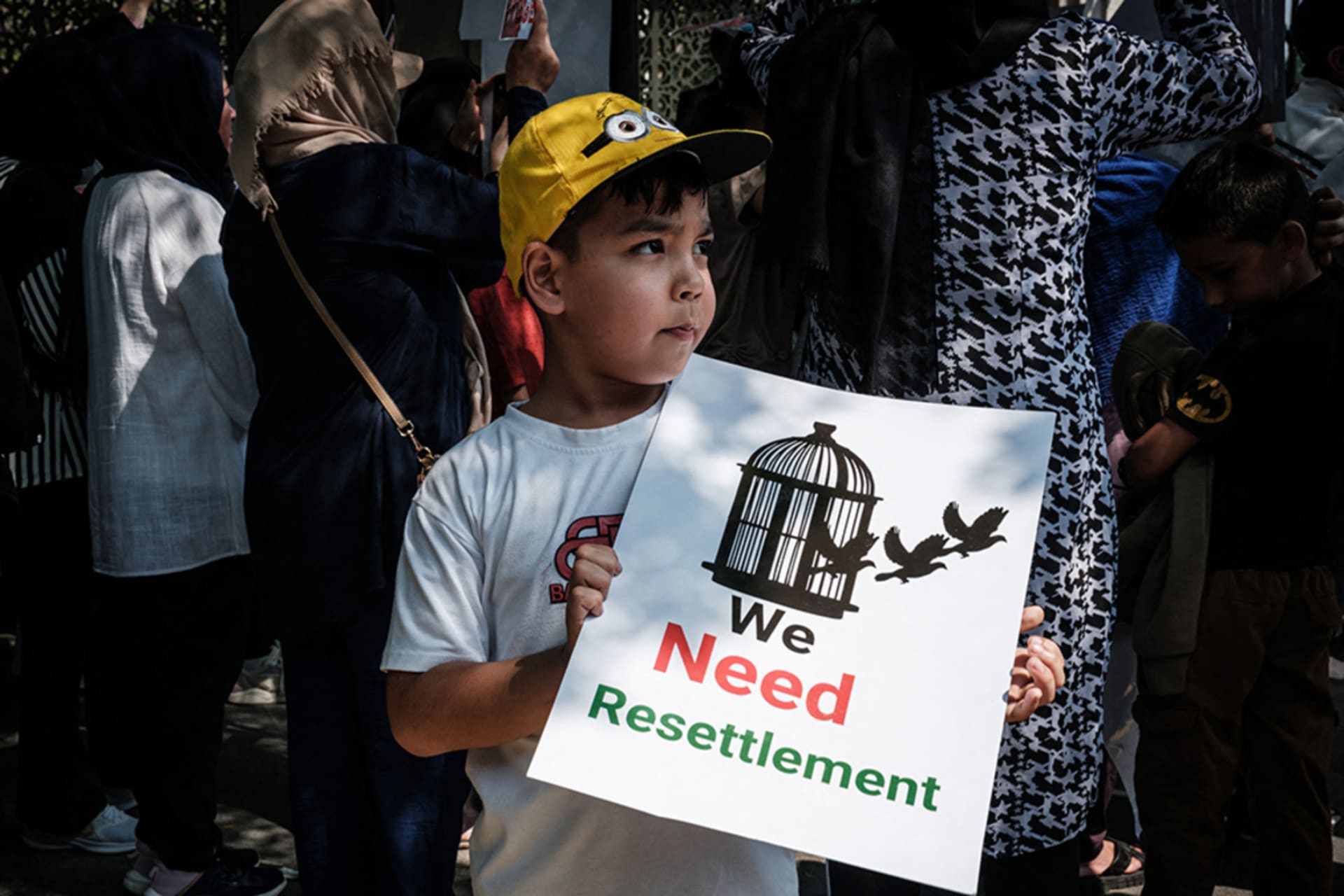
By experts and staff
- Published
The United States has historically been one of the world’s major destinations for refugees and, along with a few other countries, has played an outsize role in their resettlement. President Donald Trump’s restrictive immigration policies, combined with a growing emphasis on border securitization and rising anti-immigration sentiment in parts of Europe, have put the more than thirty-six million refugees worldwide in a challenging position.
How has U.S. refugee policy changed over time?
In 1980, the State Department launched the U.S. Refugee Admissions Program (USRAP) to standardize how the United States screens, admits, and resettles refugees. These are individuals who are unable or unwilling to return home because they face serious threats to their freedom or safety on account of their race, religion, nationality, political opinion, or membership in a particular social group. Unlike asylum seekers, refugees are vetted and approved abroad before resettlement.
Since USRAP launched, more than three million refugees fleeing conflict, persecution, and violence have entered and been resettled in the United States, though yearly numbers have fluctuated according to the annual admission cap.
Presidents have frequently adjusted the cap, which is proposed by the president and approved by Congress, sometimes in response to international emergencies. In fiscal year (FY) 2016, for example, President Barack Obama increased the admissions cap to address a growing migration crisis fueled by escalating conflict in Syria. By contrast, the first Trump administration implemented multiple travel bans and reduced the cap to a then-historically low level, framing refugees as a threat to domestic security.
As part of a broader crackdown on immigration in his second term, Trump signed an executive order in January 2025 that indefinitely suspended USRAP and paused several other programs granting temporary protection to displaced individuals from certain countries.
In October, Trump again lowered the refugee admission ceiling, setting the cap for FY 2026 to 7,500—a historic low and a stark contrast to the 125,000 cap set for FY 2022–2025. The administration’s admission policy for FY 2026 is set to prioritize white Afrikaners allegedly facing discrimination and violence in South Africa.
How do U.S. refugee numbers compare to other countries?
The United States has historically led the world in the number of resettled refugees, meaning refugees admitted with an agreement to grant permanent residence, although some countries, such as Canada, have resettled more refugees as a share of their population.
However, most refugees in any given year are not resettled, meaning they are living in a host country outside their country of origin without an agreement to grant permanent residence. According to the UN refugee agency, 66 percent of the world’s refugee population lives in states neighboring their country of origin. While some refugees do make the perilous maritime journey to Europe, most remain close to home.
Germany, Iran, Pakistan, Turkey, and Uganda hosted the largest refugee populations in 2023, while Lebanon hosted the most refugees as a share of its population. Many countries that host large refugee populations are low- or middle-income, increasing the likelihood of humanitarian crises.
In terms of hosted refugee population, rather than resettled refugees, the United States ranks lower than most other high-income countries on a per capita basis.
With USRAP on pause and an expanded travel ban on “third world” countries, it remains unclear when significant numbers of refugees will be able to enter the United States again, and whether those already in the resettlement pipeline will be able to complete the process.
This leaves those seeking refuge in the West with even fewer options.
Vasily Belousov is a data visualization intern at CFR.