
How the U.S. Asylum Process Works
Updated
Asylum has been a cornerstone of U.S. law for decades, but the Trump administration’s latest immigration crackdown is challenging the long-standing practice. Here’s what to know about the U.S. asylum system.
- The right to apply for asylum is enshrined in U.S. and international law. The qualifications resemble those for refugee status, but asylum seekers apply after arriving at an official U.S. port of entry or from inside the country.
- The number of asylum claims filed in U.S. immigration courts has sharply increased in recent years, driven by growing violence, poverty, and political instability worldwide. At the end of fiscal year 2025, the backlog of asylum cases exceeded 2.4 million.
- In his second term, President Donald Trump has expanded immigration enforcement nationwide and imposed significant new restrictions on asylum. In July 2026, his administration issued a rule letting asylum officers refer applications directly to immigration courts without an initial interview.
What are backgrounders?
Authoritative, accessible, and regularly updated Backgrounders on hundreds of foreign policy topics.
Who Makes them?
The entire CFR editorial team, with regular reviews by fellows and subject matter experts.
Introduction
The right to apply for asylum, a type of legal protection granted to migrants fleeing well-founded fears of persecution in their home countries, has been a central component of U.S. immigration law for decades. But the persistent arrival of asylum seekers at the southern U.S. border—driven by a combination of factors, including violence, political repression, and the search for better economic opportunities—and a growing backlog of asylum cases in the U.S. immigration system continue to challenge policymakers.
Trump implemented a slew of policies during his first term aimed at deterring would-be migrants from making the often arduous journey to the United States, though he faced significant legal and political resistance. Since returning to office in 2025, he has pursued an increasingly aggressive approach to severely restrict or end asylum access, characterizing the situation at the U.S.-Mexico border as an “invasion.” His administration has carried out mass deportations, terminated humanitarian parole programs, and instituted a wide-reaching travel ban—all of which face legal challenges that have reignited debate in Congress over immigration policy and the limits of presidential authority.
Most recently, the administration issued an interim final rule in July 2026 allowing U.S. Citizenship and Immigration Services (USCIS) to send certain affirmative asylum applications directly to immigration court without conducting the customary interview first—a move that could affect hundreds of thousands of pending cases.
What is asylum?
Asylum is a form of legal protection that host countries grant to migrants who can demonstrate fear of persecution in their place of origin. According to U.S. and international law, a claim of persecution must be made based on one of five protected grounds: race, religion, nationality, political opinion, or membership in a particular social group. (The breadth of this last category has stoked many legal debates.)
The right to asylum is primarily enshrined in Article 14 of the 1948 Universal Declaration of Human Rights, which states that every person has the right to seek and enjoy asylum from persecution. It is also codified in the 1951 Refugee Convention and its 1967 Protocol. Although asylum offers the same protection as refugee status, migrants seeking asylum in the United States must apply for it from within the country or at one of the 328 official ports of entry rather than from abroad.
According to the UN refugee agency, a total of 4.8 million people sought international protection in 2024, resulting in 3.1 million new individual asylum applications [PDF] worldwide. Over half of the applications were received in just four countries: the United States, Canada, Egypt, and Germany. Yet at the close of 2024, some 8.4 million asylum seekers globally still had pending claims.
How has the level of U.S. asylum claims changed over time?
Prior to the passage of the Refugee Act of 1980, the U.S. government granted asylum on an ad hoc basis, including in the aftermath of World War II and during the Cold War, though at times it refused asylum to certain immigrant groups. The 1980 law created the current statutory basis for asylum, guaranteeing family reunification rights and providing asylees—migrants who receive asylum—with a path to permanent residency after one year.
No numerical limit is set on the number of asylum requests that the government can grant each year, unlike the case of refugee requests. Additionally, because asylum is considered a discretionary status, officials can reject asylum applicants even if they qualify for refugee status under international law. Over the past few decades, the number of asylum grants has fluctuated significantly [PDF], from a little over 1,100 in fiscal year (FY) 1980 to a record more than 54,000 in FY 2023.
In the first few years of the COVID-19 pandemic, border closures, partial government shutdowns, and slow processing times led to a sharp drop in asylum approvals. Meanwhile, the backlog of asylum cases pending in U.S. immigration courts has continued to grow rapidly; by the end of FY 2025, it sat at more than 2.3 million [PDF]. Another more than 1.4 million are pending in USCIS’s affirmative asylum backlog.
Where do most asylum seekers come from?
In FY 2023, nearly half of all asylum approvals were for nationals of Afghanistan, China, El Salvador, and Venezuela. The past decade has seen a sharp rise in asylum applications from Latin America—primarily Mexico and Central America, though some have come from as far away as India, Russia, and Turkey—as migrants have fled worsening violence, poverty, and political upheaval.
What’s the process for seeking asylum?
The asylum process is complex and involves multiple federal agencies, the most prominent being the Department of Homeland Security (DHS), the Department of State, and the Department of Health and Human Services (HHS). Asylum seekers may also have to navigate the U.S. justice system if their cases get sent to immigration court.
Asylum seekers must already be physically present within the United States or at an official port of entry. From there, they have two primary pathways to obtaining asylum:
Affirmative asylum. Immigrants with temporary legal status, such as short-term visa holders, can file an asylum application with USCIS, a DHS agency. This generally must be done within one year of arriving in the country, though exceptions can be made for extraordinary circumstances, such as medical emergencies. (This deadline does not apply for unaccompanied migrant children.) Traditionally, if an asylum seeker’s application was not approved, they could pursue their case through the defensive process in immigration court. However, under a July 2026 interim rule, USCIS may refer certain affirmative asylum applicants directly to immigration court without first conducting an interview.
Defensive asylum. Migrants can request asylum as a defense against deportation if their asylum application is denied, or if they are apprehended for lacking valid documentation. Immigration and Customs Enforcement (ICE) handles those arrests in the interior of the United States, while Customs and Border Protection (CBP) operates at ports of entry. An immigration judge within the Executive Office for Immigration Review at the Department of Justice (DOJ) then hears each asylum seeker’s case.
If denied, they have thirty days to petition the Board of Immigration Appeals, the highest immigration court in the United States. If that fails, migrants can escalate their appeal to the federal court, and, in rare cases, the Supreme Court, before they are deported. Other defenses against deportation include citing a credible fear of torture in one’s home country.
However, the Biden administration issued a federal regulation in 2022 creating a third pathway for certain individuals who arrive at the U.S. southern border:
Expedited asylum. Commonly known as the Asylum Processing Rule, the regulation gives USCIS asylum officers the authority to adjudicate the asylum claims of certain migrants facing expedited removal [PDF]. These migrants were found to have credible fears of persecution when interviewed by ICE. Because of the asylum backlog, migrants who passed their asylum merits interview previously still waited years to appear before an immigration judge and officially apply for asylum. Those found to lack credible fear face deportation.
When does the government deny asylum?
Many factors can lead to denial. Asylum seekers are barred from even applying if they:
- did not comply with the one-year filing deadline,
- had a previous asylum application denied, or
- are eligible for deportation under a safe third country agreement.
Once a claim is submitted, officials conduct interviews and other background checks to determine whether the applicant’s fear of persecution is well founded. Asylum seekers can be denied for other reasons as well, including being found to have engaged in terrorist activity, participated in the persecution of another individual, or been convicted of a serious crime in the United States.
Legal representation is a major hurdle because the burden of proof is on applicants to show that they fall under one of the five protected grounds of race, religion, nationality, political opinion, or membership in a particular social group. Unlike in the criminal justice system, defendants in immigration court do not have the right to government-appointed counsel. There are, however, many nonprofit and faith-based organizations that offer free legal services to displaced people, such as the International Refugee Assistance Project and the Texas-based nonprofit Refugee and Immigrant Center for Education and Legal Services.
What happens after asylum seekers are approved?
Asylees are eligible for a host of benefits and services through HHS’s Office of Refugee Resettlement, which works with state governments, local resettlement agencies, and other nonprofit organizations to provide job training, English language classes, translation services, and other assistance. Asylees can also apply for other benefits [PDF], such as Social Security, obtain employment authorization, request permission to travel overseas, and petition to bring their spouse or family members into the country through a process known as derivative asylum. Resettlement agencies also play a crucial role in helping asylees find housing. Without assistance, language barriers, discrimination, and high rental prices often force them to rely on local nonprofits and shelters instead.
After at least one year in the United States, asylees can apply to become lawful permanent residents, also known as green card holders. But until then, they can still have their asylum status revoked for several reasons, including if they no longer meet the definition of a refugee or pose a significant danger to the public.
What is the debate over asylum policy?
Concerns have mounted in recent years over the growing number of unauthorized crossings at the southern border, which reached a record high in FY 2023 before sharply declining amid more restrictive U.S. immigration policies. A June 2025 poll by Gallup illustrated the issue’s divisiveness: 30 percent of respondents supported decreased levels of immigration, while 26 percent supported increased levels, and 38 percent thought levels should stay the same.
Proponents of expanding asylum access, including some Democrats in Congress, argue that welcoming those fleeing persecution is a bedrock U.S. value and that migrants face inhumane conditions in the United States and in third countries. Many call for an end to border detentions and a halt to the arrest and deportation of immigrants whose sole crime is being undocumented; other experts have proposed defunding ICE’s deportation force.
Critics contend that the U.S. asylum system no longer serves its intended purpose. They argue it enables economic migrants—those who leave their home country in search of better job opportunities—to live and work in the country for years while their asylum claims sit backlogged. Some Republicans have previously put forth legislation that would reduce the number of asylum seekers in the system by expediting deportations or raising the minimum standard that migrants must meet to claim a credible fear of persecution.
Meanwhile, reform advocates say there are ways to uphold border security while preserving asylum access [PDF]. These include hiring additional asylum officers and immigration judges and ensuring a six-month processing timeline. Other proposals include moving immigration courts out of the DOJ’s purview and restructuring them in an independent court system, which some experts say would help protect them from political influence.
Other countries likewise struggle to handle rising asylum claims. Canada has a comparatively open policy toward asylum seekers, most of whom can immediately apply for permanent residency and enjoy a host of benefits, including health care, after receiving protected status. However, the surge in asylum seekers entering Canada from the United States in recent years prompted the two governments to amend their safe third country agreement to expand authorities’ ability to turn away migrants.
Similarly, some member states in the European Union, which has struggled with elevated migration from Africa and the Middle East since 2015, have said they are tightening their borders to reduce unauthorized migration. In Australia, authorities have faced criticism for using offshore processing centers.
How has U.S. asylum policy changed in recent decades?
The 1980 Refugee Act sparked decades of controversy over U.S. asylum policy. President Ronald Reagan classified refugees fleeing Central America en masse as economic migrants, allowing authorities to systematically deny them asylum. By 1989, the number of migrants filing asylum claims had surpassed one hundred thousand, leading President George H.W. Bush to sign legislation that increased legal pathways for immigration. It also created the Temporary Protected Status (TPS) program that allows migrants to live and work in the United States until conditions improve in their home country.
Under President Bill Clinton, Washington restricted asylum access by establishing expedited removal proceedings, adding time limits on filing claims, and inserting additional layers of screening. As unauthorized migration increased, Presidents George W. Bush and Barack Obama both pushed for comprehensive immigration reform that would have legalized the status of many undocumented migrants and strengthened border security, but neither effort made it past Congress. Beginning in 2014, the Obama administration was challenged by a sharp increase in migrants from Central America, many of them asylum seekers, and it responded by placing families and unaccompanied children in detention centers and ramping up deportations.
In his first term, Trump framed the influx of asylum seekers as a national security threat and implemented a suite of policies to deter would-be migrants from coming to the United States. He instituted a zero-tolerance policy intended to increase prosecutions of undocumented migrants, announced new limitations on asylum protections for migrants fleeing domestic abuse or gang violence, and championed a “safe third country” agreement with Guatemala—from which the Biden administration later withdrew.
Trump also deferred asylum applications, a tactic known as metering; enforced a so-called transit ban [PDF] that denied asylum to most migrants at the southern border (though the ban was later struck down in court); and launched the Migrant Protection Protocols, also known as the “Remain in Mexico” program, which required migrants to wait in Mexico while their immigration cases were processed in U.S. courts. Additionally, his administration invoked Title 42, previously a rarely used public health law, to deny asylum on pandemic-related grounds.
What did Biden do?
Biden sought to undo many of Trump’s restrictive asylum policies. He ended the metering policy at ports of entry, restored asylum protections to victims of domestic and gang violence, and rescinded the zero-tolerance policy. His administration also expanded TPS protections to several additional countries, raised the annual cap on refugee admissions, created a family reunification task force, and ended the Remain in Mexico program after eventually winning the Supreme Court’s approval.
However, a historic influx of migrants at the southern U.S. border challenged Biden’s plans, and his administration unveiled in February 2023 a restrictive new policy allowing the government to deny asylum to migrants who did not previously apply for it in a third country, as well as to those who crossed the border with authorization. To incentivize legal migration, meanwhile, the administration announced new humanitarian parole programs for nationals of Cuba, Haiti, Nicaragua, and Venezuela.
Biden significantly expanded asylum restrictions with a June 2024 proclamation. The measure barred all asylum requests, allowing border authorities to block entry altogether when the daily average of migrants arriving at ports of entry exceeded 2,500. Asylum processing would only resume once the daily average fell to 1,500; Trump sought to impose a similar restriction in 2018, though it was ultimately blocked by federal courts.
But the Biden administration faced criticism over its decision to fast-track asylum screenings while dealing with an escalating political confrontation with border states seeking to clamp down on migration. Several governors in Republican-led states, including Florida and Texas, transported migrants to major Democrat-controlled jurisdictions to protest Biden’s immigration policies, which they say forced border communities to bear the brunt of migration surges.
What has a second Trump administration done?
In a series of executive orders on his first day back in office, Trump declared a national emergency at the U.S.-Mexico border, saying that the current situation qualified as an “invasion” of the United States. He also directed federal agencies to restart the Remain in Mexico program and took aim at restricting asylum access. This included shutting down the CBP One program, a border app established by the Biden administration that allowed migrants to notify the U.S. government of their intent to apply for asylum. Trump also ended the humanitarian parole programs for nationals of Cuba, Haiti, Nicaragua, and Venezuela.
The Trump administration has also relied heavily on deportation flights—sometimes to third countries where migrants have no existing ties—to meet its deportation goals, as well as nationwide immigration raids. It implemented a sweeping travel ban that shut down immigrant visa processing indefinitely for more than seventy countries and set a record-low annual admissions cap for refugees. In July 2026, the administration also issued an interim final rule allowing USCIS to refer certain affirmative asylum applications directly to immigration court without first conducting the customary asylum interview. The administration said the change would streamline asylum adjudications.
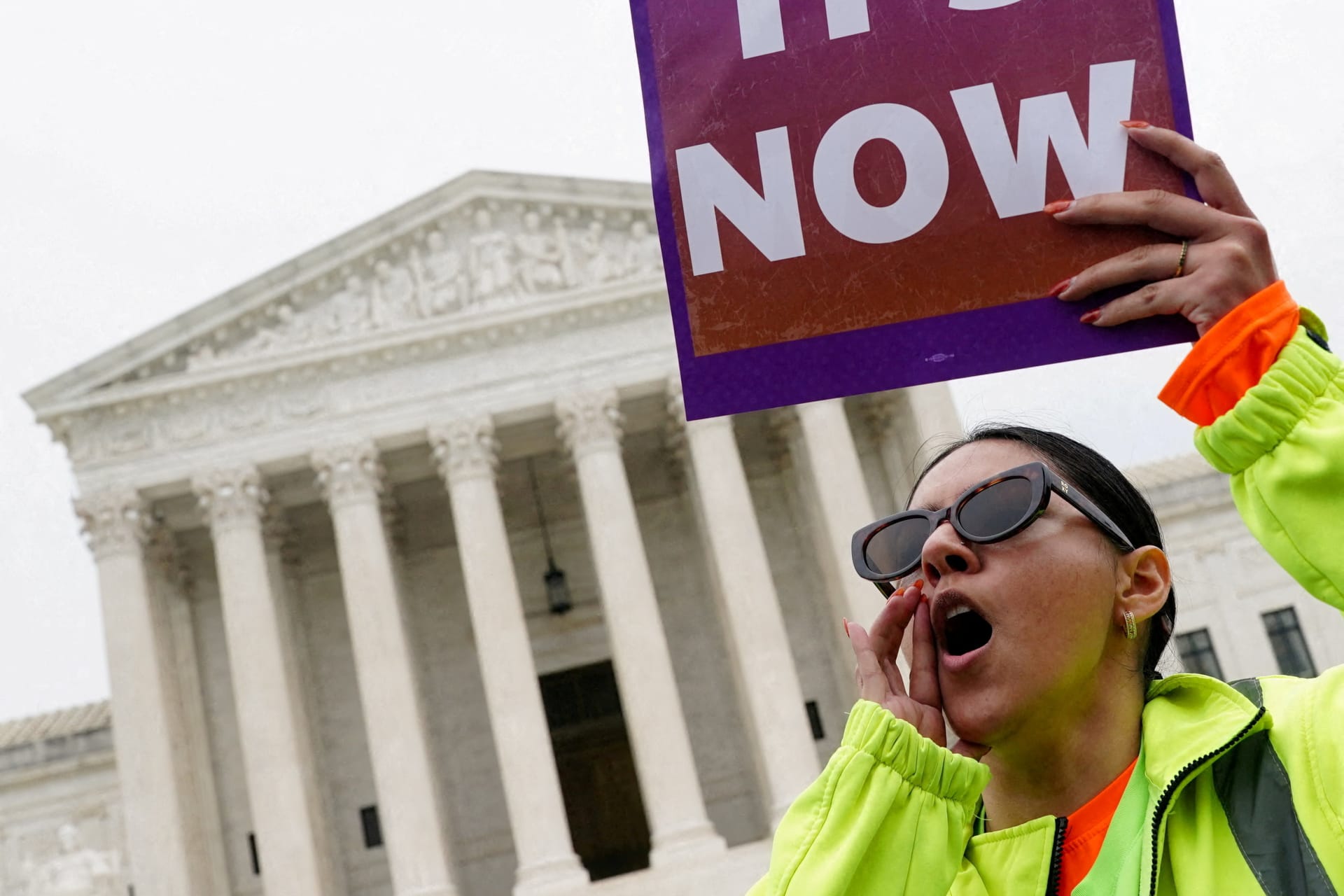
However, many of the administration’s policies have faced legal challenges. A federal appeals court in April 2026 blocked a Trump directive suspending access to asylum and other legal protections for migrants who unlawfully cross the southern U.S. border; the court ruled the president could not unilaterally override the legal right to asylum. That same month, the Supreme Court heard oral arguments in a case challenging the administration’s termination of TPS for Haitian and Syrian migrants; the court later decided in a 6–3 decision in June that the administration could terminate TPS for those nationals and that the TPS statute “bars judicial review of non-constitutional claims” challenging DHS’s TPS determinations.
Recommended Resources
Amy Pope, director general of the UN International Organization for Migration, discusses the myths and realities of global migration on the Foreign Affairs Interview podcast.
These flowcharts by the Bipartisan Policy Center show how migrants can claim asylum in the United States [PDF].
This 2024 report by the Migration Policy Institute’s Kathleen Bush-Joseph takes stock of the state of the U.S. asylum system.
This Backgrounder explains how the United States processes refugees.
For PBS NewsHour, Laura Barrón-López explains the history of U.S. immigration policy and laws that have led to today’s complex system.
For Foreign Affairs, the University of California, San Diego’s David Scott Fitzgerald explores the history of offshoring migrants worldwide.
Colophon
Staff Writers
Additional Reporting
Header image by Drew Angerer/Getty Images.
 Backgrounder
 Backgrounder
 Backgrounder
 Backgrounder