How I Got My Career in Foreign Policy: Matthias Matthijs
Matthias Matthijs’s career has spanned academia and think tanks. He sat down with CFR to discuss the benefits of observing European politics from afar, the importance of remaining open-minded in your career, and conducting dissertation research in London’s House of Lords tea room.
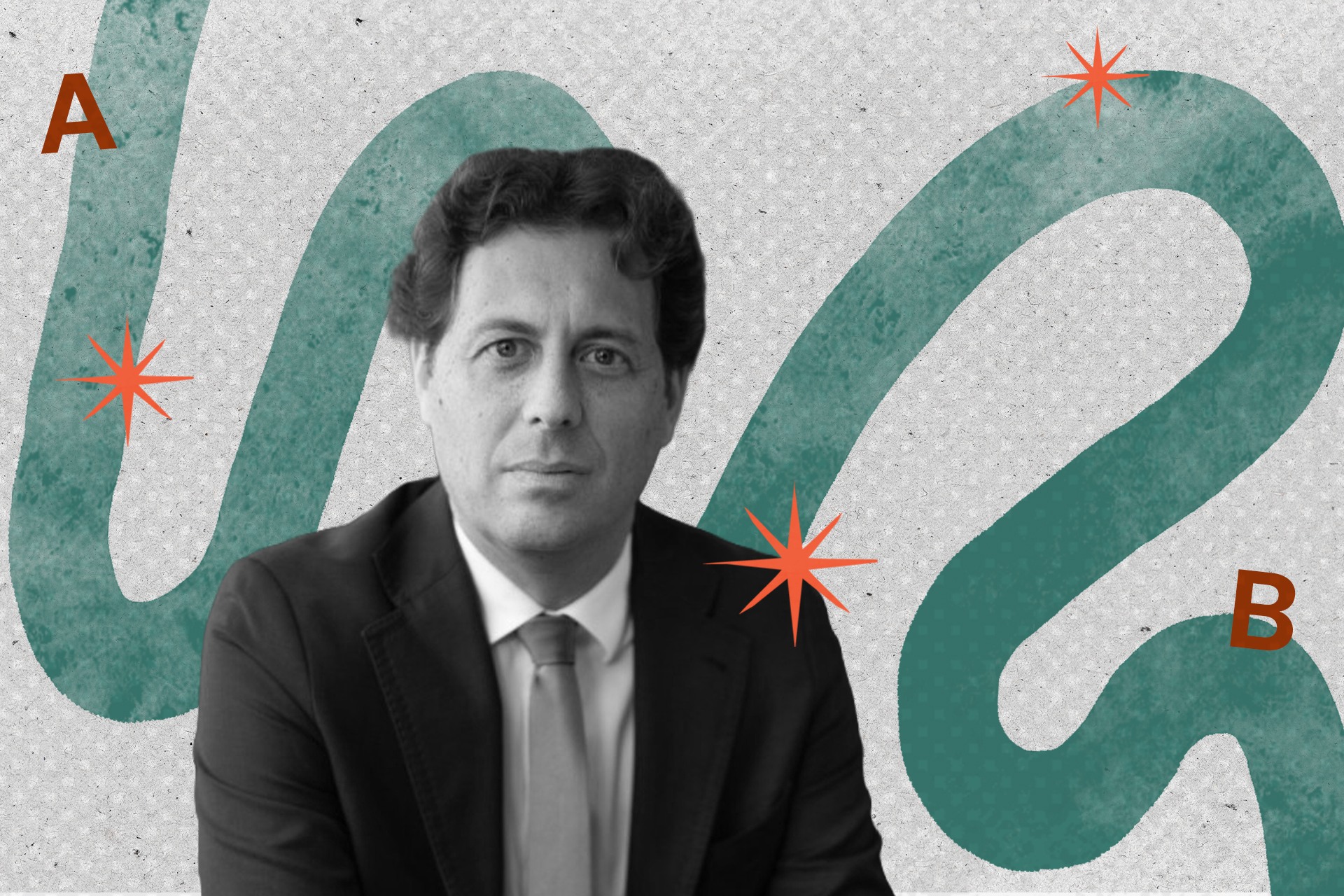
Matthias Matthijs grew up in Belgium during a time of great political upheaval in Europe with the fall of the Berlin Wall, the end of the Cold War, and the transformation of the European Economic Community (EEC) into the European Union (EU) in the early 1990s. A stint studying abroad in Wisconsin during university sparked his interest in international relations and the United States, and he went on to earn a PhD from Johns Hopkins University. He is currently the Dean Acheson Chair at Johns Hopkins University’s School of Advanced International Studies (SAIS) and a senior fellow for Europe at the Council on Foreign Relations (CFR). Read more about how he distinguishes between different audiences for his work, why distance from the “Brussels bubble” gives his views more clarity, and his memories of interviewing Thatcherites in the House of Lords.
Here’s how Matthias Matthijs got his career in foreign policy. If you’re interested in this series, check out more editions here.
What did you want to be when you were little? You grew up in Belgium, right?
Yes. When I was about eight years old, I either wanted to be a priest or a mayor. I grew up in a small Catholic town, and my dad was in local politics and eventually served two terms as mayor from 1994 to 2006, so I guess those were the two people with real power growing up! In the ‘80s, most people still went to church, and what the priest said during his homily, people listened to. My dad was leader of the opposition between 1988 and 1994, and then became mayor, and it seemed like a really cool job. Whether it was Veterans Day or any other national holiday, they were always standing at the front row with big accolades, and I suppose it made an impression on me as a small kid.
Becoming a Catholic priest was out, as I quickly realized it would be too solitary a life. And I also gradually learned the downsides of being a politician and what a thankless job it can be. So I decided to study economics and political economy instead.
I was going to ask, when did you become interested in foreign policy? And do you think Belgium being the seat of the EU—though I suppose at the time it wasn’t quite yet the EU that we know today—influenced you?
Right, growing up, it was the European Economic Community (EEC) or the “Europe of the Twelve.” Portugal and Spain joined when I was about seven years old. When the EEC became the EU in 1993, I really was coming of age and becoming more aware of the world around me.
That said, I think I became interested in foreign policy and international politics around the age of ten, really. The fall of the Berlin Wall—for my generation, the late Gen X generation—is very much a historical moment all of us remember. We knew it was significant. It was also a period of tremendous optimism. The euro seemed like the future, EU enlargement was happening to the East, and so on. I think that it all coincided with the First Gulf War, which was probably the first televised war on CNN. As kids, we all knew how many troops the French, British, and Americans were sending, and how many tanks they had. That’s really when my interest in foreign policy started.
I wanted to ask you about your schooling. You did your undergraduate degree in Belgium in applied economics, and then came to the United States to study international relations. What prompted both of those pivots?
My parents are both medical professionals. My mother was a dentist. My dad was a veterinarian before starting his career in local politics, and eventually quit to become a national politician. Honestly, the only thing they really understood and thought of as “serious professions” was anything in the broad medical field. My parents still have no idea what I really do on a day-to-day basis, apart from teaching, which is true for most people!
At the end of high school—because in Belgium you already specialize a bit in high school depending on what you think you’re going to do in university—I was educated to be pre-med. I could have gone straight into medical school. I had the biology, physics, and math requirements. Indeed, many of my classmates ended up doing exactly that.
But I decided to do economics because I didn’t know what I wanted to do with my life yet, and I wanted to keep my options open. That’s why I love the American system—you get four years of a liberal arts degree, and then you decide what to do with your life. Applied economics seemed like it opened up a huge array of job opportunities. It didn’t quite narrow what you were going to do, it broadened it. I went to the University of Antwerp because it had a vast network of foreign exchange programs, both in Europe and beyond, including the United States. And the fact that my older sister was already there, and seemed to be having the time of her life in Antwerp, made it a relatively easy choice in the end.
I studied abroad with Erasmus during my junior year in Budapest—this was in the fall of ‘99, so Hungary wasn’t part of the EU yet. That’s where I focused more on transition economics from plan to market, international economics and enlargement. My real foreign policy “wake-up moment” was when I was at Marquette University in Milwaukee, Wisconsin, one year later, where I had a roommate who was a political science major. I was really jealous of all the readings he was doing. I thought, “This is so much more interesting than supply chain management and marketing and business.” I took two elective courses at Marquette on international politics and international affairs, and that’s where I really decided, “Okay, if I’m going to do a master’s degree after this, it’s going to be in international relations.”
And were you at Marquette also as part of a study abroad program?
Yes. During my senior year. That was the fall of 2000, which coincided with the [former President George W.] Bush versus [Al] Gore election, and the whole drama that played out in Florida and eventually went to the Supreme Court. That piqued a real interest in American politics, which seemed to be so much more riveting than Belgian consensus politics, where no matter who you voted for, you eventually seemed to end up with a centrist coalition government.
Okay, I want to speed forward a little bit. You’re finishing your PhD at Johns Hopkins, and you start working as a consultant for the International Finance Corporation (IFC), which is part of the World Bank. How did that opportunity come about?
That was mostly to make extra money because you weren’t paid much as a PhD student. “Not enough to live, but enough not to starve,” as my advisor David Calleo used to say in jest. You occasionally get these things sent among PhD communities about short-term consultancies that are available. I was writing my dissertation—and once you have a pretty good idea of what you’re going to write and you’ve done most of the research—it’s actually nice to combine it with something else, because nobody writes for fifty hours a week straight. So I worked at the IFC three or four days a week and then spent the rest of the week finishing my dissertation. But it was clear that I was going to stay in academia, at least for a bit longer, by the end of my PhD.
After you finished your PhD, you became an assistant professor at American University.
I had taught a course there as an adjunct lecturer in the spring of 2008, and it seemed to go well. They had these term faculty positions, which were one-year renewable and then two-year renewable contracts, and so forth, but with six-course loads. That year was a terrible job market. Honestly, at the time, I still wasn’t sure I wanted to go into a full-fledged, long-term career in academia. But it sometimes looks like that’s all you are really able to do, at that point. I’d been a teaching assistant, I taught many basic economics courses, and I knew the international political economy field. And you don’t mind putting in a lot of work teaching at that moment because you’re just happy to have a job.
In 2012, you returned to Johns Hopkins to join as a faculty member, and you’re still there.
I’d never really left Johns Hopkins. I’d always taught there as an adjunct. I taught there as a PhD student, and I even taught summer courses there while I was at American University.
In 2012 there was a new dean, Vali Nasr, and at the request of the new JHU president, Ron Daniels, the School of Advanced International Studies (SAIS) moved towards a tenure-track system. While I was hired under the old system in 2011, I had the chance to transition to the tenure-track system, which gave me a seven-year clock to publish as much as possible to get tenure and promotion, which eventually (and to my ongoing amazement) came to fruition in early 2020.
Congratulations! You also came to CFR around that time, in September 2019, right?
Yes, just around the time my tenure file was up for a vote in the fall of 2019. I would have joined slightly earlier, but I wanted to focus purely on getting promoted at SAIS first. But I always loved the Council and admired the work they did. Joining CFR has been one of the best decisions of my career thus far.
Obviously, both your SAIS job and your one here involve a lot of research and writing. I wonder how you differentiate between academia and think tank work?
You learn to speak to different audiences. In academia, you write for your academic peers much more, and of course you also have to teach the stuff you research and write to undergraduate and graduate students. The SAIS master’s student is typically interested in joining the policy world or the broad policy universe, either private or public sector, and is less interested in narrow theoretical debates.
So what I love about CFR is that you talk much more directly to a policymaking audience, and you interact much more with policymakers. I think that has enriched my own research because, at the end of the day, I’m interested in how decision-makers think, how they push through, use, and abuse their ideas to get where they want to be. Originally, that was in economic policymaking, and now more and more, this is also true in foreign policy. That said, over the last ten years or so, security and political economy have become much more intertwined. That was not as much the case when I started my PhD.
Was there ever a time where you considered going into the private sector or doing something outside of academia completely?
Well, it’s too late now! I love talking to private sector people because I love understanding how they think. It makes you realize a lot of our political science and political economy models on decision making and how the economy works are often not exactly how things work in reality. We have these assumptions, and we have a lot of deductive reasoning. But then when you talk to people, it makes you realize there are a bunch of other things that they worry about. That’s especially true when you talk to people on Wall Street, including in macro hedge funds. How they make decisions, both short term and long term, is really fascinating.
You’re also currently writing a book. What made you want to tackle a book? And is there anything that surprised you about book writing versus doing your regular research and writing?
Well, my doctoral dissertation became a book—Economic Ideas and Crisis in the United Kingdom. I’ve written many academic articles and many more policy-oriented essays on various EU crises, starting with the eurozone and then with Brexit.
The idea for this book really started at the end of the last decade when it was clear that Europe was struggling to adapt to a very different world. In a way, I’m glad I waited because I think there are reasons for optimism now, whereas in 2018–2019 there were mostly reasons for pessimism about Europe’s future. I think it’s going to be a more balanced story because you’re trying to explain the last fifteen years but also use that to see where Europe is headed.
The manuscript I’m working on is called From Rules to Tools: The Struggle for European Sovereignty, and it looks at how the EU is adapting to a new world order that is once again based on power politics and in which it can no longer take U.S. protection for granted. I’m especially interested in how national elites in key EU member states interpret crises and how their ideas on how Europe should respond have evolved.
Why write another book? Well, I’m an associate professor and I want to get promoted to full professor at some point. You usually need another sole-authored book to start that journey. You need to show that you can do something beyond your dissertation. That’s the practical answer that puts some impetus to research and writing. But, the bigger reason is that it’s nice not to be constrained by word length the way you are with articles, so that you can fully explore a research topic in the way only a book-length project gives you.
What I love about CFR are the interactions with other fellows, life and term members, and policymakers who come through, either from Europe or the United States, which make the work both richer and better informed. It still aims to contribute to academic debates about European integration, but it’s also written for a broader policy audience, rather than being a book that would appeal solely to graduate students or other academics.
Do you think there’s an advantage for you covering Europe, as a European, from this side of the Atlantic rather than from back home?
I like to think so! If you write about Europe from within the “Brussels bubble,” you tend to take a lot of stuff for granted. You probably never even imagine that things can go really badly wrong. On the other hand, if you look at it from the United States, especially from Washington, DC, you also have certain assumptions. There’s often this view that Europe is weak, that it’s hopelessly divided. And there’s some truth to that. But what they’re often missing here is that there are really big developments going on in Europe. They don’t always get announced with great fanfare or a big bang. They take time. There’s a lot of stuff that’s been set in motion in the last decade that you’ll really only see come to fruition by the end of this decade.
Being in the United States gives you a certain distance from the subject you study. European capitals can tend to be a little more inward-looking, whereas Washington, DC, really looks at the rest of the world—at Asia, Europe, the Middle East, Latin America, and Africa. In that sense, you see Europe, at least I like to think so, slightly more objectively than if you were in the middle of it. I think that’s true for anyone. If you’re American and live abroad and look at the United States from the outside, you will probably see the big picture much better.
Shifting gears a little. The series is geared for young people who are starting out. Do you have any advice for young people who want to carve out foreign policy careers?
Run away! (laughs) Jokes aside, I think looking back at my own start in this career, you have to be fundamentally open-minded about what’s out there. Having a very clear plan of “I’m going to do this for a few years, then I’m going to do this and then that”—tends not to work out. There are often opportunities right in front of you that you can only see and take advantage of if you’re open to them in the first place.
On the one hand, you can’t be too general where you say, “I literally want to do anything in this field that’s thrown at me.” But on the other hand, I also sometimes feel—and I see this with many graduate students at SAIS—they have too narrow an idea of what their dream job looks like. They want to do political risk focused on Western Europe in this particular firm or a research job focused on renewable energy in that particular think tank. And the likelihood is that there’s no job opening there for the next five years. So you have to at least think broader and not narrow yourself down too much, especially in industries that are saturated with talent.
I think you also have to realize that in the beginning, you are going to have to do a lot of stuff that you didn’t dream of, per se. I often hear students tell me they don’t want to do any administrative work or they don’t want a ‘desk job.’ And I’m like, “We all have desk jobs and we all do admin.” Sometimes it even takes up over half of the week, or at least 30 percent. There’s just a lot of stuff—whether it’s logistics, whether it’s emails, whether it’s organizing anything.
And third, I’d say be persistent. A lot of this field is network-based. The first four or five people you meet might have nothing for you, but the sixth person may put you in touch with a seventh person that leads to something small that then opens up something else. That’s been the nature, it seems to me, of many of my former students who’ve been very successful in this career path. They’re willing to jump—whether they start in government but then go somewhere else for a year and so on.
Those are great points. We love to end on a fun note. I’m sure doing your research over the years, you’ve had many opportunities to go on interesting work trips or dinners. Is there a most memorable one you could share with us?
I think what I remember most fondly was spending about four months doing research in London for my PhD dissertation. I spent probably half my time in the House of Lords tea room because I was interviewing a lot of former chancellors, central bank governors, and former economic policymakers. The beauty of British politics is that all these people never really retire—they kind of hang out in the House of Lords tea house. (Many until they die!) I managed to get interviews with all living British Chancellors of the Exchequer by telling them I had secured interviews with all the others, and then of course, no one wanted to be left out!
I remember the biggest free market believers, the former members of Thatcher’s three cabinets, were the strongest in their defense of the subsidized prices in the cafeteria. They were always very happy to buy me subsidized tea and all kinds of things like cucumber sandwiches that came with it. When I asked one of them, “But what about the market?” He’d respond with a wink, “Well, not for us.” But what I also remember is that that generation, Britain’s post-war generation, tended to be the most nuanced and the most thoughtful about politics and economic policymaking, especially compared to the policymakers of the [Tony] Blair era.
This interview has been edited for length and clarity. It represents the views and opinions solely of the interviewee. The Council on Foreign Relations is an independent, nonpartisan membership organization, think tank, and publisher, and takes no institutional positions on matters of policy.