How I Got My Career in Foreign Policy: Rita Fernández
Rita Fernández has worked on immigration issues at the municipal, federal, and international levels of government. She sat down with CFR to discuss how her upbringing influences her work and the importance of staying flexible in your career.
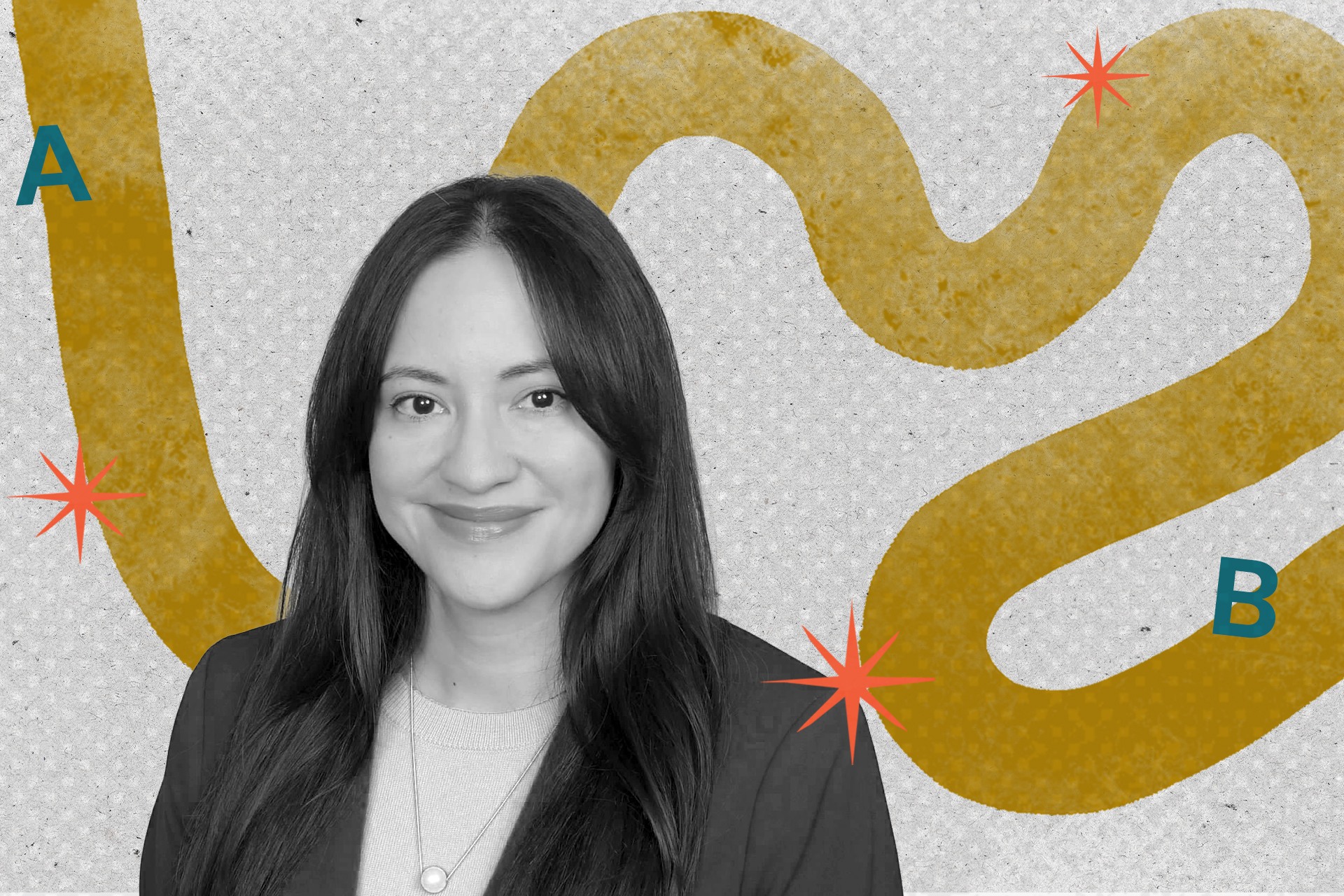
Rita Fernández’s childhood growing up along the U.S.-Mexico border as the child of Mexican immigrants influenced her desire to work on immigration policy. After starting her career on Capitol Hill, she transitioned to working in city politics in Los Angeles and San Diego, before becoming immigration policy director at UnidosUS. She is currently an international affairs fellow at the Council on Foreign Relations and is stationed at the UN International Organization for Migration (IOM). Read more about how her background gives her a unique perspective on immigration work, the benefits of pursuing a mid-career master’s degree, and the difference between working on immigration at the federal and municipal levels.
Here’s how Rita Fernández got her career in foreign policy. If you’re interested in this series, check out more editions here.
What did you want to be when you were little?
When I was in elementary school, I wanted to be a doctor, and I remember at one point I also wanted to be an archaeologist. In high school, I wanted to go into law and explored becoming an FBI agent and studying forensic science to be a crime scene investigator. At the tail end high school, I gravitated more toward history and political science, which is what I ended up majoring in in college.
Do you know what sparked that interest in foreign policy?
I grew up on the U.S.-Mexico border. I was born and raised in San Diego County, but my parents are originally from Mexico City. They came to the states in the mid-1980s, and a lot of my dad’s family moved from Mexico City to Tijuana to be closer. So growing up, I led a binational, bilingual lifestyle—we would cross into Mexico at the port of entry to visit family on the weekends and for holidays. That area of San Diego-Tijuana is very integrated. I don’t think people realize how much of a connection there is between the two.
To me, it was the most normal thing in the world to cross a major international boundary every weekend or couple of weeks. I grew up with this more global perspective. I also heard stories of my family members that were immigrants from China, France, and Spain who went to Mexico. I think I always had this more global view.
When I started my career after college, I went to work on Juan Vargas’s congressional campaign. After the campaign in 2012, I was offered a position in his office. I went to the Hill for about two-and-a-half years. I worked on scheduling, then moved over to press. At the time—this was before the 2020 census—he represented the entire stretch of the U.S.-Mexico border, from the Pacific all the way to Arizona. His district has since changed due to redistricting.
That job was my first exposure to border and immigration issues. From then on, I just focused on that area.
What made you want to start your career in Congress after graduating from college?
I really liked the idea of going to Washington. During my senior year of college, I interned on the Hill for Senator Kirsten Gillibrand, and I was there a few months for an internship. I loved Washington, I loved the work, and I always wanted to go back to the Hill.
I also liked the idea of representing my hometown’s perspective and interests in Washington. I grew up there, and I think oftentimes the border is misunderstood. For me, as someone who wanted to get into public service, there was something very valuable about going to the nation’s capital and working for the constituents that were my neighbors and friends and people I grew up with.
After a few years, you transition to city politics, working for the city of Los Angeles and then San Diego, dealing with immigration issues there too. What made you return to California and do this work on a municipal level?
After my job on the Hill, I wanted to go back to California to be closer to my family. I ended up securing a job in Los Angeles for then-Mayor Eric Garcetti. I started in early 2016 in his communications office, focusing on education, immigration, tech, and sustainability. I wanted to go back to the policy side, specifically on immigration, so I transitioned into his Office of Immigrant Affairs. This was before the 2016 election, and our day-to-day changed dramatically after the change in administration.
Los Angeles is the second-largest city in the country. It’s a very diverse city, with about a quarter foreign-born and one of the largest concentrations of undocumented immigrants. So there was a lot happening. Mayor Garcetti was very active and vocal on immigration. He spoke out against restrictions to the U.S. refugee admissions program and was very interested in making sure city departments and services remained open to all people, regardless of [their] immigration status.
We did more international engagement, primarily because the United States was disassociating in some areas, and immigration was certainly one of them. At the time, there was discussion around the Global Compact on Migration, a UN agreement, and the United States did not want to participate. Los Angeles and other U.S. cities wanted to have their say. A number of cities became involved in the Marrakech Mayors’ Declaration—over one hundred cities have now signed on, essentially saying, “We understand our central governments create immigration policy, but as mayors at the front lines of receiving and welcoming immigrants, we have something to say.”
That was in 2018. I worked a lot with counterparts in Athens, São Paulo, Montreal, Milan. We also created the Mayors Migration Council, a consortium of mayors advancing immigration priorities. Mayor Garcetti was one of the cofounders, and doing the background work for that was very fascinating.
How do you differentiate the approach to immigration between the federal and municipal levels?
The federal government creates immigration laws—in the United States, that’s Congress’s job. The executive branch enforces it. Cities or states don’t have the ability to change who’s coming in, but they’re often the recipients of the impacts of those policies.
The municipal role is not so much on policy changes or making laws, but more around deciding how they offer services to immigrants. In Los Angeles, for example, a lot of the conversation was around: what is the role of the Los Angeles Police Department (LAPD)? Many mayors see the value in not having their local law enforcement deputized for immigration enforcement because it’s not their job and it also erodes public trust. LAPD wants everyone in the city to feel comfortable approaching them if they were victims or witnesses to a crime. That trust is important.
Cities can also decide whether they have services or resources designed specifically for immigrants. For example, New York has a city ID intended for people who may not have any status. It depends on the types of resources they offer—economic mobility, financial literacy, help with citizenship applications. It runs the gamut of what cities can do to welcome immigrants, but they can’t make policy changes.
They also use their bully pulpit to do advocacy. Even though they can’t unilaterally make changes, they’ll vocally express what they believe to be sound policies and oppose any they believe are harmful to their residents.
I want to touch on something you mentioned earlier—you grew up in a border town and you’re from a family of immigrants. I’m curious whether you feel that gives you a different perspective or approach to the work than someone who wasn’t from those communities would have?
I think it informed my view not only on immigration policy, but my world perspective and how I approach relationships with people in other countries—like working with counterparts in other cities when I was in Los Angeles and San Diego, and seeing the value of having bilateral cooperation at the subnational level.
On the immigration issue in particular, I think it has shaped how I prioritize certain policies or how I work with organizations to prioritize and advocate for certain policies. I think it does give you that perspective because I grew up with a lot of the stories that my family grew up with.
My great-grandfather fled to the United States during the Mexican Revolution. He was a Spanish national, and he fled because he was encountering persecution—there was persecution of Spaniards at the time. This was obviously the early 1900s. There was no border wall. Crossing the border wasn’t necessarily illegal at the time, that wasn’t enforced until later. But had he crossed now, he would have fit that definition of an asylum seeker because it’s someone facing a credible fear of persecution in their home country based on nationality, which fits within that definition.
That’s an example of how a family experience has influenced how I see the asylum process, because now I can make my own decision on what I believe about asylum and give it the human element. I can see how it impacts people. I would not be here today had he not been able to seek safe harbor in the United States during that conflict. So I’m able to look at policy issues in a balanced way while also understanding the human impacts.
You’d been working for several years at this point and then decided to pause and get your master’s at Princeton. What made you realize that was the right point to go back to school, or what was the benefit you envisioned?
For a while I had wanted to go to grad school, specifically [for] a Master in Public Policy. I think it was just the right time. I was at the city of San Diego at that point, I had been the director of global affairs doing subnational diplomacy work, and was also the director of the Office of Immigrant Affairs there for a while. I thought it was the right time to do a mid-career graduate program.
I wanted to take myself out of my trajectory of experience and expose myself to new policy issues, both domestic and international. I took a number of classes on topics that were outside of my wheelhouse—issues I had not really explored too much, like the U.S. health-care system and international justice. I really wanted to take time in the middle of my career, go back to school, and expose myself to a whole host of topics that I had not taken too much time to explore and research that have long been of interest to me.
Very cool. After you finish the program, you join UnidosUS, which is a national advocacy organization. What made you gravitate toward advocacy, having been on the government side of policymaking?
I had never really been in an advocacy role in the past. It was more advocacy on behalf of an elected official or on behalf of a municipality, but not with a nonprofit organization. I had observed UnidosUS sort of at a distance and had worked with them a little bit during the time I was in Los Angeles. That organization used to be called the National Council of La Raza, and it was founded in the late 1960s. They’re a long-standing civil rights organization for Latinos.
It was an interesting time. I started in the fall of 2024, and I became their immigration policy director. After I left grad school, I was looking to see what my next chapter would involve, and I ended up pursuing that position. I did a lot of advocacy for the organization around immigration issues that are relevant to Latinos. In that moment, it was a very interesting experience to be in Washington during a time when the landscape on immigration policy was shifting in so many different directions. The advocacy piece was not new to me, but it was a bit different doing it for an organization and working for the broader Latino population. It was very rewarding during a time that was so challenging.
You joined CFR last year as an IAF fellow at IOM. What appealed to you about that shift?
A lot of the work I’ve done on immigration has been in the U.S. domestic context—in municipalities, on the Hill—but I had done some international work when it came to subnational engagement around immigration and economic development. I really wanted to continue my focus on international affairs and pivot more toward global migration.
For a while I had wanted to work in the UN system and have some experience there. So it was the perfect alignment of my research interests and the fellowship placement. I think it’s been really fascinating to learn about how other countries are managing a variety of different challenges, how the historic numbers of displaced people are being managed elsewhere, [and] what different countries are doing in reaction to those changes.
I’m working on a couple of projects focused specifically on labor migration—something called regular migration pathways, which are essentially projects connecting immigrants to specific jobs in particular sectors, because there are a number of labor shortages around the world. The other thing is trafficking in persons and cybercrimes and that intersection of the misuse of technology. I’m particularly doing some research right now on the role of artificial intelligence in human trafficking, which has been really fascinating.
I also want to mention that IOM is the main convener for the IMRF—the International Migration Review Forum—which reviews progress on the Global Compact for Migration I mentioned earlier. So that’s also a full circle moment for me, being able to work on the implementation of something I was involved with from the city level back in Los Angeles.
Overall, it has exposed me to different topics and allowed me to do a bit more of a pivot.
People love to criticize the United Nations as being ineffective. How do you avoid getting caught up in that? How do you stay hopeful about such a large, sometimes cumbersome, organization?
I think particularly at this moment, especially in the United States, there are big questions about what the purpose of the United Nations is and how member states invest in it. I would say, having spent some time now with one UN agency, I think it’s still important to see the value in the UN system. Member countries still get particular benefits from the United Nations that maybe they would not get otherwise.
For example, there are a lot of issues that IOM is working on that are still very important for a number of countries. The projects they’re taking on, the work that they do, is probably not something that could be done by any other central government. There still is a very critical role for the UN system. It is very complex and layered and large, but I think it has a number of different functions that are helpful that countries would not be able to do on their own.
Yeah, that makes sense. This series is geared towards young people who are starting out and seeing the foreign policy landscape change very rapidly. Do you have any advice for them, especially those who want to work on migration issues?
One central piece of advice I would give is to just be nimble and go in with an open mind. Not just on migration, but on any issue—even if you’re trying to pursue a career in foreign policy on other topics—the landscape is changing. Honestly, even a normal career trajectory is not going to be linear, and it probably won’t be exactly what you thought it was going to be at the beginning. Which can also be a benefit.
There is no way I would have been able to tell you I’d be here ten years ago if you had asked me. So I think it’s about being both proactive and seeking out opportunities, but also being open to maybe considering options you had not thought about, being open to different forks in the road, and really being flexible with your expectations of where you might end up. It’s not necessarily a bad thing! Ending up in a different place or pursuing an opportunity you had not considered before can open avenues to different possibilities, which is also very rewarding and can have really pleasant surprises.
We always like to end on a fun note. I’m sure over the years you’ve had many interesting work trips or work dinners. Is there a most memorable or most fun one you could share with us?
Yeah. Actually, I would like to go back to grad school. There was a trip I took to Japan hosted by the Japanese Ministry of Foreign Affairs—one of these exchanges for graduate students and undergraduate students. We spent four days in Tokyo and then four days in Kyoto and Shiga, which was the most fascinating leg of the trip.
Part of the exchange also entailed staying with a host family for one night and being exposed to Japanese daily life. That was just an incredibly rewarding experience. We stayed with this elderly couple, and their daughter and grandchildren came over to visit. They taught us how they prepare food. Just observing their customs was a fascinating experience.
What was really funny is that none of us students spoke Japanese, and none of the family members spoke English, so we communicated purely through Google Translate. But there’s one moment in particular that really stands out to me. One of my classmates who was also being hosted started playing the piano. It was a really nice moment of cultural exchange. There was something very intimate about that moment where neither of us really spoke each other’s language and we didn’t really know each other, but in that moment, there was that welcoming into their home, which was really lovely. Of course, they were so hospitable and kind and gracious, and it really stands out to me as a lovely experience.
This interview has been edited for length and clarity. It represents the views and opinions solely of the interviewee. The Council on Foreign Relations is an independent, nonpartisan membership organization, think tank, and publisher, and takes no institutional positions on matters of policy.