How I Got My Career in Foreign Policy: Stuart Reid
Stuart Reid’s love of writing and learning about the world drew him to become a longtime editor at Foreign Affairs. Reid sat down with CFR to discuss the importance of good writing to convey global issues, and how he started writing his own stories.
By experts and staff
- Published
- Writer/Editor
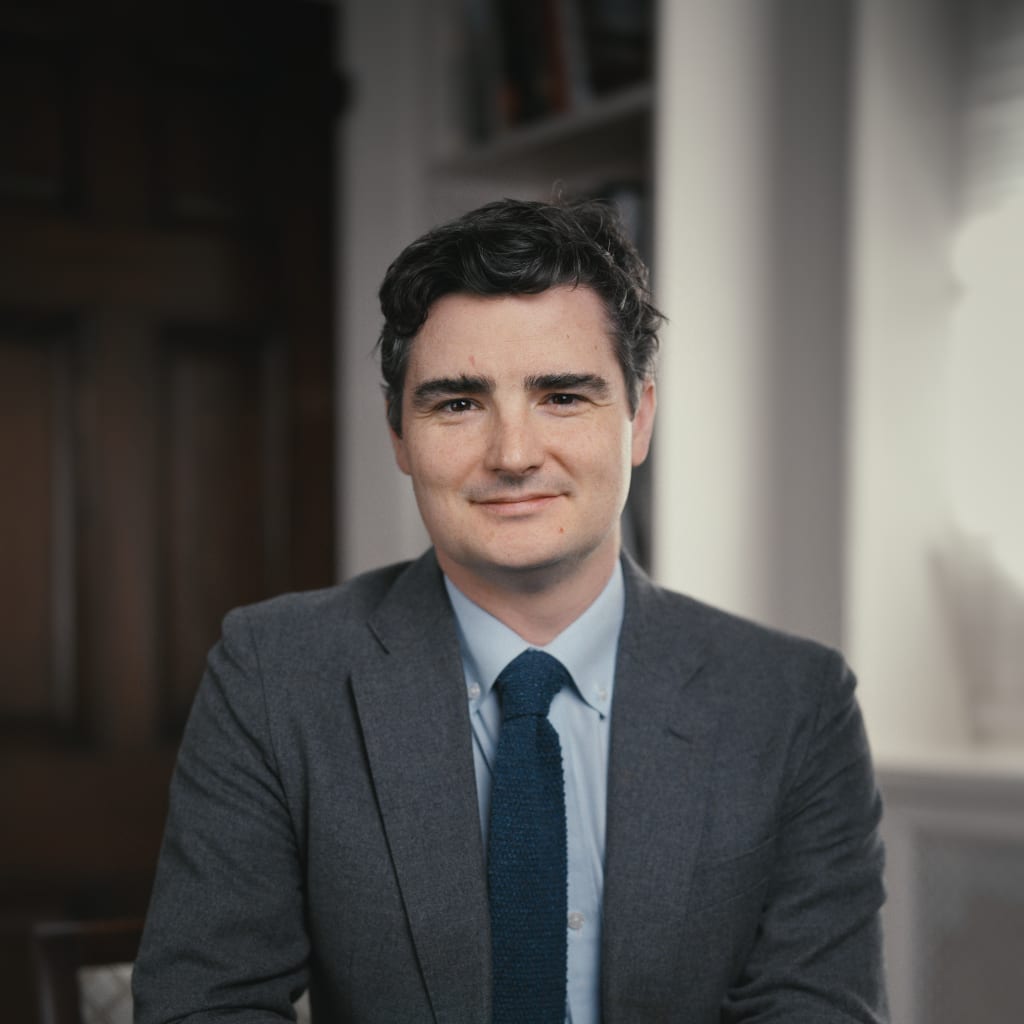 Stuart ReidCFR ExpertSenior Fellow for History and Foreign Policy and Associate Vice President of Studies
Stuart Reid knew early on he was interested in journalism and international affairs. After college, he wound up at the intersection of both, working as an assistant editor at Foreign Affairs magazine. He worked his way up to executive editor over the years as he edited—or as he called it, “translated”—countless articles, turning complex topics into compelling prose and digestible insights. His experience with the editor’s pen led him to write more, too, including his 2023 book on the CIA’s entanglement in Cold War Congo. As a CFR senior fellow and associate vice president of the Studies program, Reid is now writing and editing many projects—including his next book. Read more about how Reid traces his path back to his fourth grade French class, the behind-the-scenes of his reporting trips to the Congo, and his advice to aspiring writers.
Here’s how Stuart Reid got his career in foreign policy.
What did you want to be growing up?
When I was young, I wanted to be an architect. I would draw intricate plans of imaginary houses. Going into college, I thought I wanted to be a lawyer. But then I really got interested in two different things: one was journalism, as I was an editor and reporter for my college newspaper, and the other was international relations. I went to Dartmouth, which has a first-rate government department, and I took as many international relations courses as I could.
Going to work at Foreign Affairs out of college, those two things couldn’t be more entwined. You started out as an assistant editor and then moved all the way up to executive editor. What did that teach you about the publishing world?
I learned so many skills during my time at Foreign Affairs, but the most important one was how to edit—I gained my ten thousand hours of improving other people’s writing. I firmly believe that there is no concept in foreign policy that is too complicated to be explained in clear prose. The English language is a remarkably capacious, versatile, and powerful tool. It has evolved and borrowed for more than 1,500 years. It is equipped to handle all the ideas anyone can have. The authors I worked with had brilliant insights and arguments. I was fortunate to work with some of the smartest thinkers in foreign policy. But often they needed help presenting their ideas in prose that was clear, elegant, and accessible to a broad readership. So I learned how to translate.
The second skill I learned was diplomatic in nature. Over the course of my career, I edited hundreds of authors, each with their own personalities, preferences, and sensitivities. Editing is a collaborative process, and working at FA gave me an ability to navigate disagreements and build trust with writers. That was just as important as having editorial skills.
Last, one of the fun things about being an editor is that you get to learn a little about a lot. One day I’d be editing an article about Thailand, the next day it would be about South Africa, the day after that, it might be about trade policy. With every article I edited, I became a temporary quasi-expert in that field before moving on to something else. It was a great way of learning about the world.
Were there any pieces you worked on that really stood out to you?
There were some pieces that barely needed editing, when an author really knew how to write a piece. My job as its editor was to get out of the way. Then there were times when I’d be working closely with the author, helping them structure it, and trading multiple revisions, redrafting it with them, and spending hours on the phone going through the piece line by line. Eventually, the piece would get published and ideally make a splash. Those experiences were the most rewarding: Even though my name was not on the final product, I could take pride in it being an excellent article.
How did being at Foreign Affairs change or challenge your view of various issues around the world, or international relations at large?
I was able to gain passing fluency in a lot of different issue areas by being exposed to them. When you edit an article on a given topic, you inevitably have a dozen browser tabs open—Wikipedia pages, newspaper articles, and so on. You have to read a lot of background material to confidently edit the article.
One pleasure was when I’d change my opinion about an issue in the course of editing an article about it. Sometimes, going deep into the topic led me to disagree with the author’s position, but more often, the author would change the way I thought about something, and hopefully change the way readers did, too.
You’ve also written for several outlets covering plenty of things—from profiling Canadian Prime Minister Justin Trudeau to dissecting nuclear alarmism—but most of your pieces are focused on African politics. How did this interest grow for you?
It happened by accident, which goes to show that you can plan your career all you like, but things often unfold in a much more random way. I grew up in Canada, so I took French in grade four. After I moved to the United States, I chose to keep taking French in high school and then college because I wanted to continue learning the language (and because I had that early foundation). Then, a few years after graduating college, on a whim, I visited a friend in Senegal who was a Peace Corps volunteer there. Part of the appeal for me was that the country was francophone.
That trip sparked an interest in African politics, which I pursued by editing more articles at Foreign Affairs on Africa. That, in turn, led me to write a profile for Politico magazine on U.S. Senator Russ Feingold, who had recently lost his Senate seat and become the Obama administration’s special envoy to the Great Lakes region of Africa. I covered his efforts in the Democratic Republic of Congo, and as part of that piece, I got to travel to the country with him. When I got back stateside, my experience there led me to edit an article about Congo’s Cold War era, which led me to write a book about that very topic. So it all began with French in grade four.
As CFR’s staff writer covering Africa, I have to ask you more about The Lumumba Plot. How did you come across this story, and what made it the one that you decided, “I need to write a book on this”? What was the process of research and writing it like?
Immediately after gaining independence in 1960, Congo fell into chaos. The crisis was the front page of the New York Times for most of the summer of 1960, but I had barely heard of this episode. I never learned about it in school. I didn’t know much about Patrice Lumumba, Congo’s short-lived first prime minister, or how he was killed. The more I read, the more I realized there was a compelling story here. There were also new documents available from the CIA that had been released, which allowed me to document the day-to-day actions of the agency in Congo.
Finally, the story was filled with larger-than-life characters: Patrice Lumumba, above all, but also Larry Devlin, the CIA station chief in Congo; Dag Hammarskjöld, the UN secretary-general; and Joseph Mobutu, who was the head of the army in Congo and would go on to rule the country for over three decades. One thing led to another, and I realized there was a book to be written, and I had to write it.
It truly does have all the elements of a story begging to be told. What would you say to people who are interested in venturing into the publishing industry or international relations?
More school is not always the answer. There can be a temptation to extend your undergraduate experience by staying on the academic conveyor belt and going to graduate school almost by default, but you have to compare that experience with the time you would otherwise spend actually working. Sometimes the trade-off is worth it, and sometimes it isn’t. But you should evaluate it.
Second, a smart way to distinguish yourself is by being a good writer. Part of writing ability is innate. It depends on how your brain works, how much you were read to as a child, and how good an ear you have. But part of it can be taught. You should view writing as a muscle that can be trained. One way to do that is to read books on writing. My favorite is On Writing Well by William Zinsser, a classic in the field.
Third, in whatever job you have, figure out how to be as useful as possible to your supervisor. Don’t just come to them with problems; come to them with solutions for those problems.
Now, you’re a senior fellow at CFR and associate vice president of Studies. What made you want to come over to the CFR side and take on this new role?
I loved my time at Foreign Affairs, but I wanted to do more writing, and there aren’t enough hours in the day for me to do that while still editing. I’m busy working on my next book—very different from my last. Fortunately, I’ve also been able to stay involved in editorial work as part of my responsibilities in the studies department.
Excited to hear there’s another book to look forward to. We always like to end with a question that brings out a good story. What’s one of the most memorable moments you have from a reporting trip?
When I was in Congo researching my book, I went to the spot where Lumumba was killed in January 1961. It turned out that the government was building a monument there. I was with my fixer, the local journalist who was helping me, and I asked him how anyone knew that this was the very spot where Lumumba was assassinated. He told me there was actually someone who, as a young man in 1961, had witnessed Lumumba’s murder and, decades later, explained where it had taken place. As it happened, this man was still alive, and he lived relatively close by. So I asked if I could meet him. My fixer spoke to some people who lived in the area, and about two hours later, in the distance, I saw a cloud of dust and a motorcycle. On the back of it sat this seventy-something man.
I interviewed him, and he told me in incredible detail what he remembered from the night Lumumba was murdered. He was on an antelope-hunting trip with his father when he saw several cars veer off the road. Lumumba and his fellow prisoners were taken out, lined up, and executed. His story checked out—he told me the number of cars, for instance, which matched the documentary record we already had. But I was able to add a lot more detail in my book thanks to this lucky break.
This interview has been edited for length and clarity. It represents the views and opinions solely of the interviewee. The Council on Foreign Relations is an independent, nonpartisan membership organization, think tank, and publisher, and takes no institutional positions on matters of policy.