How I Got My Career in Foreign Policy: Vinh Nguyen
Vinh Nguyen spent more than two decades working for the U.S. government on issues related to cybersecurity and artificial intelligence. He sat down with CFR to discuss his work at the National Security Agency and his advice for young people.
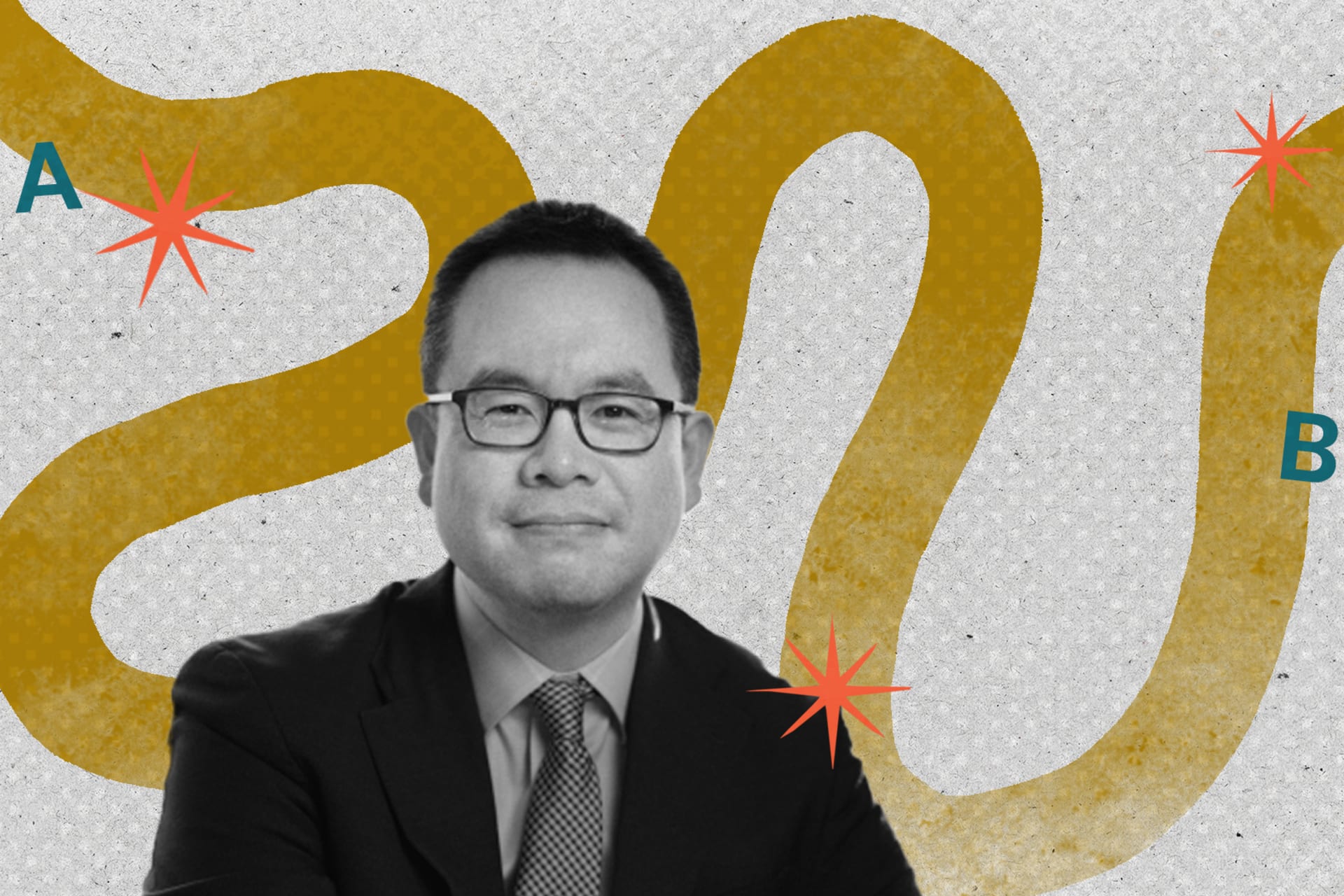
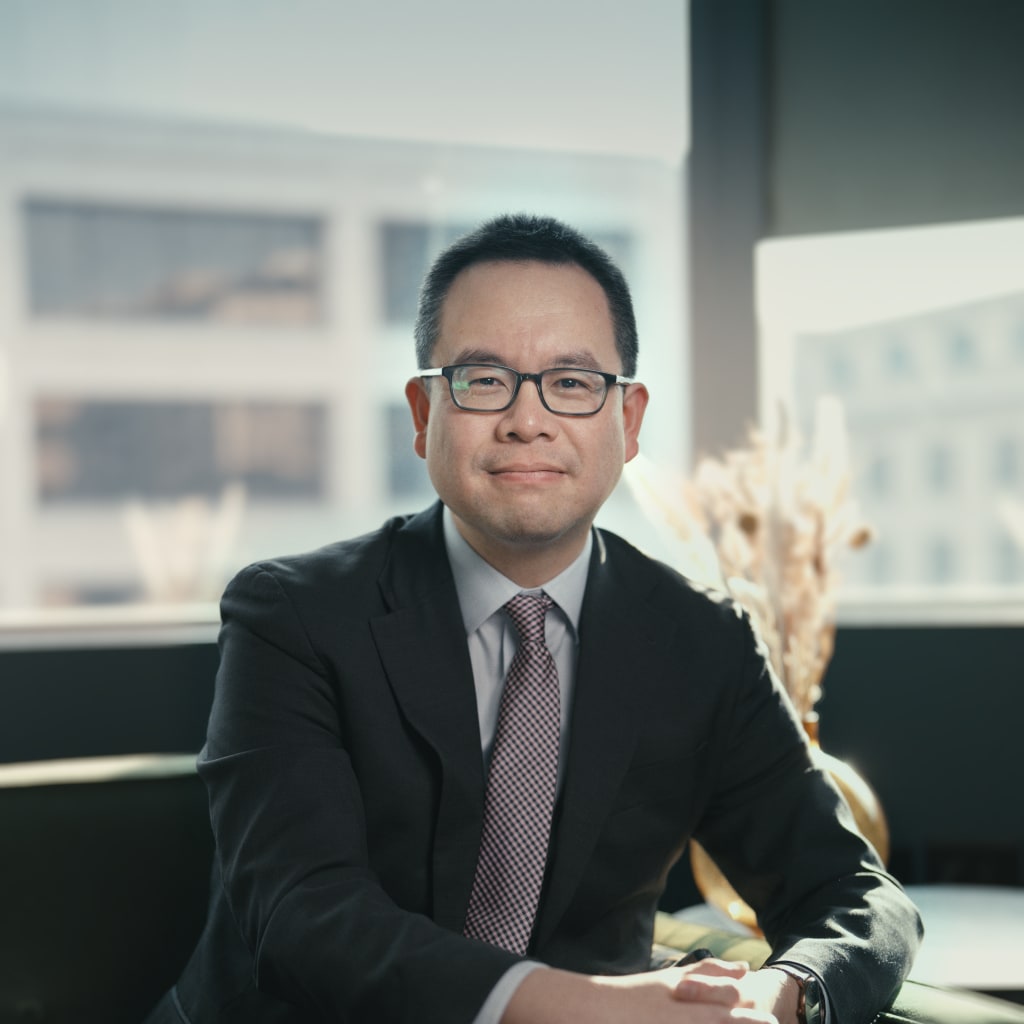
Growing up, Vinh Nguyen dreamt of building big things. At seventeen, he was selected for the prestigious Stokes Program at the National Security Agency (NSA), kickstarting his career in the U.S. government. Over more than two decades, he helped shape the United States’ approach to counterterrorism, cybersecurity, and artificial intelligence (AI). He is currently a senior fellow for AI at the Council on Foreign Relations. Read more about Nguyen’s problem-solving approach to his career, the challenge of balancing “security and privacy” in the age of AI, and his most memorable work trip to Utah.
Check out past editions of CFR’s “How I got My Career in Foreign Policy” series.
Here’s how Vinh Nguyen got his career in foreign policy.
What did you want to be when you were little?
I grew up in Saigon, Vietnam, and I immigrated to Boston. I always wanted to be an engineer who could build big machinery—like the space shuttle, or at that time during the Gulf War, it was the F-117 [aircraft]. I just wanted to build big things. That was my dream.
That’s so cool because you ended up sort of building things! So you got picked for the special Stokes Program at the NSA when you were seventeen. How does that happen? How did you attract their attention?
I grew up in Boston and did not know much about the federal government. As a New Englander, I knew my mayor and the governor. What ended up happening was that the Department of Defense sent me a letter asking me to apply for this program. Initially, because the letter noted it was a scholarship program, I was foolish enough to say, “If it’s free money, I’m going to sign up for whatever it is.” I sent it away and forgot all about it until three months later, when they sent a package with the real application. I filled it out. I even thought, “If it’s the government, they already have my information. Why do they need this?”
But I filled it out. Then I got a phone call one day saying, “Can you show up in Maryland for an in-person interview and test?” And I showed up because I was foolish and naive. I was like, “Whatever, it’s the government. Must be safe.” And then I ended up selected to be one of the fifteen Stokes Scholars for the NSA.
Do you know why they picked you? Were they just sending notices out randomly? Were you at a science high school?
I asked, and they said one indication [that helped them pick me] was my math score on the SAT. But I thought, “Okay, but a lot of people have high math scores.” So it’s still a mystery today how it showed up. I asked around my entire school and no one got the application except for me.
Well, fate! It works out that way, I guess.
It worked out. But I can tell you, at seventeen, you’re so young and naive. I didn’t know what was going on. I thought I would just apply and see where things go, and that’s how I got in. My dad thought I signed up for the army. He was freaking out when we got a phone call. He was like, “Did you sign up for the army?” And I was like, “Did I?”
That’s funny. So the program—you sort of balanced it during college, and then you were contracted to go work for the NSA after you graduated?
No, actually, when they accepted me, I became an official employee of the National Security Agency at eighteen.
What did they have you doing at eighteen?
I entered the IT industry when I was fifteen. By the time I was sixteen, I was running and building networks. I was securing networks. I was building web services, mail services, and domain name services. I wired networks. I built for nonprofits. I worked at a museum. I worked for a start-up. So by then, I was already certified to be a network engineer and a Microsoft professional for Windows. I already had the skills to do the technical work.
Interesting. You joined the NSA and later became the youngest employee to ever be promoted to its senior ranks. I wonder how you look back on it now, because you had this path set from such a young age, whereas most people go to college trying to figure things out, experimenting with different majors.
My thinking is that life will take you where you’re meant to be. A lot of times, people have analysis paralysis—“I don’t know what to do with my life. I don’t know where to go.” I’m like, “Look, go with what you love, and go with the flow.”
I think a lot of young people coming out of high school and college now, especially in the age of artificial intelligence, have a lot of anxiety about what to do, where to go, will I fail, how do I succeed? At the end of the day, you just have to go where your heart is taking you and you’ll be okay. I did that. I went to the University of Pennsylvania for both psychology and computer science.
Why psychology?
Because psychology is really about understanding people and relationships. As someone who’s technical, as a computer scientist, I felt there was always a missing piece—that technology needs to serve people, and we cannot be subservient to the technologies. At that time, I was working on machine learning and AI, so the link was quite tight for me. I can tell you the value of psychology and mathematics underpinning computer science are tremendous to me. I would not be the same person today if I hadn’t spent my time working on cognitive psychology, social psychology, and humanistic psychology.
I want to ask you about your time at the NSA. You were there for many years, you served under four different presidents. Obviously, over the last twenty years, there were big technological and geopolitical shifts. Did your job at the NSA evolve over time because of those changes?
Oh, it absolutely evolved. For any job, not just at NSA, I think the thinking is: What problems are we trying to solve here, rather than what functions or roles we are taking on? My approach to my career has always been, what are the problems that Vinh can help solve? Where can my contribution make a change, move an inch? I don’t really think much about the titles, the roles, the positions—they are necessary—but I think the core is: What problems are we trying to solve?
My approach to my career has always been, what are the problems that Vinh can help solve?
That’s why I joined the agency when counterterrorism was a huge problem for the country, and I spent my time on that. Then, of course, cybersecurity became a tremendous challenge for the nation. I had the skills, so I was going to do that. I wasn’t thinking, “Oh, cybersecurity will somehow enhance my career chances.” I was like, “The nation needs us to solve these problems. I can help solve this part of the problem, so I will jump in and just do it.”
That’s how I went from counterterrorism to cybersecurity and into AI and data science. Even today, the mission I’m on at CFR is to secure and assure AI at this foundational level, because it’s the major problem we have to solve today.
Speaking of AI, you were the NSA’s first chief responsible AI officer. What’s it like to lead a first-of-its-kind initiative at the NSA?
The mission at NSA is really about, “how we can balance between security and privacy?” The NSA has tremendous capabilities, but it also has tremendous responsibility and is accountable to the American people through our overseers in Congress, the White House, the Pentagon, and the Office of the Director of National Intelligence. In any democracy, if you don’t have any level of accountability for very powerful capability, you won’t have a democracy.
As the chief responsible AI officer, my goal was to ensure that we could accelerate AI adoption and deployment so we could be competitive with our competitors, like China, and be able to move beyond and support our military and enhance the security of the nation. At the same time, we had to make sure that the deployment and adoption of AI was also legal, privacy-preserving, secure, and accountable to the American people through our tools in Congress, the White House, and the leadership of the executive branch.
That’s a hard navigation because you constantly have to balance between these things. If you’re the Chinese government and you want to accelerate AI, you don’t really care much about the legality of it. You don’t care much about privacy-preserving for the Chinese citizenry. You don’t really care much about the use—if you can do it, you do it. What you care about is the survival and security of the Chinese Communist Party. You can call that responsible AI to the Chinese government. But I think in a democracy, we have to constantly balance it and think through it and navigate through it. Otherwise, we will lose who we are as a people.
You spent most of your career at the NSA, but you did take one detour. In 2016, you joined the National Intelligence Council as the most senior cyber analyst. What drew you to that opportunity?
I spent a lot of time on cybersecurity at NSA, and one of the challenges for a long time was the ability for us as the intelligence community to communicate the threats that were emerging—but had been manifesting for years. The policy community and decision makers didn’t fully understand and grasp the criticality of why cyber was so important to the nation.
For hundreds of years, people were trained to understand airplanes and ships and soldiers. But when we talk about cyber, it’s invisible. The impact and consequences are unknowable and uncertain. What we don’t see, we don’t know, and we cannot govern. So my mission at that time was: “How can I translate what we know as a community, frame it, and inform our policymakers and decision makers so they can make better decisions for the country?” Eventually, the cyber threat became a very prominent threat and a national security issue, which, for a long time it was not considered to be.
In 2025 you left the government and you’re now at CFR. What drew you to think tanks? You could have gone to the private sector or something else.
My new mission is to secure and assure AI at its foundation. What I’ve found in this new, strange era is that the government has very limited authority and influence over how a lot of tech decisions are being made, primarily by the private sector. We have many players who can come together to secure and assure AI at the foundation, but that’s not a mission of any one organization.
At CFR, what I’ve found to be an extraordinary experience and opportunity is how I get to work with many wonderful colleagues and very smart people. All the people around me are super supportive, and it allows me to communicate and elevate this challenge at the national level, so we all can come together and solve it. We do not have much time to shore up the secure foundation of AI. AI capabilities are moving rapidly—it’s improving almost every quarter at this point. Everyone is trying to catch up, and security is always the laggard. You cannot secure what you don’t have, but once you have it, if you don’t catch up and make sure you shore that up, then you don’t have security.
This series is geared towards young people. Do you have any advice for those who maybe have backgrounds in STEM or AI but are interested in foreign policy or in applying it to the foreign policy landscape?
I have three pieces of advice for those who want to enter the field.
Number one, be confident that you are worthwhile, valuable, and skillful, and that you will add unique ideas and make contributions to the foreign policy community. Don’t doubt that. Just because you don’t know everything doesn’t mean your voice won’t be taken seriously. Confidence is a skill you need to build.
Second, make sure you know how to leverage and augment your work with frontier AI services—whether from OpenAI, Anthropic, Google, you name it. Learn to use these services as assistants to help you gain knowledge. AI will help you with knowledge acquisition, it may not help you with skills. So you want to emphasize mastering the skills to navigate and orchestrate AI to support you and advance yourself.
Lastly, life will take you where you’re meant to be. Don’t freeze and say, “If I don’t do this and I don’t get into this—company, organization, entity, nonprofit, whatever it is—then I fail.” No, you don’t fail. Be assured that your skills will help you move forward and aim for contributions to the foreign policy community. Don’t doubt that if you’re not working in the field right now, you cannot make a contribution.
I’m sure a lot of people are asking you this, but everyone’s talking about the AI job wipeout, which would presumably include a lot of entry-level roles for these young people. How worried should they be?
I don’t have really good news here, unfortunately. The trend is that employers are making choices believing that AI will help their companies and entities to be more productive and cut costs. Therefore, unfortunately, firing people. My take is that it’s not here yet substantially. And I think a lot of companies will be reluctant to make an explicit attribution like, “AI forced me to do this.”
But my take is that you only have two competitors. One is your peers who know how to use AI quite effectively, productively, and faster. So now you’re competing with the same people you were competing with anyway—that’s challenging. Watch the people around you—your competitors, your peers—who learn to use AI to make their lives easier and more productive. You have to do the same, otherwise you’ll be falling behind.
The second is that the workflows, how we work, are actually shifting. If you learn how to transform the way you work and not wait for someone to tell you how to transform your work, you will be ahead of the curve. Learn how to think creatively to do something that brings exponential value. If you just leave it for things to happen to you, or you’re not on top of how you do your work, then there’s a risk that someone else or AI can overwhelm or overcome that.
Don’t lose hope. At the end of the day, we designed this, hopefully, to support people. I think people will learn that it is truly the people who will make this world a beautiful and wonderful place to live.
We love to end on a fun note. Over the years, I’m sure you’ve had many fascinating work trips and dinners. Is there a favorite or most memorable one that you could share?
Yes, maybe two or so years ago, I was invited to a private conference bringing together the top AI researchers and experts. Think world-class experts on AI, billionaires who finance the field—very small, less than eighty people. We were hosted in a resort in Utah, hidden in the mountains. I thought, “Okay, that’s interesting.” I’d been to some conferences, but I said, “This is fun.” The transport was arranged, so I didn’t have a car. That was the first time I went on a work trip where I didn’t have a car or a way to get out. I was like, “Okay, that’s okay. Seems safe.”
Then the whole conference was on how we’re building artificial general intelligence (AGI)—the smartest, most intelligent machinery known to mankind and beyond mankind. I thought, “Okay, that’s interesting.” And then I asked the questions: “So how do we contain it? How do we secure it? How do we lock it down?” They were like, “We don’t know.” I thought, “Uh oh.”
At the end of this workshop, everyone cheered toward AGI. It dawned on me that I may have joined a cult, and I was like, “I need to get out..” So I think that was the most surprising—it went okay, and then at the end I was like, “Oh no. This is how one gets into a cult.”
Not being able to leave if you want is crazy.
I know! I was thinking, “Wait a minute, I should have gotten a car.” So that was quite memorable—not because it was a mountain resort in Utah, but because I was thinking, “How do I get out?”
This interview has been edited for length and clarity. It represents the views and opinions solely of the interviewee. The Council on Foreign Relations is an independent, nonpartisan membership organization, think tank, and publisher, and takes no institutional positions on matters of policy.