The Iran Deal Comes at a Cost to Israel. The White House Hasn’t Acknowledged It.
The U.S.-Iran deal sidelines Israel, a critical ally, on issues affecting its core security interests. That may be tactically defensible, but the way Washington has handled it is not.

Elliott Abrams served as deputy assistant to the president and deputy national security advisor in the George W. Bush administration, where he supervised U.S. policy in the Middle East, and as Special Representative for Iran and Venezuela in the Donald Trump administration.
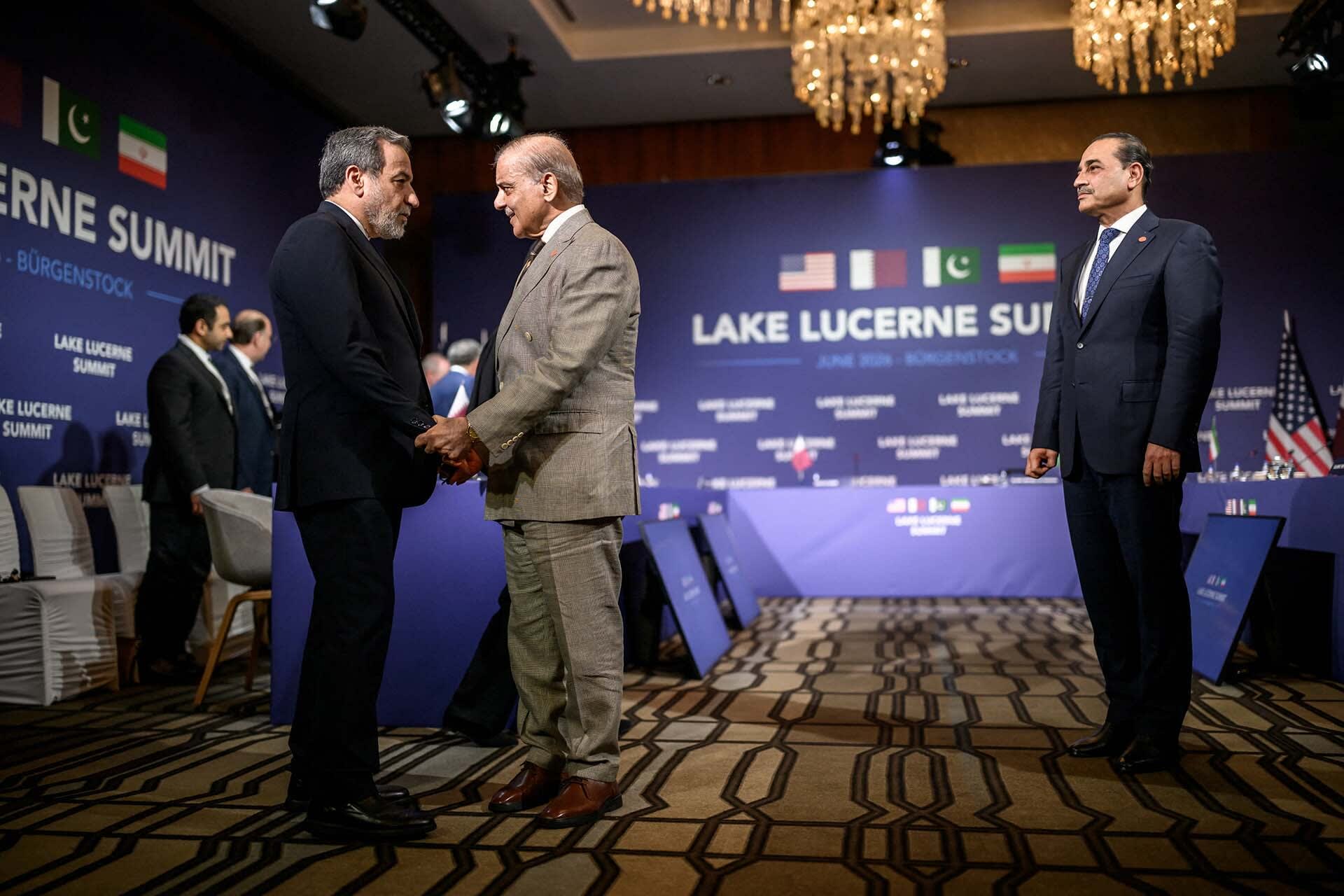
The memorandum of understanding (MOU) between the United States and Iran has left Israel on the sidelines. Israel, the close U.S. ally that has been at war with Iran’s proxy group, Hezbollah, in Lebanon, had no role in the negotiation of it—and it shows. The MOU’s first paragraph, for example, mentions Lebanon three times and declares “the immediate and permanent termination of military operations on all fronts, including in Lebanon” without making mention of Israel. What’s more, a new “deconfliction mechanism” for Lebanon that includes the United States, Iran, Pakistan, and Qatar has been announced—again, excluding Israel.
Israel views the linking of Lebanon’s internal affairs and national sovereignty to Iran as a great Iranian victory and an incomprehensible U.S. concession. In fact, Israelis have a sour opinion of the whole MOU. This view reflects several core grievances: Lebanon, where Israel anticipates U.S. efforts will constrain it from attacking Hezbollah; the lifting of all U.S. sanctions on Iran, which gives Tehran immediate and important financial relief; the absence of any mention of the Iranian missile program or support for proxies like Hezbollah in the MOU; and the way the MOU postpones serious discussion of Iran’s nuclear weapons program to later negotiations.
Israel is now entering an election season, which makes the political stakes of that discontent significant. In September or October (the date has not yet been fixed) Israelis will decide whether their prime minister, Benjamin Netanyahu, should continue in office or be replaced by an opposition leader. The election is certain to be contentious, but Israelis are now united on a critical issue—the conflict with Iran and the way it ended. A recent poll indicates that 92.1 percent of Israelis, including Jews and Arabs, agree that Iran gained the most from the MOU, and 86 percent of Israelis have a negative view of the agreement.
Keeping Israel out of the negotiations could be a critical factor in those negative views. And the roles that Pakistan and Qatar, both fierce critics of Israel, have played in this deal only deepen Israeli suspicions. If there were any consultations between the U.S. negotiating team and the government of Israel, they have not been revealed.
U.S. Secretary of War Pete Hegseth called Israel a “steadfast partner” on March 4. He added that “Our ally Israel is demonstrating tremendous capabilities. Extraordinary cooperation with such an ally is amazing and necessary. We salute you [Israel] and appreciate you.” That is not the tone being taken now by the United States’ chief negotiator, Vice President JD Vance, who suggested that Israeli critics of President Donald Trump and the MOU need to “wake up and smell the reality of the situation that country is in.” The abrupt change in rhetoric points to a deeper question: Why is the United States distancing itself, in peacemaking, from the ally with which it has just worked in extraordinary cooperation during the conflict with Iran?
At some level, this isn’t necessarily surprising. During World War II, the United States and the United Kingdom were the closest of allies and military partners, but as the war neared an end, they differed greatly on military strategy in Europe and the terms of the peace. Each pursued its national interests, and those overlapped far more during the conflict than after it. The same may be true of the United States and Israel today. While fighting Iran, postwar issues like how exactly to handle Iran’s stocks of highly enriched uranium, the scope of Israel’s attacks on Hezbollah, or when to begin lifting U.S. sanctions, were simply deferred. Now they have become pressing.
Yet, the analogy has limits. It can also be argued that the gap between the U.S. and Israeli positions is not as wide as it may appear. Both countries oppose and will act to stop Iran’s nuclear weapons program; both want a sovereign Lebanon out from under Hezbollah control; both want to prevent Hamas from regaining strength and seek to end its control of half of the Gaza Strip. So, despite the policy differences, both countries’ underlying goals remain aligned.
It’s clear that the United States gains some tactical flexibility by keeping Israel out of the negotiations, just as it has kept other interested parties like the Saudis and Emiratis out. And Israelis should at least consider whether they really want to be more directly involved, because such involvement would likely mean they were more closely bound by the outcome. Their non-involvement, for example over Lebanon, leaves them freer to act. The United States and Israel could be adopting an “ask forgiveness, not permission” approach to actions that affect each other’s interests.
But such an approach requires, at the very least, full explanations in private and careful language in public. This does not seem to be happening. While the vice president was in Switzerland discussing Lebanon with Iran, Qatar, and Pakistan, Israeli and Lebanese diplomats were meeting in Washington under U.S. auspices, ostensibly to solve their bilateral problems and work toward restraining Hezbollah. How do these two tracks affect each other? Israel doesn’t seem to know. Its ambassador in Washington said that he needed “clarity” about U.S. policy and the new deconfliction mechanism. “The basic premise [of the talks in Washington] was that Iran was not involved, and the main discussion is about Lebanon and Hezbollah—not about the extent to which Iran can restrain Hezbollah,” he said. “That is not Iran’s role. Its role is to get out of Lebanon.”
The United States has not been giving the private explanations that this moment requires—if, in fact, the two separate Lebanon tracks can be logically explained and are coordinated. The careful language in public is also lacking. On the Israeli side, the prime minister has indeed been careful, but some other ministers (unsurprisingly, the two ministers on the far right of Netanyahu’s coalition, Finance Minister Bezalel Smotrich and National Security Minister Itamar Ben Gvir) have not. And on the U.S. side, the vice president has engaged in browbeating rather than what is needed: restraint and a realization that Israel’s direct national security interests are at stake far more than those of the United States.
Sidelining an ally in negotiations affecting its vital interests can, at times, be useful or even necessary for the United States. It may greatly disadvantage that ally, or it can provide it—and the United States—distance that can allow for greater freedom of action. But in all cases, U.S. policy should carefully ensure that it consults with that ally, takes its interests into consideration, explains U.S. thinking and actions thoroughly, and speaks publicly about disagreements with language meant to maintain confidence rather than deepen differences. The United States has some catching up to do in this case.
This work represents the views and opinions solely of the author. The Council on Foreign Relations is an independent, nonpartisan membership organization, think tank, and publisher, and takes no institutional positions on matters of policy.